

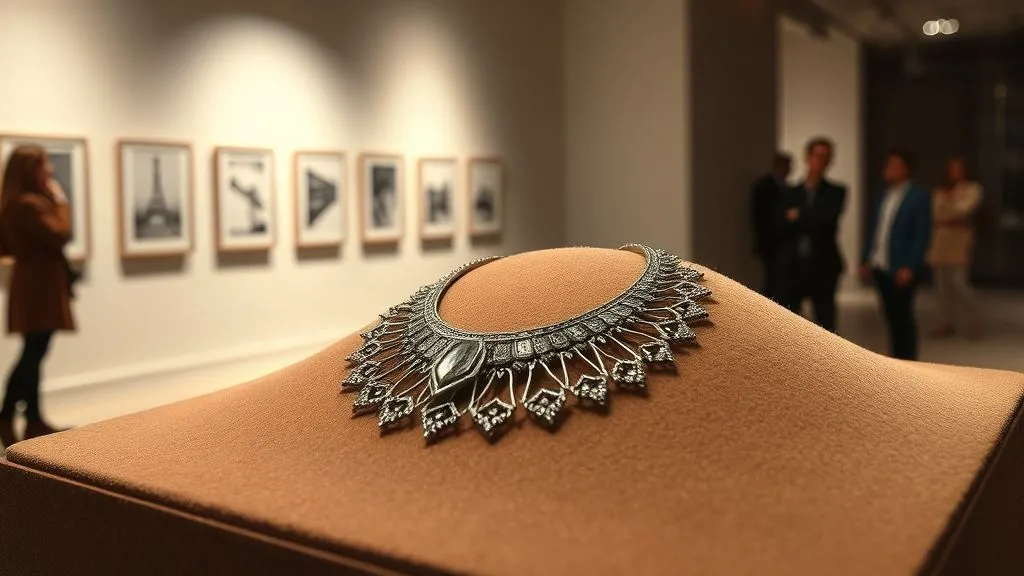
How to Value and Price Unique Wearable Art Jewelry for Galleries?
For over two decades in the dynamic world of jewelry design and fine art, I've witnessed countless brilliant artists create breathtaking wearable art pieces, only to stumble at the crucial hurdle of valuation and pricing. It's a common, heartbreaking scenario: an artist pours their soul into a creation, only to either undervalue it significantly, missing out on deserved profit and recognition, or overprice it, leaving it languishing unsold in a gallery's inventory.
The inherent challenge with wearable art jewelry lies in its dual nature. It's not merely a commodity based on material weight, nor is it purely a painting on a canvas. It occupies a liminal space between fine craft, sculpture, and fashion, making traditional pricing models often inadequate. This ambiguity frequently leaves artists feeling lost, unsure how to articulate the true worth of their intricate, narrative-driven pieces to gallery owners and discerning collectors.
In this definitive guide, I will share the frameworks, insights, and actionable strategies I've cultivated over years of experience. You'll learn not just what to consider, but how to methodically assess, justify, and confidently price your unique wearable art jewelry, ensuring it finds its rightful place and value within prestigious galleries. We'll delve into everything from intrinsic value and market dynamics to gallery relationships and a robust tiered pricing model.
1. Deconstructing Intrinsic Value: Beyond Materials and Labor
When I first started, like many artists, I believed pricing was simply materials plus labor. While these are foundational, wearable art demands a deeper appreciation of its intrinsic value, which often far surpasses its material cost. This is where the 'art' in 'wearable art' truly comes into play.
Originality and Concept: Is your piece truly unique? Does it tell a story, challenge a perception, or embody a profound concept? The intellectual property and creative vision embedded in a piece contribute immensely to its value. A truly original concept, executed flawlessly, commands a premium.
Artistic Merit and Execution: This encompasses the skill, technique, and mastery demonstrated. Is the craftsmanship exceptional? Are the forms harmonious? Does it push boundaries? A piece that showcases innovative techniques or a rare level of skill is inherently more valuable. I've seen pieces made from inexpensive materials fetch high prices purely due to their conceptual strength and the artist's unique vision.
Narrative and Provenance: Every piece of art has a story. What inspired it? What journey did it take? Documenting this narrative, along with any exhibitions, awards, or publications associated with the piece or your work, builds its provenance. A rich provenance adds layers of desirability and value.
"The true value of art is not in what it's made of, but in what it makes you feel, think, and understand." - Industry Insight
Case Study: The 'Whispers of the Deep' Brooch
Artist Anya Sharma, known for her intricate textile and metal jewelry, initially priced her 'Whispers of the Deep' brooch at $800. It was a complex piece, incorporating hand-dyed silk, sterling silver, and ethically sourced pearls, inspired by deep-sea bioluminescence. Anya calculated her material cost at $150 and estimated 20 hours of labor at $30/hour, adding a small profit margin. However, the brooch was conceptually groundbreaking, showcasing a novel technique of integrating delicate fabrics into rigid metal structures, and had won a regional design award. After a consultation, we realized she was severely underestimating its artistic merit and provenance. By documenting its conceptual depth, award, and unique technical innovation, and benchmarking it against similar gallery-represented artists, she re-priced it at $2,500. It sold within weeks at a reputable gallery, proving that a robust understanding of intrinsic value is paramount.

2. The Tangible Foundation: Materials, Craftsmanship, and Production Costs
While intrinsic value is abstract, the tangible costs form the bedrock of your pricing. This is where you calculate your actual expenses, ensuring you don't sell yourself short. I always advise artists to be meticulous here.
2.1. Material Costs: Beyond the Purchase Price
List every single material used, from the precious metals and gemstones to the smallest findings, glues, and even sandpaper. Don't forget consumables. But it's not just the purchase price; consider:
- Shipping and Handling: The cost to get materials to your studio.
- Waste and Spoilage: Account for material lost during the creative process.
- Specialty Materials: Rare, ethically sourced, or custom-ordered materials command higher value.
2.2. Labor Costs: Valuing Your Time and Skill
This is often the most undervalued component. Your time is valuable, and your skills are honed over years. Don't just pick an arbitrary hourly rate.
- Calculate Your Desired Hourly Wage: This should reflect your experience level, cost of living, and the complexity of the work. If you're a master artisan, your time is worth more than a beginner's.
- Track All Hours: Meticulously record every hour spent on design, fabrication, finishing, photography, and even administrative tasks related to the piece.
- Factor in Learning/Experimentation: If a piece involved significant R&D or learning new techniques, this time should be partially accounted for, as it contributes to your overall expertise.
2.3. Overhead and Business Expenses
Many artists overlook these crucial costs. Your studio isn't free, and neither is running a business. Allocate a portion of these to each piece.
- Studio Rent/Utilities: A percentage of your monthly studio expenses.
- Tools and Equipment: Depreciation and maintenance of your specialized tools.
- Marketing and Website Costs: Promoting your brand and online presence.
- Insurance: Protecting your work and business.
- Professional Development: Workshops, courses, and memberships.
A simple formula to start with is: (Materials + Labor + Overhead) x Multiplier = Wholesale Price. The multiplier accounts for your profit margin, which we'll discuss further.
3. Market Research: Benchmarking and Niche Positioning
Understanding your market is not about copying, but about positioning. As Seth Godin often says, "The market decides." You need to know where your work fits and what similar work is selling for. This is critical for how to value and price unique wearable art jewelry for galleries effectively.
3.1. Identifying Your Peer Group and Competitors
Look at artists creating work of similar artistic merit, material quality, and conceptual depth. Don't compare your unique, hand-fabricated art jewelry to mass-produced fashion accessories.
- Gallery Representation: Which galleries represent artists whose work resonates with yours? What are their price points?
- Exhibitions and Fairs: Attend art jewelry fairs, museum exhibitions, and craft shows. Observe pricing.
- Online Platforms: Research high-end art marketplaces and artist portfolios.
3.2. Understanding Your Target Audience
Who is buying wearable art jewelry? Are they collectors, art enthusiasts, or fashion-forward individuals? Their demographic, income level, and motivations for purchase will influence perceived value.
3.3. Analyzing Trends and Demand
While unique art should transcend fleeting trends, being aware of broader movements in art, fashion, and sustainability can inform your narrative and appeal. According to a Deloitte report on the luxury market, provenance, craftsmanship, and unique storytelling are increasingly vital to discerning buyers.
4. The Gallery's Perspective: Commission, Overhead, and Perceived Value
When you're approaching galleries, you're not just selling a piece; you're entering a partnership. Understanding their business model is crucial for how to value and price unique wearable art jewelry for galleries in a way that benefits both parties.
4.1. Standard Gallery Commission Rates
Most art galleries operate on a consignment model, taking a commission on sales. This typically ranges from 40% to 60%, with 50% being very common for fine art and high-end craft. This means if you want to net $1,000 for a piece, the gallery will need to sell it for $2,000 if their commission is 50%.
Your Net Price / (1 - Commission Rate) = Gallery Retail Price
Example: $1,000 / (1 - 0.50) = $2,000
4.2. Gallery Overhead and Value-Add
Galleries provide significant services that justify their commission:
- Exhibition Space: Prime retail or exhibition space in a desirable location.
- Marketing and Promotion: Advertising, press releases, social media, mailing lists.
- Client Base: Access to an established network of collectors and buyers.
- Sales Expertise: Experienced staff who can articulate the value and story of your work.
- Logistics: Handling sales transactions, shipping, and insurance while on display.
4.3. Perceived Value and Gallery Reputation
A reputable gallery lends credibility and prestige to your work. Being represented by a well-regarded gallery can significantly elevate the perceived value of your art and, consequently, its price. This isn't just about sales; it's about building your career and reputation.
| Cost Component | Example Value | Notes |
|---|---|---|
| Materials (incl. waste) | $200 | Precious metals, gemstones, specialty fabrics |
| Labor (artist's hourly rate) | $600 | 40 hours @ $15/hr (design, fabrication, finish) |
| Overhead Allocation | $100 | Studio, tools, marketing, insurance |
| Artist's Net Cost | $900 | Sum of above, your baseline |
| Artist's Profit Margin (20%) | $180 | Your desired profit on the piece |
| Artist's Desired Net (Wholesale) | $1080 | Total you want to receive |
| Gallery Commission (50%) | $1080 | Equal to artist's net for 50% commission |
| Gallery Retail Price | $2160 | Price the gallery sells it for |
5. Developing a Tiered Pricing Strategy
A single price point for all your work is rarely effective. I advocate for a tiered strategy that allows for flexibility, growth, and caters to different market segments. This is a sophisticated approach for how to value and price unique wearable art jewelry for galleries and other sales channels.
5.1. Entry-Level/Accessible Pieces
These are typically smaller, less complex, or experimental pieces that introduce new collectors to your work. They might use less expensive materials but still carry your signature aesthetic. They serve as a gateway.
5.2. Mid-Range/Signature Pieces
This tier represents your core body of work. These pieces are fully developed, showcase your unique style and skill, and often incorporate more valuable materials or complex techniques. This is where most of your gallery placements will likely sit.
5.3. High-End/Statement/Collector Pieces
These are your masterpieces – significant, often one-of-a-kind, labor-intensive pieces that push artistic boundaries. They might use rare materials, represent a pinnacle of your technique, or have a particularly strong conceptual narrative. These are often destined for serious collectors or museum acquisitions.
A tiered approach allows you to engage with a broader audience while reserving your highest prices for your most significant works. It also provides a clear progression for collectors as they become more invested in your art.
6. Negotiation Tactics and Consignment Agreements
Entering into a gallery relationship requires more than just submitting your work; it involves understanding and negotiating the terms. I've seen many artists falter here, often out of discomfort with business discussions.
6.1. Understanding Consignment Terms
A consignment agreement is a legal document outlining the terms of your relationship with the gallery. Key elements include:
- Commission Rate: Clearly stated percentage.
- Payment Schedule: When and how you'll be paid after a sale.
- Insurance: Who is responsible for insuring the work while in transit and at the gallery.
- Exhibition Period: How long your work will be displayed.
- Shipping Costs: Who bears the cost of shipping to and from the gallery.
- Pricing Adjustments: Conditions under which prices can be changed (e.g., for sales, discounts).
Always read the agreement carefully. Don't be afraid to ask questions or seek clarification. It's a partnership, and transparency is key.
6.2. Confident Negotiation
While commission rates are often standard, there can be room for negotiation on other terms, especially if your work is highly sought after or you're bringing a new audience to the gallery. Be prepared to articulate the value of your work, your track record, and your unique selling points. Remember, you're not just asking for a favor; you're offering them a valuable asset for their inventory.
"Know your worth, articulate it clearly, and negotiate from a position of strength, not desperation." - Expert Advice
6.3. Pricing Consistency Across Channels
One of the most crucial pieces of advice I can offer is to maintain consistent pricing across all your sales channels – your website, other galleries, and any shows you participate in. Undercutting your gallery partners by selling the same piece cheaper directly is a sure way to damage relationships and devalue your work. If you offer direct sales, ensure your pricing reflects the gallery's retail price or slightly less to account for the absence of their overhead and services, but never significantly lower.
7. Building Artist Provenance and Narrative
The long-term value of your wearable art, and your career, is heavily influenced by your provenance and the narrative you build around your work. This is an ongoing process that significantly impacts how to value and price unique wearable art jewelry for galleries and collectors over time.
7.1. Documenting Your Journey and Work
Keep meticulous records of everything: your creative process, inspirations, materials, techniques, exhibition history, awards, press mentions, and sales. High-quality photography of your work is non-negotiable. This documentation forms the backbone of your provenance.
7.2. Cultivating Your Artist Statement and Bio
Your artist statement should articulate your artistic vision, influences, and the conceptual underpinnings of your work. Your bio should highlight your education, exhibition history, awards, and significant achievements. These documents are vital tools for galleries to communicate your value to collectors.
7.3. Engaging with the Art Community
Participate in exhibitions, attend art events, connect with other artists, curators, and collectors. Being an active member of the art community enhances your visibility and credibility. Publishing articles, giving talks, or participating in panels also elevates your expert status.
As Harvard Business Review often stresses, authenticity and a compelling story are powerful drivers of value in the luxury and art markets. Your personal narrative, intertwined with your artistic journey, makes your work more resonant and collectible.

Frequently Asked Questions (FAQ)
Question? Should I price my wearable art jewelry higher for galleries than for direct sales on my own website?
Detailed answer: No, maintaining price consistency across all your sales channels is paramount. If a gallery sells your piece for $2,000, it should be listed for $2,000 on your website (or perhaps slightly less to account for the gallery's overhead, but never significantly lower to avoid undercutting them). Galleries provide significant services and marketing; undercutting them damages your relationship, devalues your work, and can lead to galleries refusing to represent you. Your direct sales price should reflect the gallery's retail price, allowing for their commission.
Question? How do I justify high prices for my wearable art jewelry, especially if the material costs are relatively low?
Detailed answer: Justifying high prices, especially with low material costs, relies heavily on emphasizing the 'art' aspect over the 'jewelry' commodity. Focus on the piece's intrinsic value: its originality, conceptual depth, artistic merit, innovative techniques, the years of skill development, and the narrative it embodies. Documenting your provenance (exhibition history, awards, publications) also adds significant weight. Educate the buyer and gallery on the time, skill, and creative vision invested, not just the raw materials.
Question? What if a gallery is interested but wants to negotiate a lower price or higher commission?
Detailed answer: Be prepared for negotiation. While standard commission rates (40-60%) are common, you can sometimes negotiate terms like exhibition duration, marketing efforts, or payment schedules. For price, if a gallery insists on a lower retail price that significantly impacts your profit, you need to weigh the value of that specific gallery representation against your financial needs. Sometimes, a prestigious gallery placement is worth a slightly reduced margin for the long-term career benefits. However, know your absolute minimum acceptable net price and be prepared to walk away if it's not met.
Question? How does my reputation and experience as an artist affect the pricing of my wearable art jewelry?
Detailed answer: Your reputation, experience, and artistic standing are huge value drivers. A well-established artist with a strong exhibition history, critical acclaim, and a recognizable signature style can command significantly higher prices than an emerging artist. Collectors are investing in the artist as much as the art itself. Continuously building your resume, gaining recognition, and cultivating your unique artistic voice directly contributes to your work's market value and your ability to justify premium pricing.
Question? Should I adjust my prices for different galleries, for example, a local gallery versus a high-end gallery in a major art hub?
Detailed answer: Ideally, your pricing should remain consistent across all galleries to maintain integrity and avoid devaluing your work. However, you might choose to place different *types* of work (e.g., your entry-level pieces vs. your high-end statement pieces) in different tiers of galleries. A local gallery might be better suited for accessible pieces, while a high-end gallery in a major art hub could successfully sell your most significant, higher-priced works. The key is that a specific piece should have the same retail price regardless of where it's sold.
Key Takeaways and Final Thoughts
- Holistic Valuation: Move beyond simple material and labor costs. Embrace the intrinsic value of originality, artistic merit, and narrative.
- Meticulous Costing: Accurately track all materials, labor, and overhead to establish a true baseline for your work.
- Market Intelligence: Research comparable artists and galleries to understand your niche and position your work effectively.
- Gallery Partnership: Understand gallery commissions and services as part of a symbiotic relationship.
- Tiered Pricing: Implement a strategic pricing structure that caters to different collectors and showcases your full range.
- Confident Negotiation: Approach consignment agreements with knowledge and confidence, ready to articulate your value.
- Provenance is Power: Continuously document your artistic journey, achievements, and the stories behind your pieces.
The journey of valuing and pricing your unique wearable art jewelry for galleries is an evolving one. It requires a blend of artistic passion, business acumen, and an unwavering belief in the worth of your creations. By adopting these expert strategies, you're not just setting a price; you're articulating a profound value proposition that resonates with galleries and discerning collectors alike. Your art deserves to be recognized, celebrated, and appropriately compensated. Go forth, negotiate confidently, and let your wearable masterpieces shine!
Recommended Reading
- Auditing Multi-Tier Supply Chains: 7 Steps to Cruelty-Free Compliance
- 7 Interactive Features Driving Virtual Fashion Buyer Engagement?
- Mastering Professional & Trendy Glasses: Your 7-Step Style Guide
- Which Ergonomic Work Shoes Prevent Bunion Pain During Long Shifts?
- 7 Ethical Scaling Strategies: Grow Your Fair Trade Apparel Brand Sustainably



Your email address will not be published. Required fields are marked *