


How to Select Eyewear That Enhances a Professional's Personal Brand?
For over two decades in the fashion and accessories industry, particularly in the nuanced world of eyewear, I've witnessed firsthand the transformative power of a well-chosen frame. It's more than just a vision aid; it's a silent, powerful statement about who you are, what you represent, and the values you bring to the professional arena. Time and again, I've seen professionals inadvertently undermine their carefully cultivated personal brand with eyewear that simply doesn't align, missing a critical opportunity to amplify their presence.
Many professionals understand the importance of a sharp suit, a confident handshake, or a clear elevator pitch, yet they often overlook their eyewear as an integral component of their overall personal brand. This oversight can lead to a disconnect between the image they wish to project – be it authority, creativity, approachability, or innovation – and the visual cues their glasses are actually sending. The problem isn't a lack of desire to present well, but often a lack of expert guidance on how to leverage eyewear strategically.
In this definitive guide, I will share the insights I've gathered from years of working with individuals and brands, providing you with a comprehensive framework to select eyewear that not only corrects your vision but profoundly enhances your professional personal brand. We'll delve into the psychology of design, the nuances of fit, the impact of materials, and the art of building an eyewear wardrobe that speaks volumes about your unique professional identity. Prepare to transform how you're perceived, one frame at a time.
Understanding Your Personal Brand Archetype
Before you even consider frame shapes or colors, the most crucial step is to intimately understand your personal brand. What message do you want to convey? Are you the innovative disruptor, the steadfast leader, the approachable mentor, or the meticulous analyst? Your eyewear should be an extension of this core identity. I've often advised clients to think of their personal brand as an archetype, which then informs every visual choice.
The Innovator/Visionary
If your brand is about pushing boundaries, creativity, and foresight, your eyewear should reflect this. Think unique shapes, unconventional materials, or subtle design elements that hint at your forward-thinking nature. You're not afraid to stand out, but always with purpose and sophistication.
The Authority/Leader
For those who embody leadership, gravitas, and decisive action, your eyewear needs to project strength and confidence. Classic, structured frames, often in darker, solid colors, can reinforce a commanding presence. The goal is to convey reliability and unwavering resolve.
The Creative/Artisan
If your profession involves design, art, or a highly creative field, your eyewear can be a canvas for self-expression. Rounder, softer shapes, vibrant colors, or frames with interesting textures can signal your artistic sensibility and open-mindedness. Authenticity is key here.
The Nurturer/Collaborator
Professionals focused on teamwork, empathy, and building relationships benefit from eyewear that conveys approachability and warmth. Softer lines, lighter colors, or subtle patterns can create an inviting and trustworthy impression, making others feel at ease.
Authenticity is the bedrock of a strong personal brand. Your eyewear should never feel like a costume; it should feel like an extension of your true professional self, amplifying your inherent strengths and values.
Identifying your archetype provides a filter through which all subsequent eyewear decisions should pass. It ensures consistency and intentionality in your visual communication.

The Psychology of Frame Shapes: What Your Glasses Say About You
The shape of your frames is perhaps the most immediate visual cue your eyewear sends. It’s not just about what suits your face shape (though we'll cover that); it's about the subconscious messages these geometries convey. I often tell clients that different frame shapes unlock different facets of their professional persona.
Square/Rectangular: Authority & Precision
These classic, angular shapes are synonymous with professionalism, intelligence, and decisiveness. They project a serious, no-nonsense demeanor. If you're in finance, law, or leadership, a well-proportioned rectangular frame can reinforce your analytical and authoritative nature. They convey structure and order, making them ideal for roles demanding precision.
Round/Oval: Approachability & Creativity
Softer, curvilinear frames tend to soften facial features, making you appear more approachable, empathetic, and often, more creative. They can convey a sense of intellectual curiosity and a less rigid approach. These are excellent choices for educators, therapists, creatives, or anyone wanting to foster a more collaborative environment. According to a study published in Harvard Business Review, facial features that appear softer can increase perceptions of trustworthiness in professional settings.
Cat-Eye: Sophistication & Confidence
The upward sweep of a cat-eye frame subtly lifts the face, conveying a sense of sophistication, confidence, and often a hint of playful assertiveness. Historically associated with intelligence and glamour, modern cat-eye frames are versatile and can be an excellent choice for women in leadership roles who want to project strength with elegance.
Aviator/Pilot: Adventurous & Bold
While often seen as casual, modern, refined aviator-style frames can make a powerful professional statement. They convey a sense of adventure, confidence, and a willingness to take calculated risks. For dynamic roles in tech, entrepreneurship, or media, a sleek aviator can underline a bold, forward-thinking brand.
- Consider your industry: A creative industry might embrace bolder shapes than a conservative legal firm.
- Balance your features: Angular frames can balance a round face, while softer frames complement a more angular face.
- Experiment: Don't be afraid to try shapes you hadn't considered. Sometimes the unexpected choice is the most impactful.
Color Theory in Eyewear: Beyond Black and Brown
The color of your frames is a powerful, yet often underutilized, tool in personal branding. While black, brown, and tortoise shell are perennial favorites for their versatility, venturing beyond these can strategically enhance your professional image. I've always emphasized that color isn't just about matching; it's about influencing perception.
Matching with Skin Tone and Hair Color (Warm vs. Cool)
Understanding your underlying skin tone (warm, cool, or neutral) is fundamental. Cool tones (pink, blue undertones) often look best with silver, black, blue, purple, or deep red frames. Warm tones (yellow, golden undertones) are complemented by gold, brown, olive green, cream, or warm red frames. Neutral tones have the most flexibility. Your hair color also plays a role; contrasting colors can make frames pop, while complementary colors create a more harmonious look.
Strategic Color Choices for Impact
Beyond personal coloring, consider the psychological impact of colors:
- Navy Blue: Conveys trustworthiness, stability, and intelligence. A powerful alternative to black.
- Deep Green: Suggests growth, ambition, and a connection to nature; often perceived as sophisticated.
- Burgundy/Deep Red: Projects confidence, passion, and creativity without being overtly aggressive.
- Clear/Translucent: Offers a minimalist, modern, and intellectual aesthetic, suggesting transparency and clarity.
- Grays/Gunmetals: Provide a sleek, modern, and understated professionalism.
The right frame color, even a subtle one, can illuminate your face, make your eyes stand out, and add a layer of depth to your professional persona. It's about strategic accentuation, not distraction.
I recall a client, a tech CEO, who typically wore black frames. I suggested a sophisticated deep navy. The change was subtle, but immediately, his colleagues commented on how 'sharp' and 'approachable' he looked. The navy softened his angular features just enough, while still maintaining his authoritative stance.
Material Matters: From Classic Acetate to Modern Titanium
The material of your eyewear frames contributes significantly to its aesthetic, durability, and the message it conveys. Each material has its own inherent qualities that can align with different professional brands. In my experience, the choice of material is often an overlooked detail that can subtly elevate or detract from your image.
Acetate: Versatility & Boldness
Acetate is a plant-based plastic known for its rich colors, patterns (like tortoise shell), and ability to be molded into diverse, often thicker, shapes. It offers a wide range of aesthetic possibilities, from bold and artistic to understated and classic. Acetate frames can convey creativity, a strong personality, or a fashion-forward sensibility.
Metal (Titanium, Stainless Steel): Sleekness & Durability
Metal frames, particularly those made from titanium or stainless steel, are prized for their lightweight nature, durability, and sleek, minimalist aesthetic. They often come in thinner profiles, conveying precision, modernity, and understated elegance. These are excellent for professionals who prefer a subtle, refined look that doesn't overpower their features, suggesting efficiency and attention to detail.
Wood/Horn: Uniqueness & Craftsmanship
For a truly distinctive and eco-conscious brand, natural materials like wood or horn offer unparalleled uniqueness. These frames often come with a higher price point but convey a deep appreciation for craftsmanship, sustainability, and individuality. They are perfect for professionals in creative fields, luxury goods, or those who wish to project a grounded, authentic, and sophisticated image.
- Weight: Consider how the weight feels on your face for long wear.
- Hypoallergenic Properties: Some metals can cause skin reactions; titanium is generally hypoallergenic.
- Maintenance: Different materials may require specific care.
- Flexibility: Certain materials offer more flexibility, making them more resilient to bending.
| Material | Key Characteristics | Professional Impression | Durability |
|---|---|---|---|
| Acetate | Rich colors, patterns, bold shapes | Creative, strong personality, fashion-forward | Good, but can be brittle if dropped |
| Titanium | Lightweight, strong, corrosion-resistant | Sleek, modern, precise, understated elegance | Excellent, highly resilient |
| Stainless Steel | Durable, flexible, affordable | Modern, practical, reliable | Very good, resistant to bending |
| Wood/Horn | Unique grain, natural, handcrafted | Distinctive, artisanal, eco-conscious, luxury | Good, but requires careful handling to prevent damage |
Fit and Comfort: The Unsung Heroes of Professional Eyewear
I cannot stress this enough: an ill-fitting pair of glasses is a distraction, both for you and for those you interact with. Nothing undermines a professional image faster than constantly pushing up slipping frames or dealing with discomfort. Fit isn't just about aesthetics; it's about confidence and focus. A perfectly fitted pair of glasses disappears on your face, allowing your message to shine through unimpeded.
Bridge Fit: Avoiding Slippage and Marks
The bridge of your nose is where most of the frame's weight rests. If the bridge is too wide, your glasses will slide down. If it's too narrow, it will pinch and leave red marks. A proper bridge fit means the frames sit snugly and evenly, without gapping or digging in. This is especially critical for professionals who spend hours in meetings or presenting.
Temple Length: Ensuring Stability
The temples (or arms) of your glasses should extend straight back to your ears and then curve gently downwards, holding the frames securely without applying excessive pressure behind your ears or to the sides of your head. Temples that are too short can cause the glasses to feel unstable, while those too long can make them feel loose or even fall off.
Lens Width and Frame Size: Proportionality is Key
The overall width of your frames should ideally be slightly wider than your face at the temples, ensuring the frames don't extend too far beyond your face or, conversely, pinch it. The top of your frames should follow the line of your eyebrows, and the bottom should not rest on your cheeks. Proportionality ensures harmony with your facial features, contributing to a balanced and professional appearance. For more detailed guidance on proper fit, consulting a certified optician is invaluable; resources like the American Optometric Association offer helpful information.
True confidence in a professional setting stems from feeling completely comfortable and self-assured. Your eyewear should never be a source of subconscious irritation or self-consciousness. A perfect fit allows you to forget you're even wearing them, letting your expertise take center stage.
Lens Technology: Clarity, Protection, and Professionalism
While frames dictate aesthetics, the lenses are the functional heart of your eyewear. In today's digital professional world, lens technology plays a crucial role not just in vision correction, but also in protecting your eyes and enhancing your professional image. Ignoring lens quality is a common pitfall I've observed among otherwise meticulous professionals.
Anti-Reflective Coatings: Reducing Glare for Presentations
An anti-reflective (AR) coating is non-negotiable for professionals. It eliminates reflections from the front and back surfaces of your lenses, making your eyes more visible to others and reducing glare from screens and overhead lighting. This is vital for maintaining eye contact during presentations, video calls, or face-to-face meetings, ensuring your audience sees your eyes, not reflections.
Blue Light Filters: For the Digital Professional
With professionals spending countless hours in front of computers, tablets, and smartphones, blue light filtering lenses are an essential investment. They help reduce eye strain, fatigue, and can even improve sleep quality by mitigating the impact of harmful blue light emitted by digital screens. This directly translates to improved focus and productivity throughout your workday.
Progressive Lenses: Seamless Vision at All Distances
For professionals who require vision correction for multiple distances (e.g., reading documents, viewing a computer screen, looking across a conference room), progressive lenses offer a seamless solution. Unlike bifocals, they have no visible lines, maintaining a youthful and sophisticated appearance while providing clear vision at all ranges without needing to switch glasses.
- UV Protection: Essential for outdoor activities or commutes, protecting your eyes from harmful UV rays.
- Scratch Resistance: A durable coating prolongs the life of your lenses and maintains clarity.
- Hydrophobic Coatings: Repel water and smudges, making lenses easier to clean.
Investing in advanced lens technology is an investment in your eye health, your comfort, and your ability to perform at your peak without visual distractions.

Crafting Your Eyewear Wardrobe: Beyond a Single Pair
Just as you wouldn't wear the same outfit to a board meeting, a casual client lunch, and an industry networking event, your eyewear shouldn't be a one-size-fits-all solution. In my extensive experience, the most polished professionals understand the power of an eyewear wardrobe – a curated collection of frames that caters to different professional scenarios and brand expressions. This allows for flexibility and reinforces the idea that every detail of your presentation is intentional.
The "Power Pair" for High-Stakes Meetings
This is your statement piece. Typically, it's a more structured, perhaps bolder frame in a classic color (like deep navy, black, or a rich tortoise) that exudes authority, confidence, and gravitas. This pair is for when you need to command attention, lead a presentation, or negotiate a critical deal. It should reinforce your leadership qualities.
The "Everyday Professional" for General Office Work
This pair is your workhorse – comfortable, durable, and versatile. It should align perfectly with your core professional brand but be subtle enough for daily wear. Often, a classic rectangular or oval metal frame, or a refined acetate in a neutral tone, fits this bill. It's about consistent, understated professionalism.
The "Creative/Casual" for Industry Events or Networking
This third pair allows you to showcase a more approachable, innovative, or personality-driven side of your brand. Think about a unique shape, a more vibrant color, or an interesting material like wood. This is ideal for industry conferences, creative brainstorming sessions, or networking events where you want to foster connection and stand out in a memorable, yet appropriate, way.
An eyewear wardrobe isn't about extravagance; it's about strategic versatility. It empowers you to adapt your visual brand to any professional context, ensuring you always present your best, most appropriate self.
Building an eyewear wardrobe shows an acute awareness of personal branding and attention to detail. It communicates that you understand the nuances of professional communication, both verbal and visual. As Forbes often highlights in articles on executive presence, every element of your appearance contributes to your overall brand narrative.
| Occasion | Recommended Style | Color Palette | Impression |
|---|---|---|---|
| High-Stakes Meeting / Presentation | Power Pair (e.g., bold, structured acetate or sleek metal) | Deep navy, black, rich tortoise, dark gray | Authority, confidence, gravitas |
| Everyday Office / Client Work | Classic, comfortable, versatile (e.g., subtle rectangular metal or refined acetate) | Brown, gunmetal, muted blue, classic tortoise | Consistent professionalism, reliability |
| Industry Event / Networking / Creative Session | Creative/Casual (e.g., unique shape, vibrant color, natural material) | Emerald green, burgundy, clear, unique patterns | Approachability, innovation, distinct personality |
Case Study: Sarah's Transformation from Accountant to CFO
I recall working with Sarah, a highly intelligent and diligent senior accountant in her mid-30s. Sarah was technically brilliant, but she struggled to be perceived as a leader, often being overlooked for management positions despite her qualifications. Her existing eyewear consisted of a flimsy, frameless pair that frequently slipped down her nose, making her appear hesitant and almost apologetic. It was a classic example of eyewear undermining a professional's potential.
After an in-depth consultation, we identified her personal brand archetype as the 'Meticulous Leader' – someone who combined analytical rigor with a desire to inspire her team. We decided to transition her to a new eyewear strategy. Her 'Power Pair' became a sophisticated, angular acetate frame in a deep, rich burgundy. This color, while professional, added a touch of warmth and confidence, moving away from the starkness of black. For her 'Everyday Professional' pair, we selected a lightweight, perfectly fitted titanium frame in gunmetal gray, offering a modern, understated look that was incredibly comfortable for her long hours at the desk.
The transformation was remarkable. The burgundy power frames immediately gave her an air of decisive authority during presentations, and colleagues noted her newfound confidence. She no longer constantly adjusted her glasses, allowing her to maintain unbroken eye contact. Within a year, Sarah was promoted to CFO. She later told me, "It wasn't just the glasses, of course, but they gave me a tangible boost in confidence. I felt like I looked the part, and that helped me to truly embody the role." This case beautifully illustrates how a thoughtful eyewear choice can be a catalyst for professional growth, reinforcing the principles of personal branding often discussed in publications like HBR.
Practical Steps for Selecting Your Next Professional Pair
Now that we've explored the various facets of professional eyewear, let's consolidate this knowledge into a clear, actionable guide. Follow these steps to ensure your next pair of glasses truly elevates your personal brand:
- Assess Your Personal Brand & Archetype: Begin by clearly defining the message you want to convey. Are you the Authority, Innovator, Creative, or Nurturer? What are your core professional values? Write them down.
- Understand Your Face Shape: While not the only factor, knowing your face shape (oval, round, square, heart, diamond) helps narrow down flattering frame shapes. Aim for contrast: angular frames for round faces, softer frames for angular faces.
- Research Frame Styles & Materials: Based on your brand archetype and face shape, explore different frame shapes (rectangular, round, cat-eye) and materials (acetate, titanium, wood). Consider what each subtly communicates.
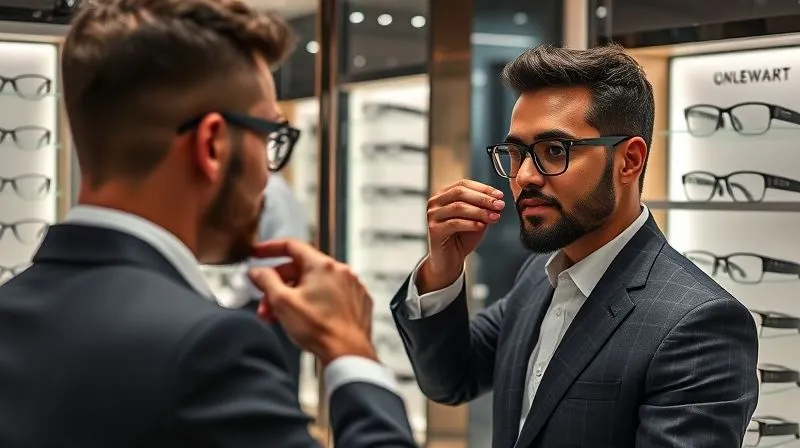
- Try Them On (Virtually or In-Store): Nothing beats seeing frames on your face. Utilize virtual try-on tools or, ideally, visit an optical boutique. Pay attention to how the frames interact with your eyebrows, cheeks, and the overall width of your face.
- Seek Expert Advice: A skilled optician or eyewear stylist is invaluable. They can offer insights on fit, proportionality, and how certain frames align with your professional goals. Don't hesitate to ask for their professional opinion.
- Invest in Quality Lenses: Prioritize anti-reflective coatings, blue light filters, and appropriate vision correction (e.g., progressives). Your comfort and visual clarity are paramount for professional performance.
- Get a Professional Fitting: Once you've purchased your frames, return for a professional adjustment. Even the best frames need fine-tuning to ensure a perfect, comfortable, and stable fit that won't distract you during your workday.
By following these steps, you move beyond guesswork and make an informed, strategic decision that enhances your professional presence.
Avoiding Common Eyewear Pitfalls
Even with the best intentions, professionals can fall into common traps when selecting eyewear. Based on my observations, these are the most frequent mistakes that can detract from an otherwise stellar personal brand:
Ill-fitting Frames
As discussed, frames that constantly slip, pinch, or sit crookedly are a major distraction. They can make you appear fidgety, unprofessional, and can even cause headaches, impacting your focus and performance. Always prioritize a perfect fit, even over a trendy style.
Outdated Styles
While classics are timeless, styles can become dated, inadvertently making you appear less current or innovative. Regularly assess your eyewear to ensure it still reflects a modern, relevant professional image. This doesn't mean chasing every trend, but rather staying current with refined, contemporary designs.
Ignoring Lens Quality
Skimping on lens technology is a false economy. Poor quality lenses, or the absence of crucial coatings like anti-reflective, can lead to eye strain, glare, and a less polished appearance, especially in the digital age. Your vision and comfort are critical assets.
Mismatching with Personal Brand
Wearing frames that contradict your core professional brand message can create confusion. For instance, an aspiring CEO wearing overly playful or flimsy frames might struggle to project the necessary authority. Ensure your eyewear consistently reinforces your desired professional identity.
Frequently Asked Questions (FAQ)
How do I know my face shape? The easiest way is to stand in front of a mirror with your hair pulled back. Use a dry-erase marker or an old lipstick to trace the outline of your face on the mirror. Step back and observe the shape. Common shapes include oval (balanced proportions, gently curving jawline), round (fuller cheeks, rounded chin), square (strong, angular jawline, broad forehead), heart (wide forehead, narrow chin), and diamond (narrow forehead, narrow jaw, wide cheekbones).
Can I wear bold colors in a conservative industry? Absolutely, but with nuance. Instead of a neon green, consider a deep emerald, a rich burgundy, or a sophisticated navy. These 'power colors' can add personality and confidence without being disruptive. The key is saturation and depth of color, and ensuring the frame style itself remains professional. A thinner metal frame in a bold color might be more subtle than a chunky acetate.
Is it worth investing in expensive frames? While 'expensive' is subjective, investing in quality is almost always worthwhile. High-quality frames often use better materials (like titanium or premium acetate), offer superior craftsmanship, and are more durable. They also tend to hold their shape better and are more comfortable. Consider it an investment in your personal brand and daily comfort, similar to investing in a good suit or professional footwear.
Should my glasses match my outfit? Not necessarily 'match' in a literal sense, but they should 'coordinate' or 'complement' your overall look. Think of your eyewear as an accessory, like a watch or a handbag. It should harmonize with your outfit's color palette and formality. Having an eyewear wardrobe allows you to choose a pair that fits the specific occasion and attire.
What's the biggest mistake professionals make with eyewear? The biggest mistake is viewing eyewear purely as a medical device rather than a crucial component of their professional image. This leads to arbitrary choices based solely on price or convenience, rather than strategic choices that align with their personal brand and career aspirations. Eyewear is a powerful, non-verbal communication tool; ignoring its potential is a missed opportunity.
Key Takeaways and Final Thoughts
Selecting eyewear that truly enhances your professional personal brand is an art and a science, a deliberate process that extends far beyond simply choosing a pair of glasses. It's about understanding who you are, what you want to communicate, and how every visual detail contributes to that narrative. By approaching your eyewear selection with intention, you transform a functional necessity into a powerful branding tool.
- Know Your Brand Archetype: Let your core professional identity guide your choices.
- Understand Shape Psychology: Leverage frame shapes to convey authority, approachability, or creativity.
- Master Color & Material: Use color and material to add depth and sophistication.
- Prioritize Fit & Lenses: Comfort, clarity, and advanced lens technology are non-negotiable for professionalism.
- Build an Eyewear Wardrobe: Curate frames for different professional occasions.
- Seek Expert Guidance: Don't hesitate to consult opticians and stylists for personalized advice.
I've seen countless professionals unlock new levels of confidence and perception by simply re-evaluating their eyewear. Your glasses are on your face every day, the first thing people see when they look at you. Make them work for you, not against you. Embrace this opportunity to refine your visual narrative, project your authentic professional brand with clarity, and step forward with unwavering confidence.
Recommended Reading
- 7 Steps to Curate Executive Eyewear for Authority & Impact
- 7 Steps to Authenticate Your Vintage Chanel Flap Bag with Confidence
- The Future of Fashion: How Advanced Materials Will Reshape Clothing Design
- Boost AI Skin Tech Adoption: 7 Strategies for Spa Client Engagement
- Master Last-Minute Costume Alterations: 7 Pro Tips for Actor Changes




Your email address will not be published. Required fields are marked *