

How to rescue a fashion shoot lacking a cohesive visual story?
For over 15 years in the dynamic world of fashion photography, I've witnessed firsthand the exhilaration of a perfectly executed shoot and, conversely, the quiet despair when a project simply “falls flat.” It’s a common pitfall: a team pours their heart into a concept, the models look incredible, the clothes are stunning, but when the images come back, they lack that intangible thread—that cohesive visual story that makes them sing.
The problem is often not a lack of talent or effort, but a breakdown in the narrative arc. Individual shots might be beautiful, but without a compelling story to bind them, they become disparate fragments, failing to communicate a deeper message or evoke a lasting emotion. This can be incredibly frustrating, leaving creatives wondering where they went wrong and how to salvage the extensive investment of time, money, and passion.
But here's the good news: a shoot lacking a cohesive visual story isn't a lost cause. In this definitive guide, I’ll share my battle-tested framework, drawing from years of experience on high-stakes campaigns, to help you diagnose the issues, implement strategic adjustments, and breathe life back into your fashion narrative. You’ll learn actionable steps, discover expert insights, and gain the confidence to transform disjointed images into a powerful, resonant visual tale.
1. Revisiting the Core Concept: Was There One to Begin With?
Often, the first point of failure for a fashion shoot lacking a cohesive visual story is a fuzzy or non-existent core concept. Without a clear narrative compass, every decision—from styling to lighting—becomes arbitrary, resulting in a collection of beautiful but unrelated images.
Deconstructing the Original Brief
My first step is always to go back to basics. What was the initial intention? What message were you trying to convey? Who was the target audience, and what emotion were you hoping to elicit? Sometimes, the brief itself was too vague, or perhaps the team veered off course during execution. It's crucial to identify if the vision was clear from the outset, or if it was simply a collection of attractive ideas without a unifying theme.
The Power of a Strong Mood Board
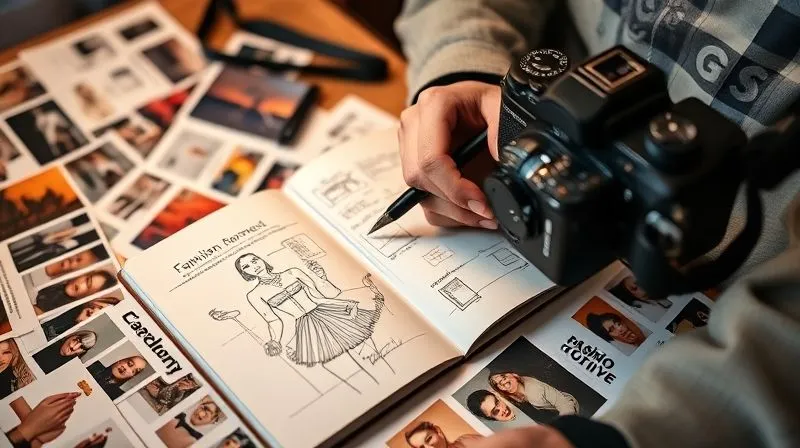
A well-crafted mood board is more than just pretty pictures; it's the blueprint for your visual story. If your original mood board was superficial, or if the team didn't fully commit to its direction, this is where you start your rescue mission. It needs to articulate the aesthetic, the emotional tone, and the narrative flow. It should inspire and guide every creative decision.
- Define Your Narrative Arc: Before collecting images, write a simple story. Who is the character? Where are they? What are they doing or feeling?
- Curate with Intention: Select images, textures, colors, and even words that *directly* support this narrative. Avoid anything that feels “nice to have” but doesn't contribute to the story.
- Include Diverse Elements: Don’t just use fashion images. Incorporate art, cinema stills, architecture, nature, and cultural references that evoke the desired mood and atmosphere.
- Annotate Your Board: Add notes explaining *why* each element is there and how it contributes to the overall story. This helps solidify the concept for everyone involved.
“A cohesive visual story isn't born from random beauty; it emerges from a singular, powerful idea meticulously articulated and consistently applied.” - Forbes on Visual Storytelling

2. Diagnosis: Pinpointing the Narrative Gaps
Once you’ve re-established or clarified your core concept, the next crucial step is to objectively analyze the existing images against this revitalized vision. This isn't about blaming; it's about understanding precisely where the disconnect occurred.
Analyzing Existing Imagery Objectively
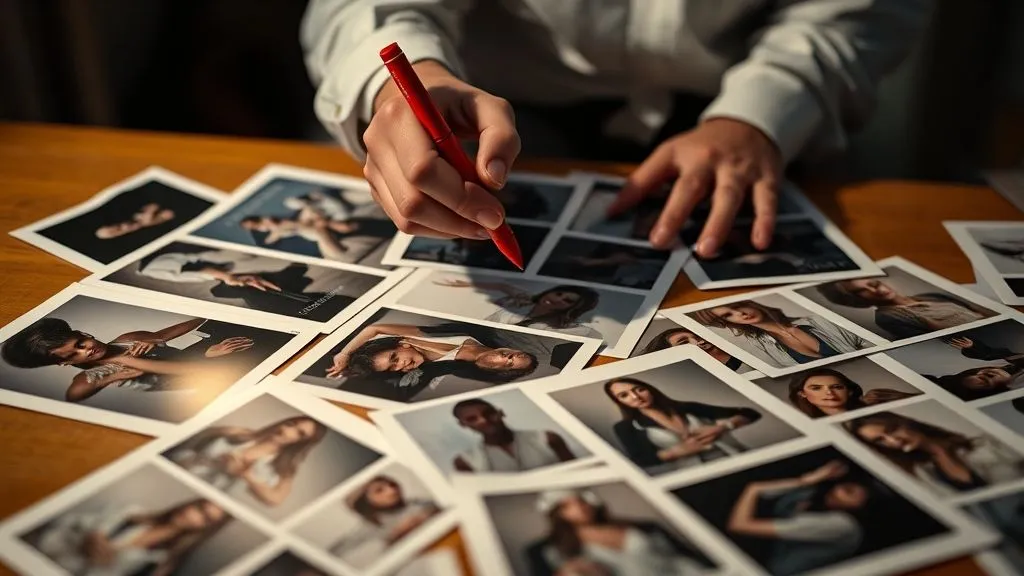
Gather all the raw and edited images from the shoot. I recommend printing them out or viewing them on a large screen, side-by-side. Ask yourself: Does this image contribute to the story? Does it convey the intended emotion? Is the styling consistent? Does the lighting support the mood? Look for patterns of inconsistency in:
- Styling: Are the outfits, accessories, hair, and makeup telling the same story across all shots?
- Location/Set: Does the environment consistently reinforce the narrative, or does it feel random?
- Model Expression/Posing: Is the model embodying the character and emotion consistently?
- Lighting: Does the lighting scheme maintain a consistent mood and atmosphere throughout the series?
- Color Palette: Are the colors harmonious and aligned with the mood board?
Feedback Loops: The Silent Storytellers
Don't conduct this diagnosis in a vacuum. Involve key team members—the stylist, the makeup artist, the creative director—and present them with the clarified concept and the existing images. Encourage honest, constructive feedback. Sometimes, an outside perspective or a fresh pair of eyes can spot inconsistencies that you, being too close to the project, might miss. Use a structured approach to gather feedback, focusing on how each image contributes (or detracts) from the established narrative.
| Image ID | Narrative Fit | Styling Consistency | Emotional Resonance | Suggested Action |
|---|---|---|---|---|
| IMG001 | Low | Inconsistent | Weak | Re-style, re-shoot if possible |
| IMG002 | Medium | Partial | Moderate | Adjust color grade, crop |
| IMG003 | High | Consistent | Strong | Keep as hero shot |
| IMG004 | Low | Inconsistent | Absent | Discard or re-purpose |
3. Strategic Pre-Production Reboot: Planning for Cohesion
With a clear concept and a thorough diagnosis, it's time for a strategic pre-production reboot. This isn't about starting from scratch but meticulously planning the adjustments needed to weave a cohesive narrative, especially if a re-shoot of some elements is necessary.
Refining Location and Set Design for Narrative Depth
The environment is a powerful character in your story. If your current location or set feels generic, consider how to infuse it with more narrative depth. Can you add specific props that hint at the character's personality or the story's context? Can the lighting be manipulated to create a more dramatic or intimate atmosphere? Every element in the frame should serve the story. For instance, a derelict building could represent decay or resilience, depending on how it’s lit and styled.
Styling with Intention: Beyond Just Clothes
Fashion is the protagonist, but styling is its language. Re-evaluate every garment, accessory, and detail against your refined mood board. Does the silhouette speak to the character's journey? Does the fabric evoke the desired texture and mood? It’s not just about what looks good; it’s about what tells the story. A simple change in a shoe or a piece of jewelry can drastically alter the perception of a character or scene. Think about the narrative arc and how the styling might evolve or remain consistent to reflect it.
Casting for Character, Not Just Looks
If you're considering a re-shoot, or even just adding new shots, re-evaluate your casting choices. Is the model capable of embodying the emotion and character demanded by the story? Sometimes, a model is beautiful but lacks the nuanced acting ability to convey a complex narrative. Seek out individuals who don't just wear the clothes but inhabit the role. Their expressions, posture, and gaze are critical tools for storytelling.
“Every detail, from the crease in a fabric to the glint in a model's eye, must be a deliberate stroke in the larger narrative canvas.” - My personal philosophy.
4. Directing with a Story-First Mindset: On Set Adjustments
The moment you step on set, whether it's for a full re-shoot or just a few pick-up shots, your role as the visual storyteller becomes paramount. This is where the concept truly comes to life through your direction.
Communicating the Vision to Your Team
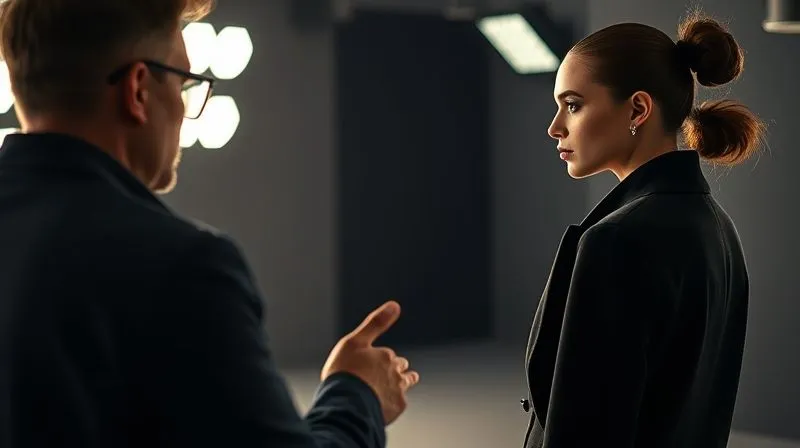
Before any camera clicks, gather your team. Share the revitalized mood board and the specific narrative points you’re now focusing on. Explain *why* certain adjustments are being made. When everyone understands the “why,” they can contribute more effectively. The stylist will dress with more intention, the makeup artist will apply with more emotional nuance, and the model will pose with greater narrative depth. A unified understanding of the story is your most powerful tool.
Posing and Expression: Guiding the Narrative
Instead of merely asking for “strong poses,” guide your model through the story. Ask them to embody specific emotions or actions related to the narrative. “Imagine you've just discovered something profound,” or “You're waiting for a crucial moment,” are far more effective prompts than generic instructions. Focus on their eyes, their hands, their posture—these are the non-verbal cues that convey the story. Encourage improvisation within the narrative framework.
Lighting as a Character: Shaping Emotion
Lighting isn't just about exposure; it's about mood, drama, and atmosphere. Review your lighting setup. Does it enhance the narrative, or does it feel flat and uninspired? Use hard light for drama and intensity, soft light for intimacy and romance, backlighting for mystery, and shadows to create depth and intrigue. Experiment with colored gels to evoke specific emotions. As Adobe's experts often emphasize, light is a fundamental element of visual storytelling.
Case Study: How 'Aria' Found Her Voice
I once worked on a campaign for a luxury fragrance called 'Aria.' The initial shoot produced technically beautiful images, but they lacked soul; the model looked aloof, and the product felt disconnected. We realized the core concept of 'Aria' was about quiet strength and inner discovery, not overt glamour. For the rescue shoot, we completely re-vamped the mood board, focusing on natural light, introspective posing, and a muted color palette. I directed the model to think about moments of deep contemplation, using prompts like “You're reflecting on a profound memory.” We introduced subtle props like a half-written journal and a single, delicate flower. The result was a series of images that conveyed genuine emotion and a powerful, understated narrative, resonating deeply with the target audience and significantly boosting engagement.
5. Leveraging Props and Details for Subtlety
Often, the most compelling stories are told not through grand gestures, but through subtle, intentional details. When a fashion shoot lacks a cohesive visual story, it's frequently because these smaller elements haven't been harnessed effectively.
The Art of Prop Placement
Every prop in your frame should serve a purpose. It should either reinforce the character’s personality, hint at the narrative setting, or add a layer of symbolic meaning. Avoid props that feel arbitrary or distracting. For example, if your story is about a traveler, a vintage suitcase, a worn map, or a passport could be far more effective than a generic decorative vase. Think about the interaction between the model and the prop—does it feel natural and meaningful, or forced?
- Symbolism: Can a prop represent an idea or emotion? (e.g., a wilting flower for fading beauty, a sturdy book for intellect).
- Context: Does the prop place the character in a specific time or place? (e.g., an antique telephone, a futuristic gadget).
- Interaction: How does the model engage with the prop? A touch, a glance, or holding it with purpose can add immense narrative value.
Hair & Makeup: Beyond Aesthetics
Just like styling, hair and makeup are not merely about making the model look good; they are critical tools for character development and storytelling. If your narrative requires a sense of vulnerability, perhaps a more natural, undone look is appropriate. If it's about strength and defiance, a bolder, more structured aesthetic might be needed. Discuss the narrative context with your hair and makeup artists. A subtle tear line, a smudged lip, or a perfectly coiffed but slightly askew hairstyle can convey volumes about the character's emotional state or backstory.
“The smallest detail can be the loudest whisper in your visual narrative. Ignore them at your peril.” - A lesson learned from countless shoots.
6. Post-Production as the Final Storyteller
Even if you've done everything right on set, the story can still be lost in post-production. This phase is not just about making images look “pretty”; it's about refining the narrative, enhancing emotions, and ensuring seamless cohesion across the entire series.
Editing for Flow and Consistency
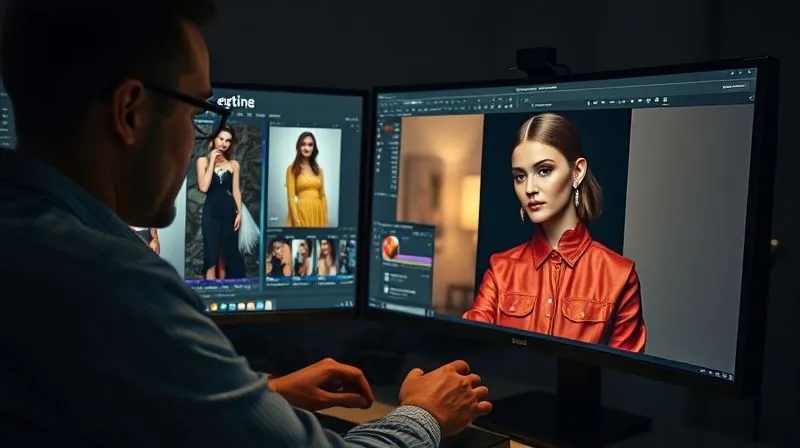
When selecting images, don't just pick the technically perfect ones. Choose those that best advance the story. Look for a natural flow between images—does one shot lead logically to the next? Are there any jarring jumps in mood or visual style? Crop and compose with the narrative in mind, emphasizing elements that contribute to the story and removing distractions. Think about the rhythm and pacing of your visual sequence, much like a film editor would.
Color Grading: Setting the Emotional Tone
Color grading is arguably one of the most powerful tools in post-production for emotional storytelling. A warm, golden hue can evoke nostalgia or joy, while cool blues and grays might suggest melancholy or detachment. Ensure your color palette is consistent across the entire series and aligns with the mood board. Experiment with tones that amplify the emotional weight of your narrative. As color theory experts explain, colors evoke specific psychological responses.
Sequencing and Layout: The Narrative Arc
The order in which your images are presented is critical. Think about a classic story arc: beginning, rising action, climax, falling action, and resolution. Can you arrange your images to follow a similar progression? Consider creating a “visual dummy” or a contact sheet where you can physically move images around to find the most impactful sequence. The layout—how images are paired or grouped—also plays a significant role in how the story is perceived.
7. Building Resilience: Preventing Future Narrative Lapses
Rescuing a shoot is a valuable learning experience, but the ultimate goal is to prevent similar issues in the future. Building resilience in your creative process ensures that every project starts and stays on a cohesive narrative path.
Pre-Mortem Planning: Anticipating Challenges
Before any major shoot, I advocate for a “pre-mortem” session. Imagine the shoot has already happened and failed. What went wrong? What were the potential pitfalls? By anticipating these challenges upfront—be it a lack of clear communication, a weak concept, or insufficient time for styling—you can put preventative measures in place. This proactive approach is far more effective than reacting to problems after they arise.
Continuous Learning and Creative Exploration
The fashion world is ever-evolving, and so too should your approach to storytelling. Stay curious. Study cinema, fine art, literature, and even anthropology to broaden your understanding of narrative structures and human emotion. Attend workshops, read industry publications, and experiment with new techniques. The more diverse your creative toolkit, the better equipped you'll be to craft compelling and original visual stories that truly resonate.
According to a study published by Harvard Business Review on storytelling in business, narratives are far more memorable and impactful than mere facts. This principle applies doubly to fashion photography, where emotion and connection are paramount.
Frequently Asked Questions (FAQ)
Q: What if I don't have the budget for a re-shoot? Are there still options? Absolutely. If a full re-shoot isn't feasible, focus heavily on post-production. Re-evaluate your image selection, crop aggressively to remove distracting elements, use color grading to unify disparate images, and experiment with sequencing to create a new narrative flow. Sometimes, a strong narrative can be crafted from existing fragments with clever editing and a compelling layout. Consider adding text overlays or graphic elements to bridge visual gaps.
Q: How do I get my team on board with a revised concept if they were attached to the original? Transparency and empathy are key. Explain clearly what went wrong and *why* the new direction is necessary. Present the revised mood board and narrative with enthusiasm and conviction. Show them how their individual contributions will be enhanced by the new, cohesive vision. Emphasize that this isn't about discarding their work but elevating it. A collaborative discussion, rather than a directive, often yields better buy-in.
Q: What's the biggest mistake photographers make that leads to a lack of visual story? In my experience, the biggest mistake is focusing solely on individual “pretty shots” without considering how they connect to a larger theme. It’s a common trap to get caught up in the aesthetics of a single frame and lose sight of the overarching narrative. Every choice, from lens selection to model expression, must serve the story, not just the isolated beauty of the moment.
Q: Can a strong product still sell even if the visual story is weak? While a truly exceptional product might find its audience regardless, a weak visual story severely limits its potential. In today's saturated market, consumers connect with brands on an emotional level. A compelling story creates desire, builds brand loyalty, and makes the product memorable. Without it, your product is just another item; with it, it becomes an experience, a dream, a lifestyle.
Q: How do I know if my visual story is truly cohesive? What's the litmus test? The ultimate litmus test is to show your series of images to someone unfamiliar with the project. Ask them: “What story do these images tell you? What emotions do they evoke?” If their interpretation aligns closely with your intended narrative, you’ve likely succeeded. If they perceive a disjointed collection or a different story altogether, then further refinement is needed. It’s about clarity of communication.
Key Takeaways and Final Thoughts
- Re-establish Your Narrative: A strong, clear core concept and mood board are non-negotiable for a cohesive story.
- Diagnose Objectively: Pinpoint inconsistencies in existing imagery against your refreshed vision.
- Plan with Precision: Use pre-production to refine every detail—location, styling, casting—to serve the narrative.
- Direct with Intention: Guide your team and model with story-driven cues, leveraging posing, expression, and lighting.
- Details Matter: Utilize props, hair, and makeup to add subtle layers of meaning to your story.
- Post-Production Unifies: Use editing, color grading, and sequencing to weave a seamless, emotionally resonant narrative.
- Build Resilience: Implement pre-mortem planning and continuous learning to prevent future narrative lapses.
Rescuing a fashion shoot lacking a cohesive visual story is a challenge, but it's also an incredible opportunity for growth and refinement. It forces you to delve deeper into the art of storytelling, to understand the intricate dance between aesthetics and narrative. By applying these proven strategies, you won't just salvage a project; you'll elevate your craft, build stronger creative processes, and ultimately, tell more compelling stories that captivate and inspire. Embrace the challenge, and watch your fashion imagery transform from mere pictures into powerful narratives that truly resonate.
Recommended Reading
- Unlock the Secret: How to Style Oversized Sweaters Without Looking Frumpy?
- The Ultimate Secret: How to Spot Fake Logomania Streetwear Brands Instantly!
- Stop the Slip: 7 Eyewear Accessories Active Users Swear By
- 7 Proven Strategies: Consistently Sourcing Quality Secondhand Apparel
- AI & Greenwashing: 7 Ways to Validate Sustainable Fashion Claims

Your email address will not be published. Required fields are marked *