

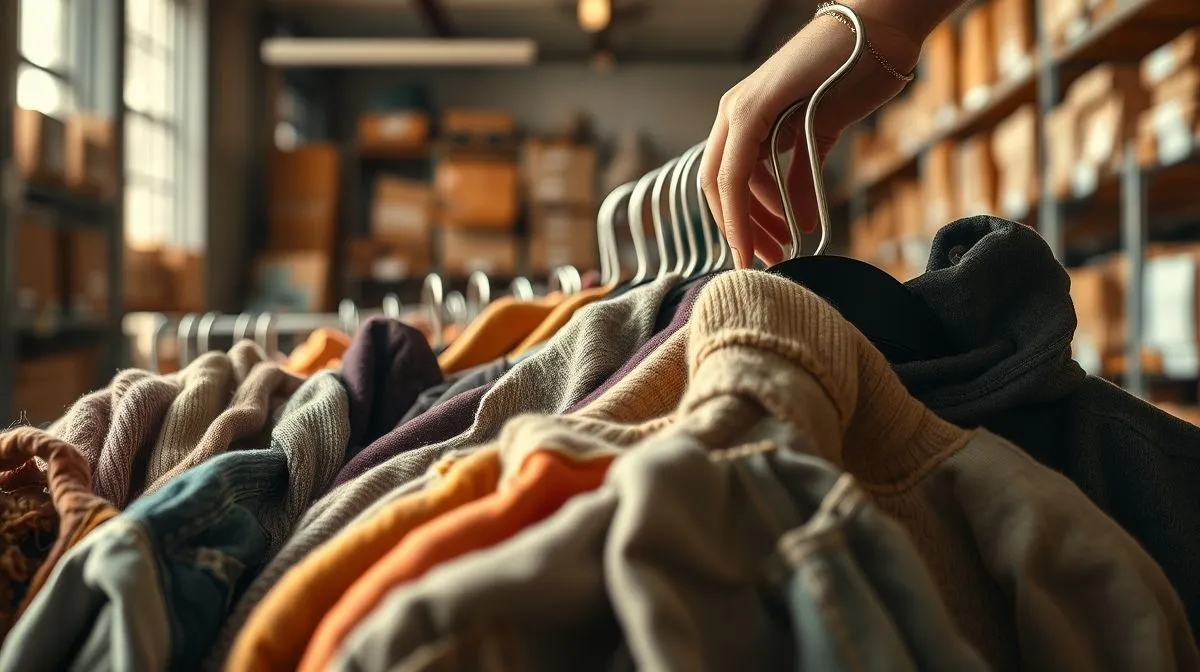
How to Consistently Source Quality Secondhand Apparel Inventory?
For over 15 years in the sustainable fashion sector, I've seen countless promising businesses falter not because of a lack of demand, but due to one fundamental, often overlooked challenge: the inability to consistently source quality secondhand apparel inventory. It's the lifeblood of any successful vintage or pre-owned clothing venture, yet it remains an elusive goal for many.
The pain points are universal: inconsistent quality, unreliable supply chains, the sheer time commitment of hunting for gems, and the constant battle against counterfeits or damaged goods. This isn't just about finding clothes; it's about building a sustainable, scalable business model on a foundation that inherently lacks traditional consistency. It can feel like an endless treasure hunt where the map keeps changing.
In this definitive guide, I will share the frameworks, hard-won insights, and actionable strategies I've developed and witnessed succeed in the industry. You'll learn not just what to do, but how to do it, transforming your sourcing from a chaotic scramble into a predictable, quality-driven operation. We'll dive into diversifying channels, mastering authentication, building robust relationships, and leveraging data to ensure your inventory is not only plentiful but impeccably curated.
Beyond Thrift Stores: Diversifying Your Sourcing Channels
Relying solely on local thrift stores or charity shops is a recipe for inconsistency. While they can yield occasional gems, they rarely offer the volume or predictability needed for a growing business. True success in sourcing quality secondhand apparel inventory lies in casting a wider, more strategic net.
Online Marketplaces & B2B Platforms
The digital age has revolutionized secondhand sourcing. Platforms like ThredUp (for bulk purchases), Poshmark (for individual sellers, though some offer bundles), and specialized B2B vintage wholesalers (e.g., Cream Vintage, LA Vintage) offer scalable options. These platforms often provide initial quality filters and can save significant time. However, due diligence is paramount; always verify seller ratings and review return policies. Consider platforms that specialize in specific aesthetics or eras if your brand has a niche.
Direct-to-Consumer Buyback Programs
This is a powerful strategy for building a unique, high-quality inventory. By offering customers cash or store credit for their gently used garments, you gain direct access to items that meet your brand's specific aesthetic and quality standards. This creates a circular loop with your customer base and often yields higher-end items than traditional donation channels. Promote these programs clearly on your website and social media.
Estate Sales & Auctions
Often overlooked, estate sales and specialized auctions (both online and in-person) can be goldmines for unique, high-quality, and often designer vintage pieces. These venues typically feature well-preserved items from single owners, meaning less wear and tear. Success here requires patience, a keen eye, and a willingness to sometimes invest more upfront. Research local estate sale companies and auction houses, and subscribe to their mailing lists for early notifications.
Textile Recycling & Upcycling Hubs
While often associated with lower-grade textiles, some advanced textile recycling facilities or upcycling hubs sort garments by quality and material. Developing relationships with these centers can provide access to specific fabric types (e.g., pure wool, silk, denim) or items suitable for upcycling, which can be a cornerstone of your brand. This requires more hands-on sorting but offers significant volume potential.
Partnerships with Charity Organizations
Many larger charities receive far more donations than they can process or sell through their retail stores. I've seen successful businesses forge direct partnerships, buying bulk lots of unsorted or partially sorted donations. This can be a win-win: the charity monetizes excess inventory, and you gain access to significant volume. Negotiate fair pricing and clear expectations regarding quality and sorting levels.
Key Insight: Diversification mitigates risk. If one channel dries up or quality dips, you have others to fall back on. It’s about building a resilient, multi-faceted sourcing ecosystem.
The Art of Authentication: Ensuring Quality & Authenticity
Sourcing is one thing; ensuring the quality and authenticity of secondhand apparel is another. This is where your brand's reputation is built or broken. In my experience, a robust authentication and quality control process is non-negotiable.
Developing a Robust Inspection Protocol
Every piece of apparel should undergo a systematic inspection. This isn't just about spotting holes; it's about evaluating the garment's overall condition, fabric integrity, and potential for repair or resale. Here's a basic protocol:
- Initial Visual Scan: Check for obvious flaws, stains, tears, or excessive pilling from a distance.
- Fabric Integrity: Feel the fabric. Is it stretched, brittle, or does it retain its original texture? Check seams for pulling or unraveling.
- Hardware & Closures: Test zippers, buttons, snaps, and buckles. Ensure they are fully functional and securely attached.
- Lining & Pockets: Inspect linings for tears, stains, or damage. Check inside pockets for holes or foreign objects.
- Odor Check: A quick sniff test can reveal mildew, smoke, or strong perfumes that might be difficult to remove.
- Brand & Authenticity Markings: Verify labels, tags, serial numbers, and specific brand hallmarks against known authentic examples. Be aware of common counterfeit indicators.
- Wear Assessment: Note areas of high wear (cuffs, collars, elbows, knees, crotch). Is the wear acceptable for your brand's quality standards?
Leveraging Technology for Authentication
For high-value items, consider investing in technology or services. AI-powered authentication tools (like Entrupy for luxury goods) are emerging, though still limited for general apparel. High-resolution photography is crucial for remote sourcing, allowing you to zoom in on details. Databases of brand hallmarks and historical collections are also invaluable resources for verifying vintage items.
Training Your Sourcing Team
Your team is your first line of defense. Provide comprehensive training on your quality standards, common fabric types, wear indicators, and authentication techniques. Regular refreshers and sharing of new counterfeit methods are essential. Empower them to reject items that don't meet your criteria, even if it means losing a potential sale.
Case Study: Vintage Threads Co.'s Quality Turnaround
Vintage Threads Co., a small online boutique specializing in 80s and 90s sportswear, was struggling with customer returns due to unacknowledged flaws. Their owner, Sarah, implemented the three-step inspection protocol outlined above, creating detailed checklists for each item category. She also invested in training her two part-time sorters, including a workshop with a textile expert. Within three months, their return rate dropped by 40%, customer satisfaction scores soared, and their reputation for curated, high-quality vintage became a key differentiator. This demonstrated that a systematic approach to quality control, even for a small operation, can yield significant results.
"Quality isn't an act, it's a habit. Especially in secondhand, it's the habit that builds unwavering trust with your customers." - Industry Expert Quote
Building Supplier Relationships: Your Sustainable Supply Chain Backbone
Whether you're dealing with individual sellers, bulk wholesalers, or charity partners, your ability to consistently source quality secondhand apparel inventory hinges on strong, respectful relationships. This is not a transactional business; it's a partnership.
Nurturing Trust and Communication
Be transparent about your needs, quality expectations, and payment terms. Communicate regularly, not just when you need new inventory. Share feedback constructively. If an item doesn't meet your standard, explain why, rather than just returning it. Building trust means showing up consistently, paying on time, and being reliable. Harvard Business Review emphasizes that strong relationships are the bedrock of resilient supply chains, a principle that applies even more acutely to the often-informal secondhand market.
Negotiating Fair & Sustainable Terms
Aim for win-win scenarios. For individual sellers, offer competitive prices or attractive store credit. For bulk suppliers, negotiate prices that reflect the quality and volume you're receiving, but also ensure they can operate sustainably. Think long-term; a supplier who feels undervalued will eventually look elsewhere. Consider agreements that include options for consistent deliveries or specific categories of items.
Regular Performance Reviews & Feedback Loops
Just as you would with any business partner, regularly assess your suppliers. Are they consistently meeting your quality standards? Are deliveries timely? Is communication clear? Provide structured feedback. If a supplier is consistently delivering high-quality items, acknowledge it. If there are issues, discuss them early and collaboratively to find solutions. This continuous feedback loop is vital for maintaining high standards.
Data-Driven Sourcing: Predicting Demand & Optimizing Inventory
Gone are the days when sourcing was purely intuitive. To consistently source quality secondhand apparel inventory, you must leverage data. This transforms sourcing from a reactive hunt to a proactive, strategic process.
Analyzing Sales Trends & Customer Preferences
What are your best-selling categories, brands, sizes, and styles? What items sit too long on your shelves? Use your sales data to inform your sourcing decisions. If oversized graphic tees are flying off the shelves, prioritize sourcing them. If vintage blazers are stagnant, reduce your intake. Track customer requests and feedback. This data tells you precisely what quality items your customers are willing to pay for.
Inventory Management Software & Analytics
Implement an inventory management system (even a robust spreadsheet can be a start) to track stock levels, sales velocity, and profit margins per item or category. This allows you to identify what's working and what's not. Look for software that can provide insights into average days to sell, ideal stock levels, and potential overstock situations. This helps prevent costly inventory bloat and ensures you're always sourcing for actual demand.
Forecasting Seasonal & Style Shifts
Fashion is cyclical, even in secondhand. Use historical sales data, fashion trend forecasts (from sources like WGSN or even mainstream fashion publications), and your own intuition to predict seasonal demand. Source winter coats in late summer, and swimwear in early spring. Understanding these cycles allows you to source proactively, ensuring you have the right inventory at the right time, maintaining quality and relevance. According to a McKinsey & Company report on the fashion industry, data analytics is becoming increasingly critical for inventory optimization and market responsiveness.
Actionable Step: Start a simple spreadsheet. List every item you source, its cost, selling price, date listed, and date sold. In a separate tab, track customer requests. Over time, patterns will emerge that will revolutionize your sourcing strategy.
Navigating the Legal & Ethical Landscape of Secondhand Trade
Operating a sustainable fashion business means operating ethically and legally. This is especially true when you consistently source quality secondhand apparel inventory, as it involves unique considerations.
Compliance with Labeling & Resale Laws
Understand local and national laws regarding textile labeling, consumer safety, and resale. This includes fiber content, care instructions, country of origin, and flammability standards. While many secondhand items pre-date strict labeling requirements, it's important to be aware of what's expected for items you sell, especially if you modify or repair them. Always ensure products are clean and safe for the consumer.
Ethical Sourcing & Fair Labor Practices (Even for Secondhand)
Even though you're dealing with pre-owned items, the supply chain behind them still has ethical implications. If you're sourcing from large-scale textile recyclers or overseas bulk suppliers, investigate their labor practices. Are they paying fair wages? Are working conditions safe? Are they genuinely diverting waste or just shipping it overseas for exploitation? This level of due diligence is crucial for maintaining your brand's integrity and truly practicing sustainable fashion. The Ellen MacArthur Foundation provides extensive resources on circular economy principles that extend to ethical considerations.
Battling Counterfeits & IP Infringement
This is a significant risk when you consistently source quality secondhand apparel inventory, particularly designer or luxury items. Implement robust authentication processes (as discussed earlier) to identify fakes. Selling counterfeit goods carries severe legal penalties and can destroy your brand's reputation. Educate yourself and your team on common counterfeit tells for brands you frequently encounter. If in doubt, do not source or sell the item.
Scaling Your Sourcing Operations Responsibly
As your business grows, the challenge of how to consistently source quality secondhand apparel inventory scales with it. Expanding requires strategic planning to maintain quality and efficiency.
Automating Initial Vetting Processes
For large volumes, manual sorting becomes unsustainable. Explore technologies that can assist with initial sorting based on parameters like material type, color, or even basic condition using AI vision. While not perfect, these can streamline the first pass, allowing your human experts to focus on the higher-value authentication and curation.
Expanding Your Sourcing Team & Training
You can't do it all yourself. Hire and train dedicated sourcing specialists. Provide them with clear guidelines, access to resources, and ongoing mentorship. Empower them to make decisions within your quality framework. Decentralizing sourcing responsibilities, while maintaining centralized quality control, is key to scaling.
Implementing Quality Control at Scale
As volume increases, so does the potential for quality issues to slip through. Implement a multi-stage quality control process. This might involve an initial sorting by your sourcing team, followed by a secondary, more detailed inspection by a dedicated QC specialist before items are priced or listed. Random spot checks of processed inventory can also catch systemic issues early. Remember, scaling should never compromise the quality that defines your brand.
Embracing Circularity: Beyond Just Sourcing
As a seasoned industry expert, I want to impress upon you that consistently sourcing quality secondhand apparel inventory is not just about transactions; it's about being a vital part of the circular economy. Your business contributes to reducing waste and extending the life of garments.
Repair, Repurpose, Recycle Initiatives
What happens to the items that don't meet your quality standards, or that you can't sell? A truly sustainable business has a plan. Can they be repaired? Upcycled into new products (e.g., patchwork, tote bags)? Or responsibly recycled through specialized textile recycling programs? Avoid sending items to landfill. This commitment to full circularity enhances your brand's sustainability credentials.
Educating Your Customers
Use your platform to educate your customers about the benefits of secondhand fashion and the journey of the clothes they buy. Share stories about your sourcing process, the quality checks involved, and the environmental impact of choosing pre-owned over new. This transparency builds a deeper connection and reinforces your brand's mission.
Measuring Your Environmental Impact
Track metrics like the number of garments diverted from landfill, water saved, or CO2 emissions avoided by selling secondhand. Many online tools and calculators can help with this. Sharing these impact figures with your audience not only validates your mission but also positions you as a leader in sustainable fashion. This is a powerful differentiator in a crowded market.
Frequently Asked Questions (FAQ)
Question: How do I handle varying quality from different sources, especially when buying in bulk? When dealing with bulk or diverse sources, you must establish clear tiers of quality. Some items will be 'A-grade' (perfect for resale), some 'B-grade' (minor flaws, suitable for repair or discounted sale), and some 'C-grade' (suitable only for upcycling or recycling). Negotiate pricing based on these tiers if possible. For unsorted bulk, budget for a higher percentage of 'B' and 'C' grade items and factor in the labor for detailed sorting. Consistent quality comes from your internal sorting and rejection process, not necessarily from the initial source.
Question: What's the best way to track inventory from diverse sourcing channels? A centralized digital inventory management system is crucial. Assign unique SKUs (Stock Keeping Units) to each item, and include fields for source, acquisition date, cost, condition, and any unique identifiers. If you're sourcing from multiple platforms, consider integrating them or using a system that allows manual input for all channels. Regular audits of your physical stock against your digital records are essential to catch discrepancies.
Question: How can I ensure ethical sourcing in the secondhand market, given its complex nature? Ethical sourcing in secondhand means transparency and due diligence down your supply chain. If buying from large aggregators, ask about their labor practices, waste management, and how they handle items that don't get resold. Visit their facilities if possible. For smaller suppliers, build direct relationships and discuss their practices. While it's harder to trace every single garment's origin, focus on partnering with organizations that demonstrate a commitment to fair treatment of workers and responsible environmental practices in their operations. Avoid sources known for exploitative practices or illegal dumping.
Question: What are the biggest legal pitfalls to avoid when sourcing and reselling secondhand apparel? The primary pitfalls are selling counterfeit goods, misrepresenting item condition (leading to consumer protection issues), and non-compliance with import/export regulations if sourcing internationally. Always ensure you can legally resell items (e.g., not stolen property). Be transparent about item condition. For luxury items, consider third-party authentication. Familiarize yourself with consumer rights laws in your region regarding returns and refunds, as these apply to secondhand sales too.
Question: Is it possible to scale a secondhand apparel business without compromising quality? Absolutely, but it requires a strategic shift. Scaling without compromising quality means investing in robust systems, thorough training for your team, and leveraging technology. It's about moving from individual 'treasure hunting' to building scalable sourcing partnerships and implementing multi-stage quality control protocols. Your brand's reputation for quality should be non-negotiable, even as volume increases. This often means saying 'no' to opportunities that don't meet your standards.
Recommended Reading
- Unlock Your Sparkle: How to Choose Jewelry Trends for Your Personal Style
- Unveiling the Secrets: What Techniques Elevate Haute Couture Craftsmanship?
- Authentic Natural Beauty: 7 Steps to Marketing Without Greenwashing
- The Ultimate Guide: How to Style a Slip Dress for Every Occasion
- Scaling Couture: 7 Pillars to Preserve Uncompromising Atelier Quality
Key Takeaways and Final Thoughts
- Diversify Your Sourcing: Don't rely on a single channel. Explore online platforms, buyback programs, estate sales, and charity partnerships for a resilient supply.
- Master Authentication: Implement rigorous, multi-step inspection protocols for every garment to protect your brand's reputation and ensure customer satisfaction.
- Build Strong Relationships: Nurture trust, communicate openly, and negotiate fair terms with your suppliers; they are your most valuable asset.
- Leverage Data: Use sales trends, customer preferences, and inventory analytics to make informed, proactive sourcing decisions.
- Prioritize Ethics & Compliance: Understand legal obligations and ensure your sourcing practices align with ethical labor and environmental standards.
- Scale Smartly: Invest in automation, team training, and multi-stage quality control to grow without sacrificing the quality your customers expect.
Consistently sourcing quality secondhand apparel inventory is not a mythical quest; it's a strategic discipline. By applying these expert-level frameworks and committing to continuous improvement, you'll transform your sourcing challenges into your greatest competitive advantage. This isn't just about finding clothes; it's about building a robust, ethical, and profitable business that champions the future of fashion. Embrace the journey, and your dedication to quality will resonate with every garment you sell, securing your place as a leader in sustainable style.




Your email address will not be published. Required fields are marked *