

How to Reduce User Drop-Off in Augmented Reality Fashion Try-On?
For over 15 years in the dynamic world of fashion technology, I've had a front-row seat to the industry's most ambitious innovations. Augmented Reality (AR) fashion try-on, in particular, promised to revolutionize how we shop, offering an immersive, convenient experience from the comfort of our homes. Yet, despite its undeniable potential, I've seen countless brands grapple with a persistent, disheartening challenge: high user drop-off rates.
This isn't just about a few lost clicks; it's about significant investment in cutting-edge tech yielding disappointing returns. Users start an AR try-on session, full of excitement, only to abandon it midway, leaving behind a trail of unfulfilled potential and missed sales opportunities. The problem is multifaceted, stemming from technical glitches, poor user experience, or simply a lack of trust in the virtual representation.
In this definitive guide, I'll draw upon my extensive experience to dissect the core reasons behind this user attrition. More importantly, I'll provide you with a framework of seven actionable strategies, enriched with expert insights, real-world analogies, and practical steps, designed to significantly reduce user drop-off in augmented reality fashion try-on and transform your virtual fitting rooms into powerful conversion engines.
Understanding the 'Why': Common Pitfalls in AR Try-On Experiences
Before we can fix a problem, we must understand its roots. In my observations, user drop-off in AR fashion try-on often boils down to a few critical areas where the virtual experience falls short of user expectations or creates unnecessary friction.
Technical Glitches and Performance Issues: Nothing kills enthusiasm faster than a buggy application. Slow loading times, lagging AR overlays, inaccurate tracking of garments on the body, or frequent crashes are immediate deterrents. Users expect a seamless, instantaneous experience, and any deviation can lead to frustration and abandonment.
Lack of Realism and Accuracy: This is perhaps the most significant barrier. If the virtual garment doesn't look realistic – if the fabric texture is wrong, the drape is unnatural, or the fit is clearly off – users lose trust. They question whether the real product will match the virtual one, leading to hesitation and drop-off before purchase. As a recent Deloitte study on AR in retail highlighted, realism is paramount for conversion.
Poor User Experience (UX) and Intuitiveness: Is your AR try-on difficult to use? Are instructions unclear? Do users struggle with camera positioning, garment selection, or customization options? A complex or non-intuitive interface creates a cognitive load that quickly exhausts user patience, pushing them to leave.
1. Prioritize Seamless Technical Performance and Stability
The foundation of a successful AR try-on experience is robust technology. Without it, all other efforts are in vain. I've seen companies invest heavily in marketing only to be undermined by a shaky backend.
- Optimize for Speed and Responsiveness: Users won't wait. Ensure your AR application or web-based solution loads quickly and responds instantly to user input. This means optimizing asset size, leveraging efficient rendering engines, and utilizing content delivery networks (CDNs).
- Ensure Cross-Device Compatibility: Your AR solution must perform consistently across a wide range of devices, operating systems, and browser versions. Test rigorously on different phone models, tablets, and even webcams if applicable.
- Implement Robust Tracking and Calibration: The AR overlay must stick precisely to the user's body as they move. Invest in advanced body tracking algorithms that can handle varying body types, lighting conditions, and movements. Provide clear, simple calibration instructions if necessary.
- Minimize Latency and Jitter: Any delay between user movement and the AR garment's response, or any 'jitter' in the overlay, breaks immersion. Aim for real-time, smooth interaction to maintain user engagement.
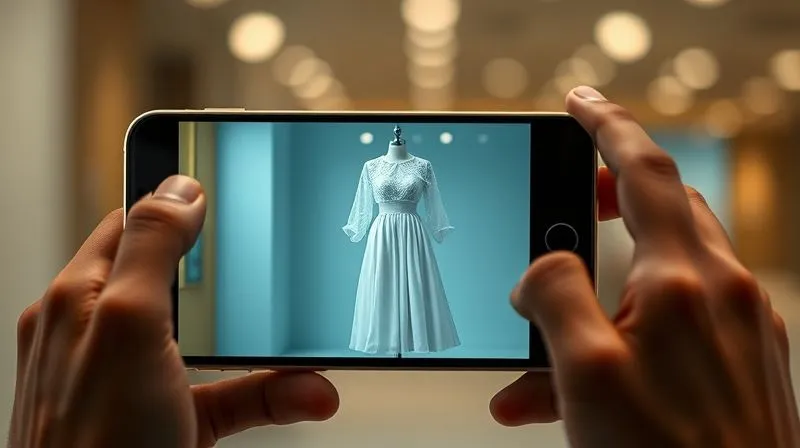
2. Achieve Hyper-Realistic Rendering and Accurate Fit Simulation
This is where the magic happens – or where it falls apart. Users want to see how a garment will truly look and fit on them. The closer you get to reality, the higher the trust and, consequently, the lower the drop-off.
The Pillars of Realism:
- Accurate Material Shaders: Fabric isn't just a color; it has texture, sheen, and drape. Develop or use advanced material shaders that realistically simulate silk, denim, wool, leather, and other fabrics, reflecting light and shadow appropriately.
- Realistic Draping and Physics: Garments should hang and move naturally with the user's body. This requires sophisticated physics engines that simulate gravity, fabric elasticity, and how fabric interacts with the body's contours.
- Precise Sizing and Fit Algorithms: This is paramount. Implement algorithms that can accurately scale and adapt garments to the user's unique body shape and measurements. Consider offering a 'fit prediction' based on user input or even 3D body scans.
- Dynamic Lighting and Shadowing: The virtual garment must integrate seamlessly into the user's real-world environment. This means dynamically adjusting lighting and shadows on the garment to match the ambient lighting captured by the camera.
"In the realm of AR fashion, realism isn't a luxury; it's a necessity for building user trust and converting intent into purchase. If it doesn't look real, it won't feel real, and users will simply disengage." - My personal observation from countless user feedback sessions.
3. Design an Intuitive and Frictionless User Experience (UX)
Even the most advanced technology will fail if it's difficult to use. A well-designed UX guides users effortlessly through the try-on process, reducing frustration and keeping them engaged.
Key UX Principles for AR Try-On:
- Clear Onboarding and Instructions: When a user first accesses the AR try-on, provide simple, visual instructions on how to position themselves, adjust lighting, and interact with the interface. Keep it concise and offer a 'skip' option for repeat users.
- Minimalist Interface Design: Avoid clutter. Place controls logically and make them easily discoverable. Use clear icons and intuitive gestures for garment selection, rotation, and resizing.
- Instant Feedback: As users move or select options, the AR garment should respond immediately. Provide visual cues that confirm their actions, such as a subtle glow around a selected item.
- Guided Pathways: Don't overwhelm users with too many choices at once. Guide them step-by-step from selecting a category to trying on an item, and then to adding it to a cart or saving it.
Case Study: How StyleSense Revolutionized AR Try-On Engagement
StyleSense, a rapidly growing online fashion retailer, faced a staggering 60% drop-off rate within the first 30 seconds of their AR try-on experience. Users were abandoning sessions due to confusing instructions and slow garment loading. By implementing a focused UX overhaul, StyleSense introduced a concise, animated onboarding tutorial (less than 15 seconds) and optimized their asset loading to reduce initial wait times by 40%. They also added a prominent 'Try On' button directly on product pages, streamlining the user journey. Within three months, their AR try-on drop-off rate plummeted to 25%, and conversion rates for AR-enabled products saw a 15% uplift. This demonstrates the profound impact of a thoughtfully designed, user-centric experience.
4. Personalization and Customization: Making it Truly 'Mine'
Users are more likely to commit to an experience that feels tailored to them. Generic models or one-size-fits-all AR solutions often fail to resonate.
- Body Scanning and Avatar Creation: The ultimate personalization. Allow users to scan their body (using smartphone cameras) to create a highly accurate 3D avatar. This avatar then becomes the canvas for all AR try-ons, offering unparalleled fit accuracy.
- Virtual Wardrobe and Styling: Enable users to save tried-on items to a virtual wardrobe. Offer AI-powered styling suggestions based on their body type, existing wardrobe, and stated preferences. This transforms a transactional try-on into a personalized styling session.
- User-Generated Content (UGC) Integration: Encourage users to share their AR try-on photos and videos. This not only provides social proof but also allows users to see how garments look on diverse body types, building community and trust.
5. Leverage Data Analytics to Identify and Address Drop-Off Hotspots
You can't improve what you don't measure. Data is your most powerful ally in understanding user behavior and pinpointing where your AR try-on experience is failing.
- Implement Comprehensive Analytics: Track every step of the user journey within your AR try-on. This includes time spent on each screen, interaction with specific features (e.g., changing colors, rotating garments), error messages encountered, and, critically, the exact point of abandonment.
- Heatmaps and Session Recordings: Tools like heatmaps can show you where users are looking and clicking, while session recordings provide a visual playback of their entire interaction. These qualitative insights are invaluable for understanding 'why' users drop off.
- A/B Testing: Continuously test different versions of your AR interface, onboarding flows, or feature implementations. For example, A/B test two different ways of presenting sizing information to see which reduces drop-off more effectively.
- Funnel Analysis: Map out the expected user flow from discovery to purchase within the AR try-on. Identify bottlenecks and high-exit points in this funnel.
According to Harvard Business Review, data-driven personalization and optimization are key to driving AR adoption and conversion in retail. Ignoring your analytics is like trying to navigate a maze blindfolded.
| Metric Category | KPI | Benchmark (Good) | Target Improvement |
|---|---|---|---|
| Engagement | AR Session Duration | 120+ seconds | +20% |
| Conversion | AR Try-On to Purchase Rate | 5-8% | +2% |
| Friction | Initial Load Time (AR) | <3 seconds | -1 second |
| Friction | Error Rate (Tracking/Rendering) | <0.5% | -0.2% |
6. Nurture Post-Try-On Engagement: The Path to Purchase
The try-on isn't the end goal; it's a step towards purchase. Don't let users leave after a successful virtual fitting without a clear next step. Many brands focus solely on the try-on itself, forgetting the critical period immediately after.
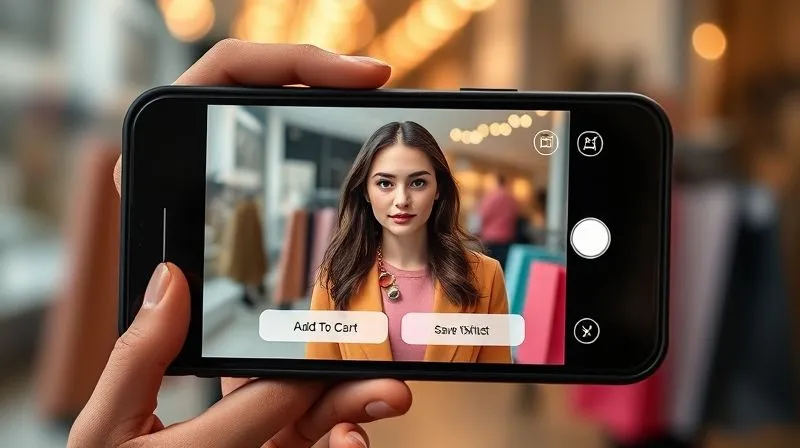
- Seamless Transition to Product Page: After trying on an item, provide a clear, one-click path directly to the product page with the correct size and color pre-selected. Reduce any friction between interest and purchase.
- 'Save Look' and 'Share' Options: Allow users to save their favorite try-on looks to a wishlist or share them with friends and family via social media or messaging apps. This extends the engagement beyond the immediate session and leverages social proof.
- Integrated Virtual Stylist: Offer the option to connect with a virtual stylist who can review their try-on looks, offer advice, and suggest complementary items. This adds a human touch and expert guidance.
- Retargeting Based on AR Interaction: Use data from AR try-on sessions to create highly targeted retargeting campaigns. If a user tried on a specific dress but didn't buy, show them that dress in an ad with a special offer.
7. Build Trust Through Transparency and Realistic Expectations
Sometimes, drop-off occurs because users feel misled or disappointed. Managing expectations is crucial for long-term user retention and satisfaction.
- Clear Disclaimers: While striving for realism, it's wise to include a subtle disclaimer that AR try-on is an approximation. Phrases like "Virtual try-on for illustrative purposes; actual product may vary slightly" can manage expectations without diminishing the experience.
- Showcasing Diverse Models: Complement your AR try-on with traditional product photography on diverse body types. This provides additional context and helps users visualize the garment on different physiques.
- Integrate Customer Reviews and Photos: Displaying reviews and real customer photos on product pages builds immense trust. If users see others happy with their purchases after using AR, they'll be more confident.
- Educate Users on AR Limitations: Briefly explain what AR try-on can and cannot do. For example, it might not perfectly replicate every fabric sheen under all lighting conditions, but it offers a fantastic visual fit.
This approach aligns with the principles of E-E-A-T (Experience, Expertise, Authority, Trust) championed by leading SEO and content guidelines. By being honest and managing expectations, you foster trust, which is the bedrock of any successful customer relationship.
Frequently Asked Questions (FAQ)
Question? Is AR try-on worth the investment for small fashion brands with limited budgets?
Answer: Absolutely, but with a strategic approach. While custom, high-fidelity AR solutions can be costly, there are increasingly accessible web-based AR platforms and SDKs that offer robust functionality at a lower entry point. For small brands, the key is to prioritize the core features that reduce drop-off – realism, performance, and intuitive UX – rather than chasing every cutting-edge novelty. A well-executed basic AR try-on can significantly outperform a buggy, feature-rich one. The ROI often comes from reduced returns, increased conversion rates, and enhanced brand perception, which can be even more critical for smaller players vying for market share. Starting small, learning from data, and iterating is a viable strategy.
Question? How accurate can AR try-on truly be in terms of fit and material representation?
Answer: Modern AR try-on technology has come incredibly far. With advanced 3D modeling, physically-based rendering (PBR), and sophisticated body-tracking algorithms, we can achieve remarkable levels of accuracy. Fit prediction, especially with user-provided measurements or even basic body scans via phone cameras, is becoming highly reliable. Material representation, while still challenging to perfect for every single fabric type, can now simulate drape, texture, and light reflection with impressive realism for many common materials. However, it's important to remember that it's a simulation. While it gets very close, it's not a 100% replacement for physical interaction, but it's an excellent, confidence-building approximation. Continuous R&D in areas like haptic feedback and even more precise body scanning will push these boundaries further.
Question? What are the biggest technical hurdles brands face when implementing AR fashion try-on?
Answer: The primary technical hurdles revolve around computational power, data accuracy, and integration complexity. Firstly, real-time, high-fidelity AR rendering and body tracking require significant processing power, which can be a challenge on older or lower-end mobile devices. Secondly, creating accurate 3D models of every garment, complete with realistic textures and physics, is a labor-intensive and specialized task. Maintaining consistency across thousands of SKUs is a huge undertaking. Lastly, seamlessly integrating the AR solution with existing e-commerce platforms, inventory management systems, and customer databases can be complex, requiring robust APIs and development expertise. Overcoming these often requires a strong technical team or a reliable AR tech partner.
Question? How do you measure success beyond just reducing drop-off rates?
Answer: While reducing drop-off is crucial, true success in AR fashion try-on is multi-dimensional. Key metrics include: Conversion Rate for AR-enabled Products (do users who try on via AR buy more often?), Average Order Value (AOV) (do they buy more expensive items or more items per order?), Return Rates (does AR reduce product returns due to better fit expectation?), User Engagement Metrics (session duration, number of items tried on per session, feature usage), Brand Perception and Customer Satisfaction (surveys, reviews), and ultimately, Lifetime Customer Value (LCV). A holistic view helps understand the full impact of your AR investment on the business.
Question? Can augmented reality try-on fully replace the need for physical fitting rooms?
Answer: In my professional opinion, AR try-on will significantly reduce the reliance on physical fitting rooms and will become the dominant method for initial product evaluation, but it's unlikely to fully replace them entirely in the foreseeable future. There's an undeniable tactile and sensory experience that physical try-on provides – the feel of the fabric, the precise drape, the way it moves with your body in a physical space – that AR cannot yet replicate perfectly. However, AR is excellent for filtering choices, confirming visual appeal, and even getting a good sense of fit. It acts as a powerful pre-screening tool, making physical try-ons more efficient and purposeful, or eliminating the need for them altogether for many purchases. It complements, rather than completely replaces, the traditional retail experience.
Key Takeaways and Final Thoughts
- Technical Excellence is Non-Negotiable: A smooth, fast, and stable AR experience is the absolute bedrock for retaining users.
- Realism Builds Trust: Invest in hyper-realistic rendering, accurate material simulation, and precise fit algorithms to bridge the digital-physical gap.
- User Experience is King: An intuitive, guided, and frictionless interface will keep users engaged and prevent frustration.
- Personalization Drives Engagement: Tailoring the experience to individual users, whether through body scans or virtual styling, fosters a deeper connection.
- Data is Your Compass: Leverage analytics to pinpoint drop-off hotspots and continuously optimize your AR try-on journey.
- Nurture the Post-Try-On Path: Provide clear calls to action and seamless transitions to purchase or further engagement.
- Transparency Fosters Loyalty: Manage expectations realistically and build trust through honest communication and supplementary visual aids.
The journey to mastering augmented reality fashion try-on is an iterative one, demanding continuous innovation, meticulous data analysis, and an unwavering focus on the user. By embracing these strategies, you're not just reducing drop-off; you're cultivating a richer, more engaging, and ultimately more profitable shopping experience. The future of fashion retail is undoubtedly immersive, and by addressing these critical challenges, you'll ensure your brand is not just participating in that future, but leading it.
Recommended Reading
- 7 Creative Strategies: How to Make Fashion Styling Concepts Stand Out
- 7 Ways to Master Dress Shoe Comfort Without Sacrificing Style
- 5 Pro Strategies: Elevating Streetwear for Professional Meetings, No Casual Slip-Ups?
- Mastering Bulk Bridesmaid Orders: 7 Strategies for Diverse Body Types
- 6 Steps: Raw Fashion Sales Data to Actionable Design Insights



Your email address will not be published. Required fields are marked *