


How to turn raw fashion sales data into actionable design insights?
For over 15 years in the fashion technology space, I've witnessed countless brands, from emerging labels to established giants, grapple with a common, debilitating challenge: a deluge of raw sales data that, paradoxically, yields minimal actionable intelligence for their design teams. It's like having a treasure map written in an unknown language – you know the riches are there, but you lack the Rosetta Stone to decipher them.
The problem is often not a lack of data, but a lack of a structured, intelligent approach to transform that data into meaningful, design-centric insights. Brands collect everything from sales figures by SKU, color, and size, to regional performance and seasonal trends, yet this wealth of information often remains siloed, overwhelming, and ultimately, underutilized by the very people who need it most: the designers.
In this definitive guide, I'll share my proven frameworks and expert insights on how to turn raw fashion sales data into actionable design insights. We'll move beyond mere reporting to uncover the 'why' behind the 'what,' equipping you with the strategies to empower your design team to create collections that resonate deeply with your customers and drive unprecedented success.
The Foundation: Understanding Your Data Landscape
Before we can extract gold, we must first understand the mine. The initial, critical step in transforming raw sales data into design insights is to map out your entire data landscape. This isn't just about looking at transaction logs; it's about understanding the ecosystem of information that surrounds your product.
Identifying Key Data Sources
In my experience, a holistic view requires integrating data from various touchpoints. While sales transactions are paramount, they tell only part of the story. Consider these essential sources:
- Point of Sale (POS) Systems: The bedrock of your sales data, providing SKU-level detail, purchase dates, prices, and sometimes customer identifiers.
- E-commerce Analytics: Website traffic, conversion rates, abandoned carts, product views, search queries – these reveal critical customer intent and interest.
- Customer Relationship Management (CRM): Demographics, purchase history, loyalty program engagement, and direct feedback can paint a richer picture of your customer segments.
- Social Media & Engagement Metrics: Mentions, shares, comments, and engagement with specific product posts can hint at emerging trends or product sentiment.
- Inventory Management Systems: Stock levels, sell-through rates, and markdown data are crucial for understanding product performance and demand.
- Customer Feedback & Returns Data: Surveys, reviews, and the reasons for returns offer direct qualitative insights into product satisfaction and design flaws.
Data Cleaning and Preparation: The Unsung Hero
I cannot stress enough the importance of clean, consistent data. Garbage in, garbage out, as the adage goes. Raw data is often messy – inconsistent naming conventions, missing values, duplicate entries, or incorrect categorizations can severely skew your analysis. This is where many companies stumble, leading to flawed insights and misguided design decisions.
- Standardize Data Formats: Ensure all data, especially product attributes like color, size, and material, adhere to a uniform nomenclature across all systems.
- Identify and Handle Missing Values: Decide on a strategy for incomplete records – imputation, exclusion, or flagging – based on the impact on your analysis.
- Remove Duplicates and Inconsistencies: Implement routines to identify and eliminate redundant entries or conflicting information.
- Categorize and Tag Effectively: Create a robust tagging system for product attributes (e.g., 'A-line dress,' 'midi skirt,' 'crew neck sweater'). This allows for granular analysis.
- Validate Data Accuracy: Regularly cross-reference data points with source systems to ensure their integrity.
From Raw Numbers to Visual Stories: The Power of Visualization
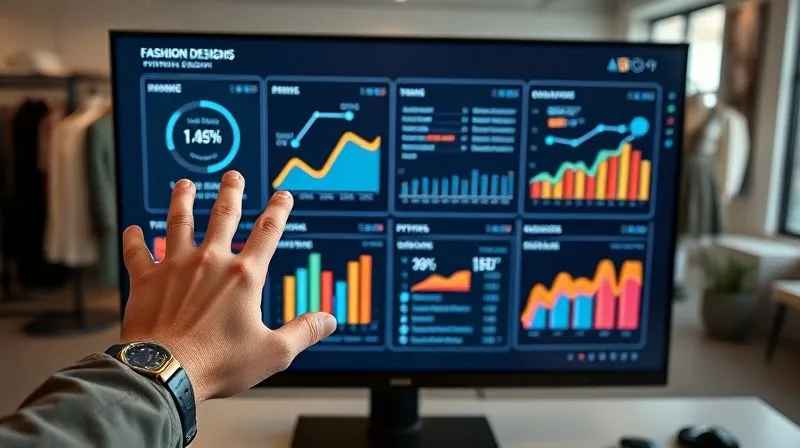
Once your data is clean and integrated, the next step is to make it comprehensible. Raw numbers, even perfectly clean ones, rarely spark design inspiration. This is where data visualization becomes an indispensable tool. It transforms complex datasets into intuitive, visual stories that reveal patterns, trends, and anomalies at a glance.
Choosing the Right Visualization Tools
Selecting the appropriate tools is crucial for effective visualization. For fashion analytics, I recommend platforms that offer flexibility and robust reporting capabilities:
- Business Intelligence (BI) Dashboards: Tools like Tableau, Power BI, or Looker Studio (formerly Google Data Studio) allow you to create interactive dashboards that consolidate key metrics and trends.
- Specialized Fashion Analytics Platforms: Some platforms are built specifically for retail and fashion, offering pre-built templates and industry-specific metrics.
- Advanced Spreadsheet Software: For smaller operations or initial exploratory analysis, Excel or Google Sheets with advanced charting features can be surprisingly powerful.
Visualizing Sales Trends for Design Cues
The goal here is to visualize data in a way that directly informs design decisions. Think about what a designer needs to know:
- Seasonal Performance: Line charts showing sales over time for different product categories can highlight seasonal peaks and troughs, informing future collection drops.
- Color Popularity: Bar charts or treemaps illustrating the sales volume by color can reveal dominant shades and emerging preferences.
- Silhouette and Fit Demand: Pie charts or stacked bar charts showing sales distribution across different garment types (e.g., A-line vs. bodycon, slim-fit vs. relaxed) offer direct silhouette insights.
- Material Preference: Visualizing sales by fabric type (e.g., cotton, linen, silk, synthetic blends) can guide material sourcing.
- Regional Differences: Map visualizations highlighting product performance by geographic region can inform localized design adaptations.
Consider this example of how a fashion brand might summarize key sales data for design review:
| Category | Top Selling Color | Top Selling Silhouette | Seasonal Peak | Growth YOY |
|---|---|---|---|---|
| Dresses | Emerald Green | A-Line | Spring | +18% |
| Tops | Terracotta | Oversized Blouse | Fall | +12% |
| Skirts | Navy Blue | Midi Pleated | Summer | +25% |
| Outerwear | Charcoal Grey | Trench Coat | Winter | +7% |
Deep Dive: Extracting Granular Design Insights
While high-level trends are useful, true design innovation often stems from granular insights. This is where we dissect the data to understand the nuances that drive consumer choices. It's about moving beyond 'what' sold to 'why' it sold, and 'who' bought it.
SKU-Level Performance Analysis
Every SKU tells a story. Analyzing individual product performance allows you to identify specific design elements that resonate (or don't) with your customers. I advise focusing on:
- Top Performers: What specific features (e.g., a unique collar, a particular print, a functional detail) are common among your best-selling items?
- Underperformers: What attributes do your slow-moving or heavily discounted items share? This can highlight design elements to avoid or refine.
- Price Point Elasticity: How do sales volumes change across different price tiers for similar products? This informs material choices and manufacturing costs.
Customer Segmentation and Preference Mapping
Not all customers are created equal, and their design preferences vary wildly. By segmenting your customer base based on demographics, purchase behavior, and lifestyle, you can tailor design strategies:
- Demographic Segmentation: Analyze sales data by age, gender, location, and income to understand how different groups respond to your designs.
- Behavioral Segmentation: Group customers by purchase frequency, average order value, preferred product categories, or brand loyalty.
- Psychographic Segmentation: While harder to quantify directly from sales data, integrating survey data or social listening can reveal lifestyle, values, and attitudes that influence design choices.
- Map Preferences: Once segments are defined, map their preferred colors, silhouettes, fabrics, and styles. This can reveal distinct design opportunities for each segment.
Identifying Gaps and Opportunities
Often, the most valuable insights come from what isn't selling, or what customers are looking for but can't find. This requires a keen eye for unmet demand. Look for:
- Search Term Analysis: What are customers searching for on your website that doesn't yield relevant results? This indicates a potential product gap.
- Customer Feedback & Wishlists: Direct requests for specific items, colors, or styles.
- Competitor Analysis: What are your competitors selling successfully that you aren't? How can you differentiate your offering?
Case Study: How 'Elegance Apparel' Refined Their Spring Collection
Elegance Apparel, a mid-sized women's wear brand, faced declining sales in their Spring collections despite strong performance in other seasons. Their raw sales data showed consistent underperformance of floral prints and pastel colors, which were staples of their Spring line. By implementing a granular data analysis strategy, they discovered something profound.
Their SKU-level analysis revealed that while traditional florals struggled, abstract botanical prints in bolder, jewel tones actually performed well, particularly among their younger customer segment (25-34). Customer feedback indicated a desire for 'sophisticated vibrancy' rather than 'sweet pastels' for Spring. They also noticed a consistent search for 'lightweight professional blazers' that they didn't offer.
Acting on this, Elegance Apparel redesigned their next Spring collection. They introduced abstract botanical prints in a refreshed color palette of emerald, sapphire, and ruby. They also launched a new line of unlined, tailored blazers in breathable fabrics. The result? Their Spring collection sales surged by 28% year-over-year, and their customer satisfaction scores for the season saw a significant uplift, demonstrating the direct impact of data-driven design.
My Expert Insight: The true power of fashion analytics lies not just in identifying what sold well, but in understanding the underlying preferences and unmet needs that can only be uncovered through a meticulous, granular examination of your data. This is where hypotheses are formed, and true innovation begins.
Predictive Analytics: Forecasting Future Fashion
In the fast-paced world of fashion, looking backward is only part of the equation. To truly stay ahead, brands must leverage data to anticipate future trends. This is where predictive analytics comes into play, transforming historical sales data into forward-looking forecasts for design.
Leveraging Historical Data for Trend Prediction
Predictive models use past sales patterns to project future demand. This involves sophisticated statistical analysis and often machine learning algorithms. Key aspects to consider include:
- Time Series Analysis: Analyzing sales data over extended periods to identify recurring cycles, seasonality, and long-term growth or decline.
- Regression Models: Identifying relationships between sales and various design attributes (e.g., how a particular fabric blend correlates with sales volume).
- Machine Learning Algorithms: Utilizing algorithms like neural networks or random forests to identify complex, non-linear patterns in vast datasets that human analysts might miss. These can predict the likelihood of a certain design element's success.
The Role of External Factors
Fashion is not created in a vacuum. External factors significantly influence trends and demand. Integrating these into your predictive models offers a more robust forecast:
- Cultural and Social Trends: Shifts in societal values, celebrity influence, and pop culture can rapidly accelerate or decelerate certain styles.
- Economic Indicators: Consumer spending habits are directly tied to economic health. Understanding these can help predict demand for luxury vs. affordable lines.
- Environmental Factors: Weather patterns (especially long-term shifts) can impact demand for seasonal wear.
- News and Events: Major global events can shift consumer focus and spending.

Translating Insights into Actionable Design Directives
Having brilliant insights is one thing; translating them into tangible, actionable design directives is another. This is the bridge between data scientists and creative designers, a crucial collaboration that often requires careful facilitation.
Iterative Design Based on Feedback Loops
I advocate for an agile, iterative design process informed by continuous data feedback. This minimizes risk and maximizes relevance:
- Rapid Prototyping: Create quick, low-cost prototypes based on initial data insights.
- Small-Batch Testing: Launch limited quantities of new designs in specific markets or online to gather real-world sales data and customer feedback.
- A/B Testing: For e-commerce, test different product images, descriptions, or even minor design variations (e.g., button style) to see which performs better.
- Analyze and Refine: Use the data from these tests to refine designs before a full-scale launch. This continuous feedback loop ensures designs are always aligned with market demand.
Collaborating with Design and Merchandising Teams
The biggest challenge I've observed is the communication gap between data analysts and creative teams. Designers often speak in terms of aesthetics and emotion, while analysts speak in numbers and probabilities. Bridging this gap is paramount.
- Visual Storytelling: Present data insights not just as charts, but as compelling narratives that designers can understand and relate to. Show them the 'customer' behind the numbers.
- Joint Workshops: Facilitate workshops where data analysts present findings and designers brainstorm creative solutions together. This fosters a shared understanding.
- Design Briefs: Translate data insights into clear, concise design briefs that outline key requirements, target customer segments, and desired emotional impact.
- Feedback Mechanisms: Establish clear channels for designers to ask questions, challenge assumptions, and provide their creative interpretation of the data.
As Harvard Business Review often emphasizes, data-driven design isn't about replacing creativity but enhancing it by providing a deeper understanding of the customer.
Measuring Impact and Refining Your Approach
The work doesn't stop once insights are translated into new designs. To truly master the art of data-driven design, you must continuously measure the impact of your decisions and refine your analytical approach.
Key Performance Indicators (KPIs) for Design Success
Defining clear KPIs allows you to quantify the success of your data-informed designs. Beyond overall sales, consider these design-specific metrics:
- Sell-Through Rate: The percentage of inventory sold compared to the amount received. High sell-through indicates strong design appeal and accurate demand forecasting.
- Full-Price Sell-Through: The percentage of items sold at their original price, indicating strong initial demand without markdowns.
- Return Rates by SKU: High return rates for specific designs can signal issues with fit, quality, or unmet customer expectations.
- Customer Satisfaction (CSAT) Scores: Surveys or reviews directly related to product design and comfort.
- Average Unit Retail (AUR): The average price at which a product is sold, reflecting its perceived value and market acceptance.
- Customer Lifetime Value (CLV): Do data-driven designs lead to more loyal, repeat customers?
Continuous Learning and Adaptation
The fashion industry is incredibly dynamic. What worked yesterday might not work tomorrow. Therefore, your approach to fashion analytics must be one of continuous learning and adaptation.
- Regular Review Cycles: Schedule regular meetings to review design KPIs, analyze new sales data, and discuss emerging trends.
- Post-Mortem Analysis: Conduct thorough reviews after each collection launch to understand what succeeded and what didn't, feeding these learnings back into the next design cycle.
- Stay Updated: Keep abreast of new analytical tools, methodologies, and industry reports. As Deloitte's annual fashion industry reports consistently show, innovation in analytics is key to competitive advantage.
An example of how a brand might track their design KPIs:
| KPI | Target | Actual (Q1) | Actual (Q2) | Trend |
|---|---|---|---|---|
| Sell-Through Rate | 70% | 68% | 75% | Improving |
| Full-Price Sell-Through | 55% | 50% | 60% | Improving |
| Return Rate (Dresses) | 10% | 12% | 9% | Decreasing |
| Customer Satisfaction (Product) | 4.2/5 | 4.0/5 | 4.3/5 | Improving |
Overcoming Common Pitfalls: My Expert Advice
While the journey to data-driven design is rewarding, it's not without its challenges. Based on my years in the field, I've identified a few common pitfalls that brands often encounter, and I want to equip you with strategies to navigate them.
Avoiding Analysis Paralysis
The sheer volume of data available today can be overwhelming, leading to 'analysis paralysis' – endless data crunching without making any decisions. The key is to remember the objective: actionable insights, not perfect data. Start small, focus on key questions, and iterate.
- Define Clear Objectives: Before diving into data, ask: What specific design question are we trying to answer? (e.g., 'What color palette will resonate for Fall 2024?')
- Prioritize Metrics: Identify the 3-5 most critical metrics that will directly inform your design decision and focus your analysis there.
- Set Deadlines for Insight Generation: Force yourself and your team to synthesize findings and make recommendations within a defined timeframe, even if the data isn't 'perfect.'
The Human Element: Blending Data with Intuition
Perhaps the most insidious pitfall is the belief that data can replace human creativity and intuition. This is a dangerous misconception. Data provides the 'what' and often the 'why,' but the 'how' – the creative interpretation and innovative leap – still belongs to the designer.
My Expert Insight: Data should serve as a compass, guiding the creative journey, not a rigid blueprint. The most successful fashion brands combine robust analytics with the unparalleled human ability to anticipate cultural shifts, understand emotional resonance, and create something truly novel. As Forbes often highlights, the blend of art and science is where true innovation happens.
Encourage your design team to use data as a starting point, a source of inspiration and validation, rather than a constraint. It should inform their vision, not dictate it entirely. The best designs emerge when data points to a direction, and a talented designer translates that direction into a captivating reality.
Frequently Asked Questions (FAQ)
What's the biggest challenge in turning raw sales data into design insights? In my experience, the biggest challenge is often the lack of a standardized, integrated data infrastructure and the subsequent 'translation layer' between data analysts and designers. Data silos prevent a holistic view, and without clear communication, even the best insights can remain unapplied. Investing in data governance and cross-functional training is crucial.
How can a small fashion brand with limited resources start with fashion analytics? Small brands should start simply. Focus on your primary sales channels (e.g., e-commerce platform analytics, POS data). Utilize affordable tools like Google Analytics, basic Excel analysis, and direct customer feedback. Prioritize understanding your best-selling SKUs, key customer demographics, and common return reasons. Even these basic insights can significantly inform design decisions without a huge investment.
How often should sales data be analyzed for design insights? The frequency depends on your product cycle and market volatility. For fast fashion, weekly or bi-weekly analysis might be necessary. For seasonal collections, monthly deep dives followed by continuous monitoring are more appropriate. The key is to establish a regular cadence that allows you to react to trends and performance without getting bogged down.
Can AI replace human designers in a data-driven fashion future? Absolutely not. While AI can analyze vast datasets, predict trends, and even generate design variations based on parameters, it lacks true creativity, emotional intelligence, and the ability to anticipate abstract cultural shifts. AI is a powerful tool for augmentation, providing designers with unparalleled insights and automating tedious tasks, but the final creative vision and human connection will always remain with the designer.
How do we ensure data privacy and ethical considerations when analyzing customer sales data? This is paramount. Always anonymize and aggregate customer data where possible. Adhere strictly to regulations like GDPR and CCPA. Be transparent with customers about how their data is used (e.g., for 'improving product offerings'). Focus on behavioral patterns and aggregate trends rather than individual customer profiling for design insights. Ethical data handling builds trust and is fundamental to long-term brand success.
Key Takeaways and Final Thoughts
Transforming raw fashion sales data into actionable design insights is no longer a luxury; it's a strategic imperative for any brand aiming to thrive in today's competitive and rapidly evolving market. It's a journey that demands a blend of analytical rigor, creative intuition, and cross-functional collaboration.
- Start with a Clean Foundation: Invest in data quality and integration across all your sales and customer touchpoints.
- Visualize for Clarity: Use powerful visualization tools to turn numbers into compelling stories that resonate with your design teams.
- Go Granular: Dive deep into SKU-level performance and customer segments to uncover specific design preferences and unmet needs.
- Embrace Predictive Analytics: Leverage historical data and external factors to forecast future trends and stay ahead of the curve.
- Bridge the Gap: Foster strong collaboration between data analysts and designers, ensuring insights are translated into actionable, creative directives.
- Measure and Refine: Continuously track design-specific KPIs and adapt your analytical approach to the dynamic nature of fashion.
Remember, data is your compass. It points the way, reveals hidden paths, and warns of potential pitfalls. But it's your designers, empowered by these insights, who will ultimately craft the beautiful, desirable collections that truly capture the hearts and wallets of your customers. Embrace this powerful synergy, and you'll not only survive but truly flourish in the fashion landscape of tomorrow. For more on the future of fashion tech, explore leading industry insights like those from McKinsey's State of Fashion reports.
Recommended Reading
- 7 Ways to Revitalize Traditional Wedding Dresses for Millennials
- 5 Rapid Fixes for Razor Burn Before Your Big Client Meeting
- 7 Steps to Earn Consumer Trust in New Cosmetic Innovations
- The Hidden Dangers: What Are the Privacy Risks of Fashion Wearables?
- Bespoke Jewelry Design: Your Ultimate Guide to Getting Started




Your email address will not be published. Required fields are marked *