


How to Reduce Fashion Supply Chain Carbon Footprint with AI?
For over two decades in fashion technology and supply chain optimization, I've witnessed the industry grapple with a monumental challenge: its environmental impact. From the fields where raw materials are harvested to the bustling ports and consumer closets, every stitch and shipment leaves a mark. I've seen countless initiatives launched, some with good intentions, others falling short due to the sheer complexity and scale of the global fashion supply chain.
The problem is stark. The fashion industry is a significant contributor to global carbon emissions, water pollution, and waste. The intricate web of suppliers, manufacturers, logistics providers, and retailers makes it incredibly difficult to pinpoint emission hotspots, let alone implement effective reduction strategies. Brands face immense pressure from conscious consumers, stringent regulations, and investors who demand genuine sustainability, not just greenwashing. This isn't just an environmental issue; it's a business imperative that affects brand reputation, operational costs, and future viability.
But amidst this complexity, a powerful ally has emerged: Artificial Intelligence (AI). In this definitive guide, I will share my expert insights and practical frameworks on how AI can fundamentally transform the fashion supply chain, offering unprecedented visibility, optimization, and actionable pathways to dramatically reduce its carbon footprint. We'll explore specific AI applications, delve into real-world (albeit fictionalized) case studies, and equip you with the knowledge to navigate this critical shift towards a greener, more intelligent fashion future.
The Unseen Burden: Understanding Fashion's Carbon Footprint
Before we can tackle the solution, we must truly understand the problem. The fashion industry's carbon footprint is not a monolithic entity; it's a sprawling beast with emissions occurring at every stage of the product lifecycle. When we talk about carbon, we often refer to Scope 1, 2, and 3 emissions. For fashion, Scope 3 emissions—those indirect emissions that occur in a company's value chain, both upstream and downstream—are overwhelmingly the largest contributor, often accounting for over 90% of a brand's total footprint. This is where the supply chain lives.
Consider the journey of a simple cotton t-shirt: cultivation, ginning, spinning, weaving, dyeing, cutting, sewing, packaging, shipping across continents, warehousing, retail, and finally, its eventual disposal or recycling. Each step consumes energy, often from fossil fuels, and generates emissions. Raw material extraction, manufacturing processes (especially wet processing like dyeing), and global logistics are particularly carbon-intensive. The lack of transparency and fragmented data across this global network makes accurate measurement and targeted intervention incredibly challenging.
The sheer volume of production exacerbates the issue. Fast fashion models, driven by rapid trend cycles and low prices, encourage overproduction and frequent disposal, creating a vicious cycle of resource depletion and waste. According to a McKinsey report on fashion sustainability, the industry needs to cut its emissions significantly by 2030 to align with global climate targets. This isn't a minor tweak; it requires a systemic overhaul, and that's precisely where AI steps in as a critical enabler.
"The fashion industry is at a crossroads. Incremental changes are no longer sufficient. We need revolutionary tools and a fundamental shift in how we design, produce, and distribute garments to meet our climate obligations. AI offers that revolutionary potential."
For more detailed insights into the industry's environmental impact, I highly recommend reviewing reports from organizations like McKinsey & Company or the Pulse of the Fashion Industry report.
AI as the Navigator: Precision Demand Forecasting & Inventory Optimization
One of the most significant sources of waste and emissions in fashion is overproduction. Traditional demand forecasting relies on historical sales data, often failing to account for rapid shifts in trends, economic factors, social media influence, and even local weather patterns. This leads to excess inventory, which then requires warehousing (energy-intensive), markdowns (eroding profit), and ultimately, disposal (landfill, incineration – both carbon-heavy).
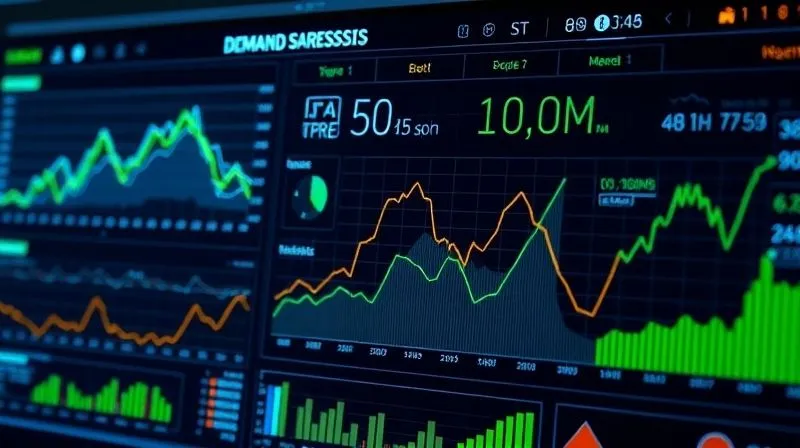
AI revolutionizes this by moving beyond simple historical averages. Predictive analytics algorithms can ingest and analyze vast, disparate datasets in real-time: past sales, competitor data, social media sentiment, macroeconomic indicators, weather forecasts, celebrity endorsements, and even granular website traffic patterns. By identifying complex, non-linear relationships, AI can generate far more accurate demand forecasts, sometimes improving accuracy by 20-30% or more. This precision directly translates to producing only what is needed, when it's needed, drastically reducing waste and associated emissions.
Furthermore, AI can optimize inventory levels across various distribution centers and retail stores. It ensures that products are available where demand is highest, minimizing the need for costly and carbon-intensive inter-store transfers or emergency shipments. This not only reduces the carbon footprint but also improves customer satisfaction and profitability. Think of it as having a crystal ball for your stockroom, but one powered by terabytes of data and sophisticated algorithms.
Actionable Steps for AI-Driven Demand Forecasting:
- Consolidate Data Sources: Gather all relevant data – sales, marketing, web analytics, social media, external economic and weather data – into a centralized, accessible platform. Data quality is paramount here.
- Select Appropriate AI Models: Work with data scientists to choose and train models (e.g., machine learning, deep learning, time series models) best suited for your specific product categories and market dynamics.
- Integrate with Planning Systems: Ensure the AI output seamlessly integrates with your existing ERP, inventory management, and production planning systems to enable automated adjustments.
- Iterate and Refine: AI models are not static. Continuously feed new data, monitor performance, and retrain models to adapt to evolving market conditions and improve accuracy over time.
The impact of this approach is profound. Reduced overproduction means fewer raw materials consumed, less energy used in manufacturing, and less product ending up in landfills. It’s a direct, measurable reduction in your Scope 3 emissions.
Smart Sourcing & Material Traceability: Unveiling Hidden Emissions
The journey of a garment begins with its raw materials, and this stage often holds some of the most opaque and carbon-intensive processes. From water-intensive cotton farming to energy-heavy synthetic fiber production, the choices made at the sourcing stage have a cascading effect on the entire supply chain's environmental footprint. Historically, brands have struggled with true visibility beyond their Tier 1 suppliers, making it nearly impossible to assess the environmental impact of raw material extraction and processing.
AI, combined with technologies like blockchain, is transforming this landscape. AI algorithms can analyze vast amounts of data on supplier certifications, environmental performance, material composition, and even geographical risk factors. This allows brands to vet suppliers more rigorously, identifying those with lower carbon footprints, responsible labor practices, and sustainable resource management.
Furthermore, AI can facilitate lifecycle assessments (LCAs) of different materials and production processes at scale. By crunching data on energy consumption, water usage, and chemical inputs, AI can recommend alternative materials or suppliers that offer a significantly reduced environmental impact without compromising quality or cost-effectiveness. When integrated with blockchain, a secure and immutable ledger, the entire journey of a material—from fiber to finished garment—can be traced, providing unparalleled transparency and accountability for emissions data.
Case Study: EcoChic Apparel's Sustainable Sourcing Journey
EcoChic Apparel, a mid-sized sustainable fashion brand, faced challenges in verifying the true environmental claims of their fabric suppliers. Their initial efforts relied on manual audits and certifications, which were time-consuming and often lacked granular data on actual emissions. By implementing an AI-powered supplier assessment platform, EcoChic could analyze hundreds of data points per supplier, including energy mix, water treatment, waste management protocols, and even satellite imagery of their facilities.
The AI identified that a significant portion of their cotton fabric's footprint came from dyeing processes in a particular region. By leveraging AI to find alternative dye houses that used advanced water recycling and renewable energy sources, EcoChic reduced the carbon footprint of their core cotton line by an estimated 25% within 18 months. This also improved their brand's reputation and resonated strongly with their eco-conscious customer base.
The ability to instantly compare the environmental profiles of various suppliers and materials empowers brands to make genuinely sustainable choices, moving beyond generic claims to data-backed decisions. This level of insight was simply unattainable before the advent of sophisticated AI and data integration tools.
For more on how technology is revolutionizing supply chain transparency, explore resources from organizations like the Ethical Fashion Forum or reports on blockchain in supply chain sustainability.
Optimizing Logistics & Transportation: Cutting Miles, Cutting Carbon
Once a garment is produced, it embarks on a complex logistical journey, often spanning continents multiple times. Transportation—by sea, air, road, and rail—is a major contributor to the fashion industry's carbon footprint. Inefficient routing, partially loaded vehicles, and reliance on high-emission transport modes significantly inflate these emissions. This is another area where AI offers transformative potential.
AI-powered logistics platforms can analyze real-time data on traffic, weather, shipping schedules, fuel prices, and warehouse capacities to optimize routes, consolidate shipments, and select the most carbon-efficient modes of transport. For instance, AI can identify opportunities to shift from air freight (high emissions, fast) to sea freight (lower emissions, slower) for inventory that isn't time-critical, or to rail for inland transport where feasible. It can also optimize truck loading to ensure full capacity, reducing the number of journeys required.
Beyond route planning, AI can enhance warehouse efficiency. Smart warehouses use AI to optimize picking paths, manage inventory placement for faster retrieval, and even predict equipment maintenance needs, reducing energy consumption and operational downtime. The goal is to move goods from point A to point B with the absolute minimum fuel, time, and carbon emissions.
| Logistics Metric | Traditional Method | AI Optimization |
|---|---|---|
| Route Planning Efficiency | Manual/Static | Dynamic/Real-time |
| Load Factor | 70-80% | 90-95% |
| Reliance on Air Freight | High for speed | Reduced, strategic use |
| Fuel Consumption | Higher | Up to 20% Reduction |
| Carbon Emissions (per km) | Baseline | Significantly Lower |
Imagine a global network of intelligent algorithms constantly working to find the greenest and most efficient path for every single item. This isn't futuristic fantasy; it's happening now. Companies are leveraging AI to simulate different logistics scenarios, identify bottlenecks, and proactively adjust their strategies to minimize environmental impact while maintaining delivery timelines.

AI in Manufacturing: Efficiency, Waste Reduction, and Energy Management
The manufacturing stage of fashion production is a hotbed of energy consumption, water usage, and waste generation. From the cutting room floor to the dyeing vats, traditional processes often involve significant inefficiencies. Here, AI acts as a powerful enabler for smart factories, driving both sustainability and productivity.
One critical application is pattern optimization. Fabric waste from cutting patterns can be substantial. AI algorithms can analyze garment patterns and fabric dimensions to create optimal cutting layouts, minimizing scrap material by 10-15% or more. This directly reduces the demand for virgin materials and the energy associated with producing them, while also cutting down on textile waste destined for landfill or incineration.
In the realm of energy management, AI can monitor and optimize energy consumption within factories. By analyzing data from IoT sensors on machinery, AI can identify energy-intensive bottlenecks, predict equipment failures (enabling proactive maintenance rather than reactive, energy-intensive repairs), and even adjust production schedules to leverage off-peak energy rates or integrate with renewable energy sources more effectively. This leads to a more stable and efficient energy grid for the factory, reducing reliance on fossil fuels.
Real-time Production Monitoring with AI:
- Sensor Deployment: Install IoT sensors on all critical machinery (sewing machines, dyeing vats, cutting tables) to collect data on energy usage, temperature, pressure, and operational status.
- Data Ingestion & Analysis: Feed this real-time data into an AI platform that can identify patterns, anomalies, and inefficiencies in energy consumption and material usage.
- Predictive Maintenance: Leverage AI to predict when machinery is likely to fail or require maintenance, scheduling interventions proactively to avoid costly breakdowns and energy spikes.
- Process Adjustment & Optimization: Use AI insights to make real-time adjustments to production parameters, such as dyeing temperatures or machine speeds, to achieve optimal efficiency and minimize resource waste.
Beyond these, AI can also optimize water usage in dyeing and finishing processes, identify faulty products early in the production line to prevent further resource expenditure, and even enhance worker safety by predicting hazardous conditions. The "smart factory" vision, powered by AI, is not just about automation; it's fundamentally about making production inherently more sustainable.
Circularity & End-of-Life Management: AI's Role in a Closed Loop
The traditional linear "take-make-dispose" model of fashion is inherently unsustainable. A true reduction in carbon footprint requires a shift towards a circular economy, where products and materials are kept in use for as long as possible, then recycled or regenerated. AI is proving to be an invaluable tool in closing this loop.
One of the biggest hurdles in textile recycling is the complex mix of materials in garments. A t-shirt might be 80% cotton and 20% polyester, often with different dyes, trims, and embellishments. Traditional sorting is manual, slow, and often inaccurate. AI-powered sorting systems, utilizing computer vision and spectroscopic analysis, can rapidly and accurately identify material composition, separating textiles into homogeneous streams suitable for recycling. This is a game-changer for scaling textile-to-textile recycling, reducing the need for virgin fibers and diverting vast quantities of waste from landfills.
Furthermore, AI can assist in design for circularity. By analyzing material properties, durability, and recyclability data, AI tools can guide designers in selecting materials and construction methods that extend product life and facilitate future recycling. For example, an AI could flag a design that uses a difficult-to-separate blend of fibers or suggest more durable stitching techniques to prolong garment life. AI can also predict the resale value and longevity of products, informing brands on how to encourage extended use through repair, resale, or rental models.
"True sustainability in fashion demands a paradigm shift from linear to circular. AI provides the intelligence needed to manage complex material flows, optimize recycling, and design products that are born to be reborn."
AI can also power platforms for garment take-back programs, predicting return volumes and optimizing logistics for collection and processing. By understanding what materials are coming back and in what condition, brands can better plan for recycling, upcycling, or repair initiatives, fundamentally altering the end-of-life narrative for fashion products.
The integration of AI into circular economy initiatives represents a powerful step towards decoupling growth from resource depletion and waste generation. For more information on circular fashion initiatives, refer to insights from the Ellen MacArthur Foundation.
Overcoming Challenges: Data, Integration, and Mindset Shifts
While the potential of AI in reducing fashion's carbon footprint is immense, its implementation is not without hurdles. As an industry veteran, I've seen these challenges firsthand, and addressing them is crucial for successful adoption.
The first major challenge is data quality and availability. AI thrives on data, but fashion supply chains are often characterized by fragmented data silos, inconsistent formats, and a lack of real-time visibility across different tiers of suppliers. Brands need to invest in robust data governance strategies, digital infrastructure, and collaborative platforms that enable seamless data sharing across the ecosystem. Without clean, comprehensive, and accessible data, AI models will underperform or even provide misleading insights.
Secondly, integration with legacy systems can be complex and costly. Many established fashion companies operate on older ERP systems that weren't designed for the real-time data flows and analytical power that AI demands. A phased approach, starting with pilot projects and gradually integrating AI solutions, can mitigate risks and demonstrate value incrementally. It's not about ripping out everything and starting fresh; it's about intelligent augmentation.
Finally, and perhaps most importantly, is the mindset shift. Adopting AI for sustainability requires a cultural transformation within organizations. It demands cross-functional collaboration between design, sourcing, production, logistics, and IT teams. It also requires leadership commitment to invest in technology, training, and new processes, understanding that the return on investment isn't just financial, but also environmental and reputational.
It's crucial to remember that AI is a tool, not a magic bullet. Its effectiveness hinges on human expertise, strategic vision, and a genuine commitment to sustainability. Brands must also be wary of "black box" AI solutions, ensuring transparency and interpretability in their models to build trust and ensure ethical decision-making.

The Future of Fashion: A Greener, Smarter Supply Chain
The imperative to reduce the fashion industry's carbon footprint is no longer debatable; it's a non-negotiable aspect of doing business in the 21st century. As I've outlined, AI offers an unparalleled opportunity to address this challenge head-on, providing the intelligence, precision, and automation needed to transform an inherently complex and often opaque global system.
From optimizing demand and inventory to revolutionizing sourcing, logistics, manufacturing, and enabling true circularity, AI's applications are vast and impactful. It empowers brands to move beyond estimation to precise measurement, from reactive problem-solving to proactive optimization, and from linear consumption to a truly regenerative model. The benefits extend beyond environmental impact, encompassing significant cost savings, enhanced efficiency, improved brand reputation, and deeper customer loyalty.
However, the journey requires commitment, investment, and a willingness to embrace innovation. The fashion industry stands at the precipice of a technological revolution that promises not just a more profitable future, but a fundamentally more sustainable one. Those who embrace AI strategically will not only lead the way in environmental stewardship but will also secure a competitive edge in an increasingly conscious marketplace.

Frequently Asked Questions (FAQ)
Q: How quickly can AI impact carbon emissions in a fashion supply chain? A: The speed of impact varies depending on the maturity of a brand's data infrastructure and the scope of AI implementation. However, focused AI applications like demand forecasting or logistics optimization can show measurable reductions in carbon footprint within 6-12 months. For broader, systemic changes across the entire supply chain, it could take 2-3 years to see significant, widespread reductions as systems integrate and processes adapt. Early adopters often see faster, more dramatic results.
Q: Is AI expensive for small to medium-sized fashion brands? A: While initial investment in advanced AI platforms can be substantial, there are increasingly scalable and accessible AI solutions available. Many cloud-based AI services offer pay-as-you-go models, making them more affordable for SMBs. Furthermore, the cost savings derived from reduced waste, optimized inventory, and efficient logistics often provide a strong ROI that quickly offsets the initial investment. Focus on specific pain points where AI can deliver immediate, tangible benefits.
Q: What data is most crucial for AI in fashion sustainability? A: High-quality, granular data is key. This includes historical sales data, inventory levels, supplier environmental performance (energy use, water, waste), logistics data (routes, fuel consumption), material composition, and even external factors like weather and social media trends. The more comprehensive and accurate the data, the more powerful and reliable the AI's insights will be in identifying emission hotspots and optimization opportunities.
Q: Can AI help with Scope 3 emissions specifically? A: Absolutely, and this is where AI truly shines for fashion. As Scope 3 emissions (indirect emissions from the value chain) account for the vast majority of fashion's footprint, AI's ability to provide granular visibility into supplier practices, optimize logistics, reduce overproduction, and enhance circularity directly addresses these hard-to-track emissions. It helps quantify, track, and ultimately reduce the emissions from raw materials to end-of-life, which are all typically Scope 3.
Q: What are the biggest hurdles to AI adoption in fashion supply chains? A: The primary hurdles include data silos and poor data quality, resistance to change within organizations, the complexity of integrating new AI systems with existing legacy infrastructure, and a lack of specialized AI talent. Overcoming these requires strong leadership, a clear strategic roadmap, investment in both technology and talent, and a culture that embraces continuous learning and innovation.
Key Takeaways and Final Thoughts
The journey to a truly sustainable fashion industry is complex, but with AI as a strategic partner, it is unequivocally achievable. Let’s summarize the most critical takeaways:
- Precision Forecasting: AI dramatically reduces overproduction and waste through highly accurate demand prediction.
- Transparent Sourcing: AI enables data-driven supplier vetting and material lifecycle assessment for lower-impact choices.
- Optimized Logistics: AI minimizes transportation emissions through intelligent routing, load consolidation, and mode selection.
- Efficient Manufacturing: AI drives waste reduction and energy optimization in factories through pattern optimization and real-time monitoring.
- Circular Economy Enabler: AI is crucial for advanced textile sorting, design for recyclability, and effective end-of-life management.
- Data is Gold: The success of AI hinges on the quality, accessibility, and integration of comprehensive data across the supply chain.
As an industry specialist, I firmly believe that embracing AI is not merely an option for fashion brands; it is an ecological and economic imperative. The technology is here, the need is urgent, and the benefits are undeniable. By strategically integrating AI into your supply chain, you're not just reducing carbon emissions; you're building a more resilient, efficient, and ultimately, a more responsible business for the future. The time to act is now, and the path forward is illuminated by intelligent automation.
Recommended Reading
- Unveiling the Secret: What is the Process of Creating a Haute Couture Gown?
- Apple Picking Perfection: Best Fall Accessories for Your Outfit
- Iconic Haute Couture Houses: Unveiling the Secrets & History!
- 9 Steps to Eradicate Razor Burn for a Confident Executive Presence
- Mastering Stability: 7 Techniques for Extreme Avant-Garde Couture





Your email address will not be published. Required fields are marked *