


How to Stabilize Extreme Avant-Garde Haute Couture Designs for Wear?
For over two decades immersed in the dynamic world of haute couture and avant-garde fashion, I've witnessed breathtaking visions grace the runway – designs that defy gravity, logic, and conventional understanding of apparel. Yet, I've also seen the heartbreaking reality when these architectural marvels falter; a magnificent silhouette begins to sag, a sculptural element loses its defiant stance, or worse, a garment proves utterly impossible to move in. The raw artistic expression, the very essence of avant-garde, demands pushing boundaries, but true mastery lies in making the impossible, wearable.
The inherent conflict for designers is palpable: how do you maintain the integrity of an extreme, often sculptural, design while ensuring it can withstand the rigors of being worn, even for a brief moment on the catwalk or a photoshoot? Fragile materials, cantilevered forms, colossal proportions – all these elements conspire against stability, threatening to reduce a visionary statement to a mere heap of fabric. This isn't just about aesthetics; it's about engineering, material science, and a deep understanding of the human form.
In this definitive guide, I will share the invaluable insights and practical frameworks I've cultivated from years at the forefront of this niche. We'll delve into innovative structural solutions, advanced material applications, strategic engineering principles, and the collaborative spirit required to transform even the most audacious avant-garde haute couture designs into stable, breathtaking, and genuinely wearable works of art. Prepare to master the delicate dance between artistic freedom and structural ingenuity.
Understanding the Physics of Form: Beyond the Sketch
Before any stitch is made or material chosen, the journey to stabilizing an extreme avant-garde design begins with a profound understanding of its underlying physics. I've often seen designers become so engrossed in the visual spectacle that they overlook the fundamental forces at play: gravity, tension, compression, and torsion. Every element of an extreme design, whether it's a massive shoulder extension or a sweeping train, exerts force, and if these forces aren't accounted for, collapse is inevitable.
The core principles of garment engineering are remarkably similar to architectural engineering. You must identify load-bearing points, anticipate stress concentrations, and understand how different materials will react under pressure. Is your design meant to stand independently, or will it be supported by the wearer's body? How will movement affect its integrity? These are not abstract questions; they are the bedrock upon which stable designs are built. Ignoring them is like building a skyscraper without a foundation.
In my experience, a crucial first step is to visualize the design in three dimensions, not just as a flat pattern. Consider how weight will distribute, where flexibility is needed, and where rigid support is paramount. This initial analytical phase, often using miniature models or digital simulations, can save countless hours and resources down the line. It’s about preemptive problem-solving, anticipating where your magnificent vision might literally fall apart and designing preventative measures from the outset.
Innovative Internal Armature Systems: The Invisible Skeleton
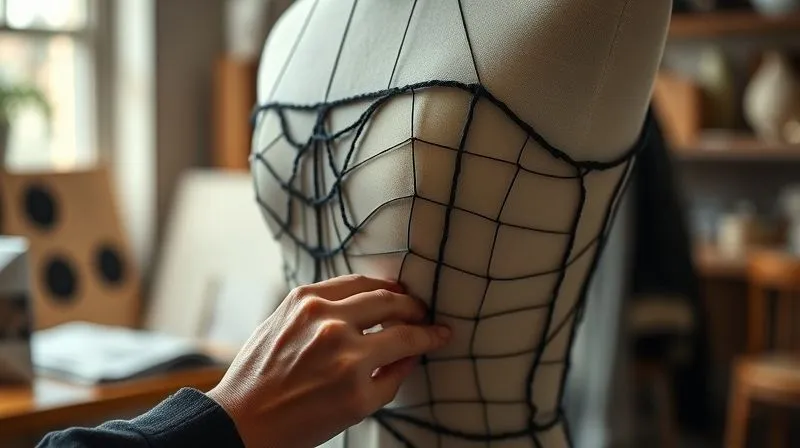
For truly extreme silhouettes, traditional boning and interlining simply won't suffice. We often need to construct an entirely separate, invisible skeleton – an armature system – that provides the necessary structural integrity. Think of it as the scaffolding within a building, hidden from view but essential for its form. This is where advanced materials and fabrication techniques come into play, pushing the boundaries of what's possible in wearable art.
Lightweight Composites and 3D Printed Solutions
The choice of material for your armature is paramount. We need strength without prohibitive weight. I've personally experimented with a range of materials, from aerospace-grade aluminum and carbon fiber composites to high-performance, flexible plastics. Carbon fiber, for instance, offers an incredible strength-to-weight ratio, making it ideal for creating rigid yet light support structures for expansive forms. Flexible plastics, often reinforced, can provide shape memory and resilience, allowing for dynamic forms that can flex and return to their original shape.
The advent of 3D printing has revolutionized this area. We can now custom-fabricate intricate, lightweight internal forms perfectly tailored to the design's unique contours and stress points. This allows for unparalleled precision and customization, creating structures that would be impossible or prohibitively expensive to produce using traditional methods. Imagine a lattice-like structure, optimized for minimal material usage but maximum support, perfectly cradling a voluminous skirt or a sculptural bodice.
- Conceptualize the Load: Identify all areas of the design that require significant structural support and estimate the forces they will exert.
- Material Selection: Choose armature materials based on required rigidity, flexibility, weight, and compatibility with the outer fabric. Consider carbon fiber, reinforced plastics, or lightweight metals.
- Design the Skeleton: Sketch or digitally model the internal armature, ensuring it follows the design's contours without being visible or impeding movement.
- Prototype and Test: Create a scaled prototype, or even a full-scale mock-up, of the armature. Test its stability under simulated wear conditions.
- Integrate Seamlessly: Develop attachment methods that securely connect the armature to the garment's inner layers without creating bulk or visible lines.
"The true artistry in avant-garde couture is not just in the audacious form, but in the unseen engineering that allows that form to exist and be experienced." - Industry Specialist Insight
Advanced Textile Reinforcement and Smart Fabrics
Beyond internal armatures, the very fabrics we use and how we treat them can significantly contribute to a design's stability. Haute couture often celebrates the fluidity and drape of luxurious textiles, but for extreme designs, we need to instill a degree of structural integrity directly into the textile itself without compromising its aesthetic.
Integrating Strength Without Bulk
This involves a range of techniques: fusing various interlinings and interfacings, bonding multiple layers of fabric with specialized adhesives, or even strategically embedding fine wires or monofilaments within the textile. The goal is to create a composite fabric that has greater inherent stiffness and shape retention than the individual components, yet still feels luxurious and moves (where appropriate) with grace. For example, a delicate silk organza can be backed with a sheer, heat-activated interfacing to give it body and resilience without losing its translucency.
Furthermore, the textile industry is constantly evolving, bringing forth "smart fabrics" with incredible properties. I've seen designers incorporate textiles with shape-memory alloys that can be manipulated and then return to a preset form, or fabrics with embedded micro-filaments that provide localized rigidity. These innovations allow for dynamic forms that can be adjusted or that inherently maintain complex shapes, reducing the reliance on bulky internal structures. According to a recent report by Forbes on the Future of Fashion, the integration of advanced materials is rapidly becoming a cornerstone of high-end design innovation.
Strategic Support Placement: The Art of Disguise
Even with robust internal armatures and reinforced fabrics, the ultimate challenge is often how to anchor these structures to the wearer's body in a way that is both invisible and comfortable. The body itself becomes part of the support system, and the designer's task is to create a seamless synergy between garment and wearer, making the extreme design feel like a natural extension rather than a cumbersome appendage.
Harnessing the Body's Structure
This often involves sophisticated internal corsetry, custom-molded body suits, or hidden harness systems. The key is to distribute the weight and stress points across the strongest parts of the body – the shoulders, hips, and ribcage – minimizing pressure on delicate areas. For instance, a voluminous skirt might be supported not just by a crinoline, but by an integrated harness that transfers its weight to the wearer's hips, preventing it from dragging or collapsing. Similarly, a massive collar or headpiece might be balanced with counterweights or anchored to a reinforced shoulder piece built into a foundational undergarment.
The integration must be meticulously planned. Every strap, every seam, every attachment point must be engineered for both strength and discretion. The goal is for the wearer to feel secure and balanced, not constrained or burdened. This often requires multiple fittings and adjustments, working closely with the model to identify any points of discomfort or instability. It's a testament to the skill of the couturier to make such elaborate constructions feel weightless and effortlessly elegant.
| Support System | Pros | Cons | Best Use Case |
|---|---|---|---|
| Internal Corsetry | Excellent torso shaping, strong foundational support for bodices | Can be restrictive, less ideal for full body support | Sculptural bodices, heavy skirts attached at waist |
| Integrated Body Harness | Distributes weight across shoulders/hips, ideal for cantilevered elements | Complex to fit and conceal, requires custom fabrication | Large shoulder pieces, extreme sleeves, designs with high stress points |
| Strategic Boning/Hoops | Defines shape, adds volume, relatively simple to implement | Can be rigid, visible lines if not expertly placed, limited extreme support | Voluminous skirts, structured collars, maintaining geometric shapes |
| Adhesive/Bonding Agents | Invisible support, creates stiffened areas in delicate fabrics | Limited for heavy loads, can alter fabric hand, not always reversible | Small, lightweight sculptural details, reinforcing edges |
The Role of Counterweights and Balance: A Delicate Dance
Achieving equilibrium in extreme, asymmetrical haute couture designs is often one of the most intellectually stimulating challenges. When you have a massive, sculptural element extending from one side of a garment, or a dramatic train pulling backwards, simply adding internal support isn't enough. You need to actively counteract these forces to prevent tipping, sagging, or an uncomfortable pull on the wearer. This is where the strategic use of counterweights and careful material distribution becomes an art form.
Achieving Equilibrium in Extreme Silhouettes
Counterweights are not about making a design heavier; they are about intelligently distributing mass to achieve balance. This might involve embedding small, dense weights (like lead shot or steel beads encased in fabric pockets) in unseen areas, such as the hem of a voluminous skirt opposite a dramatic hip adornment, or within the lining of a jacket to balance an oversized shoulder piece. The placement must be precise, often determined through trial and error during the prototyping phase, to neutralize rotational forces and maintain the intended silhouette.
Beyond explicit weights, the choice and distribution of materials also play a crucial role. A design might use a heavier, more structured fabric on one side to balance a lighter, more ethereal fabric on the other. This isn't just about aesthetics; it's an intrinsic part of the garment's structural engineering. It's a delicate dance between visual impact and physical stability, ensuring that the wearer can move with confidence, and the design maintains its defiant posture.
Case Study: The Zenith Gown's Gravitational Challenge
Consider the fictional 'Zenith Gown' by designer Elara Vance, known for its single, massive, cantilevered sleeve that extended nearly a meter from the wearer's shoulder. Early prototypes sagged dramatically, pulling the entire bodice askew. Elara's team, after extensive stress testing, integrated a series of strategically placed, encapsulated steel weights into the opposite side of the gown's internal corset, meticulously calibrated to offset the sleeve's mass. Further, the skirt on the opposite side was crafted from a slightly heavier, yet visually identical, silk-gazar blend, subtly shifting the center of gravity. This combination of hidden counterweights and material balancing allowed the Zenith Gown to maintain its audacious, gravity-defying form, creating an illusion of effortless stability where complex engineering reigned beneath the surface. The result was a stunning, perfectly balanced silhouette that became an iconic moment on the runway.
Modular Construction and Deconstructable Elements
The sheer scale and complexity of many avant-garde haute couture designs present significant practical challenges, especially concerning transport, storage, and even the fitting process. I've seen extraordinary pieces arrive at shoots damaged because they couldn't be properly packed, or prove impossible to get through a standard doorway. This is where the concept of modular construction, borrowed from architecture and product design, offers a powerful solution.
Enhancing Portability and Repairability
Modular design means breaking down a complex garment into smaller, manageable components that can be assembled and disassembled. Imagine a colossal skirt that separates into several panels, or a sculptural bodice that unclips from a base structure. This not only simplifies transport and reduces the risk of damage but also greatly aids in fitting and adjustments. If one section requires alteration, it can be worked on independently without disturbing the entire garment. It also enhances repairability, allowing for easier replacement of damaged sections.
The challenge, of course, is to make these connection points entirely invisible and robust. This requires innovative fastening systems – magnetic closures, hidden zippers, precise interlocking mechanisms – that are strong enough to hold the garment's form while remaining undetectable to the eye. This approach allows for grand, architectural statements that are, paradoxically, highly adaptable and practical. The principles of modularity are increasingly being adopted across various industries for efficiency and sustainability, as highlighted in this Harvard Business Review article on modular design.
Prototyping and Iteration: The Path to Perfection
In the realm of extreme avant-garde haute couture, the first attempt is rarely the final masterpiece. The journey from concept to a stable, wearable design is almost always an iterative process of prototyping, testing, and refining. I cannot stress enough the importance of this stage; it is where theories are put to the test, flaws are identified, and ingenious solutions are discovered. Skipping or rushing this phase is a recipe for disappointment and structural failure.
From Muslin to Masterpiece
The process typically begins with humble materials – muslin, buckram, or even paper – to create initial mock-ups. These early prototypes are not about aesthetics; they are about form, proportion, and most critically, stability. We test how the fabric drapes, how the internal structures behave, and how the garment interacts with the wearer's body. These initial tests often reveal unforeseen stress points, balance issues, or areas where the original vision simply isn't physically viable without modification.
Each iteration builds upon the last. A muslin mock-up might lead to a more refined prototype in a similar weight fabric, incorporating initial structural elements. This is then stress-tested, perhaps by having a model wear it for extended periods, move in specific ways, or even simulating environmental factors like wind. The feedback from these tests is invaluable, guiding the design team towards more robust and elegant solutions. This rigorous, evidence-based approach to design is crucial for mastering stability in avant-garde fashion, a principle echoed in product development across all sectors. For more on the iterative design process, consider resources like The Interaction Design Foundation on Design Thinking.
- Initial Sketch & Concept: Define the extreme form and identify potential stability challenges.
- Miniature Model (Optional): Create a small-scale model to visualize 3D form and preliminary balance.
- Muslin/Basic Fabric Mock-up: Construct a full-scale rough version to test basic shape, proportion, and initial structural ideas.
- Integrate Internal Structures (Prototype 1): Add rudimentary internal armatures or boning to the mock-up.
- First Wear Test & Feedback: Have a model wear the prototype, identify discomfort, instability, or sagging. Document findings.
- Refine & Re-prototype (Prototype 2+): Adjust design, materials, and internal structures based on feedback. Repeat wear tests.
- Material Finalization: Once stability is achieved, translate the successful structural elements into final materials.
- Final Fitting & Detailing: Ensure perfect fit, comfort, and aesthetic execution with the final garment.
Collaborative Expertise: Engineers, Artisans, and Visionaries
The most extreme and structurally ambitious avant-garde haute couture designs often transcend the traditional boundaries of fashion design. In my career, I've learned that truly groundbreaking stability solutions frequently emerge from interdisciplinary collaboration. A single couturier, no matter how brilliant, cannot possess all the specialized knowledge required to engineer a garment that defies physics while remaining breathtakingly beautiful.
Beyond the Atelier: The Power of Interdisciplinary Teams
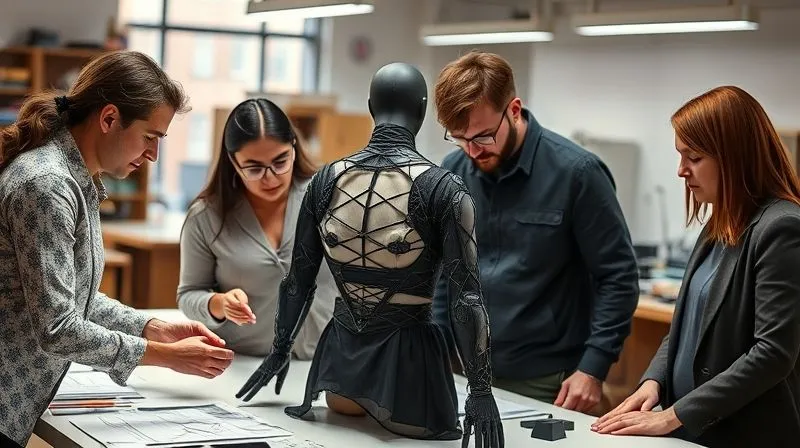
Bringing in specialists from fields like structural engineering, material science, industrial design, or even aerospace engineering can unlock entirely new possibilities. An engineer might suggest a novel composite material for an armature that a fashion designer wouldn't typically encounter. A material scientist could advise on bonding agents or fabric treatments that offer unprecedented stiffness without adding weight. These external perspectives challenge conventional thinking and push the envelope of what's achievable.
The role of the couturier then evolves from sole creator to visionary director, orchestrating a team of experts. It's about translating the artistic intent into technical specifications that these specialists can understand and execute. This collaborative model, where the creative vision is supported by rigorous scientific and engineering principles, is becoming increasingly vital for designs that truly push the boundaries of wearability and structural integrity. It's a testament to the power of collective intelligence, transforming audacious dreams into tangible realities. The synergy between art and science is a driving force in modern innovation, as explored in many academic studies on interdisciplinary collaboration.
Frequently Asked Questions (FAQ)
How do I maintain the fluidity of fabric while ensuring stability in avant-garde designs? This is a classic challenge. The key is to separate the structural elements from the aesthetic ones. Use invisible internal armatures or hidden corsetry for stability, allowing the outer, fluid fabric to drape and move as intended. Strategic fusing of sheer, lightweight interlinings can also add body without compromising drape, or consider textiles with inherent shape memory for areas requiring both fluidity and form.
What are the key considerations for wearer comfort with extreme internal structures? Comfort is paramount, even in avant-garde. Ensure all internal structures are smoothed, padded, and don't have sharp edges that could chafe or dig into the skin. Distribute weight evenly across strong body points (shoulders, hips). Use breathable linings. Conduct thorough fit tests with the model in various poses to identify and rectify any pressure points or movement restrictions. Ergonomics are as important as aesthetics.
Can 3D printing be used for primary structural elements, or just secondary supports? Absolutely, 3D printing can be used for primary structural elements, especially with advancements in high-strength, lightweight polymers and composites. For example, a complex, load-bearing corset or a rigid frame for a sculptural sleeve can be entirely 3D printed. Its advantage lies in creating intricate, custom-fit, and optimized structures that are impossible with traditional methods. However, material choice and print parameters are crucial for ensuring the necessary strength and durability.
How do I stress-test a design effectively before a show? Effective stress-testing involves simulating real-world conditions. Have the model wear the garment for an extended period, practice runway walks, sitting, and specific poses required for the show or shoot. Observe how the garment moves, if any elements sag, or if it causes discomfort. Consider using slow-motion video to analyze movement dynamics. For extreme designs, you might even simulate light wind or other environmental factors if relevant to the presentation.
What's the most common mistake designers make when trying to stabilize extreme couture? The most common mistake I've observed is underestimating the forces of gravity and movement, leading to insufficient internal support. Often, designers focus too much on the external aesthetic and too little on the hidden engineering. Another frequent error is using heavy, bulky materials for support, which adds unnecessary weight and detracts from the garment's elegance. Always prioritize lightweight, strong, and strategically placed internal structures.
Key Takeaways and Final Thoughts
- Embrace Garment Engineering: Understand the physics of form, load distribution, and stress points from the initial sketch.
- Leverage Advanced Materials: Utilize lightweight composites, 3D printing, and smart textiles for robust, invisible internal armatures.
- Master Strategic Support: Integrate hidden corsetry, harnesses, and counterweights to anchor designs securely and comfortably to the body.
- Prioritize Prototyping: Engage in rigorous, iterative testing with mock-ups to refine structural solutions and ensure wearability.
- Collaborate Widely: Don't hesitate to seek expertise from structural engineers, material scientists, and other specialists for truly ambitious projects.
The world of avant-garde haute couture is a testament to boundless creativity, a space where fashion transcends mere clothing to become wearable art. The challenge of stabilizing these extreme designs is not a limitation, but rather an invitation for deeper innovation, a call to merge artistic vision with scientific ingenuity. By embracing these advanced techniques and fostering a collaborative spirit, we empower designers to push the boundaries of imagination further, ensuring that their most audacious creations stand tall, beautifully and powerfully, for all the world to see. Continue to dream big, but always build smart.
Recommended Reading
- Authenticating Vintage Patek Philippe: 7 Expert Steps Without Papers
- 7 Critical Steps: Salvaging a Failed Editorial Fashion Shoot Concept
- Sustainable Textile Weaves: 5 Cost-Saving Strategies for Innovators
- Unlocking Time: How to Identify Authentic Retro Clothing Eras Like a Pro
- Unlock All-Day Comfort: The Ultimate Guide to Business Casual Shoes for Men Who Stand

Your email address will not be published. Required fields are marked *