

How to reduce fashion returns using AI for better fit?
For over 15 years in the fashion technology space, I've witnessed firsthand the silent killer of profitability and customer loyalty: the relentless cycle of product returns. It's a problem that plagues retailers globally, eroding margins, straining logistics, and casting a long shadow over sustainability efforts.
The core of this issue, particularly in online apparel, often boils down to one critical factor: fit. Customers order multiple sizes "just in case," leading to a significant portion of their purchases being sent back, creating a frustrating experience for both buyer and seller.
But what if there was a way to dramatically reduce these returns, ensuring customers receive garments that fit perfectly the first time? In this definitive guide, I'll share expert insights and actionable frameworks on how to harness the power of Artificial Intelligence to achieve unparalleled fit accuracy, transforming your retail operations and customer satisfaction.
The Hidden Costs of Fashion Returns: Why We Must Act Now
Before we delve into solutions, it's crucial to understand the sheer magnitude of the problem. Fashion returns aren't just an inconvenience; they represent a multi-billion dollar drain on the industry, impacting every facet of the supply chain.
Financially, retailers face costs for reverse logistics, repackaging, quality control, and often, markdown or disposal of returned items. Environmentally, the transportation of goods back and forth, coupled with the waste generated from unsaleable items, contributes significantly to carbon emissions and landfill burden.
"The cost of returns extends far beyond logistics; it impacts brand reputation, customer loyalty, and ultimately, the long-term viability of a fashion business in a competitive digital landscape."
According to a Deloitte study, returns can account for up to 30% of sales for some online retailers, a figure that is simply unsustainable. This makes addressing the root cause – poor fit – not just an operational necessity but a strategic imperative.
Understanding the Core Problem: The 'Fit' Conundrum in Online Retail
The challenge of achieving perfect fit online is multifaceted. Unlike brick-and-mortar stores where customers can physically try on garments, online shoppers rely on static size charts, vague descriptions, and often, guesswork.
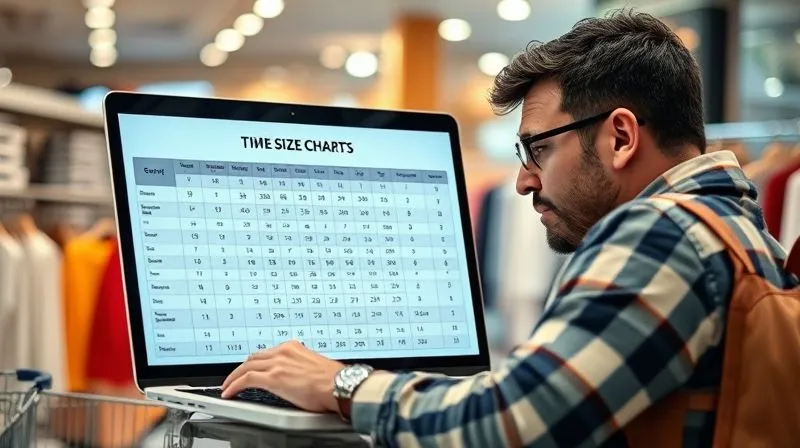
Sizing inconsistencies across brands, the variability of human body shapes, and the subjective nature of what constitutes a 'good fit' for different garment styles further complicate matters. A size 'M' in one brand might be a 'L' in another, leading to constant customer confusion and disappointment.
Traditional solutions, such as detailed size guides or customer reviews, offer some help but often fall short of providing the personalized, precise recommendations needed to truly instill confidence in a purchase.
AI to the Rescue: A Paradigm Shift in Fit Prediction
This is where Artificial Intelligence steps in, offering a revolutionary approach to solving the fit conundrum. AI doesn't just process data; it learns, predicts, and personalizes recommendations with a level of accuracy previously unattainable.
Leveraging Machine Learning for Predictive Sizing
Machine Learning (ML), a subset of AI, is at the heart of predictive sizing. ML algorithms analyze vast datasets, including historical sales data, customer return patterns, product dimensions, fabric properties, and even customer-provided measurements or preferences.
By identifying complex correlations and patterns, these algorithms can accurately predict the optimal size for an individual customer, taking into account their unique body shape and the specific garment's cut. The process typically involves:
- Data Collection: Gathering comprehensive data points from every available source – order history, returns, product specifications, customer profiles, and explicit user input.
- Model Training: Feeding this data into ML algorithms to identify patterns and build predictive models that correlate customer attributes with successful (non-returned) purchases.
- Recommendation Engine: Deploying the trained model to generate real-time, personalized size recommendations on product pages, often with a confidence score.
Computer Vision and 3D Body Scanning Technologies
Beyond predictive sizing, advanced AI techniques like computer vision and 3D body scanning are taking fit personalization to the next level. Computer vision can analyze images or videos of customers (with their consent) to derive precise body measurements.

Similarly, 3D body scanning apps, often utilizing smartphone cameras, allow users to create a digital avatar of their body. These avatars can then be used in virtual try-on experiences, where garments are digitally rendered onto the customer's exact body shape, providing an unprecedented level of visual fit confidence.
Implementing AI for Better Fit: A Step-by-Step Framework
Adopting AI for fit isn't a 'set it and forget it' solution; it requires a strategic, phased approach. Here's a framework I've seen yield significant results for various brands looking to reduce fashion returns using AI for better fit.
Step 1: Data Acquisition & Integration
The foundation of any successful AI initiative is robust, clean data. You need to gather every piece of relevant information: historical sales, return reasons, product SKUs with detailed measurements, fabric compositions, customer demographics, and any existing measurement data. This data needs to be integrated into a centralized system where AI models can access and process it.
According to research highlighted in the Harvard Business Review, data quality directly correlates with the accuracy and effectiveness of AI models. Invest in data hygiene and ensure your data sources are reliable.
Step 2: Choosing the Right AI Solution for Your Brand
The market offers a range of AI fit solutions, from off-the-shelf SaaS platforms to custom-built systems. Your choice will depend on your budget, technical capabilities, and specific business needs.
Consider factors like ease of integration with your existing e-commerce platform, the level of personalization offered, and the vendor's track record. Here's a quick comparison of common AI fit solutions:
| Solution Type | Key Benefit | Implementation Cost | Complexity |
|---|---|---|---|
| AI Size Recommender | Data-Driven Fit Prediction | Low-Medium | Low |
| Virtual Try-On (2D/3D) | Visual Fit Confidence | Medium-High | Medium |
| 3D Body Scanning (App-Based) | Highly Personalized Fit | Medium | Medium-High |
| AI Fabric Drape Simulation | Realistic Garment Behavior | High | High |
Step 3: Personalization and User Experience
Once you have an AI model, the next crucial step is to integrate it seamlessly into the customer journey. The recommendations must be intuitive, easy to understand, and readily accessible on product pages. Some best practices include:
- Clear Recommendations: Displaying a recommended size with a clear explanation of *why* it's recommended (e.g., "Based on your past purchases and similar customers, we recommend size M").
- Visual Aids: Utilizing virtual try-on features or augmented reality overlays to allow customers to visualize the fit on their own body shape.
- Feedback Loop: Encouraging users to provide feedback on the accuracy of recommendations, which further refines the AI model.
Call to action: Make the AI fit experience feel like a trusted personal stylist, not just another algorithm. User adoption hinges on trust and ease of use.
Case Study: "Fit-First" Fashion Co. & Their AI Transformation
Case Study: How "Fit-First" Fashion Co. Slashed Returns by 30%
Let me tell you about "Fit-First" Fashion Co., a mid-sized online apparel retailer specializing in contemporary women's wear. For years, they struggled with an average return rate of 28%, significantly impacting their bottom line and customer satisfaction scores. Their customers frequently cited "poor fit" and "ordered multiple sizes" as primary return reasons.
After consulting with a fashion tech expert (myself, naturally!), Fit-First Fashion Co. embarked on an ambitious project to reduce fashion returns using AI for better fit. They implemented a two-pronged AI solution: an advanced AI size recommender that analyzed purchase history and garment specifications, and a basic virtual try-on feature integrated directly onto their product pages.
The results were transformative. Within 12 months, Fit-First Fashion Co. saw a remarkable 30% reduction in their overall return rate. Furthermore, their conversion rate increased by 15% as customers felt more confident in their purchasing decisions, and customer loyalty metrics showed a significant uptick. This wasn't just about saving money; it was about building a more sustainable and customer-centric brand.
Beyond Returns: The Broader Impact of AI-Powered Fit
While reducing returns is the immediate and most tangible benefit, the ripple effects of AI-powered fit extend far wider, creating a more sustainable and customer-centric fashion ecosystem.
Firstly, it significantly boosts customer loyalty and satisfaction. When customers consistently receive items that fit well, their trust in the brand grows, leading to repeat purchases and positive word-of-mouth. Secondly, it contributes to environmental sustainability by reducing the logistical footprint of returns and minimizing waste from unsaleable items.

"AI-powered fit isn't just a tactical move to cut costs; it's a strategic investment in a more sustainable future for fashion, where customer happiness and environmental responsibility go hand-in-hand."
Moreover, the rich data collected by AI fit systems provides invaluable insights into customer preferences and product performance, informing future design and inventory decisions. This holistic approach transforms the entire retail value chain.
Navigating Challenges and Ensuring Success
Implementing AI for fit isn't without its challenges. Data quality, user adoption, and integration complexity are common hurdles. However, with careful planning and execution, these can be successfully navigated.
Best Practices for AI Fit Implementation
- Start Small and Iterate: Begin with a pilot program on a specific product category or customer segment to gather data and refine your approach before a full rollout.
- Prioritize Data Quality: Invest in cleaning and structuring your data. "Garbage in, garbage out" is particularly true for AI models.
- Focus on User Experience: The AI tool must be intuitive and add clear value to the customer. Poor UX will lead to low adoption.
- Choose the Right Vendor: Partner with an AI provider that has proven expertise in fashion and a strong understanding of your specific needs.
- Continuous Monitoring and Optimization: AI models are not static. Continuously monitor their performance, gather user feedback, and retrain models with new data.
For more insights into successful AI integration, I often refer to articles like this Forbes piece on common AI implementation challenges. Understanding these pitfalls upfront can save you significant time and resources.
| Challenge | Solution | Impact on Returns |
|---|---|---|
| Data Inaccuracy | Implement robust data cleaning & validation protocols | High |
| Low User Adoption | Design intuitive UI/UX, clearly communicate benefits | Medium |
| Integration Complexity | Utilize API-first solutions, phased rollout | Medium |
| Model Bias | Ensure diverse training data, regular audits | High |
Frequently Asked Questions (FAQ)
Is AI fit technology expensive for small brands? While custom-built solutions can be costly, many SaaS-based AI fit recommenders offer tiered pricing suitable for small to medium-sized businesses, making this technology increasingly accessible. Focus on solutions that integrate easily with common e-commerce platforms.
How accurate are AI fit recommendations? The accuracy of AI fit recommendations is constantly improving and largely depends on the quality and quantity of data used for training. Many leading solutions boast accuracy rates upwards of 85-90%, significantly outperforming traditional sizing methods.
Can AI truly account for personal style preferences? Directly, AI fit models focus on physical fit. However, by analyzing past purchases and browsing behavior, AI can infer style preferences and combine them with fit recommendations, suggesting garments that are not only the right size but also align with a customer's aesthetic.
What data points are most crucial for AI fit models? Key data points include garment measurements (bust, waist, hips, inseam), fabric composition, customer's historical purchases and returns, stated preferences, and potentially, self-reported body measurements. The more comprehensive and clean the data, the better the model's performance.
How does AI fit contribute to sustainable fashion? By significantly reducing returns, AI fit technology directly lowers the carbon footprint associated with reverse logistics (shipping, repackaging) and minimizes textile waste from damaged or unsaleable returned items. It promotes a "buy right the first time" mentality, aligning with sustainable consumption principles.
Key Takeaways and Final Thoughts
The journey to reduce fashion returns using AI for better fit is not just about adopting a new technology; it's about embracing a fundamental shift in how we approach customer experience and operational efficiency in fashion retail. My experience tells me that brands that proactively invest in this area will be the ones that thrive in the coming decade.
- AI offers a powerful, data-driven solution to the pervasive problem of poor fit and high returns in online fashion.
- Implementing AI for fit requires a strategic approach, focusing on robust data, appropriate technology selection, and seamless user experience.
- The benefits extend beyond reduced returns, encompassing enhanced customer loyalty, improved sustainability, and invaluable market insights.
- Continuous monitoring, iteration, and a commitment to data quality are essential for long-term success.
As an industry specialist, I firmly believe that AI-powered fit is no longer a luxury but a necessity for any fashion brand serious about profitability, customer satisfaction, and environmental responsibility. The future of fashion is personalized, precise, and powered by intelligence. Embrace it, and watch your returns shrink while your customer loyalty soars.
Recommended Reading
- The Ultimate Guide: How to Authenticate a Pre-Owned Luxury Watch Before Buying
- Unlock the Secrets: How to Create Dramatic Fashion Photography Lighting Outdoors?
- The Ultimate Guide: How to Pick a Perfume That Lasts All Day on Your Skin
- 7 Ways to Stand Out: Differentiate Your Streetwear Hoodies Online
- Style a Pearl Necklace Everyday? The Ultimate Style Guide!




Your email address will not be published. Required fields are marked *