

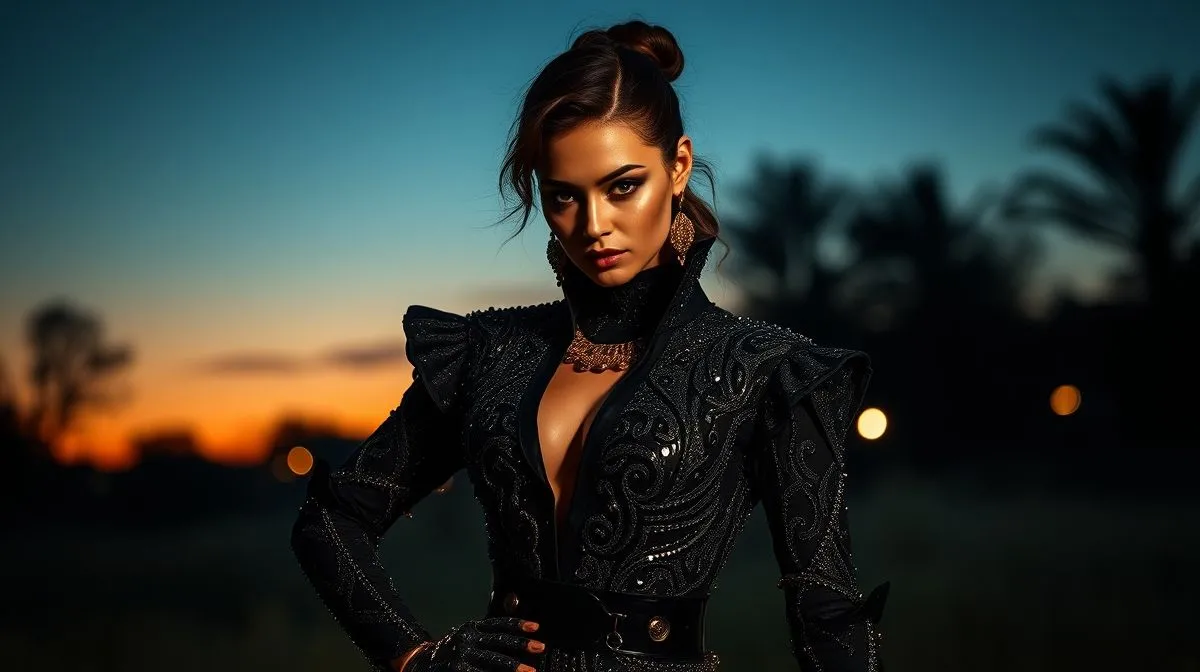
How to Create Dramatic Fashion Photography Lighting Outdoors?
Imagine a fashion photograph that stops viewers in their tracks, not just because of the stunning model or exquisite clothing, but because of the sheer power and emotion conveyed through its lighting. Have you ever wondered how top fashion photographers achieve those breathtaking, high-impact images outside, transforming ordinary outdoor scenes into cinematic masterpieces?
The challenge of working with natural light outdoors can be immense. It's often too flat, too harsh, or simply not dramatic enough to convey the artistic vision required for high-end fashion. Relying solely on the sun can lead to predictable results, lacking the depth, mood, and control that defines truly dramatic photography.
This definitive guide will equip you with the knowledge, techniques, and practical insights needed to master outdoor lighting, showing you precisely how to create dramatic fashion photography lighting outdoors. By the end of this reading, you'll be able to sculpt light, embrace shadows, and transform your fashion shoots into unforgettable visual narratives, regardless of the time of day or weather conditions.
Understanding Light: The Foundation of Drama
Before we delve into specific techniques, it's crucial to understand the fundamental properties of light. Light is not just illumination; it's a sculptor, a painter, and a storyteller. Its quality and direction dictate the mood and impact of your fashion photography.
Natural Light – Your First Tool
The sun is your most accessible light source, but knowing how to use it effectively for dramatic results is an art. It's not about avoiding the sun, but understanding its nuances.
- Golden Hour vs. Blue Hour: The golden hour (shortly after sunrise or before sunset) offers warm, soft, directional light perfect for ethereal or romantic drama. The blue hour (just after sunset or before sunrise) provides a cool, ambient glow that can be moody and mysterious, especially when combined with artificial light.
- Midday Sun: A Challenge or Opportunity?: Often considered a photographer's nemesis, harsh midday sun can actually be a powerful tool for drama. Its strong, directional nature creates deep, defined shadows. Learning to manipulate these shadows is key to creating striking, high-contrast fashion images.
The Qualities of Light
Light has distinct qualities that profoundly affect your image.
- Hard vs. Soft Light: Hard light creates sharp, well-defined shadows and high contrast, often associated with drama and intensity. Soft light produces gradual transitions from light to shadow, resulting in lower contrast and a more diffused look. For drama, we often lean towards hard light or precisely controlled soft light.
- Direction and Angle: The direction from which light hits your subject is paramount. Side lighting, backlighting, and even frontal lighting (when used with purpose) can create different dramatic effects. Experiment with the angle of your light source relative to your model to sculpt their features and the garment.
Essential Gear for Outdoor Dramatic Lighting
While natural light is a starting point, achieving consistent, powerful dramatic lighting outdoors often requires augmenting or overriding ambient light with artificial sources. The right gear is an investment in your creative control.
Portable Strobes and Monolights
These are the workhorses for outdoor fashion photography, offering significant power to overpower the sun or create their own distinct light. Look for units that are battery-powered and robust.
- Power and Portability: Choose strobes with enough watt-seconds (Ws) to compete with the sun, especially if you're shooting in bright conditions. Portability is key for outdoor shoots, so consider weight and battery life.
- High-Speed Sync (HSS): This feature is crucial. HSS allows your flash to synchronize with shutter speeds faster than your camera's native sync speed (typically 1/200th or 1/250th second). This enables you to use wider apertures in bright sunlight to achieve shallow depth of field while still using flash to sculpt your subject. Learn more about High-Speed Sync on Wikipedia.
Light Modifiers: Shaping the Drama
Modifiers are indispensable for shaping the light from your strobes, allowing you to control its quality, spread, and intensity. They are critical for truly dramatic effects.
- Softboxes and Octaboxes: While they create soft light, large softboxes can be used to create a broad, controlled soft light that still casts subtle, defined shadows when feathered. Octaboxes are popular for their pleasing round catchlights.
- Beauty Dishes: These create a unique light quality that is harder than a softbox but softer than a bare strobe. They produce a crisp light with distinct shadows, often favored for fashion and beauty photography.
- Grids and Snoots: Grids narrow the beam of light, preventing spill and creating a more focused, directional light. Snoots create a very tight, spotlight-like beam, perfect for highlighting specific details or creating dramatic vignettes.
- Reflectors and Flags: Reflectors bounce light back onto your subject, filling in shadows or adding a subtle catchlight. Flags (or black cards/fabrics) block light, creating deeper shadows and enhancing contrast.
Triggers and Stands
Reliable wireless triggers are essential for firing your off-camera flashes. Heavy-duty light stands are necessary to support your strobes and modifiers, especially outdoors where wind can be a factor.
Mastering Off-Camera Flash (OCF) for Dramatic Effects
Off-Camera Flash (OCF) is the cornerstone of creating controlled, dramatic lighting outdoors. It allows you to place light precisely where you need it, independent of the sun's position. For a comprehensive introduction to OCF, consider resources like B&H Photo's Explora articles on OCF.
Single Light Setups
Even with just one off-camera light, you can achieve incredibly dramatic results.
- Rembrandt Lighting (Modified for Fashion): Position your light to one side, slightly above and angled down, to create a triangle of light on the shadowed side of the face. For fashion, this can be adapted to sculpt the body and clothing, creating strong lines and depth.
- Split Lighting: Place the light directly to one side of the subject, illuminating half of the face and body while leaving the other half in shadow. This creates a bold, graphic, and highly dramatic effect.
- Backlighting with OCF: Position your strobe directly behind the subject, aiming towards the camera. This creates a powerful rim light that separates the subject from the background, adding depth and drama. Use a reflector or a secondary, lower-power flash for fill light on the front.
Two-Light Setups and Beyond
Adding a second or third light opens up even more creative possibilities for sculpting light and shadow.
- Key and Fill: Use one powerful light as your key (main) light for drama, and a second, less powerful light (or a reflector) to subtly fill in harsh shadows created by the key light. The key is to keep the fill subtle to maintain the drama.
- Hair/Rim Light: A dedicated light placed behind and to the side of the subject, often with a grid or snoot, can create a beautiful, ethereal glow on the hair or edges of the clothing, separating the subject from the background.
- Background Light: Use a third light to illuminate or add texture to the background, preventing it from falling completely into shadow and adding another layer of depth to your dramatic scene.
Harnessing Natural Elements for Added Impact
Dramatic fashion photography isn't just about artificial light; it's about how that light interacts with the environment. Leverage your surroundings to enhance the mood.
Using Shadows Creatively
Shadows are as important as light in dramatic photography. They define shape, add mystery, and create depth.
- Deep, Defined Shadows: Don't fear shadows. Embrace them. Use hard light to create strong, graphic shadows that become part of the composition and narrative.
- Patterned Shadows: Look for elements in the environment (trees, fences, blinds, architectural details) that cast interesting shadow patterns. Position your model within these patterns to add texture and visual intrigue.
Incorporating Environmental Light Sources
The world around you is full of potential light sources that can add a unique dimension to your dramatic fashion shots.
- Streetlights, Car Headlights, Neon Signs: These can serve as ambient light, rim lights, or background elements, particularly for night shoots, adding a gritty, urban drama.
- Reflective Surfaces (Water, Glass): Puddles, wet pavement, large windows, or metallic surfaces can reflect light, creating interesting patterns or adding subtle fill light.
Composition and Posing in Dramatic Lighting
Once you've mastered the light, how you compose your shot and pose your model becomes critical to maximizing the dramatic effect. Light and pose work in tandem to tell your story.
Guiding the Eye with Light
Use your dramatic lighting to draw the viewer's eye to specific areas of the photograph. The brightest parts of your image will naturally attract attention. Sculpt the light to highlight the model's face, a specific detail of the garment, or a key element in the scene.
Posing to Enhance Shadows and Highlights
Work with your model to create poses that accentuate the dramatic lighting. Angling the body, turning the head, or positioning limbs can create interesting shadow play and emphasize the contours defined by your light. Poses that create strong lines and angles often complement dramatic lighting effectively.
Backgrounds and Foreground Elements
Ensure your background complements, rather than detracts from, your dramatic lighting. A simple, uncluttered background can enhance the focus on your subject. Conversely, a textured background with interesting shadows or lights can add depth and context without overpowering the main subject. Consider foreground elements that can create natural frames or add layers of depth.
Post-Processing: Elevating the Drama
Post-processing is the final, crucial step in refining your dramatic fashion photography. It allows you to enhance the mood, deepen the shadows, and make your images truly pop.
Contrast and Clarity Adjustments
Increasing contrast is often the first step in enhancing drama. This deepens blacks and brightens whites, making the light-to-shadow transitions more pronounced. Adding clarity can further define textures and edges, giving your images a sharp, impactful look.
Color Grading for Mood
Color grading can significantly influence the emotional tone of your dramatic images. Cool tones (blues, greens) can evoke mystery or melancholy, while warm tones (oranges, reds) can convey intensity or passion. Experiment with split toning or selective color adjustments to amplify your desired mood.
Dodging and Burning for Emphasis
Dodging (lightening) and burning (darkening) are classic darkroom techniques now available digitally. Use them selectively to further sculpt light on your subject, enhancing highlights, deepening shadows, and drawing attention to key areas, much like a painter uses light and shadow.
Common Mistakes to Avoid
Even seasoned photographers can fall into common traps when attempting dramatic outdoor lighting. Being aware of these pitfalls can save you time and frustration.
Overpowering Natural Light Without Purpose
While OCF is powerful, simply blasting light at your subject in full sun without considering the ambient light can lead to unnatural results. The goal is to blend or sculpt, not just overpower. Understand the existing light and use your strobes to enhance or redefine it, rather than ignore it entirely.
Ignoring the Background
Dramatic lighting on your subject can be undermined by a distracting or poorly lit background. Always consider how your lighting choices affect the entire scene. Sometimes, a subtle background light or flag is needed to control the background's visibility.
Lack of Direction or Purpose
Every light you introduce should have a clear purpose. Are you creating a rim light? A key light? A fill light? Randomly adding lights without a clear vision for the final look can lead to chaotic and ineffective results. Plan your lighting setup with intention.
Practical Examples and Case Studies
Let's consider a few scenarios to illustrate the principles of how to create dramatic fashion photography lighting outdoors.
Harsh Sun, Controlled Shadow
Imagine a shoot at midday. Instead of seeking shade, position your model with the sun directly behind or to the side. Use a powerful strobe with a grid as your key light from the front or side, effectively overpowering the sun and creating deep, controlled shadows on the model's body. The harsh sun then acts as a dramatic rim light.
Golden Hour, Enhanced with Strobe
During the golden hour, the natural light is beautiful but can still be flat for fashion. Use a large octabox or beauty dish with a strobe as your main light, positioned slightly off-axis from the sun. This allows you to sculpt the model's features with your controlled light, while the warm golden hour sun provides a soft, atmospheric background and a subtle hair light.
Night Shoot, Sculpted with Light
At night, there's no ambient light to fight. This is where your strobes truly shine. Use one strobe with a snoot for a dramatic spotlight on the model's face, another with a grid for a rim light, and perhaps a third with a colored gel to add mood to the background. This complete control allows for ultimate dramatic expression.
Frequently Asked Questions (FAQ)
Can I achieve dramatic lighting with just natural light outdoors? While artificial light offers more control, you absolutely can. Look for strong directional natural light (e.g., direct sun, light filtering through a window or archway) that creates distinct shadows. Shooting during midday can provide harsh, dramatic light if you know how to use the shadows.
What's the most versatile light modifier for outdoor fashion photography? A large softbox or octabox (around 3-5 feet) is incredibly versatile. It provides beautiful, controllable soft light, but can also be feathered or gridded to create more directional, dramatic effects, making it ideal for a range of outdoor scenarios.
How do I deal with harsh midday sun when I want dramatic results? Instead of avoiding it, embrace it. Use the sun as a strong backlight or rim light. Then, use a powerful off-camera flash as your key light to illuminate your subject from the front or side, overpowering the sun and creating your desired dramatic shadows. High-Speed Sync (HSS) is crucial here.
What's HSS and why is it important for outdoor dramatic lighting? HSS stands for High-Speed Sync. It allows your flash to fire at shutter speeds faster than your camera's native flash sync speed (e.g., 1/250s). This is vital outdoors because it lets you use wide apertures (like f/2.8 or f/4) in bright conditions to achieve shallow depth of field, while still using flash to overpower the sun and create dramatic light on your subject.
How can I make my model comfortable during a dramatic outdoor shoot, especially if it's hot or cold? Prioritize your model's comfort. Plan breaks, provide water or warm drinks, and have appropriate clothing or blankets for them between shots. Keep communication open about their well-being. A comfortable model will deliver better, more natural dramatic poses.
Recommended Reading
- The Secret Revealed: How Stylists Pick Celebrity Luxury Red Carpet Gowns
- Unlock Your Style: How to Build a Minimalist Casual Streetwear Wardrobe
- The Ultimate Guide: How to Preserve Haute Couture Runway Masterpieces Forever
- Find Your Perfect Look: Which Iconic Eyeglass Frames Suit My Face Shape?
- Unveiling the Science: How Performance Fabrics Master Body Temperature Control
Conclusion
Mastering how to create dramatic fashion photography lighting outdoors is about more than just owning the right gear; it's about understanding light, embracing shadows, and having a clear artistic vision. By combining the power of natural elements with the precision of off-camera flash, you gain unparalleled control over your outdoor shoots. Remember to experiment with light direction, utilize modifiers, and refine your images in post-processing. Go forth, sculpt light with confidence, and transform your fashion narratives into truly unforgettable, dramatic visual experiences.


Your email address will not be published. Required fields are marked *