

How to Quickly Identify Advanced Replica Luxury Handbags?
For over 15 years in the luxury fashion market, I've witnessed the evolution of counterfeit goods firsthand. What once were obvious, poorly made fakes have transformed into sophisticated 'super replicas' – bags so meticulously crafted they can fool even seasoned collectors and some less experienced authenticators.
The problem is profound: unknowingly investing thousands in a replica not only results in significant financial loss but also erodes trust and diminishes the joy of luxury ownership. The sheer volume and quality of these advanced replicas make the authentication process incredibly challenging, leaving many enthusiasts feeling vulnerable and uncertain.
This definitive guide is born from my extensive experience. I’ll equip you with a systematic, expert-driven framework, focusing on the nuanced details often overlooked. You'll learn actionable techniques to scrutinize luxury handbags, empowering you to quickly identify advanced replica luxury handbags and protect your valuable investments with confidence.
The Evolving Landscape of Counterfeits: Why It's Harder Than Ever
Gone are the days when a quick glance at a logo or a feel of the material was enough to discern a fake. Today's advanced replicas, often termed 'super fakes' or '1:1 replicas,' are produced with alarming precision. Counterfeiters invest heavily in replicating genuine materials, employing skilled artisans, and even mimicking the production processes of major luxury houses.
This sophistication means that relying on outdated authentication checklists is a recipe for disaster. The subtle variations, the almost-perfect stitching, the near-identical hardware – these are the battlegrounds where authenticity is truly won or lost. Understanding this evolving threat is the first step in effective identification.
Master the Art of Hardware Scrutiny
Hardware is often the Achilles' heel of even the most advanced replicas. Genuine luxury brands invest heavily in bespoke hardware, crafted from specific alloys and finished with unparalleled precision. Replicas, while improving, frequently fall short here.
Examining Weight and Finish
True luxury hardware possesses a substantial, satisfying weight. It feels solid, never hollow or flimsy. Pay close attention to the finish: authentic hardware will have a consistent, often hand-polished sheen, free from bubbling, pitting, or uneven plating. For example, Hermès hardware often uses specific precious metals, which have a distinct feel and patina over time.
Logo Engravings and Markings
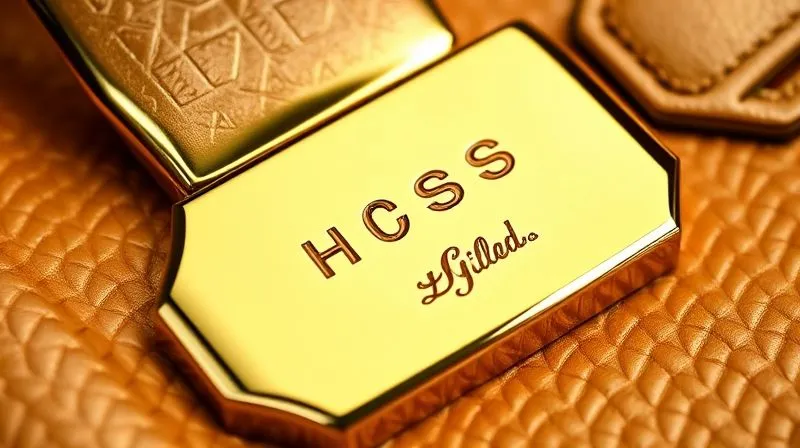
Scrutinize every engraving. Is the font crisp, uniform, and perfectly aligned? Are the letters deeply etched, or do they appear shallow and pressed? Luxury brands maintain strict standards for their logos and markings; any deviation in spacing, depth, or font is a major red flag. This applies to zipper pulls, clasps, feet, and any other metal adornment.
In my experience, many advanced replicas often overcompensate, making their hardware appear 'too perfect' or unnaturally shiny, lacking the subtle, almost organic perfection of genuine pieces that comes from meticulous craftsmanship rather than mass production.
Stitching: The Unsung Authenticity Indicator
The stitching on a luxury handbag is a signature. It speaks volumes about the craftsmanship and attention to detail that sets authentic pieces apart. Replicas frequently fail to replicate this consistency and precision.
Thread Type and Tension
Genuine bags use specific thread types – often waxed linen or high-quality nylon – with a consistent thickness and tension. The stitches should be perfectly even in length and angle, without loose threads, skipped stitches, or areas of inconsistent tension. Brands like Chanel are famous for their precise stitch count per inch. To assess stitching quality:
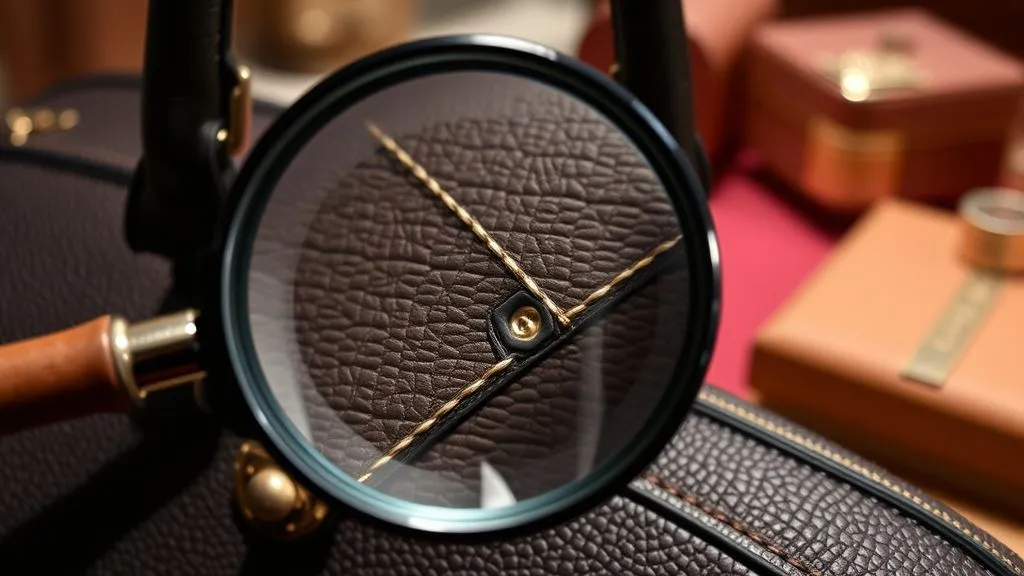
- Examine under magnification: Use a jeweler's loupe or a strong magnifying glass to check for perfect uniformity.
- Feel the texture: Run your finger along the stitching; it should feel smooth and consistent, not bumpy or uneven.
- Count stitches: If possible, compare the number of stitches per inch to known authentic examples for the specific brand and model.
Pattern and Symmetry
Observe the stitching patterns, particularly on quilted bags or those with prominent seams. Is the pattern perfectly symmetrical across the bag? Do seams align precisely? Luxury brands ensure that patterns match up seamlessly, even across different panels of the bag. Any misalignment, even minor, can indicate a replica.
| Brand | Stitching Characteristic | Common Replica Flaw | |
|---|---|---|---|
| Chanel | High stitch count (often 10-12 per inch), perfectly aligned diamond quilting, slightly raised 'puffy' appearance. | Lower stitch count, uneven quilting, flat or irregular puffiness. | |
| Hermès | Signature saddle stitching (two needles, interlocking stitches), hand-stitched appearance, slightly slanted. | Machine stitching (lock stitch), uniform straight stitches, lack of natural hand-stitched variation. | |
| Louis Vuitton | Consistent, often yellow or gold-toned thread, precise and even stitching, specific patterns for different canvas types. | Inconsistent thread color, uneven stitch length, sloppy corners. | Industry observations |
Leather and Materials: Beyond the Surface Feel
The quality and specific characteristics of the materials used are paramount. While replicas can source good leather, they rarely get every detail right, especially concerning the unique processing and finishing of luxury leathers.
Grain, Texture, and Scent
Each luxury brand uses specific leather types (e.g., Hermès Togo, Louis Vuitton Epi, Chanel Caviar) with distinct grain patterns, textures, and even natural scents. Familiarize yourself with these. Authentic leather will often have a rich, natural smell, not a chemical or plastic odor. Feel for consistency in the grain – genuine leather will have natural variations, whereas replicas might show an unnaturally uniform or printed grain.
Lining and Interior Finishes
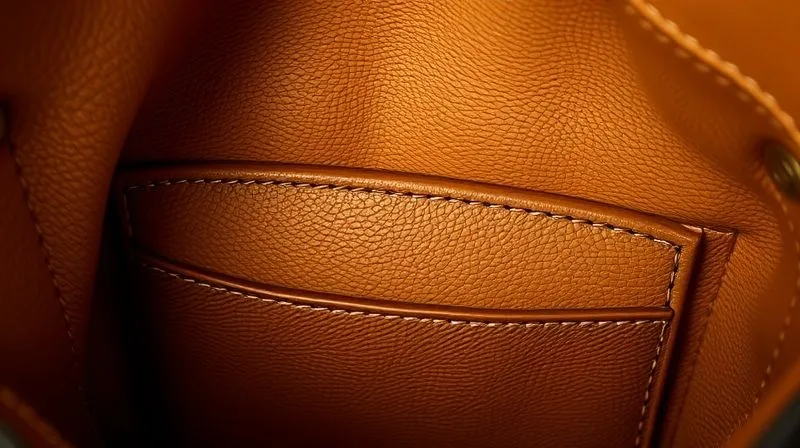
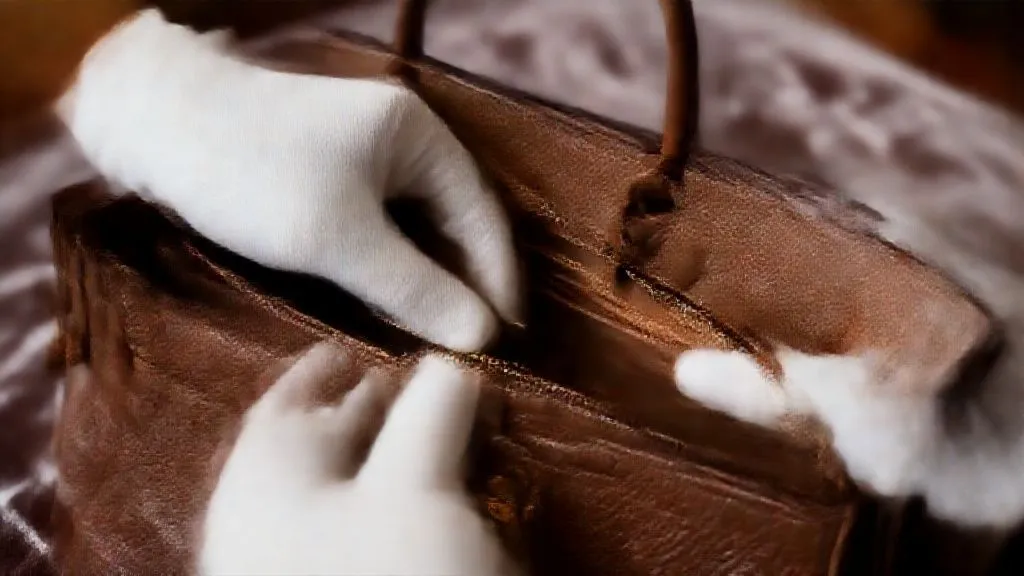
Don't overlook the interior. The lining material, color, and finish are just as important as the exterior. Is the lining made of high-quality fabric or leather? Are the interior pockets well-constructed and neatly sewn? Many replicas cut corners on interior details, using cheaper materials or sloppy stitching. For example, a genuine Hermès Birkin will have a very specific type of Chevre leather lining, which is often difficult to perfectly replicate.
Case Study: The 'Almost Perfect' Tote
Sarah, a client of mine, excitedly showed me what she thought was a fantastic deal on a popular designer tote. On the surface, the exterior leather felt soft and the hardware looked convincing. However, as I guided her to inspect the interior, we found discrepancies. The lining, while the correct color, felt slightly coarse, and the interior zip pocket's stitching was visibly uneven, with loose threads. Furthermore, the distinct smell of genuine calfskin was absent, replaced by a faint chemical scent. These subtle interior flaws, easily missed in a quick inspection, revealed it as an advanced replica, saving her thousands.
For deeper insights into the specific leather types used by top brands, you might consult resources like The Business of Fashion's insights into luxury leather supply chains.
The Devil is in the Details: Heat Stamps, Serial Codes, and Date Codes
These internal markings are crucial identifiers and are often meticulously documented by brands. Replicas frequently make mistakes here, either in the execution or the accuracy of the codes themselves.
Precision of Heat Stamps
Brand heat stamps or foil stamps (e.g., 'Made in France') should be crisp, clear, and perfectly centered. The font, spacing, and size must match authentic examples exactly. Look for any blurring, uneven depth, or misspellings. Genuine stamps are applied with precision, not hastily pressed.
Understanding Serial and Date Codes
Luxury brands use various systems for serial numbers, date codes, or authenticity cards. These codes often indicate the factory, production week, and year. It's vital to research the specific brand's coding system for the particular model and era of the bag you're examining. Replicas often use generic codes, incorrect formats, or codes that don't align with the bag's alleged production year.
Cross-referencing the bag's style and features with its supposed date code is a powerful authentication technique. A code indicating a 2010 production year on a bag with features introduced in 2015 is an immediate red flag, regardless of how convincing other aspects appear. This deep dive into a brand's history builds immense trust.
Zippers, Clasps, and Functionality: The Often-Overlooked Tells
Beyond the visual appeal, how a bag functions can reveal its authenticity. Luxury brands prioritize durability and smooth operation.
Smooth Operation and Sound
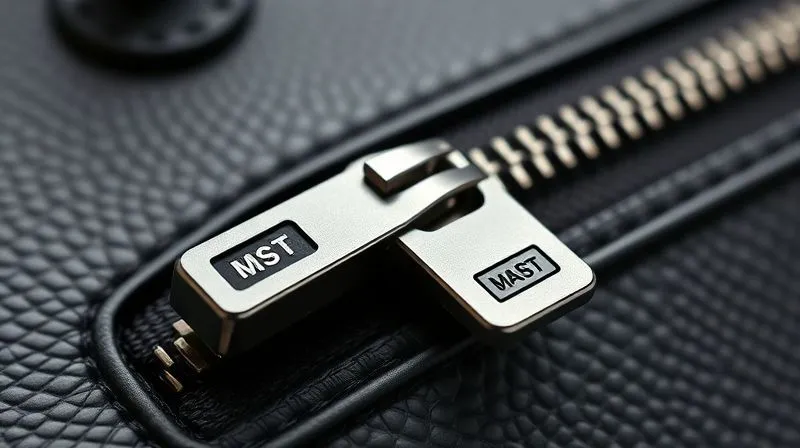
Zippers should glide effortlessly without snagging or stiffness. Clasps should snap shut securely with a satisfying click. Pay attention to the sound – cheap metals or poorly constructed mechanisms will often sound flimsy or clunky. Many brands use specific, high-quality zipper manufacturers like Lampo, Riri, or YKK, and these names are often engraved on the zipper pull or slider.
Alignment and Durability
Examine how components align. Do zippers meet perfectly? Do strap attachments sit flush? Are all moving parts robust and durable? Replicas often show signs of lesser quality here, with components that feel loose, misaligned, or prone to breaking. The integrity of the construction is a hallmark of genuine luxury.
Packaging and Accessories: A Holistic View
Authentication isn't just about the bag itself; the accompanying elements also play a critical role. Advanced replicas often include highly convincing packaging.
Dust Bags, Boxes, and Authenticity Cards
Genuine dust bags are typically made of high-quality cotton or flannel, with precise stitching and accurate branding. Boxes are sturdy, with consistent colors and crisp printing. Authenticity cards, if provided by the brand (not all do, notably Hermès), should have perfect printing, correct fonts, and often special security features. Any deviation in material quality, printing, or font is a sign of a fake.
Receipts and Provenance
While an original receipt adds significant credibility, be wary. Advanced counterfeiters can also produce highly convincing fake receipts. Always cross-reference the details on the receipt (date, store, item description) with the bag itself. The most reliable provenance comes from purchasing directly from a boutique or a highly reputable, authorized reseller. For more on consumer protection against counterfeiting, see resources like the International Trademark Association's fact sheets.
Leverage Expert Authentication Services (When in Doubt)
Despite your best efforts and newfound knowledge, some advanced replicas can be exceptionally difficult to discern. This is where professional authentication services become invaluable. I've personally used and recommend several trusted platforms when a client is truly on the fence.
These services employ teams of highly experienced authenticators who specialize in specific brands and models. They have access to vast databases of authentic pieces, proprietary knowledge of brand-specific tells, and often use microscopic analysis. For high-value purchases, the cost of an authentication service is a small price to pay for peace of mind and protection against significant financial loss.
- Unbiased Opinion: Professional authenticators offer an objective assessment, free from emotional attachment to the purchase.
- Brand-Specific Expertise: They possess in-depth knowledge of nuances across various luxury brands, which is hard for an individual to master for every single brand.
- Access to Proprietary Information: Many services have internal databases and direct insights into brand-specific details not publicly available.
- Financial Protection: A certificate of authenticity from a reputable service can be crucial if you ever need to dispute a purchase or claim insurance.
For further reading on the scale of the global counterfeit market and its impact, consider reports from organizations like the OECD on the trade in counterfeit and pirated goods.
Frequently Asked Questions (FAQ)
Q: Can even experts be fooled by advanced replicas? A: Yes, absolutely. The sophistication of 'super fakes' means that even seasoned experts must constantly update their knowledge and rely on a comprehensive, multi-point authentication process. It's a continuous learning curve, and no single 'tell' is foolproof on its own. It's why I advocate for a holistic approach.
Q: Are there specific brands that are harder to authenticate than others? A: Generally, brands with simpler designs but extremely high-quality materials and craftsmanship, like Hermès, can be exceptionally challenging because the fakes focus on replicating material feel. Brands with intricate details, like Chanel or Louis Vuitton, can also be hard because fakes are getting better at mimicking patterns and hardware, but there are more 'tells' to scrutinize.
Q: What's the biggest mistake people make when trying to authenticate a bag? A: The biggest mistake is relying on just one or two indicators, or focusing solely on exterior aesthetics. Advanced replicas often get the 'look' right. True authentication requires a deep dive into every single detail: hardware, stitching, interior, heat stamps, and even the smell and feel of the materials. It's about cumulative evidence.
Q: Should I trust online authentication services? A: Yes, but choose wisely. Reputable online authentication services (like Entrupy, Real Authentication, or Authenticate First) are invaluable. Do your research, check reviews, and ensure they offer a money-back guarantee or insurance for their findings. Avoid services that promise instant results with minimal photos, as thorough analysis takes time.
Q: What legal recourse do I have if I unknowingly buy a replica? A: Your recourse depends heavily on where and how you purchased the bag. If from a reputable platform like eBay or PayPal, you often have buyer protection. If from an individual, it can be much harder. Always document everything – communication, payment, and the seller's claims. Contact the platform or your payment provider immediately. In some jurisdictions, knowingly selling counterfeits is a crime, but proving the seller's intent can be difficult.
Key Takeaways and Final Thoughts
- Adopt a Holistic Approach: Never rely on a single tell. Authenticity is a sum of countless precise details.
- Scrutinize the 'Small Stuff': Hardware, stitching, heat stamps, and interior finishes are often where advanced replicas falter.
- Educate Yourself Continuously: Brands evolve, and so do fakes. Stay informed about specific brand characteristics and common replica flaws.
- When in Doubt, Consult an Expert: For high-value purchases, a professional authentication service is an invaluable safeguard.
Identifying advanced replica luxury handbags is a skill honed through knowledge, patience, and meticulous attention. By applying these expert checks, you're not just protecting your investment; you're upholding the integrity of luxury itself. Approach every potential purchase with a discerning eye and the confidence that comes from being well-informed. The world of luxury fashion deserves your informed appreciation, free from the deception of fakes.
Recommended Reading
- Navigating Budget Cuts: 7 Smart Strategies for Fashion Photography
- Boost Fashion Blog SEO: 7 Steps to Optimize Images for Speed & Rank
- Mastering Elegance: Your Ultimate Guide to a Thorough Luxury Fashion Review
- Sustainable Kids' Fashion: 7 Ways to Balance Affordability & Ethics
- Unveiled: Why Haute Couture Heritage Techniques Are Vital for Fashion's Future


Your email address will not be published. Required fields are marked *