


How to Pivot a Failing Fashion Photoshoot Concept On Set?
For over two decades in the dynamic, often unpredictable world of fashion photography, I’ve witnessed countless concepts bloom into stunning campaigns. But I’ve also been on sets where the initial vision, meticulously planned and mood-boarded, simply refused to translate. It’s a moment every creative director dreads: the dawning realization that your beautiful concept is, for lack of a better word, failing.
This isn't just about a model having an off day or a prop being slightly wrong. This is about the core idea, the narrative, the very soul of the shoot, not resonating. The energy feels flat, the images lack punch, and a palpable tension descends upon the crew. It’s a costly, high-pressure situation that demands immediate, decisive action.
But here’s the crucial insight I’ve gained: a failing concept isn't an end; it's an urgent call for a pivot. In this definitive guide, I’ll share my battle-tested framework and strategies on how to pivot a failing fashion photoshoot concept on set, transforming potential disaster into a unique, often more compelling, success story. We'll explore actionable steps, real-world examples, and the mindset needed to navigate these high-stakes creative challenges.
Understanding the Early Warning Signs: When to Call for a Pivot
Recognizing that a concept is veering off course is the first, and arguably most critical, step. This isn't about second-guessing; it's about acute observation and trusting your seasoned creative instincts. I've seen teams stubbornly push through, hoping for a miracle, only to waste precious time and resources.
The Subtle Shifts That Signal Trouble
The signs are rarely a flashing red light. More often, they are subtle but persistent:
- Lack of Energy: The models, despite direction, aren't connecting with the concept. The poses feel forced, the expressions vacant.
- Photographer's Frustration: The photographer is struggling to find the 'hero' shot, constantly adjusting, or expressing dissatisfaction with the output.
- Crew's Silence: A usually vibrant, communicative set becomes eerily quiet. People are going through the motions without enthusiasm.
- Client's Unease: If a client is present, their body language or hesitant feedback can be a strong indicator. They might say, "It's good, but..."
- The 'Just Not Working' Feeling: As a creative director, you have an internal barometer. If that gut feeling screams "this isn't right," listen to it.
"The most dangerous phrase in business is 'We've always done it this way.' The same applies to creative direction. Be open to change, even when it’s uncomfortable."
These indicators, individually or combined, are your cue. Don't ignore them. Acknowledging the problem early allows for a calculated, rather than panicked, response. This proactive approach is key to successfully learning how to pivot a failing fashion photoshoot concept on set.
The Immediate Huddle: Assessing the Damage and Realigning the Vision
Once you've identified a problem, the clock starts ticking. Your immediate response dictates whether you descend into chaos or ascend to a new creative solution. I advocate for a swift, contained huddle – a tactical timeout that brings key players together.
Communication is King: Gathering Input Swiftly
This isn't a blame game. It's an objective assessment. Gather your photographer, lead stylist, and perhaps a key assistant. Keep the group small and focused to avoid overwhelming the set.
- State the Problem Clearly: "The current concept isn't translating. The shots feel flat/disconnected/not impactful enough."
- Seek Concise Feedback: Ask open-ended questions. "What are you seeing? What's not working from your perspective?" Listen actively to the photographer's technical challenges, the stylist's concerns about the wardrobe's impact, or the model's difficulty connecting.
- Reiterate the Core Objective: Remind everyone of the brand's message, the product's unique selling proposition, or the overall feeling you aimed to evoke. Sometimes, the initial concept strayed too far from this core.
- Brainstorm Solutions (Rapid-Fire): Encourage quick ideas, no matter how outlandish. The goal is quantity over quality at this stage. You're looking for sparks.
This collaborative, yet directed, approach helps to distribute the creative burden and often unearths solutions faster than a single person trying to force a new direction. It’s a crucial step in understanding how to pivot a failing fashion photoshoot concept on set.

Strategy 1: The 'Minimal Viable Product' (MVP) Approach
When a concept is crumbling, sometimes the best solution is to strip it back to its bare essentials. Borrowing from the tech world, the 'Minimal Viable Product' (MVP) approach means identifying the absolute core message or aesthetic you *must* achieve, and shedding everything else that isn't working.
Stripping Down to the Core Concept
This strategy is about ruthless simplification. What is the single, most important story you need to tell? What is the one emotional response you want to elicit? Everything that complicates or detracts from that core needs to be re-evaluated or removed.
- Identify the Essence: Look at your original brief. What was the absolute non-negotiable takeaway? Is it 'empowerment,' 'elegance,' 'rebellion,' 'comfort'? Focus on that keyword.
- Simplify Wardrobe: Can you reduce the number of looks or accessories? Sometimes less is more impactful. Opt for classic, versatile pieces that support the core message.
- Streamline Posing and Expression: Instead of complex narratives, aim for straightforward, powerful poses that convey the essence directly.
- Reduce Set Complexity: If your set design is proving cumbersome or distracting, simplify it. Use fewer props, or even shoot against a plain backdrop if it serves to highlight the subject more effectively.
- Focus on a Single Hero Shot: Prioritize capturing one or two truly strong images that embody the simplified concept, rather than trying to force a full narrative.
"Complexity is the enemy of execution. In a crisis, simplify, simplify, simplify until only the essential remains."
This MVP approach often unearths a purity that was lost in the initial, perhaps over-ambitious, concept. It's a powerful way to regain control and effectively learn how to pivot a failing fashion photoshoot concept on set with clarity and precision.
Strategy 2: Resourceful Repurposing – Using What You Have
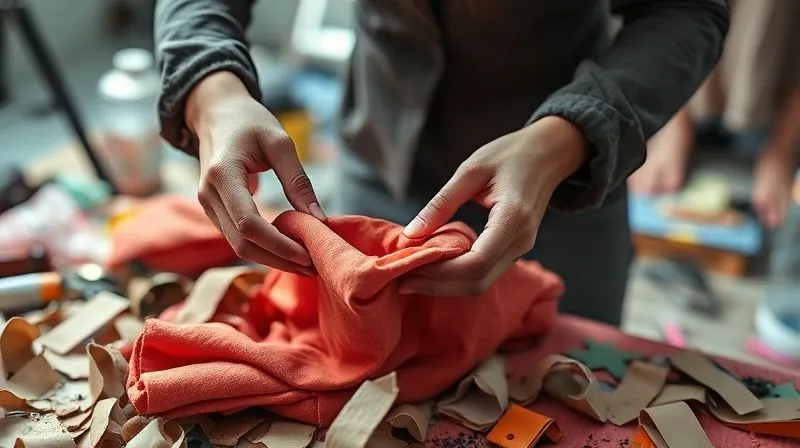
A failed concept doesn't mean your resources are wasted. Often, the elements you've already gathered—wardrobe, props, location—can be repurposed in entirely new ways. This requires a shift in perspective, moving from what *should* have been to what *can* be.
Rethinking Wardrobe, Props, and Location
Look at your existing assets with fresh eyes. Can that elaborate gown be styled down for a more casual, edgy look? Can that antique prop become a modern art installation? Can the 'wrong' lighting become a dramatic, intentional choice?
- Wardrobe Transformation:
- Deconstruct: Take apart layers, unbutton shirts, roll sleeves.
- Re-style: Pair unexpected items, use accessories differently (e.g., a scarf as a head wrap).
- Change Context: A formal dress in an informal setting, or vice-versa, creates instant tension and interest.
- Prop Reimagination:
- Change Scale: Zoom in on a small detail, or use a large prop to dwarf the model.
- Shift Function: A chair as a sculpture, a table as a backdrop.
- Emotional Association: Use props to evoke a feeling rather than a direct story.
- Location Reinvention:
- New Angles: Shoot from the floor, from above, through objects.
- Focus on Details: Instead of the grand vista, highlight a textured wall, a patch of light, a single architectural detail.
- Time of Day: Can the changing light (golden hour, twilight) transform the location's mood?
This creative constraint often sparks the most innovative solutions. By challenging yourself to work within existing parameters, you force a different kind of ingenuity. It’s an artful way to learn how to pivot a failing fashion photoshoot concept on set without incurring additional costs or delays.
| Original Resource | Pivot Strategy | New Application |
|---|---|---|
| Elaborate Gown | Deconstruct & Re-style | Styled with sneakers for urban edge, or draped as a backdrop. |
| Vintage Furniture | Change Function & Scale | Used as abstract sculptural elements, or tightly framed for texture. |
| Industrial Warehouse | Focus on Details & Lighting | Isolate a rusted beam for texture, or use natural light through high windows for dramatic shadows. |
| Bright, Sunny Day | Embrace & Subvert | Use harsh shadows as graphic elements, or overexpose for ethereal feel. |
Strategy 3: The 'Character Arc' Pivot – Redefining the Narrative
Fashion photography is inherently about storytelling. If your initial narrative isn't landing, instead of abandoning it entirely, consider shifting the character's arc or the story's emotional core. This can infuse new life into the same visual elements.
Shifting the Story, Not Just the Shots
Think about the emotional journey you want to evoke. Is your model a protagonist, an antagonist, a dreamer, a rebel? How does the clothing inform this role? A subtle shift in the story can dramatically alter the perception of the same wardrobe and setting.
"People don't buy products; they buy stories. If your story isn't working, tell a different one with the same actors and stage."
For example, if your original concept was 'effortless luxury' but the model isn't embodying it, perhaps pivot to 'rebellious elegance' or 'solitary contemplation.' The change is in the *intention* behind the pose, the gaze, the interaction with the environment.
Case Study: The 'Forgotten Forest' Campaign
I once worked on a campaign for a high-end outerwear brand, aiming for a 'rugged adventurer' narrative in a beautiful, dense forest location. On set, the model, while professional, just couldn't embody the raw, untamed spirit we envisioned. The shots felt forced, almost theatrical, rather than authentic. The concept was clearly failing.
During a quick huddle, we realized the disconnect. Instead of trying to force 'rugged,' we pivoted the narrative to 'the solitary wanderer' – someone seeking peace and introspection amidst nature. We changed the model's direction from dynamic action shots to contemplative, serene poses. We asked her to *feel* the solitude, to *breathe* the quiet. The wardrobe remained largely the same, but the styling became softer, more flowing. The photographer started focusing on the play of light through the trees, emphasizing the tranquility.
The result? A stunning series of images that conveyed a deep sense of calm and escape, perfectly showcasing the outerwear's comfort and quality in a way that resonated far more powerfully than the original, forced 'adventurer' concept. This pivot not only saved the shoot but created a more memorable campaign, proving the power of redefining the narrative to how to pivot a failing fashion photoshoot concept on set.
Strategy 4: Lighting & Staging Magic – A New Perspective
Often, a concept feels flat not because the idea is inherently bad, but because the execution lacks visual drama. Lighting and staging are your most powerful tools for transforming the mood, highlighting details, and creating an entirely new aesthetic without changing a single item of clothing or prop.
Transforming the Mood with Technical Adjustments
A shift in light can turn a mundane scene into a cinematic masterpiece. A subtle adjustment in staging can change the entire dynamic between the model and their environment.
- Dramatic Lighting:
- High Contrast: Use hard light to create deep shadows and stark highlights, adding drama and sculptural quality.
- Soft & Ethereal: Employ large diffusers, bounce cards, or natural window light for a dreamy, romantic feel.
- Color Gels: Introduce colored light to instantly change the emotional temperature of a scene – cool blues for melancholia, warm oranges for energy.
- Strategic Staging:
- Negative Space: Emphasize emptiness around the subject to create a sense of isolation or grandeur.
- Layering: Place elements in the foreground and background to add depth and visual interest, drawing the eye through the frame.
- Cropping & Framing: Shoot extremely tight on a detail, or frame the model through an architectural element to add intrigue.
- Movement: Introduce subtle movement (wind machine, model's hair toss) to add dynamism where stillness failed.
These technical shifts are often the quickest and most impactful ways to learn how to pivot a failing fashion photoshoot concept on set. They leverage the expertise of your photography and lighting teams, allowing them to truly shine and deliver a fresh perspective.

Strategy 5: Empowering Your Team – Collective Creative Problem-Solving
As a creative director, you lead the vision, but you're not an island. Your team—photographer, stylist, makeup artist, hair stylist, assistants—are all creative professionals with unique perspectives. In a crisis, their collective brainpower is your greatest asset. Empowering them to contribute meaningfully can unlock unexpected solutions.
Delegation and Trust in a Crisis
During a pivot, it's easy to fall into the trap of micromanaging. Resist this urge. Instead, clearly communicate the new direction (or the problem to solve) and trust your team to execute within their respective domains.
- Define the New Brief: After your initial huddle and decision to pivot, clearly articulate the revised concept or the desired mood. Be concise and inspiring.
- Assign Ownership:
- Photographer: "I need you to find the raw emotion in this new narrative. Experiment with tighter crops."
- Stylist: "Let's re-evaluate the accessories for a more understated/edgy feel. Can we layer these pieces differently?"
- MUA/Hair: "Can we simplify the beauty look to focus on natural texture, or go for a bold, graphic element?"
- Assistants: "Help find unexpected props on set or scout for a new background element nearby."
- Encourage Independent Thought: Give your team members the freedom to interpret the new brief through their lens. Often, their fresh perspective is exactly what's needed.
- Maintain Open Communication: Check in regularly, but avoid hovering. Be available for questions and quick feedback, but allow them space to create.
This approach not only yields better results but also builds team morale and fosters a sense of shared accomplishment. When everyone feels invested in finding a solution for how to pivot a failing fashion photoshoot concept on set, the collective creative energy becomes unstoppable. According to a Harvard Business Review article on team trust, empowering team members significantly boosts productivity and innovation, especially under pressure.
| Role | Key Action in Pivot |
|---|---|
| Creative Director | Articulates new vision, empowers team, maintains overview. |
| Photographer | Explores new angles/lighting, focuses on revised narrative, technical solutions. |
| Stylist | Re-styles existing wardrobe/props, scouts for new elements on-site. |
| Hair & Makeup Artist | Adapts beauty look to new mood, offers quick transformations. |
| Production Assistant | Assists with prop/set changes, manages logistics of new direction. |
Post-Pivot Protocol: Learning and Documenting for Future Success
Successfully navigating a mid-shoot pivot is a triumph, but the learning doesn't stop when the last shot is taken. The experience offers invaluable insights for future productions. As Seth Godin often says, "Learning is not a spectator sport." You must actively engage with what happened.
Reflecting on the Experience
A post-mortem analysis, even a brief one, is crucial. It helps refine your intuition, improve your planning processes, and build resilience for future challenges. This reflective practice solidifies your understanding of how to pivot a failing fashion photoshoot concept on set.
- Debrief with Key Team Members: Discuss what went wrong with the original concept, what worked well during the pivot, and what could be improved next time.
- Document the Changes: Keep notes on the original concept, the reasons for the pivot, the new direction taken, and the specific actions that led to success. This creates a valuable knowledge base.
- Analyze the Final Images: Compare the initial test shots (from the failing concept) with the pivoted shots. Understand *why* the new direction was more effective.
- Update Your Mood Boarding Process: Did the initial mood board miss something? Did it convey a misleading message? Adjust your pre-production process accordingly.
- Celebrate the Resilience: Acknowledge the team's ability to adapt and overcome. This reinforces a positive, problem-solving culture.
Every challenge is an opportunity for growth. By systematically reviewing your pivots, you turn potential failures into powerful lessons, honing your skills as a creative director and making you an even more formidable force on set. Further insights into project post-mortems can be found in resources like ProjectManager.com's guide on post-mortems.

Frequently Asked Questions (FAQ)
Q: How do I know it's a 'failing' concept vs. just a challenge that needs more effort?
A: This distinction comes with experience. A 'challenge' usually involves a specific hurdle – a difficult light, a tricky pose, a minor prop issue – that can be overcome with technical skill or a small adjustment. A 'failing concept,' however, is when the *core idea* isn't translating, despite effort. The images feel disjointed, the model isn't connecting, or the emotional impact is absent. Trust your gut and the collective unease of your most experienced team members. If the fundamental narrative isn't landing, that's your cue for a pivot.
Q: What if the client is on set and resistant to change?
A: This is delicate. First, approach the client privately and professionally. Clearly articulate the problem and, crucially, present a *solution* – don't just state the failure. Frame the pivot as an opportunity to enhance the initial vision or achieve the core objective more effectively. Show them a few test shots from the failing concept versus a quick mock-up of the proposed pivot. Emphasize that your priority is delivering the best possible outcome for *their* brand. Data-backed arguments (e.g., "the current shots lack the emotional resonance we discussed in the brief") can also be powerful. Referencing industry best practices for client communication can also be helpful, such as articles from Forbes Agency Council.
Q: How do I manage time pressure during a pivot?
A: Time is your enemy and your most valuable resource. The key is swift, decisive action. The 'Immediate Huddle' (H2) should be no longer than 10-15 minutes. The MVP approach (H2) is designed for speed. Delegate tasks clearly and simultaneously. Focus on the most impactful changes first (lighting, main pose, core narrative). Communicate transparently with the team about the time crunch, fostering a collective urgency. Often, a well-executed pivot, even if it takes an hour, saves more time (and money) than stubbornly pushing a failing concept for the rest of the day.
Q: Should I always try to pivot, or sometimes just cut losses?
A: This is a tough call. In most fashion photography scenarios, a pivot is almost always preferable to cutting losses entirely. The resources invested (location, models, crew, equipment) are substantial. A pivot aims to salvage that investment by finding a viable alternative. Cutting losses might be considered if the fundamental elements (e.g., a critical prop is missing, the location is unusable due to unforeseen circumstances) make *any* concept impossible, or if the client explicitly agrees to stop. However, as an experienced creative director, your role is to find a solution, and pivoting is usually that solution for how to pivot a failing fashion photoshoot concept on set.
Q: What's the most common reason for a concept failure on set?
A: In my experience, the most common reason is a disconnect between the *pre-production ideal* and the *on-set reality*. This can stem from overly abstract mood boards, a lack of clear communication during planning, or simply an unforeseen element (e.g., weather, model's energy, specific lighting) that fundamentally alters the intended mood. Sometimes, a concept that looks great on paper simply doesn't have the visual punch in three dimensions. It's rarely a single person's fault but rather a complex interplay of factors that reveals itself only when the cameras start rolling.
Key Takeaways and Final Thoughts
Navigating a failing fashion photoshoot concept on set is one of the most demanding challenges a creative director faces. It tests your leadership, your creativity, and your ability to think under pressure. But as I've shared, it's also where true mastery is forged. Understanding how to pivot a failing fashion photoshoot concept on set isn't just about problem-solving; it's about elevating your craft.
- Early Detection is Key: Trust your instincts and your team's subtle cues.
- Communicate Decisively: Hold focused huddles, gather input, and articulate new directions clearly.
- Embrace Simplification: The MVP approach can cut through complexity and reveal core strength.
- Reimagine Resources: Leverage existing wardrobe, props, and location in new, creative ways.
- Redefine the Narrative: A shift in storytelling can transform the emotional impact.
- Master Technical Magic: Lighting and staging are powerful tools for instant mood shifts.
- Empower Your Team: Their collective expertise is your strongest asset in a crisis.
- Learn from Every Pivot: Document, debrief, and refine your process for future success.
Remember, a pivot isn't a failure; it's a testament to your adaptability and ingenuity. It’s the moment you stop hoping for a miracle and *create* one. Approach these challenges with confidence, lean on your experience, and trust in your creative vision. The most memorable campaigns often emerge from the very brink of disaster, forged in the heat of an on-set pivot. Go forth and create, fearlessly adapting when necessary!
Recommended Reading
- 5 Reasons Customers Abandon AR Try-On: Fix Your Fashion Tech Leaks
- Unlock Fair Pay: 7 Steps to Calculate & Implement Apparel Living Wages
- Unlock the Secret: How to Properly Clean & Maintain Smart Fabric Garments?
- 7 Key Challenges Appraising 1920s Designer Clothing & How to Overcome Them
- Unlock the Secret: How to Prevent Scratches on Your Watch Crystal



Your email address will not be published. Required fields are marked *