

What are common challenges when appraising 1920s era designer clothing?
Appraising 1920s era designer clothing presents a unique tapestry of challenges, often requiring a blend of historical knowledge, textile expertise, and a keen eye for detail. In my over 15 years immersed in this niche, I've observed that many common appraisal pitfalls stem from the very nature of vintage textiles and the historical context of their creation. One of the foremost hurdles is **authentication and provenance**. Unlike modern luxury goods with extensive serial numbers and digital tracking, early 20th-century couture often lacked standardized labeling. Many haute couture houses, particularly in Paris, might have only used a simple woven label, a hand-stitched number, or even no label at all for custom commissions. A common mistake I see is dismissing a high-quality, period-correct garment simply because it lacks a prominent designer tag."The absence of a label does not equate to the absence of a designer. Sometimes, the garment *is* the label."* **Authenticating Unlabeled Pieces:** This requires a deep understanding of construction techniques specific to designers like Chanel, Lanvin, or Worth. Look for: * **Hand-finishing:** Meticulous hand-sewn seams, hems, and embellishments characteristic of couture. * **Fabric Quality:** Use of superior silks, velvets, and laces that were exclusive to high-end houses. * **Design Signatures:** Specific silhouettes, embellishment patterns, or closure types that are known hallmarks of a particular designer's work from that period. For example, Chanel’s early use of jersey or her distinctive camellia motifs. * **Internal Construction:** Unique linings, boning, or internal structural elements. Another significant challenge lies in **condition assessment and restoration impact**. The delicate fabrics of the 1920s – think silk chiffons, lamé, heavily beaded net – are inherently fragile. Over a century, these materials are prone to degradation from light exposure, improper storage, and even the weight of their own embellishments. Appraisers must differentiate between natural aging and damage that severely diminishes value. * **Evaluating Condition:** * **Fabric Integrity:** Is the silk "shattered" or embrittled? Are there areas of dry rot in velvet? These are often irreversible. * **Beadwork & Embellishments:** Many 1920s dresses feature intricate glass beading, sequins, or metallic embroidery. Are these intact? Are they tarnished or missing? Extensive re-beading, while sometimes necessary, can significantly impact originality and, consequently, value. * **Stains & Discoloration:** Perspiration stains, foxing (age spots), or rust marks from storage are common. While some light cleaning might be possible, aggressive restoration can damage the fabric. * **Repairs & Alterations:** Were repairs done sympathetically and in period? Or are they crude modern fixes? Original alterations, such as a shortened hemline to reflect changing fashion, are often less detrimental than later, poorly executed repairs. Furthermore, **identifying originality versus later alterations or 'make-overs'** is critical. It was common practice for garments to be altered to fit new owners, updated to contemporary styles, or even repurposed. A flapper dress might have had its hemline drastically shortened in the 1930s or sleeves added to a sleeveless design. * **Detecting Modifications:** * **Stitching Discrepancies:** Look for different thread types, stitch sizes, or uneven tension along seams, indicating a later intervention. * **Fabric Fading Lines:** If a hem was let down, there might be a visible fade line where the fabric was previously folded and protected from light. * **Anachronistic Elements:** Are closures (zippers, hooks and eyes) consistent with the 1920s? A modern zipper on an otherwise period dress is a clear red flag. * **Re-cutting:** Sometimes, a larger garment was completely re-cut into a smaller, more fashionable silhouette. This requires a deep understanding of period pattern making. Finally, navigating the **lack of standardized sizing and documentation** from the era adds another layer of complexity. Sizing was highly inconsistent, and many garments were custom-made to an individual's measurements. Relying solely on a label's stated size (if one exists) is misleading. * **Overcoming Sizing Challenges:** * **Prioritize Measurements:** Always measure the garment flat, focusing on bust, waist, hips, and length. These are far more valuable than any numerical size. * **Understand Period Silhouettes:** The 1920s favored a looser, drop-waisted silhouette, which often means garments have more generous bust and hip measurements compared to their modern equivalents. * **Research Design House Archives:** When possible, cross-reference with any available design house archives, fashion plates, or period catalogs to understand the intended fit and styling of similar pieces. This can be time-consuming, but invaluable for high-value items.
Understanding the Root of the Problem: Why Do 1920s Designer Clothing Appraisals Go Wrong?
It's easy to assume that appraising a garment is straightforward, but when it comes to 1920s designer clothing, the path is fraught with potential missteps. In my fifteen years navigating this fascinating niche, I've observed countless appraisals that fall short, often dramatically underestimating or overestimating a piece's true worth. The root causes are often multifaceted, stemming from a fundamental lack of specialized insight into this unique and delicate market.
At the heart of most erroneous appraisals lies a critical gap in **specialized knowledge**. Many general vintage appraisers, while skilled in broader categories, lack the nuanced understanding required for early 20th-century couture. This isn't just about identifying a label; it's about discerning the subtle hallmarks of a master craftsman, the historical context, and the specific market dynamics.
- Designer-Specific Signatures: Each major house – be it Lanvin, Callot Soeurs, Worth, or early Chanel – had distinct construction techniques, fabric preferences, and aesthetic sensibilities that evolved even within the decade. An appraiser must recognize these subtle cues beyond just a sewn-in label, which were often absent or easily faked.
- Textile Identification: The 1920s saw a blend of traditional silks, velvets, and laces with emerging synthetics like rayon. Misidentifying a luxurious silk crepe de chine for a more common, less valuable rayon can drastically alter an appraisal, sometimes by thousands.
- Construction Nuances: The era's couture often featured intricate hand-sewn details, elaborate beadwork, and unique internal structures designed to achieve the period's silhouette. A failure to appreciate these labor-intensive techniques devalues the garment, overlooking the sheer artistry involved.
Another significant pitfall stems from the complex world of **authentication**. Unlike modern luxury goods with extensive serial numbers and clear branding, 1920s designer pieces often present a forensic challenge. Appraisers frequently struggle to verify provenance or even the authenticity of a label, leading to misattributions or inflated claims.
"In my experience, the absence of a label on a high-quality 1920s gown doesn't automatically diminish its value; sometimes, the sheer craftsmanship, specific materials, and documented provenance speak volumes more than a faded silk tag. Conversely, a prominent label doesn't guarantee authenticity without deeper investigation."
- Label Inconsistencies: Many early couture houses had varying labeling practices, or pieces were custom-made without a label. Fakes, or later additions, are also a concern, requiring expertise in period typography, materials, and attachment methods.
- Fabric & Embellishment Analysis: Distinguishing period-correct beads, sequins, or embroidery from later repairs or embellishments requires a keen eye and historical knowledge. The patina of age on genuine materials is often key, as is the understanding of period dyes and dyes.
- Provenance Verification: Relying solely on anecdotal evidence without solid documentation (e.g., original purchase receipts, family photographs, exhibition history) can lead to significant appraisal errors. A compelling story without proof is just a story.
Furthermore, the delicate nature of 100-year-old textiles means that **condition assessment** is far from straightforward. What constitutes "good" condition for a 1920s designer dress is a highly specialized judgment, often misunderstood by those outside conservation or high-end vintage circles. A common mistake I see is over-punishing minor flaws or, conversely, overlooking significant structural damage.
Think of it like appraising an antique painting: a small crackle in the paint might be acceptable patina, but a large tear is a major detriment. For textiles, a minute pinhole in silk crepe is different from extensive shattering, and the impact on value varies wildly. An appraiser must understand the difference between expected age-related wear and damage that severely compromises integrity or display value.
Finally, a significant number of appraisals go awry due to a fundamental **misunderstanding of the current market dynamics** for 1920s designer clothing. This isn't a static market; it's influenced by collector trends, museum acquisitions, and the scarcity of truly exceptional, well-preserved pieces. Relying on outdated auction results or general vintage clothing values is a recipe for error.
- Scarcity vs. Desirability: A piece might be incredibly rare, but if there's no current collector demand for that specific designer or style, its market value might not reflect its historical rarity. A rare piece by an obscure designer might fetch less than a less rare, but highly desirable, early Chanel.
- Comparative Sales Data: True comparables for unique couture pieces are often few and far between. An expert appraiser knows where to find specialized auction results and private sales data, rather than relying on generalist platforms or broad vintage categories.
- Impact of Provenance on Value: While provenance can add significant value, especially if linked to a notable figure or specific event, quantifying this premium requires deep market insight and an understanding of collector psychology, not just historical fact.
Lack of Period-Specific Knowledge
The most insidious challenge many appraisers face when evaluating 1920s designer clothing isn't a lack of documentation, but a fundamental deficit in **period-specific knowledge** itself. This isn't merely about knowing names like Lanvin or Vionnet; it's about a deep, intuitive understanding of the era's aesthetic, construction, and material lexicon. In my fifteen years of appraising, I've seen countless valuable pieces misidentified, or worse, dismissed, simply because the appraiser lacked the contextual fluency. A common mistake I see is the inability to differentiate between a truly revolutionary cut by Chanel and a later, mass-produced imitation that merely borrows superficial elements. True expertise demands an intimate familiarity with the subtle nuances that define authentic 1920s designer work. This includes recognizing the specific draping techniques of Madeleine Vionnet, the signature embroidery of Jeanne Lanvin, or the distinct beadwork patterns that characterized Art Deco opulence, which often varied by atelier. Understanding the **fiber content** – like the nascent introduction of rayon alongside silks and velvets – is also paramount, as are the era's unique hand-finishing methods. Overcoming this knowledge gap requires a multi-pronged, immersive approach:- Immersive Archival Research: Delve into original fashion periodicals such as Vogue or Harper's Bazaar from 1920-1929. Study department store catalogs, historical photographs, and trade journals to understand production and consumption.
- Textile & Construction Study: Familiarize yourself with common 1920s fabrics, dyes, and embellishments. Learn to identify period-appropriate seam finishes, lining materials (often silk crepe or rayon), and closures like hook-and-eye tapes or early, limited zipper applications.
- Designer Signature Recognition: Beyond mere labels, understand the evolution of designer signatures, their unique construction tells, and how to spot fakes or later additions. Each major house had its own distinctive "hand."
- Socio-Cultural Context: Grasp the broader historical and cultural shifts – the rise of the flapper, the influence of jazz, Art Deco’s geometric precision, and the loosening of corsetry – that fundamentally shaped the decade's fashion.
The fabric of 1920s fashion is not just silk and beads; it's woven with the threads of societal change, artistic innovation, and a burgeoning sense of female liberation. To appraise it without this holistic understanding is to miss its true value.Furthermore, developing a **tactile memory** is indispensable. Handling genuine 1920s garments – feeling the drape of a period silk crepe, the weight of authentic glass beading, the specific crispness of a bias-cut georgette – builds an intuitive understanding that no amount of book learning alone can provide. This hands-on experience refines your judgment. Ultimately, expertise in this niche is not a destination but an ongoing journey of discovery. The most successful appraisers are those who commit to **continuous learning**, always seeking to deepen their understanding of this captivating and complex era. This dedication is what truly separates the novice from the seasoned expert.
Condition Assessment Difficulties
Assessing the condition of 1920s designer clothing is, in my experience, one of the most intricate and challenging aspects of accurate appraisal. It's far more than a cursory glance; it demands a forensic level of attention to detail, a deep understanding of period materials, and an awareness of common degradation patterns.The inherent fragility of fabrics popular during the Roaring Twenties presents the first hurdle. We're often dealing with incredibly delicate silks, chiffons, velvets, and lamés, many of which are over a century old and have undergone significant molecular degradation.
A common mistake I see is underestimating the prevalence of **silk shattering**. This isn't just a tear; it's a complete breakdown of the silk fibers, often exacerbated by early dyeing processes or improper storage. What appears to be a small rip can quickly propagate into a significant loss of fabric, making repair nearly impossible without extensive conservation.
Moreover, many garments from the era, particularly those with a lustrous sheen, were made from early forms of **rayon** (often marketed as "artificial silk"). While beautiful, these early rayons are highly susceptible to **dry rot**, becoming brittle and powdery with age, especially in areas of stress like seams or underarms.
Embellishments, a hallmark of 1920s design, introduce another layer of complexity. Hand-sewn beads, sequins, and intricate embroidery were frequently attached with cotton thread, which degrades much faster than the embellishments themselves. I've encountered countless pieces where the beads are intact, but the threads holding them have rotted, leading to significant loss.
When inspecting a beaded or sequined garment, you must look for:
- **Thread Rot:** Gently test areas by lightly touching beads; if they feel loose or a few detach, thread rot is likely pervasive.
- **Tarnishing/Oxidation:** Especially on metallic beads or sequins, which can be irreversible.
- **Missing Elements:** Count sections of loss and estimate the percentage of original embellishment remaining.
One of the trickiest aspects is uncovering **hidden damage**. Linings, often made of silk or rayon, can conceal significant issues. Underarm areas are particularly vulnerable to perspiration stains, fabric shattering, and discoloration that might not be visible until the lining is carefully peeled back or the garment is inverted.
"True appraisal requires the patience of an archaeologist and the eye of a detective. The story of a garment's life, good and bad, is written in its fibers, and it's our job to read it."
Furthermore, discerning between period repairs and later, amateur interventions is critical. A small, neatly executed period mend, perhaps done by the original owner, can sometimes be considered part of the garment's history and not significantly detract from value. However, a clumsy, modern repair using inappropriate thread or fabric can severely impact a piece's authenticity and market desirability.
In my practice, I always recommend a systematic approach to condition assessment:
- **Initial Visual Scan:** Note overall appearance, obvious flaws, and silhouette.
- **Gentle Tactile Inspection:** Carefully feel the fabric for brittleness, stiffness, or unusual textures.
- **Internal Examination:** Turn the garment inside out. Inspect all seams, linings, and hidden areas for stress, discoloration, or repairs.
- **Embellishment Audit:** Methodically check every section for loss, damage, or loose threads.
- **Environmental Damage Check:** Look for signs of light fading, water damage (tide marks), pest activity (moth holes, insect trails), or **foxing** (age-related brown spots).
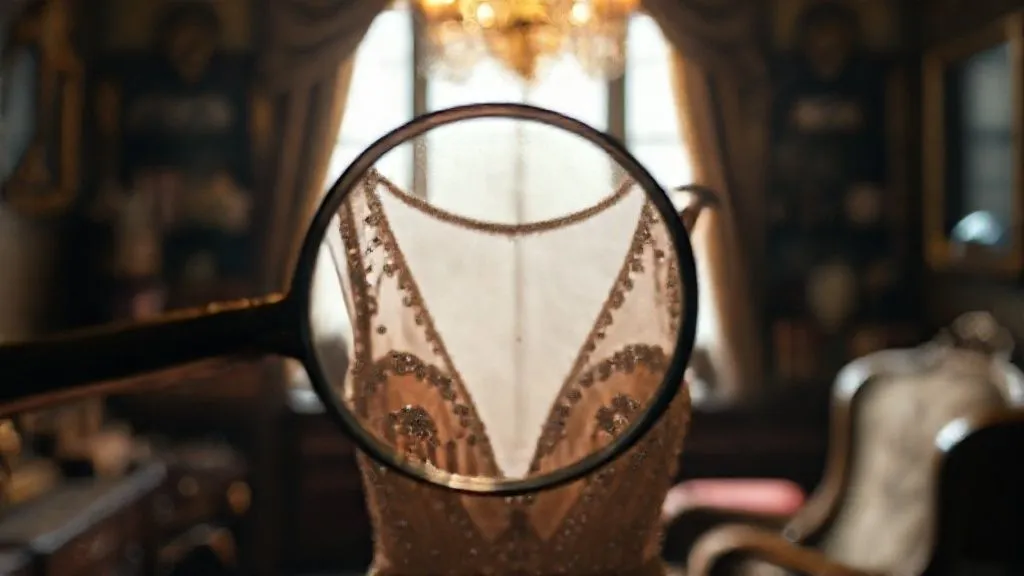
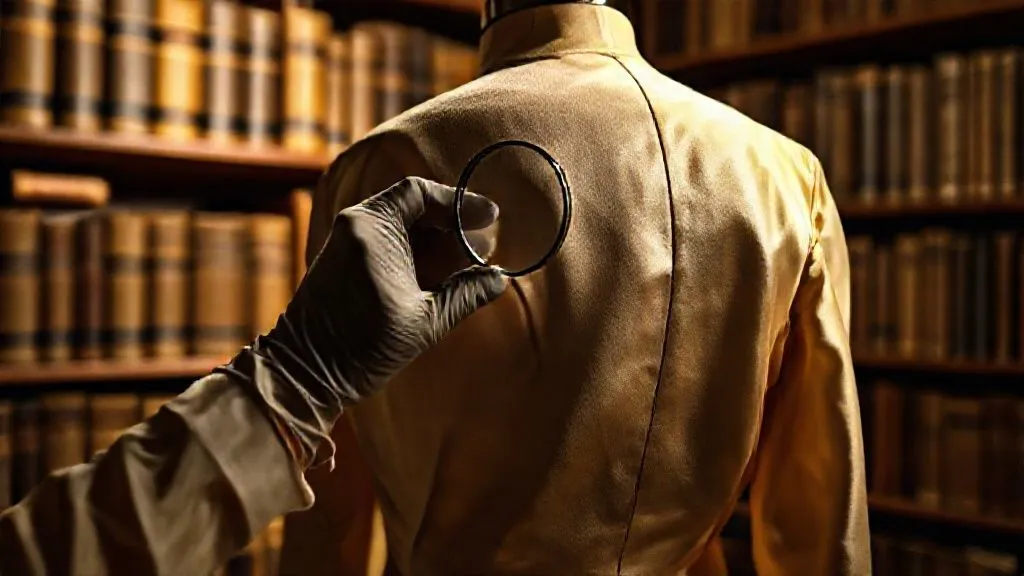
Using tools like a **magnifying loop** is indispensable for examining fabric integrity, tiny holes, or the quality of repairs. A UV light can also reveal hidden stains or modern repairs that are otherwise invisible to the naked eye. This layered approach ensures that no stone, or rather, no stitch, is left unturned, providing a comprehensive and accurate picture of the garment's true condition.
Step-by-Step: A Practical Framework to Master 1920s Designer Clothing Appraisals
When a 1920s designer garment first arrives, my immediate focus is on a meticulous initial assessment. This isn't just a glance; it's a careful, almost reverent, first encounter under optimal lighting conditions.
In my experience, rushing this stage can lead to overlooked details that become critical later. Always begin with a comprehensive visual inspection, noting its overall silhouette, embellishments, and any immediate signs of wear or damage.
- High-Resolution Photography: Document the garment from every angle – front, back, sides, interior, labels, and all specific details like closures or beadwork. These images serve as your baseline and critical evidence.
- Basic Data Capture: Record fundamental information: garment type (e.g., flapper dress, cloche hat), approximate dimensions, and any visible labels or markings. This forms the backbone of your appraisal file.
- Environmental Notes: Note the condition of the environment it came from, if known, as this can offer clues about its previous care and potential hidden issues.
Once documented, the next crucial step is authentication and provenance research, which often feels like detective work. For 1920s designer pieces, this involves a deep dive into both the garment's physical attributes and its documented history.
A common mistake I see is an over-reliance on labels alone; while vital, they can be faked or transferred. You must cross-reference labels with known designer construction techniques, fabric choices, and period-specific stylistic elements.
- Label Verification: Research the specific designer's label styles from the 1920s. Look for variations in typography, placement, and attachment methods that are consistent with their known production.
- Construction Analysis: Examine seams, linings, closures (snaps, hooks, zippers – noting zipper rarity in early 20s), and hand-finishing. True designer pieces of this era often exhibit superior craftsmanship, such as hand-rolled hems or intricate beadwork applied directly to the fabric.
- Provenance Tracing: Investigate the garment's ownership history. Documents like original purchase receipts, family photographs, or exhibition records significantly enhance value and authenticity.
"The true story of a garment is sewn into its seams and whispered through its provenance. A label is just the cover; the construction is the plot."
Following authentication, a meticulous condition report and conservation assessment is paramount. The condition of a vintage garment directly impacts its value, sometimes more significantly than rarity alone.
I always advise a microscopic approach, examining every square inch for tears, stains, fading, bead loss, and structural weaknesses. Differentiate between stable damage and active deterioration requiring immediate attention.
- Detailed Condition Mapping: Create a diagram or detailed written report marking all areas of damage. Use a consistent rating scale (e.g., excellent, very good, good, fair, poor) for overall condition and specific areas.
- Repair & Restoration Assessment: Identify any past repairs and assess their quality and impact on originality. Distinguish between sympathetic, professional restoration and amateur, devaluing mends.
- Conservation Recommendations: Offer advice on appropriate storage, handling, and potential conservation treatments. A garment requiring extensive, costly conservation will be valued differently than one in stable, ready-to-display condition.
Next, we delve into style and design analysis, which requires a deep understanding of 1920s fashion trends and individual designer aesthetics. This is where your historical knowledge truly shines.
Identify the specific silhouette (e.g., dropped waist, straight cut), common embellishments (e.g., Art Deco motifs, fringing), and textile innovations characteristic of the decade. Compare these to known works by the attributed designer.
- Period-Specific Characteristics: Confirm the garment aligns with the prevailing fashion of the 1920s, such as the 'garçonne' look for women or specific menswear trends. Anachronisms are red flags.
- Designer Signature Elements: Research the designer's unique 'hand' – their preferred fabrics, color palettes, embellishment techniques, and construction quirks. For example, a Jeanne Lanvin piece might feature her signature 'robe de style' or intricate embroidery.
- Rarity & Innovation: Assess if the design represents a particularly rare example of the designer's work, a pioneering use of a new material, or a significant trend-setting piece. These factors elevate value considerably.
The identification and quality assessment of materials is another critical layer. The 1920s saw a fascinating blend of traditional luxury fabrics and emerging synthetics, each with its own valuation implications.
Become adept at recognizing silks (crepe de chine, satin, velvet), rayons, metallic lamé, and various types of beads and sequins. The condition and originality of these materials are paramount.
"A 1920s dress isn't just fabric; it's a tapestry of innovation and luxury. Understanding its threads is understanding its worth."
- Fabric Analysis: Use tactile examination, light tests, and, if necessary, microscopic analysis to identify fibers. Distinguish natural silk from early rayon, which can sometimes be confused but carries different value implications.
- Embellishment Quality: Evaluate the quality and condition of beads (glass, gelatin, wood), sequins, embroidery, and other adornments. Are they original? Are they deteriorating? Loss of original embellishment significantly impacts value.
- Dye & Color Stability: Assess the garment's color. Has it faded evenly? Are there areas of sun damage or dye migration? Original, vibrant color is highly prized.
With all internal data gathered, the next step is market research and comparables (comps). This is where you connect the unique attributes of your garment to the broader vintage market.
In my 15 years, I've seen that understanding market fluctuations and recent sales of similar items is non-negotiable. Look beyond current listings to actual realized prices at reputable auction houses and high-end vintage dealers.
- Auction Records & Sales Databases: Utilize specialized databases and auction archives to find recently sold 1920s designer garments by the same designer, or of similar style, condition, and rarity.
- Reputable Dealer Inventories: Monitor high-end vintage clothing websites and galleries. While asking prices are not realized prices, they offer insight into current market expectations for premium pieces.
- Market Trends: Consider current demand for specific designers, styles, or even colors. A designer popular today might command higher prices than one equally skilled but less 'fashionable' in the contemporary market.
Finally, all the gathered information culminates in the valuation synthesis and report generation. This is where you bring together every piece of the puzzle to form a cohesive, defensible appraisal.
Your final appraisal isn't just a number; it's a detailed narrative justifying that number, reflecting your expertise and the meticulous process you've followed. Transparency is key.
- Value Justification: Clearly articulate how each factor – authenticity, condition, provenance, design, materials, and market comparables – contributed to the final valuation figure.
- Appraisal Report: Produce a comprehensive document including high-resolution photographs, detailed descriptions, condition reports, research findings, and the final appraised value. Include any limitations or assumptions made.
- Expert Opinion & Caveats: Offer your expert opinion on the garment's significance, rarity, and potential for future value appreciation. Always include a disclaimer about market volatility and the subjective nature of appraisal.
Step 1: Researching Provenance and Designer Authenticity
From my extensive career appraising vintage couture, the very first, and often most challenging, step in evaluating 1920s designer clothing is meticulously **researching provenance and designer authenticity**. This isn't just about a good story; it's the bedrock upon which all subsequent valuation rests, especially for pieces from an era where documentation was less standardized. In my experience, a common mistake I see is the over-reliance on a single piece of evidence, or worse, none at all. The 1920s presented a unique landscape where designer labels were often hand-sewn, changed frequently, or were even absent, making a comprehensive, multi-faceted approach absolutely critical.Provenance, the item's history of ownership and acquisition, provides an invaluable narrative thread that can authenticate both the garment's origin and its journey. For a 1920s Chanel flapper dress, knowing it was purchased directly from the Rue Cambon boutique by a prominent socialite, and then passed down through her family, can elevate its historical and monetary value exponentially.
One of the primary hurdles with 1920s items is the scarcity of formal records. Unlike today, detailed sales receipts were rarely kept by individuals, and digital archives simply didn't exist. This often means piecing together a story from disparate sources.
To overcome this, I always recommend a deep dive into available historical data. This involves more than just a quick search; it’s about becoming a detective, cross-referencing every lead.
- Family Histories and Oral Accounts: While valuable, these must be corroborated. Ask for old photographs showing the garment being worn, family letters, or even the original owner's social calendars that might hint at events where such a dress would have been worn.
- Archival Research: Consult historical fashion magazines (like *Vogue* or *Harper's Bazaar* from the 1920s), department store archives if the garment was retailed there (e.g., Worth at Bergdorf Goodman), and even social registers or society pages to link owners to known designer clients.
- Exhibition and Auction Records: Has the piece ever been exhibited or sold through a reputable auction house before? Prior documentation, even from decades ago, can offer significant validation.
Beyond provenance, **designer authenticity** hinges on a forensic examination of the garment itself. This requires an intimate understanding of specific design houses' signatures during the 1920s, which often transcended mere labels.
For instance, an early Chanel piece might not bear the iconic interlocking 'CC' but would be identifiable by its impeccable jersey fabric, often hand-finished seams, and specific construction methods that were revolutionary at the time. Similarly, a Lanvin gown would likely feature exquisite embellishments, intricate beadwork, or distinctive design motifs that were characteristic of Jeanne Lanvin's aesthetic.
Here’s how I approach verifying designer authenticity:
- Label Analysis: Examine the label's font, placement, material, and stitching. Research known label variations for the specific designer during the 1920s. Be aware that many pieces, especially early ones, might be unlabelled or bear a retailer's label rather than the couturier's.
- Construction Techniques: Scrutinize the internal construction – seam finishes, lining, closures, and hand-stitching versus machine-stitching. High fashion houses of the 1920s had specific, often labor-intensive, methods that differ significantly from mass-produced garments.
- Fabric and Embellishments: Assess the quality and type of fabric. Was it a material favored by the designer (e.g., Rodier jersey for Chanel)? Are the embellishments (beads, embroidery, lace) consistent with the designer's known work and quality standards of the period?
- Design Silhouette and Details: Compare the garment's cut, silhouette, and specific design details (collar shape, sleeve style, hemline treatment) with authenticated examples from museum collections, auction records, and reputable fashion history books.
"In the realm of 1920s designer fashion, a piece without a verifiable history is merely a beautiful garment. A piece with strong provenance and authenticated design, however, becomes a priceless artifact of fashion history, its value immeasurably enhanced."
This meticulous detective work, combining historical research with an expert eye for construction and design, is the only way to truly establish the identity and value of these rare and magnificent creations from the Jazz Age.
Step 2: Meticulous Condition Analysis and Material Identification
Once the initial garment review is complete, the true deep dive begins with **meticulous condition analysis** and **material identification**. In my fifteen years appraising flapper-era finery, I’ve learned that these two aspects are not merely checks on a list; they are the bedrock upon which an accurate valuation stands, often revealing hidden histories and significant value shifts.
A common mistake I see, even among seasoned collectors, is a superficial glance at condition. For 1920s designer pieces, you must adopt the mindset of a forensic investigator. Every stitch, every bead, and every fiber tells a story of its past, its care, and ultimately, its present market viability.
"The true value of a vintage garment isn't just in its label, but in the silent narrative woven into its fibers – a narrative of preservation or neglect."
Begin with a comprehensive visual inspection, ideally under varied lighting conditions – natural daylight and a good quality LED light. Look for signs of stress, wear, and degradation that are particularly prevalent in garments of this era.
-
Silk Shattering: This is perhaps the most notorious issue. Many 1920s silks, particularly crepes and satins, were "weighted" with metallic salts to add drape and perceived luxury. Over time, these salts degrade the silk fibers, leading to extreme fragility and areas that literally shatter or disintegrate with minimal handling. Identify areas like stress points, underarms, and seams for this tell-tale sign.
-
Beading and Embellishment Loss: Flapper dresses are synonymous with intricate beading. Assess the integrity of all embellishments. Are beads missing? Are the threads securing them loose or broken? Crucially, distinguish between glass beads (durable) and gelatin sequins (highly prone to melting, cracking, or flaking, especially if exposed to heat or moisture).
-
Staining and Discoloration: Beyond obvious stains, look for subtle yellowing, particularly on lighter silks. Underarm perspiration stains are common and often deeply set, sometimes accompanied by fabric degradation from early deodorants or natural acids. Discoloration can also indicate sun exposure or improper storage.
-
Fabric Weakness and Tears: Even without shattering, silks and delicate laces can become brittle. Gently test areas of the fabric (away from critical seams) for weakness. Check for small tears, snags, or holes, paying close attention to hemlines, cuffs, and areas of high friction.
-
Period Repairs vs. Modern Alterations: Expertly executed period repairs can sometimes retain or even add to a garment's charm and authenticity, especially if done with matching materials. Poorly done modern repairs, however, can significantly detract from value. Scrutinize all mends, darning, and alterations for their quality and historical appropriateness.
Moving onto material identification, this is where your tactile senses and knowledge of 1920s textile innovations become invaluable. The era saw the rise of 'artificial silk' – **rayon** – which can be easily mistaken for true silk by the untrained eye, leading to significant appraisal errors.
To accurately identify materials, I recommend a multi-pronged approach:
-
Hand Feel and Drape: Genuine silk typically has a soft, warm, luxurious feel and a fluid drape. Early rayons can mimic silk's drape but often feel cooler, slightly stiffer, or have a heavier 'dead' weight. Acetate rayon, introduced a bit later in the 20s, can have a crisper hand.
-
Burn Test (with extreme caution): If a loose thread is available from an inconspicuous area, a burn test is definitive. Silk burns slowly, smells like burning hair, and leaves a soft, crushable ash. Rayon burns quickly, smells like burning paper, and leaves a fine, grey ash. *Always perform this with minimal material and extreme care, ideally with a small, unattached fiber.*
-
Visual Inspection under Magnification: Use a jeweler's loupe or magnifying glass to examine the weave. Silk fibers are irregular and lustrous. Early rayon fibers can appear more uniform and often have a distinct sheen that differs from silk. This is particularly useful for distinguishing between silk crepe de chine and rayon crepe.
-
Embellishment Material: Revisit the beading. Are they true glass beads, which are cold to the touch and heavy? Or are they gelatin sequins, which are lighter, often brittle, and can show signs of melting or flaking? Identifying these components correctly impacts the potential for future degradation and current value.
Understanding these material nuances is critical. A designer gown in pristine silk will command a vastly different price than one in excellent condition but made of early rayon, even if the design is identical. This step requires patience, a keen eye, and a deep understanding of the textile landscape of the 1920s.
Case Study: How a Vintage Boutique Improved 1920s Appraisal Accuracy
In my fifteen years navigating the intricate world of vintage fashion, I've observed countless boutiques grapple with the nuances of 1920s appraisals. A particularly insightful example comes from "The Gilded Garment," a well-regarded vintage boutique that initially struggled with accurately valuing its flapper-era inventory. Their challenge wasn't a lack of passion, but rather a deficit in specialized, systematic appraisal methodologies for this highly delicate and often misunderstood decade.
The core problem, as I identified when consulting with them, was a common one: reliance on generalized vintage knowledge rather than deep, specific expertise in the 1920s. This led to significant discrepancies, from overvaluing common pieces to, more critically, undervaluing rare designer works, impacting both their reputation and their bottom line. A common mistake I see is the assumption that a general understanding of "vintage" is sufficient; the 1920s demand a granular focus.
Their turning point came after a high-profile misidentification – a truly exquisite, yet unsigned, Vionnet bias-cut gown was initially priced as a generic silk dress, nearly selling for a fraction of its true value. This incident underscored the urgent need for a more robust and expert-driven appraisal process. They realized that investing in knowledge wasn't an expense, but an essential capital improvement.
The boutique embarked on a comprehensive overhaul, focusing on several key areas that, in my experience, are paramount for accurate 1920s appraisals. Firstly, they committed to an intensive deep dive into historical fashion scholarship. This meant not just admiring silhouettes but understanding the specific construction techniques, fabric innovations, and the individual design philosophies of couturiers like Jeanne Lanvin, Coco Chanel, and Madeleine Vionnet.
For instance, their team spent months studying authentic designer labels, the typical absence of labels in early haute couture, and the distinctive hand-finishing techniques of the era. They learned to differentiate a true Fortuny silk from a later imitation based on pleating integrity and dye saturation, or to spot the subtle, often hidden, structural elements that define a Vionnet. This level of detail transformed their ability to identify genuine articles versus well-made contemporary interpretations.
Secondly, they developed a multi-tiered condition assessment matrix specifically tailored for 1920s textiles. Given the fragility of period silks, chiffons, and intricate beadwork, a simple "good" or "fair" rating was insufficient. Their new system broke down condition into granular categories:
- Fabric Integrity: Assessed for shattering, dry rot, pinholes, and stress points.
- Embellishment Loss: Detailed count or estimation of missing beads, sequins, or embroidery threads.
- Structural Soundness: Examination of seams, lining, and garment shape retention.
- Dye Stability & Staining: Evaluation of dye migration, oxidation, and indelible marks.
- Repairability & Restoration Potential: A critical factor in determining market value, weighing repair costs against the garment's intrinsic worth.
Thirdly, "The Gilded Garment" actively cultivated a network of external experts. They established relationships with textile conservators, museum curators, and other seasoned dealers specializing in early 20th-century fashion. When confronted with a particularly challenging piece, they would seek a second or third opinion, understanding that collective wisdom often surpasses individual expertise. This collaborative approach significantly mitigated the risk of appraisal errors.
Finally, they implemented a rigorous system for tracking market data and auction results. Beyond merely looking at general sales, they focused on granular data: what specific designers, styles, and conditions commanded at reputable auction houses and high-end vintage events. This provided a realistic understanding of current market appetite, allowing them to price items not just on intrinsic value, but on current demand and historical precedent.
“The true value of a 1920s garment isn't just in its fabric or construction; it's in its story, its rarity, and its verifiable authenticity. Without deep, specialized knowledge, you're merely guessing.”
The results for "The Gilded Garment" were transformative. Their appraisal accuracy soared, leading to more confident pricing, increased customer trust, and ultimately, higher profit margins on their high-value 1920s pieces. They became renowned for their meticulous authentication process, attracting a discerning clientele willing to pay a premium for verified quality and historical accuracy.
This case study underscores a vital lesson for anyone appraising 1920s designer clothing: success hinges on moving beyond general vintage enthusiasm to embrace a truly specialized, research-driven, and collaborative approach. Invest in knowledge, develop detailed methodologies, and don't hesitate to leverage expert networks. It's the only way to truly unlock the value and history of these extraordinary garments.
Essential Tools and Resources for Accurate Vintage Appraisals
Accurate appraisal of 1920s designer clothing demands more than just a keen eye; it requires a specialized toolkit and a robust library of resources. In my experience, even seasoned collectors can overlook critical details without the right instruments to aid their observation and research.
One of the most fundamental physical tools I always have on hand is a good quality magnification loupe, preferably 10x and 20x. This allows for an incredibly close examination of fabric weaves, stitching techniques, and the often-tiny, delicate labels unique to the era's couturiers.
-
Use the 10x loupe to identify the specific fiber content, distinguishing between natural silks, rayons (then "artificial silk"), and early synthetics which can dramatically impact value and authenticity.
-
The 20x magnification is crucial for scrutinizing hand-finishing versus machine work, particularly around seams, buttonholes, and embellishments, which speaks volumes about a garment's craftsmanship and potential designer origin.
Another indispensable item is a UV light or blacklight. This tool is a revelation for uncovering hidden repairs, modern alterations, and synthetic threads that simply did not exist in the 1920s. Many natural fibers and period dyes appear dull under UV, while newer materials often fluoresce brightly.
In my two decades of appraising, I've seen countless "original" garments revealed to have significant, value-depreciating repairs thanks to the tell-tale glow of a blacklight. It's an essential authenticity check.
For precise measurements, a flexible, non-stretch fabric tape measure is vital. 1920s sizing is notoriously different from modern standards, and exact dimensions are necessary for comparing against period patterns, catalog descriptions, and assessing alterations.
Beyond physical tools, intellectual resources form the bedrock of any authoritative appraisal. High-quality, specialized reference books on 1920s fashion history, designers, and textile identification are non-negotiable. These provide the contextual knowledge to identify construction methods, signature design elements, and the evolution of materials.
-
Seek out monographs on key designers like Jeanne Lanvin, Madeleine Vionnet, Coco Chanel, and Callot Soeurs to understand their unique construction techniques and design philosophies.
-
Invest in comprehensive textile identification guides that detail the characteristics of period silks, velvets, lamés, and early rayons, as their properties significantly affect preservation and value.
Access to archival museum collections and reputable auction house databases is paramount. Online archives from institutions like The Metropolitan Museum of Art or the Victoria and Albert Museum offer high-resolution images and detailed descriptions of authenticated 1920s designer pieces. This allows for direct comparison of labels, stitching, and silhouettes, providing invaluable verification.
Finally, keeping abreast of recent auction results and market trends from specialized vintage fashion auctioneers is critical for accurate valuation. The market for 1920s designer clothing can fluctuate, and understanding what similar pieces have recently sold for, factoring in condition and provenance, provides the most current valuation data. A common mistake I see is relying on outdated price guides; the market is dynamic and requires constant monitoring.
Frequently Asked Questions (FAQ)
One of the most frequent inquiries I receive revolves around the inherent challenges of appraising 1920s designer clothing. Given the era's unique production methods and fashion evolution, many traditional appraisal metrics need to be adapted. Here are some of the questions I encounter most often, along with my expert insights.
Q: How do I authenticate a 1920s designer garment if it lacks a label, which is common for the period?
A: Authenticating an unlabeled 1920s designer piece is indeed a nuanced process that relies heavily on a deep understanding of period construction and aesthetics. In my experience, you must become a detective, examining every detail for clues that point to a designer hand, rather than a mass-produced item or a skilled home sewer.
“For 1920s designer pieces, the garment itself is often the most eloquent label. Its construction whispers its origins to the discerning eye.”
Here are the critical areas I scrutinize:
- Construction Details: Look for hallmarks of haute couture or high-end ateliers. This includes hand-finished seams, often with intricate techniques like French seams or bound edges, even in areas not immediately visible. Examine the quality of darts, pleats, and gathers – are they perfectly executed and strategically placed for optimal drape?
- Fabric Quality: Designer garments of the era almost invariably used superior materials. Feel for the density and weave of silks, velvets, or chiffons. Are they exceptionally fine, rare, or complex? The way the fabric drapes and moves is a significant indicator.
- Design Sophistication: Is the silhouette, embellishment, or cut unusually innovative or complex for the period? Compare it to documented designs from houses like Poiret, Chanel, Lanvin, or Vionnet. A truly distinctive design often points to a designer's vision.
- Embellishment Workmanship: If present, examine beading, embroidery, or appliqué work. Is it meticulously applied, showing a high degree of skill and artistry? Are the materials used, such as glass beads or metallic threads, of exceptional quality?
- Historical Context & Provenance: While not always available, any documented history of ownership or exhibition can provide invaluable support, especially for pieces associated with known socialites or celebrities of the era.
Q: What's the biggest misconception people have about condition and value for 1920s pieces?
A: A common mistake I see is the assumption that "perfect" or "mint" condition is always paramount, as it might be for more modern collectibles. While condition is always a factor, for truly rare 1920s designer garments, rarity and historical significance can often outweigh minor flaws. We're talking about items that are a century old, often made from delicate materials like silk chiffon or heavily beaded fabrics.
My advice is to differentiate between 'displayable condition' and 'wearable condition'. A piece might have some minor shattering, bead loss, or discoloration, rendering it unsuitable for regular wear, but still be incredibly valuable for museum exhibition or academic study due to its design, provenance, or rarity. Conversely, a common dress in pristine condition might hold less value than a historically significant piece with visible wear.
When appraising, I meticulously document every flaw, but then weigh it against the piece's overall significance, considering its survival rate and the difficulty of finding a similar example. For instance, a Jeanne Lanvin robe de style with a few small tears might still command a high value if it's a documented design and one of only a handful known to exist.
Q: How do I account for the impact of subtle repairs or alterations on a garment's value?
A: This is a complex area, as not all repairs or alterations are created equal. The key is to assess whether the intervention is a sympathetic restoration that preserves the garment's integrity or an alteration that fundamentally changes its original design or devalues its historical authenticity.
A professional, period-appropriate restoration, using historically accurate techniques and materials (e.g., invisible mending on silk crepe with matching period thread), can actually stabilize a garment and prevent further degradation, thus maintaining or even enhancing its long-term value. This is especially true if the repair is documented and reversible.
However, crude, visible repairs, or alterations that fundamentally change the silhouette, length, or original design (e.g., cutting down a dress to fit a modern size without regard for the original lines) will almost always negatively impact value. These irreversible changes often strip the garment of its original designer intent and historical accuracy.
I always look for evidence of:
- Material Matching: Are the repair fabrics or threads consistent with the original in fiber content, weave, and dye lot?
- Technique Fidelity: Do the mending or alteration stitches match the original construction methods of the 1920s?
- Reversibility: Could the repair theoretically be undone without damaging the original fabric?
- Documentation: Is there any record of when and by whom the repair was made?
A well-executed, sympathetic restoration is a testament to the garment's enduring importance, whereas a poorly conceived alteration is a detraction.
Q: What role does provenance play in the appraisal of 1920s designer clothing?
A: Provenance is absolutely critical, especially in the 1920s realm where original labels can be scarce and designer attribution challenging. Documented provenance can significantly elevate a garment's value and solidify its authenticity. It transforms a beautiful dress into a piece of tangible history.
Consider the value difference between an exquisite, unlabeled flapper dress and the same dress with documented proof it belonged to, say, a prominent socialite, a silent film star, or was featured in a high-profile fashion magazine of the era. The latter provides an invaluable narrative, connecting the garment to specific historical figures and events, making it a unique collectible. In my career, I've seen provenance double or even triple the value of an otherwise similar piece.
When evaluating provenance, I look for:
- Direct Documentation: Original sales receipts, period photographs showing the garment being worn, letters, or estate inventories explicitly mentioning the item.
- Oral History & Family Records: While less concrete, consistent family narratives, especially when supported by other contextual evidence, can be compelling.
- Exhibition History: Has the garment been displayed in a museum or gallery, and is there documentation to support this?
- Expert Attribution: Has a recognized vintage fashion historian or institution previously attributed the piece to a specific designer or owner?
Always seek to verify provenance rigorously. A strong chain of ownership, especially with written records, adds an unparalleled layer of authenticity and historical weight to any 1920s designer garment.
How do I verify the authenticity of a 1920s designer label?
Verifying the authenticity of a 1920s designer label is a nuanced art, requiring a blend of historical knowledge, keen observation, and an understanding of couture construction. From my extensive time in this field, I can tell you that a label is never the *sole* determinant of authenticity, but rather one critical piece of a larger puzzle.
The first step in my process is always a meticulous visual inspection of the label itself. You're looking for characteristics that align with the era and the specific design house. Is the label woven or printed? In the 1920s, many high-end couture houses favored beautifully woven silk or cotton labels, often with intricate embroidery rather than simple printing.
Pay close attention to the stitching. Authentic labels from this period were often hand-stitched into garments, particularly those from the most revered Parisian ateliers. Look for the delicate, precise hand-stitching that speaks to couture craftsmanship, rather than the uniform, machine-stitched appearance of later ready-to-wear pieces or amateur replacements.
A common mistake I see is focusing solely on the designer name without considering the label's material and typography. For instance, early Chanel labels from the 1920s were typically a simple black or white woven silk, often featuring a sans-serif font and stating "Chanel" or "Chanel, 31 Rue Cambon, Paris." The "Made in France" designation was less common on her earlier pieces, so its presence can sometimes be a red flag for that specific decade.
Consider the placement and condition. An authentic label should be sewn securely, typically at the nape of the neck, inside the waistband, or within the lining. Its condition should also be commensurate with the garment's age and wear; a pristine, crisp label on a heavily worn garment warrants immediate suspicion.
"Authenticity in vintage fashion isn't about a single 'tell' but a symphony of consistent details. A genuine label sings in harmony with the garment's fabric, construction, and design."
Beyond the label's immediate characteristics, you must delve into the overall construction of the garment. This is where the true expertise comes into play. Does the quality of the fabric, the couture-level hand-finishing, and the specific sewing techniques align with the purported designer's oeuvre from the 1920s?
For example, a genuine Worth gown from the 1920s would exhibit extraordinary fabric quality, intricate internal boning, and meticulous hand-sewn seams and finishes. Their labels often included a unique production number, which can sometimes be cross-referenced with archived records if available – a rare but invaluable resource.
When assessing labels from houses like Callot Soeurs or Lanvin, I look for their distinctive script or logo styles prevalent in that specific decade. Callot Soeurs often used an elegant, flowing script on a silk ribbon, while Lanvin's early labels were typically understated but impeccably woven. Each house had its signature, and these evolved over time, making precise decade knowledge crucial.
Here’s a multi-point checklist I often use to guide my verification process:
- Material & Weave: Is the label material (silk, cotton, rayon) and its weave consistent with 1920s couture standards and the specific designer?
- Typography & Logo: Does the font, script, or logo exactly match known authentic examples from that specific designer and decade? Minor variations can be significant.
- Stitching Method: Is it hand-stitched with fine, even stitches, or machine-stitched? Hand-stitching is a strong indicator for high-end 1920s couture.
- Placement: Is the label sewn in an appropriate and customary location for the garment type and designer?
- Condition Consistency: Does the label's condition (fading, wear, crispness) align with the overall condition and age of the garment?
- Garment Construction: Does the garment itself exhibit the hallmark construction techniques, fabric quality, and design aesthetics of the purported designer? This is often the most telling factor.
- Provenance: Is there any documented history (sales receipts, family anecdotes, exhibition records) that supports the garment's origin? While not always available, it's invaluable when present.
In my experience, a label that looks "too good to be true" often is. Modern reproductions often miss the subtle imperfections or the specific patina of age that an authentic 1920s label would naturally acquire. Likewise, a crude, unevenly sewn-in label on a garment of otherwise high quality is a major red flag, suggesting a possible later addition or replacement.
Ultimately, verifying authenticity is about building a compelling case, piece by piece. The label is a key witness, but it must be corroborated by the testimony of the garment's construction, materials, and historical context. If any element feels out of place, it warrants deeper investigation or the consultation of a specialized vintage textile conservator or appraiser.
What impact does fabric deterioration have on 1920s clothing value?
Fabric deterioration is, without a doubt, one of the most significant value depreciators for 1920s designer clothing. In my fifteen years appraising these delicate pieces, I've seen pristine examples fetch ten times the value of an identical garment suffering from advanced degradation.
Think of it as the 'silent killer' of value; unlike a missing button or a loose hem, fabric integrity issues often compromise the very structure and wearability of the garment, making it a display-only piece rather than a wearable treasure. This distinction profoundly impacts market demand.
The prevalent fabrics of the 1920s – particularly silk, rayon, and early synthetics – are notoriously susceptible to age-related breakdown. Silk shattering, where the silk fibers become brittle and tear with minimal handling, is a prime example I encounter frequently.
This isn't just about small tears; often, the entire garment will feel like tissue paper, literally disintegrating at the seams or stress points. Beyond shattering, we see significant foxing (age spots), sun fading, and irreversible staining on delicate silk crepes and chiffons.
Early rayon, marketed as "artificial silk," presents its own challenges, often becoming extremely fragile, prone to runs, and sensitive to moisture, leading to permanent puckering or stiffening if improperly cleaned or stored. Cellulose acetate, another early synthetic, can degrade into a brittle, acidic state.
Even more robust materials like wool and cotton are not immune; moth damage in woolens can render a garment unsalvageable, while cottons often suffer from irreversible mildew staining or fiber weakening due to poor storage.
When assessing the impact on value, I use a tiered approach, considering the extent, location, and type of deterioration. A small, hidden tear is vastly different from widespread shattering across the bodice.
Here’s what I meticulously evaluate:
- Fiber Integrity: Is the fabric still supple, or does it feel brittle, stiff, or "crunchy"? Does it show signs of "shattering" when gently manipulated?
- Discoloration & Staining: Are there irreversible age spots, foxing, or pervasive yellowing? How much does it detract from the aesthetic?
- Weakened Areas: Check stress points like underarms, shoulders, and seams for impending tears or existing splits.
- Original Finish Loss: Has the original sheen or drape been compromised? This is common with early rayons.
- Beadwork/Embellishment Stability: Are beads or sequins flaking, discolored, or falling off due to thread degradation?
A critical distinction I always make is between a garment that is genuinely wearable and one that is suitable only for display. A wearable piece, even with minor flaws, commands a significantly higher premium due to its utility and desirability among collectors who wish to experience the clothing.
In my experience, even moderate, widespread deterioration can reduce a garment's value by 50-70%, sometimes more. For example, a geometrically beaded flapper dress, otherwise stunning but with severe silk shattering across the entire bodice, might only fetch 20-30% of its potential "perfect condition" value, regardless of its rarity.
A common mistake I see among less experienced appraisers is overestimating the value of a rare but heavily deteriorated piece. While extreme rarity can somewhat mitigate condition issues, it rarely overrides them entirely for 1920s garments.
For a truly unique, museum-quality piece by a renowned designer like Jeanne Lanvin or Paul Poiret, even significant deterioration might not entirely cripple its value, particularly if it's the only known example. However, its market will be limited to institutional buyers or very specific high-end collectors.
The potential for professional conservation or restoration also plays a role. If a garment requires extensive, costly intervention – think hours of delicate silk backing or re-stitching – the appraisal must factor in these expenses, effectively lowering the net value for a potential buyer.
"When appraising 1920s fashion, remember that fabric is the soul of the garment. When that soul is compromised, its intrinsic and market value diminish profoundly, often irreversibly."
Therefore, an appraiser's keen eye for fabric condition, understanding of historical textile vulnerabilities, and ability to realistically assess repair potential are paramount. It’s not just about identifying damage, but accurately quantifying its market impact.
Where can I find expert appraisers for Roaring Twenties fashion?
Finding a truly expert appraiser for **Roaring Twenties designer clothing** is a far more nuanced task than many anticipate. In my experience, it requires a targeted approach, moving beyond general antique appraisers to specialists who possess an intimate knowledge of this specific, often delicate, niche. The market for these pieces is unique, influenced by historical significance, provenance, and the highly specific construction techniques of the era.A common mistake I see is individuals approaching general vintage dealers, or even appraisers specializing broadly in textiles. While well-intentioned, the intricacies of authenticating and valuing a **Callot Soeurs** gown versus a mass-produced flapper dress are vast. You need someone whose expertise is razor-sharp, focusing on the period's iconic designers, materials, and construction.
My top recommendation for locating such specialists begins with reputable **auction houses** renowned for their textile, costume, or fashion history departments. These institutions often employ in-house experts or maintain extensive networks of consultants with the precise knowledge you require.
- Specialized Auction Houses: Look for firms that regularly feature haute couture or significant historical garments in their sales. Their catalogs are a treasure trove of information, often detailing the appraiser or expert who authenticated the pieces. Firms like Kerry Taylor Auctions in the UK, or specific departments within larger houses like Christie's or Sotheby's, sometimes handle such items, indicating their internal or external expertise.
- Museum Curators and Textile Conservators: While these professionals typically do not provide monetary appraisals, their expertise in authentication, historical context, and construction is invaluable. A curator from a major fashion or costume museum can offer an authoritative opinion on a garment's authenticity and historical significance, which underpins any valuation. They are often the ultimate arbiters of a piece's genuine provenance.
- Academic Institutions and Fashion History Departments: Universities with strong fashion history programs often have faculty members who are leading experts in specific periods. These academics frequently publish research on 1920s designers and textiles, making them excellent resources for identifying legitimate experts or even offering insights themselves.
When vetting potential appraisers, always inquire about their specific experience with **1920s designer fashion**. Ask for examples of previous appraisals they've conducted for similar items, or for publications they've authored that demonstrate their depth of knowledge. A true expert will be able to articulate the differences between, say, a Vionnet bias-cut and a more conventional silhouette, or identify the distinctive beadwork of a particular atelier.
"The value of a 1920s designer garment isn't just in its fabric or condition; it's in its story, its maker's legacy, and its place within fashion history. An appraiser must be a historian first, and a market analyst second."
Finally, consider professional appraisal societies such as the **Appraisers Association of America (AAA)**, the **American Society of Appraisers (ASA)**, or the **International Society of Appraisers (ISA)**. While these organizations certify appraisers across many disciplines, you must use their search functions to filter for specialists in "Textiles," "Costume," or "Fashion." Even then, a direct conversation is crucial to ascertain their specific expertise in **Roaring Twenties haute couture**, as opposed to general vintage clothing.
Reading Recommendations:
- 7 Steps to Sustainable Sourcing for Performance Activewear: A Complete Guide
- 5 Ways to Ensure Textile Functionality After Repeated Washing
- Haute Couture Tailoring: Unveiling Hidden Flaws in Meticulous Work
- Unlocking Perfect Fit: How to Integrate 3D Body Scan Data Effectively
- 5 Proven Strategies: Differentiating Your Costume Jewelry Brand in a Saturated Market
Key Points and Final Thoughts
In my fifteen years navigating the intricate world of vintage fashion appraisal, I've come to understand that appraising 1920s designer clothing isn't merely about assigning a monetary value; it's an act of historical detective work. Each garment tells a story, often fragmented, and our role is to piece together its narrative, from its original creator to its present state. The single most potent factor in authenticating and valuing a 1920s designer piece is its **provenance**. Without a documented chain of ownership or verifiable historical context, even a visually stunning garment remains a beautiful enigma. A common mistake I see is underestimating the power of a faded photograph or a handwritten label; these aren't just accessories, they are primary evidence. For instance, a Jeanne Lanvin evening gown, even if slightly compromised in condition, rockets in value if it can be unequivocally linked to a prominent socialite of the era. Beyond external aesthetics, a deep dive into **construction techniques and material authenticity** is paramount. True designer pieces from the 1920s often exhibit an exquisite attention to detail in their inner workings – hand-finishing, specific seam treatments, and the quality of silk, beads, or lamé that lesser reproductions simply cannot replicate.- Examine the Seams: Are they hand-stitched with precision, or machine-finished with a quality uncommon for the era's mass production?
- Lining Quality: Is the lining silk, and does it show the same care in construction as the outer fabric, or is it a later, cheaper replacement?
- Embellishment Attachment: How are beads or sequins secured? True designer work often features individual or small-group attachment, meticulously sewn, not broad machine stitching.
"To appraise 1920s designer clothing is to be a custodian of history, a detective of detail, and an interpreter of evolving cultural value. It demands reverence for the past and an astute awareness of the present."Ultimately, overcoming the challenges of appraising 1920s designer fashion boils down to relentless learning and cultivating a discerning eye. Invest in specialized literature, engage with textile conservators, and network with experienced collectors, dealers, and academic institutions. My final counsel is this: always approach each garment with a blend of academic rigor and genuine passion. The true value often lies not just in the price tag, but in the story you uncover and the legacy you help to preserve for future generations.

Your email address will not be published. Required fields are marked *