

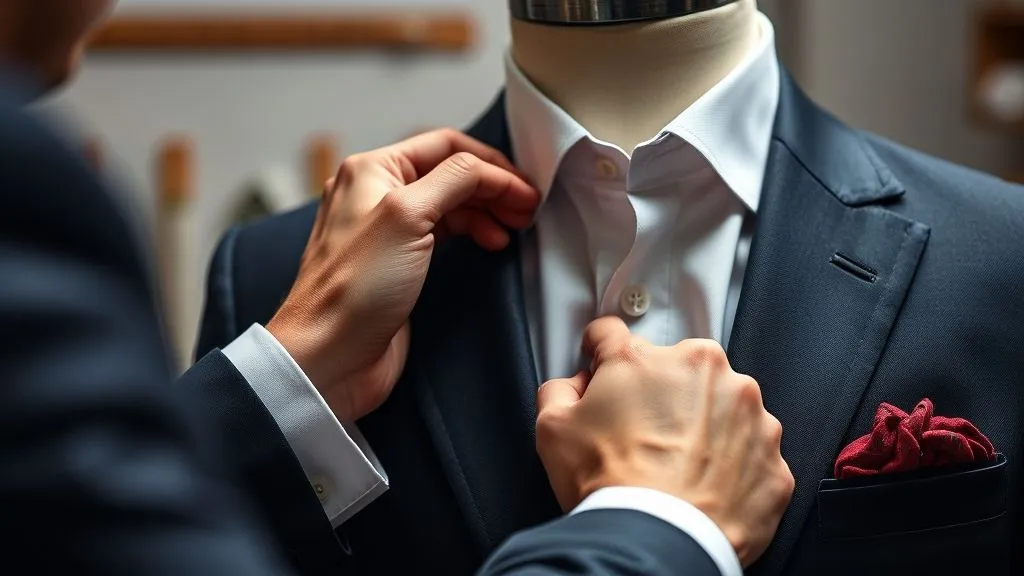
How to Perfectly Fit Bespoke Suits for Challenging Body Types?
For over two decades in the world of classic menswear, I've witnessed the transformative power of a truly bespoke suit. It's more than just fabric and stitching; it's a meticulously crafted extension of one's identity, a silent testament to confidence and discernment. Yet, I've also seen the deep-seated frustration when men, particularly those with what we lovingly call 'challenging body types,' struggle to find anything that truly fits – even off-the-rack garments that promise a 'modern' or 'athletic' cut.
The problem is pervasive: standard sizing simply cannot accommodate the glorious diversity of the human form. Whether you possess an athletic build with broad shoulders and a narrow waist, a particularly tall or short stature, significant postural nuances, or asymmetrical features, the ready-to-wear market often leaves you with compromises. You end up with suits that pull, gape, bunch, or hang, undermining your presence and making you feel anything but your best.
This guide aims to demystify the bespoke process for every man, especially those who've felt overlooked by conventional tailoring. I will share the insights, practical strategies, and nuanced understanding required to achieve sartorial perfection, regardless of your physique. Prepare to discover how to perfectly fit bespoke suits for challenging body types, transforming your wardrobe and your confidence.
Understanding the Bespoke Advantage for Unique Physiques
When it comes to achieving an impeccable fit, especially for what we term 'challenging' body types, the bespoke process isn't just an option; it's a necessity. Unlike ready-to-wear (RTW) or even made-to-measure (MTM), bespoke tailoring starts from scratch. There are no pre-existing patterns, no templates to merely adjust. Instead, a unique paper pattern is drafted specifically for your body, considering every curve, angle, and nuance.
In my experience, this fundamental difference is what allows a master tailor to truly sculpt a garment around an individual. For someone with, say, a significant shoulder slope on one side, or an athletic build that tapers sharply from chest to waist, bespoke offers the freedom to address these specificities with unparalleled precision. It's a dialogue between your body and the tailor's expertise, resulting in a suit that feels like a second skin and moves with you, not against you.
The true magic of bespoke lies in the tailor's ability to not just measure, but to observe, interpret, and anticipate your body's unique demands. It's a collaborative art form where your comfort and aesthetic vision are paramount.
This level of personalization is crucial. An MTM suit, while offering more customization than RTW, still relies on modifying an existing block pattern. This can be sufficient for standard body types, but for significant postural issues or extreme proportions, MTM can quickly hit its limitations, leaving you with minor but noticeable imperfections. Bespoke, however, embraces these challenges as opportunities for true craftsmanship.
The Initial Consultation: Unveiling Your Body's Blueprint
The foundation of a perfectly fitted bespoke suit, especially for a challenging body type, is laid during the initial consultation. This isn't merely a measurement session; it's an in-depth conversation and observation period where your tailor becomes intimately familiar with your body's unique 'blueprint.' I always tell my clients that this is where we begin to translate their physical realities into sartorial solutions.
During this crucial stage, a skilled tailor will do much more than just pull out a tape measure. They will observe your natural stance, your gait, the way you hold yourself when standing and sitting. We'll discuss your lifestyle, your typical posture (do you hunch? have a sway back?), and any past frustrations you've had with suit fit. This holistic approach is vital for identifying potential fit challenges before the first stitch is even considered.
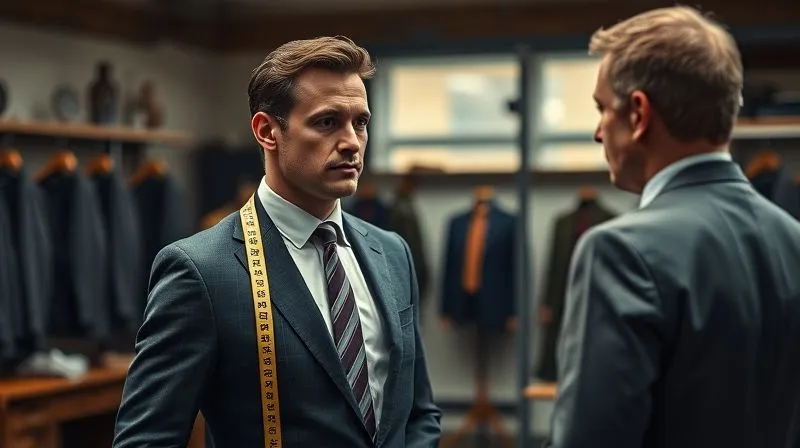
Key discussion points during this initial consultation include:
- Your Posture: Are your shoulders rounded? Do you have a forward head posture? A sway back? These significantly impact how a jacket hangs.
- Shoulder Slope: Are your shoulders level, or does one slope more than the other? This affects collar sit and sleeve drape.
- Asymmetry: Is one arm slightly longer? One shoulder higher? These are common and easily accommodated in bespoke.
- Lifestyle & Movement: Do you often raise your arms for presentations? Do you carry a briefcase on one side? This influences armhole depth and jacket mobility.
- Personal Preferences: Do you prefer a very slim fit, or a more relaxed drape? This guides the overall silhouette.
- Previous Fit Issues: What specific problems have you encountered with off-the-rack or even MTM suits?
By thoroughly exploring these aspects, the tailor gains the necessary insight to draft a pattern that doesn't just measure your body, but genuinely understands it. This proactive identification of unique characteristics is paramount to achieving a truly perfect fit.
Precision Measuring: Beyond the Tape Measure
Once the initial consultation has established your body's unique characteristics, the actual measuring process begins. But in bespoke, 'measuring' is an art form that goes far beyond simply noting numbers. It involves interpreting those numbers in the context of your posture and body type, anticipating how the fabric will drape, and making subtle adjustments that differentiate a good fit from a truly exceptional one.
I often tell my apprentices that the tape measure is just a tool; the real measurement happens with the eye and the hand. For challenging body types, this means paying excruciating attention to details that mass production simply ignores. For example, instead of just a standard chest measurement, a bespoke tailor will consider the 'chest suppression' – the difference between your actual chest size and the jacket's finished chest – to sculpt the garment to your specific musculature.
As renowned tailor Richard Anderson once said, "The tape measure tells you the length, but the eye tells you the shape." This philosophy is critical when addressing issues like uneven shoulder slopes, where a simple measurement won't convey the need for differential padding or cut. Or for a client with a significant stomach, where balancing the front and back lengths of the jacket becomes an intricate calculation to ensure the garment hangs level.
| Challenging Body Feature | Common Fit Issue | Bespoke Measurement Focus |
|---|---|---|
| Broad Shoulders/Narrow Waist (Athletic) | Jacket pulls across chest, waist too loose | Aggressive waist suppression, balanced chest measurement, higher armholes |
| Forward Head Posture/Rounded Shoulders | Collar stands away from neck, fabric bunches at back | Neck-to-back length, shoulder slope, balancing front/back lengths |
| Sway Back | Excess fabric at lower back | Back suppression, vent placement, trouser rise |
| Uneven Shoulders | One sleeve appears longer, collar gapping | Individual shoulder height, differential padding, balance lines |
| Tall & Lean | Jacket too short, trousers too high/low | Extended jacket length, specific button stance, balanced trouser rise |
| Short & Stocky | Jacket overwhelms frame, trousers pool | Shorter jacket length, higher button stance, minimal trouser break |
Accounting for asymmetry is another area where bespoke truly shines. Most people have one arm slightly longer or one shoulder slightly higher than the other. In bespoke, these are not 'problems' but simply facts. The tailor will take individual measurements for each arm length and shoulder height, ensuring that sleeves hang perfectly and the collar sits smoothly around the neck without any gapping or pulling on either side. This level of detail is what allows us to perfectly fit bespoke suits for challenging body types, creating an illusion of perfect symmetry where none naturally exists.
Mastering the Muscular & Athletic Build
The athletic build, characterized by broad shoulders, a deep chest, and a relatively narrow waist, is a common 'challenging body type' that often struggles with off-the-rack suits. I've seen countless instances where an athlete tries on a standard suit, and it either pulls uncomfortably across the chest and shoulders or billows around the waist like a sack. The key to bespoke for this physique is to celebrate the musculature without making the suit look strained or ill-proportioned.
Common issues include: restricted movement in the shoulders and armholes, tightness across the back and chest, and excessive fabric around the waist. The bespoke solution involves a strategic approach to pattern drafting and construction.
- Higher Armholes: This is crucial. Higher armholes provide a greater range of motion without pulling the jacket body, allowing the wearer to move freely without disrupting the suit's silhouette.
- Chest and Shoulder Definition: Instead of adding excessive padding, a skilled tailor will use subtle canvas work and strategic cutting to enhance the natural breadth of the shoulders and chest, ensuring the fabric drapes smoothly without stretching.
- Aggressive Waist Suppression: To highlight the V-taper inherent in an athletic build, the jacket's waist will be significantly suppressed, creating a clean, defined silhouette that complements the wearer's physique. This is where bespoke truly excels over MTM, which often struggles with extreme waist-to-chest drops.
- Balanced Lapel Width: Wider lapels often complement a broader chest and shoulder line, ensuring the jacket's proportions remain harmonious.
- Trouser Fit: Trousers for an athletic build need to accommodate muscular thighs without being overly baggy. A comfortable rise, a slight taper, and a clean break are usually preferred.
Case Study: The Rugby Player's Perfect Fit
I once had a client, a professional rugby player, who despaired of ever finding a suit that didn't feel like a straitjacket. His shoulders were immense, his chest deep, and his waist surprisingly trim. Off-the-rack suits either couldn't get past his shoulders or hung like a tent at his waist. After an extensive consultation and three fittings, we crafted a three-piece suit that transformed his perception of formal wear. We focused on a higher armhole, bespoke shoulder construction that followed his natural line without adding bulk, and a dramatic waist suppression in the vest and jacket. The result? A suit that moved with him, flattered his powerful physique, and, most importantly, made him feel incredibly comfortable and confident. He told me it was the first suit he'd ever owned where he could actually raise his arms above his head without tearing a seam.
For further insights into tailoring for athletic builds, consider resources from reputable menswear publications like GQ's guide on suit buying for athletic builds.
Tailoring for the Slim & Lean Physique
While often perceived as 'easy to fit,' the slim and lean physique presents its own set of challenges in achieving a truly impeccable suit. The goal is to create a silhouette that adds appropriate structure and definition, avoiding a 'boxy' or 'swallowed by fabric' appearance. My experience shows that merely sizing down a standard suit often results in an unflattering, shapeless garment that does little to enhance the wearer's frame.
Common issues for slim builds include: excess fabric pooling around the waist and arms, shoulders appearing too wide or padded, and a general lack of definition. Bespoke tailoring allows for a nuanced approach that builds out the frame where necessary and sculpts precisely where needed.
For the slim gentleman, the bespoke suit is an opportunity to create an illusion of subtle breadth and elegant definition, transforming a lean frame into a picture of understated power. It's about adding presence, not bulk.
The solutions in bespoke often involve:
- Aggressive Waist Suppression: Similar to athletic builds, but here it's about creating a subtle curve to define the waist, rather than emphasizing a dramatic taper. This prevents the jacket from looking like a rectangle.
- Appropriate Shoulder Width & Padding: The shoulders should end precisely where the natural shoulder does, with minimal or no padding. This avoids a 'coat hanger' look and maintains a natural, clean line.
- Slimmer Lapels: Proportionally, narrower lapels often complement a slimmer frame, ensuring the jacket's components are in harmony with the wearer's build.
- Higher Button Stance: A slightly higher buttoning point on the jacket can visually elongate the legs and create a more balanced torso-to-leg ratio.
- Sleek Trousers: Trousers should be slim but not tight, with a clean drape and a minimal break, contributing to an overall sleek and elongated line.
The emphasis here is on precision. Every seam, every curve, and every angle is designed to enhance the wearer's natural lines, adding a touch of tailored elegance that ready-to-wear simply cannot replicate. It's about achieving a fit that feels effortless and looks impeccably sharp, without overwhelming the wearer's natural physique.
Addressing Height Discrepancies: Short and Tall Statures
Height, whether significantly above or below average, introduces a unique set of challenges in suit fitting. The goal in bespoke is not to make a short man look tall or a tall man look short, but rather to create balanced proportions that flatter the individual's natural stature. I've found that understanding the visual psychology of lines and breaks is paramount here.
Tailoring for the Shorter Stature
For men of shorter stature, the objective is to create an illusion of length and avoid anything that visually cuts the body in half. This means manipulating vertical lines and minimizing horizontal breaks. The bespoke tailor can make subtle, yet impactful, adjustments:
- Shorter Jacket Length: The jacket should end higher on the thigh, typically around the point where the buttocks begin to curve. This maximizes the visible length of the legs.
- Higher Button Stance: Raising the buttoning point of the jacket creates a longer 'V' shape, drawing the eye upwards and elongating the torso.
- Higher Rise Trousers: Trousers that sit higher on the waist (rather than the hips) extend the leg line from the natural waist, making the wearer appear taller.
- Minimal Trouser Break: Trousers should have little to no 'break' (fabric pooling at the ankle). A clean, straight line from hip to shoe extends the leg.
- Slimmer Lapels & Tie: Proportionally narrower lapels and ties can complement a smaller frame without overwhelming it.
- Monochromatic or Similar Tones: Keeping the suit color and shirt/tie colors in a similar tonal range can create a continuous vertical line.
Tailoring for the Taller Stature
For taller men, the challenge is often to break up the vertical expanse and ensure that the suit's components are in harmonious proportion. An ill-fitting suit can make a tall man look gangly or like he's outgrown his clothes. Bespoke allows for thoughtful balancing:
- Appropriate Jacket Length: The jacket should be long enough to cover the seat, ensuring it doesn't look too short.
- Lower Button Stance: A slightly lower buttoning point can help to visually shorten the torso and balance the overall proportions.
- Wider Lapels: Broader lapels can help to balance a longer torso and provide a sense of horizontal breadth.
- Pockets & Details: Strategically placed or slightly larger pockets can add horizontal interest, breaking up vertical lines.
- Trouser Length & Break: Trousers should have an appropriate length, perhaps with a slight break, to ensure they don't look like high-waters.
- Avoiding Extreme Slimness: While a tailored fit is good, overly slim cuts can emphasize height in a way that appears disproportionate. A balanced, classic fit is often best.
Understanding these subtle manipulations of proportion is key to creating a suit that enhances, rather than challenges, an individual's height. For more on the power of proportionality, Forbes often discusses the psychological impact of well-fitting clothes, which is particularly relevant here.
The Art of the Fitting Sessions: Iteration to Perfection
The journey to a perfectly fitted bespoke suit, especially for challenging body types, is iterative. It’s not a one-and-done measurement, but a series of meticulous fitting sessions where the tailor refines the garment based on how it interacts with your body. In my career, I've found these fittings to be the crucible where a good suit becomes an extraordinary one, where we truly perfectly fit bespoke suits for challenging body types.
Typically, there are two to three (sometimes more) fittings, each serving a distinct purpose:
- The Basted Fitting (First Fitting): This is the most critical stage. The suit is roughly assembled, often with temporary basting stitches, allowing the tailor to pin and chalk directly onto the fabric on your body. Here, major adjustments are made to the overall balance, shoulder line, chest, and back. This is where we address significant postural issues, shoulder slopes, and ensure the jacket hangs correctly. Expect to stand, sit, and move around, as the tailor observes how the suit behaves.
- The Forward Fitting (Second Fitting): After the basted fitting, the suit is more fully constructed, with sleeves attached and some lining in place. This session focuses on refining the fit of the sleeves, the collar, the waist suppression, and the overall drape. We look at smaller details: how the lapels roll, the precise length of the jacket and sleeves, and the fit of the trousers.
- The Finish Fitting (Third/Final Fitting): The suit is largely complete. This is the last chance for minor tweaks – perhaps a slight adjustment to the trouser length, a final check on the sleeve cuffs, or a subtle change to the collar. The tailor ensures everything is immaculate and that you are completely satisfied with the comfort and appearance.
Communication is paramount during fittings. Be honest and articulate about how the suit feels. Your feedback, combined with the tailor's expertise, is the engine that drives perfection. Don't hesitate to point out any areas of discomfort or visual imbalance.
I always advise clients to wear the type of shirt and shoes they intend to wear with the suit to each fitting. This ensures the trousers break correctly and the collar lies smoothly over the shirt. This attention to detail throughout the iterative process is what elevates bespoke tailoring far beyond any other option for complex body types.
| Fitting Stage | Key Focus Areas | Client Action |
|---|---|---|
| Basted Fitting | Overall balance, shoulder fit, chest/back drape, major postural adjustments, initial trouser fit | Stand naturally, sit, move arms, provide initial comfort feedback |
| Forward Fitting | Sleeve length and fit, collar lie, waist suppression, jacket/trouser length, lapel roll, minor postural tweaks | Observe drape, check range of motion, confirm desired aesthetic |
| Finish Fitting | Final garment check, cuff/trouser break, button placement, overall comfort | Confirm satisfaction, final minor adjustments |
Postural Adjustments & Asymmetry: The Bespoke Difference
Perhaps the most profound advantage of bespoke tailoring for challenging body types lies in its ability to meticulously address postural nuances and natural asymmetries. No two bodies are perfectly symmetrical, and most individuals carry themselves with a unique posture – be it a slight forward head tilt, rounded shoulders, or a sway back. Off-the-rack suits are oblivious to these realities, leading to common fit issues like collar gapping, fabric bunching, or uneven hems.
In my decades of tailoring, I’ve learned that ignoring posture is the quickest way to ruin a suit's drape. A skilled bespoke tailor, however, sees these characteristics not as flaws, but as essential data points for crafting a truly personalized garment. Here's how bespoke addresses them:
- Rounded Shoulders/Forward Head Posture: A tailor will adjust the jacket's back length and width, potentially adding a touch more fabric across the upper back and shortening the back of the collar slightly. This prevents the collar from standing away from the neck and eliminates unsightly fabric rolls behind the neck.
- Sway Back: For a pronounced sway back, excess fabric often bunches at the small of the back. Bespoke allows for more aggressive suppression in this area, often by adjusting the side seams and the placement of the rear vents, ensuring a clean, smooth line.
- Uneven Shoulder Slope: This is incredibly common. A bespoke tailor will adjust the padding and cut of each shoulder individually to create a balanced look. This ensures the collar sits evenly and the sleeves hang without twisting or pulling.
- Asymmetrical Arm Lengths: Instead of simply taking one arm measurement, a bespoke tailor will measure each arm independently, cutting each sleeve to its precise length. This avoids one sleeve appearing too long or too short.
- Balance Lines: The tailor constantly checks the 'balance' of the jacket – ensuring the front and back lengths are appropriate and that the jacket hangs level from side to side. This is particularly crucial for clients with one hip higher than the other, or those who consistently carry items on one side.
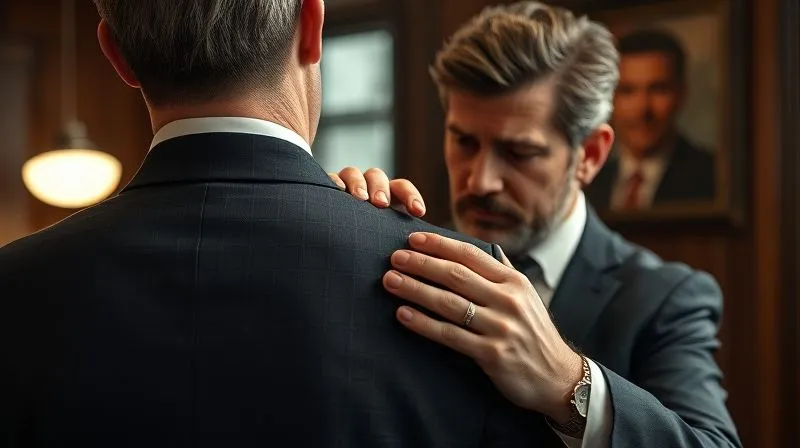
By understanding and compensating for these individual postural and asymmetrical characteristics, the bespoke tailor creates a suit that doesn't just fit statically, but moves and drapes in harmony with the wearer's body. It's this deep understanding of the human form, combined with sartorial artistry, that truly sets bespoke apart in its ability to perfectly fit bespoke suits for challenging body types. For a deeper dive into how posture affects suit fit, you might find valuable insights from specialist tailoring blogs or menswear publications focusing on traditional tailoring techniques.
Frequently Asked Questions (FAQ)
Q: Is bespoke worth the investment for a challenging body type? A: Absolutely, unequivocally yes. For challenging body types, bespoke isn't just a luxury; it's often the only way to achieve a truly flattering and comfortable fit. The frustration and compromises of ill-fitting off-the-rack or even made-to-measure suits are eliminated, replaced by a garment that enhances your presence, boosts your confidence, and lasts for years. Consider it an investment in your personal brand and comfort.
Q: How many fittings are typically needed for a bespoke suit with a complex fit? A: While the standard is usually two to three fittings (basted, forward, and final), for a particularly challenging body type or complex postural issues, it's not uncommon to require four or even five fittings. Each additional fitting allows the tailor to make incremental, precise adjustments, ensuring every nuance of your physique is perfectly accommodated. Patience is a virtue in bespoke tailoring.
Q: Can a bespoke suit hide certain body features I'm self-conscious about? A: A skilled bespoke tailor can certainly create the illusion of a more balanced or desired silhouette. For instance, we can use clever cutting and padding to broaden narrow shoulders, suppress a prominent stomach, or elongate a shorter frame. The goal isn't to 'hide' but to 'harmonize' and enhance your natural physique, making you feel more confident and presenting your best self.
Q: What if my body changes after getting a bespoke suit? A: One of the significant advantages of a well-made bespoke suit is its inherent adaptability. Because it's constructed with ample seam allowance and often with a 'floating canvas,' minor weight fluctuations (typically within 5-10 lbs) can often be accommodated through alterations by your tailor. Significant changes would require more extensive work, but the foundational pattern and quality construction make it more amenable to adjustment than a fused, off-the-rack garment.
Q: How do I find a truly skilled bespoke tailor for complex fits? A: Look for tailors with a long-standing reputation, strong client testimonials, and a portfolio that demonstrates experience with diverse body types. Ask about their process, how many fittings they typically conduct, and their approach to postural adjustments. A good bespoke tailor will be eager to discuss these specifics and demonstrate their expertise. Personal recommendations are also invaluable. Don't hesitate to interview a few before committing. You can also consult resources like Harvard Business Review articles on professional attire which often emphasize the importance of a good tailor.
Key Takeaways and Final Thoughts
Navigating the world of menswear with a challenging body type can be a frustrating experience, often leading to compromises that undermine confidence and style. However, the bespoke journey offers a definitive solution, transforming the 'impossible fit' into sartorial perfection. It’s a process built on collaboration, precision, and the unparalleled expertise of a master tailor.
- Embrace the Bespoke Process: Understand that bespoke is an investment in unparalleled fit, comfort, and confidence, especially for unique physiques.
- Prioritize the Consultation: This initial dialogue with your tailor is crucial for identifying and addressing your body's specific nuances.
- Value Precision Measuring: Beyond basic numbers, bespoke measuring accounts for posture, asymmetry, and how fabric will drape.
- Understand Body-Specific Solutions: Whether athletic, lean, tall, short, or with postural issues, bespoke offers tailored (pun intended) solutions.
- Engage Actively in Fittings: Your feedback is vital. Communicate openly with your tailor to refine the garment to perfection.
- Invest in Your Image: A perfectly fitted suit is more than clothing; it's a statement of professionalism and self-respect.
In my decades of experience, I’ve seen firsthand how a bespoke suit can utterly transform a man's presence. For those who've struggled with ill-fitting garments, the bespoke journey is not just about acquiring a new suit; it's about discovering a new level of confidence and comfort in your own skin. Don't settle for anything less than perfection. Seek out the bespoke experience, and let a master tailor craft a garment that truly celebrates your unique form.
Recommended Reading
- 7 Ways to Differentiate Men's Sustainable Denim & Dominate the Market
- Apple Picking Perfection: Best Fall Accessories for Your Outfit
- Why Dress Styles Fail Online? 5 Proven Ways to Skyrocket E-commerce Sales
- 5 Actionable Ways: Revamp Stale Streetwear for New Buyers Now
- Authenticate Vintage Eyewear: 5 Steps to Profitable Online Resale



Your email address will not be published. Required fields are marked *