

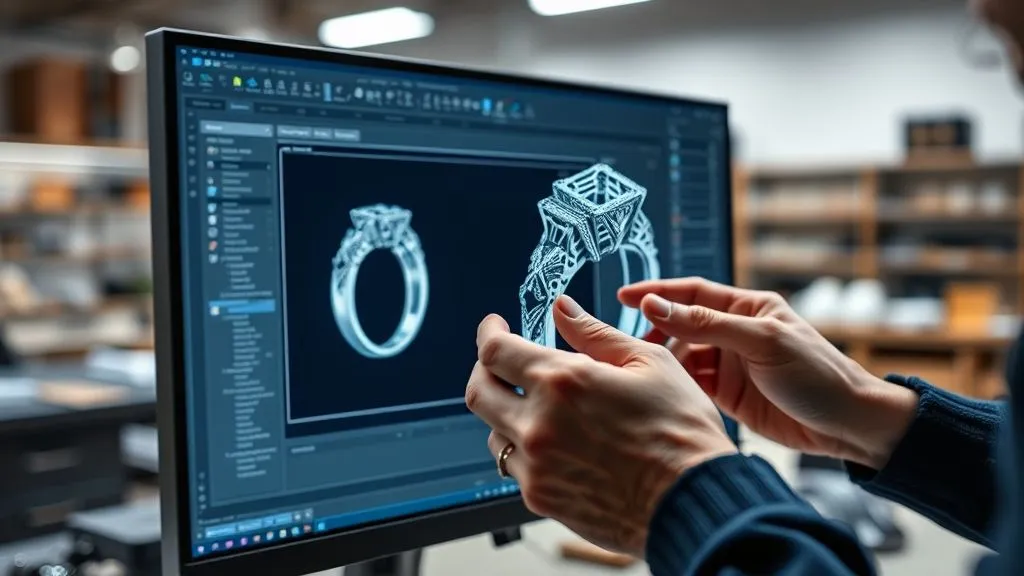
How to Optimize Jewelry Design for Efficient Manufacturing?
For over two decades in the dynamic world of jewelry design and manufacturing, I've witnessed a common, yet often overlooked, challenge: brilliant designs that falter at the production stage. Designers pour their hearts into creating breathtaking pieces, only to face exorbitant manufacturing costs, frustrating production delays, or quality inconsistencies that erode profit margins and reputation.
The core of the problem often lies in a disconnect between the creative vision and the practical realities of production. A design might be aesthetically stunning, but if it's overly complex, uses impractical materials, or requires specialized, expensive processes, it becomes a manufacturing nightmare. This isn't just about small inefficiencies; it's about fundamental flaws that can halt scaling, deplete resources, and ultimately, undermine a brand's viability.
In this comprehensive guide, I'll share my insights and provide you with seven proven strategies to bridge this gap. You'll learn how to integrate design for manufacturability (DFM) principles from conception, optimize your CAD/CAM workflows, make smarter material choices, and foster collaboration that transforms your design process into a lean, efficient, and profitable engine. Prepare to gain actionable frameworks, real-world examples, and expert advice that will fundamentally change how you approach jewelry design for efficient manufacturing.
1. Embrace Design for Manufacturability (DFM) from Conception
The single most impactful shift you can make is to adopt a Design for Manufacturability (DFM) mindset right from the initial sketch. DFM isn't about stifling creativity; it's about channeling it toward designs that are inherently easier, faster, and more cost-effective to produce without compromising aesthetic value. I've seen countless projects saved, and profits boosted, by integrating DFM principles early.
What is DFM in Jewelry Design?
DFM means consciously designing a piece with the manufacturing process in mind. It involves understanding the limitations and capabilities of your chosen production methods – whether it's casting, stamping, 3D printing, or hand fabrication – and designing to leverage their strengths while avoiding their weaknesses. It's asking, "Can this be made efficiently?" before you're too far down the design path.
- Simplify Component Geometry: Complex undercuts, extremely thin sections, or intricate details in areas not easily accessible for finishing can significantly increase production time and cost. Aim for simpler forms where possible, especially for structural elements.
- Minimize Part Count: Each additional component adds to assembly time, material cost, and potential failure points. Can two parts be combined into one? Can a setting be integrated into the main body of a ring instead of being a separate soldered piece?
- Standardize Features: Use standard stone sizes, drill bit diameters, or clasp types. Custom components are always more expensive and lead to longer lead times.
- Consider Tooling & Fixturing: How will the piece be held during polishing, stone setting, or assembly? Designs that are difficult to fixture often incur higher labor costs.
"Designing without considering manufacturing is like writing a symphony without knowing which instruments will play it. The result might be beautiful on paper, but impossible to perform."
This proactive approach ensures that your beautiful designs are not only wearable but also viable in the marketplace. It's about smart design, not compromised design.
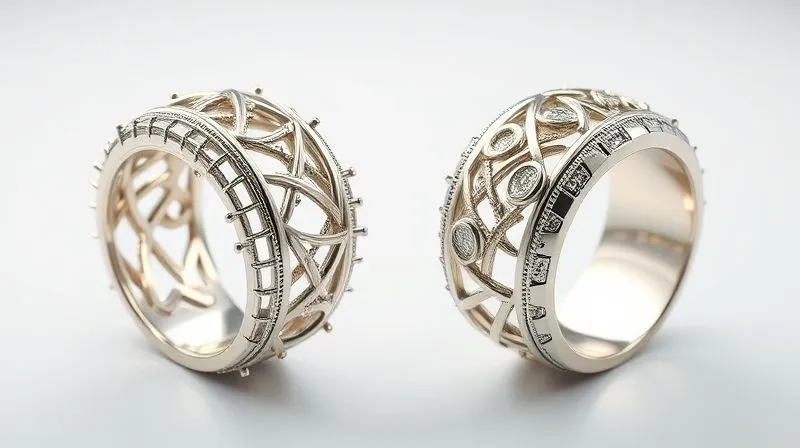
2. Strategic Material Selection: Beyond Aesthetics to Practicality
The choice of material is fundamental to both the aesthetic and the manufacturability of a jewelry piece. It's not just about gold, silver, or platinum; it's about the specific alloy, its properties, and how it interacts with your chosen manufacturing processes. I've seen designers fall in love with a concept only to realize the material they envisioned is incompatible with efficient production methods or vastly inflates costs.
Understanding Material Properties for Production
Different metals have distinct melting points, hardness, ductility, and workability. These properties directly influence casting quality, ease of stamping, laser welding capabilities, and even the final polishing process. For instance, some alloys are notoriously difficult to cast without porosity, while others are too brittle for intricate forming.
- Casting Alloys: Research specific alloys optimized for casting, which flow well and minimize porosity. For example, some gold alloys are formulated for better fill in intricate molds.
- Work-Hardening: Be aware of materials that work-harden quickly (e.g., some stainless steels), requiring frequent annealing during forming, which adds time and cost.
- Surface Finish: Consider how easily the material can be polished or textured. Some metals require more aggressive and time-consuming finishing, impacting labor costs.
- Weight & Density: A heavier material (like platinum) for a bulky design will significantly increase material cost compared to a lighter metal like titanium or even a hollowed-out gold design.
According to a report by the Gemological Institute of America (GIA), understanding the metallurgical properties of precious metals is crucial for both design integrity and efficient production, directly impacting factors like durability and finish quality.
3. CAD/CAM Optimization: Precision as Your Ally
Computer-Aided Design (CAD) and Computer-Aided Manufacturing (CAM) have revolutionized jewelry production, offering unparalleled precision and repeatability. However, simply using CAD isn't enough; optimizing your CAD models for CAM processes is where true efficiency gains are found. In my experience, poorly constructed CAD models are a leading cause of manufacturing delays and costly rework.
Best Practices for CAD Modeling for Manufacturing
- Clean Geometry: Ensure your CAD models have clean, watertight geometry with no open surfaces, self-intersecting polygons, or non-manifold edges. These issues cause errors in 3D printing and milling.
- Appropriate Wall Thickness: Design with adequate wall thickness for the chosen material and manufacturing method. Too thin, and the piece might break during handling, casting, or wear. Too thick, and it's wasteful and heavy.
- Minimize Support Structures: When designing for 3D printing, consider how the model will be oriented to minimize the need for support structures, which reduces material waste and post-processing labor.
- Tolerance Awareness: Design with manufacturing tolerances in mind. If a stone needs to fit into a bezel, ensure the bezel opening is slightly larger than the stone's nominal size to allow for setting.
- File Management & Naming: Maintain organized CAD files with clear naming conventions. This streamlines collaboration and makes it easier to retrieve and modify designs.
Case Study: How 'LuxeLink' Reduced Casting Errors with CAD Optimization
LuxeLink, a boutique jewelry brand specializing in intricate filigree designs, faced a consistent 15% rejection rate during casting due to porosity and incomplete fills. Their beautiful, detailed CAD models were often too complex for consistent casting. By partnering with a CAD/CAM specialist (which I consulted on), they optimized their models by:
- Increasing minimum wall thicknesses in critical areas.
- Adding strategic sprues and vents directly into the CAD model for better metal flow.
- Simplifying non-visible internal geometries.
This resulted in a dramatic reduction in casting errors to under 3% within six months, saving them significant material costs, labor, and lead time. This demonstrates how a small investment in CAD optimization can yield substantial manufacturing efficiencies.
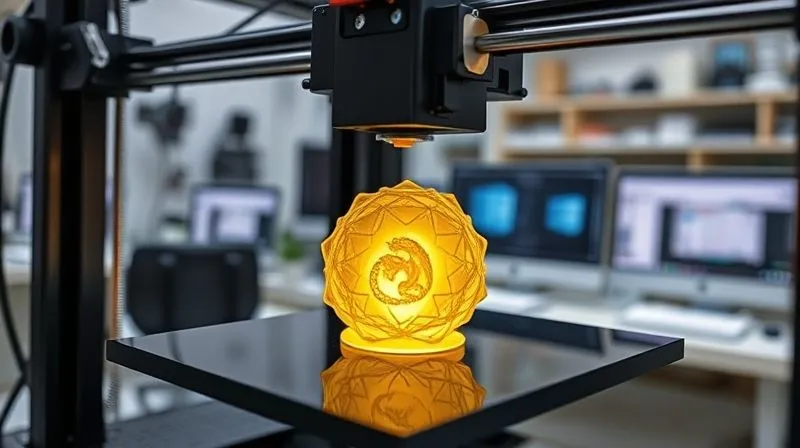
4. Prototyping Wisely: Iteration, Not Just Creation
Prototyping is an indispensable step in the jewelry design process, but it needs to be approached strategically to optimize manufacturing. It's not just about creating a physical model; it's about using each prototype as a learning opportunity to refine the design for production. I've often seen designers skip crucial prototyping steps, leading to expensive mistakes down the line.
Smart Prototyping for Efficiency
Think of prototyping as a series of tests, each designed to answer specific questions about manufacturability, wearability, and aesthetics.
- Rapid Prototyping (RP) for Form & Fit: Use inexpensive RP methods (like FDM or basic resin printing) early on to test scale, ergonomics, and component fit. This is about validating the physical dimensions and interaction of parts, not the final finish.
- Wax or Castable Resin Prototypes for Casting Validation: Once the form is validated, create a prototype using the actual material or a castable equivalent (e.g., castable resin for investment casting). This allows you to test the casting integrity, metal flow, and surface finish before committing to a full production run.
- Functional Prototypes: For pieces with moving parts or complex mechanisms (e.g., hinged bracelets, intricate clasps), create functional prototypes to test durability and smooth operation.
- Feedback Loop: Crucially, get feedback from your manufacturing team or skilled jewelers at each prototyping stage. Their insights into production challenges are invaluable.
"Every prototype is an opportunity to fail cheaply, so you don't fail expensively in production."
5. Component Standardization & Modularity: Building Blocks for Success
One of the most powerful strategies to optimize jewelry design for efficient manufacturing, especially for brands aiming to scale, is the adoption of component standardization and modularity. This approach, borrowed from industrial design, allows for greater flexibility, faster assembly, and reduced inventory costs. It's about thinking of your jewelry as a collection of reusable, interchangeable parts.
Implementing Standardized & Modular Design
- Standard Findings: Use industry-standard clasps, jump rings, ear wires, and chain components whenever possible. Custom findings are expensive and require specialized tooling.
- Modular Elements: Design elements that can be used across multiple pieces in a collection. For example, a specific bezel setting for a gemstone could be used in a ring, pendant, and earrings. This reduces the number of unique molds or CAD files needed.
- Interchangeable Parts: Can a specific charm be attached to different chain styles? Can a pendant be worn on multiple necklace lengths? This enhances customer choice while simplifying production.
- Size Standardization: For rings, ensure consistent sizing conventions. For gemstones, use standard calibrated sizes to avoid custom cutting costs.
This approach not only streamlines manufacturing but also offers advantages in inventory management and product development. According to a study published in the Harvard Business Review on product line efficiency, modular design can significantly reduce complexity and cost across the entire product lifecycle.
6. Designing for Finishing & Assembly: The Unseen Costs
Often, designers focus heavily on the initial form, overlooking the critical and often labor-intensive stages of finishing and assembly. These "unseen costs" can disproportionately inflate the final price of a piece and bottleneck production. A design that is difficult to polish, clean, or assemble is a design that is not optimized for manufacturing efficiency.
Considerations for Efficient Finishing and Assembly
- Accessibility for Polishing: Avoid deep, narrow crevices or sharp internal angles that are difficult for polishing wheels or hand tools to reach. Design with gentle curves and open spaces where possible.
- Minimizing Solder Joints: Each solder joint requires careful preparation, soldering, and subsequent cleaning/polishing. Can parts be cast as one piece instead of multiple soldered components?
- Ease of Stone Setting: Design settings that allow for straightforward stone placement and securing. Complex or overly delicate settings can increase setting time and risk of stone damage.
- Surface Quality from Casting/Printing: While not always controllable, consider if your design's complexity will exacerbate surface roughness from casting or 3D printing, requiring more aggressive finishing.
- Assembly Sequence: Think about the logical order of assembly. Can components be added without obstructing access to subsequent steps?
Here's a comparison of how design complexity impacts finishing time:
| Design Complexity | Estimated Polishing Time | Setting Difficulty |
|---|---|---|
| Simple (e.g., plain band) | 15-30 min | Easy |
| Moderate (e.g., solitaire with simple prongs) | 30-60 min | Medium |
| Complex (e.g., intricate filigree, pave) | 60-180+ min | High |
By designing with these post-production steps in mind, you can significantly reduce labor costs and speed up your overall manufacturing timeline. It's about making the entire journey from raw material to finished product as smooth as possible.
7. Integrate Quality Control Proactively, Not Reactively
Quality control is not just a final inspection; it's a continuous process that should be integrated into every stage of your design and manufacturing workflow. When designing for efficiency, think about how quality can be built into the product, rather than inspected in at the end. This proactive approach saves immense time and resources, preventing costly recalls or customer dissatisfaction.
Designing for Built-In Quality
- Clear Specifications: Provide unambiguous design specifications, including tolerances, material types, and finishing requirements, directly in your CAD files and technical drawings. Ambiguity leads to errors.
- Visual Inspection Points: Design elements that allow for easy visual inspection at various stages. For example, ensuring that all stone settings are clearly visible for inspection.
- Testable Features: For functional jewelry (e.g., clasps, hinges), design in a way that allows for easy testing of functionality without damaging the piece.
- Material Homogeneity: Choose materials and design forms that promote consistent material properties throughout the piece, reducing weak points.
As manufacturing expert W. Edwards Deming famously stated, "Quality is not an act, it is a habit." This applies directly to how we design. By embedding quality considerations from the outset, we not only optimize jewelry design for efficient manufacturing but also build a reputation for excellence. For more insights into quality management, consider resources from organizations like the American Society for Quality (ASQ).
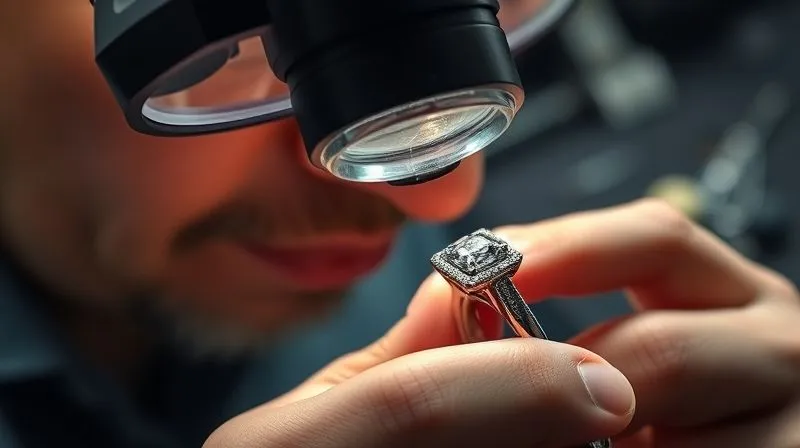
8. Collaboration is Key: Bridging the Design-Production Gap
Perhaps the most crucial, yet often overlooked, aspect of optimizing jewelry design for efficient manufacturing is effective collaboration between designers and manufacturers. I've seen too many brilliant ideas stumble because the designer and the production team operated in silos. The best results emerge when there's an open, continuous dialogue.
Fostering a Collaborative Environment
- Early Engagement: Bring your manufacturing partners or in-house production team into the design process early. Their practical insights into material behavior, tooling, and process limitations are invaluable.
- Regular Feedback Loops: Establish a system for regular feedback. Share early concepts, prototypes, and CAD models. Encourage questions and critiques from the production floor.
- Cross-Training/Shadowing: If possible, have designers spend time in the workshop, and production staff spend time understanding design constraints. Empathy for each other's roles is a powerful tool.
- Clear Communication Channels: Use shared platforms for project management, document sharing, and communication to ensure everyone is working from the latest information.
- Joint Problem-Solving: When a manufacturing challenge arises, approach it as a joint problem to be solved, rather than a "designer vs. manufacturer" issue.
This collaborative synergy not only optimizes jewelry design for efficient manufacturing but also fosters innovation. When designers understand production realities, they can design more inventively within those boundaries. When manufacturers understand design intent, they can find creative ways to bring those visions to life efficiently. This is a topic frequently explored by experts in industrial design and supply chain management, emphasizing the need for integrated product development teams, as discussed in various Supply Chain Management Review articles.
Frequently Asked Questions (FAQ)
Q: How do I balance creative freedom with manufacturing constraints? The key is not to view constraints as limitations but as creative challenges. By understanding manufacturing processes, you can design pieces that are both innovative and producible. Often, designing within constraints leads to more elegant and resourceful solutions. It's about designing smart, not necessarily simple.
Q: What CAD software is best for DFM in jewelry? Software like Rhino3D with Grasshopper, MatrixGold, and SolidWorks are excellent for jewelry design, offering robust tools for precise modeling and analysis. The "best" often depends on your specific needs, existing skill set, and integration with your chosen CAM processes. Focus on mastering the DFM principles within your chosen software.
Q: How can small independent designers apply these principles without a large team? Even as a solo designer, you can apply these by actively seeking feedback from your casting house, bench jewelers, or 3D printing service. Treat them as your extended production team. Document your design decisions and their manufacturing implications. Investing in a good CAD program and understanding its DFM features is also crucial.
Q: Is 3D printing always more efficient for manufacturing jewelry? Not necessarily. While 3D printing offers incredible design freedom and rapid prototyping, its efficiency for mass production depends on the piece's complexity, material, and desired finish. For high-volume, simpler designs, traditional methods like stamping or die-striking can be far more cost-effective. It's about choosing the right tool for the job.
Q: What are the biggest mistakes designers make regarding manufacturability? The most common mistakes I've observed are designing with insufficient wall thickness, creating intricate geometries that are impossible to polish or set stones in, failing to consider material shrinkage/expansion during casting, and not engaging with manufacturers early enough in the design process. These often lead to expensive redesigns or scrapped production runs.
Key Takeaways and Final Thoughts
Optimizing jewelry design for efficient manufacturing is not just about cutting costs; it's about building a sustainable, scalable, and reputable brand. By integrating DFM principles, making informed material choices, leveraging CAD/CAM effectively, and fostering collaboration, you transform your creative process into a finely tuned engine of innovation and production.
- Start with DFM: Embed manufacturability considerations from the very first sketch.
- Choose Materials Wisely: Understand how material properties impact production.
- Master Your CAD: Create clean, optimized models for seamless CAM integration.
- Prototype Strategically: Use each prototype as a learning opportunity to refine.
- Standardize & Modularize: Build flexibility and efficiency with reusable components.
- Design for Finishing: Account for polishing and assembly to avoid hidden costs.
- Embed Quality: Make quality an inherent part of your design, not an afterthought.
- Collaborate Continuously: Bridge the gap between design and production teams.
The journey from a brilliant idea to a beautifully crafted, efficiently produced piece of jewelry is complex, but immensely rewarding. By adopting these strategies, you're not just designing jewelry; you're engineering success. Embrace these principles, and watch your designs not only captivate imaginations but also thrive in the competitive marketplace.
Recommended Reading
- 7 Proven Ways to Stop Costume Jewelry Allergic Reactions & Irritation
- Unlock Digital Fashion: 5 Ways Blockchain NFTs Secure Your Ownership
- Natural Beauty Claims Challenged? 5 Legal Defense Strategies
- Elevate Business Casual: 7 Strategies for Senior Leadership Impact
- Bride's Skin Reacts? 7 Urgent Steps After Bad Trial Makeup

Your email address will not be published. Required fields are marked *