


Introduction: How to forecast commercially viable luxury runway trends swiftly?
For over two decades in the luxury fashion sector, I've witnessed firsthand the exhilarating highs of trend adoption and the crushing lows of misinterpreting the market. The pace of change today is relentless, and for luxury brands, a misstep isn't just a missed opportunity; it can be a significant financial drain and a blow to brand equity. I've seen countless brilliant designs gather dust because they were either too early, too late, or simply not aligned with what the discerning luxury consumer truly desired.
The traditional, often slow-moving forecasting models that once sufficed are now obsolete. We're operating in an era where social media can amplify a micro-trend into a global phenomenon overnight, and cultural shifts can redefine desirability in an instant. The core problem for many is not just identifying a trend, but understanding its commercial viability – will it sell, and will it sell at a luxury price point, swiftly enough to capitalize?
In this definitive guide, I will share the frameworks, strategies, and deeply personal insights I’ve cultivated over years at the forefront of luxury. You’ll learn not just how to forecast commercially viable luxury runway trends swiftly, but how to build an intuitive, data-driven, and agile system that keeps your brand not just relevant, but leading. We’ll delve into actionable steps, real-world analogies, and the critical thinking required to navigate this complex, yet incredibly rewarding, landscape.
Deconstructing "Commercially Viable": Beyond Hype to Profit
Before we can forecast, we must precisely define what a "commercially viable" luxury runway trend actually means. It’s far more than just what looks good on the catwalk or garners social media buzz. For me, it boils down to a confluence of four critical factors: market demand, production feasibility, brand alignment, and profitability at scale. A trend might be aesthetically groundbreaking, but if it doesn't resonate with your target demographic's evolving desires, can't be produced to luxury standards, clashes with your brand's core identity, or fails to deliver healthy margins, it's not commercially viable.
True commercial viability in luxury fashion requires a delicate balance. It's about discerning which emerging styles will transition from editorial pages to shopping carts, which materials will capture the zeitgeist, and which silhouettes will define the season for your specific clientele. This requires moving beyond subjective judgment to a more rigorous, data-informed approach that still respects the artistry inherent in luxury.
“In luxury, commerce is not the antithesis of creativity; it is its vital oxygen. A trend, however beautiful, that cannot find its market is merely an artistic statement, not a business strategy.”
This means understanding the subtle nuances of luxury consumer behavior – their aspirations, their values, and their evolving definition of exclusivity and quality. It’s about anticipating their next desire before they even articulate it, and then ensuring your brand is ready to deliver.
The Data Triangulation Model: My Secret Weapon
To truly forecast commercially viable luxury runway trends swiftly, I rely on what I call the Data Triangulation Model. This approach systematically combines quantitative data with qualitative insights, allowing for a comprehensive and robust prediction. We’re not just looking at sales figures; we’re merging them with cultural anthropology, social listening, and expert interviews to build a richer, more accurate picture.
Quantitative data forms the bedrock: past sales performance of similar items, web analytics, social media engagement metrics, search trends, and macroeconomic indicators. This tells us what is happening. Qualitative insights, on the other hand, explain why it's happening: shifts in consumer values, emerging subcultures, geopolitical influences, and technological advancements. When these two data streams are cross-referenced, patterns emerge that are far more predictive than either source alone.
Leveraging AI & Predictive Analytics
In today's landscape, AI and predictive analytics are no longer optional; they are essential tools for swift forecasting. These technologies can process vast amounts of unstructured data – from runway show reviews and fashion blogs to global news feeds and social media conversations – identifying nascent trends faster than any human team. I've personally seen how AI can highlight correlations between seemingly disparate data points, revealing early signals of a commercially viable trend.
However, AI is a tool, not a crystal ball. Its outputs must be interpreted by human experts who understand the nuances of luxury and can differentiate genuine shifts from fleeting fads. According to a Deloitte report on the State of Fashion, technology adoption, particularly in data analytics, is a key differentiator for successful brands. It’s about augmenting, not replacing, human intuition.
The Power of Micro-Trend Spotting
Forget waiting for macro trends to solidify. Swift forecasting means identifying micro-trends – small, localized shifts in consumer behavior or aesthetic preference that, if nurtured, can scale. These often originate in niche communities, art movements, or specific cultural dialogues. Monitoring these early indicators, perhaps through specialized social listening tools or by actively engaging with cultural innovators, provides a significant competitive edge. It’s like catching a whisper before it becomes a shout.

Swiftness Through Agile Research Cycles
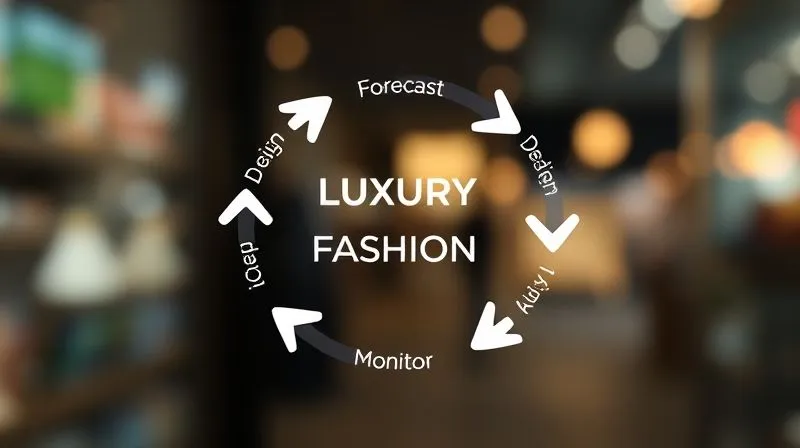
The traditional seasonal forecasting model is too slow for the modern luxury market. To achieve swift forecasting, we must adopt agile research cycles. This means moving from a reactive, annual cycle to a proactive, continuous monitoring and iteration process. Instead of waiting for fashion week to dictate the next season, we are constantly scanning, analyzing, and adapting. This ensures your brand is always prepared, never playing catch-up.
An agile approach breaks down the forecasting process into shorter, iterative sprints, allowing for quicker validation and adaptation. This minimizes the risk of investing heavily in a trend that might falter and maximizes the opportunity to capitalize on those that accelerate rapidly. It's about being nimble and responsive.
Step-by-Step: Implementing an Agile Trend Sprint
- Define the Focus (1 week): Identify a specific area of inquiry – e.g., 'emerging eveningwear silhouettes' or 'sustainable material innovation in accessories'.
- Data Collection & Aggregation (2 weeks): Utilize AI tools, social listening platforms, expert interviews, and cultural reports to gather relevant data.
- Analysis & Pattern Recognition (1 week): Cross-reference quantitative and qualitative data. Look for recurring themes, early adopters, and cultural resonance.
- Hypothesis Formulation (3 days): Based on analysis, formulate clear hypotheses about potential commercially viable trends.
- Validation & Refinement (1 week): Present hypotheses to a cross-functional team (design, merchandising, marketing). Seek external validation from a small focus group or industry experts.
- Action & Integration (Ongoing): Integrate validated trends into design briefs, material sourcing, and marketing strategies. Monitor performance.
This rapid iteration allows for constant course correction, ensuring your brand remains aligned with the fast-evolving luxury consumer landscape. It’s a continuous feedback loop that fosters true swiftness.
| Phase | Duration | Key Activities | Outcome |
|---|---|---|---|
| Discovery | 2 weeks | Social listening, cultural reports, expert interviews | Raw trend signals |
| Analysis | 1 week | Data triangulation, pattern identification | Trend hypotheses |
| Validation | 1 week | Internal review, market testing, expert feedback | Commercially viable trends |
| Implementation | Ongoing | Design integration, sourcing, marketing | Market success & learning |
Cultural Cartography: Mapping the Zeitgeist
Luxury fashion doesn't exist in a vacuum; it is a direct reflection of the broader cultural landscape, or the 'zeitgeist.' To forecast runway trends swiftly and accurately, one must become a master of cultural cartography – understanding the macro-shifts in society, technology, economics, environment, and politics (STEEP analysis) that underpin consumer desires. A shift towards wellness, for example, isn't just a health trend; it influences fabric choices, garment silhouettes, and brand messaging in luxury sportswear and loungewear.
I’ve learned that the most profound and commercially viable luxury trends often emerge from deep-seated cultural anxieties, aspirations, or shifts in identity. For instance, the growing emphasis on sustainability and ethical sourcing isn't merely a niche concern; it's a fundamental value shift among affluent consumers, as highlighted in numerous consumer reports. Brands that ignore these tectonic shifts do so at their peril.
A great resource for understanding these broader forces is academic research and thought leadership from institutions like the Harvard Business Review, which often publishes articles on consumer behavior and societal changes that profoundly impact luxury markets.
Case Study: The Rise of Sustainable Luxury
Consider the trajectory of 'sustainable luxury.' A decade ago, it was a nascent concept, often relegated to niche brands. However, by meticulously mapping the cultural zeitgeist – increasing environmental consciousness, millennial and Gen Z values, and a growing distrust of fast fashion – my team began to see its commercial viability accelerate. We advised a prominent Italian leather goods brand, 'Eterna Legacy,' to invest in traceable, ethically sourced leathers and to innovate with plant-based alternatives, even when traditionalists balked. They launched a capsule collection focused on transparency and provenance. The collection initially faced skepticism but, within two seasons, became their fastest-growing segment, attracting a younger, affluent demographic willing to pay a premium for conscious consumption. This proactive cultural cartography allowed Eterna Legacy to capture a significant market share before many competitors even recognized the shift.
The Influence Network: Identifying True Tastemakers
In the luxury space, influence is a nuanced and often elusive concept. Swift forecasting demands that we move beyond simply tracking celebrity endorsements to meticulously identifying and monitoring the true tastemakers – individuals and groups who genuinely shape culture and style, often from the periphery. These can be niche artists, avant-garde musicians, underground subcultures, or even influential academics whose ideas trickle down into aesthetic preferences.
My experience has shown that these individuals often act as early warning systems for emerging trends. They are the ones experimenting, pushing boundaries, and inadvertently signaling shifts in desirability long before they hit mainstream runways. Learning to identify these nodes in the influence network, whether through ethnographic research, specialized online community monitoring, or direct engagement, is crucial. It's about understanding who genuinely moves the needle, not just who has the largest follower count.
As marketing guru Seth Godin often says, "The smallest viable market is the future of every brand." In luxury, this means identifying the 'smallest viable market' of tastemakers who will eventually define the desires of the broader affluent consumer base. This requires deep cultural immersion and a keen eye for authenticity.

Prototype & Pilot: Validating Trends Before Full Launch
Even with the most sophisticated data triangulation and cultural mapping, a degree of uncertainty remains. This is where the strategy of prototype and pilot becomes indispensable for ensuring commercial viability. Instead of committing to massive production runs based solely on forecasts, luxury brands can mitigate risk and gain real-world validation by launching small, limited-edition collections or individual items. This approach allows for swift market testing without significant capital outlay.
Think of it as a scientific experiment: you have a hypothesis (this trend is commercially viable), and you test it with a controlled release. This could involve a capsule collection showcased exclusively online, a limited drop in key flagship stores, or even a collaboration with an emerging designer that embodies the trend. The feedback – sales velocity, customer reviews, social media engagement – provides invaluable, real-time data on the trend's actual market acceptance and commercial potential.
This iterative process is crucial for brands that want to remain agile and responsive. It allows for quick adjustments, scaling up successful concepts, and gracefully exiting from those that don't resonate. It's a pragmatic approach to luxury, ensuring that creativity is always grounded in market reality. For more on strategic testing, insights from publications like Forbes often discuss agile business strategies relevant to luxury retail.
The Feedback Loop: Continuous Learning & Adaptation
Forecasting commercially viable luxury runway trends swiftly isn't a one-time event; it's a continuous, dynamic process fueled by a robust feedback loop. Once a trend has been launched, the work is far from over. In fact, this is where some of the most critical learning occurs. My approach emphasizes establishing systematic mechanisms to collect, analyze, and act upon post-launch performance data and consumer insights.
This involves more than just tracking sales. It means actively monitoring customer reviews, conducting post-purchase surveys, analyzing return rates for specific trend-driven items, and keeping a close eye on social media sentiment. Were the initial assumptions about commercial viability correct? Did the trend resonate as expected? What unexpected reactions or adjacent trends emerged?
This continuous learning allows brands to refine their understanding of the luxury consumer, improve future forecasts, and adapt their strategies in real-time. It’s an iterative cycle of prediction, action, measurement, and adjustment. Brands that excel in this area are not only swift in their initial forecasts but also incredibly resilient and adaptable to market shifts.
Building Your Internal Forecasting Muscle: Team & Tools
Ultimately, the ability to forecast commercially viable luxury runway trends swiftly rests on two pillars: your team and your tools. No single individual, however brilliant, can manage the complexity of modern trend forecasting. It requires a cross-functional team with diverse expertise, united by a shared vision and agile methodologies.
Your team should ideally comprise individuals with backgrounds in data analytics, cultural sociology, fashion design, merchandising, and marketing. Each perspective adds a crucial layer to the analysis, preventing blind spots and fostering a holistic understanding of emerging trends. Regular, structured brainstorming sessions and workshops are essential for cross-pollination of ideas and for challenging assumptions.
Equally important are the right tools. Investing in advanced AI-driven trend forecasting platforms, sophisticated social listening software, and robust data visualization tools is no longer a luxury; it's a necessity. These technologies empower your team to process vast amounts of data, identify patterns, and present insights in an actionable format, dramatically increasing the swiftness and accuracy of your forecasts. For instance, exploring new technologies in fashion can be a great way to stay ahead, as detailed by various tech and business publications like TechCrunch.
Frequently Asked Questions (FAQ)
Q: How often should I update my luxury trend forecasts? A: In today's dynamic luxury market, a continuous, agile approach is best. I recommend implementing monthly or bi-monthly 'trend sprints' to capture micro-shifts, with a more comprehensive review every quarter. Relying solely on seasonal updates is too slow and risks missing critical commercial opportunities.
Q: What's the biggest mistake luxury brands make in forecasting? A: The most common mistake I've observed is relying too heavily on either pure intuition or isolated data points. True forecasting success comes from triangulating data – combining quantitative metrics with deep qualitative cultural insights. Another significant error is failing to validate trends through small-scale pilots before committing to large production.
Q: Can small luxury brands effectively forecast trends with limited resources? A: Absolutely. While large brands may have more extensive tools, smaller brands often possess greater agility and a closer connection to their niche audience. Focus on hyper-targeted micro-trend spotting within your specific customer segment, leverage free social listening tools, and prioritize qualitative insights from your loyal customer base and industry network. Your agility is your superpower.
Q: How do I differentiate genuine, long-term trends from fleeting fads? A: Genuine trends are usually rooted in deeper cultural, societal, or technological shifts, whereas fads are often superficial and short-lived. Look for consistent growth in interest over time, adoption across diverse, authoritative tastemakers (not just commercial influencers), and alignment with evolving consumer values. Fads tend to spike quickly and then decline just as rapidly. The 'why' behind the trend is key.
Q: What role does intuition play alongside data in luxury fashion forecasting? A: Intuition is invaluable, especially in luxury fashion where creativity and artistry are paramount. However, it should act as a guide for inquiry, not a sole decision-maker. Use your expert intuition to formulate hypotheses or identify areas for deeper investigation, and then validate those hunches with robust data and market testing. Data grounds intuition in commercial reality.
Key Takeaways and Final Thoughts
- Define Commercial Viability Rigorously: Beyond aesthetics, ensure trends align with market demand, production feasibility, brand identity, and profitability.
- Embrace Data Triangulation: Combine quantitative metrics with qualitative cultural insights for a comprehensive, predictive view.
- Adopt Agile Cycles: Move from seasonal to continuous, iterative trend sprints to maintain swiftness and responsiveness.
- Map the Cultural Zeitgeist: Understand macro-societal shifts that underpin consumer desires and give rise to enduring trends.
- Identify True Tastemakers: Look beyond celebrity to niche influencers and subcultures for early trend signals.
- Prototype and Pilot: Validate trends with small-scale releases to mitigate risk and gain real-world feedback.
- Cultivate a Feedback Loop: Systematically analyze post-launch performance to refine future forecasts and adapt strategies.
- Empower Your Team with Tools: Invest in cross-functional expertise and advanced technologies to enhance forecasting accuracy and speed.
Forecasting commercially viable luxury runway trends swiftly is no longer a dark art but a strategic discipline. By integrating these expert-level frameworks and insights, you're not just predicting the future; you're actively shaping your brand's success within it. The luxury landscape demands foresight, agility, and a deep understanding of both data and desirability. Embrace this challenge, and you'll find yourself not just reacting to trends, but confidently leading the way.
Recommended Reading
- Best Activewear for CrossFit Beginners: Crush Your First WOD!
- Bridesmaid Dress Disaster? 7 Steps When Wrong Sizes Arrive on Your Big Day
- Scaling Haute Couture: 7 Strategies to Preserve Artisan Quality
- Mastering Womenswear: How to Avoid Inventory Losses from Fleeting Trends
- 5 Strategies to Slash Returns: Adaptable Kids' Wear Fit Solutions


Your email address will not be published. Required fields are marked *