


How to Dress for High-Stakes Client Meetings to Convey Authority?
For over two decades in the menswear industry, advising countless executives and entrepreneurs, I've observed a profound truth: what you wear to a high-stakes client meeting isn't just about looking good; it's a silent, yet powerful, form of communication. It's your personal brand speaking volumes before you even utter a word. I've seen promising deals falter and careers plateau, not due to a lack of competence, but a fundamental misunderstanding of this sartorial language.
The pressure of a crucial client meeting is immense. You're not just selling a product or service; you're selling yourself, your credibility, and your organization's trustworthiness. The pain point is clear: how do you ensure your visual presentation aligns perfectly with the authority and expertise you bring to the table, without appearing ostentatious or out of touch? How do you dress to command respect, instill confidence, and, ultimately, close the deal?
In this definitive guide, I will share my expert insights and actionable frameworks specifically designed to help you master the art of dressing for influence. We'll explore the psychology behind visual authority, break down the essential components of a power wardrobe, and provide practical strategies to ensure you always convey confidence and competence when it matters most. Prepare to transform your approach to business attire.
1. The Psychology of First Impressions: Your Silent Sales Pitch
The moment you walk into a room, a complex array of judgments begins. This isn't vanity; it's human psychology at play. In my experience, the first seven seconds of an interaction are critical, and a significant portion of that impression is visual. Your attire, grooming, and posture instantly signal your professionalism, attention to detail, and even your respect for the occasion and the people you're meeting.
According to a study published by Harvard Business Review, people form lasting opinions about others very quickly, often based on non-verbal cues. This "halo effect" means that a positive initial impression, heavily influenced by appearance, can spill over into perceptions of your intelligence, competence, and reliability. Conversely, a poor impression can create an uphill battle, forcing you to work harder to overcome preconceived notions.
To truly understand how to dress for high-stakes client meetings to convey authority, you must first acknowledge that your clothing is a strategic tool. It's not just about covering your body; it's about projecting an image of capability and control. Think of your wardrobe as an extension of your professional resume, a non-verbal argument for why you are the right person for the job.
- Visual Authority: Well-tailored, appropriate clothing signals discipline and attention to detail.
- Trust & Credibility: A polished appearance suggests reliability and respect for your clients.
- Confidence Projection: When you look good, you feel good, and that confidence is palpable.
2. The Unshakeable Foundation: Fit, Fabric, and Form
Before we delve into colors or accessories, let's establish the absolute non-negotiables: fit, fabric, and the overall form of your garments. These three elements are the bedrock upon which all authority dressing is built. Neglect them, and even the most expensive suit will fall flat.
Tailoring is King: The Power of a Perfect Fit
I cannot stress this enough: a perfectly tailored garment will always outshine an ill-fitting designer piece. A suit jacket that bunches at the shoulders, sleeves that are too long, or trousers that puddle at your ankles scream amateur. Conversely, a jacket that gently hugs your shoulders, sleeves that expose a quarter-inch of cuff, and trousers that break just once over your shoes convey precision and polish. Invest in a good tailor; it's the single best investment you can make in your professional wardrobe.
- Shoulder Seams: Should sit precisely where your shoulder ends.
- Jacket Length: Should cover your seat and end around mid-thumb when your arms are at your side.
- Sleeve Length: Should expose about 0.25 to 0.5 inches of your shirt cuff.
- Trouser Break: Aim for a 'no break' or 'slight break' – a single crease at the front of your shoe.
Fabric Finesse: Quality That Speaks Volumes
The tactile quality of your clothing communicates luxury, durability, and a discerning eye. For high-stakes meetings, stick to natural fibers. For suits, worsted wool (Super 100s to 130s) is the gold standard – it drapes beautifully, resists wrinkles, and breathes well. For shirts, crisp cotton poplin or twill is ideal. Avoid synthetic blends that can look cheap, wrinkle easily, and don't breathe well, leading to discomfort.
Form and Structure: The Silhouette of Authority
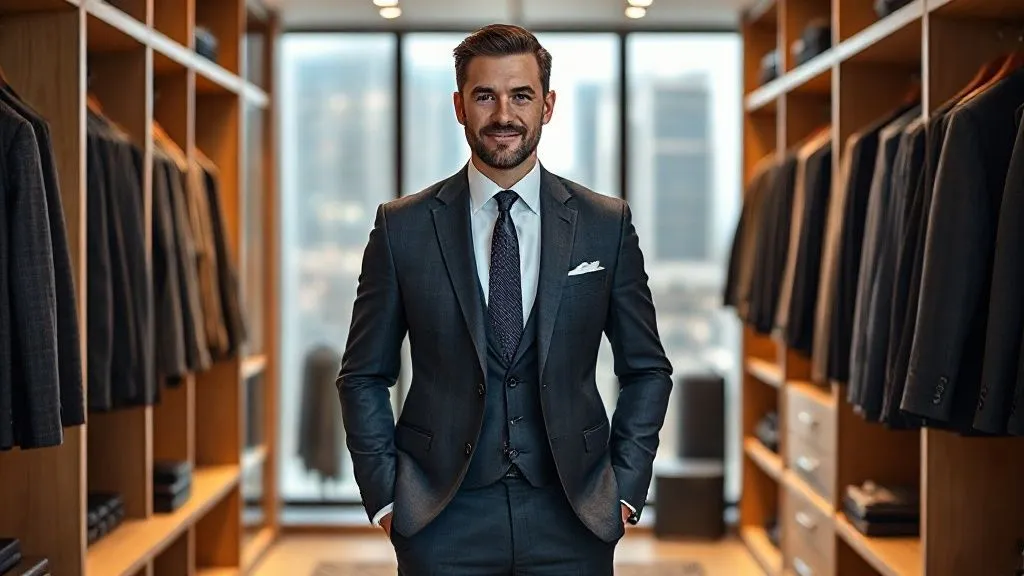
The overall silhouette of your outfit should be clean, streamlined, and structured. A well-constructed suit jacket, with a defined shoulder and a slight taper at the waist, creates an authoritative V-shape. Avoid overly baggy or excessively slim cuts. The goal is a confident, strong outline that commands presence without being restrictive.
3. Strategic Color Choices: Speaking Without Words
Colors carry psychological weight, and understanding this can give you a significant advantage when you need to convey authority. Certain colors inherently project power, stability, and seriousness, making them indispensable for high-stakes client meetings.
The Power Palate: Navy, Charcoal, and Grey
These are your primary weapons. A Psychology Today article noted the impact of color in clothing. Navy blue conveys trustworthiness, stability, and intelligence – it's approachable yet authoritative. Charcoal grey signals sophistication, gravitas, and quiet confidence. Mid-grey is versatile and professional, suitable for slightly less formal but still serious encounters. For shirts, crisp white or light blue are non-negotiable foundations, projecting cleanliness and clarity.
Accent Colors: Subtle Statements, Not Distractions
Your tie and pocket square are where you can introduce a subtle splash of color or pattern. A deep burgundy, forest green, or a classic repp stripe tie can add personality without detracting from your authority. The key is subtlety. Avoid overly bright, flashy, or novelty ties that might suggest a lack of seriousness.
“Your clothes are not just a covering; they are a canvas upon which you paint your professional narrative. Choose your colors wisely, for they are the silent words of your conviction.”
4. The Power of Details: Accessories That Elevate, Not Distract
In the world of menswear, authority is often conveyed in the minutiae. The right accessories don't just complete an outfit; they refine it, adding layers of sophistication and signaling an acute attention to detail – a trait highly valued in business.
The Watch: A Statement of Precision and Value
Your watch is more than a time-telling device; it's a subtle indicator of your taste and appreciation for quality. For high-stakes meetings, opt for a classic, understated timepiece. A slim dress watch with a leather strap or a clean, elegant metal bracelet watch is ideal. Avoid overly sporty, bulky, or flashy watches that might appear immature or ostentatious. It should be a quiet symbol of your respect for time and tradition.
The Tie and Pocket Square: Harmony and Polish
A well-chosen tie (silk is preferred) with an appropriate knot (four-in-hand or half-Windsor) is essential. It should complement your suit and shirt, not clash. The pocket square, while optional, adds a touch of panache and sophistication. A simple white linen square, folded neatly, is always a safe and powerful choice. Ensure your tie and pocket square complement each other, but do not perfectly match – that's a common rookie mistake.
Shoes and Belt: The Foundation of Your Footing
These two elements are often overlooked but are critical. Your shoes should be impeccably polished, high-quality leather (oxfords or derbies are best for formal settings), and in a color that matches or complements your belt. Black or dark brown are standard. A worn, scuffed, or mismatched pair of shoes can undermine your entire look. Your belt should be of similar quality leather and match your shoes in color and finish. This consistent attention to detail signals a thorough and reliable individual.
Mini Case Study: How Elevate-Co. Secured a Multi-Million Deal with Strategic Wardrobe
Client: Elevate-Co., a mid-sized consulting firm, vying for a multi-million dollar contract with a conservative financial institution.
Challenge: Despite a strong proposal, their previous attempts to secure similar high-value contracts often ended with them being perceived as 'too casual' or 'lacking gravitas' by older, more established clients.
Solution: I worked with Elevate-Co.'s lead negotiator, Mark, to refine his entire presentation, starting with his wardrobe. We swapped out his slightly-too-casual blazers for bespoke charcoal and navy suits, ensured every shirt was impeccably tailored and pressed, and focused on high-quality leather accessories. His previously worn-out briefcase was replaced with a structured leather attaché. We even refined his grooming, ensuring a clean shave and a classic haircut.
Result: In the final client meeting, Mark reported an immediate shift in the room's dynamic. The client's senior partners, known for their traditional approach, were visibly more engaged and receptive from the outset. Mark exuded an undeniable air of authority and confidence that resonated with their values. Within two weeks, Elevate-Co. secured the contract, with the client specifically mentioning their professionalism and attention to detail throughout the process. This demonstrated how conveying authority through dress was a crucial, silent factor in their success.
5. Navigating the Unwritten Rules: Context and Industry Nuances
While the principles of conveying authority through dress remain consistent, the application of those principles must be nuanced. A high-stakes meeting with a Silicon Valley tech startup might call for a different interpretation of 'authority' than one with a Wall Street investment bank. Understanding context is paramount.
Industry Specificity: Adapt, Don't Assimilate
Conservative Industries (Finance, Law, Government): For these sectors, a dark, impeccably tailored two-piece suit (navy or charcoal), a crisp white or light blue shirt, a silk tie, and polished leather oxfords are the gold standard. Deviation should be minimal, focusing on subtle texture in fabric or a refined pattern in the tie. This is where Deloitte's insights on executive presence are particularly relevant; conformity to established norms often signals trustworthiness.
Creative/Tech Industries: While still high-stakes, these environments might allow for more flexibility. A well-fitted sport coat with tailored trousers, a high-quality knit shirt, or even a sophisticated dark denim with a blazer could convey authority if executed with precision. The key is still polish and intentionality, avoiding anything sloppy or overtly casual. It's about looking like a leader in *their* context.
Reading the Room (and the Invitation)
Always do your homework. Research the client's company culture, review their website, and if possible, observe how their senior leadership dresses. Pay attention to any dress code mentioned in the invitation. When in doubt, it's almost always better to be slightly overdressed than underdressed. Overdressing signals respect; underdressing can signal a lack of seriousness or understanding.
6. Beyond the Garment: Grooming and Presence
Your clothing is only one component of your overall presentation. To truly convey authority, your grooming and physical presence must be equally impeccable. These elements reinforce the message your attire sends.
The Polished Finish: Hair, Skin, and Nails
- Hair: Neatly cut, clean, and styled appropriately for your face shape and profession. Avoid extreme styles or unkempt looks.
- Facial Hair: If you have a beard or mustache, ensure it's meticulously trimmed and groomed. If clean-shaven, ensure no stubble or razor burn.
- Skin: Basic skincare is essential. A clean, healthy complexion reflects vitality.
- Nails: Clean, trimmed, and well-maintained. This is a small detail that speaks volumes about your overall attention to personal care.
Scent Strategy: Subtle and Sophisticated
A subtle, sophisticated fragrance can enhance your presence, but less is always more. Avoid strong, overpowering colognes that can be distracting or offensive. A light application of a high-quality, professional scent is all that's needed to leave a pleasant, lingering impression.
Confident Posture and Body Language
Even the most perfectly dressed individual can undermine their authority with poor posture. Stand tall, shoulders back, head level. Make eye contact, offer a firm handshake, and maintain open, confident body language. These non-verbal cues amplify the message of power and self-assurance that your clothing initiates. As Forbes often highlights, executive presence is a holistic concept where appearance and demeanor are intertwined.
7. Building Your Authority Wardrobe: A Strategic Investment
Dressing for high-stakes client meetings to convey authority isn't about having an endless closet; it's about having a strategic, curated collection of versatile, high-quality pieces. Think of your wardrobe as an investment portfolio for your career.
Essential Pieces for the Authority Wardrobe
Based on years of experience, here are the core items to build your foundational authority wardrobe:
- Two Dark Suits: One navy, one charcoal grey. Impeccably tailored, two-piece, single-breasted.
- Three to Five Dress Shirts: Two white, two light blue, one subtle stripe or pattern. All 100% cotton, crisp, and well-fitting.
- Three to Five Silk Ties: Classic patterns (solids, repp stripes, subtle foulards) in power colors (burgundy, deep blue, forest green).
- One Quality Leather Belt: Black, to match black shoes.
- One Pair Black Oxfords: Highly polished, full-grain leather.
- One Pair Dark Brown Derbies or Loafers: Polished, full-grain leather (for less formal but still serious occasions).
- One Classic Dress Watch: Understated and elegant.
- High-Quality Socks: Dark, over-the-calf to avoid exposed skin when seated.
Investment vs. Fast Fashion: The Long-Term View
Resist the temptation of fast fashion for your core professional wardrobe. These garments are often poorly constructed, use inferior fabrics, and quickly lose their shape. Invest in fewer, higher-quality pieces that will last for years, maintain their appearance, and provide a consistent, authoritative look. A well-maintained suit from a reputable brand, tailored to perfection, will serve you far better than multiple cheap alternatives.
Wardrobe Planning and Maintenance
Develop a routine for wardrobe maintenance. This includes regular dry cleaning (not too often for suits), professional pressing of shirts, polishing shoes, and storing garments properly to prevent wrinkles and damage. A well-cared-for wardrobe always looks more authoritative than one that appears neglected.
Frequently Asked Questions (FAQ)
Q: Is it always about wearing a full suit, even in more casual industries? A: Not always a full suit, but always about intentionality and polish. In a creative or tech industry, a high-quality blazer, tailored trousers (not jeans), and a refined button-down or knit shirt might be the 'suit' of that environment. The key is to look like you took the meeting seriously and respect the client, conveying authority through elevated casual attire, not sloppy casual. Always aim to be slightly more dressed up than the average person in that industry.
Q: How do I balance my personal style with the need for professional authority? A: Personal style should be expressed through subtle nuances, not overt statements. This could be the texture of your tie, the pattern of your pocket square, the unique but classic design of your watch, or the cut of your suit within professional norms. Your personal style should enhance your authority, not detract from it. Think of it as refining your look, not reinventing it.
Q: What's the biggest mistake men make when dressing for high-stakes meetings? A: The single biggest mistake is neglecting fit and maintenance. You can have the most expensive suit, but if it doesn't fit properly, or if it's wrinkled, stained, or accompanied by scuffed shoes, it undermines your entire message. Conversely, a moderately priced suit that fits perfectly and is immaculately maintained will always project more authority and confidence.
Q: Should I invest in custom tailoring right away, or can off-the-rack work? A: Start with off-the-rack garments that fit reasonably well in the shoulders and chest, then immediately take them to a skilled tailor for adjustments. This is a cost-effective way to achieve a custom-fit look without the full expense of bespoke. As your career progresses and budget allows, bespoke tailoring becomes a worthwhile investment for its superior fit and unique details.
Q: How do I ensure comfort while maintaining a powerful look, especially during long meetings? A: Comfort is crucial for confidence. Focus on natural, breathable fabrics like wool and cotton. Ensure your tailoring allows for ease of movement – a suit should never feel restrictive. Invest in quality shoes that are broken in and comfortable. Consider layering strategically so you can adapt to room temperature. When you're comfortable, you're less distracted and can focus entirely on the meeting, projecting effortless authority.
Recommended Reading
- Luxury PR: 7 Digital Shifts for Declining High Fashion Print Media
- Unlock Your Look: The Ultimate Guide to Choosing Glasses That Enhance Features
- Scaling WBP Fabric Production: 7 Ways to Maintain Peak Performance
- Unlock Your Radiance: Discovering Your Unique Personalized Beauty Needs
- The Ultimate Guide: How to Preserve Your Wedding Veil Long Term, Flawlessly
Key Takeaways and Final Thoughts
Mastering how to dress for high-stakes client meetings to convey authority is an art, but one that is entirely learnable and incredibly impactful. It's about understanding the psychology of perception and leveraging your wardrobe as a strategic asset. Here are the core principles to remember:
- Fit is Paramount: A well-tailored garment is the foundation of authority.
- Choose Power Colors: Navy and charcoal are your allies for conveying trust and gravitas.
- Details Matter: Impeccable shoes, a classic watch, and a refined tie elevate your entire presence.
- Context is King: Adapt your style to the industry and culture, while maintaining polish.
- Grooming is Non-Negotiable: A polished appearance extends beyond your clothes to your hair, skin, and nails.
- Invest Strategically: Prioritize quality over quantity for long-term impact.
Your journey to commanding presence begins with intentionality. Don't view dressing for authority as a chore, but as an empowering tool that amplifies your competence and credibility. By meticulously crafting your visual message, you not only elevate yourself but also instill greater confidence in those you aim to influence. Step into your next high-stakes meeting not just prepared to speak, but prepared to embody authority.




Your email address will not be published. Required fields are marked *