

How to Preserve a Wedding Veil Long Term: The Definitive Guide
Imagine your grandmother’s wedding veil, a whisper of lace and tulle, passed down through generations, still as radiant and pristine as the day she wore it. This isn't just a fantasy; it's a testament to meticulous care and thoughtful preservation. Your wedding veil is more than just an accessory; it's a tangible piece of your special day, a symbol of love, hope, and new beginnings. It holds memories, emotions, and the potential to become a cherished family heirloom.
However, the delicate fabrics and intricate embellishments of a wedding veil are highly susceptible to damage over time. Exposure to dust, light, humidity, and even the natural oils from your skin can lead to yellowing, brittleness, mildew, or irreparable tears. Without proper care, that beautiful symbol of your wedding day can quickly deteriorate, losing its luster and sentimental value.
This comprehensive guide will equip you with the expert knowledge and practical steps needed to ensure your wedding veil remains a stunning relic for decades to come. From immediate post-wedding care to professional cleaning insights and optimal archival storage solutions, you’ll learn precisely how to preserve a wedding veil long term, safeguarding its beauty and allowing it to tell its story for future generations.
Understanding Your Veil's Delicate Nature
Before embarking on the preservation journey, it's crucial to understand what makes your veil so fragile and why it requires such specific care. Different materials react differently to environmental factors and cleaning methods.
Common Veil Materials and Their Vulnerabilities
- Tulle: Often made from silk, rayon, or nylon, tulle is lightweight and airy but prone to snagging and creasing. Synthetic tulles can yellow over time, while silk tulle is more delicate and susceptible to moisture damage.
- Lace: Whether it's delicate Chantilly, intricate Alençon, or bold Venetian, lace is a work of art. Its open weave makes it vulnerable to tears, and its fibers can be highly absorbent, making stains difficult to remove.
- Silk: A luxurious natural fiber, silk is incredibly soft and drapes beautifully. However, it's highly sensitive to light, moisture, and acidic environments, which can cause yellowing, weakening, and degradation.
- Organza: A crisp, sheer fabric, organza (often silk or synthetic) holds its shape well but can be easily creased or snagged.
- Embellishments: Pearls, beads, crystals, and embroidery add beauty but also introduce potential for damage. Adhesives can degrade, beads can chip, and metal elements can tarnish.
Potential Threats to Your Veil's Longevity
Your veil faces numerous adversaries in the battle against time. Understanding these threats is the first step in effective preservation:
- Dust and Dirt: Airborne particles can settle on the fabric, causing discoloration and abrasion.
- Light Exposure: Both natural and artificial light can cause irreversible fading, discoloration (especially yellowing), and weakening of fibers. UV rays are particularly damaging.
- Humidity and Moisture: High humidity encourages mold and mildew growth, leading to unsightly spots and a musty odor. It can also weaken fibers. Low humidity, conversely, can make delicate fabrics brittle.
- Pests: Moths, silverfish, and other insects are drawn to natural fibers and can cause irreparable holes and damage.
- Acids: Non-archival materials (like regular cardboard boxes, plastic bags, or even certain tissue papers) contain acids that can leach into the fabric, causing yellowing and fiber degradation over time.
- Temperature Fluctuations: Extreme changes in temperature can cause materials to expand and contract, leading to stress on fibers and embellishments.
Immediate Post-Wedding Care: The First Crucial Steps
The moments immediately following your wedding day are critical for your veil's long-term preservation. Prompt and gentle action can prevent many common issues.
Gentle Handling and Inspection
After the celebration, resist the urge to simply toss your veil into a bag. Handle it with extreme care, using clean hands or cotton gloves if possible, to avoid transferring oils and dirt. Lay it flat on a clean, dry surface, such as a white sheet or a large towel. Carefully inspect the entire veil for any visible stains, tears, snags, or loose embellishments. Note down any areas of concern.
Addressing Stains Promptly
Time is of the essence when dealing with stains. The longer a stain sits, the harder it is to remove. Common veil culprits include:
- Makeup: Gently blot with a clean, white cloth. Do not rub.
- Food/Drink: For liquid spills, blot immediately with a clean, dry cloth. Do not try to wash it out with water unless you are certain of the fabric type and the stain.
- Dirt/Grime: For surface dirt, you can gently shake or brush it off.
For any significant or questionable stains, it’s always best to consult a professional textile conservator or a reputable wedding gown preservation specialist. Attempting to clean delicate fabrics with the wrong products can cause permanent damage.
DOs and DON'Ts of Immediate Veil Care:
- DO hang your veil carefully on a padded hanger (if it’s not too heavy) or lay it flat to prevent creasing.
- DO keep it away from direct sunlight, pets, and children.
- DO air it out in a clean, dry, well-ventilated area for 24-48 hours to dispel any lingering odors (e.g., perfume, smoke) or moisture.
- DON'T leave it in a plastic dry-cleaning bag, which can trap moisture and chemicals, leading to yellowing.
- DON'T attempt to iron out creases unless you know the fabric and have experience with delicate materials. Steam is often a safer alternative, but proceed with caution.
- DON'T use harsh chemicals or household cleaners on any part of the veil.
Professional Cleaning vs. DIY: Making the Right Choice
Deciding whether to clean your veil yourself or entrust it to a professional is a critical decision that depends on the veil's condition, material, and your comfort level.
When to Seek Professional Help
For most wedding veils, especially those with intricate lace, delicate embellishments, or significant stains, professional cleaning is highly recommended. Wedding gown preservation specialists or textile conservators have the expertise, specialized equipment, and non-acidic, gentle cleaning solutions to safely clean and restore delicate fabrics. They understand the nuances of different materials and can address specific issues like yellowing or mold.
Look for companies that specialize in heirloom textile preservation. Ask about their cleaning processes, what chemicals they use, and if they offer archival storage solutions. A good professional will provide a detailed assessment of your veil and explain the proposed treatment. For more information on textile care and preservation, you might consult resources from institutions like the American Institute for Conservation of Historic and Artistic Works, which offers guidelines on finding qualified conservators.
Safe DIY Cleaning for Minor Issues
If your veil is made of a durable synthetic tulle, has minimal or no embellishments, and only has very minor, fresh surface dirt (no deep stains), you might consider a gentle DIY approach. However, proceed with extreme caution and always test a small, inconspicuous area first.
Steps for Gentle DIY Cleaning (Use with extreme caution):
- Dusting: Gently shake the veil outdoors or use a soft, lint-free cloth to brush off surface dust.
- Airing Out: Hang the veil in a clean, dry, well-ventilated area away from direct sunlight for several days to dissipate odors.
- Spot Cleaning (Very Limited): For tiny, fresh, non-greasy spots (e.g., water marks), you can try dabbing very gently with a clean, damp white cloth. Use distilled water. Do not rub. Allow to air dry completely.
Never:
- Submerge the entire veil in water unless you are absolutely certain of its material composition and stability.
- Use regular laundry detergents, bleach, or harsh stain removers.
- Put the veil in a washing machine or dryer.
- Dry clean it yourself, as the chemicals used in commercial dry cleaning can be harsh on delicate fabrics and embellishments, potentially causing yellowing or damage over time.
The Art of Archival Storage: Protecting Your Heirloom
Once your veil is clean and dry, the way you store it is paramount to its long-term survival. Archival storage aims to create a stable, protected environment that shields the fabric from environmental degradation.
Selecting the Right Storage Materials
This is perhaps the most crucial step in how to preserve a wedding veil long term. Regular materials can actually harm your veil over time.
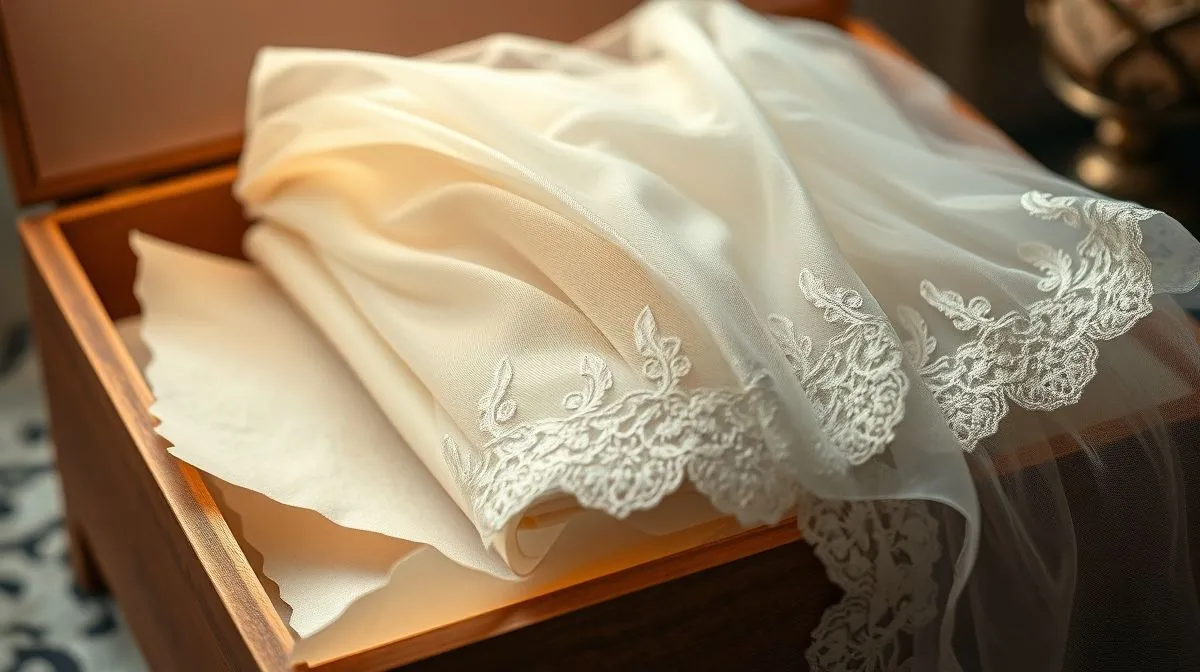
- Acid-Free & Lignin-Free Archival Box: This is non-negotiable. Standard cardboard contains acids (lignin) that will leach into the fabric, causing irreversible yellowing and deterioration. An archival box is specifically designed to be pH-neutral and chemically stable.
- Acid-Free, Unbuffered Tissue Paper: Use generous amounts of this paper to cushion folds and prevent creasing. Ensure it is unbuffered if your veil contains silk, as buffered paper (which is alkaline) can react with animal fibers. For more on archival materials, refer to preservation guidelines, such as those often provided by the Library of Congress for textile preservation.
- Cotton Gloves: Always wear clean cotton gloves when handling your veil during the packing process to avoid transferring natural oils from your hands.
The Folding and Packing Technique
Proper folding minimizes stress on the fabric and prevents permanent creases.
- Prepare the Surface: Lay a large, clean, white sheet or archival paper on a flat, clean surface.
- Layer Tissue Paper: Place a layer of acid-free tissue paper down.
- Lay the Veil Flat: Gently lay your veil flat on the tissue paper, smoothing out any wrinkles.
- Add Interleaving Layers: Place sheets of tissue paper between any layers of fabric that will touch each other, especially where there are embellishments, to prevent snagging and pressure marks.
- Gentle Folds: Fold the veil as few times as possible. Create soft, rounded folds rather than sharp creases. Pad each fold with rolled or crumpled tissue paper to maintain a gentle curve. This prevents permanent stress lines in the fabric.
- Place in Box: Carefully lift the folded, tissue-padded veil and place it into the archival box. Ensure it fits comfortably without being compressed.
- Final Layer: Place a final layer of tissue paper on top before closing the lid.
Optimal Storage Environment
The location of your archival box is just as important as its contents:
- Cool, Dark, Dry Place: Store the box in an area with a stable, cool temperature (ideally 60-75°F or 15-24°C) and moderate humidity (ideally 40-50%).
- Avoid Extremes: Never store your veil in an attic, basement, or garage. These areas are prone to extreme temperature fluctuations, high humidity, and pest infestations.
- Away from Light: Store the box in a dark closet or under a bed where it will not be exposed to direct or indirect light.
- Pest Control: Ensure the storage area is free of pests. Avoid using mothballs, as their chemicals can damage fabrics. Cedar blocks can be a safer alternative, but keep them separate from the veil itself.
Long-Term Maintenance: Periodic Checks and Re-Evaluation
Preservation is not a one-time event. Regular monitoring ensures your veil remains in pristine condition.
Annual Inspections
At least once a year, carefully remove your veil from its box. Wear clean cotton gloves. Gently unfold it and inspect it thoroughly for any signs of:
- Yellowing: Particularly on white or ivory fabrics.
- Mildew or Mold: Indicated by spots or a musty odor.
- Pest Activity: Small holes, droppings, or actual insects.
- Fabric Weakening: Brittleness, fraying, or tears.
- Loose Embellishments: Check beads, pearls, or lace appliques.
If you notice any of these issues, consult a professional conservator immediately.
Re-folding and Airing Out
When you inspect your veil, it's a good practice to re-fold it along different lines. This prevents permanent creases from forming in the same spots over time. After inspection, allow the veil to air out for a few hours in a clean, dry, dark room before carefully re-folding it with fresh tissue paper and returning it to its archival box.
When to Re-clean or Re-box
If you detect a persistent odor, significant yellowing, or any signs of mold/pests during your annual inspection, it's time to consider professional re-cleaning. Similarly, if your archival box or tissue paper shows signs of degradation, yellowing, or damage, it's essential to transfer your veil to new, fresh archival materials.
Common Pitfalls to Avoid in Veil Preservation
Even with good intentions, common mistakes can jeopardize your veil's longevity.
Using Non-Archival Materials
One of the most frequent errors is storing a veil in everyday materials. Plastic garment bags, regular cardboard boxes, or colored tissue paper all contain chemicals and acids that will break down and discolor delicate fabrics over time. Wooden hangers can also off-gas acids. Always invest in true archival-quality materials.
Storing in Attics or Basements
As mentioned, these areas are the worst possible places for textile storage due to their unstable environments. They are breeding grounds for mold, mildew, and pests, and subject to extreme temperature and humidity swings that can rapidly degrade fabrics.
Neglecting Initial Cleaning
Even if your veil looks clean, it likely has invisible residues from the wedding day—body oils, makeup residue, airborne pollutants, or even microscopic cake crumbs. These organic materials will oxidize over time, leading to stubborn yellowing and attracting pests. A thorough, professional cleaning before storage is crucial for long-term preservation.
Beyond Preservation: The Sentimental Value of a Wedding Veil
Successfully preserving your wedding veil long term is not just about maintaining a piece of fabric; it's about safeguarding a legacy. Your veil, carefully preserved, becomes a tangible link to your past, a story that can be shared and relived.
Passing Down a Legacy
Imagine the joy of offering your daughter or granddaughter the opportunity to wear a veil that has been cherished for generations. This act of passing down an heirloom is a powerful tradition, connecting family members across time and creating new memories while honoring old ones.
Displaying Safely (If Desired)
While long-term storage in an archival box is ideal, some brides may wish to display their veil for a period. If you choose to do so, ensure it's in an acid-free display case, away from direct sunlight, heat sources, and high-traffic areas where it could be accidentally damaged. Rotate it back into archival storage periodically to minimize light exposure.
Frequently Asked Questions (FAQ)
Can I store my veil with my wedding dress? Yes, but only if both have been professionally cleaned and are stored together in an appropriate archival wedding dress preservation box with acid-free tissue paper, ensuring they are separated by layers of tissue. However, storing them separately can sometimes be easier for accessibility and individual care.
How often should I check my preserved veil? It's recommended to inspect your preserved veil at least once a year. This allows you to catch any potential issues like yellowing, pest activity, or mold early on.
What causes wedding veils to yellow over time? Yellowing is primarily caused by oxidation of fabric fibers, particularly synthetics like nylon tulle, and by exposure to light, heat, and acidic environments (like non-archival storage materials). Residue from body oils or stains not properly cleaned before storage can also contribute.
Is dry cleaning safe for all veil types? No. Traditional dry cleaning uses harsh chemicals that can damage delicate veil fabrics, embellishments, and adhesives, often leading to yellowing or disintegration over time. Always seek a specialist in wedding gown and textile preservation who uses gentle, archival-safe methods.
Where is the best place in my home to store a preserved veil? The best place is a cool, dark, dry, and stable environment, such as an interior closet or under a bed. Avoid attics, basements, garages, or any areas prone to extreme temperature fluctuations, high humidity, or direct sunlight.
Recommended Reading
- Ultimate Guide: Best Casual Shoes for Wide Feet Men
- Beat the Shine: The Ultimate Makeup Guide for Oily Skin This Summer
- The Ultimate Guide: How to Get Your Fashion Photos Published in Top Magazines
- The Ultimate Guide: How to Care for Anti-Reflective Coating on Glasses
- Unlock the Secret: Tips for Long-Lasting Professional Stage Makeup?
Conclusion
Preserving your wedding veil is an investment in its future, transforming it from a beautiful accessory into a timeless heirloom. By understanding its delicate nature, taking immediate post-wedding steps, opting for professional cleaning, and committing to proper archival storage, you can ensure its beauty endures. This guide on how to preserve a wedding veil long term provides the definitive roadmap to protecting this cherished symbol, allowing it to remain a radiant reminder of your special day for generations to come. Embrace these practices, and your veil will tell its story beautifully for decades.



Your email address will not be published. Required fields are marked *