

How to direct inexperienced models for urgent high-fashion poses?
After more than two decades immersed in the dynamic world of high-fashion photography, I've witnessed countless scenarios where raw talent meets immense pressure. The challenge of transforming an inexperienced model into a high-fashion icon, often with mere minutes to spare, is a crucible for any photographer.
It's a common pain point: you have a tight deadline, a complex creative brief, and a model who, while enthusiastic, lacks the intuitive understanding of editorial posing. The clock is ticking, the client is watching, and the fear of a flat, uninspired shot looms large.
But what if I told you there's a systematic approach, a blend of psychological insight and practical technique, that can empower you to elicit stunning, high-fashion poses from even the most novice talent, even under the most urgent circumstances? In this definitive guide, I'll share the frameworks, communication strategies, and expert insights I've honed over years to turn potential chaos into breathtaking artistry.
Mastering the Pre-Shoot Brief: Setting the Stage for Success
The foundation of any successful shoot, especially with inexperienced models, is a crystal-clear brief. This isn't just about showing them clothes; it's about immersing them in the narrative and aesthetic of the shoot before the camera even powers on.
The Power of Visual Communication
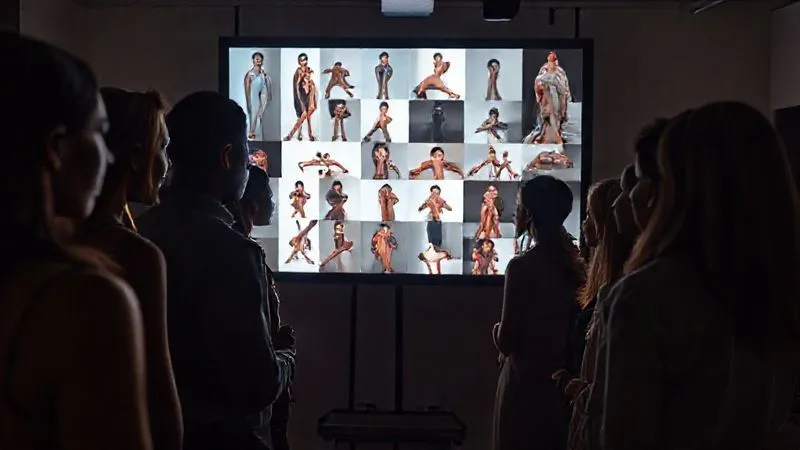
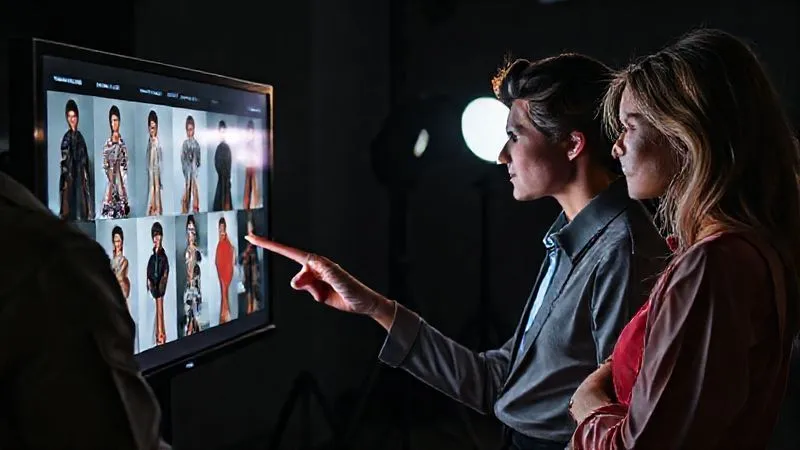
Verbal instructions alone are insufficient for complex high-fashion poses. Visual aids are your most potent allies. I've found that a well-curated mood board and a set of reference poses are non-negotiable.
- Curate a Digital Mood Board: Before the shoot, compile 10-15 diverse high-fashion images that encapsulate the mood, energy, and specific posing styles you're aiming for. Include a mix of full-body, mid-shot, and detail poses.
- Highlight Key Elements: When reviewing the mood board with the model, don't just scroll. Point out specific elements: 'Notice the tension in her neck here,' or 'See how her fingers are deliberately placed.'
- Demonstrate Basic Shapes: Break down complex poses into simpler geometric shapes or lines. For instance, 'We're aiming for a strong diagonal line from your shoulder to your hip.'
- Encourage Questions: Create a safe space for the model to ask about anything they don't understand. A confused model is an unconfident model.
This pre-visualization process significantly reduces on-set confusion and gives the model a mental library to draw from. It’s about building a shared vocabulary for the visual language of high fashion.
Building Instant Rapport and Trust
In high-pressure situations, trust is your most valuable currency. An inexperienced model needs to feel safe and supported to truly perform. I always begin with a genuine, warm introduction, acknowledging their newness and reiterating my role as their guide.
- Acknowledge and Empathize: Start with, 'I know high-fashion posing can feel a bit abstract at first, but we'll work through it together.' This immediately disarms them.
- Set Clear Expectations: Explain your process briefly: 'I'll give you clear, concise directions, and we'll refine as we go. There are no wrong answers, only adjustments.'
- Maintain Eye Contact and a Calm Demeanor: Your composure is infectious. If you're stressed, they will be too.
According to a study published in the Harvard Business Review, trust significantly enhances collaboration and performance. Building this rapport quickly is crucial for overcoming the initial awkwardness and fear of failure.
Rapid Pose Deconstruction: Breaking Down Complex Looks
High-fashion poses often look incredibly intricate, almost sculptural. For an inexperienced model, this can be overwhelming. My strategy is to break these complex poses into manageable 'building blocks.'
The 'Building Block' Approach to High Fashion
Instead of asking for the final pose, guide the model through its constituent parts. Think of it as constructing a sculpture, piece by piece.
- Start with the Core: Begin with the model's weight distribution and torso. 'Shift your weight onto your back foot, rotate your hips slightly to the left.'
- Arm Placement: Move to the arms. 'Now, bring your right arm up, elbow bent, hand relaxed near your chin.'
- Leg and Foot Detail: Address the lower body. 'Cross your left leg over, standing on the ball of your foot, heel slightly lifted.'
- Head and Expression: Finally, guide the head tilt and facial expression. 'Chin slightly down, eyes looking past my shoulder, a hint of intensity.'
This sequential approach prevents overload and allows the model to incrementally build confidence as each 'block' falls into place. It’s like learning to dance; you master individual steps before combining them into a routine.
Verbal Cues and Physical Demonstrations
Your language must be precise and evocative. Avoid vague terms like 'just pose naturally.' Instead, use action verbs and sensory descriptions.
- Use Action-Oriented Language: 'Elongate,' 'articulate,' 'anchor,' 'float,' 'reach.'
- Incorporate Analogies: 'Imagine you're reaching for something just out of grasp,' or 'Think of your neck as a swan's neck, elegant and long.'
- Mirror Posing: Don't just tell; show. Stand in the desired pose yourself. This is incredibly effective, especially for subtle shifts in weight or hand placement.
I find that combining verbal cues with a quick physical demonstration almost always yields faster results. It bypasses verbal processing delays and taps directly into visual learning.
| Pose Element | Direction for Inexperienced Model | High-Fashion Goal |
|---|---|---|
| Torso | Rotate hips 30 degrees right, shoulders slightly counter-rotate. | Creates dynamic tension, 'S' curve. |
| Arms/Hands | Elbow bent, hand loosely cupped, fingers spread but relaxed, near face. | Adds elegance, frames face, avoids stiffness. |
| Legs/Feet | Weight on one leg, other leg bent, foot pointed or crossed. | Lengthens lines, introduces asymmetry. |
| Head/Neck | Chin slightly down, neck extended, eyes looking past camera. | Emphasizes bone structure, creates mystery. |
The 'Mirror Technique': Instant Visual Feedback
One of the most powerful tools in my arsenal for directing inexperienced models, particularly under urgency, is the 'mirror technique.' It essentially turns the model into their own director.
Using Your Body to Guide Theirs
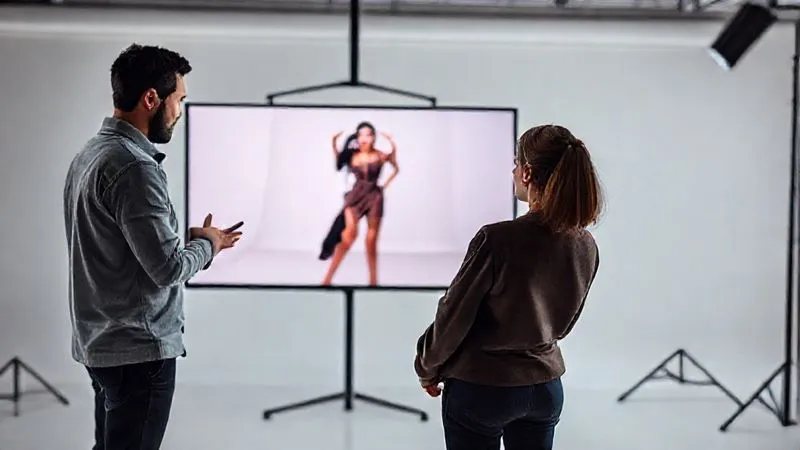
This isn't just about you demonstrating; it's about the model seeing themselves *as* you demonstrate. If you have a large monitor tethered to your camera, position it so the model can see the live feed. Failing that, a large studio mirror or even a polished surface can work.
- Pose, Then Point: Get into the desired pose yourself, then ask the model to mirror you while looking at their reflection or the monitor.
- Highlight Discrepancies: 'See how my shoulder is slightly lower? Try to match that.' This allows them to self-correct based on immediate visual feedback.
- Focus on One Adjustment: Don't overwhelm them. 'Just focus on the angle of your wrist for this one.'
This technique empowers the model, fostering a sense of control and understanding, which is crucial for building confidence quickly. It transforms abstract instructions into tangible adjustments.
Harnessing the Power of Props and Environment
High-fashion photography often involves elaborate sets and intriguing props. For an inexperienced model, these aren't just background elements; they are opportunities for interaction that can naturally lead to dynamic poses.
Integrating Elements for Natural Flow
Instead of instructing a pose in a vacuum, integrate the environment. This makes the posing feel less forced and more organic.
- Lean and Support: 'Lean against that pillar, let your weight sink into it, and then extend your leg.'
- Interact with Texture: 'Run your fingers lightly over the fabric of the drape, as if feeling its luxurious texture.'
- Create Negative Space: 'Use that empty space between the chair and the wall to create an interesting silhouette with your arm.'
By giving the model something tangible to react to, you reduce the mental burden of creating a pose from scratch. It shifts their focus from 'how do I stand?' to 'how do I engage with this?'
Case Study: How 'Luxe Apparel' Achieved Dynamic Poses
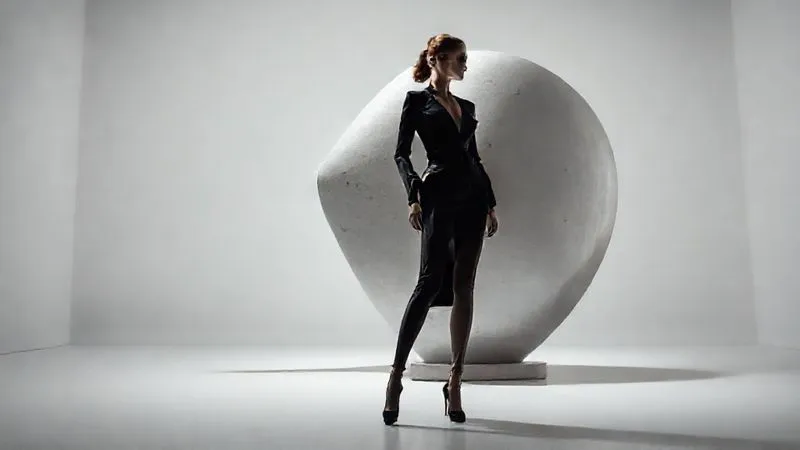
I once had an urgent high-fashion shoot for 'Luxe Apparel,' a new luxury brand, with a model who had only done commercial work. The brief called for dynamic, architectural poses. Instead of forcing her into specific positions, I guided her to interact with the minimalist, sculptural set pieces. 'Place your hand on the edge of that cube, now extend your body away from it, creating tension.' By focusing on her interaction with the props – leaning, reaching, balancing – we naturally generated a series of powerful, editorial-ready poses that felt authentic and dynamic, not stiff. The client was thrilled with the unexpected fluidity and artistic merit of the final images, attributing it to the model's 'natural grace,' which was, in fact, careful direction.
The 'Energy & Emotion' Dial: Beyond Just Form
High-fashion isn't just about perfect lines; it's about conveying a narrative, an emotion, a mood. This is often the hardest part for inexperienced models, but it's crucial for urgent high-fashion poses to truly stand out.
Coaching for Expression and Intent
Once the basic form of the pose is established, I guide the model to infuse it with intent. This requires a shift from physical mechanics to emotional resonance.
- Use Evocative Prompts: 'Imagine you've just received incredible news, but you're trying to keep your composure.' Or, 'You're a powerful, mysterious figure, observing from afar.'
- Focus on the Eyes: The eyes are the windows to the soul. 'Let your eyes convey curiosity,' or 'Give me a look that suggests quiet confidence.'
- "Breathe into the Pose": Encourage deep breaths. This helps relax the model and allows them to settle into the emotion, making it feel more natural.
"The most captivating fashion images aren't just about clothes; they're about the unspoken story the model tells with their eyes, their posture, their very being. It's the soul behind the silhouette." - My personal philosophy.
As renowned fashion photographer Annie Leibovitz often emphasizes, understanding the subject's inner world is key to capturing powerful imagery. For inexperienced models, you become the conduit for that inner world.
Efficient Feedback Loops: Iterate and Refine Under Pressure
In an urgent high-fashion shoot, time is of the essence. Your feedback must be concise, constructive, and immediately actionable. Avoid long explanations or critiques.
Concise, Actionable Adjustments
I employ a 'one thing' rule. Focus on one major adjustment at a time. Too many instructions will overwhelm and freeze an inexperienced model.
- Identify the Primary Issue: 'The pose is almost there, but your left shoulder is a little too high.'
- Provide a Clear Solution: 'Relax that shoulder, let it drop naturally.'
- Observe and Confirm: 'Perfect! Hold that.'
- Positive Reinforcement: Always follow with encouragement. 'That's it, you've got it!'
This iterative process allows for rapid refinement without causing anxiety. It keeps the energy flowing and the model engaged in the problem-solving process.
| Problematic Pose Element | Ineffective Feedback | Effective Feedback (Actionable) |
|---|---|---|
| Stiff neck, looking directly at camera | Don't look so stiff, try to be more natural. | Chin slightly down, elongate your neck, eyes just over my left shoulder. |
| Hands clenched | Your hands look weird. | Relax your fingers, imagine holding a delicate feather. |
| Slumped posture | Stand up straight. | Imagine a string pulling you up from the crown of your head, shoulders back but relaxed. |
Maintaining Composure and Confidence: Your Role as Director
As the photographer, you are the leader, the visionary, and the emotional anchor of the shoot. Your demeanor directly impacts the model's performance.
Projecting Calmness in Chaos
Even when you're feeling the pressure, it's crucial to project an aura of calm and control. A nervous photographer will only amplify the model's anxiety.
- Take Deep Breaths: A quick, conscious breath can reset your own stress levels.
- Speak in an Even Tone: Avoid rushing your words or raising your voice.
- Maintain a Positive Body Language: Open posture, a reassuring smile.
Remember, the model is looking to you for guidance and reassurance. Your confidence is their confidence. This is where your seasoned experience truly shines.
Celebrating Small Wins
Positive reinforcement is incredibly powerful, especially for inexperienced models. Every successful pose, every good adjustment, should be acknowledged.
- Verbal Praise: 'Excellent!' 'That's exactly what I was looking for!'
- Visual Confirmation: Show them a great shot on the camera's display. Seeing their own success is a huge motivator.
This builds momentum and encourages the model to try even harder. It transforms the challenging task of urgent high-fashion posing into a rewarding collaborative experience.
For more insights on effective communication in creative fields, I often refer to principles outlined in leadership psychology, such as those discussed on Psychology Today, which can be adapted for the studio environment.
Post-Shoot Review: Learning from Every Urgent Session
Even after the immediate pressure subsides, the learning doesn't stop. A quick post-mortem is invaluable for both you and your model's future growth.
Analyzing What Worked (and What Didn't)
Take a few moments, even if it's just mentally, to review the session. Which techniques were most effective? Where did the model struggle? This self-reflection refines your directorial skills for the next urgent shoot.
Building a Personal Pose Library
Encourage the model to review the successful poses from the shoot. Suggest they practice these in front of a mirror, internalizing the feeling of a correct high-fashion posture. For your own benefit, keep a mental or physical 'library' of effective cues and breakdowns for various high-fashion styles. This makes you even faster the next time you need to direct inexperienced models for urgent high-fashion poses.
The continuous refinement of your approach is what truly distinguishes a seasoned expert. As The Business of Fashion often highlights, adaptability and continuous learning are paramount in the fast-evolving fashion industry.
Frequently Asked Questions (FAQ)
Q: What if the model is completely stiff and can't relax into any pose? A: Stiffness often stems from anxiety or self-consciousness. Start with relaxation exercises: deep breaths, gentle stretches. Then, give them something tangible to do, like interacting with a prop or leaning against a wall. Focus on weight transfer and simple movements first, gradually building up to more complex shapes. Sometimes, playing upbeat music can also help loosen them up.
Q: How do I handle a model who is shy or lacks confidence on set? A: Building rapport is paramount. Begin with genuine compliments about their look or initial efforts. Break down tasks into very small, achievable steps, praising each success. Avoid any critical language; reframe it as 'let's try this adjustment.' Show them good shots on the camera display to boost their confidence. Remember, empathy and patience go a long way.
Q: What's the fastest way to get a dramatic, editorial facial expression from an inexperienced model? A: Instead of asking for a generic 'fierce' look, give them a specific scenario or emotion. 'Imagine you're seeing something shocking but beautiful,' or 'You've just heard a secret you can't tell.' Encourage them to think about the emotion, not just the muscle movement. Sometimes, a quick demonstration of a subtle brow furrow or lip slight parting can also help. Focus on the eyes; they convey the most.
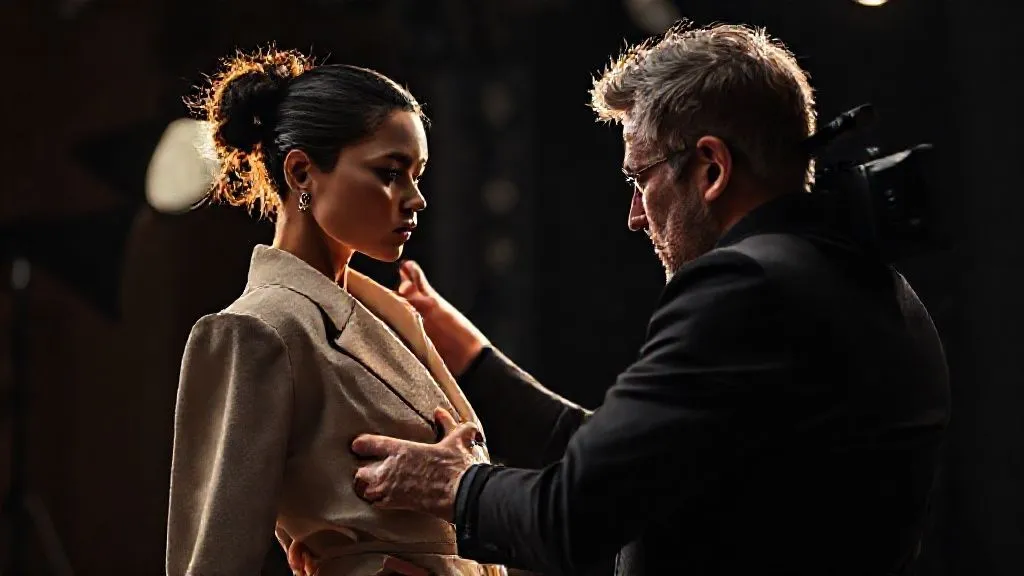
Q: Should I physically adjust the model's limbs or body for a pose? A: This is a sensitive area and requires extreme caution and professionalism. Always ask for explicit permission first: 'May I gently guide your arm?' or 'Is it okay if I adjust your hand?' Explain why you're doing it. If they decline or seem uncomfortable, respect their boundaries and stick to verbal cues and demonstrations. Maintaining a professional distance and ensuring comfort is crucial for trust.
Q: How do I maintain creative flow when constantly having to direct an inexperienced model? A: This is where preparation and a structured approach come in. Have your mood board and reference poses clear. Use the 'building block' method and 'one thing' feedback rule to streamline direction. Embrace the collaborative challenge. Also, don't be afraid to take a 30-second pause to re-center yourself if you feel overwhelmed; a brief break can often refresh both you and the model.
Key Takeaways and Final Thoughts
- Preparation is Paramount: A detailed visual brief (mood board, reference poses) is your first line of defense against on-set confusion.
- Build Instant Rapport: Trust and empathy unlock an inexperienced model's potential, especially under pressure.
- Deconstruct Complexity: Break down high-fashion poses into manageable 'building blocks' and guide sequentially.
- Leverage Visual Feedback: The 'mirror technique' or live monitor feed empowers models to self-correct rapidly.
- Integrate the Environment: Use props and set elements to inspire natural, dynamic interactions and poses.
- Coach for Emotion: Go beyond form; use evocative prompts to elicit genuine expressions and narrative.
- Feedback with Precision: Employ concise, actionable 'one thing' adjustments to maintain flow and avoid overwhelm.
- Maintain Composure: Your calm confidence is infectious and crucial for a successful, urgent high-fashion shoot.
Directing inexperienced models for urgent high-fashion poses is undoubtedly a demanding skill, but it's also an incredibly rewarding one. It tests your patience, your creativity, and your ability to communicate under pressure. By implementing these seasoned strategies, you're not just taking pictures; you're nurturing talent, building confidence, and consistently delivering stunning editorial work, no matter the experience level of your subject. Embrace the challenge, trust your expertise, and watch as your vision comes to life through their evolving artistry.
Recommended Reading
- 7 Steps: Ethically Sourcing Traceable Gold for Small Jewelry Brands
- 7 Proven Steps: Turn Silent Fashion Followers into an Engaged Community
- Restore & Preserve: Your Vintage Heirloom Ethically, Without Devaluing It
- Top Picks: Discover the Best Contemporary Urban Streetwear Brands Now!
- 7 Pro Strategies: Preventing Color Fade on Vibrant Red Hair for Professional Shoots?


Your email address will not be published. Required fields are marked *