

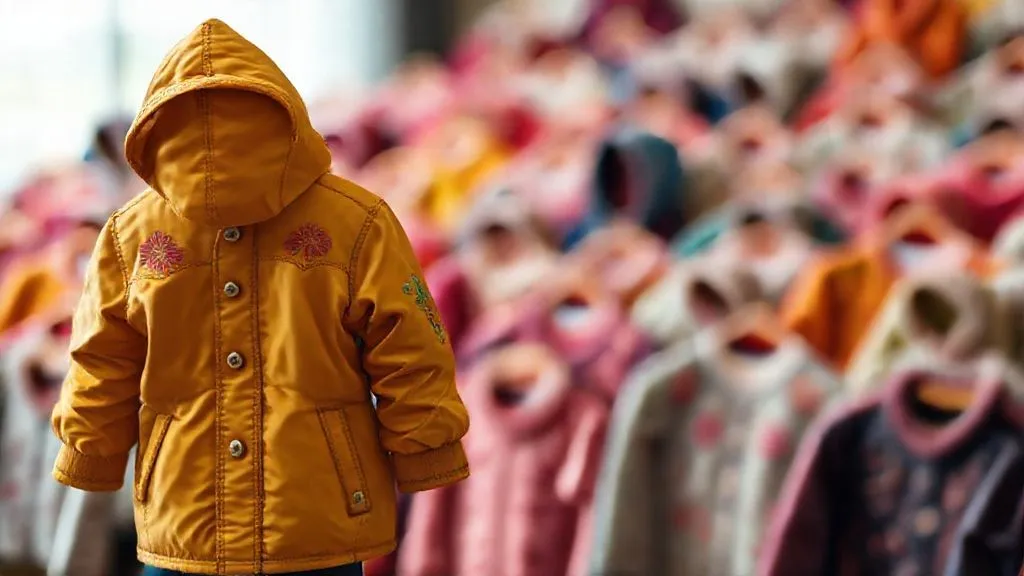
How to Differentiate a Kids Fashion Brand in a Saturated Market?
For over 15 years, navigating the vibrant, yet often bewildering, world of fashion, I've witnessed countless brands rise and fall. The kids' fashion sector, in particular, is a fascinating paradox: brimming with potential, yet notoriously challenging due to its sheer saturation. I've seen aspiring entrepreneurs pour their hearts and savings into beautiful collections, only to disappear within a year, not because their products lacked quality, but because they failed to carve out a distinct identity.
It's a common dilemma: you have a vision for children's clothing that's unique, stylish, and perhaps even sustainable, but how do you make your voice heard amidst a cacophony of established giants and nimble startups? The market is overflowing with choices, making it incredibly difficult for parents to discern genuine value and for your brand to resonate. This saturation isn't just about competition; it's about the erosion of perceived uniqueness, leading to a relentless race to the bottom on price.
But despair not. Differentiating your kids fashion brand in a saturated market isn't an impossible feat; it's a strategic art form. In this definitive guide, I'll share the frameworks, hard-won insights, and actionable strategies I've gathered over my career, designed to help your brand not just survive, but truly thrive. We’ll explore everything from uncovering your brand's unique DNA to mastering digital storytelling and building an unshakeable community.
Beyond Aesthetics: Defining Your Unique Brand DNA
In my experience, the first and most critical step to differentiation isn't about the latest trend or the cutest print; it's about digging deep to unearth your brand's intrinsic DNA. What makes you, you? This isn't just marketing speak; it's the soul of your brand, the non-negotiable essence that will guide every design decision, every marketing campaign, and every customer interaction. Without a clearly defined brand DNA, you're merely adding more noise to an already crowded marketplace.
Think of it this way: many brands sell children's clothes, but very few sell their story through those clothes. Your brand DNA encompasses your mission, vision, values, and the unique problem you aim to solve for parents and children. Is it about sustainability? Empowering play? Celebrating cultural heritage? Adaptive design for special needs? The clearer this is, the more magnetic your brand becomes.
The Power of Purpose-Driven Kids Wear
Parents today are more discerning than ever. They're not just buying clothes; they're buying into values. A brand with a strong, authentic purpose resonates deeply. For instance, a brand committed to using only organic, fair-trade cotton isn't just selling 'eco-friendly' clothes; it's selling peace of mind, ethical consumption, and a better future for their child and the planet. This purpose becomes your North Star.
I've seen brands thrive by focusing on specific values. One brand I mentored focused solely on gender-neutral clothing that broke traditional stereotypes, promoting self-expression. Their purpose was clear, and it attracted a fiercely loyal community of parents who shared that vision. This isn't about being preachy; it's about being authentic and consistent.
- Identify Your Core Values: List 3-5 non-negotiable principles your brand stands for (e.g., sustainability, inclusivity, durability, creativity, comfort).
- Define Your Mission Statement: Craft a concise statement (1-2 sentences) explaining your brand's purpose and what it aims to achieve.
- Articulate Your Unique Selling Proposition (USP): What makes your brand fundamentally different and better than the competition? Is it a unique fabric, an innovative design feature, a social cause, or an unparalleled customer experience?
- Develop a Brand Personality: If your brand were a person, what would their traits be? Playful, sophisticated, adventurous, calm, rebellious? This influences your voice and visual identity.
"Authenticity is the most powerful differentiator. In a world of fleeting trends, a genuine purpose creates an unshakeable bond with your audience." - Expert Insight
Mastering Niche Marketing: Who Are You Really Dressing?
A common pitfall I observe, especially with new brands, is the desire to appeal to 'all parents' or 'all kids.' While noble in intent, this broad approach is a fast track to obscurity in a saturated market. When you try to be everything to everyone, you end up being nothing distinct to anyone. The key to successful differentiation lies in understanding and embracing niche marketing.
In kids' fashion, 'niche' doesn't necessarily mean small; it means specific. It’s about deeply understanding a particular segment of parents or children and tailoring your entire offering – from product design to marketing messages – directly to their unique needs, desires, and pain points. This laser focus allows you to dominate a segment rather than being a minor player in a vast ocean.
Identifying Your Ideal 'Mini-Customer'
Beyond basic demographics like age and gender, you need to delve into psychographics. What are their lifestyle choices? What are their parenting philosophies? What problems do they face when shopping for children's clothes? Are they looking for ultra-durable playwear, eco-conscious organic sleepwear, stylish occasion wear, or adaptive clothing for sensory sensitivities?
Consider the parent who prioritizes sustainability above all else, willing to invest more in ethically produced, long-lasting garments. Or the parent seeking playful, imaginative outfits that encourage storytelling and creativity. By painting a vivid picture of your ideal 'mini-customer' (and their parent), you can create products and messaging that speak directly to their hearts and wallets.
| Niche Focus | Target Parent | Key Differentiators |
|---|---|---|
| Organic & Sustainable Playwear | Eco-conscious, values durability, invests in ethical production | GOTS-certified cotton, non-toxic dyes, reinforced seams, gender-neutral designs |
| Adaptive & Sensory-Friendly Apparel | Parents of children with special needs, seeks comfort & ease of dressing | Tag-less, flat seams, magnetic closures, soft fabrics, adjustable features |
| Whimsical & Storytelling Outfits | Values creativity, imaginative play, unique aesthetics | Hand-embroidered details, unique prints, historical/fantasy themes, limited editions |
The Art of Storytelling: Weaving Narratives into Fabric
In a market where products often look similar, your brand's story is its most potent weapon. People don't just buy products; they buy stories, emotions, and connections. This is especially true for parents, who are often making purchasing decisions based on their hopes and dreams for their children. Your brand's narrative can transform a simple garment into a cherished memory or a statement of values.
A compelling story can encompass your brand's origin, the inspiration behind a collection, the journey of your materials, or the impact you aim to make. It’s about building an emotional bridge between your brand and your customer, fostering a sense of belonging and shared purpose. This goes far beyond listing product features; it's about invoking feeling.
Crafting Compelling Brand Narratives
To craft an effective story, think about your 'why.' Why did you start this brand? What problem were you trying to solve? Who are the people behind the clothes? Where do your materials come from, and what ethical practices are involved? These elements, when woven together authentically, create a narrative that captivates and differentiates.
I always advise brands to think like a children's book author: create characters (your founders, your artisans), a setting (your workshop, the fields where your cotton grows), a plot (the journey of your product), and a moral (your brand's purpose). This makes your brand relatable and memorable.
Case Study: Tiny Threads Co. & Their Eco-Warrior Story
Tiny Threads Co., a small kids' fashion brand, initially struggled to gain traction despite offering high-quality organic cotton clothing. Their founder, Maya, realized they were just another 'eco-friendly' brand. Following my advice, she pivoted to telling the story of their specific supply chain: partnering with a women's cooperative in rural India that hand-weaves their fabric using traditional, sustainable methods. They shared videos of the artisans, highlighted their fair wages, and explained the minimal environmental footprint. They framed their clothes not just as organic, but as 'Eco-Warrior Wear,' empowering children to be part of a bigger movement. This unique, transparent narrative resonated deeply with their target audience, leading to a 40% increase in brand engagement and a 25% boost in sales within six months, purely by selling a story, not just a product. Parents felt they were buying a piece of social impact, not just an outfit.
"Your brand's story is not what you tell people, it's what they believe about you." - Seth Godin, marketing guru. For more insights on brand storytelling, consider resources like Harvard Business Review on storytelling.
Innovation in Design & Functionality: More Than Just Cute Clothes
While aesthetics are crucial in fashion, true differentiation in the kids' market often stems from innovation in design and functionality. Parents are constantly seeking solutions to everyday challenges – clothes that last, are easy to wear, adapt to growth, or cater to specific needs. A brand that can genuinely solve these problems through thoughtful design will always stand out.
This means moving beyond surface-level trends and thinking about the user experience. How can you make dressing easier for busy parents? How can you make clothes more comfortable for sensitive children? How can you design garments that grow with the child, extending their lifespan and offering better value? These are the questions that lead to truly innovative and differentiating products.
Sustainable & Ethical Practices as a Differentiator
Sustainability is no longer a niche; it's an expectation, and for many, a powerful differentiator. But it’s not enough to just say 'sustainable.' You need to demonstrate it through tangible actions: using certified organic cotton, recycled materials, closed-loop production, non-toxic dyes, or ethical manufacturing processes. Transparency about your supply chain builds immense trust and loyalty.
Beyond environmental impact, ethical practices in labor and fair trade are equally important. Parents want to know the clothes their children wear are made with integrity. Brands that lead with genuine ethical commitments, backed by certifications and transparent reporting, create a powerful narrative that resonates with conscientious consumers. According to a Deloitte study, consumers are increasingly willing to pay more for sustainable products.

Building a Community, Not Just a Customer Base
In today's digital age, brands that foster a genuine sense of community around their values and products are the ones that truly differentiate themselves. This isn't about simply having followers on social media; it's about creating a space where parents feel connected, understood, and part of something larger than just buying clothes. A strong community transforms customers into advocates.
I've seen brands thrive by actively listening to their community, involving them in product development, and celebrating their shared experiences. When parents feel heard and valued, they become fiercely loyal, not just to your products, but to your brand's ethos. This organic word-of-mouth marketing is far more powerful and trustworthy than any paid advertisement.
Leveraging User-Generated Content (UGC)
User-Generated Content (UGC) is gold for kids' fashion brands. When parents share photos and videos of their children wearing your clothes, it serves as authentic social proof that resonates far more deeply than polished marketing campaigns. It shows real kids, real families, and real joy. Encourage this by creating branded hashtags, running contests, and actively featuring customer content on your own channels.
Beyond just sharing, consider ways to actively involve your community. Could they vote on new print designs? Offer feedback on prototypes? Participate in 'design-a-tee' contests? These initiatives not only generate valuable insights but also deepen engagement and foster a sense of ownership among your customers.
- Create a Dedicated Online Space: Whether it's a private Facebook group, a forum on your website, or an active Instagram presence, provide a platform for parents to connect with each other and your brand.
- Run Engaging Campaigns: Host photo contests, style challenges, or 'story time' sessions featuring your clothes. Encourage parents to share their experiences using a unique hashtag.
- Implement a Loyalty Program with a Twist: Beyond discounts, offer exclusive access to new collections, early bird sales, or 'insider' content. Make members feel special.
- Listen and Respond: Actively monitor conversations, respond to comments, and genuinely engage with your community. Show them their input matters.
- Collaborate with Parent Influencers: Seek out micro-influencers whose values align with yours, fostering genuine partnerships rather than transactional sponsorships.
Digital Presence & Experiential Retail: Connecting in a Hybrid World
In an increasingly digital world, your online presence is often the first, and sometimes only, interaction a potential customer has with your brand. However, for kids' fashion, the tactile experience of fabric and the visual appeal of seeing clothes on a child are still incredibly important. The most successful brands differentiate by seamlessly blending a compelling digital experience with strategic, memorable physical touchpoints.
Your e-commerce site needs to be more than just a catalog; it needs to be an immersive brand experience. High-quality photography, detailed product descriptions that tell a story, easy navigation, and engaging content (like 'shop the look' or customer reviews with photos) are non-negotiable. But don't forget the power of offline engagement, even if it's small-scale.
Consider how to bring your brand to life. Pop-up shops in family-friendly locations, collaborations with local children's boutiques, or participation in curated craft fairs can create memorable 'experiential retail' moments. These allow parents to touch your fabrics, see the quality firsthand, and connect with your brand story in a tangible way. Even simple things like beautifully designed packaging can elevate the unboxing experience into a memorable event.
For more on the evolving retail landscape, see this article on Forbes on Experiential Retail.
Strategic Collaborations & Partnerships: Expanding Your Reach Authentically
One of the smartest ways to differentiate and expand your reach in a saturated market is through strategic collaborations. This isn't just about finding an influencer; it's about forming genuine partnerships with complementary brands, artists, non-profits, or even other small businesses that share your values and target audience. These collaborations introduce your brand to new, relevant audiences in an authentic and trustworthy manner.
Think beyond direct competitors. Could you partner with a children's book author to create a collection inspired by their characters? A toy company for a joint promotion? A parenting blogger for a series of style guides? The key is mutual benefit and a shared audience demographic. These partnerships can create unique product lines, co-hosted events, or shared marketing campaigns that amplify both brands' messages.
Finding the Right Partners
The success of a collaboration hinges on finding partners whose brand ethos, quality standards, and audience genuinely align with yours. A mismatch can be detrimental. Look for brands that fill a gap in your offering or provide an experience that enhances your product. For instance, a sustainable kids' clothing brand might partner with an eco-friendly toy brand or a children's gardening kit company.
Always prioritize authenticity over reach. A micro-influencer with a highly engaged, relevant audience is often more valuable than a macro-influencer with a broad, less targeted following. The goal is to tap into a trusted community, not just broadcast to the masses.
| Collaboration Type | Example Partner | Benefit |
|---|---|---|
| Co-Branded Product Line | Children's Book Illustrator | Unique product offering, shared creative vision, taps into existing fan base of illustrator |
| Event Sponsorship/Participation | Local Family Festival Organizer | Direct engagement with target audience, brand visibility, community goodwill |
| Content Partnership | Parenting Blogger/Vlogger | Authentic product reviews, style guides, increased brand awareness through trusted voices |
| Cause-Related Marketing | Children's Charity (e.g., literacy, environment) | Aligns with brand values, enhances brand reputation, appeals to socially conscious consumers |
Pricing for Value, Not Just Cost: Perceived Worth in Kids Fashion
In a saturated market, there's a constant temptation to compete on price. However, in my long career, I've seen that the race to the bottom is a losing game for brands aiming for differentiation. Unless you're a volume-driven fast-fashion giant, trying to be the cheapest will erode your margins, compromise your quality, and ultimately devalue your brand. True differentiation allows you to command a premium by focusing on perceived value.
Your pricing strategy should reflect the unique value proposition you offer. If you're using organic materials, ethical labor, innovative designs, or providing an exceptional customer experience, your pricing should communicate that. Parents who value these aspects are often willing to pay more for a product that aligns with their values and offers tangible benefits like durability, comfort, or unique style.
Educate your customers about why your products are priced the way they are. Be transparent about your production costs, the quality of your materials, and the ethical labor practices you employ. When customers understand the true value and the story behind the price, they are more likely to appreciate and invest in your brand. This builds trust and reinforces your differentiated position.
Frequently Asked Questions (FAQ)
How important is sustainability for kids fashion today? Extremely important. I've observed a significant shift in consumer values. Sustainability is no longer a 'nice-to-have' but a 'must-have' for many discerning parents. It builds trust, enhances brand reputation, and differentiates you from conventional brands. Transparency in your supply chain and certifications (like GOTS for organic cotton) are crucial for credibility.
Should a new brand focus on a specific age group or try to cater to a broader range of children? In a saturated market, I strongly advise new brands to start with a highly specific age group or niche (e.g., newborn essentials, toddler playwear, pre-teen formal wear). This allows you to deeply understand their unique needs, design targeted products, and market more effectively. Once you establish a strong foothold and loyal customer base, you can consider expanding cautiously.
What's the best way to get genuine customer feedback for product development? Beyond traditional surveys, I recommend creating a 'beta testing' program with a small group of loyal customers, hosting online focus groups, and actively engaging with your community on social media. Encourage photo and video submissions of kids wearing your clothes in real-life situations. This provides invaluable insights into fit, durability, and practical use.
How can a small kids' fashion brand compete with large established retailers? Small brands cannot compete on price or sheer volume. Your competitive advantage lies in agility, authenticity, niche specialization, exceptional customer service, and a compelling brand story. Leverage your unique identity, build a strong community, and focus on delivering high-quality, purpose-driven products that large retailers often can't replicate at scale.
Is influencer marketing still effective for kids fashion, or is the market too saturated with it? Yes, but with caveats. The key is to move away from generic macro-influencers and towards authentic micro- or nano-influencers whose values genuinely align with your brand. Seek out parents who are truly passionate about your niche and have an engaged, trusting audience. Focus on long-term partnerships rather than one-off sponsored posts for more impactful and trustworthy results.
Key Takeaways and Final Thoughts
Differentiating your kids fashion brand in a saturated market is undoubtedly a journey, not a destination. It requires introspection, strategic planning, relentless innovation, and a genuine commitment to your unique vision. But armed with these insights and actionable strategies, I am confident that you can not only carve out a distinct space but also build a brand that resonates deeply, inspires loyalty, and leaves a lasting, positive impact on the lives of children and their families.
- Define Your Unique DNA: Go beyond aesthetics to articulate your brand's core values, mission, and purpose.
- Embrace Niche Marketing: Focus on a specific segment of parents and children to become a leader in that domain.
- Master Storytelling: Weave compelling narratives that create emotional connections and build trust.
- Innovate in Design & Functionality: Solve real problems for parents and children through thoughtful, sustainable, and adaptive design.
- Build a Vibrant Community: Foster engagement and loyalty by making customers feel part of something bigger.
- Create Seamless Experiences: Blend a strong digital presence with memorable experiential retail touchpoints.
- Form Strategic Partnerships: Collaborate with complementary brands and influencers to expand your reach authentically.
- Price for Value, Not Just Cost: Communicate the worth behind your products to avoid the race to the bottom.
Go forth and create something truly remarkable!
Recommended Reading
- 7 Expert Ways to Prevent Stone Chipping in Micro-Pavé Setting
- 7 Strategies: Scaling Unique Kids Fashion Production, Preserving Identity
- 5 Proven Strategies: Overcoming Stagnation in Fashion Photography Campaigns
- 7 Proven Strategies: Banish Uninspired Fashion Content Ideas Forever
- 5 Proven Strategies: Differentiating Your Costume Jewelry Brand in a Saturated Market




Your email address will not be published. Required fields are marked *