

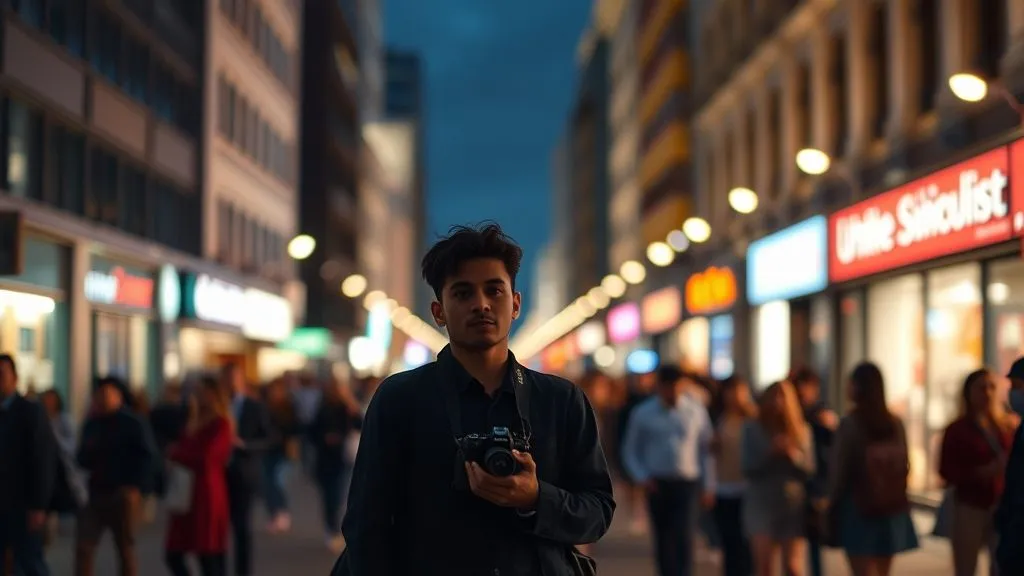
How to Capture Unique Street Style Photos at Crowded Fashion Week?
For over 15 years, I've navigated the exhilarating, often overwhelming, maelstrom that is Fashion Week. From Paris to New York, Milan to London, the spectacle of street style has evolved from an organic sideline to a full-blown, highly competitive event in itself. I've witnessed countless aspiring photographers, armed with expensive gear, getting lost in the sea of bodies, emerging with images that, while technically sound, lack that essential spark of uniqueness. It's a common struggle, a palpable frustration I've felt myself in the early days.
The core problem isn't a lack of talent or equipment; it's the sheer density of photographers, enthusiasts, and onlookers all vying for the same iconic shots. The pressure to stand out, to capture something truly original when everyone else is pointing their lens at the same trending outfit, can be paralyzing. The fleeting moments, the unexpected gestures, the subtle details that elevate a good photo to a great one, often get swallowed by the crowd, leaving photographers feeling defeated and their portfolios looking indistinguishable.
But what if I told you there are proven strategies, honed over years of trial and error, that can cut through the noise? In this definitive guide, I'll share my insider framework for not just surviving, but thriving at crowded Fashion Weeks. You'll learn how to anticipate moments, leverage your environment, connect with your subjects, and refine your craft to consistently capture unique street style photos that tell a compelling story, standing head and shoulders above the generic snapshots.
Mastering the Art of Observation: Seeing Beyond the Obvious
In a sea of visual noise, the first step to capturing unique street style photos is to train your eye to see what others miss. This isn't just about spotting a designer outfit; it's about understanding the nuances of human interaction, the play of light, and the subtle narratives unfolding around you. I've found that the most compelling images often come from moments that are overlooked by the masses fixated on the 'main event' – the celebrity arrival or the latest influencer.
Think of yourself as a visual anthropologist. Instead of rushing towards the largest gathering of photographers, step back. Observe the periphery. Who is waiting patiently? What small, intentional details are evident in their styling that might be missed in a full-body shot? Look for the quiet confidence, the playful glance, the way someone holds their coffee cup, or the texture of their accessories against a mundane backdrop. These are the elements that add depth and personality to your work, transforming a mere documentation of fashion into a piece of art.
Actionable Steps for Sharpening Your Observation Skills:
- Pre-Scout Digitally: Before you even arrive, study previous Fashion Week photos. Identify common compositions and trends. Your goal is to consciously avoid these and seek out new perspectives.
- Practice Active Waiting: Don't just stand there. Scan the environment in a grid pattern. Look for repeating patterns, contrasting colors, interesting textures, and potential backdrops.
- Focus on Micro-Expressions: Pay attention to faces. A genuine smile, a contemplative gaze, or a fleeting moment of interaction can be far more powerful than a posed stare.
- Anticipate Movement: People are always in motion. Try to predict where someone might pause, turn, or interact with their surroundings. This allows you to pre-compose your shot.
"The ordinary is often the most extraordinary if you simply observe it with fresh eyes." - A lesson I learned early in my career, applicable to every crowded scenario.
According to a study published by Psychology Today, mindful observation significantly enhances perception and memory. This translates directly to photography; the more mindfully you observe, the more unique details you'll notice and remember to capture.
Strategic Positioning: Claiming Your Spot in the Chaos
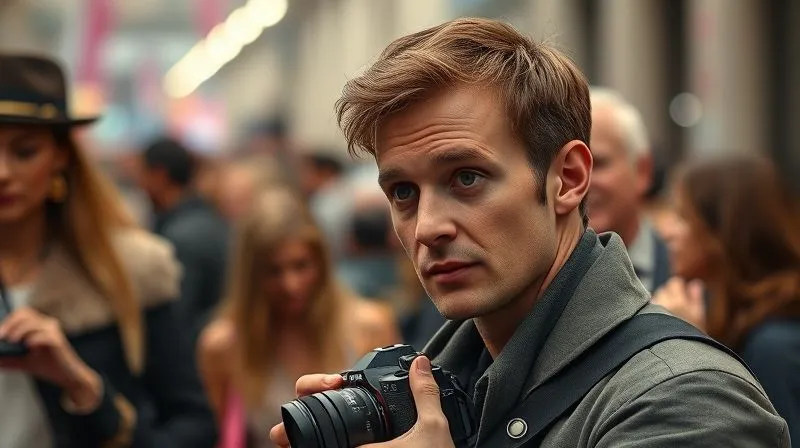
It's a common misconception that the best shots come from being in the thick of the action. While proximity can be key, strategic positioning is about finding an angle that offers a unique perspective, not just a closer view of the same subject everyone else is shooting. This often means sacrificing the 'front row' of photographers for a slightly elevated vantage point, a side angle, or even a low-angle shot that cuts out the distracting clutter.
I've often found success by identifying natural choke points or areas where people tend to pause – perhaps near a taxi stand, a particularly interesting architectural feature, or a less-used entrance. These spots, while seemingly less glamorous, offer a consistent flow of subjects and often provide cleaner backgrounds. The goal is to minimize distractions and maximize the impact of your subject and their style.
| Positioning Strategy | Benefit | Challenge |
|---|---|---|
| Elevated View | Overhead perspective, reduces ground clutter, unique angle | Requires finding a suitable ledge/stairs, can be far from subject |
| Low Angle | Dramatic effect, emphasizes subject's stature, isolates subject against sky | Can be physically demanding, risk of unflattering angles |
| Side Angle/Flank | Captures candid moments, less direct competition, interesting compositions | May miss full-front look, requires quick reflexes |
| Choke Point/Bottleneck | Predictable subject flow, cleaner backgrounds, easier to pre-focus | Can attract other photographers, requires patience |
Remember, the best position isn't always where the most photographers are. It's where you can tell the most compelling story with the least visual interference. Sometimes, it's about being patient and waiting for the crowd to thin, or for a specific person to move into your pre-visualized frame. Being nimble and willing to move is crucial. Don't get rooted to one spot; explore and experiment.
The Power of Anticipation: Predicting the Next Iconic Shot
Anticipation is the street photographer's superpower, especially at Fashion Week. It's not about luck; it's about pattern recognition, understanding human behavior, and being ready to press the shutter the moment a unique expression or interaction unfolds. I've spent countless hours observing the rhythm of these events, learning to read the subtle cues that precede a great moment.
This skill comes from experience, but it can be cultivated. Pay attention to how people react to compliments, how they adjust their clothing, or how they interact with their phones. Often, the most authentic moments occur just before or just after a posed shot. The unguarded smile, the slight furrow of a brow, the adjustment of a scarf – these are the human elements that make a photograph resonate. Learn to 'see' the moment before it happens.
Case Study: How Elena Mastered Anticipation at Milan Fashion Week
Elena, a talented but initially struggling street style photographer, found herself perpetually behind the curve at Milan Fashion Week. She'd often capture the tail end of a great moment, or miss a crucial interaction because she was reacting rather than anticipating. By consciously focusing on anticipating human behavior, she transformed her approach. Instead of just waiting for someone to pose, she'd observe their walk, their interactions with publicists, or their initial reactions to other photographers. She learned that a quick glance at their phone often preceded a spontaneous smile, or a slight shift in weight indicated a pause for a photo op. By pre-focusing and pre-composing, and then waiting for these subtle cues, she began capturing genuinely unique, candid moments that other photographers missed. Her portfolio, once filled with standard posed shots, soon boasted dynamic, narrative-rich images that quickly garnered attention from fashion publications, showcasing her ability to capture the authentic spirit of the event.
This proactive approach requires a deep understanding of your camera settings, allowing you to react instantly without fumbling. Pre-set your aperture, shutter speed, and ISO for the prevailing light conditions, and use continuous autofocus (AI Servo on Canon, AF-C on Nikon) to track moving subjects effectively. Your camera should feel like an extension of your eye, not a barrier to your vision.
Leveraging Light and Shadow: Crafting Mood and Drama
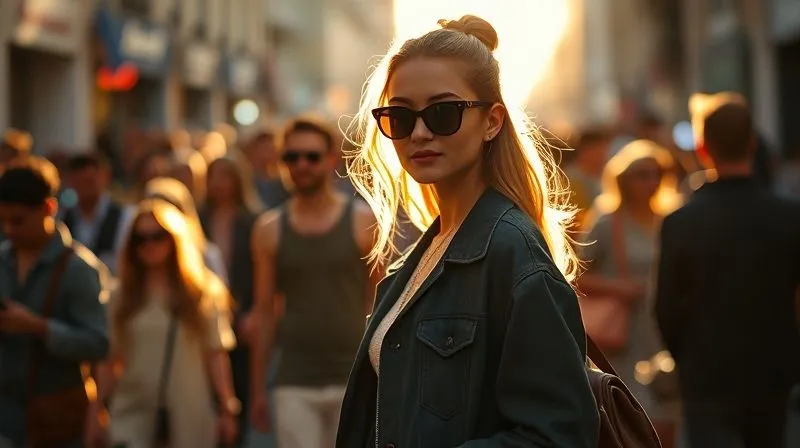
Light is the painter's brush, and for a photographer, it's the ultimate tool for creating mood, depth, and drama. At crowded Fashion Weeks, where backgrounds can be chaotic, using light and shadow effectively can help isolate your subject and add a unique artistic flair to your images. I always look for interesting light – the golden hour glow, harsh midday shadows, or even the soft, diffused light of an overcast day – and plan my shots around it.
Consider shooting into the light (backlighting) to create stunning rim light effects that separate your subject from a busy background. This technique can produce ethereal, almost angelic outlines around your subjects. Alternatively, look for pockets of shade amidst bright sunlight, where your subject can stand out against a darker, less distracting backdrop. The contrast can be incredibly powerful.
- Identify Light Sources: Before you even lift your camera, assess where the light is coming from. Is it direct sunlight, diffused by clouds, or bouncing off a building?
- Look for Contrast: Seek out areas where light and shadow meet sharply. These can be used to frame your subject or add dramatic tension.
- Experiment with Backlighting: Position yourself so the sun is behind your subject. Use spot metering to expose for your subject's face, allowing the background to blow out slightly or create a beautiful glow.
- Utilize Open Shade: Find areas under awnings or large buildings that offer soft, even light, which is incredibly flattering for portraits and eliminates harsh shadows.
As renowned photographer Henri Cartier-Bresson famously said, "It is the ability to see in terms of light and shade that makes the image." This holds true even, or perhaps especially, in the frenetic environment of Fashion Week.
Beyond the Full Look: Focusing on Details and Accessories
When everyone else is trying to capture the entire ensemble, you can differentiate your work by zooming in. Fashion is often in the details: the intricate embroidery, the unique texture of a fabric, a statement piece of jewelry, or the unexpected pairing of accessories. These close-up shots not only provide a fresh perspective but also offer a more intimate glimpse into personal style.
I've discovered that these detail shots are often less susceptible to crowd interference. You can often get closer to a subject's hands, feet, or bag without being elbowed by another photographer. They also allow you to tell a story about craftsmanship, personal curation, and the smaller elements that contribute to a grand fashion statement. Think about how a watch peeks out from a cuff, the unique stitching on a boot, or the way a handbag complements a specific color palette.
- Hands and Jewelry: Often overlooked, hands can convey emotion and display rings, bracelets, or watches.
- Footwear Focus: Shoes are a crucial part of any outfit. Capture unique designs, textures, or how they interact with the ground.
- Accessory Storytelling: Bags, hats, scarves, and eyewear can be subjects in themselves. Show how they are worn or held.
- Fabric Textures: Get close enough to highlight the tactile quality of a garment – the weave of tweed, the sheen of silk, the intricate pattern of lace.
"True style is often found in the deliberate details, not just the grand statements." - A mantra I often repeat to myself when navigating the visual overload.
These shots require a good macro lens or the ability to crop tightly in post-production, but the results can be incredibly rewarding and add significant depth to your portfolio, showcasing a keen eye for nuance.
The Human Connection: Eliciting Authentic Expressions
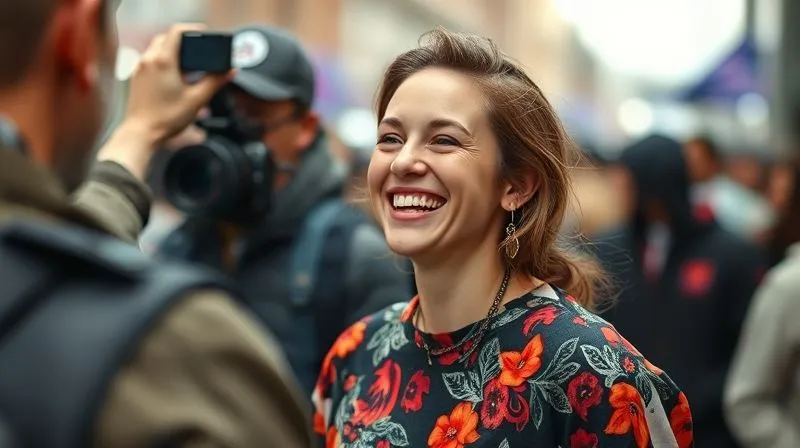
While street style photography is often about capturing what people are wearing, the most memorable images also capture who they are. Making a genuine human connection, even a fleeting one, can transform a posed shot into an authentic moment. I've learned that a simple, respectful interaction can unlock an entirely different level of expression from your subject.
It starts with a smile and often a quick compliment. "I love your coat! May I take a quick photo?" Most fashion week attendees are accustomed to being photographed, but a sincere compliment can disarm them and encourage a more relaxed, natural pose. Don't be afraid to engage briefly. Ask about their inspiration or where they found a particular piece. This brief interaction often results in a more genuine smile, a thoughtful glance, or a confident stance that feels less forced.
- Be Respectful: Always ask permission, even if it's non-verbal (a nod and a smile).
- Offer a Compliment: Start with genuine praise about their style.
- Direct Briefly, Then Observe: You might suggest a direction ("Could you look over your shoulder?") but then let them settle into it naturally.
- Shoot Candids Around Poses: Capture moments just before or after a requested pose – these are often the most authentic.
Remember, you're not just taking a picture; you're engaging with another human being. This approach, emphasized by many portrait photographers, builds trust and allows for a more collaborative, natural outcome. It's about capturing their essence, not just their attire.
Post-Production Polish: Elevating Your Street Style Narrative
The work doesn't end when you press the shutter. Post-production is where you refine your vision and ensure your unique perspective truly shines. In a crowded field, a consistent and distinctive editing style can be your signature. I've spent years developing my own workflow to enhance colors, clean up distractions, and craft a cohesive narrative across my images.
Start with culling ruthlessly. Out of hundreds of shots, only a handful might truly stand out. Be honest with yourself. Focus on enhancing the unique qualities of each chosen image. This might involve selective color adjustments to make a specific garment pop, dodging and burning to emphasize light and shadow, or subtle cropping to refine composition and remove distracting elements. Don't be afraid to experiment with different color grades or black and white conversions to evoke a particular mood.
| Editing Step | Goal | Software Feature |
|---|---|---|
| Culling & Selection | Choose strongest images, remove duplicates/blurs | Rating/Flagging system |
| Basic Adjustments | Correct exposure, white balance, contrast | Sliders for Exposure, Temp, Tint, Contrast |
| Color Grading | Establish a consistent mood/style | HSL sliders, Split Toning, LUTs |
| Distraction Removal | Clean up unwanted background elements | Spot Healing Brush, Clone Stamp, Content-Aware Fill |
| Sharpening & Noise Reduction | Enhance detail, reduce grain | Detail panel, Luminance/Color Noise Reduction |
While it's tempting to apply heavy-handed edits, remember that the goal is to enhance, not to transform beyond recognition. The best post-production is often subtle, making your images feel polished and intentional without looking overly manipulated. A consistent look across your portfolio helps build your brand and makes your work instantly recognizable, even amidst a sea of other photographers.
Essential Gear & Settings for Crowded Environments
While I always say the photographer makes the photo, not the gear, having the right tools can significantly ease the challenges of a crowded Fashion Week. My go-to setup prioritizes speed, versatility, and discretion.
- Camera Body: A fast DSLR or mirrorless camera with excellent autofocus capabilities and good high-ISO performance. Brands like Canon (5D series, R series) or Nikon (D850, Z series) are industry standards.
- Lenses:
- 70-200mm f/2.8: My workhorse. Essential for reach, compressing backgrounds, and isolating subjects from a distance. The f/2.8 aperture provides beautiful bokeh.
- 50mm f/1.4 or f/1.8 (Nifty Fifty): Lightweight, sharp, and excellent in low light. Great for candid shots and full-body portraits with natural compression.
- 24-70mm f/2.8: A versatile zoom for wider environmental shots or when you need to quickly change focal lengths.
- Settings:
- Shutter Speed: Aim for 1/500s or faster to freeze motion, especially with moving subjects. Adjust based on available light.
- Aperture: Generally f/2.8 to f/5.6 for subject isolation and creamy bokeh. Wider apertures (f/1.4-f/2.0) for extreme isolation or low light.
- ISO: Keep as low as possible for image quality, but don't be afraid to push it to 800-3200 if necessary, especially with modern cameras.
- Autofocus: Continuous AF (AI Servo/AF-C) with a flexible spot or zone mode for tracking specific subjects.
- Accessories: Extra batteries are non-negotiable. A comfortable camera strap and a small, easily accessible bag for lenses are also crucial.
Mastering your gear means being able to change settings instinctively. Practice in similar environments before the event. The less time you spend fiddling with dials, the more time you spend observing and capturing those unique moments.
Frequently Asked Questions (FAQ)
Question? How do I deal with other photographers getting in my shot at Fashion Week?
Answer: This is an inevitable challenge. My best advice is to embrace strategic positioning. Instead of trying to muscle your way to the front, seek out unique angles from the side, a slightly elevated position, or even a low angle. Use a longer lens (like a 70-200mm) to compress the background and isolate your subject, effectively making other photographers disappear in the bokeh. Patience is key; sometimes waiting a few seconds for a small gap to open up is more effective than fighting for space. Also, consider shooting from behind the subject, capturing their interaction with the crowd or their walk away from the main hub.
Question? Is it ethical to photograph people without their explicit permission at Fashion Week?
Answer: Generally, in public spaces like Fashion Week, where attendees are often dressed to be photographed, implied consent is usually assumed. However, as an industry specialist, I always advocate for respect and courtesy. A quick nod, a smile, or a verbal "May I?" goes a long way. If someone clearly signals they don't want to be photographed, respect their wishes immediately. For more intimate or close-up portraits, direct permission is always preferable. Building a rapport, even briefly, often leads to more authentic and compelling images.
Question? What's the best time of day to capture unique street style photos?
Answer: "Golden Hour" (the hour after sunrise and before sunset) offers the most beautiful, soft, and warm light, which can make any subject look stunning. However, these times are also extremely popular. For truly unique shots, I often find success during the midday sun, which most photographers avoid due to harsh shadows. By strategically using shadows, open shade, or backlighting, you can create dramatic and artistic images that stand out. Overcast days also offer beautifully diffused light, perfect for vibrant colors and clean portraits without harsh shadows. The 'best' time depends on the specific light you want to leverage for your unique vision.
Question? Should I focus on established influencers or new faces for unique content?
Answer: Both have their merits. Established influencers guarantee views and recognition, but their images are often oversaturated. To capture truly unique content, I recommend a balanced approach. Dedicate some time to capturing well-known personalities, but prioritize seeking out emerging talents, unique stylists, or attendees with genuinely distinctive, personal style that might not be as widely recognized. These 'new faces' often offer more creative freedom and less competition, allowing you to develop a fresh perspective and potentially discover the next big trendsetter before anyone else. This demonstrates a keen eye and adds significant value to your portfolio.
Question? How can I make my street style photos look more editorial?
Answer: To elevate your street style photos to an editorial level, focus on several key aspects. Firstly, look for strong compositions and clean backgrounds to eliminate distractions. Secondly, pay extreme attention to light and shadow, using them to sculpt your subject and create mood. Thirdly, aim for authentic expressions and dynamic poses that tell a story, rather than just static shots. Finally, develop a sophisticated and consistent post-production style that enhances the image without over-processing, often leaning towards rich, natural tones or a classic black and white aesthetic. Think about the narrative and how each photo contributes to a larger visual story, much like a magazine spread.
Key Takeaways and Final Thoughts
- Cultivate a Unique Eye: Train yourself to see beyond the obvious, focusing on details, light, and authentic moments.
- Master Your Position: Strategic placement is more effective than fighting for the front row; find angles that offer a fresh perspective.
- Anticipate, Don't Just React: Learn to read cues and predict moments to capture genuine expressions and interactions.
- Leverage Light as Your Ally: Use light and shadow creatively to add drama, mood, and to isolate your subjects.
- Focus on the Finer Details: Don't overlook accessories, textures, and subtle styling choices for unique close-up shots.
- Connect with Your Subjects: A genuine interaction can lead to more authentic and compelling portraits.
- Refine in Post-Production: Develop a consistent editing style to polish your work and reinforce your unique visual signature.
Capturing unique street style photos at crowded Fashion Week is a challenge, but it's a challenge that can be overcome with intention, practice, and a strategic approach. It's about combining technical prowess with a deep understanding of human behavior and an artistic vision that seeks out beauty in the chaos. Embrace the crowds not as an obstacle, but as a dynamic backdrop for your storytelling. Go forth, observe acutely, anticipate fearlessly, and let your unique perspective shine through. The industry is waiting for your distinct voice.
Recommended Reading
- 5 Ways to Stop Chafing: Select Gym Outfits for Intense Workouts
- How to Curate a Cohesive Luxury Fragrance Collection for Your Brand
- 7 Proven Strategies: Elevating Everyday Accessories for High-End Clients
- Unlock Ageless Style: How to Create Womenswear for Every Generation
- 5 Strategic Ways: Project Executive Power Through Your Workwear Choices


Your email address will not be published. Required fields are marked *