


How to Avoid Dead Stock When Forecasting Eyewear Fashion Trends
For over two decades navigating the dynamic currents of the eyewear fashion industry, I've witnessed firsthand the exhilaration of a perfectly timed collection launch and, conversely, the crushing burden of a warehouse overflowing with unsold frames. The difference often boils down to one critical skill: accurate trend forecasting.
Dead stock isn't just an inconvenience; it’s a silent killer of profitability, tying up capital, consuming valuable space, and ultimately eroding your brand's vitality. In a market as fickle as fashion eyewear, misjudging a trend can lead to significant financial losses and missed opportunities for growth.
This article isn't about guesswork; it's about equipping you with a robust framework. I’ll share actionable strategies, drawing from my extensive experience and real-world case studies, to help you master the art and science of how to avoid dead stock when forecasting eyewear fashion trends, transforming uncertainty into strategic advantage.
Deconstructing the Eyewear Market's Intricacies
Before we dive into specific strategies, it's crucial to understand the very nature of the beast we're trying to tame: the eyewear fashion market itself. It's a complex ecosystem influenced by global fashion weeks, celebrity endorsements, technological advancements, and shifting consumer lifestyles.
The Cyclical Nature of Fashion Eyewear
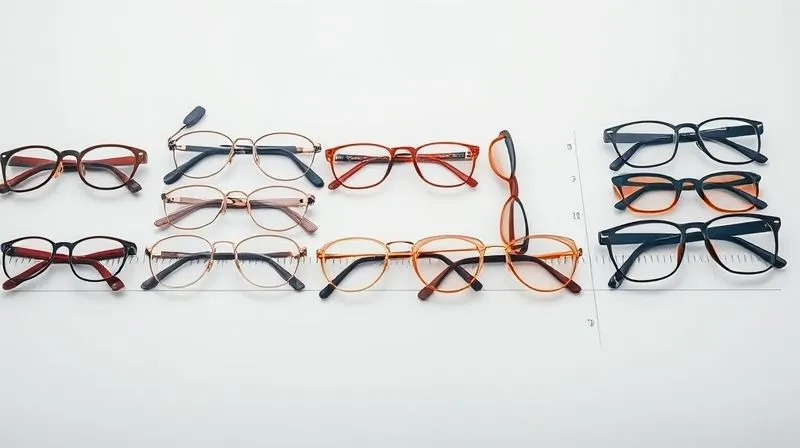
Eyewear fashion, like all fashion, moves in cycles. We see revivals of vintage styles – think classic aviators or retro cat-eyes – interspersed with the emergence of entirely new aesthetics driven by innovation or cultural shifts. Understanding these macro-cycles, which can span years, is foundational. Simultaneously, micro-trends, like a specific frame color or a unique temple design, can emerge and fade within a single season.
Distinguishing Micro-Trends from Enduring Styles
The challenge lies in discerning what's a fleeting fad versus what has the potential for longevity. Investing heavily in a micro-trend can quickly lead to dead stock once its moment passes. Conversely, overlooking an emerging enduring style means missing out on significant sales. This requires a keen eye and a nuanced understanding of both the immediate market pulse and broader societal movements.
True success in eyewear forecasting isn't about chasing every fleeting whim, but discerning the underlying currents that shape consumer desire for years, not just months.
Data-Driven Forecasting: Beyond Intuition
While intuition and experience are invaluable, they must be augmented by concrete data. In today's retail landscape, relying solely on gut feelings is a recipe for disaster. Data provides an objective lens through which to view past performance and predict future demand.
Leveraging Point-of-Sale (POS) Data and Sales Analytics
Your own sales data is a goldmine. It tells you exactly what your customers are buying, when they're buying it, and at what price point. Deep diving into your POS system can reveal patterns that are otherwise invisible.
- Analyze SKU Performance: Identify your top sellers, slow movers, and frames with high return rates. Look for granular patterns in material, shape, color, and brand.
- Track Sales Velocity: Understand how quickly certain styles move from shelf to customer. A high sales velocity indicates immediate, strong demand, while a low velocity signals potential future dead stock.
- Seasonal Adjustments: Account for seasonal peaks and troughs. Sunglasses sales will naturally surge in summer, while clear frames might see consistent year-round demand. Factor in holiday promotions and back-to-school periods.
- Customer Demographics: Understand who is buying what. Are younger demographics gravitating towards specific frame types? Are older clients sticking to classic designs?
External Market Indicators and Demographic Shifts
Beyond your internal data, broader economic trends, demographic changes, and cultural shifts significantly influence eyewear choices. An aging population might drive demand for progressive lenses and more sophisticated styles, while the growing buying power of Gen Z could fuel trends in sustainable materials or bold, expressive designs. Keep an eye on reports from reputable market research firms and retail associations.
According to a recent National Retail Federation (NRF) report, understanding evolving consumer values, such as sustainability and personalization, is paramount for forecasting success across all retail sectors.
The Power of Social Listening and AI-Powered Trend Tools
Social media platforms like Instagram, TikTok, and Pinterest are real-time barometers of emerging fashion trends. By actively monitoring influencers, fashion blogs, and relevant hashtags, you can spot nascent trends before they become mainstream. Furthermore, AI-powered trend forecasting tools can process vast amounts of unstructured data – images, text, videos – to identify patterns and predict demand with remarkable accuracy, often outpacing human analysis.
In today's hyper-connected world, consumer preferences are broadcasted daily across digital platforms. Ignoring these signals is like navigating blindfolded through a shifting landscape.
Agile Sourcing and Strategic Supplier Collaboration
Even the most accurate forecast can be undermined by an inflexible supply chain. Building strong relationships with your suppliers and adopting agile sourcing practices are crucial to minimize dead stock risk.
Building Robust Supplier Partnerships
Think of your suppliers not just as vendors, but as strategic partners. Foster transparent communication, share your forecasting insights, and work together on inventory planning. Negotiate for flexible ordering terms, smaller minimum order quantities (MOQs), and faster reorder lead times. A supplier who understands your needs and is willing to adapt can be your greatest asset in avoiding overstock.
Exploring Just-In-Time (JIT) Inventory and Dropshipping Models
For certain frame lines, especially those with high trend volatility, consider Just-In-Time (JIT) inventory strategies. This involves ordering frames only when they are needed, minimizing the amount of capital tied up in stock. While challenging for all inventory, it can be effective for specific, high-risk items. Similarly, dropshipping, where the supplier ships directly to the customer, can be a viable option for niche or experimental collections, completely eliminating the need for you to hold inventory.

Piloting and Test Marketing New Collections
When in doubt, test it out. Instead of making large, risky commitments to new, unproven styles, adopt a strategy of piloting and test marketing. This allows you to gauge genuine customer interest with minimal financial exposure.
Small-Batch Orders and Limited Editions
Introduce new styles in limited quantities. This could mean ordering only a handful of units of a new frame line or offering it as a 'limited edition' release. This strategy serves multiple purposes:
- Reduced Financial Risk: You minimize capital tied up in unproven styles, protecting your bottom line if the trend doesn't take off.
- Exclusivity Appeal: Limited editions can create a sense of urgency and desirability among your customers, driving initial sales.
- Real-Time Feedback: You gather direct, unfiltered customer reactions to new designs, which is invaluable for future purchasing decisions.
Gathering Qualitative Customer Feedback Early
Beyond sales numbers, actively solicit feedback from customers who purchase or show interest in your pilot collections. Conduct informal surveys, engage in conversations on the shop floor, or use online polls. Understanding *why* a style resonates (or doesn't) provides deeper insights than just quantitative data alone. This qualitative data can inform your next purchasing round, helping you refine your selection and avoid styles that are likely to become dead stock.
Dynamic Inventory Management & Lifecycle Optimization
Even with the best forecasting, some styles will inevitably underperform. The key is to have a dynamic inventory management system in place to identify and address slow-moving stock before it becomes a significant problem.
Implementing an ABC Analysis for Eyewear SKUs
An ABC analysis categorizes your inventory items based on their value and sales velocity. This helps you prioritize your management efforts:
| Category | Characteristics | Management Strategy |
|---|---|---|
| A (High Value/Fast Moving) | Top 20% of SKUs, 80% of sales revenue. Critical for consistent availability. | Tight control, frequent review, accurate forecasting, strong supplier relationships. |
| B (Medium Value/Velocity) | Next 30% of SKUs, 15% of sales revenue. Important, but less critical. | Moderate control, regular reviews, balanced stock levels. |
| C (Low Value/Slow Moving) | Remaining 50% of SKUs, 5% of sales revenue. Often niche or older styles. | Minimal control, periodic review, consider clearance or bundling strategies to move stock. |
Focus your most intensive forecasting and ordering efforts on 'A' items, as they represent the bulk of your revenue. For 'C' items, be aggressive in clearing them out to free up capital and shelf space.
Strategic Markdown vs. Value-Added Bundles
When a frame style isn't selling, don't let it linger indefinitely. Develop clear strategies for moving slow-moving stock. This might involve:
- Strategic Markdowns: Price reductions are often necessary, but timing is everything. Start with smaller discounts and escalate if needed, rather than a drastic cut that devalues the product.
- Value-Added Bundles: Instead of just discounting, try bundling slow-moving frames with complementary products like a premium cleaning kit, a stylish case, or even a discount on a second pair of lenses. This adds perceived value without simply slashing the price of the frame itself.
- Promotional Events: Create themed sales events, such as 'Retro Frame Flash Sale' or 'Designer Clearance,' to generate excitement around older inventory.
Case Study: Visionary Optics' Triumph Over Dead Stock
The Challenge
Visionary Optics, a mid-sized independent optical chain operating across three locations, found itself with a 25% increase in dead stock over two years. Their traditional forecasting relied heavily on past sales data and a few senior buyer's 'gut feelings,' leading to consistent over-ordering of certain styles and missing out on emerging micro-trends. This resulted in significant capital being tied up, reduced cash flow, and increasing storage costs.
The Strategy Implemented
I advised Visionary Optics to overhaul their entire forecasting and inventory management process. First, they integrated a new POS system that provided granular data on SKU performance, sales velocity, and customer demographics across all stores. Second, they began actively monitoring social media for emerging eyewear trends, assigning a dedicated team member to track fashion influencers, industry blogs, and competitor launches. Third, they initiated a 'Pilot Program' for all new frame lines, ordering only 5-10 units of select new styles to test market reception before committing to larger quantities. Finally, they established closer, more collaborative relationships with their top three suppliers, negotiating for smaller minimum order quantities and faster reorder lead times, particularly for their 'B' and 'C' category SKUs.
The Results
Within 18 months, Visionary Optics achieved a remarkable 40% reduction in its dead stock value. Their inventory turnover improved by 30%, freeing up significant capital that was then reinvested into marketing and store upgrades. More importantly, they became much more responsive to market changes, consistently being among the first in their region to stock emerging popular styles, which significantly enhanced their brand reputation as a trendsetter. This strategic shift didn't just save them money; it positioned them for sustainable growth and increased customer loyalty.
Cultivating a Culture of Continuous Learning and Adaptation
Forecasting isn't a one-time task; it's an ongoing process that requires constant learning and adaptation. Your team is your greatest asset in this endeavor.
Regular Trend Review Meetings
Establish regular, cross-functional meetings involving your buyers, sales associates, marketing team, and even optometrists. In these meetings, review sales data, discuss emerging trends observed on the shop floor, analyze competitor movements, and adjust your purchasing strategies accordingly. This collaborative approach ensures that diverse perspectives inform your decisions.
Investing in Team Training and Market Exposure
Empower your team by investing in their knowledge. Encourage them to attend industry trade shows, workshops on fashion trends, and to actively follow trend-spotting platforms. The more informed your team is, the better equipped they will be to spot emerging trends, provide valuable customer insights, and contribute to accurate forecasting.
Your team's collective eyes and ears are your most potent trend-spotting tool. Empower them with knowledge and a platform to share their insights.

The Future: Predictive Analytics and AI in Eyewear
The landscape of forecasting is rapidly evolving, with technology playing an increasingly pivotal role. Embracing these advancements can give your optical shop a significant competitive edge.
AI for Enhanced Demand Forecasting
Artificial Intelligence (AI) and machine learning algorithms are revolutionizing demand forecasting. These systems can process vast datasets – including sales history, social media sentiment, economic indicators, weather patterns, and even competitor data – to identify complex patterns and predict future demand with unprecedented accuracy. This moves beyond simply extrapolating past sales to truly predicting future consumer behavior.
As highlighted in a Harvard Business Review article, AI-driven forecasting can significantly reduce inventory costs and improve service levels by providing more precise predictions, especially in volatile markets.
Virtual Try-Ons and Augmented Reality (AR)
While not directly a forecasting tool, virtual try-on (VTO) and Augmented Reality (AR) technologies contribute indirectly by providing valuable data and enhancing customer satisfaction. VTO allows customers to virtually try on frames from your inventory, reducing returns due to ill-fitting or unsuitable styles. The data collected from these interactions – which frames are tried on most, which are saved to wishlists – can offer powerful insights into customer preferences and emerging trends before a physical purchase is made.
| Feature | Traditional Forecasting | AI-Powered Forecasting |
|---|---|---|
| Data Volume & Complexity | Limited to historical sales, often manual analysis. Struggles with unstructured data like social sentiment. | Processes vast amounts of diverse data (sales, social media, weather, economic indicators, sentiment). Identifies non-obvious correlations. |
| Accuracy & Speed | Can be prone to human bias, slower to react to sudden market shifts. Accuracy diminishes with market volatility. | Significantly higher accuracy, particularly for short to medium-term predictions. Enables real-time adjustments and scenario planning. |
| Risk Mitigation | Higher risk of overstocking or understocking due to less precise predictions, leading to dead stock or lost sales. | Optimizes inventory levels, minimizing dead stock potential and maximizing sales opportunities through precise demand matching. |
Frequently Asked Questions (FAQ)
Q: How often should I review my eyewear inventory and forecasting strategy? A: I recommend a multi-tiered approach. Conduct a detailed, comprehensive review of your entire inventory and forecasting strategy quarterly, adjusting for seasonal shifts and broader fashion cycles. For your top-performing 'A' category SKUs, a weekly or bi-weekly check is prudent to ensure optimal stock levels and quickly identify any emerging trends or dips in demand.
Q: What's the biggest mistake optical shops make in forecasting eyewear trends? A: The most common pitfall is relying solely on past sales data or anecdotal evidence. While historical data is undeniably crucial, it's a lagging indicator. Failing to integrate forward-looking signals – like social media trends, broader fashion movements, consumer sentiment analysis, and competitor activity – is a recipe for being consistently behind the curve and accumulating unnecessary dead stock.
Q: Can small independent optical shops effectively implement sophisticated forecasting techniques? A: Absolutely. While large chains might have dedicated data science teams, independent shops can leverage surprisingly affordable cloud-based POS systems with robust built-in analytics. They can also effectively follow key fashion influencers, utilize free social listening tools, and build strong, communicative relationships with their suppliers for agile ordering. The core principles of data-driven and agile forecasting remain the same, just scaled appropriately for their operations.
Q: How do I balance classic, evergreen styles with trendy, fashion-forward frames to avoid dead stock? A: A balanced portfolio is key to mitigating risk. Dedicate a significant portion of your inventory to proven, classic styles that consistently sell well – these are your 'bread and butter' and provide stable revenue. For trendy, fashion-forward frames, employ the strategies discussed: small-batch orders, rigorous test marketing, and agile reordering. Think of it as an 80/20 rule: roughly 80% reliable sellers for stability, and 20% trend-driven, high-turnover items for excitement and market responsiveness.
Q: What are the key metrics to track to measure forecasting accuracy? A: Beyond overall sales, focus on metrics like inventory turnover rate (how quickly you sell and replace stock), stockout rate (how often you run out of popular items, indicating under-forecasting), dead stock value (the monetary value of unsold inventory past its prime), and forecast error percentage (the difference between your predicted and actual sales). Consistently improving these metrics indicates greater forecasting accuracy and efficiency.
Key Takeaways and Final Thoughts
- Embrace Data: Move beyond intuition by integrating comprehensive POS data, external market indicators, and social listening into your forecasting models.
- Cultivate Agility: Build flexible, collaborative supplier relationships and explore JIT models to reduce significant upfront commitments to uncertain trends.
- Test and Learn: Utilize small-batch orders and pilot programs to gauge genuine market interest before making substantial inventory investments.
- Optimize Inventory: Implement dynamic management strategies like ABC analysis and thoughtful markdown or bundling approaches for slow-moving stock.
- Foster Collaboration: Empower your team with knowledge and create a culture of continuous trend monitoring, discussion, and adaptation.
- Look to Technology: Explore AI and AR tools to enhance prediction accuracy, streamline operations, and improve customer engagement.
- Prioritize Profitability: Remember that proactively avoiding dead stock directly impacts your bottom line, frees up crucial capital, and safeguards your brand reputation.
Mastering how to avoid dead stock when forecasting eyewear fashion trends is an ongoing journey, not a static destination. It demands vigilance, adaptability, and a willingness to embrace both the art of fashion insight and the science of data analytics. By diligently implementing these strategies, you'll not only safeguard your capital but also strategically position your optical shop as a forward-thinking, profitable leader in the ever-evolving world of eyewear fashion. Your future success hinges on your ability to predict, adapt, and act decisively in this dynamic market.
Recommended Reading
- 7 Steps: Predict Sunglasses Trends & Avoid Dead Stock Profitably
- Scaling Unique Handcrafted Jewelry: 7 Proven Strategies for Growth
- Scaling Luxury Fashion: 7 Strategies to Preserve Artisan Quality
- 7 Ways to Balance Aesthetic & Ergonomics in Contemporary Sandals
- Craft Believable Characters: Costume Design Secrets Revealed!




Your email address will not be published. Required fields are marked *