

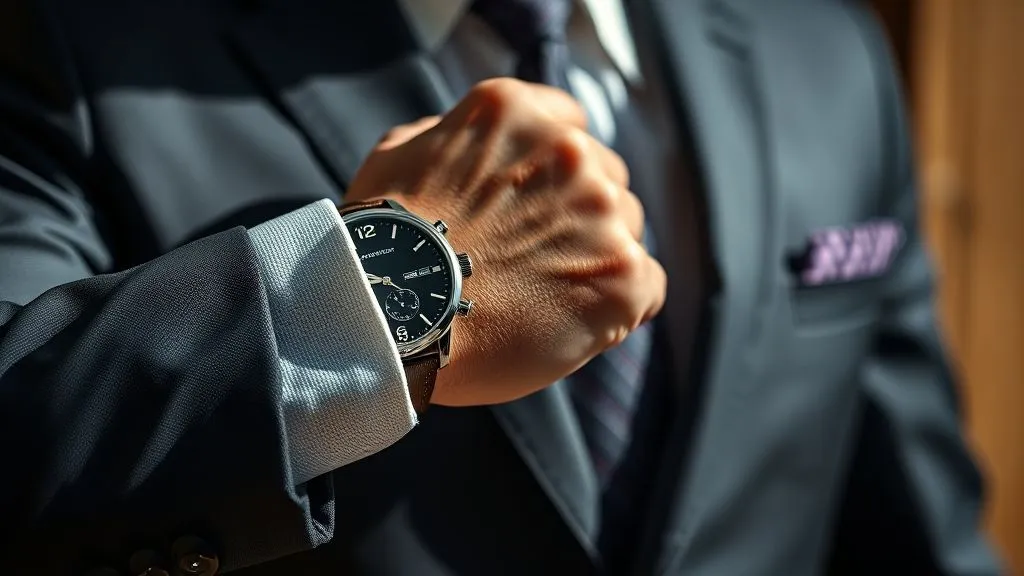
How to avoid accessory blunders that undermine a professional's image?
For over two decades in the menswear industry, I've had the privilege of observing, advising, and even transforming the professional images of countless individuals. What often strikes me is not the grand fashion faux pas, but the subtle, almost imperceptible accessory blunders that, over time, can silently chip away at a man's professional credibility and presence.
Many professionals meticulously select their suits, shirts, and ties, yet overlook the crucial role accessories play in completing their narrative. A misplaced tie bar, an ill-chosen watch, or even scuffed shoes can send unintended signals, subtly undermining the very image of competence and attention to detail they strive to project.
This article isn't just about avoiding mistakes; it's about understanding the psychology behind professional accessorizing and harnessing its power. I'll share actionable frameworks, real-world insights, and my expert perspective to equip you with the knowledge to not only avoid accessory blunders that undermine a professional's image but to use them as tools for strategic advantage.
The Silent Saboteurs: Why Accessories Matter More Than You Think
In the high-stakes world of business, first impressions are paramount, often formed within seconds. While your attire forms the canvas, your accessories are the brushstrokes that define the masterpiece – or mar it. They are silent communicators, speaking volumes about your personality, attention to detail, and respect for the occasion.
I've seen countless instances where an otherwise impeccable outfit was brought down by a single, careless accessory choice. A professional might wear a perfectly tailored suit, but if his belt doesn't match his shoes, or his watch is more suited for a nightclub than a boardroom, that incongruity creates a dissonance in perception. It suggests a lack of polish, an oversight that can be unconsciously interpreted as a broader lack of attention to detail.
"Accessories are the exclamation point to a man's outfit. They should enhance, not distract, and always reinforce the message of competence and confidence."
Understanding this subtle yet profound impact is the first step in learning how to avoid accessory blunders that undermine a professional's image. It's about recognizing that every element, no matter how small, contributes to the overall narrative you present to the world.
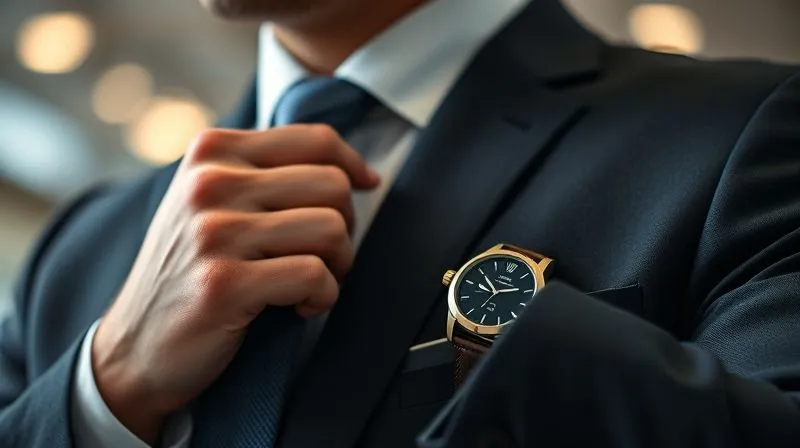
The Cardinal Sins: Common Accessory Blunders Professionals Make
Even the most seasoned professionals can fall prey to common accessory missteps. From my vantage point, these aren't always glaring errors but often subtle miscalculations that accumulate to diminish one's polished image. Let's delve into the most frequent blunders I've observed.
Over-accessorizing: Less is More
One of the most common pitfalls is the temptation to wear too many accessories, believing that more adds to sophistication. In reality, it often leads to visual clutter, distracting from your overall professional presentation. A true mark of sartorial intelligence is knowing when to stop.
- Multiple bracelets on one wrist: While acceptable in casual settings, a single, elegant watch is typically sufficient for professional environments.
- Numerous rings: Beyond a wedding band, multiple rings can detract from a professional aesthetic.
- Excessive lapel pins or flashy tie clips: These should be chosen with restraint and purpose, not as a collection.
Ill-fitting or Worn-out Items: The Devil in the Details
Nothing screams unprofessionalism louder than accessories that are visibly old, damaged, or simply don't fit. These details, though small, are glaring indicators of neglect and can severely undermine your professional image.
- Scuffed or unpolished shoes: Your footwear is often the first thing noticed. Dirty or worn shoes instantly convey a lack of care.
- Frayed ties or pocket squares: Material that is visibly damaged diminishes the quality of your entire outfit.
- Belts with cracked leather or scratched buckles: These show a disregard for maintenance.
- Watches with scratched faces or ill-fitting straps: A luxury watch loses its appeal if it looks neglected or is too loose/tight.
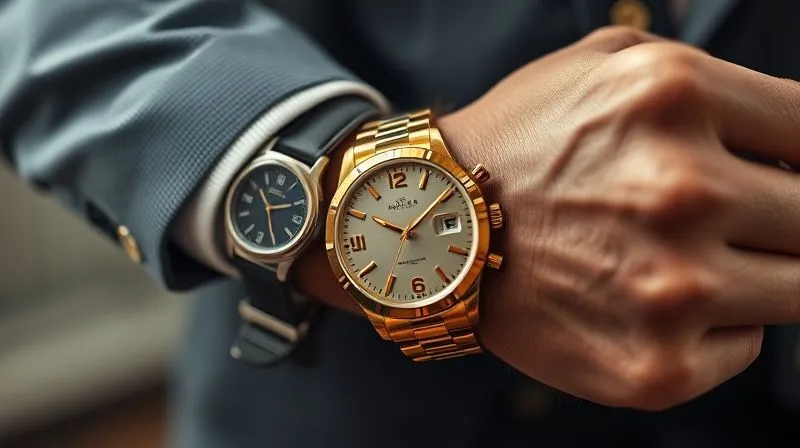
Mismatched Metals & Materials: A Visual Discord
Creating visual harmony is crucial for a cohesive professional look. Mixing metals and materials haphazardly can create a jarring effect, signaling a lack of aesthetic awareness. The goal is a seamless flow, not a chaotic clash.
I've often advised clients to stick to either silver-toned or gold-toned metals for their primary accessories – watches, belt buckles, tie bars, and cufflinks. While there's a growing trend towards mixing metals in casual wear, in a strictly professional context, consistency projects a more refined and intentional image. Similarly, ensure the texture and material of your belt complement your shoes – leather with leather, suede with suede, etc.
Ignoring Context: The Wrong Accessory for the Occasion
The cardinal rule of professional dressing is understanding the context. An accessory perfectly suitable for a weekend brunch might be entirely inappropriate for a boardroom meeting. Misjudging the occasion is a surefire way to send the wrong message.
- Wearing a sports watch with a formal suit: A robust dive watch, while functional, doesn't pair well with elegant formal wear.
- Flashy cufflinks for a conservative meeting: While cufflinks add flair, choose understated designs for serious business.
- Novelty ties or pocket squares: Unless explicitly part of a company culture, these can detract from seriousness.
- Overly casual bags or briefcases: A professional setting demands a refined carry-all, not a backpack.
Chasing Trends Over Timelessness: Fleeting Fads
While staying current is good, professional accessories should lean towards timeless elegance rather than fleeting trends. Investing in classic pieces ensures longevity and maintains an air of sophistication that doesn't date itself quickly.
I always emphasize building a core wardrobe of classic accessories that transcend seasons. A well-made leather belt, a classic watch, and versatile ties will serve you far better than a collection of trendy, disposable items. Trends can be fun, but they rarely project the gravitas required in a professional setting.
"Trends fade, but true style endures. Invest in accessories that speak to timeless professionalism, not just the fleeting moment."
The Foundation: Mastering the Core Professional Accessories
Once you understand the blunders, the next step is to build a solid foundation of correctly chosen and styled core accessories. These are the workhorses of your professional wardrobe, deserving of careful consideration.
Watches: The Timepiece of Power and Punctuality
A watch is more than a time-telling device; it's a statement. It speaks to your appreciation for precision, your respect for time, and your personal style. For professional settings, a dress watch or a refined business casual watch is almost always the best choice.
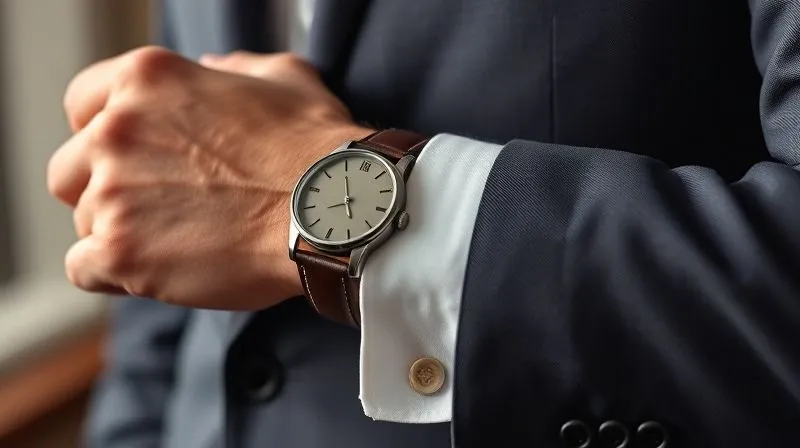
A dress watch typically features a slim profile, a clean dial, and a leather strap (black or brown, matching your belt and shoes). For business casual, you might opt for a slightly more robust watch with a metal bracelet, but still maintaining an elegant aesthetic. Avoid overly large, flashy, or sporty watches in formal business environments. As Harvard Business Review often notes, professionalism is about projecting competence and trustworthiness, and your watch plays a subtle role in that perception.
- Match the occasion: Dress watches for formal, understated watches for business casual.
- Proportion matters: The watch face should not overwhelm your wrist.
- Strap harmony: Leather straps should match your belt and shoes in color and texture.
Belts: The Unsung Hero of Cohesion
Often an afterthought, the belt is critical for bringing an outfit together. It acts as a visual anchor, creating a seamless transition between your upper and lower attire. The most crucial rule for professional men is simple yet frequently overlooked: match your belt to your shoes.
This means matching not just the color, but also the material and the general level of formality. A shiny black leather belt should be paired with shiny black leather dress shoes. A brown suede belt with brown suede loafers. The buckle should be understated and proportionate to the belt's width, typically a simple silver or gold tone that complements other metallic accessories.
- Match color and material: Black leather belt for black leather shoes; brown leather for brown leather.
- Choose appropriate width: Dress belts are typically narrower (1.25-1.5 inches) than casual belts.
- Opt for subtle buckles: A simple, clean buckle is always preferred for professional settings.
- Ensure proper fit: The belt should fasten comfortably on the middle hole, allowing for two fingers to fit between your waist and the belt.
Ties and Pocket Squares: Adding Personality with Precision
These are your opportunities to inject personality, but with precision and restraint. A well-chosen tie and pocket square can elevate a simple suit, while poor choices can undo it entirely.
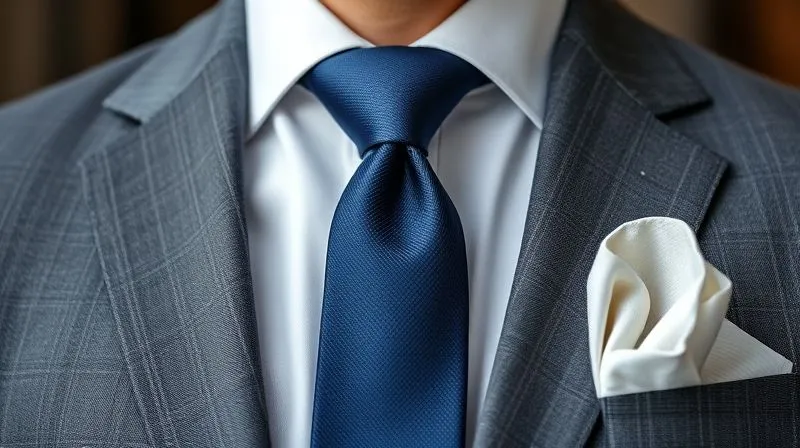
When selecting a tie, consider its width in relation to your lapels. A common blunder I see is an overly wide or narrow tie that throws off the suit's proportions. The tie's tip should just graze the top of your belt buckle. For pocket squares, aim for a complementary color or pattern to your tie, but not an exact match. A simple presidential fold (straight line) is always safe and professional, while a puff or peak fold can add subtle flair for less formal business occasions.
Footwear: The Groundwork of Your Image
Your shoes are the foundation of your professional image. A man's shoes can reveal a great deal about his attention to detail and personal discipline. As Forbes contributors often highlight, shoes are a key indicator of professionalism. They must be polished, well-maintained, and appropriate for the occasion.
For formal business, classic oxfords or sleek derbies in black or dark brown are indispensable. Loafers can work for business casual, provided they are refined and well-kept. Always ensure your shoes are clean, polished, and in good repair. Scuffed shoes, worn-down heels, or dirty laces are immediate image detractors.
- Classic styles: Oxfords, Derbies, and refined loafers are staples.
- Impeccable condition: Always clean, polished, and in good repair.
- Color coordination: Match with your belt, or at least ensure they complement your trousers.
Eyewear: Framing Your Intellect
For those who wear glasses, eyewear is a constant accessory that significantly impacts facial perception. Your frames should complement your face shape and project an image of intellect and seriousness, not fashion frivolity.
Choose frames that are proportionate to your face and align with your professional brand. Classic shapes like rectangular, square, or subtle round frames in muted colors (black, brown, tortoise, gunmetal) are generally safe bets. Avoid overly trendy, brightly colored, or oversized frames in formal business settings.
Strategic Accessorizing: Elevating Your Look with Intent
Beyond simply avoiding blunders, true mastery lies in strategically using accessories to enhance and elevate your professional presence. This involves a deeper understanding of aesthetics, proportion, and personal branding.
The Power of Subtlety: Understated Elegance
In professional settings, subtlety is often your most powerful ally. Accessories should enhance your overall look without drawing undue attention to themselves. They are meant to complement, not dominate. An understated piece often speaks louder than a flashy one, conveying confidence without needing to shout.
"The most impactful accessories are those that are noticed for their quality and harmony, not for their ostentation."
Think of accessories as grace notes in a symphony – they add richness and depth without overshadowing the main melody. A well-chosen tie bar, a discreet pair of cufflinks, or a finely crafted pen can all contribute to an aura of refined elegance without being overtly noticeable. This approach is key to how to avoid accessory blunders that undermine a professional's image by ensuring every piece works in concert.
Color Theory and Harmony: A Visual Symphony
Understanding basic color theory can transform your accessorizing. It's not about being a fashion expert, but knowing how colors interact to create a cohesive and pleasing visual effect. Your accessories should complement your suit and shirt, adding depth without clashing.
Consider complementary colors (opposite on the color wheel) for subtle contrast, or analogous colors (next to each other) for a harmonious blend. For instance, a navy suit pairs beautifully with burgundy or deep green accessories. Earth tones work well together. When in doubt, stick to classic pairings or use a neutral accessory to bridge colors. This table illustrates some common, effective color pairings for men's professional accessories:
| Suit Color | Recommended Tie/Pocket Square | Recommended Shoe/Belt | Watch Metal |
|---|---|---|---|
| Navy Blue | Burgundy, Forest Green, Silver-Grey, Light Blue | Dark Brown, Black | Silver, Gold |
| Charcoal Grey | Navy Blue, Deep Red, Purple, Black | Black, Dark Brown | Silver, Gold |
| Light Grey | Navy Blue, Pastel Shades, Light Green | Dark Brown, Black, Tan | Silver |
| Brown | Navy Blue, Olive Green, Cream, Orange Accents | Dark Brown, Tan | Gold |
Understanding Fit and Proportion: The Tailored Touch
Just as your suit must fit perfectly, so too must your accessories. Proportion is key to a polished look. A watch that's too large for your wrist, a tie that's too wide for your lapels, or a belt that's too chunky can all disrupt the visual balance of your outfit.
Pay attention to the scale of each accessory in relation to your body and your clothing. Your tie width should generally align with your lapel width. Your watch should sit comfortably on your wrist without sliding up and down, and its face should not extend beyond the width of your wrist. These details demonstrate a meticulous eye and a refined understanding of personal presentation.
Building a Versatile Accessory Wardrobe: Investment Pieces
Rather than accumulating a multitude of cheap, disposable items, I strongly advocate for investing in a smaller collection of high-quality, versatile accessories. These pieces will not only last longer but will also consistently elevate your style and project a more sophisticated image. Think of them as foundational elements that can be mixed and matched to suit various professional occasions.
A well-curated accessory wardrobe should include items that are classic in design, made from durable materials, and capable of complementing a wide range of outfits. This approach ensures you always have the right accessory at hand, preventing last-minute blunders and ensuring you consistently present a polished image. As a seasoned industry specialist, I can tell you that quality always trumps quantity when it comes to professional attire. GQ's guide to men's accessories often emphasizes investing in timeless pieces.
- Two quality watches: One dress watch (leather strap), one versatile business casual (metal bracelet or interchangeable straps).
- Three versatile belts: Black leather, dark brown leather, and perhaps a more casual brown for business casual.
- A selection of ties: Solid navy, solid grey, a subtle stripe, and a conservative pattern.
- A few pocket squares: White linen, a patterned silk, a solid silk in a complementary color.
- Quality cufflinks: Simple silver or gold, perhaps one pair with a subtle stone.
- A professional bag: A leather briefcase or messenger bag.
Case Study: From Overlooked to Outstanding – Mark's Transformation
Case Study: How Mark Elevated His Professional Presence
I recall working with a client named Mark, a talented mid-level manager in a financial services firm. Mark was intelligent and hardworking, but his professional image wasn't quite aligning with his capabilities. He often wore a perfectly good suit, but his accessories told a different story. His watch was a large, chunky sports model, his belt was a casual braided leather that didn't match his sleek dress shoes, and his ties, while colorful, were often paired with novelty pocket squares. These were classic accessory blunders that undermined a professional's image, subtly hindering his progression.
During our consultation, I gently pointed out these inconsistencies. I explained that while individually minor, collectively they projected an image of someone who hadn't quite grasped the nuances of corporate polish. We started by replacing his sports watch with a classic, slim-profile dress watch with a black leather strap. Next, we swapped his braided belt for a sleek black leather belt that perfectly matched his shoes. We curated a small collection of elegant silk ties in solid navy, burgundy, and a subtle stripe, pairing them with crisp white linen or subtly patterned silk pocket squares in presidential or puff folds.
The transformation was remarkable. Within six months, Mark exuded a newfound confidence. His colleagues and superiors began to notice a subtle but significant shift in his presence. He was perceived as more authoritative, more detail-oriented, and ultimately, more executive-ready. This wasn't about changing who Mark was, but about aligning his external presentation with his internal potential. He received a significant promotion shortly after, crediting his elevated image as a key factor in how he was perceived.
The Psychology of Professional Accessories: Beyond Aesthetics
The impact of well-chosen accessories extends far beyond mere aesthetics; it delves into the realm of psychology and perception. When you master how to avoid accessory blunders that undermine a professional's image, you're not just looking good – you're influencing how others perceive your competence, trustworthiness, and even your leadership potential.
Psychological studies often reveal that individuals who pay attention to details in their appearance are perceived as more conscientious and reliable. An accessory, precisely chosen and perfectly maintained, signals an individual who cares about precision and excellence in all aspects of their life, including their work. This subtle cue can subconsciously build trust and respect among peers and clients alike. As renowned marketing guru Seth Godin often says, "Perception is reality." Your accessories contribute significantly to that reality.
"Every accessory you choose is a non-verbal cue, signaling your respect for yourself, your role, and those you interact with. Choose wisely, and you communicate competence."
Furthermore, the act of dressing well and accessorizing thoughtfully can significantly boost your own confidence. When you know you look polished and put-together, you naturally carry yourself with more assurance, speak with greater conviction, and engage more effectively. This self-assurance is palpable and contributes positively to your overall professional performance.
Maintaining Your Investment: Care and Longevity
Even the finest accessories will lose their luster if not properly maintained. Part of mastering how to avoid accessory blunders that undermine a professional's image is understanding that ongoing care is just as important as initial selection. Proper maintenance ensures longevity, preserves their appearance, and reinforces your image as someone who values quality and pays attention to detail.
Leather goods, such as belts and watch straps, should be regularly cleaned and conditioned to prevent cracking and maintain their supple feel. Shoes require frequent polishing and occasional re-soling. Watches should be serviced according to manufacturer recommendations. Ties and pocket squares should be stored properly to prevent wrinkles and damage. This commitment to care reflects a broader commitment to excellence.
- Clean and polish shoes regularly: Use appropriate polishes and brushes.
- Condition leather goods: Belts, watch straps, and bags benefit from leather conditioner.
- Store ties properly: Hang them or roll them to prevent creases.
- Clean watches: Wipe down with a soft cloth; for leather straps, use a damp cloth and air dry.
- Store cufflinks and tie bars: Keep them in a jewelry box to prevent scratches and tarnishing.
| Accessory Type | Maintenance Task | Frequency | Notes |
|---|---|---|---|
| Leather Shoes | Polish & Buff | Weekly (if worn often) | Use matching polish, condition leather |
| Leather Belts/Watch Straps | Clean & Condition | Monthly | Avoid harsh chemicals, store flat or rolled |
| Watches (excluding strap) | Wipe Down | Daily/Weekly | Soft cloth, professional service every 3-5 years |
| Ties & Pocket Squares | Steam/Iron & Store | As needed (after wear) | Hang ties, fold pocket squares, spot clean only |
| Metal Accessories (Cufflinks, Tie Bars) | Wipe & Store | After each wear | Soft cloth, keep in box to prevent tarnish/scratches |
Frequently Asked Questions (FAQ)
How do I know if I'm over-accessorizing? A good rule of thumb I've developed over the years is the 'One Statement Piece' rule for professional settings. If you have a bold watch, keep other accessories minimal. If your tie is a strong pattern, opt for a simple pocket square. If you find yourself wearing more than three distinct accessories (excluding your watch and wedding band), you might be venturing into over-accessorizing territory. The goal is refinement, not distraction.
Is it okay to mix silver and gold metals? In a strictly formal or conservative professional environment, I generally advise against mixing silver and gold metals. Consistency projects a more cohesive and sophisticated image. However, for business casual or creative professional settings, subtle mixing can be acceptable if done intentionally and sparingly – perhaps a watch with both silver and gold elements, or a silver tie bar with a gold ring. The key is intent and balance, ensuring one metal dominates or acts as a clear accent.
What's the most important accessory for a professional man? While all accessories play a role, I would argue that your shoes are arguably the most critical. They are often the first thing people notice and are powerful indicators of your attention to detail and overall polish. A man can wear an average suit, but if his shoes are impeccable, he still projects an air of seriousness and care. Conversely, expensive attire can be instantly undermined by scuffed or inappropriate footwear.
How often should I update my accessories? Classic, high-quality accessories don't necessarily need to be 'updated' frequently. Instead, focus on maintaining them. A well-made leather belt or a classic watch can last for years, even decades, with proper care. You might update your ties or pocket squares seasonally to reflect current color trends in a subtle way, but the core pieces should be timeless investments. Replace items when they show significant wear or damage that cannot be repaired.
Can casual accessories ever be professional? It depends entirely on the definition of 'casual' and the professional environment. In a truly formal corporate setting, most casual accessories are inappropriate. However, in a business casual or creative industry, certain refined casual accessories can work. For example, a high-quality braided leather belt (if matched to shoes), a premium casual watch (like a field watch on a leather strap, not a dive watch), or even stylish, non-distracting eyewear can be acceptable. The key is always 'refined' and 'intentional' – never sloppy or overly relaxed.
Key Takeaways and Final Thoughts
Mastering your professional image through accessories is a journey of refinement and intentionality. It's about understanding that every small detail contributes to the larger narrative you present to the world. By diligently applying the principles we've discussed, you can transform potential accessory blunders into powerful assets that reinforce your professionalism.
- Prioritize quality over quantity: Invest in fewer, better accessories that stand the test of time.
- Match and coordinate: Ensure your metals, leathers, and colors create a harmonious visual flow.
- Context is king: Always dress and accessorize appropriately for the specific professional setting.
- Pay attention to proportion: Ensure accessories fit your body and complement your attire, not overwhelm it.
- Maintain your investment: Regular care keeps your accessories looking sharp and extends their lifespan.
- Embrace subtlety: Let your accessories enhance, not distract, projecting understated elegance.
Remember, your professional image is a reflection of your commitment to excellence. By thoughtfully selecting and maintaining your accessories, you're not just avoiding blunders; you're actively crafting a powerful visual statement that resonates with confidence, competence, and unwavering attention to detail. Take these insights, apply them with intention, and watch as your professional presence elevates to new heights.
Recommended Reading
- Supplier Fails? 7 Steps for Haute Couture Fabric Crisis Management
- 7 Ways to Master Dress Shoe Comfort Without Sacrificing Style
- 7 Strategies to Scale Circular Textile Production Without Prohibitive Costs
- 7 Proven Strategies: Liquidate Urban Fashion Inventory Without Devaluing Your Brand
- 7 Steps: Confidently Styling Clients with Iconic Eyewear Frames





Your email address will not be published. Required fields are marked *