

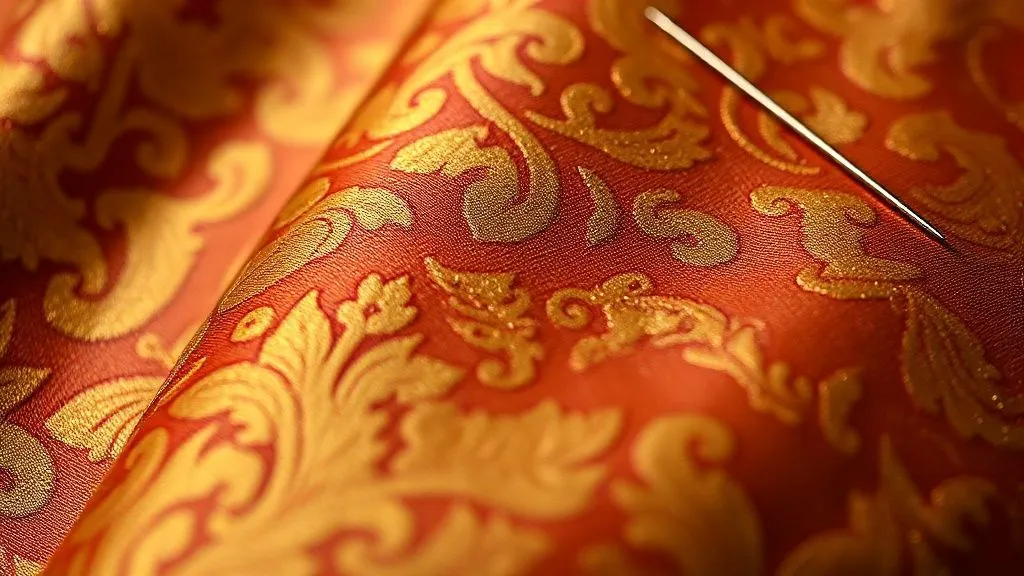
How to Authentically Recreate 16th-Century Italian Brocade with a Limited Budget?
After two decades immersed in the intricate world of historical costume design, I've witnessed countless aspiring designers and seasoned professionals alike grapple with a universal truth: authenticity often comes with a formidable price tag. Especially when we talk about the lavish textiles of the 16th-century Italian Renaissance, like the famed brocade, the sheer cost can feel prohibitive. I've seen projects abandoned, dreams shelved, all because the budget simply couldn't stretch to the opulent, silk-and-metal-thread fabrics that defined the era.
The challenge isn't just about finding any fabric; it's about capturing the essence, the weight, the shimmer, and the intricate patterns of true 16th-century Italian brocade without depleting your entire production budget. How do you convey that sense of Medici-era grandeur, the sumptuousness of Venetian nobility, when raw materials alone can cost hundreds per yard? It’s a dilemma that requires more than just clever shopping; it demands a deep understanding of textile history, creative problem-solving, and a willingness to embrace ingenuity.
In this comprehensive guide, I'll draw upon my years of hands-on experience and research to show you exactly how to authentically recreate 16th-century Italian brocade with a limited budget. We'll explore strategic material sourcing, innovative embellishment techniques, pattern adaptation secrets, and essential finishing touches. You'll gain actionable frameworks, real-world case studies, and expert insights that will empower you to craft stunning, historically accurate costumes that look a million florins, even if your budget is far more modest.
Understanding 16th-Century Italian Brocade: The Opulence and the Challenge
What Made It So Special?
To truly appreciate the challenge of recreating 16th-century Italian brocade, we must first understand its historical significance and inherent complexity. These fabrics were the epitome of luxury, status, and artistic achievement. Primarily woven from silk, often interwoven with real gold or silver threads, they were products of highly skilled artisans working on complex draw looms. The intricate weaving process allowed for multi-layered designs, creating a raised, textural surface that caught the light with breathtaking effect.
Characteristic motifs included highly stylized pomegranates, artichokes, crowns, elaborate floral scrolls, and even architectural elements or fantastical beasts. Each pattern was rich in symbolism and reflected the wealth and taste of its owner. These textiles were not merely clothing; they were investments, heirlooms, and powerful statements of power and prestige, often traded and gifted across European courts. The Victoria and Albert Museum's textile collection offers incredible examples of this craftsmanship, showcasing the intricate detail and luxurious materials. V&A Textile Collection
The Budgetary Hurdle
The very qualities that made 16th-century Italian brocade so magnificent are what make it nearly impossible to replicate authentically on a limited budget today. Modern reproduction brocades, even without real metal threads, are incredibly expensive due to the specialized looms and skilled labor required. Authentic vintage pieces are rare, fragile, and command astronomical prices, making them unsuitable for active costume use.
The alternative, cheap synthetic brocades, often fall short. They lack the luxurious drape, the subtle sheen, and the rich hand of silk, appearing stiff and unconvincing. This leaves the historical costumer in a quandary: how do you achieve that unmistakable visual authenticity without compromising your entire production's financial viability? It requires a paradigm shift from direct replication to clever illusion, leveraging period-appropriate techniques to achieve a similar visual effect.
Strategic Material Sourcing: The Foundation of Budget-Friendly Authenticity
The first step in learning how to authentically recreate 16th-century Italian brocade with a limited budget lies in smart material sourcing. Your base fabric is your canvas, and choosing wisely can make all the difference in achieving a convincing final look.
Identifying Affordable Base Fabrics
- Silk Blends: Pure silk is often out of reach, but silk/rayon, silk/cotton, or silk/viscose blends can offer a similar luxurious hand and drape at a fraction of the cost. Look for blends with a higher silk content if possible.
- High-Quality Synthetics: Don't dismiss synthetics entirely. A well-chosen `polyester jacquard` or `rayon brocade` can provide a good starting point, especially if the weave already has some texture. The key is to select fabrics with excellent drape, a rich, non-plastic-looking sheen, and a substantial weight. Avoid anything too thin, stiff, or overly shiny. `Acetate satin` or `crepe-backed satin` can also serve as an excellent base for embellishment.
- Velvet: If the original brocade design included velvet pile, a good quality cotton or rayon velvet can be an effective base. Its depth of color and softness can beautifully mimic the rich texture of historical textiles.
"Authenticity isn't just about the fibers; it's about the visual impact and the way the fabric moves. Sometimes, a well-chosen synthetic with the right embellishment will look more 'right' than a cheap, plain silk."
The Art of Upcycling and Repurposing
One of my favorite budget-saving strategies involves looking beyond traditional fabric stores. Vintage curtains, tablecloths, bedspreads, or even evening gowns found at thrift stores and estate sales can be goldmines. You can often find large pieces of high-quality jacquard, damask, or velvet for pennies on the dollar. With a bit of clever dyeing, deconstruction, and re-imagining, these can become the perfect foundation for your period garments. I once found a stunning, unused jacquard bedspread at a flea market that, with a bit of clever dyeing and deconstruction, became the perfect base for a ducal gown – saving hundreds of dollars.
Don't overlook fabric remnant bins or discount sections in larger fabric stores. Sometimes, a small flaw or an end-of-bolt piece can mean a drastically reduced price on a fabric that's otherwise perfect for your needs. Always check the fiber content and drape before committing.
Embellishment Techniques: Mimicking Brocade Without the Weave
Once you have your base fabric, the real artistry begins. Since true woven brocade is out of budget, we turn to period-appropriate embellishment techniques to create the illusion of intricacy and richness. These methods were also used historically, often to enhance simpler fabrics or add extra luxury.
Surface Embroidery: A Time-Honored Solution
Hand embroidery is arguably the most effective way to replicate the intricate patterns and raised textures of brocade. It's labor-intensive, but the results are unparalleled in terms of authenticity and visual impact.
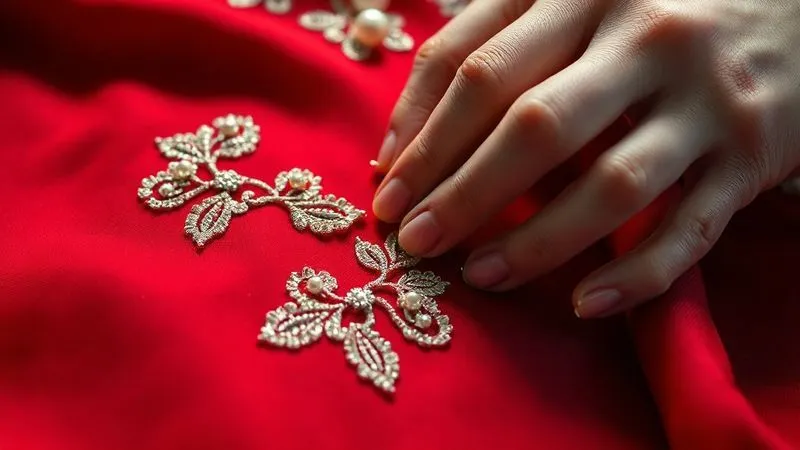
- Materials: Use silk embroidery threads for a luxurious sheen, or high-quality rayon/polyester metallic embroidery floss for that precious metal glint. Seed beads, small pearls, and even tiny sequins (historically accurate in various forms for the period) can add sparkle and dimension.
- Research Motifs: Begin by studying authentic 16th-century Italian brocade motifs from museum collections. The Met Costume Institute offers a wealth of visual inspiration. Metropolitan Museum of Art - 16th-Century Italian Textiles
- Transfer Design: Carefully transfer your chosen motif onto your base fabric using tracing paper and a fabric marker, tailor's chalk, or pounce powder.
- Outline: Start by outlining the main elements of your design with a fine backstitch, chain stitch, or stem stitch. This gives definition.
- Fill: For larger areas, use satin stitch, long and short stitch, or even couching. Varying stitch direction can mimic the play of light on woven threads.
- Add Texture and Sparkle: Incorporate beads, small pearls, or metallic threads for highlights. `Couching` is particularly useful for simulating thicker lines or the raised effect of metallic threads. You can couch down thicker embroidery floss, metallic cords, or even thin braids.
Stenciling and Fabric Painting: Illusion of Intricacy
For larger, repeating patterns or when time is a constraint, stenciling and fabric painting can be incredibly effective. Modern fabric paints are flexible and come in a wide array of colors, including metallics and iridescents.
- Technique: Create custom stencils from your chosen 16th-century Italian motifs. Use fabric paint (metallic or iridescent paints are excellent for mimicking gold and silver threads) or mix regular acrylics with a fabric medium. Apply paint sparingly with a sponge or stenciling brush.
- Layering: Layering different colors or metallic shades can add depth and complexity to your design.
- Advantages: This method is significantly faster than embroidery and works well for creating a uniform, repeating pattern.
- Limitations: Be careful not to apply paint too thickly, as it can make the fabric stiff. A light touch is key to maintaining the fabric's drape.
Appliqué and Couching: Adding Dimensionality on a Dime
Appliqué and couching are fantastic for adding bold, raised dimensionality to your 'brocade' without the need for extensive weaving. These techniques were also used historically to enrich garments.
- Appliqué: Cut your chosen motifs from a contrasting fabric – perhaps a rich velvet on a satin base, or a subtle printed jacquard cut into shapes. Secure these pieces onto your base fabric. You can use fusible web for initial placement, then hand or machine stitch around the edges for security and a clean finish.
- Couching: Use decorative cords, braids, or even twisted metallic embroidery floss, couched down around the edges of your appliqué pieces or to form patterns directly on the fabric. This creates a beautiful, raised, and visually rich effect that closely mimics the texture of woven brocade. It’s particularly effective for outlining stylized pomegranates or intricate scrolls.
Tip: Experiment with different textures for your appliqué pieces. A velvet appliqué on a satin background creates a stunning contrast in light reflection, enhancing the illusion of woven complexity.
Pattern and Motif Adaptation: Designing for Impact, Not Cost
The intricate patterns of 16th-century Italian brocade are a hallmark of the era. Recreating them effectively on a budget means understanding how to adapt these complex designs for maximum visual impact without requiring an impossible amount of detail or materials.
Researching Authentic 16th-Century Italian Motifs
Before you even pick up a needle, immerse yourself in the visual language of the Italian Renaissance. Focus on iconic designs: the `pomegranate` (often highly stylized, sometimes resembling a thistle), the artichoke, crowns, lush floral scrolls, and architectural elements. These motifs were rich in symbolism, often representing fertility, power, and prosperity.
Study surviving garments, textile fragments, and especially portraits from the era by artists like Titian, Veronese, and Bronzino. These paintings offer invaluable insights into how these fabrics looked when worn and draped. The `Medici family's patronage` heavily influenced these designs, and their coats of arms or symbols sometimes appeared within the patterns. The J. Paul Getty Museum's online collection provides excellent resources for visual reference on historical art and textiles. J. Paul Getty Museum - 16th-Century Italian Textiles
Simplifying Complex Designs for Budget Application
This is where your eye for design becomes crucial. Instead of attempting to replicate every tiny detail of an original brocade pattern, identify the `key characteristics` that make the motif recognizable. Focus on the strong outlines and primary internal divisions.
- Outline Focus: Often, a well-executed outline of a pomegranate or artichoke, perhaps couched in metallic cord, is enough to convey the motif without needing to fill in every single internal detail.
- Strategic Embellishment: Rather than covering the entire fabric, concentrate your embellishment on key areas of the garment – the bodice, sleeves, cuffs, and hem. These are the parts that will be most visible and create the strongest impression.
- Use of Negative Space: Sometimes, what you *don't* embellish is as important as what you do. Let the base fabric show through, allowing it to act as the 'background' weave of the brocade.
"The goal isn't photographic replication; it's capturing the *spirit* and *readability* of the original design from a distance. The audience's eye will fill in the details, especially under stage lights or in a bustling historical event."
| Motif Element | Budget Adaptation Strategy | |
|---|---|---|
| Original Brocade | Visual Impact (Budget) | |
| Pomegranate Core | Simplified outline, a few key 'seeds' with beads/couched thread | High |
| Foliage Details | Simplified leaf shapes, single vein line | Medium-High |
| Metallic Thread | Metallic embroidery floss, sequins, beadwork | High |
| Velvet Pile | Appliquéd velvet shapes, flocking | Medium |
Dyeing and Finishing: Achieving Period-Appropriate Patina
The final touches can elevate your budget brocade recreation from merely 'decorated' to authentically 'period.' This involves careful consideration of color and texture, moving beyond the pristine newness of modern materials.
Natural Dyes vs. Synthetic Alternatives
Historically, 16th-century Italian brocades were colored with natural dyes, yielding deep, rich, and often complex hues. While natural dyeing can be a fascinating pursuit, it's often expensive and time-consuming for large projects.
- Synthetic Dyes: Modern synthetic dyes offer a vast palette and are generally more colorfast and easier to use. Focus on `rich, jewel tones` characteristic of the era: deep crimson reds (like cochineal), emerald greens, sapphire blues, and opulent golds. Dharma Trading Co. is a reliable source for a wide range of fabric dyes.
- Overdyeing: A smart budget hack is to purchase a slightly off-color or muted fabric cheaply and then overdye it to achieve the perfect historical shade. This can save significant money compared to buying a perfectly pre-dyed fabric.
Aging and Distressing Techniques for Authenticity
New fabrics often look too pristine, lacking the subtle wear, softening, and patina that time imparts. Even the wealthiest individuals wore their clothes for extended periods, and fabrics would have subtly aged.
- Tea/Coffee Dyeing: A gentle wash or dip in weak tea or coffee can add a subtle aged patina to lighter fabrics, laces, or even some synthetics, muting harsh newness.
- Controlled Fading: For some fabrics, very controlled, brief exposure to sunlight can gently fade areas, mimicking natural wear, but proceed with extreme caution to avoid uneven or excessive fading.
- Subtle Grime and Wear: For a truly lived-in look, very light applications of fabric paint or pastels in crevices or along edges can add depth and the illusion of subtle grime. Use sparingly and with a light hand, focusing on areas that would naturally show wear.
Remember, the goal is not to make the fabric look dirty or damaged, but to give it the subtle character of age and use, making it more visually harmonious with a historical aesthetic.
Case Study: "The Venetian Courtesan's Gown" - A Budget Brocade Success
The Challenge
A local theatre production approached me with a daunting task: they needed a lavish 16th-century Venetian courtesan gown, demanding the visual opulence of heavy silk brocade with metallic threads. The catch? The entire budget for this single garment, including all fabric and embellishments, was capped at $200 – a mere fraction of what even a low-end reproduction brocade would cost per yard.
The Approach
I began by strategically sourcing materials. Instead of seeking out any form of brocade, I found a `heavy-weight rayon/acetate blend satin` in a deep crimson from a fabric remnant store for an incredible $8/yard. This fabric had an excellent drape and a rich, subtle sheen, making it an ideal base. For the brocade pattern, I selected a simplified pomegranate motif typical of the era, drawing inspiration from historical paintings. Instead of attempting intricate embroidery across the entire gown, I opted for a combination of techniques.
I used `fabric painting with metallic textile medium` for the main motif outlines, carefully stenciling and hand-painting the larger elements. For the 'fruit' sections of the pomegranates, I cut shapes from `gold lamé fabric` and appliquéd them onto the satin base. To add texture and sparkle, I couched down `gold metallic cord` around the appliqué edges and added `tiny gold seed beads` in key areas to catch the light. Finally, the entire fabric was given a subtle `tea-dye bath` to mute its newness and imbue it with a more aged, rich appearance, preventing it from looking too 'freshly made.'
The Result
The final gown was nothing short of spectacular. From the stage, under theatrical lighting, it possessed the undeniable illusion of authentic 16th-century Italian brocade. The metallic sheen, the raised texture of the appliqué and couching, and the rich, aged crimson color created a stunning, opulent effect that perfectly captured the grandeur of the Venetian Renaissance. The total material cost came in under $150, well within the allocated budget, proving that meticulous planning, a deep understanding of historical aesthetics, and creative application of budget-friendly techniques can yield spectacular, historically accurate results. This approach saved the production thousands and earned rave reviews for its visual authenticity and ingenuity.
Tooling and Equipment: Smart Investments for Long-Term Savings
While recreating intricate textiles on a budget often emphasizes handwork and clever material choices, having the right tools can significantly improve your efficiency, comfort, and the quality of your finished piece. Smart investments here can save you time and frustration in the long run.
Essential Hand Tools
For detailed embellishment work, your hands are your primary tools, but they need support. Invest in:
- Good Quality Embroidery Hoops: Choose hoops that hold your fabric taut without slipping, preventing distortion of your design. Wooden hoops with a screw tightening mechanism are usually best.
- Sharp Scissors: Dedicated fabric scissors and a smaller pair for thread trimming are non-negotiable. Sharp blades make clean cuts and reduce fraying.
- A Range of Needles: You'll need various sizes and types – sharps for general sewing, tapestry needles for thicker threads, and chenille needles for beads or heavier embroidery floss.
- Thimble: Protect your finger! A well-fitting thimble is crucial for comfortable and efficient hand sewing.
- Measuring Tape and Fabric Markers/Chalk: Accurate measurements and clear design transfers are fundamental.
- Magnifying Lamp: For intricate detail work, especially with fine threads or beads, a magnifying lamp with good illumination is an invaluable investment for eye strain prevention and precision.
When to Splurge, When to Save
- Splurge: If your design incorporates significant machine embroidery or appliqué, a good quality sewing machine with appropriate presser feet can be a worthwhile investment. A high-quality iron or steamer is also essential for pressing seams and finishing garments beautifully.
- Save: You don't need the most expensive threads, beads, or embellishments to start. Begin with more affordable options and upgrade as your skills develop and your budget allows. Often, clever application of simpler materials yields more impressive results than expensive materials poorly used.
Investing in ergonomic tools will save your hands and eyes in the long run, making the detailed work more enjoyable and sustainable, allowing you to tackle more ambitious projects for years to come.
Collaboration and Community: Leveraging Shared Resources
In the world of historical costume, collaboration and community are invaluable resources, especially when working with a limited budget. You don't have to tackle the challenge of how to authentically recreate 16th-century Italian brocade with a limited budget alone.
Connecting with Fellow Costume Makers
Seek out local or online communities of historical costumers, reenactors, or textile artists. These can include:
- Online Forums and Social Media Groups: Platforms dedicated to historical sewing, costuming, or textile history are vibrant hubs for sharing knowledge, asking questions, and finding inspiration.
- Historical Reenactment Groups: Many groups have members with extensive knowledge of period clothing and often have resources or fabric stashes they're willing to share or trade.
- Local Sewing Circles or Guilds: These can be excellent places to find mentors, get feedback on your work, and even discover local sources for affordable materials.
"I've found some of my best budget textile solutions through discussions with other designers facing similar constraints. Someone else might have a scrap of the perfect velvet or a clever trick for metallic sheen that you hadn't considered."
Workshops and Skill-Sharing
Actively participate in workshops on historical embroidery, fabric painting, or textile art. Many museums or historical societies offer these at reasonable prices. If you have a particular skill, offer to teach or assist others; this is a fantastic way to gain experience, build connections, and learn new techniques in return.
Organizations like the `Costume Society of America` often host events and provide resources for historical costume enthusiasts, including symposia and publications that delve into textile history and construction. Costume Society of America Leveraging these networks can open doors to shared resources, collective knowledge, and even opportunities to acquire materials at a lower cost through group buys or destash sales.
Frequently Asked Questions (FAQ)
Q: What's the best budget base fabric for a convincing 16th-century Italian brocade look? A: In my experience, a heavy-weight rayon or acetate blend satin or even a high-quality cotton velvet provides the best foundation. These fabrics offer a good drape, a subtle sheen, and enough body to hold embellishment without looking flimsy. Look for a tight weave and a rich color. Avoid thin, shiny polyesters that often look cheap.
Q: How can I achieve a metallic sheen without using actual metal threads, which are very expensive? A: There are several excellent alternatives. Metallic embroidery floss (polyester or rayon based) can be couched down or used for surface embroidery. Fabric paints mixed with metallic medium, or specialty metallic fabric paints, can create stunning effects when stenciled or hand-painted. Gold lamé or metallic faux leather cut into appliqué shapes and secured with couching also works wonders for larger, bolder motifs.
Q: Are printed brocades ever acceptable for period-accurate costumes on a budget? A: While a true 16th-century Italian brocade was woven, not printed, some high-quality printed jacquards or damasks can serve as a starting point. The key is to select prints with historical motifs and then enhance them. You can outline key elements with embroidery, add beads, or even over-paint certain areas with metallic fabric paint to give them dimension and make them appear more textural and less 'flat' than a simple print. Use them as a base to build upon, rather than a finished product.
Q: How long does it typically take to recreate a decent brocade effect on a garment using these budget techniques? A: This largely depends on the complexity of your chosen motif, the size of the garment, and your skill level. Simple stenciling might take a few hours for a bodice, while intricate surface embroidery on a full gown could easily consume 50-100 hours or more. It's a labor of love! I always advise breaking down the design into smaller, manageable sections and planning your time accordingly. Start with a smaller project to gauge your pace.
Q: Where can I find reliable historical patterns and motifs for 16th-century Italian brocade? A: Museum collections are your best friend! Websites for institutions like the Victoria and Albert Museum, The Metropolitan Museum of Art, and the J. Paul Getty Museum have extensive online textile archives. Look at paintings from the period, especially portraits by artists like Titian, Veronese, and Bronzino, for visual inspiration. Books on historical textiles and costume history are also invaluable resources. Don't just copy; understand the motifs' context and symbolism.
Key Takeaways and Final Thoughts
Recreating the splendor of 16th-century Italian brocade on a limited budget is not merely a compromise; it's an exhilarating exercise in historical understanding, artistic ingenuity, and technical skill. It challenges us to look beyond the obvious and discover innovative ways to bring history to life. By embracing these expert strategies, you can achieve stunning, historically resonant results without depleting your resources.
- Strategic Sourcing: Prioritize heavy-weight silk blends or quality synthetics as your base, and always explore upcycling opportunities at thrift stores and remnant bins.
- Embellish, Don't Weave: Master surface embroidery, stenciling, fabric painting, and appliqué to create the illusion of intricate brocade patterns and textures.
- Adapt Motifs Smartly: Simplify complex historical patterns, focusing on their essence and visual impact from a distance, rather than attempting photographic replication.
- Finish with Finesse: Use careful dyeing and subtle aging techniques to achieve a period-appropriate patina, making your new fabric look authentically old.
- Leverage Community: Connect with fellow designers and utilize shared resources, knowledge, and advice to maximize your budget and enhance your skills.
I urge you to embrace these techniques, experiment fearlessly, and trust in your creative vision. The most authentic costumes are often those crafted with passion and cleverness, not just endless funds. Go forth and create your own masterpieces, proving that historical accuracy and a limited budget can indeed go hand-in-hand!
Recommended Reading
- Sweat-Free Workouts: 5 Keys to Optimal Moisture Wicking Activewear
- Solving Progressive Lens Frustration: 7 Expert Steps to Adaptation Success
- 7 Steps: Curating Unique Scarf Collections for Elite Retail Clients
- Top Picks: Discover the Best Contemporary Urban Streetwear Brands Now!
- Ethical DNA Beauty: 7 Steps to Integrate Data in Bespoke Formulations

Your email address will not be published. Required fields are marked *