


How to Accurately Measure Fashion Supply Chain Carbon Footprint?
For over 15 years in the sustainable fashion sector, I've witnessed a recurring, critical mistake: brands making grand sustainability claims without the verifiable data to back them up. It's not always intentional greenwashing; often, it's a genuine struggle to navigate the labyrinthine complexities of global supply chains and pinpoint true environmental impact.
The fashion industry, by its very nature, is a global enterprise, with raw materials sourced from one continent, spun and dyed in another, cut and sewn in a third, and finally shipped worldwide. This intricate web makes accurately measuring your carbon footprint an immense challenge, yet it's absolutely non-negotiable in today's climate-conscious world. Consumers demand transparency, regulators are increasingly imposing stricter reporting, and investors are scrutinizing ESG performance like never before. Without precise data, your sustainability efforts remain mere aspirations, vulnerable to skepticism and ineffective in driving real change.
This post isn't just another 'guide.' I'm going to share a definitive, expert-level framework, distilled from years of hands-on experience, that will equip you with the actionable steps, methodologies, and critical insights needed to accurately measure your fashion supply chain's carbon footprint. We'll demystify the process, tackle the toughest challenges, and provide you with the tools to transform your sustainability narrative from vague promises to verifiable impact.
Understanding the Scope: What's Included in Fashion's Carbon Footprint?
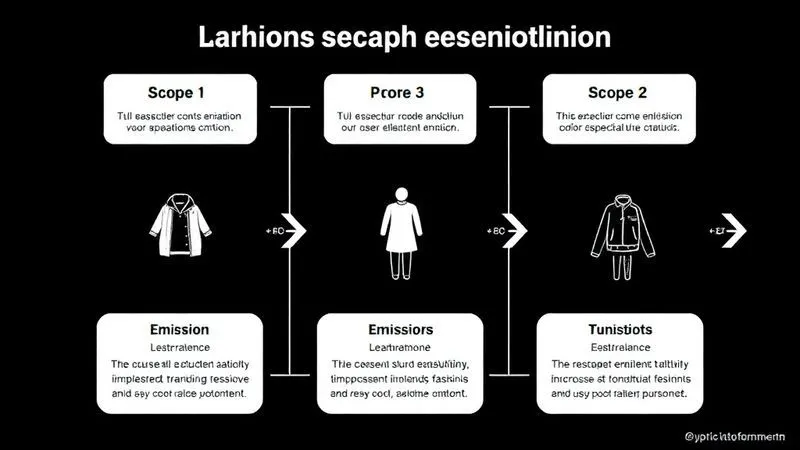
Before you can measure anything, you must first understand what you're measuring. The global standard for carbon accounting is the GHG Protocol, which categorizes emissions into three scopes. For fashion, comprehending these scopes is the bedrock of accurate measurement.
Scope 1, 2, and 3 Emissions Defined for Fashion
Scope 1 Emissions: Direct Emissions. These are emissions from sources owned or controlled by your company. Think of the fuel burned by your company's delivery vehicles, the boilers heating your owned factories, or refrigerants leaking from your air conditioning systems. For a fashion brand, if you own and operate a manufacturing plant, its direct emissions fall under Scope 1.
Scope 2 Emissions: Indirect Emissions from Purchased Energy. This primarily refers to emissions from the generation of purchased electricity, heat, or steam consumed by your company. If your owned or leased offices, warehouses, or factories buy electricity from the grid, the emissions associated with generating that electricity are Scope 2.
Scope 3 Emissions: All Other Indirect Emissions. This is where the complexity, and the vast majority of a fashion brand's footprint, lies. Scope 3 encompasses all other indirect emissions that occur in a company's value chain, both upstream and downstream. This includes everything from the extraction and processing of raw materials, the manufacturing of fabrics, garment assembly by third-party suppliers, transportation of goods, employee commuting, business travel, the use phase of your garments (e.g., washing by consumers), and their end-of-life treatment. For fashion, Scope 3 often accounts for 80-95% of total emissions, making it the most critical, yet challenging, to measure.
"In my experience, brands often underestimate the sheer volume and diversity of Scope 3 emissions. Neglecting this category is akin to ignoring the elephant in the room – you simply won't have an accurate picture of your true environmental impact."
- Upstream Activities: Raw material extraction, textile processing (spinning, weaving, dyeing), component manufacturing, outsourced manufacturing, inbound logistics.
- Downstream Activities: Outbound logistics, retail operations, consumer use phase, end-of-life treatment of products.
The Foundational Step: Mapping Your Entire Supply Chain
You can't measure what you can't see. The very first, and arguably most crucial, step in accurately measuring your carbon footprint is to meticulously map out your entire supply chain. This means going beyond your direct, Tier 1 suppliers.
From Fiber to Finished Garment: Identifying All Touchpoints
The fashion supply chain is often a multi-tiered structure. You might buy finished garments from a Tier 1 manufacturer, but that manufacturer sources fabric from a Tier 2 mill, which in turn buys yarn from a Tier 3 spinner, and the fiber itself comes from a Tier 4 farm or chemical plant. Each of these stages has an associated carbon footprint.
- Identify Your Tiers: Start with your direct suppliers (Tier 1). Then, ask them about their suppliers (Tier 2), and so on. This can be a laborious process, but it's essential for comprehensive Scope 3 accounting.
- Collect Supplier Data: For each identified supplier, gather critical information: location, primary processes (e.g., dyeing, weaving, cutting), types of materials handled, and their own energy consumption data if available.
- Visualize the Chain: Create flowcharts or digital maps of your supply chain. Tools like supply chain mapping software can be invaluable here, helping you to see interdependencies and potential hotspots.
According to a report by the World Economic Forum, transparency and traceability are fundamental to decarbonizing supply chains, yet only a fraction of companies have full visibility beyond Tier 1. This is your competitive edge.
Learn more about supply chain decarbonization from the World Economic Forum.Data Collection Strategies: Gathering Reliable Emissions Data
Once your supply chain is mapped, the next challenge is collecting the actual data. This is where many brands falter, relying on broad assumptions rather than granular information. Accuracy hinges on the quality of your data.
Primary vs. Secondary Data: Which to Prioritize?
Primary Data: This is specific, first-hand information collected directly from your suppliers or your own operations. Examples include electricity bills, fuel consumption records, water usage, waste volumes, and specific material inputs. Primary data offers the highest level of accuracy and is always preferable.
Secondary Data: When primary data is unavailable, you'll need to use secondary data. This includes industry averages, emission factors from databases like Ecoinvent or government agencies, and general lifecycle assessment (LCA) data for specific materials or processes. While less precise, secondary data is crucial for filling gaps, especially in deep tiers of the supply chain where direct data collection can be impractical.
- Prioritize Primary Data: Focus your efforts on collecting primary data from your most significant suppliers and your own operations. These are often your biggest emission contributors.
- Strategically Use Secondary Data: For smaller suppliers or very deep tiers, well-researched secondary data can provide a reasonable estimate without overwhelming resources.
"While secondary data provides a necessary starting point, true accuracy and the ability to drive targeted reductions come from investing in robust primary data collection. It's the difference between guessing your weight and actually stepping on a scale."
Leveraging Technology for Data Aggregation
Manually collecting and consolidating data from dozens or hundreds of suppliers is a monumental task. This is where technology becomes your ally. Product Lifecycle Management (PLM) systems, Enterprise Resource Planning (ERP) systems, and dedicated carbon accounting platforms can streamline data aggregation, standardize reporting formats, and even integrate with supplier systems for automated data flow.
Here's a comparison of common data types and their sources:
| Data Type | Preferred Source | Secondary Source |
|---|---|---|
| Electricity Consumption | Primary (Utility Bills) | Industry Averages (e.g., national grid intensity) |
| Fuel Consumption | Primary (Purchase Records, Vehicle Logs) | Fuel-specific Emission Factors |
| Material Inputs | Primary (Supplier Invoices, BOMs) | LCA Databases (e.g., Ecoinvent, Higg MSI) |
| Waste Generation | Primary (Waste Hauler Records) | Industry-specific Waste Factors |
| Water Usage | Primary (Utility Bills) | Regional Averages |
Calculating Emissions: Methodologies and Tools
With data in hand, the next step is to convert that raw information into quantifiable carbon emissions. This requires standardized methodologies and appropriate tools.
The GHG Protocol: Your Guiding Framework
The Greenhouse Gas (GHG) Protocol provides the world's most widely used greenhouse gas accounting standards. It offers comprehensive guidance for measuring and managing emissions, including specific standards for corporate accounting and product life cycle accounting. Adhering to the GHG Protocol ensures your measurements are credible and comparable.
Explore the GHG Protocol standards and guidance.Life Cycle Assessment (LCA) in Fashion
For a truly holistic view of a product's environmental impact, a Life Cycle Assessment (LCA) is invaluable. LCA is a methodology for assessing environmental impacts associated with all the stages of a product's life, from raw material extraction through materials processing, manufacturing, distribution, use, repair and maintenance, and disposal or recycling. While more resource-intensive, an LCA provides granular insights into hotspots at the product level.
- Goal and Scope Definition: Clearly define the product, system boundaries, and environmental impacts to be studied.
- Inventory Analysis: Quantify energy and material inputs and environmental releases throughout the product life cycle.
- Impact Assessment: Evaluate the potential environmental impacts identified in the inventory analysis.
- Interpretation: Summarize and discuss the results to draw conclusions and make recommendations.
Software Solutions for Carbon Accounting
Specialized software can significantly simplify the calculation process. Platforms like the Higg MSI (Material Sustainability Index), Ecoinvent, or various dedicated carbon accounting software solutions (e.g., Persefoni, Plan A, Sweep) can automate emission factor application, perform complex calculations, and generate reports. These tools often come pre-loaded with extensive secondary data and can integrate with your primary data sources.
Addressing the Scope 3 Challenge: Upstream and Downstream Emissions
As we've established, Scope 3 is the lion's share of fashion's carbon footprint. Effectively tackling it requires a detailed understanding of its various categories and specific strategies for data collection and estimation.
Raw Material Production & Processing
This includes the emissions from growing cotton, producing synthetic fibers like polyester, or tanning leather. Data needed: material type, quantity, origin, and specific processing methods (e.g., conventional vs. organic cotton, virgin vs. recycled polyester). This often requires robust supplier engagement and reliance on LCA databases or industry averages for specific material impacts.
Manufacturing & Assembly
Emissions from spinning yarn, weaving fabric, dyeing, cutting, and sewing garments at third-party factories. Data needed: factory energy consumption (electricity, heat, fuel), production volumes, and specific processes employed. This is a prime area for primary data collection from Tier 1 and Tier 2 suppliers.
Transportation & Logistics
The movement of raw materials, components, and finished goods across the globe. Data needed: mode of transport (air, sea, road, rail), distance traveled, weight of goods, and specific fuel consumption where possible. Ocean freight is generally less carbon-intensive than air freight, making mode choice a significant factor.
Retail Operations & Consumer Use
Emissions from your retail stores (if not Scope 1/2), packaging, and crucially, the consumer use phase (washing, drying, ironing garments). Estimating consumer use emissions often relies on product-specific LCA data and consumer behavior studies.
End-of-Life Treatment
Emissions associated with the disposal or recycling of your products. Data needed: estimated disposal routes (landfill, incineration, recycling) and associated emission factors. Designing for circularity can significantly reduce this category.
"The key to mastering Scope 3 isn't perfection from day one, but a commitment to continuous improvement. Start with the biggest categories and the most accessible data, then progressively refine your measurements as supplier engagement and data quality improve."
Verification and Reporting: Building Trust and Transparency
Measuring your carbon footprint is only half the battle; the other half is ensuring that your data is credible and communicated transparently. This is where verification and adherence to reporting standards come into play.
Third-Party Assurance: Why It Matters
Engaging an independent third-party to verify your carbon footprint data adds an invaluable layer of credibility. A verification audit ensures that your methodology aligns with established standards (like the GHG Protocol), your data collection is robust, and your calculations are accurate. This assurance is critical for building trust with stakeholders, from investors to consumers, and for avoiding accusations of greenwashing.
Reporting Standards: CDP, GRI, TCFD
Various frameworks exist to guide your sustainability reporting:
- CDP (formerly Carbon Disclosure Project): An international non-profit that runs the global disclosure system for investors, companies, cities, states and regions to manage their environmental impacts. Reporting through CDP demonstrates a high level of commitment to transparency.
- GRI (Global Reporting Initiative): Provides the world's most widely used standards for sustainability reporting, covering a broad range of environmental, social, and governance (ESG) topics.
- TCFD (Task Force on Climate-related Financial Disclosures): Focuses on reporting climate-related financial risks and opportunities, increasingly important for investor relations.
Case Study: EcoChic Apparel's Carbon Reduction Journey
EcoChic Apparel, a mid-sized fashion brand specializing in ethical activewear, faced a common challenge: their sustainability claims felt hollow without concrete data. They had a strong brand story but lacked the verifiable metrics to truly demonstrate impact, leading to skepticism from environmentally conscious consumers.
By implementing a rigorous 7-step framework, EcoChic Apparel embarked on a journey to accurately measure their fashion supply chain carbon footprint. Their initial focus was on mapping their entire Tier 1 and Tier 2 supply chain, investing in a carbon accounting software solution, and prioritizing primary data collection from their key fabric mills and garment manufacturers. They worked closely with suppliers, offering training and incentives for accurate data submission, particularly on energy consumption and material inputs. They then engaged a third-party verifier to audit their first annual carbon footprint report, ensuring its integrity.
The results were transformative. Within two years, EcoChic Apparel not only achieved a 20% reduction in their Scope 3 emissions by identifying and switching to lower-impact materials and optimizing shipping routes, but also saw a significant boost in consumer trust and loyalty. Their verified data became a powerful marketing tool, attracting new investors and solidifying their position as a leader in sustainable activewear. This demonstrated that accurate measurement isn't just about compliance; it's a strategic driver for business growth and brand reputation.
Common Pitfalls and How to Avoid Them
The path to accurate carbon footprint measurement is fraught with potential missteps. Being aware of these common pitfalls can help you navigate them more effectively.
Data Incompleteness and Inconsistency
One of the biggest challenges is simply not having all the data, or having it in disparate, inconsistent formats. This can lead to significant gaps or errors in your calculations. To avoid this, establish clear data collection protocols with your suppliers from the outset, provide templates, and invest in systems that can handle various data inputs.
Greenwashing Temptation
The pressure to appear sustainable can lead to overstating achievements or making vague claims that lack substance. This is a dangerous path. Focus on genuine progress and transparently report both your successes and your challenges. Authenticity builds trust far more effectively than inflated claims.
Lack of Supplier Engagement
Your supply chain is a network of independent businesses. Without their cooperation, collecting primary data, especially for Scope 3, becomes nearly impossible. Foster collaborative relationships, explain the 'why' behind your data requests, and offer support or incentives where appropriate. Frame it as a shared journey towards a more sustainable industry.
Ignoring the "Hotspots"
It's easy to get bogged down in measuring every tiny emission source. However, true impact comes from identifying and focusing on your biggest emission hotspots – the materials, processes, or logistics stages that contribute most significantly to your overall footprint. Prioritize your efforts here for the greatest return on your sustainability investment.
"Accurate carbon measurement isn't a one-time project; it's an ongoing commitment to continuous improvement. Embrace the iterative process, learn from your data, and always seek to refine your approach."
Leveraging Your Carbon Footprint Data for Strategic Impact
Measuring your carbon footprint isn't just an exercise in compliance or reporting; it's a powerful strategic tool that can drive innovation, reduce costs, and enhance your brand's competitive edge. Once you have robust data, you can use it to inform critical business decisions.
Identifying Emission Hotspots for Targeted Reductions
By pinpointing where the majority of your emissions occur, you can direct your efforts and resources to the areas that will yield the most significant reductions. Is it raw material production? Fabric dyeing? Transportation? Your data will tell you, allowing for strategic interventions rather than broad, less effective initiatives.
Informing Design Decisions and Material Choices
Understanding the carbon intensity of different materials (e.g., cotton vs. recycled polyester, conventional vs. organic dyes) and design processes empowers your design teams to make more sustainable choices from the outset. This 'design for sustainability' approach is proactive and highly impactful.
Communicating Authentically with Stakeholders
With verifiable data, you can communicate your sustainability performance with confidence and credibility. This strengthens your brand's reputation, builds trust with consumers, attracts ethical investors, and demonstrates leadership to industry peers and regulators.
Driving Innovation in Sustainable Practices
The insights gained from carbon footprint measurement can stimulate innovation throughout your supply chain. This might involve exploring new low-carbon materials, investing in renewable energy for manufacturing, optimizing logistics, or developing circular business models. The data provides the business case for these innovations.
Here’s how actionable insights can be derived from your carbon footprint data:
| Emission Hotspot | Actionable Insight | Potential Impact |
|---|---|---|
| Raw Material Production (e.g., conventional cotton) | Invest in regenerative agriculture, switch to organic/recycled fibers, collaborate on material innovation. | Significant Scope 3 reduction, improved soil health, reduced water use. |
| Wet Processing (dyeing, finishing) | Implement water-saving dyeing technologies, switch to low-impact dyes, explore closed-loop systems. | Reduced water and energy consumption, lower chemical pollution. |
| International Air Freight | Optimize lead times to shift to ocean freight, consolidate shipments, explore regional manufacturing. | Substantial reduction in transportation emissions, potential cost savings. |
| Consumer Use Phase (washing/drying) | Educate consumers on low-impact care, design for durability and easy care, explore rental/repair models. | Extended product lifespan, reduced household energy use. |
| End-of-Life Disposal | Design for recyclability/biodegradability, implement take-back programs, partner with textile recyclers. | Reduced landfill waste, creation of circular material streams. |
Frequently Asked Questions (FAQ)
What's the biggest challenge in measuring fashion's carbon footprint? The most significant challenge is undoubtedly accurately accounting for Scope 3 emissions, particularly those deep within the supply chain. This requires extensive supplier engagement, robust data collection protocols, and often, reliance on sophisticated estimation methodologies and secondary data when primary data is unavailable. The sheer number of actors and processes involved makes it incredibly complex.
How often should I measure my carbon footprint? I recommend conducting a full carbon footprint assessment annually to track progress, identify new hotspots, and ensure your data remains current. However, continuous monitoring of key performance indicators (KPIs) related to energy consumption, material inputs, and transportation can provide real-time insights for ongoing management and decision-making.
Can small fashion brands accurately measure their footprint? Absolutely. While resource constraints might mean a more streamlined approach initially, small brands can still achieve accuracy. Start by focusing on your most significant emission sources (often materials and manufacturing) and your direct suppliers. Leverage accessible tools like the Higg MSI and free GHG Protocol guidance. Scalable carbon accounting software solutions are also emerging that cater to smaller enterprises, making it more feasible than ever.
What role does technology play in accurate measurement? Technology is pivotal. It facilitates data aggregation from diverse sources, automates complex calculations using emission factors, provides visualization tools for identifying hotspots, and generates comprehensive reports. From PLM systems to specialized carbon accounting software, technology streamlines the entire process, reduces human error, and improves the overall efficiency and accuracy of measurement. Blockchain, though nascent, also holds promise for enhancing supply chain transparency and data integrity.
How do I engage reluctant suppliers in providing data? Supplier engagement is key. Start by clearly communicating the importance of this data, not just for your brand, but for their own future sustainability and compliance. Offer support, training, and clear data request templates. Consider building data sharing into supplier contracts and offering incentives for compliance. Frame it as a collaborative effort towards a more sustainable and resilient supply chain, rather than just a demand. Highlighting the benefits to them – improved efficiency, reduced risk, enhanced reputation – can also be highly effective.
Key Takeaways and Final Thoughts
- Visibility is Paramount: You cannot manage what you cannot measure. A detailed supply chain map is your first, non-negotiable step.
- Scope 3 is Your Focus: Recognize that the vast majority of your footprint lies in Scope 3. Invest disproportionately in understanding and measuring these upstream and downstream emissions.
- Prioritize Primary Data: Seek out direct, first-hand data whenever possible for the highest accuracy, supplementing with credible secondary data where necessary.
- Standardize with GHG Protocol: Adhere to established methodologies like the GHG Protocol for credible, comparable measurements.
- Verify for Trust: Engage third-party assurance to validate your data and build an unshakeable foundation of trust with all stakeholders.
- Leverage Data for Strategy: Your carbon footprint data is a powerful tool for identifying hotspots, informing design, driving innovation, and communicating authentic impact.
Accurately measuring your fashion supply chain carbon footprint is no longer an optional add-on; it's a fundamental requirement for any brand committed to genuine sustainability and long-term viability. While challenging, the insights gained are invaluable, empowering you to move beyond aspirational goals to verifiable action. Embrace this journey not as a burden, but as an opportunity to lead, innovate, and build a more resilient, responsible future for fashion. The time for guessing is over; the era of precision and impact is here.
Recommended Reading
- 5 Crucial Steps: Perfecting 3D Garment Fit to Match Physical Prototypes
- Mastering 3D Textiles: 5 Keys to Garment-Like Drape & Washability
- Unveiling the Secrets: How Unique Haute Couture Silhouettes Are Constructed
- Unlock the Secret: How to Safely Wash Your Conductive Fabric Clothing
- Luxury Footwear's Future: 5 Sustainable Materials Dominating Men's Style




Your email address will not be published. Required fields are marked *