

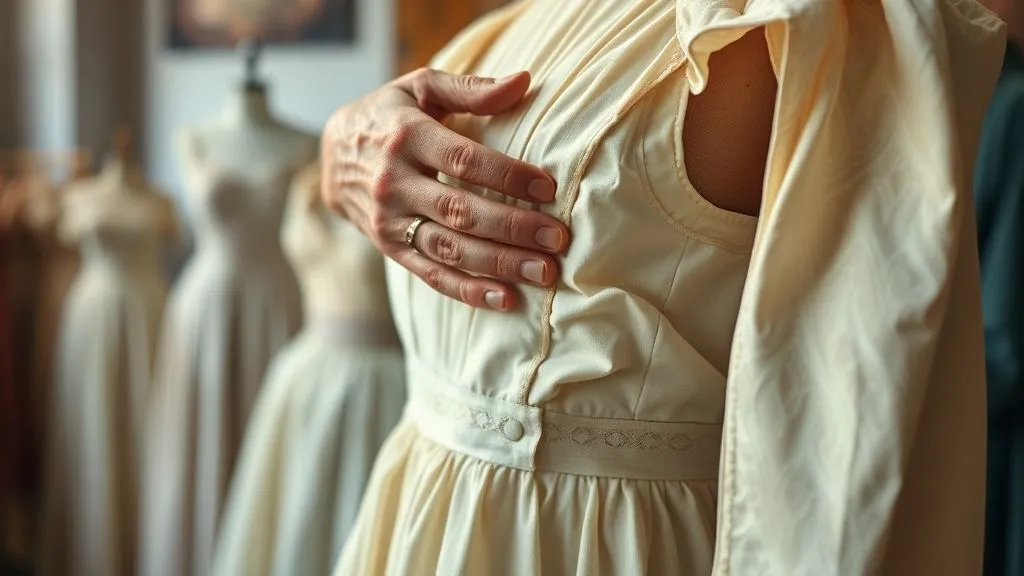
How to Accurately Identify an Unlabelled Vintage Garment's Precise Era?
For over two decades immersed in the captivating world of vintage fashion, I've had the privilege of unearthing countless sartorial treasures. But among the most thrilling challenges – and indeed, the most common puzzle I encounter – is the enigmatic unlabelled garment. It’s a moment that separates the casual admirer from the dedicated historian, a true test of observation and knowledge, demanding a keen eye and an understanding of fashion's intricate timeline.
There's a unique frustration that comes with holding a beautiful, obviously old piece of clothing, only to find no designer tag, no size label, no hint of its origins. Was it a homemade masterpiece? A boutique creation from a bygone era? Without a clear marker, its story remains untold, its value often underestimated, and its place in fashion history obscured. Many enthusiasts feel lost, fearing misidentification or overlooking crucial details, potentially missing out on a truly rare find.
This comprehensive guide is designed to empower you with the precise tools and expert insights needed to become a true vintage detective. We'll delve into a systematic approach, examining everything from fabric composition to seam construction, hardware, and silhouette, providing actionable frameworks, visual cues, and real-world examples to accurately identify an unlabelled vintage garment's precise era. By the end, you’ll possess the confidence and knowledge to unlock the hidden narratives within these timeless pieces, transforming every unlabelled find into an exciting historical inquiry.
1. The Language of Fabric: Textiles Through the Ages
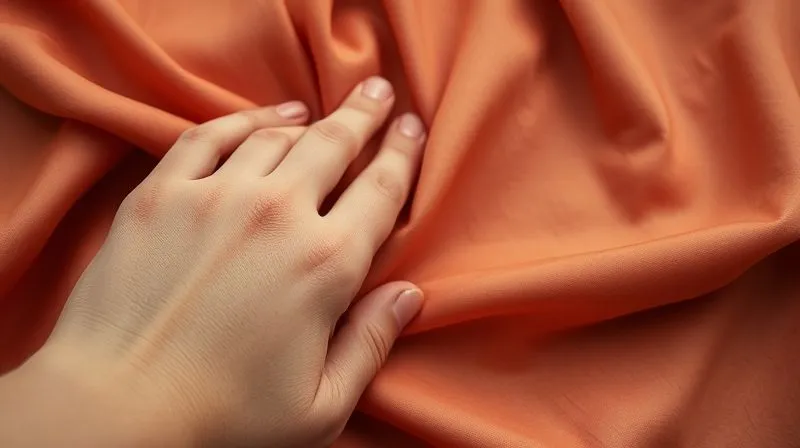
The very material of a garment can tell you volumes about its age. Fabric technology has evolved dramatically, and understanding these shifts is fundamental to dating an unlabelled piece. I've often found that the texture and drape of a fabric are immediate giveaways, even before a closer inspection.
Identifying Fiber Content and Weave
Before the mid-20th century, natural fibers like cotton, linen, wool, and silk dominated. Their look and feel are distinct. For instance, early silks might feel heavier and less refined than modern counterparts, while hand-spun wools have a unique unevenness.
- Natural Fibers: Cotton, linen, wool, and silk were staples for centuries. Their presence often indicates an earlier origin, though they've never truly gone out of style.
- Rayon: One of the earliest synthetics, introduced commercially in the 1920s. It often mimics silk or wool and was popular for dresses and lingerie.
- Nylon: Developed in the late 1930s, gaining widespread use post-WWII, especially for hosiery, lingerie, and later, durable outerwear.
- Polyester: Became a household name in the 1950s and exploded in popularity in the 60s and 70s due to its wrinkle resistance and durability. Its distinct 'plastic' feel is often recognizable.
- Acrylic: Mimicking wool, acrylic gained traction from the 1950s onwards.
- Spandex/Lycra: Introduced in the late 1950s, widespread use in the 1960s and beyond for stretch and comfort. Its presence immediately places a garment in the post-50s era.
Beyond fiber, examine the weave. Early 20th-century garments might feature fine crepe, gabardine, or intricate jacquards. The 1960s saw a rise in double-knit polyesters, while the 70s embraced synthetic blends with distinctive textures. A great resource for diving deeper into textile history is the Victoria and Albert Museum's textile collections.
In my experience, the 'hand' or feel of a fabric is an invaluable first clue. A truly vintage natural fiber will often have a different weight, drape, and even a subtle scent that modern fabrics lack, reflecting older processing techniques.
2. Stitches & Seams: Deciphering Construction Clues
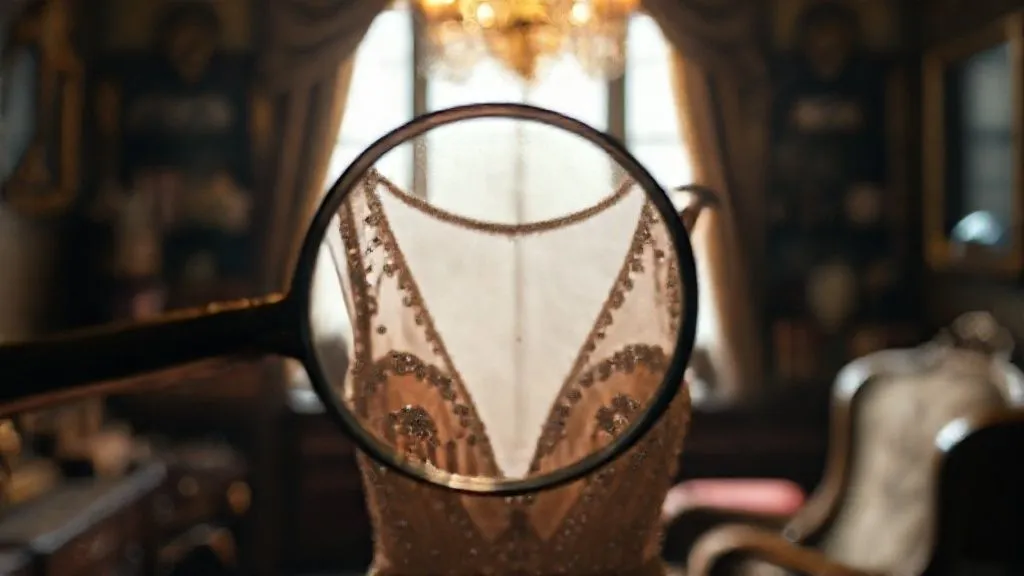
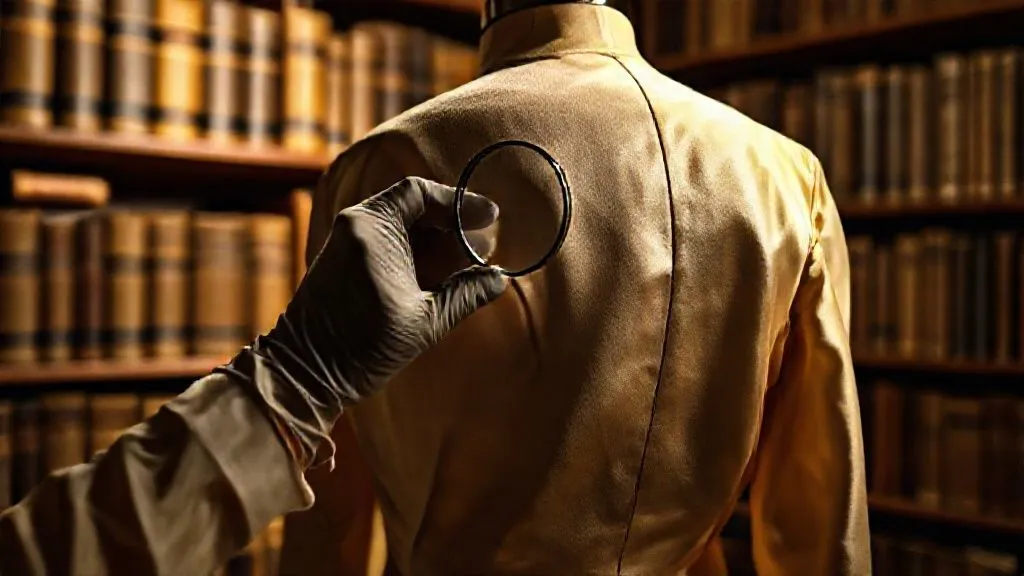
The way a garment is put together – its construction – offers a wealth of temporal data. Fashion manufacturing underwent significant industrialization, and the evolution of sewing techniques leaves distinct markers. I've often found myself peering inside a garment, using a magnifying glass, to truly understand its construction story.
Hand-Stitched vs. Machine-Stitched Finishes
Prior to the widespread availability of home sewing machines and industrial advancements, many garments featured extensive hand-stitching. While couture pieces always retained hand-finishing, everyday wear transitioned to machine production. Look for:
- Seam Finishes: Early machine-stitched seams often have raw edges or simple turned-under and stitched edges. Pinked seams (cut with zigzag shears) were common from the 1930s to the 1950s. Overlocked or serged seams, which prevent fraying with multiple threads, became prevalent from the 1960s onwards. Bound seams (where raw edges are encased in fabric strips) were a sign of quality in many eras.
- Darts and Shaping: The placement and number of darts can indicate a period. For example, the 1940s and 50s often featured intricate darting to create an hourglass silhouette.
- Lining Attachment: How a lining is sewn in, whether by hand or machine, and how it's finished at the hem and armholes, can be a clue.
- Buttonholes: Hand-stitched buttonholes are a sign of pre-1940s or high-end couture. Machine-made buttonholes became standard after that.
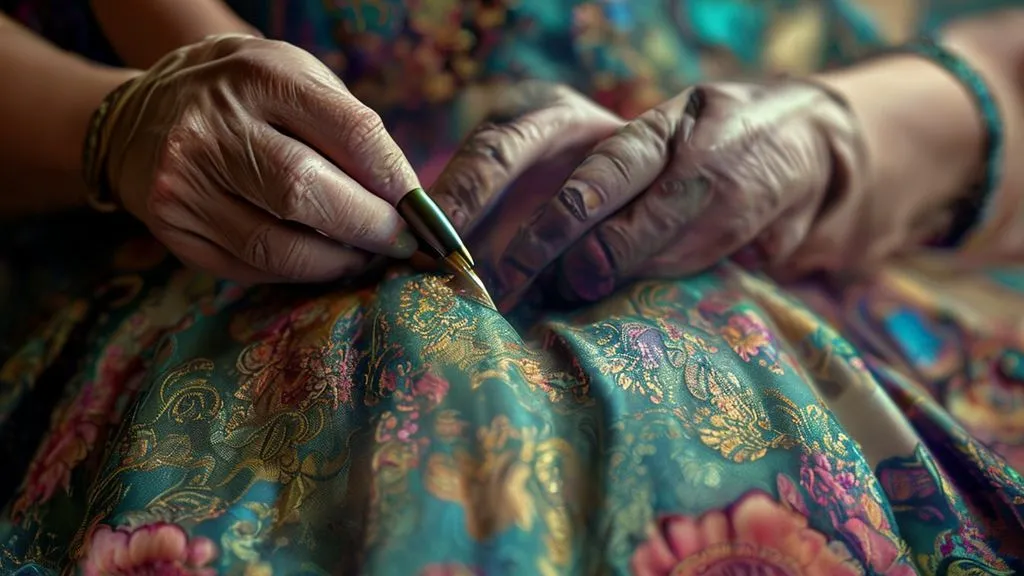
Examine the consistency of the stitches. Uniform, tight stitches often point to machine work, while slight irregularities suggest hand-sewing. The thread itself can also be a clue; older threads might be cotton or silk, while polyester threads are a later development. Understanding the history of sewing techniques is crucial here, and resources like the Metropolitan Museum of Art's costume institute archives often detail construction methods.
Case Study: The Mystery of the '40s Dress
A client once brought me a stunning floral dress, unlabelled, with a silhouette that hinted at the 1940s. However, the fabric felt too smooth, too modern. A close inspection revealed machine-made buttonholes and a serged seam finish, which were inconsistent with a true 1940s piece. But then, I noticed the zipper: a heavy metal 'Talon' brand, with an unusual square pull, often found in late 30s to early 50s garments. The mystery deepened. It was only when I examined the inner construction of the shoulder pads – lightweight foam, not the typical batting or buckram of the 40s – that the truth emerged. It was a meticulously crafted 1980s reproduction, designed to evoke the 40s, but with modern construction methods hidden beneath a vintage-style zipper. This highlights how crucial it is to consider *all* clues, not just one.
| Era | Seam Finish | Buttonholes |
|---|---|---|
| Pre-1930s | Raw, hand-basted, simple turned & stitched | Hand-stitched (often couture) |
| 1930s-1950s | Pinked, turned & stitched, some bound seams | Machine-made becoming common, hand-stitched in quality pieces |
| 1960s-1970s | Overlocked/Serged (increasingly), turned & stitched | Machine-made (standard) |
| 1980s+ | Predominantly overlocked/serged | Machine-made (standard) |
3. Silhouettes & Hemlines: The Changing Shape of Fashion
Fashion is a mirror of society, and nowhere is this more evident than in the changing silhouette. Each decade has its distinct shape, dictated by social norms, economic conditions, and cultural movements. I always advise beginners to study a visual timeline of fashion; it's the fastest way to recognize a decade at a glance.
Iconic Shapes and Proportions by Decade
- 1910s: S-bend corset gives way to a more natural, columnar shape. High waists and draping.
- 1920s: The 'Flapper' era. Dropped waists, straight, loose, boyish silhouettes, often with intricate beading and shorter hemlines (around the knee by mid-decade).
- 1930s: Return to a more feminine, elongated silhouette. Bias cut dresses, defined waists, broader shoulders, and hemlines dropping to mid-calf or ankle.
- 1940s: Wartime austerity influenced fashion. Broad, padded shoulders, narrow waists, A-line skirts, often knee-length. Utilitarian and practical.
- 1950s: The 'New Look' emerges. Defined waists, full skirts (circle or A-line), or sleek pencil skirts. Hourglass figure emphasized.
- 1960s: Youthquake! Shift dresses, A-line shapes, mini skirts (hemline rising dramatically), mod styles, and geometric patterns.
- 1970s: Diverse silhouettes: bell bottoms, maxi dresses, leisure suits, wrap dresses. More relaxed and flowing shapes.
- 1980s: Power dressing. Exaggerated shoulder pads, oversized blazers, tight skirts, and vibrant colors.
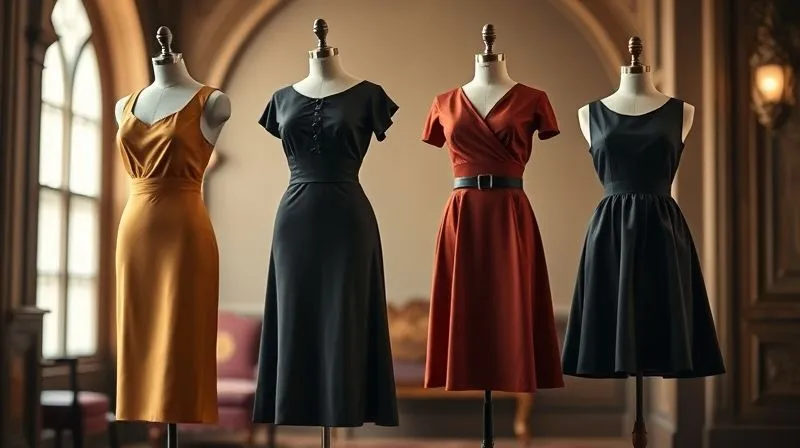
Hemlines are particularly telling. While variations exist within any given year, the general trend of skirt length provides a strong indicator. For example, true mini skirts are unequivocally 1960s or later. The gradual rise and fall of hemlines throughout the 20th century are well-documented and provide a reliable dating tool.
The silhouette isn't just about the body; it's about the era's attitude. A tight, constricting garment speaks to one period, while a loose, flowing one speaks to another. Pay attention to how the garment makes you feel it would have been worn.
4. Hardware & Fastenings: Zippers, Buttons, and Beyond
The small details often hold the biggest clues. Zippers, buttons, snaps, and buckles all have their own evolutionary timelines. These elements, often overlooked, can be incredibly precise dating tools for an unlabelled vintage garment.
Dating by Zippers: Metal, Plastic, and Brands
Zippers are perhaps one of the most reliable dating indicators. Their invention and popularization followed a clear path:
- Early Zippers (Pre-1930s): Rare. If present, they are typically heavy, exposed metal, often with large, distinctive pull tabs, primarily used in boots or bags, not common in clothing.
- 1930s-1940s: Zippers began appearing more frequently in clothing. They were almost exclusively metal, often brands like Talon (the dominant player), Crown, or Eclair. Look for the brand name stamped on the pull tab or the slider. These zippers were often inserted with a visible tape or teeth.
- 1950s: Metal zippers remained standard, but the 'invisible' zipper concept started to emerge, though not widely adopted.
- 1960s: The introduction of plastic zippers revolutionized the industry. Their lighter weight and ability to be dyed any color made them incredibly popular. If a garment has a plastic zipper, it's highly unlikely to be pre-1960s.
- 1970s onwards: Plastic zippers became ubiquitous, with metal zippers reserved for specific aesthetic or heavy-duty purposes (e.g., denim).
Always inspect the zipper's material, its brand (if any), and its method of insertion. A visible metal zipper in a dress could be 30s-50s, while a hidden plastic zipper points to the 60s or later. For a deep dive into zipper history, the Smithsonian Magazine offers an excellent overview.
Buttons, Snaps, and Buckles
- Buttons: Material, style, and method of attachment are key.
- Bakelite (1920s-1950s): A distinctive plastic, often found in vibrant colors or marbled patterns. It has a specific weight and feel, and when rubbed, it can emit a faint chemical smell.
- Celluloid (Late 19th C - 1940s): Another early plastic, often mimicking horn or ivory. It can be brittle and discolors over time.
- Rhinestone/Glass Buttons (Various Eras): Popular in the 1930s-50s for glamour, and again in the 80s for sparkle. Context is key here.
- Plastic (Post-1940s): Modern plastic buttons are generally lighter and less substantial than older Bakelite or Celluloid.
- Metal Buttons: Can be very old. Look for specific designs, crests, or backings.
- Snaps: Early snaps were often metal, sometimes quite large, and might be branded (e.g., 'DOT'). Plastic snaps are a later development.
- Buckles: Material (Bakelite, metal, plastic) and design can offer clues. Art Deco buckles (1920s-30s) are very distinct from 1970s chunky plastic ones.
5. Embellishments & Details: Ornaments of an Era
The decorative elements applied to a garment are like fingerprints of fashion history. From the type of lace to the style of embroidery, these details are highly sensitive to trends and can help you accurately identify an unlabelled vintage garment's precise era.
Lace, Embroidery, and Appliqué Styles
- Lace: The type of lace used can be very telling.
- Early 20th Century: Fine Irish crochet, delicate machine-made Valenciennes or Chantilly lace.
- 1920s-1930s: Simpler, often geometric lace patterns, or elaborate cutwork.
- 1940s-1950s: More utilitarian machine lace, often used as trim, or delicate nylon lace in lingerie.
- 1960s-1970s: Guipure lace, often heavier and more textural, and synthetic laces in bold patterns.
- Embroidery: The style, thread type, and motifs of embroidery evolve.
- Pre-1950s: Often hand-embroidered, or intricate machine embroidery with natural threads. Motifs might be floral, art nouveau, or art deco inspired.
- 1960s-1970s: Brighter colors, bolder stitches, often synthetic threads, sometimes psychedelic or folk-inspired motifs.
- Beadwork & Sequins:
- 1920s: Extensive, intricate glass beadwork (often bugle beads) on flapper dresses.
- 1930s-1950s: More subtle beading, often on evening wear, sometimes using faceted glass or plastic beads.
- 1960s-1980s: Plastic sequins become dominant, often larger and more reflective, used for disco wear or statement pieces.
- Trims: Rickrack, fringe, ribbons, and braids all have periods of peak popularity. Rickrack, for example, saw a resurgence in the 1970s.
The craftsmanship of embellishments speaks volumes. Are the beads sewn on securely? Is the lace delicate or robust? High-quality, hand-applied details often signify an earlier, more labor-intensive production era.
6. Print, Pattern & Color Palettes: A Visual Timeline
Colors and patterns are perhaps the most visually immediate indicators of an era. Just as hemlines rise and fall, so too do favored hues and motifs. I’ve found that even a quick glance at a print can often narrow down a decade or two, sometimes even a specific year.
Popular Motifs and Color Trends
- Pre-1920s: Muted natural dyes, intricate florals, Art Nouveau curves.
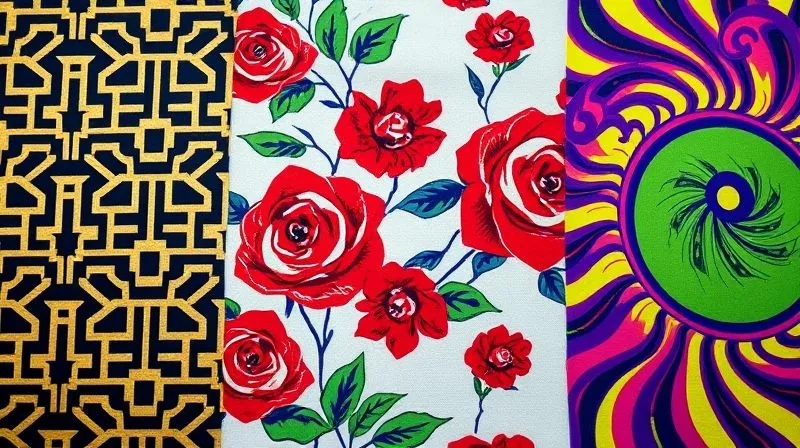
- 1920s: Geometric Art Deco patterns, often in contrasting colors like black and white, or rich jewel tones. Orientalist motifs.
- 1930s: Smaller, daintier floral prints, often on dark backgrounds. Polka dots, subtle stripes. Muted, sophisticated color palettes.
- 1940s: Patriotic colors (red, white, blue), simple florals, often on rayon. Novelty prints depicting everyday life, wartime themes.
- 1950s: Bold, vibrant colors. Abstract prints, large florals (often roses), novelty prints (poodles, cars, cocktails). Gingham and polka dots.
- 1960s: Psychedelic prints, Op Art, Pop Art graphics, large florals, bold stripes, color blocking. Bright, saturated colors (neons, pastels).
- 1970s: Earth tones, avocado green, burnt orange, mustard yellow, browns. Paisleys, large geometric prints, folk-inspired patterns, disco glitter.
- 1980s: Neon colors, animal prints, abstract squiggles, bold stripes, color-blocked patterns.
Consider the scale and density of the print, as well as the color combinations. A print that feels 'too modern' in its color saturation or graphic quality might indicate a later era, even if the motif seems classic. The way colors are combined, for instance, the specific clash of a 1960s psychedelic print, is often unmistakable.
7. The Inner Workings: Linings, Interlinings, and Pads
What's on the inside of a garment can be just as revealing as what's on the outside. The materials and construction of linings, interlinings, and padding have evolved significantly, offering crucial clues to an unlabelled garment's age. I've often found that the quality and type of lining are excellent indicators of both era and original garment value.
Materials and Construction of Garment Interiors
- Lining Fabrics:
- Silk (Pre-1930s & High-End): Used for luxury garments, often heavier and more opaque than modern silks.
- Rayon/Acetate (1920s-1950s): As synthetics emerged, these became popular, mimicking silk but more affordable. Rayon linings can often feel quite soft and drape well. Acetate can be stiffer.
- Bemberg/Cupro (Mid-20th C onwards): A type of rayon, known for its silky feel and breathability.
- Nylon/Polyester (1960s onwards): Lightweight, durable, and often less breathable. Their distinct 'slippery' feel is easily recognizable.
- Interlinings/Interfacing: These hidden layers provide structure and shape.
- Early 20th C: Often natural materials like buckram, horsehair canvas, or heavy cotton for stiffness.
- Mid-20th C: Fusible interfacings (iron-on) became more common from the 1960s, a strong indicator of a later piece. Prior to this, interfacings were sewn in.
- Shoulder Pads: These are particularly era-specific.
- Pre-1930s: Generally minimal or non-existent, unless for specific structured military wear.
- 1930s-1940s: Modest to pronounced, often made of batting or buckram, sewn into the shoulder seam. They created a broad, squared-off silhouette.
- 1950s: Generally smaller or absent, aligning with the more rounded shoulder of the 'New Look'.
- 1980s: Exaggerated, large, and often made of foam, defining the 'power dressing' look.
Also, observe how the lining is attached. Is it hand-stitched into place, or is it machine-sewn with a more contemporary finish? A fully bagged lining (where the lining is sewn to the outer fabric and then turned right side out, concealing all raw edges) is a more modern construction technique than a simple slip lining. These internal details are often less prone to alteration than external features, making them highly reliable.
| Lining Material | Common Era |
|---|---|
| Silk (heavy) | Pre-1930s, High-End |
| Rayon/Acetate | 1920s-1950s |
| Bemberg/Cupro | Mid-20th C onwards |
| Nylon/Polyester | 1960s onwards |
8. Contextual Clues: Beyond the Garment Itself
While the physical attributes of a garment are paramount, sometimes the most definitive answers come from external research. Becoming a true vintage sleuth means knowing how to cross-reference your findings with broader historical and cultural contexts. This is where you connect the garment to its world.
Fashion Photography, Advertisements, and Cultural Influences
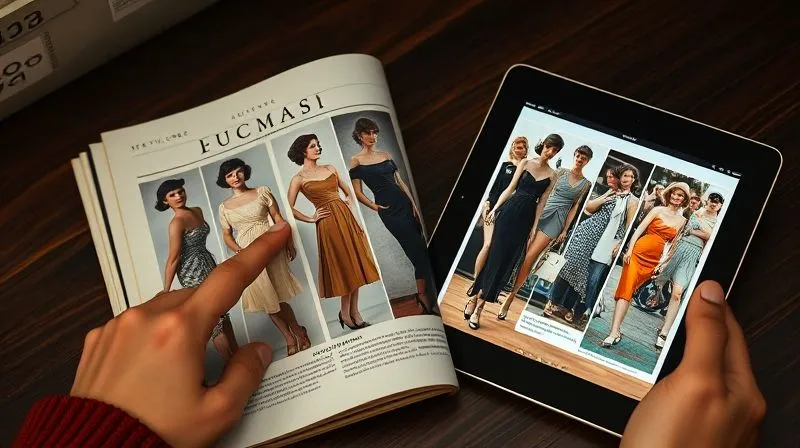
- Historical Fashion Photography: Immerse yourself in images from different decades. Look at fashion magazines (e.g., Vogue, Harper's Bazaar), Sears catalogs, and historical photographs. Can you find a similar silhouette, fabric, or detail in a dated image? Digital archives of fashion magazines are invaluable here.
- Vintage Advertisements: Old ads for clothing, textiles, or sewing patterns often feature distinct styles and technologies. A dress in a 1940s ad will have a very specific look, complete with era-appropriate hair and accessories.
- Cultural Movements and Events: Fashion is inherently linked to social change.
- Wartime (WWI, WWII): Influenced fabric rationing, utilitarian styles, and specific silhouettes.
- Youth Culture (1960s): The rise of the mini skirt, mod styles, and vibrant colors directly reflected a rebellious youth movement.
- Disco Era (1970s): Sparkle, synthetic fabrics, and specific silhouettes like wide-leg pants were tied to the disco scene.
- Museum Collections & Databases: Many major museums (like the Metropolitan Museum of Art's Costume Institute or the FIDM Museum) have extensive online collections of dated garments. Comparing your unlabelled piece to their documented items can provide strong evidence.
- Cross-Referencing: If you've identified a specific zipper brand, research its operating years. If a fabric feels like early rayon, search for typical rayon dresses from the 1920s-30s. The more clues you can corroborate, the more confident your identification will be.
Remember, no single clue is infallible. A dress might have a 1940s silhouette but be made from a 1970s polyester. It's the convergence of multiple, consistent clues that allows you to accurately identify an unlabelled vintage garment's precise era. This holistic approach is what separates a good guess from an expert identification.
Frequently Asked Questions (FAQ)
Can a garment have features from multiple eras? How do I handle that? Yes, absolutely. This is common, especially with homemade items, altered pieces, or styles that had revivals. When faced with conflicting clues, prioritize the most technologically specific ones (like zipper type or fabric composition) first. Then, consider whether the garment has been altered or mended. Sometimes, a piece is a 'transitional' style, bridging two decades. In such cases, a broader 'late 1940s/early 1950s' identification is more accurate than trying to force it into a single year. Look for the dominant characteristics, and be honest about any ambiguities.
How reliable are zippers for dating? Are they always a definitive clue? Zippers are among the most reliable indicators because their technology evolved rapidly and distinctively. The material (metal vs. plastic) and brand names are strong clues. However, they are not 100% foolproof. A zipper could have been replaced during a repair or alteration. Always cross-reference zipper clues with at least two other strong indicators (e.g., fabric, silhouette, seam finish). If a garment has a plastic zipper but a clearly pre-1960s silhouette and construction, suspect a replacement.
What if a garment is clearly homemade? Does that make dating harder? Homemade garments can be both challenging and fascinating. They often reflect popular patterns of the era, but might use fabrics or construction techniques that were available to the home sewer, which could sometimes lag behind couture or ready-to-wear trends. Focus on the core elements: the silhouette will likely follow a popular pattern, the fabric will be contemporary to its making, and hardware will be indicative. Seam finishes might be simpler or more varied than factory-made items. The presence of a hand-stitched hem or buttonholes might be a personal choice rather than an era indicator in a homemade piece.
Where can I find reliable resources for further research and visual comparisons? Beyond the links I've provided, I highly recommend exploring digital archives of fashion magazines (like Vogue Archive, though often subscription-based), museum collections (e.g., The Costume Institute at the Met, V&A, FIDM Museum), and university textile/costume collections. Online vintage clothing forums and reputable vintage dealer websites can also offer community wisdom and visual examples. For comprehensive research, sites like Collectors Weekly's fashion section often provide excellent overviews.
Are there any 'red flags' I should look for that might indicate a reproduction piece rather than a genuine vintage item? Absolutely. Some common red flags include: overly perfect condition for its age (especially if the fabric shows no wear), modern synthetic fabrics in a pre-1960s silhouette, serged seams on a garment that should predate the 1960s, highly stylized or 'costumey' interpretations of an era's fashion, and often, a lack of the subtle imperfections or 'patina' that genuine age brings. Sometimes, even the smell of a garment can be a clue; older pieces often have a distinct, slightly musty scent that reproductions lack. Always trust your gut, and if something feels 'off,' investigate further.
Key Takeaways and Final Thoughts
- Holistic Approach: Never rely on a single clue. True identification comes from corroborating multiple indicators across fabric, construction, silhouette, and hardware.
- Embrace the Details: The smallest elements – a zipper pull, a button material, a seam finish – often hold the most precise dating information.
- Continuous Learning: Fashion history is vast. The more you immerse yourself in visual and textual resources from different eras, the sharper your eye will become.
- Practice Makes Perfect: Like any skill, identifying vintage garments improves with practice. Examine everything you can, even modern clothes, to understand construction.
- Value the Unlabelled: These pieces are often the most intriguing, offering a direct connection to fashion history without the distraction of a brand name.
The journey of learning how to accurately identify an unlabelled vintage garment's precise era is a deeply rewarding one. It transforms you from a casual observer into a knowledgeable curator, allowing you to appreciate the craftsmanship, the history, and the stories embedded within each stitch and seam. Don't be intimidated by the absence of a label; instead, see it as an invitation to embark on an exciting historical investigation. With the tools and insights shared here, you are now equipped to confidently uncover the hidden chronology of these timeless treasures, enriching both your collection and your understanding of fashion's enduring legacy. Happy hunting, and may your vintage discoveries be ever insightful!
Recommended Reading
- Mastering Minimalist Fashion Photography: 7 Steps to a Distinctive Aesthetic
- 7 Key Challenges Appraising 1920s Designer Clothing & How to Overcome Them
- Mastering Menswear: 7 Ways to Blend Classic Style & Modern Trends
- Elevate Your Look: 7 Ways to Style Smartwatches with Luxury Outfits
- 5 Ethical Pillars: Reinterpreting Iconic Designer Legacies Responsibly

Your email address will not be published. Required fields are marked *