

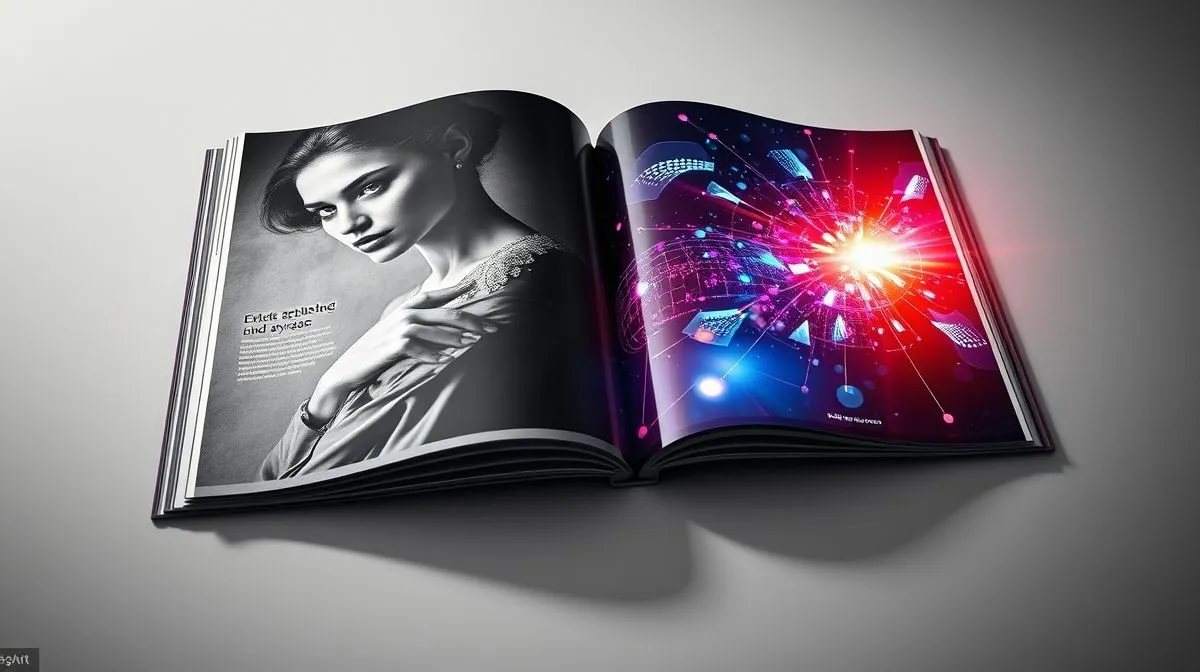
How should high fashion magazines balance print heritage with digital growth?
In my fifteen years observing the luxury fashion publishing landscape, the question of balancing print heritage with digital growth isn't merely strategic; it's existential. The greatest mistake I see is treating digital as a secondary channel or, worse, a mere repository for print content. This approach fundamentally misunderstands the unique value proposition of each medium in the modern luxury ecosystem. The core principle lies in defining distinct, yet complementary, roles for print and digital. Print must evolve from a mere content delivery vehicle into a true **luxury artifact**. Its value proposition shifts towards exclusivity, tangibility, and a curated, immersive experience that digital cannot replicate.For print, this means a ruthless focus on:
- Exquisite Curation: Fewer, but more impactful, stories. Think long-form journalism, breathtaking photography, and art direction that demands a physical presence.
- Premium Production: Tactile paper stocks, bespoke finishes, and a collectibility factor that elevates it beyond a disposable item. Consider the heavy, almost coffee-table book feel of titles that thrive today.
- Sensory Engagement: The rustle of pages, the scent of ink, the deliberate act of disconnecting to absorb content – these are the luxuries of print in a hyper-connected world.
A robust digital strategy for high fashion magazines entails:
- Bespoke Content Creation: Investing in native digital content like short-form video series, podcasts, interactive editorials, and live virtual events. This isn't repurposing; it's reimagining.
- Community Building: Leveraging social media platforms and dedicated online forums to foster direct engagement, allowing readers to feel part of a larger, exclusive conversation.
- Data-Driven Personalization: Using analytics to understand reader preferences and deliver tailored content, enhancing the user experience and driving deeper engagement.
- New Revenue Streams: Exploring avenues beyond traditional advertising, such as exclusive digital subscriptions, e-commerce integrations, and branded content partnerships that offer genuine value.
"Luxury today isn't just about what you own; it's about how you experience it. High fashion magazines must offer a dual-track luxury experience: the slow, deliberate indulgence of print, and the dynamic, immediate gratification of digital, each elevating the other."In my view, a successful balance hinges on acknowledging that the audience for luxury fashion is sophisticated and expects excellence across all touchpoints. They value the tactile pleasure of a beautifully produced magazine *and* the instant access and rich multimedia of a cutting-edge digital platform. It’s about understanding that these two worlds are not mutually exclusive, but rather two sides of the same exquisitely crafted coin, each serving a distinct, yet equally important, role in defining and disseminating luxury.
Understanding the Root of the Problem: Why Does The Print-Digital Divide in Fashion Media Happen?
The print-digital divide within luxury fashion media isn't merely a technological challenge; it's a deeply rooted clash of philosophies, business models, and audience expectations that has evolved over decades. In my experience, understanding this fundamental schism is the first step towards bridging it effectively.At its heart, the problem stems from the inherent nature of each medium. Print magazines have historically been aspirational artifacts – glossy, tactile, and designed for slow, considered consumption. They offer an escape, a curated world of luxury that is tangible and enduring.
Digital, by contrast, is defined by immediacy, accessibility, and interactivity. It thrives on rapid updates, real-time engagement, and a vast, global audience. These distinct characteristics lead to fundamentally different value propositions for both readers and advertisers.
A significant driver of this divide is the divergence in revenue models and key performance indicators (KPIs). Print magazines traditionally relied on premium advertising placements from luxury brands, justified by their exclusive audience and high production values. Subscriptions and newsstand sales provided a secondary, albeit crucial, revenue stream.
- Print KPIs: Circulation numbers, ad page counts, brand prestige, reader loyalty, and the perceived quality of the editorial environment.
- Digital KPIs: Page views, unique visitors, engagement rates, social shares, click-through rates, and conversion metrics, often driven by programmatic advertising or affiliate sales.
A common mistake I see is when organizations attempt to force print content strategies directly onto digital platforms, or vice versa, without acknowledging these underlying economic realities. The content that excels in a lean-back, immersive print experience rarely translates seamlessly to a scroll-heavy, attention-fragmented digital feed without significant adaptation.
The audience expectation gap further exacerbates the issue. A reader picking up a physical copy of *Vogue* or *Harper's Bazaar* expects a luxurious, editorialized journey – a deliberate aesthetic experience. Online, that same reader might be seeking quick trend updates, behind-the-scenes glimpses, or shoppable content.
"The digital reader demands utility and community; the print reader craves aspiration and escape. Failing to cater to these distinct psychological contracts is where many fashion media brands stumble."
Furthermore, organizational silos often perpetuate the divide. Historically, print teams and digital teams were established as separate entities, sometimes even competing for resources and influence. This often results in:
- Separate editorial calendars and content strategies.
- Different skill sets and recruitment priorities (e.g., photo editors for print vs. SEO specialists for digital).
- A lack of integrated planning, leading to missed opportunities for cross-promotion and content synergy.
This internal friction is not just operational; it's cultural. Print veterans, rightly proud of their craft, may view digital as less prestigious or commercially driven, while digital natives might see print as slow and antiquated. Bridging this gap requires a fundamental shift in mindset, fostering collaboration rather than competition.
Finally, there's the lingering fear of cannibalization. Many traditional publishers have historically been cautious about investing too heavily in digital for concern it might undermine their lucrative print advertising revenue or subscriber base. This hesitancy often led to underdeveloped digital strategies that merely mirrored print, rather than innovating for the unique opportunities of the online space.
Is print still relevant for high fashion magazines?
In my fifteen years observing and shaping the luxury fashion media landscape, one question consistently arises: "Is print still relevant?" My unequivocal answer is yes, absolutely, but its relevance has profoundly evolved. We are no longer debating its survival, but rather understanding its refined, indispensable role in the modern luxury ecosystem.The notion that print is obsolete often stems from a superficial understanding of what luxury truly represents. For high fashion, print is not merely a medium for information dissemination; it is an intrinsic part of the luxury experience itself.
Consider the tactile sensation: the weight of a thick, glossy page, the crispness of a perfectly bound spine, the rich saturation of ink on premium paper. This sensory engagement is something digital platforms, no matter how sophisticated, simply cannot replicate. It’s a deliberate, slow consumption that aligns perfectly with the ethos of luxury.
In my experience, luxury is about more than just owning an item; it’s about the ritual, the anticipation, the unhurried appreciation. Print delivers this in spades, transforming a magazine into a collectible artifact rather than a disposable scroll.
A common mistake I see is equating print's purpose with digital's. Digital excels at immediacy, breadth, and interactivity. Print, conversely, thrives on depth, curation, and permanence. It’s the difference between a quick glance at a watch on your phone and the deliberate act of admiring a finely crafted mechanical timepiece on your wrist.
For brands, print offers an unparalleled platform for prestige and positioning. An advertisement in a high-fashion magazine isn't just an ad; it's a statement. It signifies a brand's commitment to quality, its association with esteemed editorial content, and its place within a highly exclusive, curated environment.
The "coffee table factor" is another tangible benefit. A beautifully produced fashion magazine doesn't get discarded; it becomes part of a home's aesthetic, a visible testament to the reader's taste and a brand's enduring presence. This prolonged visibility offers a subtle, yet powerful, form of brand advocacy.
Furthermore, print magazines have become crucial vehicles for artistic expression and long-form storytelling that digital formats often struggle to accommodate without sacrificing immersion. Think of the sprawling, multi-page fashion editorials that demand physical space to truly unfold their narrative and visual impact.
To illustrate, consider the continued cultural phenomenon of the September Issue for titles like *Vogue*. Despite the pervasive digital presence of these brands, the September Issue remains a weighty, much-anticipated event. It's a tangible declaration of the season's direction, a collectible item that transcends its immediate content to become a cultural touchstone.
Moreover, the rise of independent luxury fashion publications like *System* or *A Magazine Curated By* further underscores print's enduring appeal. These titles don't compete on speed or volume; they thrive on:
- Exclusivity: Often limited runs, high price points.
- Artistic Vision: Prioritizing creative freedom and unique perspectives.
- Deep Dive Content: Long-form interviews, in-depth analyses, and bespoke photographic essays.
These publications prove that when print leans into its unique strengths – craft, curation, and an elevated sensory experience – it not only remains relevant but becomes more potent and desirable than ever before. It's not about print versus digital; it's about a strategic synergy where each medium plays to its distinct strengths, ultimately enriching the luxury fashion narrative as a whole.
How can digital platforms enhance print content?
In my experience, the notion that digital platforms compete with print in luxury fashion is a fundamental misunderstanding. Instead, I view digital as the ultimate accelerator, providing layers of depth and interactivity that print, by its very nature, cannot. It’s about creating a holistic, multi-sensory brand universe.
One of the most potent enhancements comes through **Augmented Reality (AR)**. Imagine a stunning editorial spread in a physical magazine. With a simple scan via a smartphone app, that static image can spring to life: a model’s gown transforms into a 3D render, a designer offers a personal voiceover about their collection, or a behind-the-scenes video of the photoshoot plays directly on your device. This isn't just a gimmick; it's a profound extension of storytelling.
A common mistake I see is treating digital as merely a repository for print content. The true mastery lies in leveraging digital's dynamic capabilities to enrich and expand the print narrative, not just duplicate it.
Another critical area is **shoppable content integration**. Print inspires desire, but digital facilitates immediate gratification. I've observed magazines successfully embed subtle QR codes or NFC tags within editorial features that, when scanned, seamlessly take the reader directly to the e-commerce page for the featured item. This drastically shortens the path from inspiration to purchase, a vital element in luxury where impulse and immediacy often converge.
Furthermore, digital platforms offer an unparalleled canvas for **extended narratives and multimedia storytelling**. A print interview might be limited to a few hundred words and a handful of images. Online, that same interview can become a mini-documentary, an extensive photo gallery with previously unseen shots, an audio podcast with the full, unedited conversation, or even a deep dive into the brand’s heritage via interactive timelines. This caters to diverse consumption preferences and significantly deepens engagement.
Consider the example of a major fashion house's print campaign. Digitally, this campaign can be amplified through:
- Behind-the-scenes footage of the shoot, showcasing the craftsmanship and creative process.
- Exclusive interviews with the creative director or models, adding personal context.
- Interactive lookbooks that allow readers to explore outfits from multiple angles.
- User-generated content campaigns linked to the print theme, fostering community.
Digital also enables **data-driven personalization**, an advantage print cannot match on its own. By tracking how readers engage with digital extensions of print content – which articles they click on, how long they watch a video, what products they view – magazines gain invaluable insights. This data can then inform future print layouts, editorial choices, and even advertising placements, creating a feedback loop that continually refines both experiences.
In my view, the ultimate goal is to build a cohesive ecosystem where print delivers the curated, tactile, and aspirational experience, while digital provides the dynamic, interactive, and immediate layer. It’s not about replacing the glossy page, but about making that page a portal to an even richer, more expansive world of luxury.
What are the key monetization strategies for digital fashion content?
Navigating the digital landscape for high fashion magazines isn't merely about replicating print online; it's a fundamental reimagining of revenue streams. In my fifteen years witnessing this evolution, I've seen a clear shift from relying solely on traditional display advertising to a more diversified, sophisticated approach. The goal is no longer just eyeballs, but engagement, influence, and transactional impact.One of the most potent strategies today revolves around premium advertising and bespoke brand partnerships. Forget the intrusive banner ads of yesteryear; luxury brands demand integration that respects their identity and the editorial environment. This translates into highly curated sponsored content, native advertising, and integrated campaigns that feel less like ads and more like extensions of the magazine's own storytelling.
- Native Storytelling: This involves creating editorial-quality content, often video or long-form articles, funded by a brand but executed with the magazine's distinct voice and aesthetic. Think of a feature exploring the craftsmanship behind a luxury watch, seamlessly blending brand heritage with aspirational lifestyle content.
- Experiential Sponsorships: Digital platforms now host virtual events, masterclasses, and exclusive Q&As. Brands can sponsor these, gaining direct access to a highly engaged, affluent audience, providing a more immersive brand experience than a static ad ever could.
- High-Impact Digital Units: While not strictly native, these are custom-designed, full-screen takeovers or interactive ad formats that captivate attention without feeling disruptive, often leveraging rich media and bespoke creative.
A common mistake I see is magazines underpricing their digital influence. The true value lies in their editorial authority and access to a discerning, high-net-worth audience. Brands are willing to pay a premium for that alignment, especially when the content is genuinely compelling.
Secondly, affiliate commerce and curated shopping experiences have become cornerstones of digital monetization. Fashion magazines inherently possess immense power as trendsetters and style authorities. By integrating direct shopping links, they convert inspiration into transaction, earning a commission on sales.
"The modern luxury fashion magazine isn't just telling you what to wear; it's showing you how to buy it, curated by the very experts you trust."
This strategy is far more sophisticated than simply dropping a link. It involves:
- "Shop the Look" Features: Editorial spreads or street style galleries are augmented with clickable links to purchase exact or similar items from luxury retailers like Net-a-Porter, Farfetch, or direct from brand e-boutiques.
- Curated Boutiques & Editor's Picks: Magazines can host their own digital storefronts featuring products hand-selected by their editors, reinforcing their role as trusted arbiters of taste. This often includes exclusive collaborations or early access to new collections.
- Data-Driven Personalization: Leveraging reader data to present highly relevant product recommendations, enhancing the shopping experience and increasing conversion rates.
Thirdly, the rise of subscription and membership models signals a return to valuing premium content. While the print edition always had a cover price, digital content was largely free for years. Now, magazines are successfully introducing paywalls or tiered membership programs for exclusive access.
This isn't just about ad-free browsing; it's about offering unparalleled value. For instance, a premium digital subscription might include:
- Exclusive Content: Deep-dive trend reports, behind-the-scenes access to fashion shows, unedited interviews with designers, or early access to major features.
- Digital Archives: Unlocking decades of iconic fashion photography and journalism, a treasure trove for enthusiasts and researchers alike.
- Community Access: Invites to exclusive virtual events, Q&As with editorial staff, or members-only forums fostering a sense of belonging among luxury consumers.
Finally, we're seeing exciting developments in digital product innovation and experiential monetization. This includes venturing into areas like NFTs, virtual fashion, and metaverse experiences, often in partnership with leading luxury brands. These initiatives tap into the nascent but rapidly growing digital luxury market.
Whether it's offering limited-edition digital collectibles tied to a fashion week or hosting an immersive brand experience within a virtual world, these strategies create entirely new revenue streams that resonate with a digitally native, affluent audience. It's about pushing the boundaries of what a fashion magazine can be, transforming from a publisher into a multi-faceted luxury content and experience provider.
Reading Recommendations:
- Mastering Character Costume Design: How to Conceptualize Effectively
- Draping Dreams: Best Fabric for Textile Art Costumes REVEALED!
- Cut Activewear Returns by 25%: 7 Pro Strategies for Online Gym Outfits
- Authenticate Vintage Eyewear: 5 Steps to Profitable Online Resale
- 7 Proven Ways to Manage Unrealistic Expectations in Fashion Shoots
Key Points and Final Thoughts
Having spent over a decade and a half navigating the intricate currents of luxury fashion media, what becomes unequivocally clear is that the journey of high fashion magazines is less about choosing sides and more about mastering a delicate, strategic dance. The core challenge is not merely to exist in both print and digital, but to thrive by understanding the unique value proposition each platform offers to the discerning luxury consumer.
In my experience, the enduring power of print in the luxury sphere stems from its ability to offer an unmatched tactile and aspirational experience. It’s a physical artifact, a coffee-table statement, a moment of slow consumption in a fast-paced world. Think of it like a bespoke couture gown versus ready-to-wear: one is a cherished investment in artistry, the other offers accessibility and immediate gratification. High fashion print embodies that investment in artistry and exclusivity.
However, the digital realm is equally indispensable. It provides unparalleled reach, immediacy, and the ability to engage with a global audience in real-time. What I've observed is that digital platforms are where the conversation happens, where trends accelerate, and where new narratives are forged. They allow for dynamic content, behind-the-scenes access, and interactive experiences that print simply cannot replicate. The smart move is to leverage digital for scale and instant connection, while reserving print for depth and enduring legacy.
A common mistake I see brands and publishers make is viewing print and digital as competitors. This is a fundamental misunderstanding. They are, in fact, complementary arms of the same luxury brand experience. The synergy lies in how content is adapted and amplified across platforms, ensuring a cohesive brand narrative while respecting each medium's strengths.
Consider the analogy of a luxury maison: its flagship boutique offers an immersive, personal experience, while its e-commerce site provides convenience and global access. Neither diminishes the other; rather, they collectively strengthen the brand's presence and appeal. For high fashion magazines, this means:
- Print as the Editorial Anchor: A curated, high-production-value statement of taste and authority.
- Digital as the Engagement Engine: A dynamic hub for breaking news, community building, and interactive storytelling.
- Experiential Extensions: Both platforms should lead to real-world events, collaborations, and exclusive access, reinforcing the luxury lifestyle.
"The true genius of modern luxury fashion publishing isn't in abandoning tradition for innovation, but in weaving them together so seamlessly that the heritage elevates the digital, and the digital breathes new life into the heritage."
The future success hinges on a few critical points. Firstly, maintaining unwavering editorial integrity and luxury aesthetic across all channels. Secondly, diversifying revenue streams beyond traditional advertising, exploring e-commerce, branded content, and exclusive digital subscriptions. Thirdly, leveraging data not to dilute the luxury experience, but to intelligently inform content creation and audience engagement, making the experience more relevant without sacrificing aspiration.
Ultimately, the magazines that will continue to lead are those that recognize their role not just as publishers, but as luxury brand custodians. They understand that their audience isn't just consuming content; they are buying into a dream, a lifestyle, and a sense of belonging. Balancing print heritage with digital growth is about ensuring that dream remains vibrant, accessible, and deeply resonant, no matter the platform.


Your email address will not be published. Required fields are marked *