

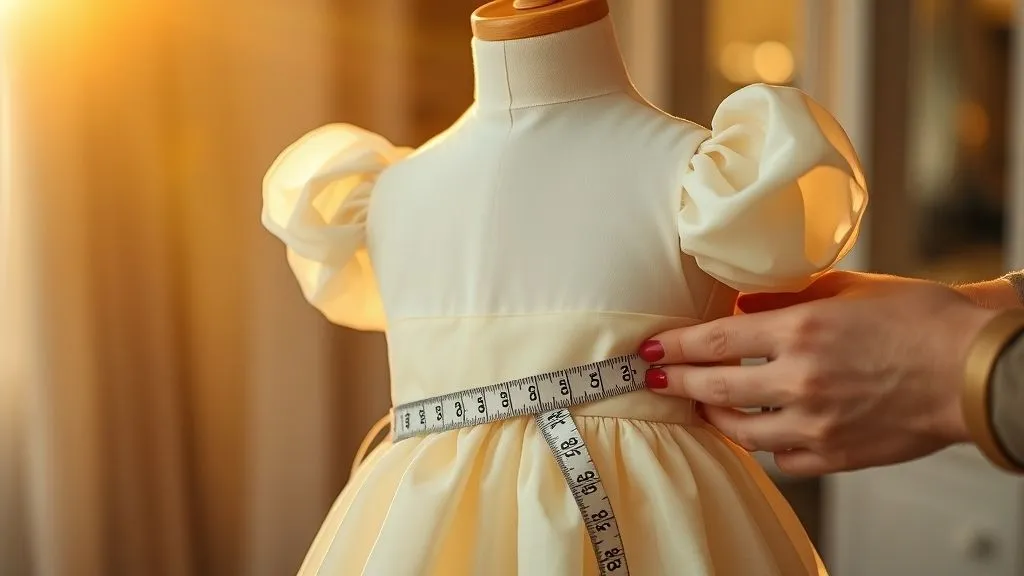
Why are my luxury kids' occasion wear returns high due to fit?
For over 15 years in the high-end children's fashion industry, I've seen countless luxury brands struggle with a silent, yet significant, profit drain: high return rates, especially in occasion wear, often attributed simply to 'fit issues.' It's a problem that goes far beyond a simple size chart discrepancy; it's a complex interplay of biology, expectation, and precision.
This isn't just about lost sales; it's about damaged brand reputation, increased operational costs, and ultimately, a frustrated customer base who expected perfection for their investment. The pain point is palpable: parents spend a premium for that 'picture-perfect' outfit for a wedding, christening, or gala, only to find it doesn't quite sit right on their child.
In this definitive guide, I will dissect the multifaceted reasons behind high fit-related returns in luxury kids' occasion wear. I'll share actionable frameworks, real-world insights, and expert strategies to not only identify the root causes but also implement sustainable solutions that will reduce returns, enhance customer satisfaction, and solidify your brand's reputation for impeccable quality and fit.
The Sizing Conundrum: More Than Just a Number
When it comes to children's clothing, 'size' is rarely a universal standard. Unlike adult sizing, which has its own inconsistencies, kids' sizing is complicated by rapid, often unpredictable growth spurts and variations in body shape among children of the same age. A 5-year-old can be tall and slender, or short and sturdy, making a single 'size 5' a difficult proposition for a perfect fit.
I've observed that many luxury brands, perhaps due to legacy patterns or cost-saving measures, don't invest enough in truly understanding the anthropometric data specific to their target demographic. This leads to generic sizing that simply doesn't cater to the nuances of children's bodies.
Expert Insight: "Treating children's sizing as a scaled-down version of adult sizing is a critical misstep. Children have different body proportions, particularly in torso length, head circumference relative to body, and limb-to-torso ratios, which demand unique pattern drafting."
Furthermore, the 'occasion wear' aspect adds another layer of complexity. These garments are often more structured, less forgiving, and designed for a precise silhouette. A slight tightness in the armhole or a hem that's just a little too long can ruin the entire look and feel, leading to immediate dissatisfaction.
Understanding Varied Growth Patterns
Children don't grow uniformly. They experience growth spurts that affect different parts of their body at different times. A child might grow taller rapidly, then fill out, or vice-versa. This means a garment purchased for a specific age might fit perfectly one month and be too snug or too short the next.
Brands need to consider not just age-based sizing but also incorporate ranges for height and weight. This is a practice I've seen successfully implemented by leading European children's wear brands, providing parents with more accurate guidance. According to a study published by the National Center for Biotechnology Information, children's anthropometric data varies significantly by region and ethnicity, further complicating a 'one-size-fits-all' approach.
Decoding Customer Expectations: Perception vs. Reality
Luxury kids' occasion wear isn't just clothing; it's an experience, a memory in the making. Parents are not just buying a dress or a suit; they're investing in a flawless moment. Their expectations for fit, fabric, and finish are inherently higher than for everyday play clothes. This heightened expectation significantly contributes to why 'fit' issues become return triggers.
When a parent invests hundreds of dollars in a bespoke-looking outfit for their child's first communion, any imperfection in fit—a gaping neckline, a restrictive waist, or sleeves that are too long—is amplified. They expect a garment that drapes beautifully, allows for comfortable movement, and looks impeccable in photographs.
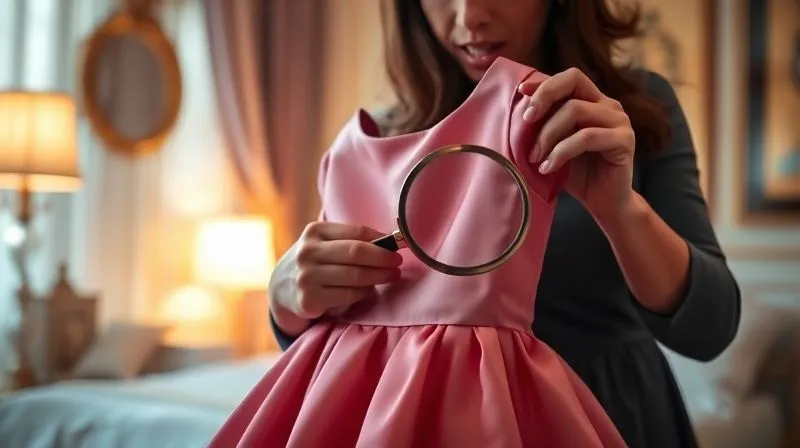
The perception of fit is also influenced by the occasion itself. A child needs to be able to sit, stand, play (within reason), and feel comfortable for several hours in occasion wear. A garment that restricts movement or causes discomfort, even if technically 'sized correctly,' will be perceived as a poor fit.
Precision in Production: The Unsung Hero of Fit
The journey from design sketch to a perfectly fitting garment is fraught with potential pitfalls. Even with impeccable pattern drafting, inconsistencies can creep in during production, particularly with offshore manufacturing or less rigorous quality control.
In my experience, many brands overlook the critical importance of robust quality control (QC) at every stage of production. This isn't just about checking for loose threads; it's about meticulous measurement checks, fabric shrinkage tests, and even fitting samples on actual child models throughout the production run, not just the initial sample.
Implementing a Multi-Stage Quality Control Protocol
- Pre-Production Fabric Testing: Test fabric for shrinkage, stretch, and drape before cutting. Different dye lots or weaves can subtly alter these properties.
- Pattern Accuracy Checks: Digitally verify pattern grading for consistency across sizes. Manually check key measurements on cut fabric pieces against the pattern.
- In-Line Inspections: Implement checks at various sewing stages. Are seams consistent? Are allowances correct? This catches errors early, preventing an entire batch of ill-fitting garments.
- Post-Production Measurement Audits: Randomly select finished garments from each batch and measure against technical specifications. Pay close attention to critical fit points like shoulder width, sleeve length, waist circumference, and garment length.
- Fit Model Verification: Periodically fit production samples on child models representing your target demographic. This provides a real-world validation that numerical measurements alone cannot.
A lack of precision in any of these steps can lead to the 'Why are my luxury kids' occasion wear returns high due to fit?' conundrum. As Harvard Business Review often emphasizes, quality control is not a cost center but a profit protector.
| QC Stage | Key Metric | Impact on Fit |
|---|---|---|
| Fabric Testing | Shrinkage Rate | Prevents size discrepancies post-wash |
| Pattern Audit | Grading Consistency | Ensures proportional scaling across sizes |
| In-Line Inspection | Seam Allowance | Maintains garment dimensions during assembly |
| Final Measurement | Garment Tolerance | Guarantees adherence to design specs |
Optimizing Online Presentation: Visuals and Data are Key
For brands selling online, the challenge of conveying fit is magnified. Customers cannot physically touch, feel, or try on the garment. This makes high-quality visual representation and comprehensive data absolutely paramount to mitigating fit-related returns.
I've seen brands fail simply because their product photography was generic or their sizing charts were inadequate. You need to bridge the gap between the digital image and the tangible reality of the garment's fit.
Case Study: How 'Petite Royalty' Reduced Fit Returns by 25%
Petite Royalty, a fictional luxury children's occasion wear brand, faced a 30% return rate attributed to fit. Their initial website only displayed standard size charts and single-angle product photos. By implementing a multi-pronged approach, they drastically improved their situation.
They introduced 360-degree product videos featuring real children of various builds wearing the garments. They also added a 'How to Measure Your Child' guide with clear diagrams and a printable measuring tape. Crucially, they developed a 'Fit Predictor' tool based on anonymized return data and customer measurements. This resulted in a 25% reduction in fit-related returns within six months and a significant boost in customer confidence and repeat purchases.
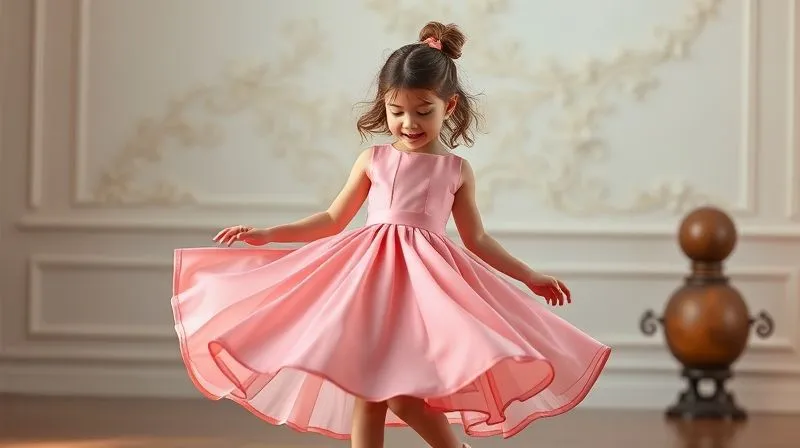
Essential Elements for Online Fit Guidance:
- Detailed Sizing Charts: Go beyond age. Include measurements for chest, waist, hip, shoulder-to-hem, and sleeve length. Provide instructions on how to measure a child accurately.
- Fit Notes: Add specific notes like 'Runs true to size,' 'Designed for a slim fit,' 'Generous cut for layering,' or 'Consider sizing up for chunky thighs.'
- Model Specifications: State the age, height, and weight of the child model in the product photos, along with the size they are wearing. This provides a crucial reference point.
- High-Quality Photography & Video: Showcase garments on real children (not just mannequins) from multiple angles, including close-ups of key fit areas. Use short videos to demonstrate movement and drape.
- Customer Reviews with Fit Feedback: Encourage customers to leave specific feedback on fit, including their child's size/age and the size purchased. This user-generated content is incredibly valuable.
The Power of Feedback: Listening to Your Littlest Customers (and Their Parents)
Feedback is gold, especially when trying to understand 'Why are my luxury kids' occasion wear returns high due to fit?'. Many brands collect general feedback but fail to deep-dive into the specifics of fit-related returns. This requires a systematic approach to data collection and analysis.
When a return comes in, don't just process it. Implement a clear protocol to capture detailed reasons. Is it too tight in the chest? Too long in the sleeve? Does it restrict movement? This granular data is invaluable for pinpointing design or production flaws.
Actionable Steps for Leveraging Fit Feedback:
- Enhanced Return Forms: Create detailed online return forms that guide customers to provide specific fit feedback (e.g., dropdowns for 'too tight/loose in X area,' 'too long/short').
- Direct Customer Outreach: For high-value returns, consider a brief, polite email or phone call to understand the fit issue directly from the parent. Their insights are often priceless.
- Categorize and Analyze Data: Use CRM or spreadsheet tools to categorize fit feedback by garment type, size, and specific issue. Look for patterns. Are all size 6 dresses returned for being too tight in the armhole? This indicates a pattern flaw.
- Cross-Functional Review: Regularly review fit feedback with your design, pattern-making, and production teams. This ensures that insights from returns directly inform future collections and production adjustments.
By actively listening and learning from every return, you transform a negative into a powerful data point for continuous improvement. This proactive approach builds immense trust with your clientele.
Innovative Sizing Solutions: Embracing Technology
The future of fit in luxury kids' occasion wear lies in embracing technological innovations. From 3D body scanning to AI-powered size recommendations, there are tools emerging that can dramatically enhance fit accuracy and reduce returns.
While some of these technologies are still emerging or carry a significant investment, understanding their potential is crucial for long-term strategy. For example, some brands are experimenting with virtual try-on apps that use augmented reality to overlay garments onto a child's image.
Emerging Technologies for Improved Fit:
- 3D Body Scanning: While perhaps impractical for individual customers, brands can use 3D scans of representative child bodies to create highly accurate digital avatars for pattern testing and virtual fitting.
- AI-Powered Size Recommendation Engines: These tools use algorithms to recommend sizes based on customer-provided measurements, purchase history, and even body type assessments, significantly reducing guesswork.
- Virtual Try-On (AR/VR): Augmented reality apps allow customers to 'try on' clothes virtually, providing a better sense of how a garment might look and fit on their child's unique body.
- Customization/Made-to-Measure Options: For ultra-luxury segments, offering limited made-to-measure options, even with slight upcharges, can eliminate fit issues entirely and create unparalleled customer loyalty.
The investment in these technologies can yield substantial returns by drastically cutting down on operational costs associated with returns, improving customer satisfaction, and building a reputation as a forward-thinking brand.
| Technology | Benefit for Fit | Implementation Cost |
|---|---|---|
| AI Size Recommender | Personalized size suggestions, reduced guesswork | Medium |
| 3D Body Scanning (Internal) | Precise pattern development, virtual model fitting | High |
| Virtual Try-On (AR) | Visual fit assessment, interactive experience | Medium-High |
| Enhanced Sizing Charts & Guides | Clear measurement instructions, informed decisions | Low |
Training Your Team: The Frontline of Fit Satisfaction
Even the most perfectly designed and produced garment can lead to a return if the customer service experience around sizing is lacking. Your sales associates, whether online chat support or in-store staff, are the frontline in preventing fit-related dissatisfaction.
I've observed that often, team members are not adequately trained to advise on children's sizing nuances. They might rely solely on age labels rather than understanding body measurements or the specific cut of an occasion wear garment.
Comprehensive Training for Fit Expertise:
- Product Knowledge Deep Dive: Train staff on the specific fit characteristics of each garment (e.g., 'This dress has an empire waist, so focus on chest measurement,' or 'The trousers are designed with an adjustable waistband for growth').
- Sizing Chart Mastery: Ensure all staff can confidently interpret and explain your brand's sizing charts, including how to take accurate measurements. Provide practical tools like measuring tapes.
- Common Fit Issues: Educate staff on the most common fit problems specific to children's occasion wear (e.g., tight armholes, long sleeves, gaping necklines) and how to troubleshoot or recommend alternatives.
- Empathy and Communication: Train staff to listen actively to parents' concerns, offer empathetic solutions, and guide them through the selection process with patience and expertise.
- Return Feedback Loop: Empower staff to capture detailed fit feedback during the return process and understand how this data contributes to product improvement.
Investing in this training transforms your customer service team into fit consultants, adding immense value to the customer journey and significantly reducing the likelihood of a return. As leadership expert Simon Sinek notes, "Customers will never love a company until the employees love it first."
Frequently Asked Questions (FAQ)
Q: What's the biggest mistake luxury kids' brands make with sizing? The biggest mistake I've seen is treating children's sizing as a simple linear scale-down from adult patterns, or relying too heavily on age alone. Children's body proportions change dramatically and uniquely, requiring dedicated anthropometric research and pattern development specific to their age groups and typical growth patterns. Ignoring this leads to consistent fit issues across collections.
Q: How can I improve my online sizing guide beyond a basic chart? Go beyond the basics! Incorporate detailed 'how-to-measure' videos, specify the child model's height/weight for each photo, add 'fit notes' describing the garment's cut (e.g., 'relaxed fit,' 'slim cut'), and integrate customer reviews that include specific fit feedback. Consider an AI-powered size recommender if budget allows. The more visual and data-rich, the better.
Q: Is it worth investing in 3D body scanning for kids' apparel? For luxury brands, absolutely. While a significant investment, 3D body scanning allows for the creation of highly accurate digital child avatars, enabling designers to test patterns virtually, identify potential fit issues before physical sampling, and ensure precise grading. This can drastically reduce sample iterations, production errors, and ultimately, fit-related returns, making it a valuable long-term investment in precision and quality.
Q: My production partner says they follow my tech packs perfectly, but returns are still high due to fit. What gives? This is a common issue. It often points to a gap in your quality control protocol or inconsistencies in the production partner's internal processes. You need to implement stricter, multi-stage QC checks: pre-production fabric testing, in-line measurement audits during sewing, and rigorous post-production random sample measurements. Also, consider sending your own QC team or a third-party auditor to the factory floor to ensure adherence to your exact specifications, not just their interpretation.
Q: How do I balance the desire for a 'perfect fit' with the reality that children grow quickly? This is the core challenge. The solution lies in smart design and clear communication. Design garments with some adjustability (e.g., adjustable waistbands, longer hems that can be let out, generous seam allowances). For garments that must be precise, emphasize the importance of exact measurements and consider offering a slightly wider size range. Most importantly, educate parents on the intended fit and the garment's lifespan, setting realistic expectations. Some brands even offer 'grow-with-me' features for key pieces.
Key Takeaways and Final Thoughts
Addressing the question of 'Why are my luxury kids' occasion wear returns high due to fit?' requires a holistic, multi-faceted approach. It's not a single problem but a convergence of design, production, marketing, and customer service challenges. The brands that master this will not only see a significant reduction in returns but also build an unparalleled reputation for quality and customer satisfaction.
- Invest in Anthropometric Data: Understand how children truly grow and design patterns based on real data, not assumptions.
- Prioritize Production Precision: Implement rigorous, multi-stage quality control from fabric to finished garment.
- Elevate Online Presentation: Provide comprehensive visual and data-driven sizing guidance to bridge the digital gap.
- Actively Seek & Analyze Feedback: Turn every return into a learning opportunity to continuously improve fit.
- Embrace Technology: Explore AI and 3D solutions to enhance sizing accuracy and customer confidence.
- Empower Your Team: Train staff to be expert fit consultants, providing invaluable support to parents.
By meticulously addressing each of these areas, you can transform a frustrating problem into a powerful competitive advantage. The luxury kids' occasion wear market demands excellence, and a perfect fit is the cornerstone of that promise. Your dedication to this level of detail will not only reduce returns but also foster unwavering loyalty from parents who trust your brand to deliver unforgettable moments, perfectly dressed.
Recommended Reading
- 7 Proven Methodologies: Early Identification of Lasting Menswear Trends
- The Ultimate Guide: How to Authenticate a Pre-Owned Luxury Watch Before Buying
- 7 Pro Strategies: Navigating Unrealistic Bridal Beauty Client Expectations
- The Ultimate Guide: How to Find Practical Kids Wear That Lasts & Grows
- 7 Steps: Select Truly Eco-Friendly Dyes for Production (No Greenwashing!)




Your email address will not be published. Required fields are marked *