

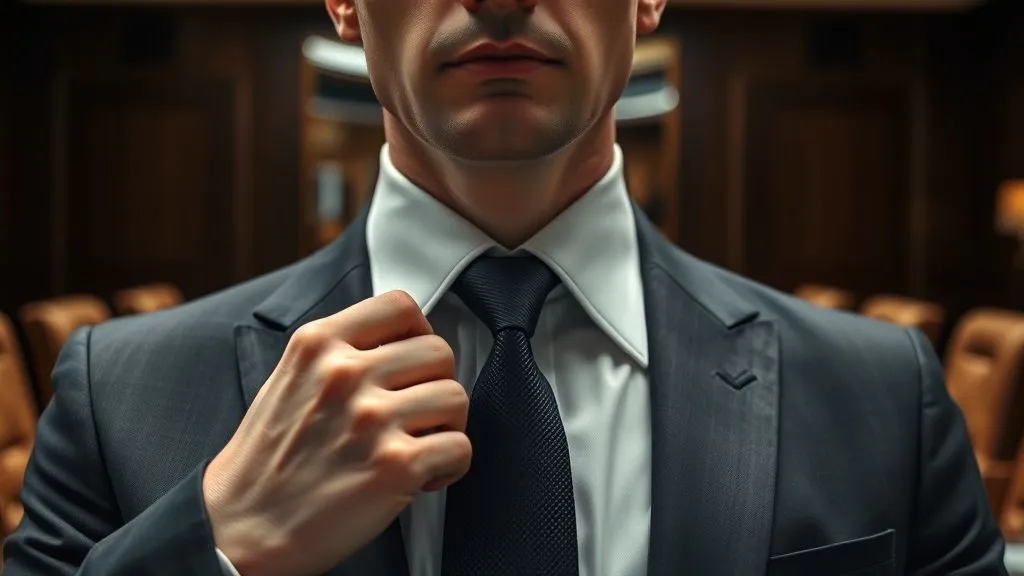
Which formal shirt collar style projects most authority in boardroom?
For over 15 years, navigating the intricate world of menswear, particularly in high-stakes corporate environments, I’ve witnessed firsthand how subtle sartorial choices can significantly impact perception. It's not just about wearing a suit; it's about the deliberate orchestration of every element, and perhaps no element is more frequently underestimated than the humble shirt collar. I've seen countless brilliant minds walk into a boardroom, only to have their authority subtly undermined by a collar choice that speaks of uncertainty rather than conviction.
The problem isn't a lack of effort, but often a lack of specific, actionable knowledge. Many men invest heavily in bespoke suits and luxury ties, yet treat the shirt collar as a mere afterthought. They might default to what's comfortable or what they've always worn, unaware that this small piece of fabric, framing their face, sends powerful, unspoken signals about their attention to detail, confidence, and ultimately, their gravitas in a professional setting. In the boardroom, where every impression counts, this oversight can be costly.
This article is your definitive guide to mastering this often-overlooked aspect of power dressing. We're not just discussing aesthetics; we're delving into the psychology of perception, the history of sartorial authority, and practical frameworks to help you choose the formal shirt collar style that projects the most authority in boardroom settings. You’ll learn which collars command respect, which to approach with caution, and how to integrate this knowledge into a cohesive, powerful executive presence.
The Silent Language of the Collar: Why It Matters More Than You Think
Think of the shirt collar as the frame for your face – the primary point of visual connection in any interaction. It’s the closest element to your face, and its structure, spread, and stiffness communicate volumes before you even utter a word. In my experience, the subconscious mind of an observer processes these visual cues rapidly, forming initial judgments about competence, trustworthiness, and authority. A well-chosen collar reinforces your message; a poorly chosen one can detract from it.
Consider the historical context. Collars, particularly stiff, structured ones, have long been associated with formality, discipline, and status. From the starched ruffs of Elizabethan courtiers to the detachable collars of 19th-century gentlemen, they've always signified a deliberate effort to present oneself with decorum and importance. This historical resonance still subtly influences our modern perceptions, even if we don't consciously acknowledge it. The boardroom, being a bastion of tradition and formality, is particularly susceptible to these nuanced signals.
Deconstructing Authority: What Makes a Collar “Powerful”?
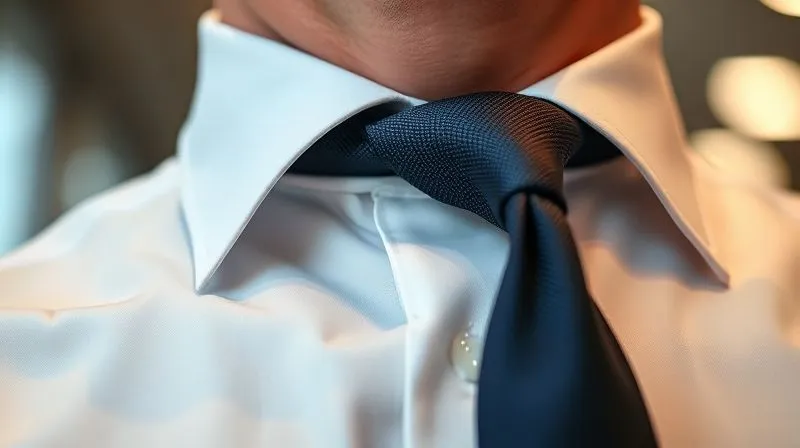
When we talk about a collar projecting authority, what exactly are we looking for? It boils down to a few key characteristics:
- Structure and Stiffness: A collar that stands tall and maintains its shape throughout the day, without wilting or collapsing, conveys resilience and meticulousness. A flimsy collar, conversely, can suggest a lack of attention to detail or even a casualness inappropriate for the boardroom.
- Proportion: The size and spread of the collar points relative to your face shape and the lapels of your jacket are crucial. A collar that is too small can make your head appear disproportionately large, while one that is too wide might overwhelm a slender face.
- Symmetry and Clean Lines: A well-constructed collar should be symmetrical, with crisp, clean lines. Any asymmetry or raggedness immediately detracts from a polished appearance.
- Tie Compatibility: The collar must perfectly accommodate your tie knot. There should be no gaping space between the collar leaves and the knot, nor should the knot be squashed. This synergy is key to a harmonious and authoritative look.
“True authority isn’t shouted; it’s quietly demonstrated through an unwavering attention to detail. Your collar is one of its quietest, yet most potent, ambassadors.”
The Classic Spread Collar: Your Go-To for Gravitas
If there’s one collar style that consistently projects authority and sophistication in the boardroom, it’s the **Spread Collar**. This style features collar points that are 'spread' wide apart, creating an open angle. It’s a versatile and universally flattering choice that has long been a staple in the wardrobes of power brokers.
Why the Spread Collar Commands Respect:
- Balances the Face: Its wider opening helps to balance broader face shapes, but it also provides a strong frame for narrower faces. The horizontal emphasis adds a sense of stability.
- Accommodates Larger Knots: The generous spread allows for larger, more substantial tie knots like the Windsor or Half-Windsor, which themselves convey a sense of formality and importance. A well-formed, substantial knot is a hallmark of executive dressing.
- Perceived Formality: Historically, the spread collar has been associated with Savile Row tailoring and British formality, lending it an inherent gravitas. It signals a sophisticated understanding of dress codes.
- Stiffness and Structure: Quality spread collars are typically designed with sufficient interlining to ensure they stand up crisply, maintaining their shape throughout a long day of meetings.
When selecting a spread collar, pay attention to the exact degree of spread. A 'semi-spread' offers a slightly more conservative look, while a 'full spread' or 'cutaway' (which we'll discuss next) is more assertive. For most boardroom scenarios, a classic spread that allows a perfect Windsor knot to sit snugly is ideal.
The Assertive Cutaway: A Modern Statement of Confidence
A close cousin to the spread collar, the **Cutaway Collar** takes the spread to its extreme, with the points angled sharply backwards, almost parallel to the collar band. This creates an even wider opening, making it an incredibly bold and modern choice that, when worn correctly, projects immense confidence and a contemporary understanding of power dressing.
When to Deploy the Cutaway:
- High-Confidence Environments: This collar is for the executive who is comfortable making a statement. It signals a departure from the purely traditional, suggesting a forward-thinking and decisive individual.
- Larger Tie Knots are a Must: The cutaway collar absolutely demands a substantial tie knot – a full Windsor or a Balthus knot are excellent choices. A small knot will look lost and expose too much of the shirt placket, undermining the intended effect.
- Best with Broader Faces: While versatile, the extreme horizontal lines of a cutaway collar can particularly flatter individuals with rounder or broader face shapes, providing a strong visual counterpoint.
I’ve observed that executives in tech, finance, or highly competitive industries often gravitate towards the cutaway. It’s a subtle nod to being ahead of the curve, while still adhering to strict formal wear guidelines. However, ensure the collar stands firm; a cutaway that collapses is worse than a standard spread collar.
The Traditional Point Collar: Reliability and Understated Power
The **Point Collar**, also known as the straight collar, is the most common and traditional collar style. Its points are relatively close together and extend downwards. While it might not scream 'authority' in the same way a spread or cutaway does, it projects reliability, conservatism, and an understated confidence that should not be overlooked.
The Point Collar’s Role in the Boardroom:
- Unquestionable Formality: You can never go wrong with a point collar in a formal setting. It is the bedrock of business attire.
- Versatile for Ties: It pairs well with most standard tie knots, particularly the Four-in-Hand or the Pratt knot, which are slightly narrower.
- Ideal for Narrower Faces: The vertical emphasis of the point collar can subtly elongate the neck and complement narrower or longer face shapes.
- Signals Steadfastness: In boardrooms where tradition and stability are highly valued, the point collar communicates a sense of being grounded and dependable.
While some might argue it’s less 'impactful' than a spread, its sheer ubiquity and historical acceptance mean it’s never out of place. It’s the sartorial equivalent of a quiet leader who commands respect through consistent performance rather than flashy gestures. According to a Harvard Business Review article on the psychology of dressing for success, consistency and adherence to conventional norms can significantly build trust and perceived competence.
Collars to Approach with Caution (or Avoid) in the Boardroom
Not all formal collars are created equal when it comes to projecting authority in a boardroom. Some, while perfectly acceptable in other settings, can detract from your executive presence.
1. The Button-Down Collar:
While a classic, the button-down collar (where the points are buttoned to the shirt body) originated in polo fields and is inherently less formal. It signals a more casual, preppy aesthetic. In a truly formal boardroom, it can appear too relaxed, even slightly collegiate. Save it for smart casual or business casual settings, not when you need to project utmost authority.
2. The Club Collar:
With its distinctive rounded points, the club collar is a stylish, vintage-inspired choice. However, its aesthetic is more whimsical and less severe than the sharp lines typically associated with boardroom gravitas. It can sometimes be perceived as too 'fashion-forward' or even a little boyish, potentially undermining a serious executive image.
3. The Wing Collar:
This collar, with its small, upturned tips, is strictly reserved for black-tie (tuxedo) or white-tie events. Wearing a wing collar with a business suit is a significant sartorial misstep that screams 'uninformed' rather than 'authoritative.' It’s completely inappropriate for a standard boardroom setting.
Beyond the Collar: Fabric, Fit, and Knot Synergy for Maximum Impact
A powerful collar is only part of the equation. Its impact is amplified exponentially when combined with other elements of your attire. In my professional view, these three components are non-negotiable for true executive presence:
1. Fabric Quality:
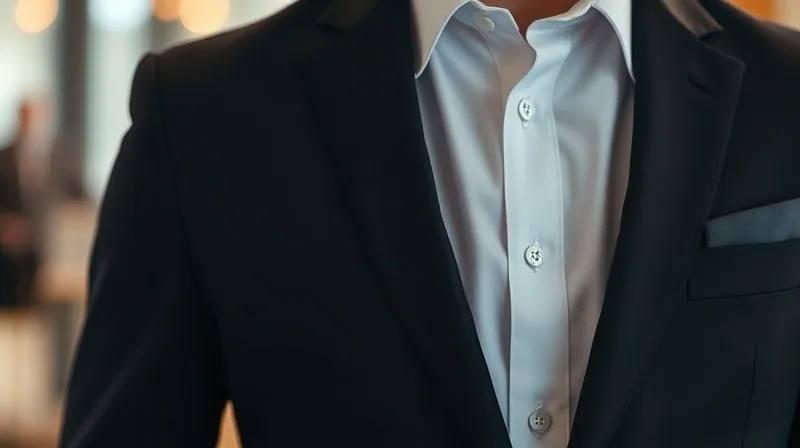
A cheap, flimsy fabric will sabotage even the best collar style. Opt for high-quality cottons like Egyptian or Sea Island, with a fine weave (e.g., twill, poplin, herringbone). The fabric should have a slight sheen, drape beautifully, and feel substantial. A crisp, opaque white or light blue shirt is the foundation of boardroom authority.
2. Impeccable Fit:
No amount of collar prowess can compensate for a poorly fitting shirt. The shoulders should align perfectly, the sleeves should end at your wrist bone, and the body should be slim without being restrictive. A billowy or baggy shirt undermines any attempt at projecting authority. Consider having your shirts tailored, or invest in brands known for their precise fit. As menswear authority Alan Flusser states, "Fit is king."
3. The Perfect Tie Knot:
The tie knot must be proportionate to your collar, your face shape, and the occasion. For boardroom settings, a well-formed, symmetrical knot is essential. The Four-in-Hand, Half-Windsor, or Full Windsor are your best bets, depending on the collar spread. The knot should fill the collar gap without straining the collar points or looking too bulky. Ensure the dimple (the small indentation just below the knot) is present, as it adds a touch of refined elegance.
Case Study: Elevating Executive Presence at "Global Dynamics"
Case Study: How Alex Transformed His Boardroom Authority
Alex, a brilliant but unassuming senior VP at 'Global Dynamics,' consistently struggled to command the room during executive meetings. Despite his sharp intellect, his appearance often veered towards the 'safe' and uninspired. He favored traditional point collars with thin ties, and his shirts, while clean, lacked the crispness needed for true gravitas. His feedback often highlighted a perception that he was 'too junior' or 'lacked conviction,' despite his years of experience.
I advised Alex to make a strategic shift, starting with his collar choice. We transitioned him primarily to well-structured, classic spread collars, occasionally incorporating a subtle cutaway for specific high-stakes presentations. We also ensured his shirts were made from a high-thread-count twill, professionally laundered and starched, and perfectly tailored to his physique. Crucially, we focused on selecting ties that allowed for a substantial Half-Windsor or Windsor knot, ensuring a seamless fit with his new collar styles.
The transformation was remarkable. Within three months, Alex’s colleagues and superiors began to comment on his newfound 'presence' and 'confidence.' He reported feeling more assertive, and his contributions in meetings were met with greater attention and respect. This wasn't about changing who Alex was, but about aligning his external presentation with his internal capabilities, allowing his true authority to shine through, significantly aided by a seemingly small detail like his shirt collar.
Tailoring Your Collar Choice to the Boardroom Context
While the spread and cutaway collars generally project the most authority, the 'best' choice can also depend on the specific boardroom culture and your personal attributes. Here’s a quick guide:
| Collar Style | Best For Face Shapes | Tie Knot Compatibility | Authority Projection | Notes |
|---|---|---|---|---|
| Classic Spread | All, particularly balanced for rounder/broader faces | Medium to Large (Half-Windsor, Windsor) | High - Sophisticated, Gravitas | Universal, safe, always appropriate |
| Cutaway | Broader faces, strong jawlines | Large (Full Windsor, Balthus) | Very High - Confident, Modern, Assertive | Demands strong knot, for the bold executive |
| Point | Narrower, longer faces | Small to Medium (Four-in-Hand, Pratt) | Medium-High - Reliable, Conservative, Understated | Traditional, always correct, less 'statement-making' |
| Button-Down | All | Small (Four-in-Hand) | Low - Casual, Preppy | Avoid for formal boardrooms |
| Club | All | Small (Four-in-Hand) | Low - Whimsical, Fashion-forward | Too informal for most boardrooms |
Beyond face shape, consider the industry. A creative agency's boardroom might tolerate more sartorial flair, while a traditional banking institution will likely favor classic choices. Always err on the side of formality and structure when the goal is to project authority. The key is to understand the rules so you can break them intentionally, not ignorantly.
The Psychology of Power Dressing: A Deeper Dive
The impact of clothing on perception isn't just anecdotal; it's backed by psychological research. The concept of 'enclothed cognition,' coined by Hajo Adam and Adam Galinsky, suggests that the clothes we wear can systematically influence our psychological processes. When you dress in a way that projects authority, it doesn't just change how others see you; it changes how you see yourself.
Wearing a meticulously chosen, authoritative collar can instill a sense of confidence, competence, and readiness. This internal shift, in turn, influences your posture, your vocal tone, and your overall demeanor – all of which further amplify your perceived authority. It’s a virtuous cycle: dress for success, feel successful, act successful. This reinforces the idea that choosing the right formal shirt collar style projects most authority in boardroom settings because it impacts both external perception and internal self-perception.

Frequently Asked Questions (FAQ)
Q: Is a stiff collar always better for projecting authority? A: Generally, yes. A collar with good interlining that maintains its crisp shape throughout the day signals attention to detail and resilience. A wilting or flimsy collar can detract from a professional image, suggesting carelessness. However, 'stiff' doesn't mean uncomfortable; it means structured.
Q: How do I know if a collar style suits my face shape? A: As a rule of thumb, choose collars that balance your face. If you have a rounder face, a spread or cutaway collar (which emphasizes horizontal lines) can make your face appear more angular. If you have a longer or narrower face, a point collar (which emphasizes vertical lines) can complement it. Try on different styles and observe in a mirror; personal comfort and confidence are also key indicators.
Q: Can I wear a patterned shirt in the boardroom and still project authority? A: Yes, but with extreme caution. Subtle patterns like thin stripes or very faint checks (Prince of Wales check) in classic colors (light blue, white) can be acceptable. However, bold patterns, loud colors, or anything too 'fashion-forward' should be avoided. When in doubt, a solid white or light blue shirt is always the safest and most authoritative choice for a formal boardroom.
Q: What's the biggest mistake men make with their shirt collars in formal settings? A: The biggest mistake, in my experience, is wearing a collar that's either too small for their neck size (causing discomfort and bulging) or, more commonly, one that doesn't accommodate their chosen tie knot properly. A gaping space between the collar and the tie knot, or a knot that's squashed by the collar points, immediately undermines an otherwise polished look. Always ensure a snug, seamless fit between collar and knot.
Q: Should I always wear collar stays? A: For any formal shirt with a spread or point collar, absolutely. Collar stays (either sewn-in or removable plastic/metal inserts) are essential for keeping the collar points crisp and preventing them from curling up. They are a small detail that makes a significant difference in maintaining a sharp, authoritative appearance throughout the day.
Key Takeaways and Final Thoughts
Mastering your executive presence is a continuous journey, and understanding which formal shirt collar style projects most authority in boardroom settings is a crucial, yet often overlooked, milestone. It’s not about following rigid rules blindly, but about understanding the subtle signals you send and leveraging them to your advantage.
- The Spread Collar and Cutaway Collar are your strongest allies for projecting gravitas and modern confidence in the boardroom.
- The Point Collar remains a reliable choice, signaling understated authority and tradition.
- Avoid casual collars like the Button-Down, Club, or the inappropriate Wing Collar in formal settings.
- Always prioritize impeccable fit, high-quality fabric, and a perfectly tied, proportionate knot to amplify your collar's impact.
- Remember that your attire doesn't just influence others; it profoundly impacts your own confidence and demeanor.
By making deliberate, informed choices about your shirt collar, you're not just dressing for the occasion; you're dressing for influence, for respect, and for success. Invest in quality, pay attention to detail, and let your sartorial choices speak volumes about the authority you bring to the table. Your presence will be felt, and your message, loud and clear.
Recommended Reading
- How to Ethically Source Exotic Leather for Luxury Handbags: A 7-Step Guide
- Beat the Shine: The Ultimate Makeup Guide for Oily Skin This Summer
- Clean Beauty's Credibility: 7 Proven Ways to Banish Greenwashing Skepticism
- The Ultimate Guide: Why Do Your Belts Keep Cracking and How to Prevent It?
- 5 Proven Strategies: Differentiating Your Costume Jewelry Brand in a Saturated Market





Your email address will not be published. Required fields are marked *