

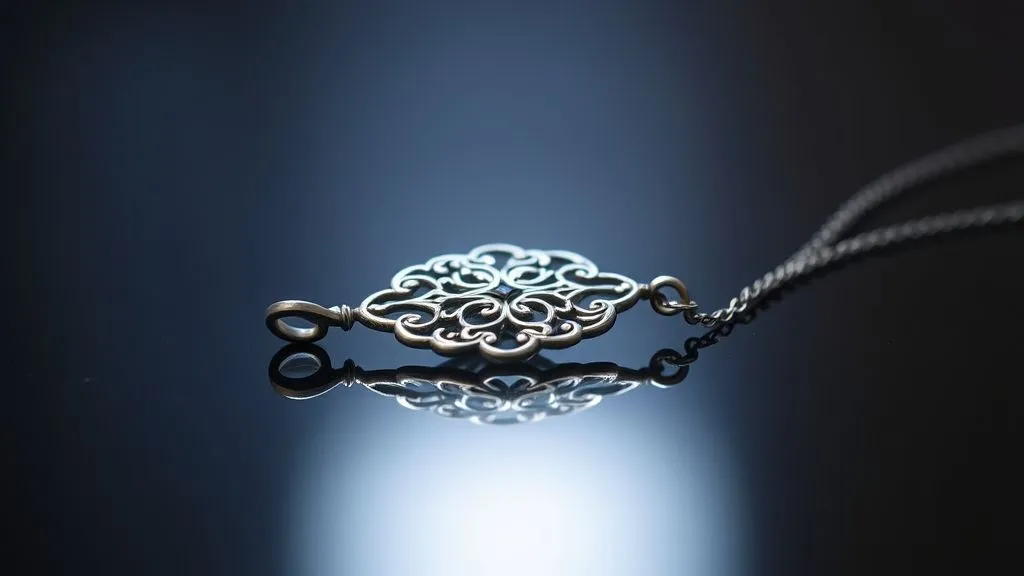
What to Do When Artisan Jewelry Designs Get Copied?
For over two decades in the artisan jewelry industry, I've witnessed the profound heartbreak and financial devastation that occurs when a designer's unique creations are brazenly copied. It's a gut punch, a violation of trust, and a direct assault on the very essence of what makes artisan work so special: its originality and the soul poured into every piece. I've seen countless talented individuals, brimming with passion, feel utterly lost and helpless in the face of such infringement, questioning if their fight is even worth it.
The problem of design copying isn't just an inconvenience; it's an existential threat to independent artists and small businesses. It erodes market share, devalues original work, and can stifle the very innovation that drives our industry forward. The ease of digital reproduction, coupled with the global reach of online marketplaces, has only exacerbated this issue, making it a critical challenge for every artisan jeweler.
But here's the crucial insight I want to share: you are not helpless. In this definitive guide, I will walk you through a comprehensive, actionable framework—a series of expert-backed strategies and legal insights—to empower you. You'll learn not just what to do when artisan jewelry designs get copied, but how to proactively protect your intellectual property, confront infringers effectively, and ultimately safeguard your brand's integrity and future. This isn't just about reaction; it's about resilience and strategic defense.
Understanding the Threat: Why Copying Happens in Artisan Jewelry
Before we dive into solutions, it's essential to grasp the landscape. Artisan jewelry, by its very nature, is a magnet for attention due to its unique aesthetics and often personal narratives. This uniqueness, while being its greatest strength, also makes it a target.
The Allure of Unique Designs
Consumers seek out artisan jewelry precisely because it stands apart from mass-produced items. They desire individuality, craftsmanship, and a story. When a design resonates strongly, it creates a demand that unscrupulous individuals or companies try to capitalize on, often by simply replicating the successful aesthetic without any of the original effort or integrity.
The Digital Age & Ease of Replication
The internet, while a powerful tool for marketing and sales, also facilitates copying. High-resolution images can be downloaded, 3D models can be reverse-engineered, and manufacturing processes can be mimicked with relative ease. The global marketplace means an infringer could be thousands of miles away, adding layers of complexity to enforcement.
Expert Insight: "Originality is the lifeblood of artisan jewelry. When that originality is compromised by copying, it not only harms the creator but also diminishes the entire ecosystem that values unique, handcrafted beauty."
Immediate Steps: Documenting the Infringement
The moment you suspect your design has been copied, your first and most critical task is to gather irrefutable evidence. This documentation will form the bedrock of any subsequent action, whether it's a direct confrontation or legal proceedings.
- Identify the Infringing Product: Clearly pinpoint which of your designs has been copied and identify the specific infringing product(s).
- Capture Screenshots and Recordings: Take dated screenshots of the infringing product on all platforms where it appears (e.g., website, social media, online marketplaces like Etsy, Amazon, eBay). Record videos if necessary, showing the product in context, especially if it's dynamic or interactive. Ensure URLs, dates, and seller information are clearly visible.
- Preserve Product Listings: If possible, save entire web pages as PDFs or use web archiving services to capture the full listing, including descriptions, pricing, and seller details.
- Purchase the Infringing Item (If Feasible): If the cost isn't prohibitive, consider purchasing an infringing item. This provides tangible evidence, allows you to inspect the quality, and can reveal manufacturing details. Document the purchase process, receipt, and shipping details meticulously.
- Record Communication: Keep a detailed log of any communication you have with the infringer or the platform hosts.
- Establish Your Originality: Gather all evidence proving your design's originality and prior creation. This includes design sketches, CAD files, photographs of prototypes, receipts for materials, social media posts announcing the design, and any registration certificates (copyright, patent, trademark). Timestamping digital files can be incredibly useful.

The Legal Landscape: Protecting Your Intellectual Property
Understanding the different forms of intellectual property (IP) protection is paramount for artisan jewelers. Many mistakenly believe their work is automatically protected sufficiently, but a proactive approach can make all the difference.
Copyright: Your First Line of Defense
In many countries, including the U.S., copyright protection for original works of authorship (which includes jewelry designs as sculptural works or applied art) arises automatically the moment the work is created and fixed in a tangible medium. This means you don't *have* to register it to have rights.
However, registering your copyright with the appropriate government office (e.g., the U.S. Copyright Office) offers significant advantages. It creates a public record of your ownership, allows you to sue for infringement in federal court, and, if registered within a certain timeframe, opens the door to statutory damages and attorney's fees, which can be far more substantial than actual damages. For more information on registration, visit the U.S. Copyright Office website.
Trademarks: Securing Your Brand Identity
While copyright protects the design itself, a trademark protects your brand's name, logo, or any other symbol that identifies the source of your goods. This is crucial for distinguishing your brand in the marketplace. If a copier uses your brand name or a confusingly similar logo, that's trademark infringement, a separate legal issue. Registering your trademark provides national protection and strengthens your ability to enforce your rights.
Design Patents: For Truly Novel Creations
A design patent protects the ornamental design of an article of manufacture. Unlike copyright, which protects the artistic expression, a design patent protects the unique visual appearance of a functional item. This is often the strongest form of protection for a truly novel jewelry design that has a non-obvious ornamental feature. However, it's more expensive and time-consuming to obtain than copyright, and it has a shorter term (typically 14 or 15 years from the date of grant). Learn more about design patents at the U.S. Patent and Trademark Office.
| IP Type | Protects | Arises | Registration Benefits | Cost |
|---|---|---|---|---|
| Copyright | Original artistic expression (e.g., design form) | Upon creation | Public record, statutory damages, attorney fees | Low |
| Trademark | Brand name, logo, identifying symbols | Upon use in commerce | National protection, presumption of ownership | Medium |
| Design Patent | Ornamental appearance of functional item | Upon grant by patent office | Strongest protection for novel designs | High |
Confronting the Infringer: Direct Communication & Cease and Desist
Once you have your evidence and a clear understanding of your IP rights, the next step is often to directly confront the infringer. This can sometimes resolve the issue without the need for costly litigation.
Drafting a Professional Communication
Your initial contact should be firm, factual, and professional. Avoid emotional language. Clearly state: (1) what design has been copied, (2) where it's being sold, (3) that you are the rightful owner of the IP (providing evidence or registration numbers), and (4) what action you expect them to take (e.g., remove the product, cease sales, destroy inventory). Provide a reasonable deadline for their response.
The Role of a Cease and Desist Letter
If your initial communication is ignored or ineffective, a formal Cease and Desist (C&D) letter, preferably drafted and sent by an attorney, is the next step. A C&D letter is a legally binding document that demands an immediate stop to the infringing activity. It outlines the legal basis for your claim, the evidence, and the potential legal consequences if the demands are not met.
- Consult with an IP Attorney: Even if you don't plan to litigate immediately, having an attorney draft the C&D letter lends it significant weight and ensures it is legally sound.
- Clearly State Infringement: The letter must precisely identify the infringed IP and the infringing product.
- Demand Specific Actions: It should explicitly demand the removal of the product, cessation of sales, and potentially an accounting of past sales.
- Set a Deadline: A clear, reasonable deadline for compliance is crucial.
- Warn of Legal Action: The letter should explicitly state your intent to pursue legal action if the demands are not met.
Case Study: How 'Gemstone Glow' Reclaimed Its Design
"Gemstone Glow," a small artisan jewelry brand specializing in unique raw gemstone settings, discovered a major online retailer selling near-identical copies of their signature "Cosmic Dust" pendant. The retailer, based overseas, initially ignored direct emails. Gemstone Glow's founder, Sarah, then engaged an IP attorney who sent a robust Cease and Desist letter, backed by Gemstone Glow's registered copyright and extensive documentation of prior creation. The letter also highlighted potential damages and legal costs. Within two weeks, the retailer removed the infringing products and issued a public apology, recognizing the legal weight of the attorney's communication. This proactive and professionally managed response saved Gemstone Glow from significant brand erosion and potential litigation.
Proactive Protection: Building an Impenetrable Brand
While reacting to infringement is necessary, a truly experienced artisan jeweler also focuses on proactive measures to minimize the risk of copying and strengthen their position should it occur.
Design Registration & Documentation Best Practices
As discussed, formal registration of your copyrights and trademarks is a powerful deterrent and a crucial asset for enforcement. Beyond formal registration, maintain meticulous internal documentation: date all sketches, CAD files, prototype photos, and material invoices. Keep a detailed design journal. This creates a clear timeline of your creative process.
Watermarking & Digital Fingerprinting
When sharing images of your work online, especially new designs, consider using subtle but visible watermarks. While not foolproof, it can deter casual copiers and clearly mark your ownership. More advanced techniques like digital fingerprinting (embedding invisible data into images) are also emerging as tools for tracking usage.
Building a Strong Online Presence & Community
A strong brand presence, a loyal customer base, and an active social media community can act as a powerful defense. Your customers are often your best advocates, quick to spot and call out copying. A recognized brand is harder to impersonate or overshadow with cheap knock-offs. Consistent branding and clear messaging about your originality reinforce your position.
Leveraging Your Community & Public Awareness
In the age of social media, public opinion and community support can be incredibly powerful tools in your arsenal when dealing with design copying.
The Power of Social Media
If an infringer is unresponsive, sometimes a carefully worded public appeal can generate significant pressure. Share your story respectfully, presenting the facts and evidence without resorting to aggression. Your followers, fellow artisans, and even industry influencers can rally behind you, putting pressure on the infringer and the platforms they use. Many online marketplaces have policies against IP infringement and will act when presented with sufficient public outcry and evidence.
Industry Networks & Associations
Connect with other jewelers and join industry associations. These networks often share information about known infringers and can offer support, advice, or even collective action. Associations sometimes have resources or legal aid programs specifically for members facing IP theft.
Expert Insight: "Your community isn't just a market; it's a powerful protective shield. Nurture it, educate it, and when needed, empower it to stand with you against those who would steal your creativity."
When to Engage Legal Counsel: Escalation & Litigation
Despite best efforts, some infringers remain uncooperative. At this point, engaging legal counsel becomes not just advisable, but often essential. This is a significant decision, and careful consideration is required.
Assessing the Damage & Potential Returns
Before initiating litigation, you need to realistically assess the financial damage caused by the infringement and the potential for recovery. Is the infringer making substantial sales? Do they have assets to pay damages? Litigation is expensive and time-consuming, so the potential returns must outweigh the investment in legal fees.
Finding the Right IP Attorney
Not all attorneys specialize in intellectual property. Seek out an attorney with specific experience in copyright, trademark, and/or design patent law, ideally with a background in the fashion or jewelry industry. They will guide you through the complexities of IP law, assess the strength of your case, and represent your interests effectively. Resources like the American Bar Association's Section of Intellectual Property Law can help you find qualified professionals.
| Action Step | Status | Notes |
|---|---|---|
| Gather all evidence (creation dates, infringement proof) | Complete/In Progress | Crucial for any legal action. |
| Review IP registrations (copyright, trademark, patent) | Complete/In Progress | Strengthens your legal standing. |
| Calculate estimated financial loss due to infringement | Complete/In Progress | Helps determine litigation feasibility. |
| Research infringer's business and assets | Complete/In Progress | Assesses recoverability of damages. |
| Consult with IP attorney for initial case assessment | Complete/In Progress | Essential before committing to litigation. |
| Understand potential legal costs and timelines | Complete/In Progress | Manage expectations and budget. |
| Consider alternative dispute resolution (mediation/arbitration) | Complete/In Progress | Potentially faster and less costly than court. |
| Prepare for potential public relations implications | Complete/In Progress | Control the narrative if the case goes public. |
Frequently Asked Questions (FAQ)
Is registering my design always necessary? While copyright protection for an original design is automatic upon creation, registration is highly recommended. It creates a public record, provides stronger legal standing, and allows you to seek statutory damages and attorney's fees in a lawsuit, which are often unavailable for unregistered works. For design patents, registration (grant) is the only way to obtain protection.
What if the copier is in another country? This adds complexity. You may need to pursue legal action in the infringer's country, which requires understanding their local IP laws and potentially hiring international counsel. However, if the infringing products are sold on platforms based in your country or that operate globally (like Etsy, Amazon), you can often leverage those platforms' IP infringement policies to have the listings removed. International treaties like the Berne Convention offer some level of reciprocal protection.
Can I prevent copying entirely? Unfortunately, no. Where there is value and demand, there will always be those who try to exploit it. However, by implementing robust proactive measures – registering your IP, maintaining thorough documentation, building a strong brand, and being vigilant – you can significantly deter casual copiers and strengthen your position to effectively challenge serious infringers. Prevention is about making yourself a harder target.
How much does legal action cost? Legal costs can vary wildly depending on the complexity of the case, the jurisdiction, and whether it settles quickly or proceeds to trial. A simple cease and desist letter from an attorney might cost a few hundred to a few thousand dollars. Full-blown litigation can easily run into tens of thousands or even hundreds of thousands of dollars. This is why a thorough cost-benefit analysis is crucial before escalating to court.
What's the difference between inspiration and copying? This is a nuanced area. Inspiration involves taking elements, techniques, or general aesthetics and reinterpreting them to create a new, distinct work. Copying, on the other hand, is the substantial reproduction of another's original design, often to the point where an ordinary observer would consider the two works to be substantially similar. The key is whether your work is genuinely transformative or merely imitative. It's a question of degree and intent, often best assessed by an IP expert.
Key Takeaways and Final Thoughts
Navigating the complex world of intellectual property when your artisan jewelry designs get copied can feel overwhelming, but remember, you have agency and powerful tools at your disposal. Protecting your creative legacy is not just about legal battles; it's about building a resilient brand and a robust framework around your unique artistry.
- Document Everything: Your immediate and thorough documentation of infringement and your own creative process is non-negotiable.
- Understand Your IP: Familiarize yourself with copyright, trademark, and design patents to know your rights and leverage them strategically.
- Be Proactive: Registering your designs and brand, coupled with strong online presence, acts as your first line of defense.
- Communicate Strategically: Start with professional direct communication, escalating to a lawyer-issued Cease and Desist when necessary.
- Leverage Your Community: Your loyal customers and industry peers can be powerful allies in raising awareness and applying pressure.
- Seek Expert Legal Counsel: For serious infringements, an experienced IP attorney is an invaluable partner.
The journey of an artisan jeweler is one of passion, dedication, and relentless creativity. Don't let the fear of copying stifle your vision. By understanding these steps and building a proactive defense, you can continue to innovate, create, and thrive, secure in the knowledge that your unique artistry is protected. Your voice, your vision, and your craft are worth fighting for.
Recommended Reading
- 7 Toughest Fabrics: How to Select for Kids' Extreme Playwear
- 7 Pillars: How to Maintain Luxury Footwear Exclusivity Online
- 7 Essential Strategies: Differentiate Your New Womenswear Accessories Brand
- 7 Stunt Safety Hacks: Preventing Damage to Intricate SFX Costumes
- Eco-Kids Apparel: 5 Steps to Green Marketing Without Accusations


Your email address will not be published. Required fields are marked *