


What to do when a commercial fashion client rejects final images?
For over two decades in the high-stakes world of commercial fashion photography, I've witnessed the full spectrum of client relationships – from seamless collaborations to unexpected, gut-wrenching rejections. There's a particular sting when you pour your creative energy, technical skill, and countless hours into a project, only for a commercial fashion client to look at the final images and say, 'This isn't what we wanted.' It's a moment that can send a professional photographer into a spiral of self-doubt, frustration, and panic.
This isn't just a creative setback; it's a business crisis. A rejected project can mean lost income, damaged reputation, strained relationships, and a significant drain on resources. The fear of not knowing how to respond, or worse, responding incorrectly, can paralyze even the most seasoned professionals.
But here's the truth: client rejections, while painful, are not necessarily the end of the world. In this comprehensive guide, I'll share the frameworks, strategies, and hard-earned wisdom I've gathered over my career to effectively navigate these challenging situations. You'll learn not just what to do when a commercial fashion client rejects final images, but how to turn a potential disaster into an opportunity for growth, stronger client relationships, and even better future work.
1. The Immediate Aftermath: Damage Control and Emotional Intelligence
The first rule when a client rejects your final images is simple: don't panic. Your immediate reaction, both internally and externally, sets the tone for everything that follows. I've seen photographers react defensively, emotionally, or even aggressively, which only escalates the situation and erodes trust.
Instead, take a breath. Acknowledge the client's feedback calmly. Your primary goal in this initial phase is to listen, understand, and demonstrate professionalism. Remember, this is a business transaction, and while your art is personal, the outcome needs to serve the client's commercial objectives.
Expert Insight: Your ability to remain composed and objective in the face of criticism is a hallmark of true professionalism. It signals to the client that you are a problem-solver, not just an artist.
Schedule a call or meeting, rather than relying solely on email, to discuss their concerns. This allows for nuances in communication, enables you to ask clarifying questions in real-time, and shows you value their input enough for a direct conversation. Prepare yourself mentally to hear criticism without internalizing it as a personal attack.

2. Deconstructing the Feedback: The Art of Active Listening and Inquiry
Once you've composed yourself, the next crucial step is to meticulously deconstruct the client's feedback. This isn't about defending your work; it's about understanding their perspective. Often, a client's initial rejection might be vague ('It just doesn't feel right') or emotionally charged. Your job is to peel back those layers.
- Ask Open-Ended Questions: Instead of 'What's wrong with it?' try 'Could you elaborate on what specifically isn't aligning with your vision?' or 'Which elements of the images are not meeting your expectations, and why?'
- Categorize the Feedback: Is it about the styling, lighting, model's expression, composition, post-production, or something else entirely? Try to get as granular as possible.
- Seek Specific Examples: Ask them to point to specific images or even specific parts of images that are problematic. 'Can you show me an example of an image that embodies what you were looking for?'
- Identify the Underlying Goal: Sometimes, a client rejects an image because they believe it won't achieve their marketing goal. Try to understand that goal. 'What message were you hoping these images would convey to your target audience that isn't coming across?'
Case Study: The 'Too Dark' Campaign
I once had a client, a luxury streetwear brand, reject an entire series of edgy, high-contrast, moody images, stating simply, 'They're too dark.' My initial thought was that this was the aesthetic we discussed. Through careful questioning, I discovered their marketing team had shifted strategy post-briefing, aiming for a broader, more accessible appeal that required a brighter, more optimistic look. The 'darkness' wasn't a technical flaw but a mismatch with a newly evolved brand narrative. By understanding this underlying shift, we could pivot our approach rather than just tweaking exposure.
| Feedback Type | Client Statement | Actionable Question |
|---|---|---|
| Vague/Emotional | It just doesn't feel right. | Can you describe the feeling you were hoping to evoke that isn't present? |
| Specific Technical | The colors are off. | Could you provide a reference image or a specific color palette you had in mind? |
| Strategic/Brand | It doesn't represent our brand. | Which key brand values do you feel are not being communicated effectively? |
| Objective/Goal | These won't sell. | What specific market response were you expecting, and how do you feel these images fall short of achieving that? |
3. Revisiting the Brief and Contract: Was There a Misalignment?
With detailed feedback in hand, it's time to go back to the foundational documents: the creative brief and the contract. This isn't about assigning blame, but about identifying where the communication might have broken down. As Harvard Business Review often emphasizes, clear communication is paramount in all business dealings.
- The Creative Brief: Did the final images align with the brief you were given? Were there any ambiguities in the brief that might have led to different interpretations? Was the brief itself clear, or did it contain conflicting directives?
- Pre-Production Communication: Review all emails, mood boards, concept approvals, and discussions leading up to the shoot. Were there any points where the client's vision diverged from yours, and was that divergence noted or addressed?
- The Contract: What does your contract say about revisions, re-shoots, and client dissatisfaction? Understanding your legal standing is crucial. Most professional contracts outline a certain number of revisions or a protocol for addressing rejections.
I've often found that rejections stem from a disconnect between the initial verbal discussions and the written brief, or from a brief that evolved without formal updates. This review is a critical step in understanding the root cause, which then informs the potential solutions.
4. Proposing Solutions: Revisions, Re-shoots, or Compromise
Once you understand *why* the client rejected the images, you can propose targeted solutions. This is where your expertise as a problem-solver truly shines. Your options generally fall into three categories:
4.1 Post-Production Revisions
Often, the issue can be resolved through further editing. This is usually the most cost-effective and time-efficient solution for both parties. Be specific in what you can offer:
- Targeted Retouching: Adjusting skin tones, removing distractions, refining details.
- Color Grading Adjustments: Shifting the overall mood and aesthetic.
- Cropping/Compositional Tweaks: Reframing to emphasize different elements.
- Adding/Removing Elements: If minor, this can sometimes be done through compositing.
Crucially, define the scope of these revisions. State clearly what is included and what might incur additional charges, especially if it goes beyond the terms of your initial agreement. According to a Forbes Agency Council article, managing expectations around revisions is key to client satisfaction.
4.2 Negotiating a Re-shoot
If the issues are fundamental (e.g., wrong styling, models, lighting setup, or concept execution), post-production alone won't fix it. A re-shoot might be necessary. This is a more complex negotiation:
- Identify the Cost: Calculate the cost of a partial or full re-shoot (studio, models, stylists, crew, your time, equipment rental).
- Determine Responsibility: Based on your brief and communication review, determine if the need for a re-shoot falls on you (misinterpretation, technical error) or the client (changed brief, poor communication of vision).
- Propose a Shared Cost: If responsibility is ambiguous or shared, proposing to split the cost can be a fair compromise. For instance, you might waive your creative fee for the re-shoot day, but the client covers hard costs.
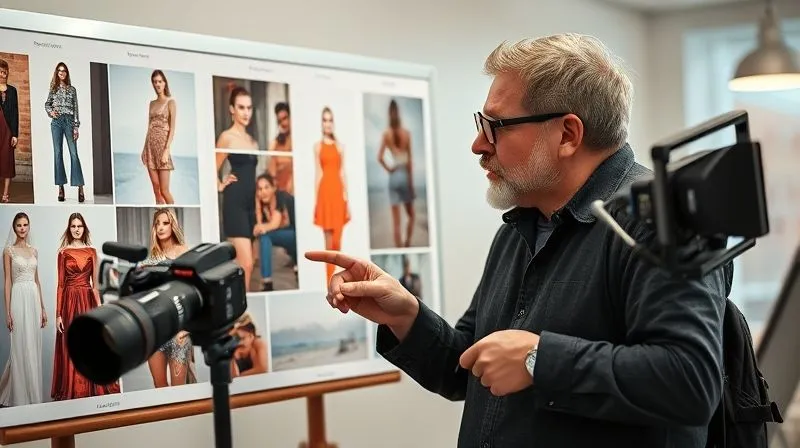
4.3 Strategic Compromise
Sometimes, the best solution involves meeting in the middle. This could mean:
- Partial Acceptance: The client accepts some images but rejects others, with agreed-upon revisions or a partial re-shoot for the rejected ones.
- Usage Limitations: Perhaps the client accepts the images but for a more limited usage than initially planned, resulting in a reduced fee.
- Future Work: Offering a discount on a future project in exchange for acceptance of the current work, if the relationship is valuable.
Expert Insight: Always present solutions, not just problems. Frame your proposals in terms of how they will achieve the client's objectives, demonstrating your commitment to their success.
5. Protecting Your Work and Your Business: Contracts and Rights
This situation underscores the absolute necessity of a robust contract. Your contract should clearly define:
- Scope of Work: What exactly is included in the project (number of images, usage, deliverables)?
- Revision Policy: How many rounds of revisions are included? What constitutes an 'additional revision' and its cost?
- Acceptance Criteria: While subjective, some contracts try to define what constitutes 'acceptance' or 'rejection'.
- Kill Fees/Cancellation Policy: What happens if the project is terminated mid-way or if images are rejected and not used?
- Usage Rights: Who owns the images, and what are the client's rights to use them? If images are rejected and not paid for, the client has no right to use them.
Consulting with legal counsel to draft or review your photography contracts is an investment, not an expense. It protects you in situations like these. As a general rule, if a client rejects images and you cannot come to a resolution, they should not be permitted to use any of the images without full payment or a new negotiated agreement. This is critical for safeguarding your intellectual property and livelihood.
6. Building Resilience: Learning from Every Setback
Every rejection, though painful, is a potent learning opportunity. I've found that my most significant growth moments often followed a challenging client situation. Take time for a post-mortem analysis:
- Self-Assessment: Honestly evaluate your own performance. Were there any missed cues? Did you over-promise or under-deliver? Was your communication as clear as it could have been?
- Process Review: Examine your entire workflow, from initial client brief to final delivery. Are there gaps in your onboarding, creative approval process, or feedback loops?
- Client Communication Audit: How effective was your dialogue with the client? Were expectations set and managed proactively?
- Update Your Workflow: Implement changes based on your findings. This might include more detailed contracts, enhanced mood board processes, interim review stages, or specific checkpoints for client sign-off.
This continuous improvement mindset is what distinguishes long-term success in commercial photography. It’s about building resilience, not just against rejection, but for the inevitable challenges that arise in creative collaboration. The American Psychological Association highlights the importance of learning from adversity to foster resilience.
7. When to Walk Away: Recognizing Unsalvageable Situations
While the goal is always resolution, there are rare instances where a project becomes unsalvageable, or a client relationship turns toxic. Recognizing these situations is vital for your mental health and business integrity.
- Unreasonable Demands: The client's requests become increasingly vague, impossible to achieve, or outside the original scope without willingness to adjust compensation.
- Lack of Respect: The client becomes verbally abusive, dismissive of your expertise, or attempts to bully you into unreasonable concessions.
- Fundamental Disagreement: A complete and irreconcilable creative vision clash that cannot be bridged through compromise or revision.
- Non-Payment/Contract Breach: The client refuses to pay for services rendered or breaches other terms of the agreement.
In these scenarios, it's often best to cut your losses. Refer to your contract's kill fee or termination clauses. Document all communications thoroughly. If necessary, seek legal advice. Protecting your reputation and mental well-being sometimes means knowing when to gracefully, but firmly, exit a challenging situation.

8. Preventative Measures: A Proactive Approach to Client Management
The best defense against client rejection is a strong offense – a proactive approach to client management and communication. In my experience, most rejections can be traced back to a breakdown in one of these areas. Here’s how to minimize the risk:
- Ironclad Briefing Process: Develop a comprehensive questionnaire or a detailed brief template that covers every conceivable aspect: target audience, brand aesthetic, mood, desired message, usage, technical specifications, reference images, and specific no-go areas. Get it signed off.
- Visual Communication is Key: Don't just talk about concepts; show them. Use mood boards, storyboards, and preliminary sketches. Get explicit sign-off on these visual guides before the shoot.
- Staged Approvals: Implement staged approvals. For commercial fashion, this might include: approval of the creative brief, approval of mood boards/styling concepts, approval of model casting, approval of test shots, and then final image selection. Each stage reduces the risk of a major deviation later.
- Clear Contractual Language: Ensure your contract explicitly covers revision policies, re-shoot scenarios, payment terms, and intellectual property. Clarity prevents disputes.
- Regular Check-ins: Maintain open lines of communication throughout the project. Don't wait until final delivery to check in. Provide updates, share behind-the-scenes glimpses (if appropriate), and confirm you're still aligned.
- Manage Expectations: Be realistic about what you can deliver. If a client's vision is impossible or impractical, communicate that early and offer alternatives.
By investing in these preventative measures, you build a foundation of trust and clarity that significantly reduces the likelihood of a client rejecting final images. It’s about building a partnership, not just performing a service.
Frequently Asked Questions (FAQ)
Q: Should I offer a refund if a client rejects the final images?
A: A full refund is rarely the first step. Your contract should outline your policy on rejections, revisions, and kill fees. Typically, you'd first attempt to resolve the issue through revisions or a re-shoot. If no resolution is possible and the client truly cannot use the images, a partial refund or waiving of the final payment might be considered, especially if you want to maintain a good relationship or avoid legal disputes. However, if the rejection is due to a change in the client's vision not communicated to you, a refund is generally not warranted.
Q: What if the client wants unlimited revisions?
A: This is why your contract must specify the number of included revisions. Unlimited revisions are unsustainable for your business. Politely remind the client of the agreed-upon revision limit and explain that further revisions will incur additional charges, as per your contract. Frame it as ensuring fair compensation for your time and expertise.
Q: How do I handle a client who changes their mind completely after approving the brief and mood board?
A: This is a tricky situation. Refer back to the signed brief and mood board. Emphasize that you delivered according to the agreed-upon vision. Explain that a complete change of direction constitutes a new project or a significant scope change, which would require a new agreement and additional compensation. Document everything. This often falls under a re-shoot scenario where the client would bear the majority, if not all, of the additional costs.
Q: Can a client use rejected images without paying for them?
A: Absolutely not. Your contract should clearly state that usage rights are only granted upon full payment. If images are rejected and not paid for, the client has no legal right to use them. If you discover unauthorized usage, you have grounds to pursue legal action for copyright infringement.
Q: How do I avoid sounding defensive when discussing feedback?
A: Focus on active listening and asking clarifying questions. Use phrases like, 'Help me understand what you mean by...' or 'Could you show me an example of what you're looking for?' Avoid 'But I thought...' or 'My intention was...' Instead, acknowledge their perception first, then offer solutions. Your goal is to gather information, not to justify your work prematurely.
Key Takeaways and Final Thoughts
- Stay Calm and Professional: Your initial reaction sets the tone for resolving the issue.
- Deconstruct Feedback Thoroughly: Ask precise questions to understand the root cause of the rejection.
- Review Your Foundation: Revisit the brief and contract to identify any misalignments or contractual obligations.
- Propose Actionable Solutions: Offer revisions, re-shoots, or compromises, clearly defining scope and cost.
- Leverage Your Contract: Understand your legal standing regarding revisions, payments, and usage rights.
- Learn and Adapt: Use every rejection as an opportunity to refine your processes and communication.
- Know When to Walk Away: Protect your business and well-being from truly unsalvageable situations.
Client rejections are an almost inevitable part of a long career in commercial fashion photography. They are not failures, but rather complex challenges that test your professionalism, problem-solving skills, and resilience. By approaching these situations with a clear head, a structured plan, and a commitment to understanding and resolution, you can not only salvage projects but also emerge with stronger client relationships and a more robust business. Embrace the challenge, learn from the experience, and continue to create stunning work.
Recommended Reading
- Unlock the Secret: Tips for Long-Lasting Professional Stage Makeup?
- 7 Steps to Swiftly Forecast Commercially Viable Luxury Runway Trends
- 5 Strategies to Slash Returns: Adaptable Kids' Wear Fit Solutions
- 7 Sustainable Strategies: Differentiating a Luxury Men's Skincare Line
- 7 Pillars: Preserving High-End Fashion Exclusivity in Digital Spaces





Your email address will not be published. Required fields are marked *