

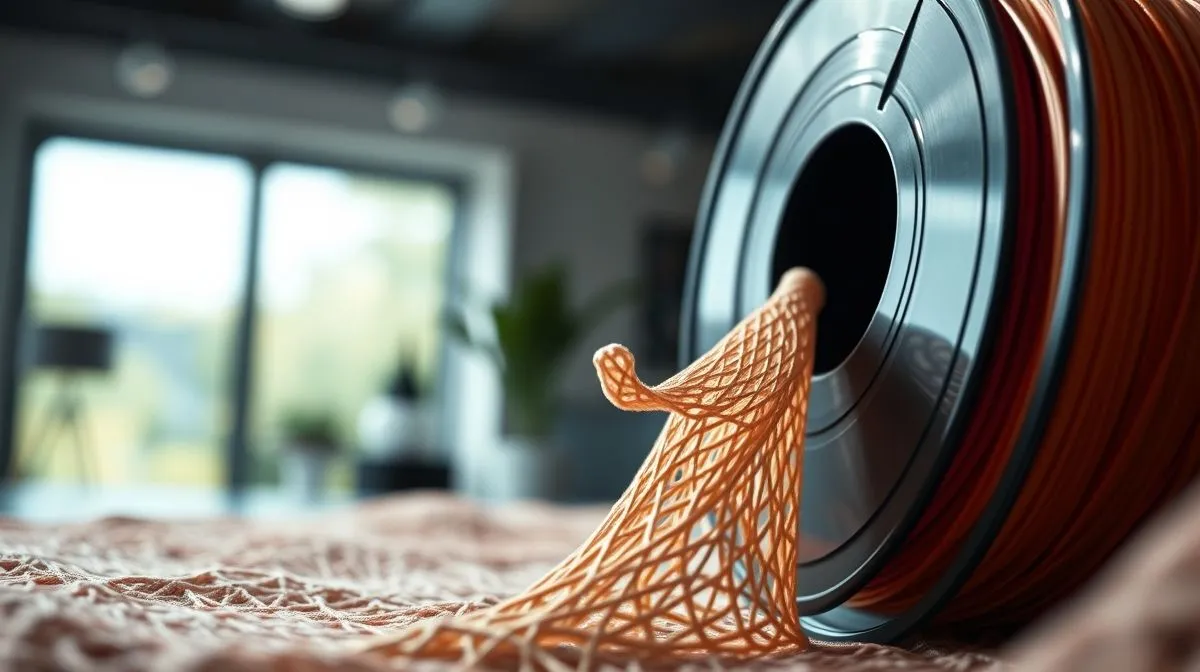
Minimizing material waste in commercial 3D printed fashion textiles?
For over two decades in the textile innovation landscape, I’ve witnessed incredible advancements, from smart fabrics to biomaterials. Yet, a persistent shadow has always loomed over our industry: waste. When 3D printed fashion first emerged with its promise of on-demand, hyper-customized production, many of us, myself included, saw it as a potential panacea for this very problem. We envisioned a world where every stitch, every fiber, was purposefully placed.
However, the reality for many commercial operations has been a different story. While 3D printing *can* be incredibly efficient, without a strategic, holistic approach, it can also generate significant material waste, from failed prints and support structures to discarded prototypes and off-cuts. This not only impacts your bottom line and resource consumption but also undermines the very sustainability narrative that makes 3D printed fashion so appealing.
In this definitive guide, I will share the actionable frameworks, cutting-edge insights, and proven strategies I’ve developed and observed over years, specifically tailored to address the critical challenge of minimizing material waste in commercial 3D printed fashion textiles. We’ll delve into everything from design methodologies to post-processing techniques, ensuring your operations are not just innovative, but truly sustainable.
Understanding the Waste Landscape in Additive Textiles
Before we can tackle waste, we must first understand its multifaceted nature within the realm of additive manufacturing for fashion. It’s not just about what ends up in the bin; it’s about inefficient processes, suboptimal designs, and overlooked opportunities for material recovery. I’ve seen companies invest heavily in state-of-the-art printers, only to neglect the fundamental principles that govern true material efficiency.
The Hidden Costs of Over-Extrusion and Support Structures
When we talk about waste in 3D printed fashion, the obvious culprits are often failed prints or miscalibrated machines. However, a significant portion of material inefficiency comes from less apparent sources. Think about the intricate support structures necessary for complex geometries, or the slight over-extrusion that accumulates over thousands of layers. These aren't just 'necessary evils'; they represent tangible material loss and contribute to the overall environmental footprint.
- Support Material: Often non-recyclable with the main print, or difficult to separate cleanly.
- Failed Prints: Due to design flaws, machine errors, or material issues.
- Post-Processing Scraps: Trimmings, sanding dust, or dissolved support material residue.
- Prototyping Waste: Iterations that don't make it to final production.
- Off-Spec Materials: Filaments that don't meet quality standards or expire.
Each of these points represents an opportunity for intervention and improvement. The goal is not just to reduce waste, but to eliminate it as a concept, moving towards a truly circular model.
Strategy 1: Precision Design for Minimal Material Use
The journey to zero waste in 3D printed fashion textiles begins long before a single filament is extruded. It starts at the design stage. This is where you, as a designer or production manager, have the most profound influence on material consumption. I often tell my mentees: 'Waste is a design flaw, not a manufacturing inevitability.'
Generative Design and Topology Optimization in Fashion
Embracing advanced design methodologies like generative design and topology optimization is a game-changer. These computational design processes allow software to generate optimal geometries based on specific parameters – strength, flexibility, aesthetics, and crucially, material efficiency. Instead of you guessing the most efficient structure, the algorithm calculates it.
Actionable Steps for Design Optimization:
- Define Clear Constraints: Input material properties, required flexibility, desired drape, and specific aesthetic goals into your generative design software.
- Iterate on Material Thickness: Experiment with varying wall thicknesses and infill patterns to achieve desired performance with the least amount of material.
- Utilize Lattice Structures: For areas requiring strength without bulk, employ intricate lattice designs that consume far less material than solid infills.
- Integrate Support Reduction: Design parts to be self-supporting as much as possible, minimizing the need for sacrificial support structures.
- Consider Anisotropy: Factor in the directional properties of 3D printed materials to optimize strength along stress lines, reducing the need for excessive material.
Digital Prototyping and Simulation
Before committing to physical prints, leverage the power of digital simulation. Advanced CAD software can simulate how a 3D printed garment or accessory will behave under various stresses, how it drapes, and even how it will feel against the skin. This significantly reduces the need for multiple physical prototypes, a notorious source of material waste.
“The true magic of 3D printing isn’t just making things; it’s the ability to virtually perfect them before any material is consumed. Embrace simulation as your first line of defense against waste.”
According to a study published by Forbes Insights, digital prototyping can reduce sample lead times by up to 50% and material consumption by as much as 30% in traditional fashion, a principle that translates directly to additive manufacturing.
Strategy 2: Advanced Filament Management and Recycling
The raw material – your filament – is at the heart of your production. Its quality, storage, and end-of-life management directly impact your waste profile. In my early days, I saw countless spools of expensive specialty filaments rendered useless due to improper storage or unaddressed quality issues.
On-Demand Filament Production and Spool Management
Consider solutions that allow for more flexible filament production or consumption. On-demand filament extrusion systems, while a significant investment, can allow you to produce filament from recycled pellets or even in-house waste, precisely when and in the quantities needed. This eliminates the waste associated with pre-packaged spools nearing their expiry or being overstocked.
- Humidity Control: Store hygroscopic (water-absorbing) filaments like Nylon, PETG, or PLA in dry boxes or dehumidifying cabinets. Moisture degrades material and causes print failures.
- Inventory Optimization: Implement just-in-time inventory practices for filaments to reduce spoilage and obsolescence.
- Quality Control: Regularly test new batches of filament for consistent diameter and material properties to prevent print failures.
Closed-Loop Recycling Systems for Thermoplastics
This is where the real sustainability magic happens. For thermoplastic materials commonly used in 3D printing (PLA, PETG, Nylon, TPU), establishing a closed-loop recycling system is paramount. This means taking your failed prints, support material, and even post-processing scraps and re-processing them into new, usable filament.
Case Study: ReGen Textiles' Zero-Waste Filament Initiative
ReGen Textiles, a fictional but highly realistic innovator in sustainable fashion, faced a significant challenge with TPU material waste from their elaborate 3D printed shoe components. Their initial waste rate was around 18%, largely due to support structures and failed prototype iterations. By implementing a compact, in-house filament extrusion and pelletizing system, they were able to collect all their TPU waste, grind it into pellets, and re-extrude it into new filament. This closed-loop system, after an initial investment of roughly $70,000 for the machinery, allowed them to reduce their virgin material purchases by over 60% within 18 months. Their waste rate plummeted to less than 3%, and the quality of their recycled filament was comparable to new, demonstrating a viable path to minimizing material waste in commercial 3D printed fashion textiles.
This initiative not only saved them substantial material costs but also significantly enhanced their brand's sustainability credentials, attracting a new segment of eco-conscious consumers. The success hinged on rigorous material sorting and consistent processing parameters.
Strategy 3: Optimizing Print Parameters and Machine Calibration
Even the most perfectly designed garment can become a source of waste if the printing process isn't meticulously managed. I've walked into workshops where valuable material was being squandered simply because operators hadn't fine-tuned their printer settings or conducted routine maintenance.
Layer Height, Infill, and Print Speed Balances
These three parameters are your primary levers for material efficiency during the print phase. Finding the optimal balance is crucial:
- Layer Height: Thicker layers generally print faster but might use slightly more material per layer and reduce detail. Finer layers offer higher detail but extend print time and can increase nozzle clogs if not managed well. Optimize for the desired aesthetic and structural integrity.
- Infill Density: Do you truly need 100% infill for a fashion garment? Often, a lower infill percentage (e.g., 10-20% gyroid or honeycomb) provides sufficient structural integrity, flexibility, and drape while significantly reducing material use and print time.
- Print Speed: While faster prints seem efficient, too high a speed can lead to poor layer adhesion, warping, and ultimately, failed prints. Find the 'sweet spot' where speed doesn't compromise print quality.
Routine Calibration and Preventative Maintenance
A well-maintained machine is a waste-reducing machine. Uncalibrated axes, worn nozzles, or loose belts lead to print errors, stringing, and ultimately, discarded material. This isn't just about saving money; it’s about respecting resources.
Actionable Steps for Machine Optimization:
- Regular Bed Leveling: An uneven print bed is a leading cause of first-layer adhesion issues and print failures. Make it a daily or per-shift routine.
- Nozzle Inspection & Replacement: Worn nozzles can cause inconsistent extrusion. Replace them proactively, especially if you're printing with abrasive materials.
- Extruder Calibration (E-steps): Ensure your extruder is pushing out the exact amount of filament it's commanded to. This prevents under or over-extrusion.
- Temperature Tuning: Dial in optimal hotend and bed temperatures for each filament type to ensure proper layer adhesion and minimize warping.
- Firmware Updates: Keep your printer's firmware updated to benefit from bug fixes and performance improvements that can enhance print reliability.
Strategy 4: Post-Processing Efficiency and Waste Valorization
The journey doesn't end when the print head stops moving. Post-processing, while essential for aesthetic and functional finishes, can also be a source of waste. However, it also presents unique opportunities for resource recovery and value creation.
Automated Support Removal and Finishing Techniques
Manual support removal can be tedious, labor-intensive, and often leads to breakage or damage to the printed part, necessitating a reprint. Investing in automated or semi-automated support removal solutions, such as water-soluble support systems or dedicated support-removal stations, can significantly reduce post-processing damage and associated waste.
- Water-Soluble Supports: For multi-material printers, using water-soluble PVA or BVOH for supports eliminates manual removal and its associated risks.
- Vapor Smoothing: For specific materials (like ABS or ASA), vapor smoothing can create a smooth, aesthetically pleasing finish without generating sanding dust or requiring abrasive removal of artifacts.
- Precision Tools: If manual removal is unavoidable, equip your team with specialized tools designed to cleanly remove supports without damaging the print.
Turning Waste into Value: Upcycling and By-product Innovation
This is where true innovation shines. Instead of simply discarding post-processing waste, how can it be transformed? Think about the small off-cuts, the filament purges, or even the finely ground plastic from support removal. These aren't just 'trash'; they are raw materials for something new.
“Waste is simply a resource in the wrong place. In the context of 3D printed fashion, every discarded piece of filament is a potential embellishment, a new material, or a design element waiting to be discovered.”
I've seen forward-thinking companies pelletize their print failures and use them as raw material for injection molding small components (e.g., buttons, clasps). Others have experimented with integrating finely ground 3D print waste into composite materials for furniture or art installations. The possibilities are only limited by imagination and material compatibility.
Strategy 5: Implementing a Circular Economy Mindset from Concept to Consumer
True waste minimization isn't just about optimizing production; it's about embedding circularity into every stage of the product lifecycle. This paradigm shift moves away from a linear 'take-make-dispose' model towards one where materials are kept in use for as long as possible. This is perhaps the most profound strategy for minimizing material waste in commercial 3D printed fashion textiles.
Design for Disassembly and Recyclability
From the very first sketch, consider the end-of-life of your 3D printed garment. Can it be easily disassembled into its constituent materials? Are those materials mono-material for easier recycling? Avoid complex multi-material assemblies that make separation difficult. Design garments that can be fully melted down and re-printed, or even composted if using bio-based polymers.
- Mono-Material Design: Prioritize using a single type of plastic (e.g., only TPU) for a garment to simplify post-consumer recycling.
- Modular Components: Design garments with components that can be easily detached, repaired, or replaced, extending product life and reducing overall waste.
- Clear Material Labeling: Ensure consumers know exactly what materials their 3D printed garments are made from to facilitate proper recycling.
Producer Responsibility and Consumer Education
As producers, we have a responsibility beyond the point of sale. This extends to educating consumers about the proper care, longevity, and end-of-life options for 3D printed fashion. Consider implementing take-back programs where consumers can return old or worn 3D printed garments for recycling. This closes the loop and ensures your materials stay within the circular economy.
The Ellen MacArthur Foundation advocates powerfully for a circular economy in fashion, emphasizing design for longevity, resource efficiency, and the elimination of waste and pollution. Their insights are invaluable for any brand looking to truly embed sustainability.
Leveraging Data Analytics and AI for Predictive Waste Reduction
In the age of Industry 4.0, data is your most powerful ally in the fight against waste. Modern 3D printers generate vast amounts of operational data, and intelligent systems can turn this raw information into actionable insights, predicting potential failures and optimizing processes before waste even occurs.
Real-time Monitoring and Anomaly Detection
Implement sensors and monitoring software that track key printing parameters in real-time: extrusion temperature, bed temperature, filament flow, print speed, and even environmental conditions like humidity. AI algorithms can analyze this data, identify deviations from optimal performance, and flag potential issues (e.g., nozzle clogs, filament tangles) before they lead to a failed print. This proactive approach is critical for minimizing material waste in commercial 3D printed fashion textiles.
- Predictive Maintenance: Use data to anticipate when a component might fail (e.g., extruder motor, heating element) and schedule maintenance before it causes production halts and waste.
- Quality Control Loops: Integrate camera systems with AI vision to detect print defects as they occur, allowing for immediate intervention or automated stopping of a faulty print.
AI-driven Design Optimization and Production Scheduling
Beyond real-time monitoring, AI can revolutionize design and planning. Machine learning algorithms can analyze historical print data to identify patterns that lead to waste and suggest design modifications or print parameter adjustments. For example, an AI could learn that a certain geometry printed with a specific infill density consistently fails, and then recommend a more robust alternative.
Furthermore, AI-powered production scheduling can optimize print queues, material allocation, and machine utilization to minimize idle time and maximize first-pass yield. This reduces the likelihood of starting prints with insufficient material or on an uncalibrated machine, both common sources of waste.
Research from institutions like MIT's Department of Mechanical Engineering consistently highlights the transformative potential of AI and machine learning in optimizing additive manufacturing processes, leading to significant reductions in material consumption and energy use.
Training and Culture: The Human Element in Waste Reduction
Ultimately, technology is only as good as the people who operate it and the culture that supports it. I’ve seen companies with the most advanced machinery still struggle with waste because their teams weren't adequately trained or didn't feel empowered to contribute to sustainability goals. Human error remains a significant factor in material waste, but human ingenuity is the ultimate solution.
Empowering Teams with Best Practices and Accountability
Regular, comprehensive training on material handling, printer operation, maintenance, and waste segregation is non-negotiable. Empower your operators to understand the 'why' behind waste reduction – not just the 'how.' When teams understand the environmental and economic impact of their actions, they become more invested in sustainable practices.
- Standard Operating Procedures (SOPs): Develop clear, accessible SOPs for every stage of the 3D printing process, from filament loading to post-processing.
- Cross-Training: Ensure multiple team members are proficient in various aspects of printing and troubleshooting to reduce reliance on a single individual.
- Feedback Loops: Create channels for operators to report issues, suggest improvements, and share best practices related to waste reduction.
Fostering a Culture of Sustainability and Innovation
Waste reduction should not be seen as a burden but as an opportunity for innovation and a core value of your brand. Celebrate successes, no matter how small, and encourage experimentation with new, more sustainable materials or processes. This creates an environment where everyone feels responsible for and invested in minimizing material waste in commercial 3D printed fashion textiles.
As leadership expert Frances Frei often discusses in Harvard Business Review, a purpose-driven culture, where sustainability is a clear and communicated objective, leads to greater employee engagement and operational excellence. This translates directly into more efficient and less wasteful production.
Frequently Asked Questions (FAQ)
Question: Is 3D printed fashion inherently more wasteful than traditional textile manufacturing? Not necessarily. While traditional textile manufacturing can have significant waste from cutting patterns and dyeing processes, 3D printed fashion can also generate waste from failed prints, support structures, and prototyping. However, 3D printing offers unique advantages like on-demand production, zero-waste design potential, and localized manufacturing, which can drastically reduce overall material consumption and supply chain waste if managed effectively. The key is in applying circular economy principles and process optimization.
Question: What's the biggest challenge in recycling 3D printed fashion textiles? The primary challenge lies in material homogeneity and purity. Many 3D printed garments might use multiple types of plastics (even if subtly different), or contain additives, dyes, or non-plastic components (like zippers or clasps) that make mechanical recycling difficult. Developing efficient sorting, cleaning, and mono-material design strategies are crucial for effective closed-loop recycling. Scaling these processes economically is also a significant hurdle.
Question: How can small fashion brands or startups implement these waste minimization strategies without huge investments? Small brands can start with foundational steps: rigorous design optimization to minimize supports and infill, meticulous print parameter tuning, and establishing internal material sorting for future recycling. Partnering with local recycling facilities or universities for material research can also be cost-effective. Focus on one or two key strategies at a time, such as improving first-pass print success rates, which immediately reduces material waste and saves money.
Question: What role do consumers play in minimizing waste from 3D printed fashion? Consumers are vital. Their role includes properly caring for 3D printed garments to extend their lifespan, understanding how to clean and maintain them, and participating in take-back or recycling programs offered by brands. Educating consumers about the material composition and end-of-life options for their garments empowers them to make sustainable choices and helps close the material loop.
Question: What's the future outlook for zero-waste 3D printed fashion? The future is incredibly promising. Advancements in bio-based and compostable filaments, improved in-house recycling technologies, AI-driven design and production, and a growing consumer demand for sustainable products are all converging. We will see more integrated 'print farms' that handle everything from design to recycling, and a greater emphasis on 'product-as-a-service' models where garments are leased and returned for remanufacturing, truly embodying a zero-waste, circular economy.
Recommended Reading
- Unlock Your Look: The Ultimate Guide to Choosing Glasses That Enhance Features
- 7 Proven Strategies: Maximize Profit Selling Rare 1970s Vintage Apparel
- Petite Style Guide: What to Wear Daily for a Flattering Fit!
- Clean Vintage Beaded Purses Safely: The Ultimate Care Guide
- Unlock Loyalty: How to Build a Thriving Fashion Blog Reader Community
Key Takeaways and Final Thoughts
The journey to truly minimizing material waste in commercial 3D printed fashion textiles is not a sprint; it's a marathon of continuous improvement, innovation, and unwavering commitment. As an industry expert who has seen this field evolve, I can confidently say that the potential for sustainable, waste-free fashion through additive manufacturing is not just a pipe dream – it's an achievable reality.
- Design is Paramount: Begin with waste reduction in mind, leveraging generative design and digital prototyping.
- Material Management is Critical: Optimize filament use, storage, and embrace closed-loop recycling.
- Process Optimization is Power: Fine-tune print parameters and maintain your machinery meticulously.
- Value Your Waste: Explore innovative ways to upcycle and transform discarded materials into new resources.
- Embrace Circularity: Embed a circular economy mindset across your entire product lifecycle, from design to consumer.
- Empower Your People: Invest in training and foster a culture of sustainability.
- Leverage Data: Use analytics and AI to predict and prevent waste before it happens.
The path forward requires vision, discipline, and a willingness to challenge conventional norms. But the reward – a more sustainable, efficient, and ultimately more innovative fashion industry – is well worth the effort. Let's build that future, one precisely printed, waste-minimized garment at a time.


Your email address will not be published. Required fields are marked *