


How to Translate Abstract Play Themes into Wearable Costume Concepts?
For over two decades in the intricate world of costume design, I've witnessed countless emerging designers grapple with a fundamental, yet often daunting, challenge: how to take the ephemeral, the conceptual, the downright abstract 'play theme' and ground it in something tangible, something wearable, something that speaks volumes without uttering a single word. It's a dance between the visionary and the practical, a tightrope walk where many lose their footing.
The pain point is palpable. You're handed a script or a concept that speaks of 'the fragmentation of memory,' 'the weight of expectation,' or 'the fluidity of time.' These are beautiful, profound ideas, but how do they manifest on a performer's body? The blank page, or perhaps the empty mannequin, can feel like an abyss when your inspiration is a whisper rather than a clear image. The fear of literal interpretation, or worse, a design that misses the essence entirely, can paralyze even the most creative minds.
But fear not. In this definitive guide, I will share the frameworks, the thought processes, and the actionable steps I've honed over years of working on productions ranging from avant-garde theatre to large-scale cinematic spectacles. You'll learn not just to interpret, but to truly embody abstract play themes in your costume designs, transforming intangible concepts into breathtaking, meaningful wearable art. We will explore how to dissect the abstract, build a visual vocabulary, and iterate your way to conceptual brilliance.
Deconstructing Abstraction: The Initial Mind Meld
The first step in any conceptual design journey is to truly understand the core of the abstract theme. It’s not enough to just read the words; you must immerse yourself in their meaning, their implications, and their emotional resonance. This is where the 'mind meld' begins, allowing the abstract concept to permeate your creative consciousness.
Understanding the Core 'Play'
When I receive an abstract theme, my immediate goal is to break it down. What are its underlying emotions? What philosophical questions does it pose? Is it about conflict, harmony, transformation, or stasis? I look for recurring motifs, contrasting elements, and the overall mood. For instance, if the theme is 'the echo of forgotten dreams,' I consider what 'dreams' entail – fragility, aspiration, vividness, or distortion. What does 'forgotten' signify – decay, absence, or a haunting presence? And 'echo' – repetition, fading, or resonance?
I find it incredibly useful to engage in a free-association exercise. Write down every word, image, color, texture, and sound that comes to mind when you contemplate the theme. Don't filter; just let it flow. This raw data forms the bedrock of your visual vocabulary.
Identifying Key Metaphors and Symbols
Abstract themes are often rich with inherent metaphors. Your task is to unearth them and consider their physical manifestations. If 'fragmentation' is a theme, think about shattered glass, torn fabric, disjointed lines. If 'fluidity' is key, consider water, smoke, draped silk, or organic, flowing shapes. These metaphors are your bridge from the abstract to the concrete.
Expert Insight: "The most profound costume designs for abstract themes don't just represent; they evoke. They invite the audience to feel the concept, not just see it."
Symbols, whether universal or context-specific to the play, can also be powerful tools. A single, well-placed symbol can convey layers of meaning without overwhelming the design. Researching cultural or historical symbolism related to your identified metaphors can provide an incredible depth of insight. As a good starting point, exploring resources like Britannica's overview of Symbolism in Art can broaden your understanding.
Actionable Steps for Initial Deconstruction:
- Deep Dive Reading/Listening: If there's a script or musical score, analyze it for emotional arcs, character journeys (even if abstract), and recurring imagery.
- Mind Mapping: Create a visual map connecting the abstract theme to associated words, feelings, colors, textures, and potential forms.
- Visual Research: Compile a mood board of images that *feel* like the theme – this could be abstract art, natural phenomena, architectural structures, or even fashion editorials.
- Conceptual Questioning: Ask yourself: What is the core conflict? What is the desired audience reaction? How does the theme relate to the performer's body and movement?
The Palette of Emotion: Color, Texture, and Form
Once you've deconstructed the abstract theme, your next challenge is to translate those insights into a tangible visual language. Color, texture, and form are your primary tools, acting as the emotional palette of your design.
Translating Emotional Resonance into Visual Elements
Every color evokes a feeling. Red for passion or anger, blue for serenity or sadness, yellow for joy or madness. For abstract themes, these associations become even more potent. Consider the psychological impact of colors and how they can embody the abstract concept. For 'fragility,' you might lean towards muted, desaturated tones, or perhaps stark whites and grays. For 'transformation,' a gradient of shifting colors or a juxtaposition of contrasting hues could be powerful.
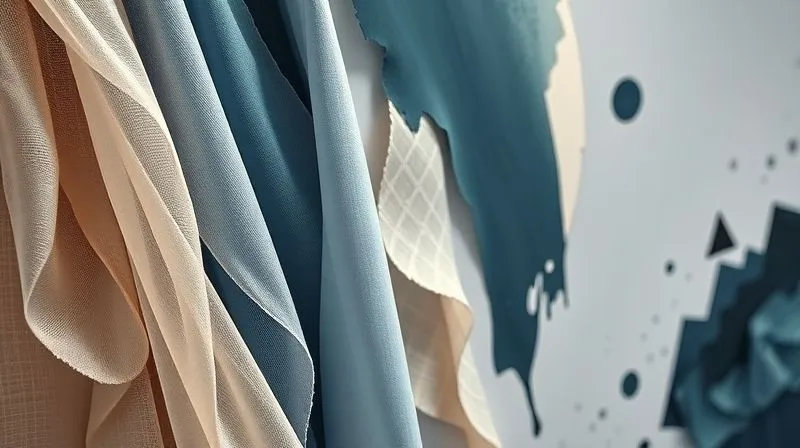
Texture, too, speaks volumes. Smooth, reflective surfaces suggest modernity, detachment, or fluidity. Rough, organic textures can imply earthiness, age, or struggle. Sheer, translucent fabrics evoke vulnerability or illusion. The choice of texture is not merely aesthetic; it's a narrative device that contributes to the overall emotional landscape of the costume.
Materializing the Intangible: Fabric Choices and Draping
This is where the rubber meets the road. How do you make 'weight of expectation' *look* heavy? How does 'fluidity of time' *flow*? Fabric choices are paramount. Heavy wools, stiff brocades, or layered, dense materials can convey literal and metaphorical weight. Lightweight chiffons, silks, or stretchy knits can embody fluidity and adaptability. Sometimes, the absence of fabric, through strategic cut-outs or sheer panels, can be as impactful as its presence.
Draping and construction techniques further refine the form. Unstructured, flowing drapes can create a sense of liberation or ambiguity. Architectural, rigid forms might suggest constraint or power. Experiment with how different fabrics behave on the body, how they catch the light, and how they move (or don't move) with the performer. Consider how renowned designers, as discussed in publications like Vogue's trend analyses, push the boundaries of materials and form to create iconic looks.
Structural Storytelling: Silhouette and Movement
Beyond color and texture, the overall silhouette and how the costume moves are critical to translating abstract play themes. The human body is your canvas, and the costume is a sculptural extension of the concept.
Sculpting the Narrative: From Formless Idea to Defined Shape
The silhouette of a costume communicates its essence instantly. For 'fragmentation,' you might explore deconstructed garments, asymmetrical lines, or exaggerated, broken forms. For 'unity' or 'wholeness,' a strong, unbroken line or a symmetrical, harmonious shape would be more appropriate. Think about how historical fashion exaggerated certain aspects of the body to convey status or ideal; you are doing something similar, but with abstract ideals.
I often begin with abstract sculptural forms, not even thinking about them as clothing initially. I sketch shapes that represent the theme: sharp angles for conflict, soft curves for introspection, sprawling forms for expansion. Then, I work backwards, seeing how these forms can be adapted to the human body while maintaining their conceptual integrity. This approach helps avoid the trap of conventional garment construction limiting your conceptual vision.
Movement as a Design Element: How Costumes Interact with Performance
A costume isn't static; it's a dynamic element of the performance. How does it move with the actor? Does it restrict, enhance, or transform their natural movement? For 'entrapment,' a costume might be cumbersome, with long, trailing elements that tangle, or a rigid structure that impedes free motion. For 'liberation,' it could be light, flowing, and allow for expansive, unhindered movement.
Consider the interplay between the costume and the choreography or blocking. Will fabric swirl dramatically? Will a rigid piece create a striking visual as the actor poses? Thinking about the costume in motion, rather than just as a still object, unlocks another layer of conceptual expression. This dynamic aspect is often overlooked but is crucial for abstract themes that rely heavily on visual storytelling and atmosphere.
Case Study: The Whispering Woods
A few years ago, I worked on a contemporary dance piece titled 'The Whispering Woods,' which explored themes of environmental decay, memory, and the cyclical nature of life. The director wanted costumes that felt organic yet fragmented, hinting at both beauty and destruction. My initial approach was to use natural materials, but that felt too literal. Instead, I focused on the abstract concept of 'decay' and 'regeneration.'
We designed costumes with multi-layered, sheer fabrics in muted greens and browns, but each layer was strategically torn, frayed, and scorched using a heat gun, creating a deliberate 'decayed' aesthetic. The silhouette began as flowing and organic, but as the dance progressed, elements were designed to be shed or manipulated by the dancers, revealing brighter, almost glowing under-layers, symbolizing regeneration. The fragmented layers created a 'whispering' movement as the dancers moved, enhancing the theme of an ancient, fading forest. This resulted in a visually stunning representation that was abstract yet deeply resonant, earning critical acclaim for its evocative design.
Symbolic Detailing: The Devil's in the Details
While silhouette and overall form establish the macro concept, it's the micro-details that often cement the abstract theme, adding layers of meaning and intrigue.
Incorporating Motifs and Embellishments
Small, repeated motifs or strategically placed embellishments can act as visual anchors for abstract concepts. If your theme is 'connection,' perhaps a subtle network of embroidery or interwoven elements. For 'disconnection,' broken lines, unfinished edges, or disparate materials joined awkwardly. These don't have to be overt symbols like a dove for peace; they can be abstract patterns or textures that subtly reinforce the core idea.
Think about the surface treatment: painting, dyeing, embroidery, appliqué, or even digital prints. These techniques allow for incredible specificity in translating abstract patterns or textures onto the fabric. For instance, a theme of 'unraveling' could be depicted by loose threads, deliberate snags, or deconstructed seams that appear to be coming apart.
The Power of Subtlety vs. Overt Symbolism
This is a delicate balance. Sometimes, a bold, clear symbol is necessary to drive a point home. Other times, the power lies in suggestion, in allowing the audience to discover and interpret the meaning themselves. For abstract play themes, I often lean towards subtlety. The goal is to evoke, not to explicitly state. A costume that is too literal can quickly become a caricature, losing its abstract power.
Consider the context: Is it a highly conceptual art piece where ambiguity is desired, or a theatrical production where the audience needs some guidance? Your choice of overt or subtle symbolism should align with the overall artistic vision of the production. For deeper insights into design principles, resources like those from the Design Principles & Elements website can be invaluable.
| Abstract Concept | Material Translation |
|---|---|
| Fragmentation | Torn edges, patchwork, asymmetry, broken seams |
| Fluidity | Draping, sheer fabrics, gradients, organic shapes |
| Weight of Expectation | Heavy fabrics, restrictive elements, layered bulk, stiff structures |
| Transformation | Reversible elements, modular pieces, color shifts, metamorphic textures |
Prototyping and Iteration: Bringing Concepts to Life
The journey from abstract idea to wearable costume is rarely linear. It's a process of experimentation, refinement, and continuous iteration. This is where your designs truly begin to breathe.
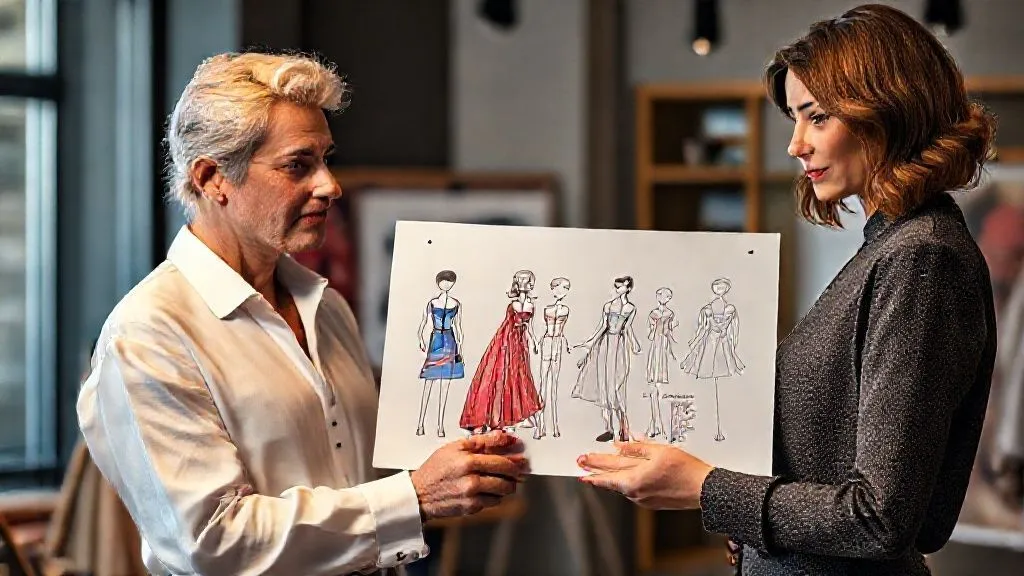
From Sketch to Mock-up: The Iterative Process
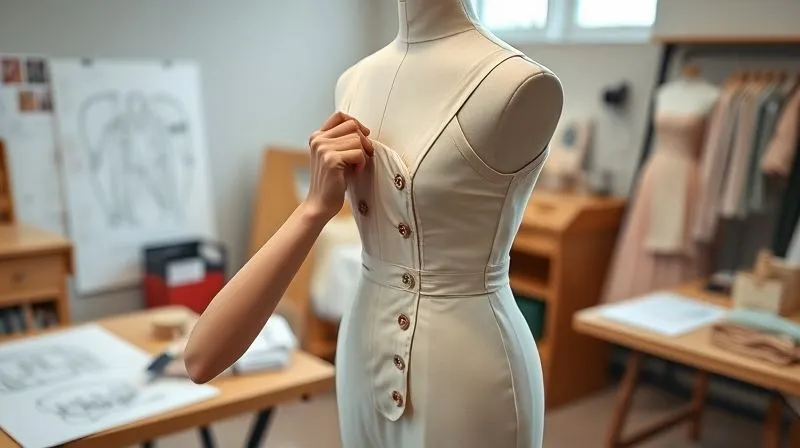
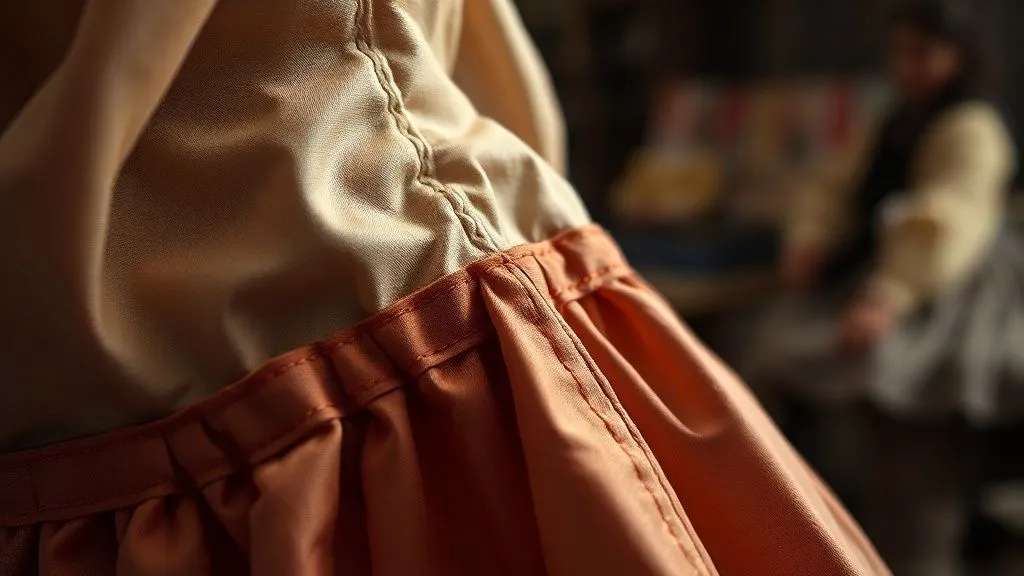
Never underestimate the power of the mock-up, or 'toile.' A sketch can capture an initial idea, but only a three-dimensional form can truly test how a concept translates to the body. I start with basic muslin or inexpensive fabric mock-ups, focusing on silhouette and form. This allows me to experiment with draping, volume, and how the garment interacts with movement without the pressure of expensive materials.
This stage is crucial for understanding how abstract shapes translate to a human form. A dramatic angle on paper might look awkward in 3D. A flowing line might become saggy. It's an opportunity to identify and solve these practical challenges while staying true to the conceptual intent. I often make multiple mock-ups, each refining a specific aspect of the design.
Feedback Loops: Refining the Abstract Vision
No design exists in a vacuum. Engaging in regular feedback loops with the director, choreographer, and even the performers themselves is vital. Explain your conceptual choices and ask for their interpretations. Do they see what you intend? Does the costume evoke the desired emotion or idea? Sometimes, a fresh pair of eyes can reveal a disconnect you missed.
Be open to constructive criticism, but also be prepared to articulate your artistic intent. It's a dialogue. This collaborative process ensures that the costume not only looks good but also effectively serves the abstract narrative of the play. Remember, the costume is part of a larger artistic whole, and its success is measured by its contribution to that whole.
Collaboration is Key: Harmonizing Visions
Costume design is inherently a collaborative art form. For abstract themes, where interpretations can vary widely, effective communication with your creative team is not just important – it's paramount.
Working with Directors and Performers
The director is the ultimate visionary, and your designs must serve their overall concept. When discussing abstract themes, I always bring visual aids: mood boards, fabric swatches, and even small conceptual sculptures. Words alone are often insufficient to convey the nuances of an abstract costume idea. I ask open-ended questions to ensure I fully grasp their interpretation of the abstract theme and how they envision it manifesting visually.
Similarly, performers are your living canvases. Their comfort, range of motion, and ability to embody their role are directly impacted by your designs. Involve them early in the process, especially when dealing with unusual silhouettes or materials. Their feedback on wearability and how the costume influences their movement can be invaluable in refining a conceptually bold, yet practically functional, design.
Communicating Abstract Ideas Effectively
Translating an abstract concept from your mind to another's requires a specific skill set. Avoid jargon. Use analogies. Show, don't just tell. If you're designing a costume for 'the weight of memory,' you might describe it as 'a garment that feels like layers of accumulated experiences, heavy in some places, translucent in others, almost like geological strata.' This paints a picture that is both conceptual and relatable.
Document your conceptual journey. Keep detailed notes on why certain choices were made in relation to the abstract theme. This not only helps you stay consistent but also provides a clear reference point when discussing the design with others. Effective communication in creative fields is a recognized challenge, and insights from sources like the Harvard Business Review can provide a broader perspective on team dynamics.
Embracing the Unexpected: Serendipity in Design
The creative process, especially when dealing with abstraction, is not always predictable. Some of the most groundbreaking designs emerge from moments of serendipity, from allowing the unexpected to inform your vision.
Allowing for Organic Evolution
While a structured approach is vital, it's equally important to remain flexible. An abstract theme, by its very nature, invites multiple interpretations. What if a fabric drapes in an unforeseen way that perfectly captures a nuanced aspect of 'fluidity'? What if a 'mistake' in construction creates a fascinating texture that speaks to 'fragmentation' more powerfully than your original intent?
I always leave room for organic evolution in my design process. This means not being overly rigid with initial concepts. Sometimes, the materials themselves will 'speak' to you, suggesting new directions or refinements that enhance the abstract theme. This openness to discovery is a hallmark of truly innovative design.

When 'Mistakes' Become Masterpieces
There have been numerous times in my career where what initially seemed like a 'mistake' – a dye batch gone wrong, a seam ripping unexpectedly, a fabric reacting differently than anticipated – turned into a conceptual breakthrough. For a piece exploring 'resilience,' a fabric that frayed beautifully when distressed became a core element, symbolizing strength found in vulnerability.
Embrace these moments. They are not failures but unexpected opportunities. Look at them through the lens of your abstract theme. Does this 'mistake' now offer a new visual metaphor? Can it be incorporated to add depth and complexity? This willingness to pivot and reinterpret is a powerful tool in translating the elusive nature of abstract concepts into compelling wearable art. The history of innovation is rife with such examples, a principle well-articulated in discussions on creativity and accidental discoveries, often touched upon by thought leaders in design and innovation, such as those featured on platforms like TED Talks on Creativity.
Frequently Asked Questions (FAQ)
How do I avoid literal interpretations when translating abstract themes? The key is to focus on evoking emotion and conceptual resonance rather than direct representation. Instead of depicting 'sadness' with tears, think about how sadness feels: heavy, restrictive, isolating. Translate these feelings into form, texture, and color (e.g., heavy, drooping fabric, muted cool tones, a constricted silhouette). Use metaphors and symbolism subtly, allowing the audience to interpret rather than simply observe.
What if the director's vision for an abstract theme is too vague or constantly changing? This is a common challenge. Your role becomes one of a visual interpreter and a guide. Propose concrete visual concepts based on your understanding, always linking them back to the director's broad strokes. Use mood boards, sketches, and small fabric samples to solidify ideas. Document every conversation and decision. Present options that are conceptually strong but also offer flexibility for adjustment. Open and frequent communication is your best tool here.
How do I balance wearability with highly abstract costume concepts? Wearability is crucial, as the costume must allow the performer to execute their role effectively. For highly abstract concepts, consider modular designs where conceptual elements can be added or removed. Use lightweight materials where possible, and ensure the basic garment structure is comfortable and allows for full range of motion. Sometimes, the 'unwearable' quality can itself be part of the abstract concept (e.g., restriction, burden), but this must be a deliberate, discussed choice that doesn't hinder performance safety or integrity.
What role does research play in abstract costume design? Research is fundamental. It's not just about historical fashion or material science; it's about delving into philosophy, psychology, art history, and even scientific concepts related to your abstract theme. If the theme is 'quantum entanglement,' research its visual metaphors. If it's 'the sublime,' explore how artists have depicted it across centuries. This deep research enriches your understanding and provides a vast well of inspiration for non-literal translation.
Can abstract costumes still be historically informed? Absolutely. Historical garments often carry inherent symbolism and emotional weight. You can use historical silhouettes, construction techniques, or textile patterns as a foundation, then abstract or distort them to convey your modern concept. For example, a historically accurate corset could be deconstructed or exaggerated to represent 'societal pressure' or 'fragmented identity,' blending the familiar with the abstract to create a powerful new meaning.
Key Takeaways and Final Thoughts
- Deconstruct and Define: Break down abstract themes into core emotions, metaphors, and symbols before visualizing.
- Master Your Visual Language: Utilize color, texture, form, and silhouette to evoke, not just represent, abstract ideas.
- Embrace Movement: Design costumes not as static objects, but as dynamic extensions of the performer's body and the play's narrative.
- Detail with Intent: Use symbolic detailing subtly to add layers of meaning without being overly literal.
- Iterate and Collaborate: Prototype extensively and engage in continuous feedback with your creative team.
- Stay Open to Serendipity: Allow for organic evolution and embrace unexpected discoveries in your design process.
Translating abstract play themes into wearable costume concepts is one of the most intellectually stimulating and creatively rewarding challenges a designer can undertake. It demands not just skill, but a willingness to delve into the intangible, to trust your intuition, and to constantly push the boundaries of visual storytelling. By applying these frameworks and maintaining an open, iterative approach, you won't just design costumes; you'll craft living, breathing embodiments of profound ideas. Go forth and create, and let your designs speak the unspoken language of the abstract.
Recommended Reading
- 7 Pillars: How to Select Contemporary Menswear for Professional Authority
- Haute Couture: Is Exclusive Design Investment a Smart Move?
- 7 Pro Strategies: Navigating Unrealistic Bridal Beauty Client Expectations
- Unlock Your Glow: How to Choose Statement Earrings for Your Face Shape
- 7 Essential Steps: Safeguarding Your Fragile Vintage Dresses from Irreversible Damage

Your email address will not be published. Required fields are marked *