


How to Spot Emerging Street Style Trends Before They Hit Mainstream?
For over 15 years immersed in the vibrant world of fashion blogging and trend analysis, I've witnessed countless shifts – from fleeting fads to seismic style revolutions. What separates the true visionaries from those constantly playing catch-up isn't luck; it's a honed ability to read the subtle whispers of the street.
Many aspiring trendsetters and fashion enthusiasts feel perpetually behind, seeing trends explode only after they've saturated social feeds and retail shelves. The frustration of missing that 'aha!' moment, of not being the first to champion a new look, can be disheartening. It feels like everyone else has an invisible crystal ball.
But what if you could develop that crystal ball? In this definitive guide, I'll pull back the curtain on the methodologies I've refined over years. We'll explore actionable frameworks, real-world case studies, and expert insights that will empower you to not just follow trends, but to anticipate and even influence them, transforming you into a true fashion oracle on How to spot emerging street style trends before they hit mainstream?
The Art of Observation: Beyond the Obvious Street Style Cues
I've always stressed that true trend spotting isn't about scanning a fashion magazine; it's about deep, empathetic observation of human behavior and aesthetic expression. It's learning to see what others merely look at.
Training Your Eye for Micro-Trends
Micro-trends are the nascent signals, the subtle shifts in how people dress, accessorize, or even carry themselves, long before they coalesce into a recognizable movement. Think of a specific way a scarf is tied, a unique layering technique, or an unexpected color combination appearing repeatedly in diverse settings. I advise my mentees to keep a "visual diary"—a mental or actual collection of these small, recurring elements. It's about pattern recognition, not just identifying isolated incidents.
The Importance of Context and Subculture
Street style is never a vacuum. It's a reflection of culture, mood, and societal shifts. To truly understand an emerging trend, you must understand its context. Is it a response to economic changes, a political statement, or a revival of a past era interpreted through a modern lens? Subcultures, from skaters to artists, musicians to tech innovators, are often the fertile ground where new styles first sprout. They aren't trying to be trendy; they're expressing identity, and that authenticity is magnetic.
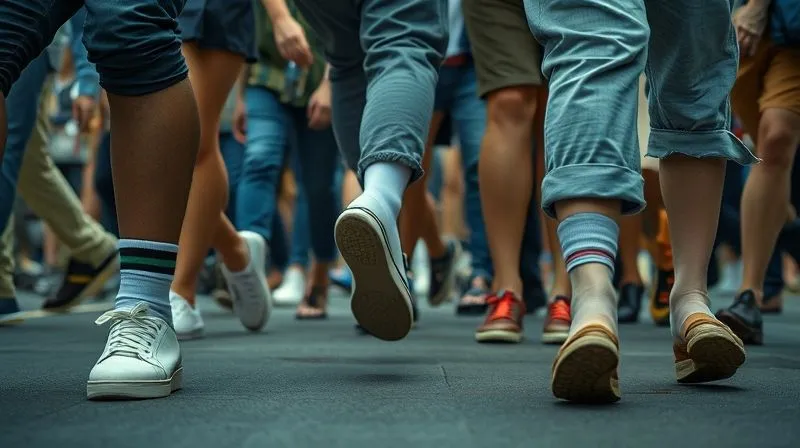
Decoding Early Adopters: Where True Innovation Resides
In my journey, I've learned that you don't find the future by looking at the masses. You find it by observing the outliers, the ones who aren't afraid to step outside the current fashion paradigm. These are the true early adopters.
Identifying the "Avant-Garde" Pockets
These aren't necessarily celebrities, but individuals or small groups known for their distinct, often unconventional, style. They might be art students, independent designers, musicians in emerging genres, or even specific communities within major cities. They prioritize personal expression over mainstream acceptance. I often recommend seeking out local fashion schools' graduation shows or independent art gallery openings – these are often incubators of fresh ideas.
The Role of Niche Communities and Digital Spaces
Before mainstream social media catches on, these trends often simmer in highly specific digital communities. Think niche forums, private Discord servers, or even curated Instagram accounts with smaller, highly engaged followings. These spaces allow for unadulterated style experimentation. As fashion journalist The Business of Fashion often highlights, the trickle-up effect from these niche groups is now more powerful than ever.
| Category | Characteristics | Examples |
|---|---|---|
| Early Adopters | Risk-takers, innovators, highly individualistic, prioritize expression | Art students, indie musicians, niche designers, specific subcultures |
| Early Majority | Influenced by early adopters, more cautious, seek social proof | Fashion-forward consumers, trend-conscious shoppers |
| Late Majority | Skeptical, adopt only when trend is widespread, value practicality | General public, mass market consumers |
| Laggards | Traditional, resistant to change, adopt only when trend is obsolete | Very few in fashion context, typically non-participants |
Leveraging Digital Footprints: Social Media as a Trend Compass
Social media isn't just a display window for trends; it's a living, breathing dataset if you know how to read its signals. I've spent years refining techniques to filter out the noise and pinpoint genuine emerging movements. This is a crucial aspect of How to spot emerging street style trends before they hit mainstream?
Beyond the 'Explore' Page: Deep Diving into Niche Platforms
While Instagram's Explore page offers a snapshot, true insights come from intentional exploration. Look at platforms like TikTok, Pinterest, and even less obvious ones like Tumblr or Behance for visual cues. Pay attention to how users are styling common items in uncommon ways, or the emergence of entirely new garment types. For instance, the rise of "cottagecore" didn't start on mainstream fashion feeds; it bloomed in specific aesthetic communities on Pinterest and Tumblr.
Hashtag Archaeology and Algorithmic Anticipation
Don't just follow popular hashtags. Delve into smaller, more obscure ones. Search for combinations of descriptive terms that haven't yet gained mass traction. For example, instead of #streetstyle, try #deconstructedtailoring or #utilitywearrevival. Algorithms, particularly on platforms like TikTok, are incredibly adept at identifying micro-communities and emerging interests. By engaging with diverse, avant-garde content, you can subtly train your feed to show you more of what's truly new. This proactive engagement is crucial.
- Create Curated Feeds: Dedicate specific social media accounts or lists to following only niche designers, independent fashion photographers, and style influencers with fewer than 50k followers.
- Engage Actively: Like, comment, and save posts that feature genuinely innovative styling or garments. This signals to the algorithm that you want to see more of this content.
- Monitor Hashtag Evolution: Track how certain descriptive hashtags gain or lose momentum. A sudden surge in a previously obscure tag can be a strong indicator of an emerging trend.
- Cross-Platform Comparison: Identify a potential micro-trend on one platform (e.g., a specific color palette on Pinterest) and then search for visual evidence of it on others (e.g., TikTok outfits, Instagram stories).
"The most powerful trends don't shout; they whisper first in the echo chambers of niche communities before growing into a roar." - My personal mantra for digital trend spotting.
According to TikTok's own trend reports, user-generated content often dictates the direction of fashion, with trends originating from the platform's diverse communities.
The Global Perspective: Why Local Street Styles Matter Universally
I've traveled extensively, and one profound lesson I've learned is that fashion isn't monolithic. What's bubbling up in Tokyo's Harajuku district might seem disparate from Seoul's Gangnam, but these distinct local expressions are often the precursors to global shifts.
Fashion Capitals vs. Emerging Style Hubs
While Paris, Milan, New York, and London remain pivotal, true innovation often sparks in less conventional hubs. Think cities like Copenhagen, Berlin, Seoul, Lagos, or even smaller, culturally rich towns. These places, free from the immediate pressures of the mainstream fashion industry, foster unique aesthetic narratives. For example, the minimalist aesthetic and functional fashion that have become so prominent globally often trace roots back to Scandinavian street style.
Cultural Exchange and Hybrid Aesthetics
The digital age has accelerated the cross-pollination of styles. A traditional garment from one culture might be reinterpreted with a contemporary twist in another, creating a hybrid aesthetic. Observing how different cultures adopt, adapt, and transform existing styles offers a rich tapestry of future trends. It’s about understanding the dialogue between global influences and local interpretations.
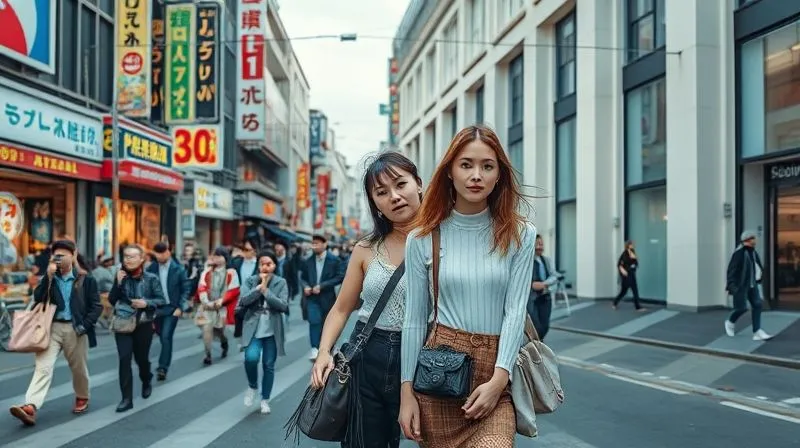
From Runway to Reality: Bridging High Fashion and Street Interpretation
The relationship between the runway and the street is a fascinating, cyclical dance. While high fashion often dictates direction, it's the street that truly validates, adapts, and democratizes these ideas. My experience has shown me that the most enduring trends are those that find a resonant interpretation in everyday wear.
Deconstructing Designer Influences
Don't just look at the finished runway looks; analyze the underlying themes, silhouettes, fabrics, and color palettes. Designers are often forecasting years in advance. How are these abstract concepts being translated into wearable, accessible forms on the street? A deconstructed blazer on the runway might become an oversized, relaxed-fit blazer in street style, retaining the essence but adapting the practicality.
The Trickle-Down and Bubble-Up Dynamics
Traditionally, fashion was seen as trickling down from haute couture to the masses. However, the "bubble-up" theory, where trends originate from street style and influence designers, is increasingly prevalent. The most astute trend spotters understand that it's a constant feedback loop. A designer might introduce a specific sleeve detail, but it's the street stylists who experiment with how it's worn, layered, or paired, ultimately shaping its mainstream adoption.
Case Study: The Rise of Utility Wear
Consider the journey of Utility Wear. For years, designers like Stella McCartney and Prada flirted with utilitarian elements on the runway – cargo pockets, durable fabrics, and functional silhouettes. However, it was the street style communities, particularly within workwear and outdoor subcultures, that truly embraced and popularized these elements. They took the designer's conceptual ideas and integrated them into daily outfits, demonstrating versatility and comfort. This street-level validation, amplified by social media, eventually led to the explosion of cargo pants, utility vests, and oversized pockets across all retail levels. This 'bubble-up' from authentic street interpretation back to mainstream retail proved the power of observing how people actually wear clothes.
Building Your Personal Trend Prediction Framework
Predicting trends isn't magic; it's a systematic process. Over the years, I've developed a framework that combines observation, data analysis, and intuition. Here’s how you can construct your own to effectively answer How to spot emerging street style trends before they hit mainstream?
Step-by-Step Trend Analysis Protocol:
- Initial Observation & Hypothesis: Regularly scan diverse sources (social media, niche blogs, global street style photography, art exhibitions). Identify recurring micro-details or unique styling choices. Formulate a hypothesis: "Is [specific detail] a nascent trend?"
- Validation Across Platforms: Search for evidence of your hypothesis on at least three different platforms or geographic locations. Look for consistent repetition, not just isolated instances.
- Contextual Analysis: Research the potential cultural, social, or economic drivers behind the emerging trend. What problem does it solve, or what sentiment does it express?
- Influencer & Early Adopter Identification: Pinpoint individuals or communities who are consistently showcasing this style. These are your trend evangelists.
- Market Signals: Look for very early signs of adoption by smaller, independent brands or boutiques. Is anyone selling items that align with your observed trend?
- Forecasting & Action: Based on your validated data, project the potential trajectory of the trend. Consider its longevity, adaptability, and mainstream appeal.
"A trend without context is just a fleeting image. Understand the 'why' behind the 'what,' and you unlock true foresight." - A core principle I live by.
Integrating Data with Intuition
While data from social media analytics and retail reports is invaluable, never discount your intuition. As a seasoned observer, your gut feeling, honed by years of experience, can often connect dots that data alone cannot. It's about synthesizing quantitative evidence with qualitative understanding. Harvard Business Review often emphasizes the synergy between data-driven insights and experienced-based judgment in effective decision-making.
| Phase | Tools | Output |
|---|---|---|
| Observation | Visual diary, niche social feeds, street photography | Micro-trend hypothesis |
| Validation | Cross-platform search, qualitative interviews (optional) | Confirmed pattern recognition |
| Analysis | Cultural research, subculture deep dives, expert interviews | Contextual understanding, drivers identified |
| Forecasting | Market analysis, brand monitoring, intuition | Trend trajectory, potential impact |
The Ethics of Trend Spotting: Appreciation vs. Appropriation
As someone who has spent decades navigating the fashion landscape, I feel it's my responsibility to emphasize the ethical considerations of trend spotting. It's not just about what's new; it's about respecting origins.
Respecting Origins and Cultural Significance
Many street style trends originate from specific cultural groups, often marginalized ones. When spotting and reporting on these trends, it is paramount to acknowledge their source. Appropriation occurs when elements are taken from a culture, often without understanding or respect, and used in a way that trivializes their significance or benefits the dominant culture while the originators receive no recognition or compensation. Always ask: "Where did this truly come from?" and "Am I giving credit where credit is due?"
Fostering Inclusivity in Trend Dialogue
True innovation often comes from diverse voices. As trend spotters, we have a role to play in amplifying those voices, not silencing them. Seek out and celebrate the original creators and communities. Promote a dialogue of appreciation, understanding, and respectful homage rather than mere replication. This not only makes your insights more authentic but also contributes to a more equitable and vibrant fashion ecosystem. Vogue Business frequently discusses the critical importance of cultural sensitivity in fashion.
Frequently Asked Questions (FAQ)
Q: How quickly do emerging street style trends typically become mainstream? A: From my observations, this timeline has significantly accelerated. What once took years now often takes mere months, sometimes even weeks, thanks to social media. A micro-trend spotted in a niche community can go viral globally within a single fashion season, especially if picked up by influential early adopters and amplified by algorithms. However, truly enduring trends still require a longer gestation period, often building slowly over 1-2 years before reaching mass saturation.
Q: Is it possible to influence a trend, or only spot it? A: Absolutely, you can influence it, especially if you are an early adopter or have a platform. By consistently showcasing an emerging style with authenticity and creativity, you contribute to its visibility and validation. Fashion is a conversation, and by participating thoughtfully, you can certainly help shape its direction. Your curated content, whether on a blog or social media, acts as a powerful signal.
Q: What's the biggest mistake aspiring trend spotters make? A: The most common mistake I've seen is looking for trends in the wrong places – i.e., only looking at what's already popular. They chase what's already mainstream instead of seeking out the nascent whispers. Another significant error is failing to understand the 'why' behind a trend, reducing it to a mere aesthetic without appreciating its cultural or social context. Without context, it's impossible to predict its longevity or evolution.
Q: How can I differentiate between a fleeting fad and a genuine emerging trend? A: This is where experience and your framework come in. Fads often explode quickly, are very specific, lack deeper cultural context, and burn out fast. Genuine emerging trends, however, tend to have roots in broader societal shifts, offer versatility, and are adopted by diverse groups of early adopters. They evolve rather than simply disappear. Look for adaptability and underlying meaning.
Q: Should I focus on specific garments, or broader styling techniques? A: Both are important, but I'd argue that broader styling techniques often signal more enduring shifts. A specific garment might be a fad, but a new way of layering, combining colors, or playing with proportions can define an era. Focus on the *how* as much as the *what*. For instance, oversized tailoring is a styling technique that has outlasted many specific oversized garments.
Key Takeaways and Final Thoughts
Mastering How to spot emerging street style trends before they hit mainstream? is an invaluable skill for any fashion enthusiast or professional. It transforms you from a follower into a forward-thinker, capable of anticipating the next big wave.
- Hone Your Observational Skills: Look beyond the obvious for micro-trends and contextual cues.
- Embrace Niche Communities: Early adopters and subcultures are the incubators of future fashion.
- Master Digital Archaeology: Leverage social media's deep data, going beyond surface-level trends.
- Adopt a Global Lens: Recognize that local street styles are the building blocks of universal fashion shifts.
- Bridge Runway and Reality: Understand the interplay between high fashion concepts and street-level interpretation.
- Develop a Systematic Framework: Combine structured analysis with your expert intuition for reliable predictions.
- Practice Ethical Trend Spotting: Always acknowledge origins and foster inclusivity in your fashion dialogue.
By diligently applying these strategies, you're not just waiting for trends to arrive; you're actively seeking them out, understanding their roots, and even contributing to their narrative. The world of fashion is ever-evolving, and with these tools, you'll be equipped to stay not just abreast, but ahead. Go forth, observe, analyze, and continue to inspire with your unique foresight. The street is your runway, and its whispers hold the future of style.
Recommended Reading
- Stop Struggling: 6 Steps to Scale Apparel Repair Profitably
- Unlock Your Style: How to Chicly Dress Diverse Body Types (7 Pro Tips)
- Unlock the Secret: How to Style Oversized Sweaters Without Looking Frumpy?
- Salvaging a High-Value Custom Wedding Dress with Major Flaws: Your Expert Guide
- AI & Greenwashing: 7 Ways to Validate Sustainable Fashion Claims




Your email address will not be published. Required fields are marked *