

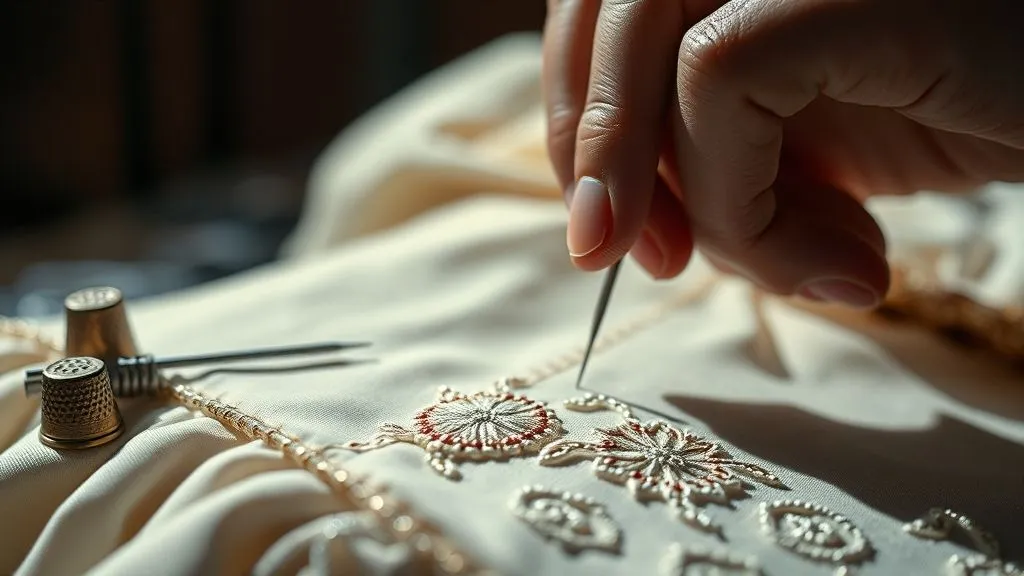
How to reinforce delicate costume seams for intense stage wear?
For over two decades in the vibrant world of costume design, I've witnessed the heart-stopping moment when a beautifully crafted garment, designed for dazzling stage presence, begins to unravel mid-performance. It's a nightmare scenario for any designer, a testament to the immense strain placed on theatrical costumes.
The unique demands of intense stage wear—acrobatic movements, rapid costume changes, sweat, and repeated laundering—push costume construction to its absolute limits. Delicate fabrics, intricate embellishments, and precisely fitted silhouettes are particularly vulnerable, often leading to unsightly tears or complete seam failures.
In this definitive guide, I will share my hard-won expertise and practical strategies for reinforcing even the most delicate costume seams. We'll delve into material science, advanced construction techniques, and preventative measures, ensuring your creations withstand the rigors of the spotlight and endure for countless performances.
Understanding the Enemy: Why Delicate Seams Fail on Stage
Before we can fortify our seams, we must first understand the forces working against them. Stage costumes are not everyday wear; they are engineered for extreme conditions.
The Dynamics of Stage Movement
Performers contort, leap, spin, and stretch, subjecting seams to dynamic, multi-directional stress. A seam designed for static wear will quickly fail under the constant pulling and twisting of a dancer or actor.
Areas like armholes, crotches, waistlines, and princess seams bear the brunt of this movement. The sheer force exerted can snap threads, pull fabric away from stitching, or even tear the fabric itself adjacent to the seam line.
Fabric Stress and Tension Points
Delicate fabrics like chiffon, silk, lace, and fine tulle have limited tensile strength. When stretched or pulled taut, they can fray or tear. Even sturdier fabrics can be compromised if the seam allowance is too small or if the stitching is too close to the raw edge.
High-tension areas, such as the point where a sleeve meets a bodice or where a fitted pant meets the waist, require extra consideration. These are predictable failure points that demand proactive reinforcement.
The Impact of Quick Changes
The frenetic pace of backstage quick changes often involves frantic pulling, tugging, and fastening. Zippers are yanked, hooks are strained, and fabric is stretched beyond its normal limits. This rough handling, though unavoidable, significantly contributes to seam degradation over time.
Expert Insight: A well-reinforced seam isn't just about preventing a tear; it's about engineering a garment that can withstand the entire lifecycle of a production, from dress rehearsal to the final curtain call, including the often-brutal quick changes.
The Foundation: Choosing the Right Materials
The strength of your seam begins long before the needle touches the fabric. Material selection is paramount.
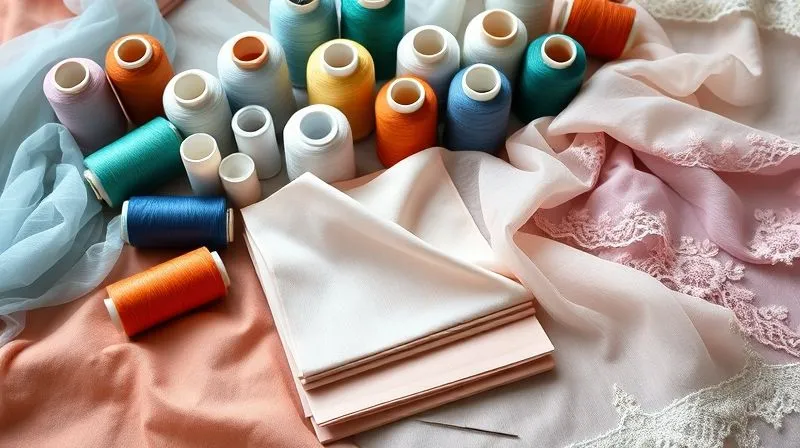
Threads: More Than Just Color
Never underestimate the power of a strong thread. While cotton threads are traditional, they lack the tensile strength and elasticity needed for stage wear. I exclusively recommend synthetic threads for most costume construction.
- Polyester Thread: My go-to for general costume construction. It's strong, durable, resistant to UV light, and has a slight stretch that accommodates movement.
- Nylon Thread: Even stronger than polyester, often used for heavy-duty applications, leather, or upholstery. Can be a bit stiff for very delicate fabrics, but excellent for high-stress areas like strapping or corset boning channels.
- Silk Twist/Buttonhole Twist: Exceptionally strong and lustrous, ideal for hand-sewn reinforcements, buttonholes, or areas needing both strength and a fine finish.
- Core-Spun Thread: A polyester core wrapped in cotton or another fiber. Offers excellent strength with a softer hand, good for visible topstitching where strength is needed.
Always match your thread weight to your fabric weight, but err on the side of slightly stronger for stage costumes. For delicate fabrics, a fine but strong polyester or silk twist is best.
Interfacing and Stabilizers: The Unseen Heroes
These materials provide crucial support, preventing delicate fabrics from stretching out of shape or tearing at the seam line.
- Fusible Interfacing: Applied with heat, it bonds to the fabric. Choose lightweight, knit fusibles for stretch fabrics, or woven for stable fabrics. It adds body and prevents stretching.
- Sew-in Interfacing: Offers support without changing the fabric's hand as much as fusible. Organza, silk organza, or fine cotton batiste can be excellent choices for delicate fabrics, providing sheer, stable backing.
- Twill Tape/Grosgrain Ribbon: Can be sewn into seam allowances or along stress points to add significant reinforcement without bulk.
Pre-Construction Reinforcement: Building Strength from Within
The best reinforcement is often invisible, integrated into the construction process itself.
Flat-Felling and French Seams for Durability
These enclosed seam finishes are not just aesthetically pleasing; they are inherently strong because they encase the raw edges, preventing fraying and providing a double layer of stitching.
For truly delicate fabrics like chiffon or sheer silks, a French Seam is invaluable. It creates a neat, strong seam that is completely finished on both sides, making it ideal for unlined garments or those where the inside may be visible.
- Place fabric wrong sides together, stitch 1/4 inch from the edge.
- Trim seam allowance to 1/8 inch.
- Press seam open, then press both allowances to one side.
- Fold fabric right sides together, encasing the raw edges. Press.
- Stitch 1/4 inch from the fold, ensuring the raw edges are fully enclosed.
- Press the finished seam to one side.
Flat-felled seams are excellent for areas needing extreme durability, like pant inseams or historical garments. They create a very robust, flat seam that can withstand significant stress.
Strategic Understitching and Topstitching
Understitching isn't just for neat edges; it secures the seam allowance to the facing or lining, preventing it from rolling to the outside. This adds a layer of stability to necklines, armholes, and waistbands, reducing strain on the main seam.
Topstitching, when done correctly with a strong thread, acts as an additional line of defense. It secures layers of fabric together and distributes tension, especially effective on collars, cuffs, and waistbands. It can also reinforce pockets or decorative elements.
Integrating Webbing and Cording
For areas of extreme stress, such as the attachment points for heavy skirts, structured bodices, or areas experiencing significant pull (e.g., suspender attachments), integrating webbing or cording directly into the seam is a game-changer. Stitch a strip of sturdy cotton webbing or a length of strong cording into the seam allowance. This distributes the stress across a wider area and provides an unyielding anchor.
I've found this technique particularly useful in historical costume construction, where structural integrity is paramount. For instance, in a heavily boned corset, the boning channels themselves become points of reinforcement. For more on historical techniques, I often refer to resources like the Metropolitan Museum of Art's costume collection archives.
Expert Insight: Think of your seams as structural beams. Just as an architect designs for load-bearing walls, a costume designer must engineer seams for maximum stress tolerance.
Advanced Seam Techniques for High-Stress Areas
When standard seams won't cut it, it's time to bring in the heavy artillery.
Double-Stitching and Triple-Stitching Protocols
This is precisely what it sounds like: sewing the same seam line two or three times. While simple, its effectiveness is profound. For seams in high-movement areas (e.g., crotch seams in dancewear, armholes in acrobatic costumes), I always recommend at least double-stitching.
- Stitch your initial seam line with a slightly longer stitch length (e.g., 2.5-3mm).
- Carefully trim and press the seam as usual.
- Stitch a second line parallel to the first, either directly on top of it or just inside the seam allowance, ensuring it doesn't show on the right side.
- For triple-stitching, repeat the process, perhaps with a slightly shorter stitch length for the final pass.
This distributes the stress across multiple lines of thread, making it exponentially harder for the seam to fail. Always use a strong, suitable thread for this technique.
The Power of Casing and Boning Channels
For structured garments, creating casings for cording, flexible steel boning, or plastic boning adds incredible strength. These channels are essentially reinforced seams themselves. By enclosing a rigid or semi-rigid element within the seam, you prevent stretching and provide structural integrity.
This is vital in corsetry, bodices, and areas requiring shape retention. The casing itself should be sewn with robust thread and potentially double-stitched. The boning or cording inside acts as a continuous reinforcement, preventing the fabric from tearing at stress points.
Gussets and Godets: Engineering for Movement
Rather than simply reinforcing a straight seam, sometimes the best solution is to redesign the seam entirely. Gussets (diamond, square, or triangular inserts) and godets (triangular or circular inserts) are fabric pieces strategically added into seams to provide extra ease of movement and reduce tension.
For example, a gusset in the underarm of a fitted sleeve or the crotch of dance pants allows for a much greater range of motion without straining the surrounding seams. These inserts are constructed with their own robust seams, effectively redistributing the stress away from a single vulnerable line. BurdaStyle offers a good glossary of these terms.
Post-Construction Fortification: After the Seam is Sewn
Sometimes, reinforcements are added after the main construction, either as a preventative measure or to address an existing weakness.
Seam Taping with Twill or Grosgrain
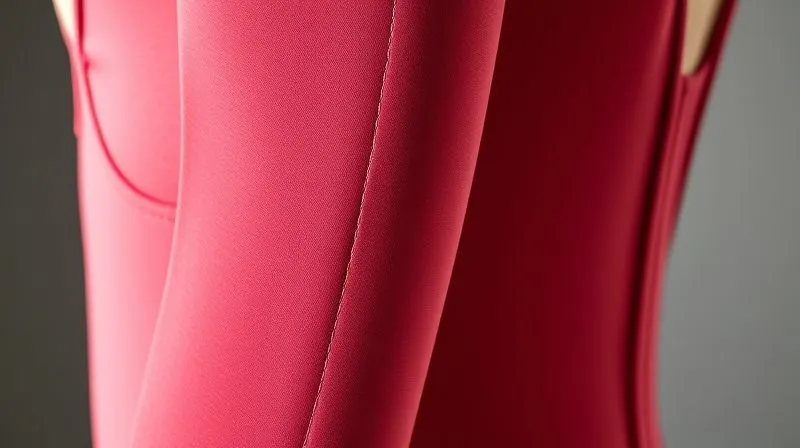
This is a classic technique for adding strength to a finished seam. Twill tape or grosgrain ribbon can be sewn directly onto the seam allowance, or sometimes even over the seam line on the wrong side of the garment. This provides a stable, non-stretch barrier that prevents the seam from pulling apart or stretching out.
It's particularly effective on shoulder seams, waistlines, or any straight seam that carries significant weight or tension. For curved seams, a bias-cut twill tape or a slightly stretched grosgrain can be used to maintain flexibility while adding strength.
| Tape Type | Characteristics | Best Use |
|---|---|---|
| Twill Tape (Cotton) | Strong, durable, matte finish, good for structure | Shoulder seams, waistlines, historical garments |
| Grosgrain Ribbon (Polyester/Nylon) | Strong, durable, ribbed texture, less prone to stretching | Waistbands, decorative reinforcement, corset lacing channels |
| Bias Tape (Fabric) | Flexible, stretchable, can follow curves easily | Curved seams, necklines, armholes in delicate fabrics |
Hand-Stitched Reinforcement: The Unsung Hero
Do not underestimate the power of careful hand-stitching. For areas that are difficult to access by machine, or for truly delicate fabrics where machine stitching might be too harsh, hand-sewn reinforcements are indispensable. Techniques like a strong backstitch, whipstitch, or even a careful felling stitch can add significant strength.
Use a strong silk twist or heavy-duty polyester hand-sewing thread. This is especially useful for reinforcing the ends of machine-stitched seams, securing appliqués, or strengthening areas where multiple seams converge.
Bar Tacks and Reinforcement Patches
Bar tacks are small, dense lines of zigzag stitching used to reinforce points of stress, such as the ends of buttonholes, pocket openings, or belt loops. They are incredibly strong and prevent seams from ripping at these critical junctures. Many sewing machines have an automatic bar tack setting, but they can also be done manually.
For extreme stress points, or areas that have already shown signs of tearing, a small, discreet reinforcement patch can be applied to the wrong side of the fabric. Use a lightweight but strong fabric like cotton canvas, denim, or even a second layer of the costume fabric. Stitch it securely over the stressed area, extending beyond the weak point to distribute the tension.
Expert Insight: The best reinforcement is often invisible, blending seamlessly into the garment's design. It's about engineering strength without compromising aesthetics.
Case Study: The Ballerina's Bodice Breakthrough
Case Study: The Ballerina's Bodice Breakthrough
I once worked on a principal dancer's bodice for a new ballet production. The design called for a very delicate silk dupioni, heavily embroidered, with an incredibly tight fit to provide support and create a flawless line. After just a few dress rehearsals, the side seams, particularly under the arms, began to show signs of strain, with threads pulling and the silk fraying.
Instead of rebuilding, we implemented a multi-pronged reinforcement strategy. First, we carefully unpicked the stressed sections of the side seams. We then inserted a very fine, bias-cut silk organza as a sew-in interfacing, extending several inches beyond the original seam line to distribute stress. The seams were then re-stitched using a strong, fine polyester thread, double-stitched for extra security. Finally, a narrow strip of bias-cut twill tape was hand-stitched onto the seam allowance on the inside, providing a final layer of robust, flexible support. The dancer performed flawlessly through the entire run, and the bodice held up beautifully, a testament to combining several reinforcement techniques.
Maintenance and Longevity: Extending Costume Life
Even the strongest seams need care to last. Proactive maintenance is key to extending the life of your theatrical costumes.
Regular Inspection Routines
After every performance or rehearsal, costumes should undergo a quick but thorough inspection. Pay close attention to high-stress areas: armholes, crotches, waistlines, zippers, and closures. Look for loose threads, small tears, or signs of fabric pulling away from the stitching.
Catching a small issue early can prevent a catastrophic failure. A quick repair with a strong hand stitch is far easier than a full seam reconstruction.
Smart Storage Solutions
How costumes are stored between performances and seasons significantly impacts seam integrity. Avoid cramming costumes into tight spaces or hanging them on thin hangers that distort shoulder seams.
- Use padded hangers for heavy garments.
- Store delicate items flat in acid-free tissue paper.
- Ensure costumes are clean and dry before storage to prevent mildew or pest damage, which can weaken fibers.
- Avoid direct sunlight, which can degrade fabric and thread strength over time.
Common Pitfalls and How to Avoid Them
Even experienced designers can fall into these traps. Awareness is your first line of defense.
Overlooking Fabric Stretch
Many delicate fabrics, especially those used in dancewear, have inherent stretch. Using a rigid stitch or non-stretch thread on a stretch fabric will cause the seam to pop. Always use a zigzag stitch, a stretch stitch, or a serger for stretch fabrics, and pair it with a polyester or nylon thread that has some give.
The "Quick Fix" Trap
Under pressure, it's tempting to use a quick, superficial repair. A few hasty stitches with weak thread or a poorly applied patch will only delay the inevitable and often make the subsequent proper repair more difficult. Always aim for a durable, considered repair, even if it takes a little longer.
Neglecting Stress Testing
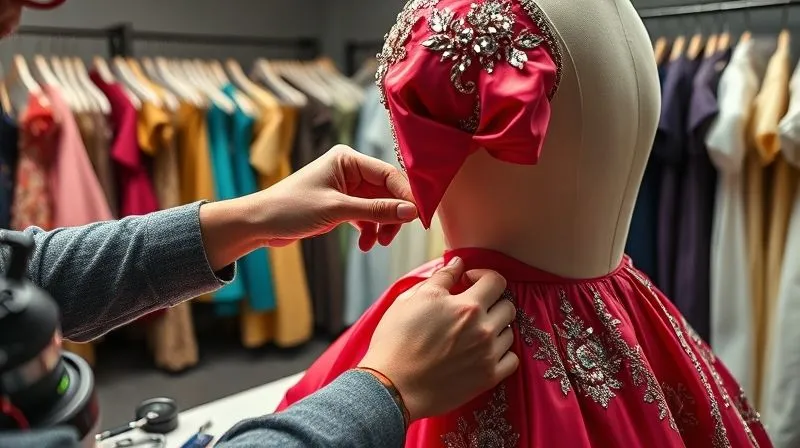
Before a costume hits the stage, it should be stress-tested. Have the performer go through their full range of motion. Gently pull on seams in high-stress areas. This proactive testing reveals weak points before they become public embarrassments. This practice is a cornerstone of professional theatrical costume shops, as highlighted by organizations like the Costume Society.
Frequently Asked Questions (FAQ)
How do I choose the right thread for different fabrics? For most delicate stage fabrics, a strong polyester thread is your best bet due to its durability and slight stretch. For very fine silks or hand-sewn details, a silk twist thread offers superior strength with a delicate finish. Always consider the fabric's weight and intended movement; a heavier fabric or more intense movement might warrant a nylon thread.
Can I use fusible interfacing on all delicate fabrics? No, exercise caution. While fusible interfacing is convenient, it can alter the drape and hand of very delicate fabrics like chiffon or fine lace. Always test on a scrap piece first. For extremely delicate materials, a sew-in interfacing like silk organza or fine cotton batiste is often a safer choice as it adds support without changing the fabric's inherent qualities as drastically.
What's the best way to reinforce a seam on stretch fabric? For stretch fabrics, the key is to maintain elasticity. Use a narrow zigzag stitch or a dedicated stretch stitch on your sewing machine. A serger is ideal as it creates a strong, flexible seam. Always use a polyester or nylon thread. For added reinforcement, you can stitch a narrow strip of clear elastic into the seam allowance as you sew, or use a stretch-knit fusible interfacing.
How often should I inspect costume seams for damage? For costumes in active use, a seam inspection should be a routine part of the post-performance or post-rehearsal dressing room check. For costumes in storage, a thorough inspection at the beginning and end of each season, or before a new run of performances, is advisable. Regular, small checks prevent major repairs.
Are there any specific machines or attachments that help? A good quality sewing machine with various stitch options (especially zigzag and stretch stitches) is essential. A serger (overlocker) is invaluable for stretch fabrics and creating professional, durable seam finishes quickly. Specialty presser feet, like a walking foot, can help feed delicate or slippery fabrics evenly, preventing stretched or puckered seams.
Key Takeaways and Final Thoughts
Reinforcing delicate costume seams for intense stage wear is not an afterthought; it's an integral part of the design and construction process. By embracing a proactive approach, you can create garments that are not only beautiful but also resilient and reliable.
- Choose materials wisely: Strong threads and appropriate interfacings are your first line of defense.
- Integrate strength from within: Techniques like French seams, double-stitching, and gussets build durability into the very structure of the garment.
- Reinforce high-stress points: Identify vulnerable areas and fortify them with webbing, bar tacks, or hand-stitching.
- Prioritize maintenance: Regular inspections and proper storage extend the life of your meticulously crafted costumes.
- Test, test, test: Always stress-test costumes with the performer to identify and address weaknesses before opening night.
As a costume designer, your creations are vital to bringing a story to life. By mastering these reinforcement techniques, you ensure that your costumes can withstand the theatrical crucible, allowing performers to shine without a single stitch of worry. Invest the time and precision, and your costumes will stand the test of time, performance after performance.
Recommended Reading
- 5 Actionable Ways: Revamp Stale Streetwear for New Buyers Now
- Bride Dislikes Custom Veil? 7 Steps to Save Your Wedding Day Look
- 5 Proven Strategies: Differentiating Your Costume Jewelry Brand in a Saturated Market
- Stop Kids' Clothes Ripping: 7 Expert Strategies for Durable Wear
- 7 Steps: Avoid Greenwashing as Your Organic Beauty Brand Grows


Your email address will not be published. Required fields are marked *