


How to reduce returns of delicate bridal hair accessories?
For over 15 years, navigating the intricate world of luxury bridal accessories, I've witnessed firsthand the passion and dedication that goes into creating these exquisite pieces. Yet, I've also seen the silent, often devastating, impact of product returns, particularly for the most delicate items like bridal hair accessories.
The problem isn't just a minor inconvenience; it's a significant drain on resources, a dent in brand reputation, and a source of immense frustration for both businesses and brides-to-be. Delicate bridal hair accessories, by their very nature, are susceptible to damage during transit, mishandling, or simply failing to meet a bride's often sky-high expectations.
In this comprehensive guide, I will share the actionable frameworks, expert insights, and proven strategies I've cultivated over my career to effectively reduce returns of delicate bridal hair accessories. We’ll dissect the journey from creation to celebration, identifying critical touchpoints where you can implement robust measures to protect your products, delight your customers, and safeguard your brand's integrity.
The Hidden Costs of Returns: Beyond the Bottom Line
Many businesses view returns simply as a cost of doing business, a line item on a profit and loss statement. However, in the niche of delicate bridal accessories, the repercussions run far deeper, impacting various facets of your operation and long-term viability.
Financial Drain: More Than Just the Product Value
When a delicate bridal hair accessory is returned, the financial impact extends far beyond the lost sale. You’re looking at reverse logistics costs, including return shipping, inspection, potential repair or refurbishment, and repackaging. If the item is unsalvageable, it's a complete write-off, wiping out your profit margin and potentially even the cost of goods sold.
Consider the administrative burden: processing refunds, communicating with customers, and updating inventory. These are all labor-intensive tasks that divert valuable resources away from sales and product development. Each return, therefore, carries a multi-faceted financial penalty that erodes profitability.
Brand Erosion & Reputation Damage: The Silent Killer
In the bridal industry, reputation is paramount. A bride’s wedding day is one of the most significant events of her life, and every detail, including her hair accessories, is imbued with immense emotional value. A damaged or unsatisfactory product can lead to profound disappointment, which often translates into negative reviews, social media complaints, and word-of-mouth warnings.
This erosion of trust is incredibly difficult to repair and can deter future customers, regardless of the quality of your other products. As a brand, your promise of excellence is tested with every shipment, and a failure to deliver on that promise can have lasting repercussions on your market standing.
Operational Inefficiencies: The Ripple Effect
High return rates signal underlying issues within your operational pipeline. Are there inconsistencies in your quality control? Is your packaging inadequate? Are your product descriptions misleading? Each return is a data point screaming for attention, highlighting areas where processes are failing.
Addressing these inefficiencies requires root cause analysis, process re-engineering, and often, investment in new systems or training. This diversion of focus from growth initiatives to problem-solving can stifle innovation and slow down your business's overall progress.
Expert Insight: "Returns aren't just transactions; they're symptoms. In the luxury bridal sector, a return of a delicate hair accessory is a direct challenge to your brand's promise of perfection and a critical indicator of systemic vulnerabilities that demand immediate, strategic attention."
Phase 1: Pre-Purchase & Product Excellence – Setting the Right Expectations
The journey to reducing returns begins long before an item is shipped. It starts with how you present your products and the inherent quality you build into them. Managing customer expectations effectively is the first line of defense.
Master Your Product Descriptions: Clarity is King
Vague or incomplete product descriptions are a primary culprit behind returns. Brides need to visualize and understand exactly what they are purchasing, especially when they cannot physically inspect the item.
- Material Composition: Clearly state all materials used (e.g., "rhinestones, freshwater pearls, silver-plated wire, silk flowers").
- Dimensions and Weight: Provide precise measurements (length, width, height) and approximate weight. This helps brides gauge scale and comfort.
- Flexibility and Fastening: Describe how the accessory can be shaped or positioned, and detail the type of fastening (e.g., "flexible wire vine, attaches with bobby pins through loops" or "alligator clip").
- Delicate Nature Disclaimer: Explicitly state that the item is delicate and requires careful handling.
- Care Instructions: Briefly outline initial care and storage recommendations directly in the description.
- Use Precise Language: Avoid subjective terms. "Sparkly" is less helpful than "hand-set Swarovski crystals."
- Specify Delicate Nature: Integrate phrases like "Due to its intricate design and delicate materials, this piece requires gentle handling."
- Include Usage Context: Suggest hair types or styles it best suits, if applicable, to guide the customer.
High-Fidelity Visuals: What You See Is What You Get
In an online environment, images are your most powerful sales tool. For delicate bridal hair accessories, superior photography is non-negotiable. It bridges the gap between digital representation and tangible reality.
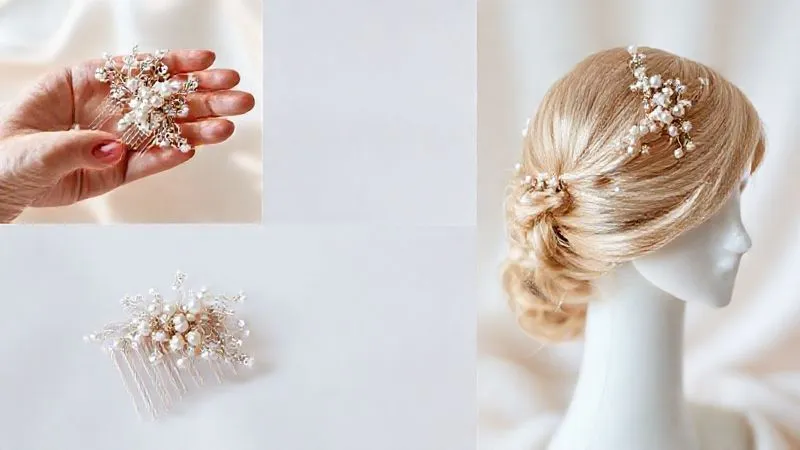
- Multiple Angles: Showcase the accessory from the front, back, sides, and top.
- Scale Reference: Include an image of the accessory next to a common object (e.g., a ruler, a hand, or on a mannequin head) to accurately convey its size.
- Zoom Functionality: Allow customers to zoom in to inspect intricate details, textures, and finishes.
- Video Demonstrations: A short video showing the accessory being handled, its flexibility, and how it's worn can be incredibly effective.
Quality Control at Source: The Foundation of Trust
The best product descriptions and images are meaningless if the product itself doesn't meet rigorous quality standards. Implementing stringent quality control (QC) at every stage of production is critical.
- Supplier Vetting: Partner with suppliers known for their quality materials and ethical production practices. Don't compromise on the base components.
- Material Inspection: Before assembly, meticulously inspect all raw materials for flaws, discoloration, or damage.
- Craftsmanship Checks: Implement multi-stage inspections during the assembly process to catch issues like loose stones, bent wires, or weak fastenings before the product is finished.
- Final Inspection: Every single finished product should undergo a thorough final inspection before being packaged. This is your last chance to ensure perfection.
According to a report by Accenture, businesses that invest in robust quality management systems see a significant reduction in product defects and customer complaints. This proactive approach not only saves money on returns but also builds immense brand loyalty. For further reading on establishing effective quality management, consider exploring resources from organizations like the American Society for Quality (ASQ).
Phase 2: Packaging & Logistics – Safeguarding the Journey
Once a delicate bridal hair accessory leaves your hands, its fate is largely determined by how well it's protected and handled during transit. This phase is crucial for preventing damage-related returns.
The Art of Protective Packaging: Beyond Just a Box
Packaging for delicate bridal hair accessories isn't just about aesthetics; it's about engineering protection. It needs to withstand bumps, drops, and pressure changes during its journey.
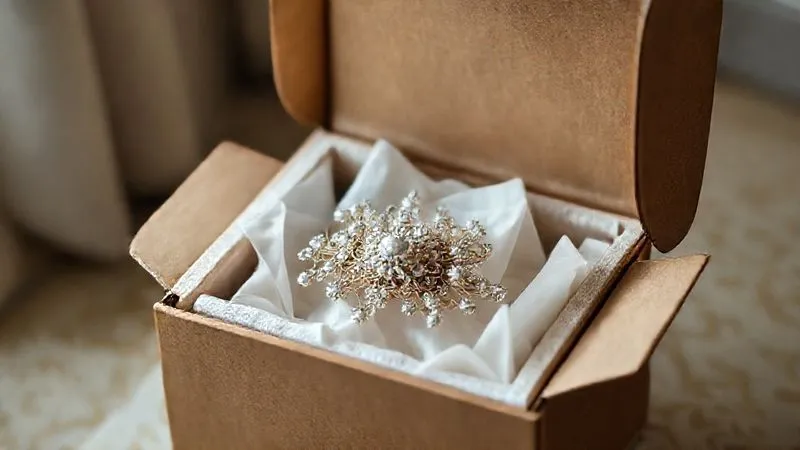
- Custom Inserts: Utilize custom-cut foam, velvet-lined cavities, or rigid cardboard inserts that perfectly cradle the accessory, preventing it from shifting within the box.
- Cushioning Materials: Employ ample cushioning like bubble wrap, air pillows, or crumpled tissue paper around the inner presentation box to absorb shocks.
- Rigid Outer Box: Always use a sturdy, crush-resistant outer shipping box. The box should be appropriately sized – not too large (allowing too much movement) and not too small (risking compression).
- Moisture Protection: For certain materials, consider adding a desiccant packet to prevent moisture damage during transit, especially for international shipments.
- Test Your Packaging: Conduct drop tests and shake tests with dummy products to ensure your packaging can withstand typical shipping abuses.
- Layered Protection: Think in layers: the accessory itself, its immediate protective wrap, an inner presentation box, cushioning, and finally, the outer shipping box.
Clear Handling Instructions: Empowering the Carrier and Customer
Even the best packaging can be compromised if handlers are unaware of the delicate nature of the contents. Clear labeling and internal communication are vital.
- "Fragile" Labels: Prominently display "Fragile" stickers on at least two sides of the outer shipping box.
- "This Way Up" Indicators: If the accessory has a specific orientation for optimal protection, use "This Way Up" arrows.
- Internal Packing Slips: Include a packing slip with a friendly reminder to the customer about the delicate nature of the item and initial handling tips.
Case Study: How 'Bella Brides' Drastically Cut Damage
Bella Brides, a boutique specializing in intricate bridal hair vines and combs, faced a 12% damage return rate, primarily due to transit. They implemented a two-pronged strategy: First, they redesigned their packaging to include custom-fit, velvet-lined foam inserts within a sturdy presentation box, which was then suspended within a larger shipping box using biodegradable air pillows. Second, they mandated the use of "Handle with Care: Delicate Contents" bright red labels on all six sides of the outer packaging. Within six months, their damage return rate plummeted to less than 1%, saving them significant costs and boosting customer satisfaction scores. This resulted in a stronger brand reputation and increased repeat business.
Selecting the Right Shipping Partner: Not All Couriers Are Created Equal
Your choice of shipping carrier plays a monumental role in the safe delivery of delicate items. Prioritizing cost over care can be a costly mistake.
- Reputation for Delicate Goods: Research carriers known for their careful handling of fragile shipments. Some carriers have specialized services for high-value or delicate items.
- Insurance Coverage: Ensure the carrier offers robust insurance options that adequately cover the value of your bridal accessories. Understand their claims process thoroughly.
- Tracking and Delivery Notifications: Opt for services with detailed tracking and proactive delivery notifications. This keeps both you and the customer informed, reducing anxiety and potential "lost in transit" claims.
- Speed vs. Care: While expedited shipping is often desired, sometimes a slightly slower, more controlled shipping method with less handling might be safer for extremely delicate items.
Choosing a reliable logistics partner is an investment in your brand's integrity. For a deeper dive into selecting appropriate shipping solutions for delicate goods, resources from industry bodies like the Pitney Bowes Shipping Best Practices Guide can offer valuable insights.
Phase 3: Post-Purchase Engagement – Education & Support
Even after a delicate bridal hair accessory arrives safely, the potential for returns due to mishandling by the customer remains. Proactive education and supportive communication are key to mitigating this.
Comprehensive Care Guides: Extending Product Lifespan
Empower your customers with the knowledge to care for their precious accessory. A well-designed, easy-to-understand care guide can prevent accidental damage and ensure longevity.
- Cleaning Instructions: Specific methods for different materials (e.g., "gently wipe pearls with a soft, damp cloth" vs. "use a jewelry polishing cloth for silver components").
- Storage Recommendations: Advise on proper storage to prevent tangling, crushing, or exposure to elements (e.g., "store in its original box, away from direct sunlight and humidity").
- Handling Tips: Reinforce the delicate nature and suggest how to put on and take off the accessory without causing stress to its components.
- Repair Information: Offer guidance on minor repairs or contact information for professional restoration, if applicable.
This care guide should be included physically with every order and ideally also available as a downloadable PDF on your website. Here's an example of how you might structure a care guide for common bridal hair accessory materials:
| Material Type | Care Instruction |
|---|---|
| Pearls (Freshwater/Faux) | Wipe gently with a soft, damp cloth. Avoid harsh chemicals, perfumes, and hairspray. Store separately from other jewelry. |
| Crystals (Swarovski/Glass) | Clean with a soft, lint-free cloth. A slightly damp cloth can be used for stubborn spots. Avoid ultrasonic cleaners and abrasive materials. |
| Metal Components (Silver/Gold Plated) | Use a jewelry polishing cloth for shine. Avoid prolonged exposure to moisture and chemicals. Store in an airtight bag to prevent tarnishing. |
| Fabric/Lace Elements | Spot clean very gently with a damp cloth if necessary. Avoid rubbing. Do not submerge in water. Store flat to prevent creasing. |
| Flexible Wire Designs | Handle with extreme care when shaping. Avoid excessive bending or forceful pulling to prevent breakage. Store flat or gently coiled in its original box. |
Proactive Communication: Managing Expectations Post-Delivery
Your responsibility doesn't end when the package is delivered. Proactive communication can preempt potential issues and build customer confidence.
- Delivery Confirmation Email: Send an email confirming delivery, reiterating the delicate nature of the item, and gently reminding them to inspect it upon arrival.
- Follow-up Email (Post-Delivery): A day or two after delivery, send a "check-in" email. Inquire if everything arrived safely and if they have any questions. Provide direct contact information for customer support.
- Digital Care Guide Link: Include a link to your comprehensive digital care guide in these emails.
Streamlined Returns Process (If Necessary): Turning a Negative into a Positive
Despite all best efforts, some returns are inevitable. How you handle these situations can either solidify or destroy your brand's reputation. A smooth, empathetic returns process can actually foster loyalty.
- Clear and Concise Policy: Make your returns policy easy to find, understand, and fair. Clearly state conditions for returns, timelines, and required documentation.
- Easy Initiation: Provide a simple online portal or clear instructions for initiating a return. Reduce friction wherever possible.
- Empathetic Customer Service: Train your support team to handle returns with empathy and a solution-oriented mindset. Acknowledge the customer's disappointment.
- Feedback Loop: Crucially, use the returns process to gather valuable feedback. Ask customers for the specific reason for the return. This data is gold for continuous improvement.
Expert Insight: "A return is not always a loss; it's an opportunity. When handled with grace, efficiency, and a genuine desire to understand, a return can transform a disgruntled customer into a loyal advocate. It's about demonstrating your commitment to their satisfaction, even when things don't go perfectly."
Leveraging Data for Continuous Improvement
The most effective way to reduce returns of delicate bridal hair accessories long-term is to understand why they are happening. Data analysis provides the insights needed to make informed, strategic adjustments.
Analyzing Return Reasons: The 'Why' Behind the 'What'
Don't just track the number of returns; categorize and analyze the reasons. This is where you uncover patterns and identify root causes.
- Categorize Returns: Create distinct categories for return reasons (e.g., "Damaged in Transit," "Not as Described/Pictured," "Didn't Fit/Too Big/Too Small," "Changed Mind," "Quality Issue/Defect").
- Track Over Time: Monitor these categories over weeks, months, and seasons to identify trends. Is there a spike in "Damaged in Transit" during peak shipping seasons?
- Correlate with Products: Are specific products or product lines experiencing higher return rates in certain categories? This could indicate a design flaw, a fragile component, or an issue with that product's description.
- Geographical Analysis: Are returns higher from certain regions? This might point to issues with specific shipping routes or local carrier performance.
This systematic approach allows you to move beyond assumptions and focus your efforts where they will have the greatest impact. For example, if "Not as Described" is a leading reason, you know to revisit product photography and descriptions. If "Damaged in Transit" dominates, packaging and carrier selection become priorities.
| Return Reason Category | Q1 2023 Returns | Q2 2023 Returns | Action Taken |
|---|---|---|---|
| Damaged in Transit | 15% | 18% | Enhanced packaging, carrier review |
| Not as Described/Pictured | 10% | 8% | Improved product photography, detailed descriptions |
| Didn't Fit/Too Big/Too Small | 7% | 6% | Added scale images, precise measurements |
| Quality Issue/Defect | 5% | 3% | Strengthened QC at assembly stage |
| Changed Mind/No Longer Needed | 25% | 22% | Pre-purchase engagement, clear return policy |
Customer Feedback Loops: Your Most Valuable Asset
Beyond formal return reasons, actively solicit and listen to customer feedback. This qualitative data provides rich context that numbers alone cannot.
- Post-Purchase Surveys: Send short, targeted surveys to customers, especially those who returned items. Ask open-ended questions about their experience.
- Direct Communication: Encourage customers to reach out with questions or concerns. Make it easy for them to connect with a human.
- Social Listening: Monitor social media, bridal forums, and review sites for mentions of your brand. Understand public sentiment and address issues proactively.
- Review Analysis: Deeply analyze product reviews, paying close attention to recurring complaints or suggestions related to product fragility, packaging, or accuracy of representation.
As renowned marketing guru Seth Godin often emphasizes, "The market is always talking." By creating robust feedback loops, you're not just reacting to problems; you're proactively learning and evolving. This continuous dialogue with your customer base is invaluable for refining your products and processes. Learn more about effective customer feedback strategies from experts like Harvard Business Review.

Frequently Asked Questions (FAQ)
Q: What's the most common reason for returns of delicate bridal hair accessories, and how can I address it? In my experience, the most common reasons are 'damaged in transit' and 'not as described/pictured.' To address transit damage, invest in superior, custom-fit protective packaging and partner with reliable carriers known for delicate item handling. For 'not as described,' focus on hyper-accurate product descriptions, including precise dimensions and materials, and provide high-fidelity, multi-angle photography with scale references. Videos are also incredibly effective for demonstrating true appearance.
Q: Is it worth investing in expensive, custom packaging for every bridal hair accessory? Absolutely. While the upfront cost might seem higher, consider the total cost of a return: reverse logistics, potential write-off, administrative overhead, and significant brand damage. Custom packaging tailored to the fragility and shape of your accessories drastically reduces transit damage, enhances the unboxing experience, and reinforces your brand's luxury positioning. It's an investment that pays dividends in reduced returns and elevated customer perception.
Q: How can I educate customers about the delicate nature of the accessories without scaring them off? The key is proactive, gentle education, integrated seamlessly into the customer journey. Start with clear, honest disclaimers in product descriptions. Include a beautifully designed, concise care guide with every shipment. Follow up with post-delivery emails that reiterate care tips and offer support. Frame it as empowering them to cherish their special piece, rather than warning them of potential problems. This builds trust and shows you care about their experience beyond the sale.
Q: What role does customer service play in reducing returns, especially for delicate items? Customer service is a critical last line of defense and an opportunity for recovery. An empathetic, solution-oriented customer service team can de-escalate frustration, offer alternatives (like repair advice or exchanges), and gather invaluable feedback. When a customer feels heard and respected, even a return can be handled positively, potentially turning a negative experience into a chance to showcase exceptional brand care. This fosters loyalty and can prevent public negative reviews.
Q: Should I offer a no-questions-asked return policy, or be very strict for delicate items? For delicate bridal accessories, a balanced approach is best. A completely 'no-questions-asked' policy might encourage frivolous returns and increase your costs. Conversely, an overly strict policy can alienate customers. I recommend a clear, fair policy that allows returns for legitimate reasons (damage, defect, significant discrepancy) within a reasonable timeframe, with clear guidelines for condition. Always prioritize customer satisfaction and be flexible for genuine issues, especially those related to damage in transit which is beyond the customer's control.
Key Takeaways and Final Thoughts
Reducing returns of delicate bridal hair accessories isn't a single fix; it's a holistic strategy that permeates every aspect of your business, from product inception to post-purchase support. It demands a commitment to excellence, transparency, and a deep understanding of your customer's journey and emotional investment.
- Proactive Expectation Management: Master your product descriptions and provide high-fidelity visuals to ensure what customers see is what they get.
- Uncompromising Quality Control: Implement stringent checks at every stage, from material sourcing to final inspection, to ensure product integrity.
- Engineered Protective Packaging: Invest in custom, layered packaging designed to withstand the rigors of transit, safeguarding your delicate creations.
- Strategic Logistics Partnerships: Choose shipping carriers known for their careful handling of fragile items, prioritizing reliability over mere cost.
- Empowering Customer Education: Provide comprehensive care guides and proactive communication to help brides cherish and protect their accessories.
- Data-Driven Improvement: Analyze return reasons and customer feedback to continuously refine your products, processes, and policies.
By embracing these strategies, you're not just reducing return rates; you're building a resilient brand founded on trust, quality, and exceptional customer experience. This commitment will not only protect your bottom line but also solidify your reputation as a purveyor of exquisite, reliable bridal accessories, ensuring every bride's special day is as perfect as she envisioned.
Recommended Reading
- Elevate Your Look: 7 Ways to Style Smartwatches with Luxury Outfits
- 7 Pro Tips: How to Pack Professional Fashion Accessories Without Damage
- 5 Pro-Strategies: Don't Lose Fashion Brand Deals After Algorithm Shifts
- Stale Fashion Blog Outfits? 7 Fresh Angles to Innovate Your Content Now
- Unleash Your True Self: How to Develop a Unique Personal Street Style




Your email address will not be published. Required fields are marked *