


How to Reduce Hat E-commerce Returns from Poor Fit Descriptions?
As a veteran in the accessories space, particularly hats, I've witnessed firsthand the silent killer of profitability for countless e-commerce businesses: the dreaded return. It's a logistical nightmare, a financial drain, and a massive hit to customer satisfaction. For over 15 years, I've seen promising brands falter not because their hats weren't stylish or well-made, but because their customers couldn't confidently choose the right size online.
The core issue often lies in inadequate or confusing fit descriptions. Customers receive a hat they love visually, only to find it's too tight, too loose, or simply doesn't sit right, leading to immediate disappointment and an inevitable return. This isn't just a minor inconvenience; it's a systemic problem that erodes trust, inflates operational costs, and ultimately stifles growth for online hat retailers.
But what if you could drastically cut down these fit-related returns? In this definitive guide, I'll share actionable strategies, drawing from my extensive industry experience and insights from leading e-commerce practices, to help you revolutionize your hat fit descriptions. We'll explore innovative approaches, practical tools, and customer-centric frameworks that will empower your customers to make confident purchasing decisions, ensuring their hats fit perfectly the first time. This is how to reduce hat e-commerce returns from poor fit descriptions effectively.
Understanding the Root Cause: Why Customers Return Hats
Before we dive into solutions, it's crucial to understand why customers return hats. In my experience, the primary reason for returns in e-commerce, especially for apparel and accessories like hats, is a mismatch between customer expectations and the actual product. When it comes to hats, this mismatch almost invariably boils down to fit.
The Cost of Poor Fit
The financial implications of high return rates are staggering. Beyond the direct costs of reverse logistics (shipping, handling, repackaging), there are hidden costs like inventory depreciation, lost sales opportunities, and the significant impact on customer lifetime value. According to a Deloitte study on retail returns, returns cost retailers billions annually. For hats, this is compounded by the personal nature of fit.
- Financial Drain: Shipping costs, processing fees, restocking, and potential markdowns on returned items.
- Environmental Impact: Increased carbon footprint from reverse logistics.
- Brand Reputation: Negative reviews, reduced customer loyalty, and a perception of unreliable sizing.
- Operational Burden: Staff time diverted to processing returns rather than focusing on sales or innovation.
"Returns aren't just a cost; they're a symptom of a broken customer journey. Fixing the fit description is preventative medicine for your bottom line." - Industry Veteran Insight
When customers struggle with fit, it's not just a problem for them; it's a critical failure in your product presentation. Addressing this head-on is the most effective way to reduce hat e-commerce returns from poor fit descriptions.
Strategy 1: Revolutionizing Your Hat Sizing Guides
The foundation of reducing fit-related returns lies in providing a clear, comprehensive, and easy-to-understand sizing guide. Generic S, M, L labels are simply not enough for hats.
Standardizing Measurements: Beyond S, M, L
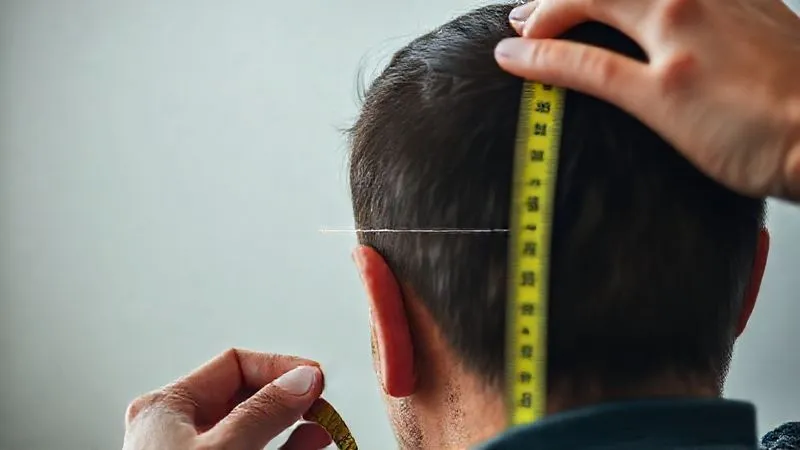
I always advise brands to move beyond vague sizing. Hats require precise measurements. The most critical measurement is head circumference, but crown depth and brim width also play significant roles in how a hat sits and feels. Providing these details empowers customers to make an informed choice.
- Measure Head Circumference: Instruct customers to use a flexible tape measure. Wrap it around the widest part of their head, just above the ears and across the mid-forehead.
- Specify Crown Depth: The distance from the top of the crown to the brim. This affects how high or low a hat sits on the head.
- Indicate Brim Width: Crucial for style and sun protection, affecting overall proportion.
- Provide International Conversions: Include US, UK, European, and numerical sizing where applicable.
Here's an example of how a robust sizing chart could look:
| Size | Head Circumference (in) | Head Circumference (cm) | Crown Depth (in) | Brim Width (in) |
|---|---|---|---|---|
| Small (S) | 21.25 - 21.63 | 54 - 55 | 5.5 | 2.5 |
| Medium (M) | 22.0 - 22.4 | 56 - 57 | 6.0 | 2.75 |
| Large (L) | 22.8 - 23.2 | 58 - 59 | 6.5 | 3.0 |
| X-Large (XL) | 23.6 - 24.0 | 60 - 61 | 7.0 | 3.25 |
"A detailed sizing chart isn't just data; it's a trust-building tool. It tells your customer you care about their fit experience."
Always ensure your sizing charts are easily accessible, perhaps linked directly from the product page with a clear 'Size Guide' button. Visual aids are also incredibly helpful here.
Universal vs. Brand-Specific Sizing
While some brands strive for universal sizing, many hat manufacturers have their own nuances. It's crucial to be transparent about whether your sizing adheres to a common standard or if it's unique to your brand. If it's brand-specific, provide clear guidance on how it might differ from what a customer expects. This manages expectations and prevents disappointment. For further reading on the complexities of apparel sizing, a Harvard Business Review article on online returns highlights how fit inconsistencies contribute significantly to customer dissatisfaction across fashion categories.
Strategy 2: Leveraging Visuals and Interactive Tools
Humans are visual creatures. When shopping online, the absence of physical interaction means visuals must do heavy lifting. This is particularly true when trying to reduce hat e-commerce returns from poor fit descriptions.
High-Quality Product Photography
Static, flat images don't convey fit. Your product photography needs to be dynamic and informative.
- On Diverse Models: Show hats on models with varying head shapes and sizes, and different hair types. This helps customers visualize how the hat might look on them.
- Multiple Angles: Include front, side, back, and overhead shots.
- Close-ups: Detail the texture, stitching, and internal lining, which can influence comfort and fit.
- Lifestyle Shots: Show the hat being worn in context, giving a sense of scale and proportion.
Virtual Try-On (VTO) Technologies
This is where innovation truly shines for hat retailers. Augmented Reality (AR) and Artificial Intelligence (AI) powered virtual try-on tools allow customers to 'wear' the hat digitally. While an investment, the ROI in reduced returns and increased conversion rates can be substantial.
Case Study: Hat Haven's VTO Success
Hat Haven, a mid-sized online hat retailer, faced a 25% return rate specifically for fit-related issues. After investing in an AI-powered virtual try-on tool that used customer-uploaded photos to simulate hat fit, they saw a dramatic change. Within six months, their fit-related returns dropped by 18%, and their conversion rate for products with the VTO option increased by 10%. This demonstrated the power of empowering customers with a realistic preview. The initial investment paid for itself within a year, and customer satisfaction scores soared.

The adoption of such technologies is growing. According to a McKinsey report on the State of Fashion, digital innovation, including AR/VR, is critical for engaging modern consumers and addressing pain points like fit.
Interactive Sizing Quizzes
If VTO isn't feasible, consider an interactive quiz. Ask customers about their typical hat size, head shape, and even their hair volume. Based on their answers, the quiz can recommend the best size and style for them. This creates a personalized experience without the high tech.
Strategy 3: Crafting Impeccable Product Descriptions
Beyond numbers and visuals, the written word still holds immense power. Your product descriptions should be detailed, evocative, and leave no room for ambiguity regarding fit.
Beyond Basic Dimensions: The 'Feel' of the Hat
A hat's fit isn't just about circumference; it's about how it feels. Describe the material's properties:
- Stretch/Flexibility: Does it have an elastic band? Is the material forgiving?
- Rigidity/Structure: Is it a stiff fedora or a soft, packable beanie?
- Lining Details: Is there an internal sweatband? Does it add cushioning or reduce friction?
- Weight: A lighter hat might feel less restrictive.
These details paint a clearer picture of the wearing experience, helping customers anticipate the comfort level.
Fit Type Descriptors
Use specific terms to describe the intended fit:
- "Snug Fit": Meant to sit closely to the head, often with some stretch.
- "Relaxed Fit": A more casual, slightly looser feel.
- "Adjustable": Clearly state the adjustment mechanism (e.g., snapback, strapback, buckle).
- "Structured": Maintains its shape, often with reinforced panels.
- "Unstructured": Softer, more casual, conforms to the head shape.
This vocabulary helps customers quickly identify if the hat's intended fit aligns with their preference.
Styling and Head Shape Recommendations
While not strictly about 'fit,' recommending hats based on head shape and typical styling can significantly reduce returns. A hat that might technically fit circumference-wise could look disproportionate on certain head shapes, leading to returns based on aesthetics rather than pure sizing. Offer gentle guidance:
- "Best suited for oval and round face shapes."
- "Pairs well with a casual, everyday look."
This level of detail shows expertise and helps customers visualize themselves wearing the hat successfully. For more on matching hats to face shapes, resources like GQ's guide to buying a hat offer valuable insights.
Strategy 4: Empowering Customers with Education
The more educated your customer is, the less likely they are to make a purchase mistake. Proactive education is a powerful tool to reduce hat e-commerce returns from poor fit descriptions.
Dedicated 'How to Measure' Pages
Beyond just a size chart, create a dedicated landing page or section on your website that thoroughly explains how to measure one's head. This should include:
- Step-by-step instructions: Clear, concise, and easy to follow.
- Video tutorials: A short, engaging video demonstrating the measurement process is invaluable.
- Printable measuring tools: Offer a downloadable, printable tape measure for those who don't own one.
- Tips for accuracy: Advise on measuring multiple times, or having someone else help.
Make sure these resources are prominently linked from every hat product page and your main navigation.
Customer Service Training
Your customer service team is on the front lines. They need to be experts in hat sizing and fit. Invest in comprehensive training that covers:
- All aspects of your sizing charts.
- How to guide a customer through measuring their head over the phone or chat.
- Understanding different hat materials and their stretch properties.
- Common fit issues and how to troubleshoot them.
An empowered customer service team can prevent a return before it even happens by providing confident, accurate advice.
User-Generated Content (UGC) with Fit Feedback
Encourage customers to leave reviews that specifically address fit. Implement a rating system for 'runs small,' 'true to size,' or 'runs large.' Even better, allow customers to upload photos of themselves wearing the hat, along with their head circumference and the size they purchased. This peer-to-peer validation is incredibly powerful and builds trust. I've seen brands significantly reduce hat e-commerce returns from poor fit descriptions by simply giving a platform for customers to share their fit experiences.
Strategy 5: Harnessing Data to Refine Fit Accuracy
Data is your friend. It tells you where the problems are and helps you fine-tune your approach. This is a continuous improvement cycle.
Analyzing Return Data for Fit Patterns
Don't just track the number of returns; understand the *reasons* for them. Implement a robust system that captures detailed return reasons, specifically categorizing 'poor fit' and allowing for sub-categories like 'too small,' 'too large,' 'crown too shallow,' etc.
| Return Reason | Percentage of Fit Returns | Common Hat Styles |
|---|---|---|
| Too Small | 35% | Fitted Baseball Caps, Beanies |
| Too Large | 25% | Unstructured Fedoras, Bucket Hats |
| Crown Too Shallow/Deep | 20% | Flat Caps, Sun Hats |
| Uncomfortable Material/Feel | 10% | Wool Hats, Stiff Brims |
| Didn't Suit Head Shape | 10% | All Styles (Aesthetic) |
Analyze this data by:
- Hat Style: Are certain styles (e.g., fitted baseball caps vs. bucket hats) more prone to fit issues?
- Size: Is there an disproportionate number of returns for a specific size (e.g., XL hats always returned as too small)?
- Demographics/Geography: Are customers from certain regions or age groups experiencing more fit problems?
- Time of Year: Does weather (e.g., needing a thicker beanie in winter) influence perceived fit?
"Data transforms assumptions into insights. It pinpoints exactly where your fit descriptions are failing and guides your corrective actions."

A/B Testing Fit Description Variations
Once you've identified potential problem areas from your data, A/B test different versions of your fit descriptions. For example, test a description that emphasizes 'snug fit' versus one that says 'true to size' for the same product. Monitor which version leads to lower return rates for that specific item. This iterative process allows you to continuously optimize your product information.
Beyond the Sale: Post-Purchase Engagement
The journey doesn't end when the customer clicks 'buy.' Thoughtful post-purchase engagement can still mitigate potential fit issues and transform a potential return into a successful exchange.
Follow-Up Emails with Fit Tips
Send a personalized email after purchase (but before delivery) that reinforces how to ensure a perfect fit. Include a link to your 'How to Measure' guide, remind them of the specific hat's fit type, and offer tips on how to adjust or break in certain materials. This proactive approach shows you care and gives customers a chance to re-evaluate their choice before the hat even arrives.
Easy Exchange Processes for Sizing Issues
Despite all efforts, some fit issues will inevitably arise. Make the exchange process for sizing as seamless and customer-friendly as possible. Offer free return shipping for exchanges, clear instructions, and quick turnaround times. A positive exchange experience can salvage customer loyalty, even if the initial purchase wasn't perfect.
Implementing a Culture of Fit Accuracy
Ultimately, reducing hat e-commerce returns from poor fit descriptions requires a holistic approach and a commitment from the entire organization. It's not just a marketing or customer service problem; it's a product development, merchandising, and operational challenge.
Training Product Development Teams
Ensure your product development and sourcing teams are intimately familiar with common fit complaints. They should design and select hats with precise sizing in mind, anticipating how different materials and constructions will affect the final fit. Regular feedback loops from return data should inform future product lines.
Supplier Collaboration
Work closely with your hat manufacturers. Share your return data and customer feedback on fit. Collaborate on developing more consistent sizing standards and clearer specifications. A strong partnership with suppliers can address fit issues at the source, preventing them from ever reaching your customers.
Continuous Improvement Loop
Consider fit accuracy an ongoing project, not a one-time fix. Regularly review your sizing guides, update product descriptions, explore new technologies, and analyze return data. The market, customer expectations, and product offerings evolve, and your approach to fit must evolve with them.

Frequently Asked Questions (FAQ)
What's the single most impactful change I can make today to reduce hat returns? The most impactful immediate change is to drastically improve your primary sizing guide. Move beyond S, M, L to include explicit head circumference measurements in both inches and centimeters, and clearly explain how customers should measure their heads. This clarity empowers customers to make an informed decision instantly.
How accurate are virtual try-on tools for hats, and are they worth the investment? The accuracy of virtual try-on (VTO) tools has significantly improved with advancements in AR and AI. While not 100% perfect, they offer a highly realistic preview of fit and style, dramatically reducing guesswork. For hat e-commerce, where fit is paramount, VTO is increasingly becoming a worthwhile investment due to its potential to significantly cut return rates and boost conversion. The ROI often justifies the cost.
My hat brand offers unique, non-standard sizing. How can I best communicate this? Transparency is key. Clearly state that your sizing is brand-specific. Provide a comprehensive size chart with precise measurements (circumference, crown depth, brim width) and include a disclaimer that customers should refer to your unique guide rather than relying on general sizing. Consider adding a 'compare to standard sizes' section as a reference point.
Besides fit descriptions, what other factors contribute significantly to hat returns? Beyond poor fit descriptions, key contributors to hat returns include inaccurate color representation (screen calibration issues), misleading product photography (e.g., hat appears larger/smaller than in reality), material quality not meeting expectations, and ultimately, a general mismatch between product expectation and reality. Addressing all these aspects creates a holistic positive customer experience.
How can I encourage customers to accurately measure their heads before buying? Integrate the measurement process directly into the buying journey. Provide a prominent 'Find Your Size' button that links to an interactive guide or video tutorial. Offer incentives like a small discount for customers who complete a sizing quiz. Use calls-to-action on product pages like 'Measure Your Head First for a Perfect Fit!' to make it a non-negotiable step.
Key Takeaways and Final Thoughts
Reducing hat e-commerce returns from poor fit descriptions is not an overnight fix, but a strategic imperative that yields significant long-term benefits. It's about prioritizing the customer experience and building trust through transparency and detailed information. As I've seen in countless successful ventures, those who master this aspect not only cut costs but also build a loyal customer base.
- Prioritize Detail: Go beyond basic sizing with comprehensive measurements and fit descriptors.
- Embrace Visuals & Tech: Leverage high-quality photography and explore virtual try-on to bridge the online-offline gap.
- Educate Your Customer: Provide clear 'how-to' guides and empower your customer service team.
- Utilize Data: Analyze return reasons to continuously refine and improve your approach.
- Foster a Culture of Fit: Make fit accuracy a core value across all departments, from design to customer support.
By implementing these strategies, you're not just preventing returns; you're cultivating a superior shopping experience that will set your hat brand apart in a competitive digital landscape. Invest in precision, empower your customers, and watch your return rates shrink while your customer satisfaction and profitability soar. The effort you put into perfecting your fit descriptions today will pay dividends for years to come.
Recommended Reading
- 7 Pillars: Build Unshakeable Trust in Body Positive Fashion Campaigns
- 7 Steps: Quickly Authenticate Vintage Hermès Birkin Hardware
- 7 Artistic Strategies: Monetizing Unique Contemporary Jewelry Designs
- 7 Proven Strategies: How to Boost Traditional Wedding Gown Sales in a Modern Market?
- 7 Steps: How to Verify Eco-Friendly Suppliers, Avoiding Greenwashing Claims




Your email address will not be published. Required fields are marked *