

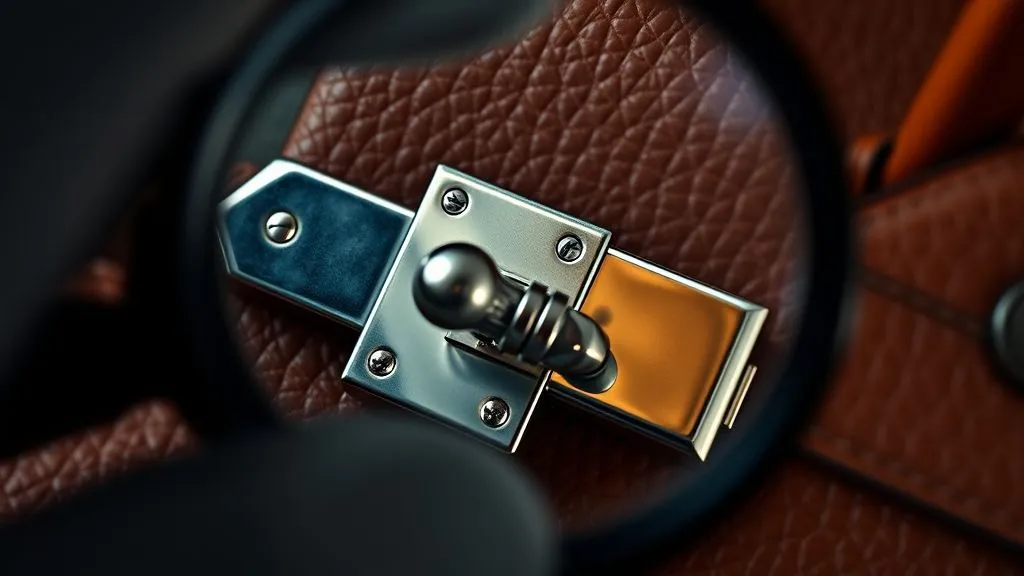
How to Quickly Authenticate Vintage Hermès Birkin Bag Hardware?
For over 20 years in the discerning world of pre-owned luxury, I've witnessed the heartbreak and financial loss that comes from acquiring a counterfeit Hermès Birkin. It’s a gut-wrenching experience, especially when the details seem so convincing to the untrained eye. I've spent countless hours examining these masterpieces, understanding their nuances, and, crucially, learning the subtle yet undeniable 'tells' that separate a genuine article from a clever fake.
The market for vintage Hermès Birkin bags is booming, but so is the sophistication of counterfeiters. While the leather and stitching are often the first points of inspection, the hardware—the gleaming buckles, the iconic clochette, the precise engravings—is often overlooked by novices, yet it holds some of the most critical clues to a bag's authenticity. Many buyers find themselves overwhelmed by the sheer volume of information, or worse, misled by superficial comparisons that fail to grasp the true essence of Hermès craftsmanship.
In this definitive guide, I will share my insider knowledge and a robust, actionable framework for quickly authenticating vintage Hermès Birkin bag hardware. We’ll delve into specific elements, from the weight and finish of the metal to the minute details of the engravings and stamps. You'll gain the confidence to identify genuine Hermès hardware, protect your investment, and truly appreciate the unparalleled craftsmanship that defines a real Birkin, ensuring your peace of mind in every transaction.
The Unseen Language of Hermès Hardware: Why It Matters
When we talk about Hermès, we often think of the exquisite leather and the meticulous stitching. However, the hardware on a Birkin bag is far more than just functional adornment; it's a critical component of its identity and an unequivocal testament to its authenticity. Counterfeiters often focus on mimicking the overall look and feel, but they rarely achieve the precision, quality, and specific characteristics of genuine Hermès hardware. This is where your expert eye, guided by my insights, will make all the difference.
Genuine Hermès hardware is crafted from specific metals—typically palladium-plated or gold-plated brass—and undergoes rigorous quality control. It's designed not just to look good, but to withstand the test of time, developing a unique patina rather than flaking or tarnishing poorly. This commitment to enduring quality is a cornerstone of the Hermès philosophy, a detail that fakes simply cannot replicate without astronomical costs that would defeat their purpose.
Understanding the 'language' of this hardware means recognizing the subtle clues embedded in its weight, finish, engravings, and the way it interacts with the bag's other components. It’s about appreciating the engineering behind the aesthetics, knowing that every curve, every stamp, and every screw is there for a reason, executed with unparalleled mastery. This section will lay the groundwork for a more detailed examination, highlighting the overarching principles of authentic Hermès hardware.
The Philosophy of Hermès Hardware Production
Hermès doesn't just source off-the-shelf components. Their hardware is custom-made, often in specialized ateliers, ensuring that it meets their exacting standards. This bespoke approach means that every piece of hardware, from the smallest foot stud to the substantial toggle lock, is designed to complement the bag's overall design and functionality perfectly. This integrated design philosophy is a hallmark of true luxury.
"In the world of luxury, authenticity is not just a stamp; it's a narrative woven into every fiber and every metallic glint. Hermès hardware tells a story of unparalleled dedication to craft."
This dedication extends to the plating process, which is thick and durable, designed to prevent chipping or significant wear even after decades of use. While some surface scratches are inevitable with age, true Hermès plating will not easily expose the base metal underneath. This durability is a key differentiator when comparing a vintage authentic piece against a modern counterfeit.
Weight and Feel: The First Touch Test
One of the quickest and most telling authentication checks for vintage Hermès Birkin bag hardware begins before you even look closely: it's all about the weight and the tactile experience. Genuine Hermès hardware, typically made from brass and then plated, possesses a substantial, reassuring heft. It feels solid, not hollow or flimsy. This is a direct result of the quality of the base metal and the thickness of the plating.
When you handle an authentic Birkin's hardware, you'll notice a distinct coldness and density. Counterfeit hardware, on the other hand, often feels lighter, cheaper, and sometimes even plastic-like. This is because fakes frequently use lower-quality alloys or thinner plating over lighter metals to cut costs. The difference is often immediately apparent to an experienced hand. I've seen countless instances where this simple touch test alone has raised red flags, prompting a deeper, more scrutinizing examination.
Pay attention to the specific components: the padlock, the keys, the pontets (the metal plates where the handles attach), and the toggle lock. Each should contribute to the overall impression of solidity. If any part feels surprisingly light or chintzy, it's a significant indicator that you might be dealing with a replica.
The Subtle Art of Tonal Consistency
Beyond just weight, consider the "feel" of the metal itself. Genuine Hermès hardware has a smooth, consistent finish, whether it's polished palladium or brushed gold. There should be no rough edges, no uneven plating, and no sense of cheapness. Run your finger over the surface; it should glide without catching. Any sharp burrs or irregularities are immediate red flags.
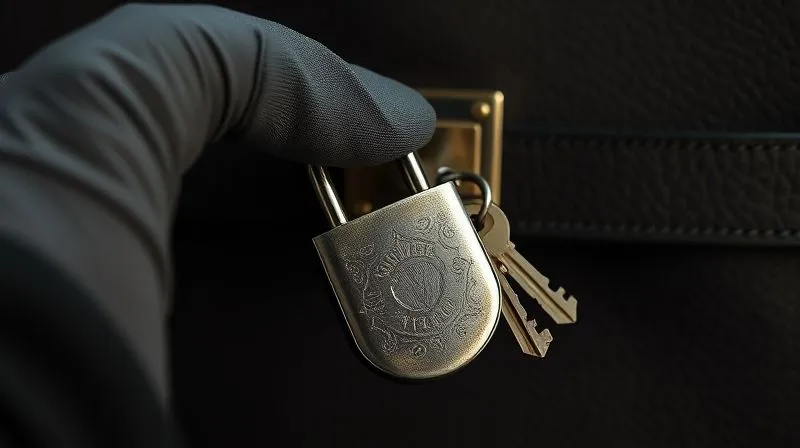
Furthermore, the sound the hardware makes is also a subtle clue. When the padlock gently taps against the keys or the toggle swivels, there's a certain metallic resonance, a solid 'clink' rather than a tinny 'clank.' This might seem overly meticulous, but these sensory details are precisely what distinguishes true luxury craftsmanship from its imitations. As Christie's experts often emphasize, every detail contributes to the overall authenticity profile.
Engravings and Stamps: Decoding the Hermès Signature
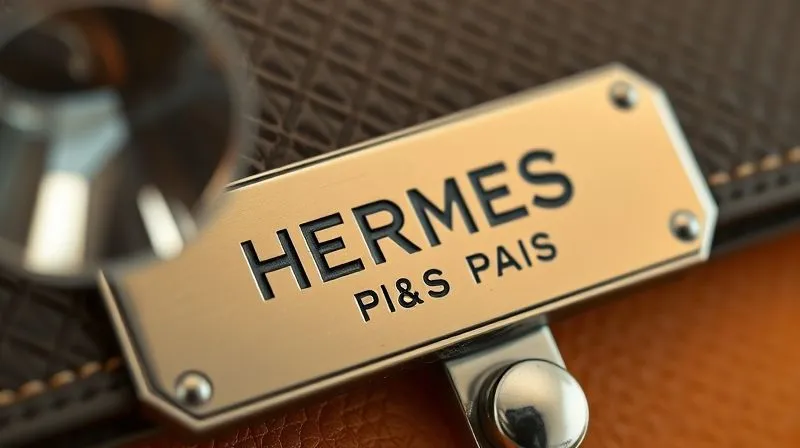
The engravings and stamps on Hermès Birkin hardware are arguably the most crucial authentication points, requiring a keen eye and often magnification. These aren't just decorative; they are precise, deep, and executed with an artistry that counterfeiters struggle to replicate accurately. Every genuine Birkin bag, especially vintage ones, will feature the "HERMÈS PARIS" engraving, usually on the front of the pontets and the padlock.
Look for clarity, depth, and consistency. The letters should be evenly spaced, sharply defined, and have a consistent font and size. There should be no blurring, shallow impressions, or signs of uneven stamping. On fakes, the engravings often appear too thin, too thick, poorly aligned, or simply lack the crispness that is characteristic of Hermès' meticulous standards. I've observed countless replicas where the 'S' in 'PARIS' is particularly telling – it often looks distorted or less refined than a genuine one.
The Pontets: Front and Back Engravings
On the front pontets (the metal plates where the handles attach), you will find the "HERMÈS PARIS" engraving. Examine this closely. The font is distinctive, with slightly elongated serifs and a specific spacing. The depth of the engraving should be consistent across all letters. On the reverse side of the pontets, you might find additional, smaller markings, such as a number or a letter code, which are internal production stamps. These are often minute and require magnification, but their presence and precision are important.
For vintage pieces, it's essential to understand that slight variations can occur over decades of production, but the underlying quality and precision remain constant. It’s never about perfection in the sense of a machine, but perfection in the sense of masterful human craftsmanship. Any sign of machine-like uniformity that lacks a certain 'soul' can be suspicious.
The Padlock and Keys: Micro-Engravings
The padlock is another treasure trove of authentication details. The bottom of the padlock typically bears the "HERMÈS" engraving, sometimes accompanied by a number (which matches the number on the keys). Again, the quality of this engraving is paramount. The letters should be perfectly formed, not crude or shallow. The numbers on the keys should also match the padlock precisely, and their engraving should be equally crisp.
Case Study: The 'Mismatched S' Birkin
A client once brought me a beautiful vintage Birkin, purchased from an online reseller. At first glance, the leather and stitching seemed impeccable. However, upon closer inspection of the hardware, I noticed a subtle but critical flaw in the "HERMÈS PARIS" engraving on one of the pontets. The 'S' in 'PARIS' was slightly wider and less defined than the other letters, almost as if it had been stamped with a different tool or at a different pressure. This minor inconsistency, combined with a slightly lighter weight, was enough to trigger a full authentication report. It turned out to be a high-quality replica, but the hardware's subtle imperfections were the definitive betrayers. This experience underscored the importance of examining every single letter with scrutiny.
Remember, Hermès doesn't compromise on these details. Even the smallest number stamped on the back of a key should exhibit the same level of precision as the main logo. This obsessive attention to detail is a hallmark of genuine production.
The Toggle Lock and Pontets: A Symphony of Precision
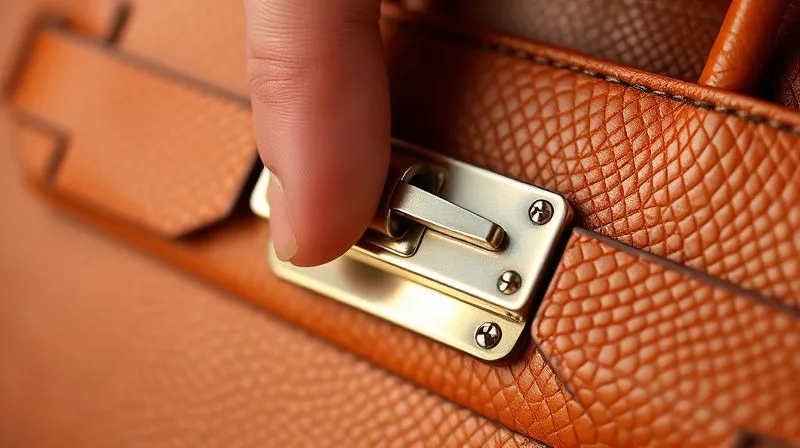
The toggle lock mechanism and the pontets are central to the Birkin's iconic design and offer multiple authentication checkpoints. The toggle, which allows the front flap to be secured, should operate smoothly and with a satisfying, precise click. It should never feel loose, wobbly, or stiff. This mechanical perfection is a hallmark of Hermès engineering. The metal components should align perfectly, without any gaps or misalignments.
Examine the small metal plates, or pontets, where the handles attach to the bag. Not only do they bear the "HERMÈS PARIS" engraving on the front, but their attachment to the bag itself is telling. They should be securely fastened, often with tiny screws on the inside of the bag. These screws are typically flat-head, meticulously aligned, and should not appear stripped or cheaply made. The finish of the pontets should match the rest of the hardware perfectly.
Analyzing the Toggle's Movement and Sound
When you turn the toggle, feel for a fluid, controlled motion. It should turn 90 degrees and stop firmly. There should be no grinding or excessive friction. The sound it makes when it locks into place should be a crisp, reassuring click. Fakes often have toggles that feel either too loose, wobbling excessively, or too stiff, requiring undue force to operate. The plating on the toggle should also be uniform and show age-appropriate wear, not flaking or bubbling.
The Feet and Base Hardware
The four 'feet' at the base of the Birkin bag, known as clous, are also made of the same high-quality plated brass. They should be firmly attached and have a consistent finish with the rest of the hardware. They are designed to protect the bag's base, and as such, they will often show signs of use, but the plating itself should remain intact, not chipped down to a base metal. The shape and curvature of these feet are also subtly distinct to Hermès, often slightly domed and substantial.
A quick comparison of genuine versus counterfeit hardware characteristics can be incredibly insightful:
| Feature | Genuine Hermès | Counterfeit |
|---|---|---|
| Weight & Feel | Substantial, solid, cool to touch, dense | Light, hollow, flimsy, sometimes plastic-like |
| Engravings | Deep, crisp, clear, even spacing, consistent font | Shallow, blurry, inconsistent, uneven, crude font |
| Plating | Thick, durable, even, develops patina | Thin, prone to chipping/flaking, uneven, bubbles |
| Toggle Movement | Smooth, precise, satisfying click, firm stop | Loose, wobbly, stiff, grinding, no clear stop |
| Screws | Flat-head, meticulously aligned, high quality | Phillips-head (rare), stripped, cheap appearance, misaligned |
This table serves as a quick reference for the most common indicators. Always remember that multiple red flags are more indicative of a fake than a single, minor anomaly, especially in vintage pieces.
Clochette, Keys, and Padlock: Small Details, Big Revelations
The clochette (bell-shaped key holder), its accompanying keys, and the padlock are iconic elements of the Birkin bag, and they provide some of the most definitive clues for authentication. Counterfeiters often stumble on these smaller, seemingly insignificant details, revealing their inability to perfectly replicate Hermès's exacting standards.
Start with the padlock. As mentioned, it should be heavy and solid. The 'HERMÈS' engraving on the bottom should be sharp and clear, often accompanied by a number. This number is crucial because it must match the numbers stamped on the keys. If these numbers don't match, or if the engraving quality differs between the padlock and keys, you have a major red flag. I've encountered numerous fakes where the padlock and keys were clearly from different batches, or the numbers were simply absent or poorly etched.
The Keys: Form, Function, and Feel
The keys themselves should also possess a significant weight and feel substantial in hand. They are not flimsy. The shaft of the key is typically solid. Examine the 'stop' on the key (the small ridge that prevents it from going too far into the lock); it should be well-defined and smooth. The overall finish should match the padlock and the rest of the bag's hardware. Any key that feels light, thin, or has rough edges is highly suspect.
The clochette, the leather bell that holds the keys, is equally important. While it's primarily a leather component, its metal ring and the way it's stitched are vital. The metal ring should be of the same high-quality plating as the rest of the hardware, and the stitching on the clochette should be perfect, consistent with Hermès's saddle stitching technique. No loose threads, no unevenness. The leather itself should be supple and high quality.
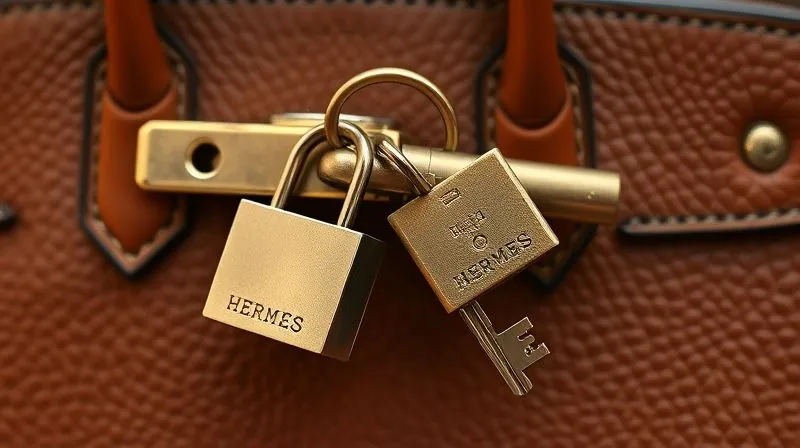
The Clochette's Metal Ring and Attachment
The small metal ring at the top of the clochette, through which the leather strap passes, should be seamless and robust. There should be no visible join lines or cheap-looking welding. Its plating should be identical to the rest of the bag’s hardware, ensuring a cohesive aesthetic. The way the clochette attaches to the bag's handle should also be secure and well-integrated, not an afterthought. This attention to every minute detail, even on an accessory, reinforces the bag's overall authenticity.
"Authenticity is found in the relentless pursuit of perfection, even in the smallest, most overlooked elements. The Birkin's clochette and keys are miniature masterpieces of this philosophy."
I recall an instance where a client presented a Birkin with an otherwise convincing appearance. However, the padlock's number was engraved with a slightly different font weight than the keys, and the clochette's metal ring had a visible, cheap-looking seam. These discrepancies, though small, were irrefutable evidence of a counterfeit, highlighting how critical it is to examine every single component.
Sangles and Feet: Anchoring Authenticity
The sangles, or straps, that cinch the Birkin bag, along with the protective metal feet at its base, are additional points of interest for hardware authentication. While often considered secondary to the main toggle and padlock, these elements contribute significantly to the overall impression of authenticity and can expose flaws in replicas.
The metal plates at the end of the leather sangles, where they buckle, should exhibit the same high-quality plating and finish as the rest of the hardware. Check for crisp edges, consistent thickness, and a smooth surface. The buckles themselves should operate smoothly, and the prongs should be well-formed and sturdy. Any sign of cheap, thin metal, or poorly finished edges on these components is a red flag. The leather straps themselves should be of the same quality as the bag's main body, with impeccable stitching.
The Distinctive Hermès Feet (Clous)
As briefly mentioned, the four metal feet at the base of the bag, known as 'clous,' are essential. They are not merely functional but are integral to the Birkin's design integrity. These feet should be securely attached, usually with internal screws, and should not wiggle or feel loose. The metal itself should feel solid and substantial, matching the weight and coldness of the other hardware components. Their shape is typically slightly domed, not flat or overly pointed.
The plating on the feet should also be robust. While they are prone to scratches from resting the bag on surfaces, the underlying brass should not be easily exposed. Significant chipping or flaking that reveals a different colored base metal is a strong indicator of a fake. Authentic Hermès hardware is designed for longevity, and even with wear, the plating holds up remarkably well. According to Sotheby's luxury handbag experts, consistency in hardware finish across all components is a key indicator of authenticity.
Examine the screws that secure the feet and other hardware elements from the inside of the bag. Hermès typically uses flat-head screws, precisely aligned and perfectly flush with the interior leather or lining. Counterfeiters often use Phillips-head screws, or their flat-head screws are poorly finished, misaligned, or appear stripped. This is a detail often overlooked by buyers but is a crucial 'tell' for an expert.
The Patina Puzzle: Age vs. Artifice
When authenticating vintage Hermès Birkin bag hardware, understanding the concept of 'patina' is absolutely essential. Patina is the natural aging process of metal, a beautiful and unique sheen that develops over time through exposure to air, oils from handling, and general use. Genuine Hermès hardware, being made of high-quality plated brass, will develop a rich, subtle patina that enhances its character. This is distinctly different from cheap tarnishing or flaking.
Palladium hardware, in particular, tends to maintain its bright, silvery luster remarkably well, though it can develop a very subtle, almost imperceptible softening of its shine over decades. Gold-plated hardware, especially on older bags, might show a slight deepening of color or a soft dullness in areas of high contact, but it should never appear discolored, green, or corroded in an unnatural way. The wear should be consistent with the bag's age and usage, indicating a natural process, not a manufacturing defect or low-quality material.
Distinguishing Natural Patina from Poor Quality
Counterfeit hardware, due to inferior plating and base metals, often tarnishes quickly and unevenly. You might see green oxidation (verdigris), especially in crevices, or patches where the plating has completely flaked off, revealing a dull, cheap-looking base metal underneath. This is a clear sign of poor quality and a strong indicator of a fake. Authentic hardware's plating is thick and durable; it wears down gradually and gracefully, rather than peeling or bubbling.
Consider the areas of high contact: the base feet, the toggle lock, the buckles on the sangles, and the corners of the pontets. These areas will naturally show the most wear. On an authentic vintage Birkin, this wear will manifest as a smoothing of the metal or a slight dulling of the shine, but the integrity of the plating will largely remain. On a fake, these areas are often where the plating fails first and most dramatically.
It’s also crucial to consider the consistency of the patina across all hardware elements. All metal components—padlock, keys, pontets, toggle, feet, and buckle hardware—should show a similar degree and type of aging. If some parts look brand new while others are heavily worn or tarnished, it could indicate replaced parts or, more often, a bag assembled from mixed-quality components, which is common in higher-end fakes.
"The true beauty of vintage Hermès lies not in its pristine condition, but in the story told by its gracefully aged hardware. A genuine patina whispers tales of a life well-lived; cheap tarnish screams fraud."
I once examined a Birkin where the main toggle hardware had a beautiful, even patina, but the padlock and keys looked suspiciously new and shiny, with a slightly different tone of gold. This inconsistency was a major clue that the bag was a composite, with potentially authentic leather but counterfeit accessories. Always look at the hardware as a cohesive unit, observing how its age and wear patterns align across all its parts.
Beyond the Eye: Leveraging Expert Resources
While the detailed examination techniques I've outlined provide a powerful toolkit for authenticating vintage Hermès Birkin bag hardware, it's important to recognize when to call upon additional expert resources. Even the most seasoned collectors and specialists sometimes encounter pieces that present ambiguous signs, or cases where the stakes are simply too high to rely solely on personal inspection. My years in this industry have taught me that humility and collaboration are key to confident authentication.
There are reputable third-party authentication services that specialize in luxury handbags, including Hermès. These services often employ a team of experts, utilize advanced technologies like microscopic analysis and material testing, and maintain extensive databases of genuine and counterfeit items. They provide an unbiased, professional opinion that can be invaluable, especially for high-value acquisitions or when you intend to resell the bag.
When to Seek Professional Authentication
Consider engaging a professional authentication service in the following scenarios:
- When purchasing from a private seller or an unknown online platform where recourse might be limited.
- If you detect multiple subtle red flags during your personal inspection that leave you feeling uncertain.
- When the value of the Birkin bag represents a significant investment for you.
- If you plan to insure the bag or need official documentation of its authenticity for any reason.
- When the bag's history is unclear, or it has been significantly restored or repaired.
Reputable authenticators like Entrupy or Real Authentication use a combination of AI-powered analysis and human expertise to verify items. While they may not specifically focus on 'how to quickly authenticate vintage Hermès Birkin bag hardware?' as their primary service, their comprehensive evaluation will certainly include a thorough examination of all hardware components. For instance, Forbes has highlighted companies like Entrupy for their innovative approaches in this field, underscoring the growing reliance on technology in luxury authentication.
It’s also wise to consult with established luxury consignment stores or auction houses that have a track record with Hermès. While they may not offer standalone authentication services, their staff often possess deep knowledge and can offer informal opinions or guide you toward trusted resources. Always ensure any service you use has positive reviews, clear methodologies, and guarantees their findings.
Remember, the goal is not just to quickly authenticate vintage Hermès Birkin bag hardware, but to do so with certainty and peace of mind. Combining your own informed inspection with the judicious use of professional resources creates the most robust defense against counterfeits.
Frequently Asked Questions (FAQ)
Q: Can hardware really be the sole determinant of authenticity for a vintage Birkin?
A: While hardware is an incredibly strong indicator and often reveals flaws in counterfeits that leather and stitching might not, it's rarely the *sole* determinant. A comprehensive authentication always involves examining the leather, stitching, heat stamps, date codes, smell, and overall craftsmanship. However, glaring inconsistencies in hardware alone can be enough to definitively deem a bag fake. It's one of the most reliable 'tells'.
Q: Do all vintage Birkins have the same hardware markings and characteristics?
A: Generally, yes, the core characteristics of Hermès hardware (quality, weight, engraving style) remain consistent. However, there can be minor variations depending on the year of production, the specific hardware finish (e.g., gold vs. palladium), and even subtle shifts in font or numbering over decades. For instance, very early vintage pieces might have slightly different fonts than those from the 90s or 2000s. An expert understands these historical nuances.
Q: What if the hardware on a vintage Birkin has been replaced or repaired?
A: This is a complex scenario. Hermès itself offers repair services, and if hardware was replaced by Hermès, it would be genuine. However, unauthorized repairs or replacements with non-Hermès hardware significantly impact authenticity and value. Look for signs of tampering, mismatched screws, or hardware that doesn't align aesthetically or chemically with the rest of the bag. Such bags typically require professional authentication to ascertain the extent and nature of the repair.
Q: Is gold hardware different from palladium in authentication methods?
A: The core authentication principles (weight, engraving quality, feel) apply to both gold-plated and palladium-plated hardware. The main difference lies in their visual appearance and how they patina. Gold hardware might show a deeper, richer hue and age with a slightly softer luster, while palladium retains a brighter, silver-like finish. Both should feel substantial and have precise engravings. The base metal is usually brass for both.
Q: How does wear and tear affect the authentication of vintage Birkin hardware?
A: Wear and tear are expected on vintage items. The key is to differentiate natural, graceful aging (patina) from signs of poor quality. Authentic hardware will show surface scratches or a slight dulling, especially in high-contact areas, but the plating should remain largely intact, and the engravings should still be crisp. Fakes, conversely, will often show chipping, flaking, or unnatural tarnishing, revealing a cheap base metal. Consistent, natural wear across all hardware components is a good sign.
Key Takeaways and Final Thoughts
Authenticating vintage Hermès Birkin bag hardware is a nuanced skill, one that combines tactile assessment with meticulous visual inspection and a deep understanding of Hermès's unwavering commitment to craftsmanship. It's a journey from superficial observation to truly understanding the 'language' of luxury. As an industry specialist, I've seen how these seemingly minor details can make all the difference, safeguarding your investment and preserving the integrity of the luxury market.
- Trust Your Touch: The weight and feel of genuine hardware are immediately substantial and cold.
- Scrutinize Engravings: Look for deep, crisp, evenly spaced 'HERMÈS PARIS' stamps on pontets, padlocks, and matching numbers on keys.
- Examine Functionality: The toggle lock should operate smoothly with a precise click; all screws should be flat-head and perfectly aligned.
- Distinguish Patina from Flaws: Natural aging enhances character; chipping, flaking, or unnatural tarnishing indicates poor quality.
- Consistency is Key: All hardware components should exhibit similar quality, finish, and age-appropriate wear.
- Leverage Experts: Don't hesitate to consult professional authentication services for high-value or ambiguous cases.
By employing these expert-backed techniques, you empower yourself to navigate the vintage luxury market with confidence. Each authentic Hermès Birkin is a piece of art, a testament to enduring elegance and unparalleled skill. May your pursuit of genuine beauty be met with success, and may your authenticated Birkin bring you joy for years to come. Happy hunting, and always remember: knowledge is your most valuable tool in the world of luxury.
Recommended Reading
- Designing Playful Kids' Wear: 7 Steps to Sensory Comfort
- How to Maintain Creative Integrity with Restrictive Fashion Briefs
- Supplier Fails? 7 Steps for Haute Couture Fabric Crisis Management
- Unlock the Secret: How to Reduce Microplastic Shedding from Your Clothes for a Cleaner Planet
- Unlock Profit: 7 Strategies for Niche Outdoor Wear Brands

Your email address will not be published. Required fields are marked *