

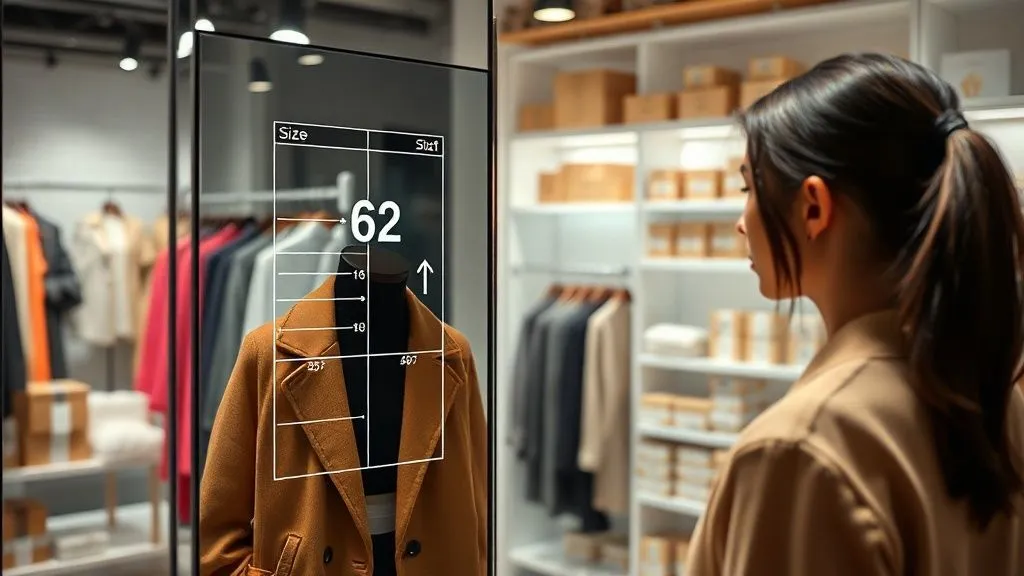
How to Reduce Fashion E-commerce Returns Using AI Sizing Tech?
For over two decades in the fashion technology space, I've witnessed countless promising e-commerce ventures struggle, not because of poor marketing or design, but due to a silent, insidious killer: high return rates. It's a problem that erodes profit margins, strains logistics, and ultimately, undermines customer trust. I've seen brands invest heavily in acquisition only to watch those hard-won customers slip away, frustrated by ill-fitting garments.
The core issue, as I've observed time and again, is the inherent disconnect between a digital product image and the tactile reality of fit. Customers can't try on clothes before buying online, leading to widespread sizing inconsistency, guesswork, and ultimately, a wave of returns. This not only burdens your bottom line but also contributes significantly to environmental waste, a growing concern for today's conscious consumer.
But what if there was a way to bridge this gap, to virtually bring the fitting room experience to your customers' homes? This article will dive deep into exactly that: how to reduce fashion e-commerce returns using AI sizing tech. I'll share actionable frameworks, reveal the underlying mechanics of these powerful tools, and provide expert insights gleaned from years in the trenches, empowering you to transform your return challenge into a competitive advantage.
The Hidden Costs of Returns: Why This Problem Demands Immediate Attention
Many retailers view returns as an unavoidable cost of doing business online. However, in my experience, this perspective often underestimates the true financial and reputational damage. The problem extends far beyond the initial shipping and restocking fees; it’s a systemic issue that siphons profitability from multiple angles.
Financial Drain: Beyond Shipping Labels
Consider the full lifecycle of a returned item. There's the initial outbound shipping cost, the inbound return shipping cost, inspection, repackaging, and often, a markdown if the item can't be sold as new. These operational expenses accumulate rapidly. Furthermore, the capital tied up in returned inventory, which could otherwise be used for new stock or investments, represents a significant opportunity cost. According to a National Retail Federation report, returns cost U.S. retailers over $1 trillion in lost sales in 2023, a staggering figure that underscores the urgency of this issue.
Brand Erosion: The Trust Deficit
Every ill-fitting garment that lands back on your doorstep is a missed opportunity to build loyalty. More critically, it's a direct hit to your brand's reputation. A customer who repeatedly receives items that don't fit is unlikely to return, regardless of how stylish your collection is. They'll share their negative experiences, impacting potential new customers. In today's hyper-connected world, a poor sizing experience can quickly translate into detrimental online reviews and social media chatter, eroding the trust you've worked so hard to build.
Environmental Impact: The Unseen Footprint
As an industry veteran, I've become increasingly aware of fashion's environmental footprint. Returns contribute significantly to this. The transportation of goods back and forth, the waste generated from damaged or unsellable items, and the energy consumed in processing all add up. Consumers are increasingly valuing sustainability, and a high return rate often signals inefficiency and waste, which can deter environmentally conscious shoppers. Addressing returns isn't just good for business; it's good for the planet.
Understanding the Root Cause: Why Do Customers Return?
To effectively reduce returns, we must first understand their genesis. My years in fashion tech have taught me that while reasons for returns can seem varied, a handful of core issues consistently emerge as primary drivers, particularly in apparel e-commerce.
The 'Fit' Fallacy: Inconsistent Sizing & Lack of Information
This is, without a doubt, the single biggest culprit. Unlike brick-and-mortar stores where customers can physically try on garments, online shoppers rely on static size charts and product descriptions. The problem is, sizing is notoriously inconsistent across brands and even within a single brand's different product lines. A 'medium' from one designer might be a 'small' from another. Without personalized, accurate information, customers are left to guess, leading directly to a high probability of purchasing an item that simply doesn't fit their unique body shape.
Expectation vs. Reality: Visual Discrepancies
The way an item looks on a perfectly styled model online can often differ significantly from how it appears on an average person. Lighting, photography angles, and even digital enhancements can create a skewed perception of fit, drape, and material. When the garment arrives and doesn't match the idealized image in the customer's mind, disappointment sets in, often leading to a return. This isn't just about size; it's about the overall visual expectation.
The 'Bracketing' Phenomenon
I've seen this tactic become increasingly common, especially with free returns. Customers, unsure of their size, will order the same item in two or three different sizes (e.g., small, medium, large) with the full intention of keeping only one and returning the rest. While convenient for the customer, this practice significantly inflates return volumes and associated costs for retailers. It's a direct symptom of the lack of confidence customers have in finding their correct size on the first try.
Demystifying AI Sizing Technology: What It Is and How It Works
The good news is that we're no longer confined to static size charts. AI sizing technology represents a profound leap forward in addressing the root causes of returns. It leverages advanced algorithms and data analysis to provide highly personalized fit recommendations, effectively bringing the fitting room to the customer. I've seen these technologies evolve rapidly, becoming more sophisticated and accurate with each passing year.
Body Scans & 3D Modeling: The Gold Standard
This advanced approach involves customers using specialized apps to create a 3D scan of their body using their smartphone camera. The AI then uses these precise measurements to compare against the digital patterns of garments. This provides an incredibly accurate recommendation, often even visualizing how the garment will fit on the customer's unique body shape. While still relatively niche due to integration complexity, I anticipate this becoming a dominant force as mobile scanning technology improves.
Questionnaire-Based AI: Smart Algorithms at Work
One of the most accessible and widely adopted forms, this AI collects data through a series of questions. These typically include height, weight, age, preferred fit (e.g., loose, true-to-size, tight), and even the sizes they wear in other well-known brands. The AI then cross-references this information with a vast database of garment measurements, past customer return data, and brand-specific sizing intelligence to generate a personalized recommendation. It's a powerful tool for brands without the resources for full 3D scanning.
Virtual Try-On (VTO) & Augmented Reality (AR): Bringing the Dressing Room Home
VTO and AR solutions allow customers to 'try on' clothes virtually. Using their device's camera, garments are overlaid onto their live image or a 3D avatar. While some VTO focuses more on visual appeal than precise fit, the more advanced versions integrate sizing AI to show not just how an item looks, but also how it drapes and fits based on body dimensions. This immersive experience significantly boosts buyer confidence and reduces the 'expectation vs. reality' gap.
"The true power of AI sizing isn't just about telling a customer their size; it's about building their confidence to purchase the *right* size, every single time. This shifts the paradigm from guesswork to certainty, a fundamental change for fashion e-commerce."
Implementing AI Sizing: A Step-by-Step Framework for Fashion Retailers
Successfully integrating AI sizing technology isn't a plug-and-play solution; it requires a strategic, phased approach. Based on my experience guiding numerous brands, I've distilled the process into this actionable framework to help you reduce fashion e-commerce returns using AI sizing tech effectively.
Step 1: Assess Your Current Return Landscape
Before you even look at AI vendors, you need a crystal-clear understanding of your current return problem. This means diving deep into your data. I recommend focusing on:
- Identify Key Return Drivers: Analyze return reasons provided by customers. Is it consistently 'too big,' 'too small,' or 'not as expected'?
- Product-Specific Return Rates: Pinpoint which product categories or even individual SKUs have the highest return rates due to sizing.
- Customer Demographics & Behavior: Are certain demographics returning more? Do new customers have higher return rates than loyal ones?
- Cost Analysis: Calculate the true cost of returns for your business, including shipping, processing, and lost revenue.
This initial audit will provide a baseline for measuring success and help you prioritize where AI sizing will have the most impact.

Step 2: Choose the Right AI Sizing Solution
The market for AI sizing is growing, with various solutions catering to different needs and budgets. Your choice should align with your specific return drivers, product range, and technical capabilities.
| Solution Type | Pros | Cons | Best For |
|---|---|---|---|
| Questionnaire-Based AI | Easy integration, lower cost, good for general apparel | Less precise for unique body shapes | High-volume, broad apparel retailers |
| 3D Body Scan/Measurement AI | Highest accuracy, personalized fit visualization | Higher integration complexity, customer adoption hurdles | Premium brands, custom-fit apparel |
| Virtual Try-On (VTO) with AI | Engaging customer experience, visual fit assessment | Can be resource-intensive, varying levels of fit accuracy | Fashion-forward brands, enhancing product discovery |
When evaluating vendors, ask about their data sources, accuracy rates, integration methods, and customer support. I always advise piloting with a specific product category first to test efficacy.
Step 3: Seamless Integration and Data Flow
Integration is where the rubber meets the road. Whether it's an API integration with your e-commerce platform or a more complex SDK for 3D scanning, ensure your chosen solution can seamlessly communicate with your existing systems. This includes product catalogs, customer data platforms, and analytics tools. Accurate and real-time data flow is critical for the AI to learn and improve its recommendations over time. Don't underestimate the importance of clean, consistent product data – garment measurements are the AI's lifeblood.
Step 4: Educate Your Customers and Staff
The best AI sizing tool is useless if your customers don't use it or understand its benefits. Clearly communicate how the technology works, its benefits (e.g., 'find your perfect fit, avoid returns'), and how to use it on your product pages. Train your customer service team to explain the AI's recommendations and troubleshoot any issues. A smooth user experience from discovery to purchase is paramount for adoption and success.
Real-World Impact: A Case Study in AI-Powered Return Reduction
Theory is one thing; practical application is another. I want to share a composite, yet realistic, case study that illustrates the transformative power of AI sizing when implemented thoughtfully. This isn't just about reducing a number; it's about fundamentally reshaping the customer experience and profitability.
Case Study: How 'ChicMode' Slashed Returns by 28% with AI Fit
ChicMode, a fast-growing online retailer specializing in contemporary women's wear, faced a formidable challenge: a persistent 25% return rate, with 'poor fit' cited in over 60% of cases. This was severely impacting their profitability and slowing their expansion. I consulted with their team, and we identified a clear need for a personalized sizing solution.
After a thorough assessment, ChicMode opted for a questionnaire-based AI sizing tool that integrated directly onto their product pages. The tool asked customers for their height, weight, age, preferred fit, and their typical size in 3-4 major competitor brands. The AI then cross-referenced this with ChicMode's extensive garment measurement database and historical return data.
The implementation involved a pilot phase on their best-selling dresses and denim, followed by a gradual rollout across their entire catalog. Crucially, ChicMode invested in educating their customers with clear on-site messaging and a short tutorial video. Their customer service team was also trained to guide shoppers through the AI process.
Within six months, the results were remarkable. The overall return rate for products using the AI sizing tool dropped from 25% to 18%, representing a 28% reduction in fit-related returns. This translated into significant savings on shipping and processing, increased customer satisfaction scores, and a noticeable uptick in repeat purchases from customers who had used the AI tool. ChicMode also gained invaluable data on fit preferences, which they used to inform future product design and merchandising decisions. This success story underscores the direct correlation between personalized fit and reduced operational overhead.
"ChicMode's journey proves that AI sizing isn't just a cost-cutting measure; it's a customer loyalty builder. When shoppers feel confident in their purchase, they return to the brand, not the product."
For more insights into successful tech implementations in retail, I often refer to industry reports like those from Deloitte's retail sector analysis, which consistently highlight the impact of smart technology on customer experience and operational efficiency.
Beyond Returns: The Broader Benefits of AI Sizing for Your Business
While the immediate goal of implementing AI sizing is to reduce fashion e-commerce returns using AI sizing tech, the ripple effects of this technology extend far beyond just cost savings. In my professional opinion, AI sizing is a foundational technology that can unlock a suite of strategic advantages for any fashion retailer.
Enhanced Customer Experience and Loyalty
When customers consistently receive items that fit perfectly, their shopping experience transforms from a gamble to a delight. This positive reinforcement builds immense trust and satisfaction. They're more likely to become repeat buyers, recommend your brand to others, and even forgive minor issues if the core product experience is consistently excellent. It moves you from transactional sales to genuine relationship building.
Data-Driven Design and Inventory Optimization
The data collected by AI sizing tools is a goldmine. Beyond individual recommendations, it provides aggregated insights into customer body shapes, fit preferences, and common sizing discrepancies across your product lines. This invaluable feedback loop can inform future design decisions, leading to better-fitting garments from the outset. Furthermore, by predicting demand for specific sizes more accurately, you can optimize inventory levels, reducing overstock and markdown risks, and improving supply chain efficiency.
Sustainability and Ethical Fashion
As I mentioned earlier, every return has an environmental cost. By significantly reducing returns, AI sizing directly contributes to a more sustainable retail model. Less transportation, less waste, and fewer resources consumed in processing returns align perfectly with the growing consumer demand for ethical and environmentally responsible brands. Positioning your brand as a leader in sustainable practices through smart tech can be a powerful differentiator.
Overcoming Implementation Challenges: My Expert Advice
No transformative technology comes without its hurdles. While the benefits of AI sizing are clear, I've guided many companies through the common pitfalls during implementation. Anticipating and addressing these challenges proactively is key to a smooth and successful rollout.
Data Privacy and Trust
Collecting personal body measurements or detailed sizing preferences raises immediate questions about data privacy. Customers need reassurance that their data is secure and used only for its stated purpose. I always advise clear, transparent privacy policies and robust data security measures. Building trust is paramount; any perceived misuse of data can quickly erode customer confidence and negate the benefits of the AI.
Integration Complexity
Integrating a sophisticated AI system into existing e-commerce platforms, ERPs, and inventory management systems can be complex. It often requires significant technical expertise and careful planning. My advice is to engage with vendors who offer strong technical support and clear integration roadmaps. Consider a phased rollout, starting with a manageable product category, to iron out kinks before a full-scale deployment. Don't rush this stage; a flawed integration can lead to more problems than it solves.
Cost vs. ROI Justification
Investing in AI sizing technology can represent a significant upfront cost. Justifying this investment requires a clear understanding of the potential Return on Investment (ROI). This is where your initial return landscape assessment (from Step 1) becomes crucial. Quantify the savings from reduced returns, improved customer lifetime value, and optimized inventory. A compelling business case, backed by solid data, is essential for securing internal buy-in. As Forbes Tech Council often highlights, measuring ROI for AI requires looking beyond immediate cost savings to long-term strategic advantages.
The Future of Fashion E-commerce: Personalization at Scale
Looking ahead, AI sizing isn't just a solution for today's return problems; it's a gateway to the future of hyper-personalized fashion e-commerce. As an industry specialist, I foresee a landscape where every customer interaction is tailored, every recommendation precise, and every purchase a confident decision. This is where AI truly shines, moving beyond simple sizing to anticipating needs and shaping experiences.
Predictive Analytics for Trend Forecasting
The rich data generated by AI sizing tools, when combined with purchase history and browsing behavior, can empower predictive analytics. Retailers will be able to not only understand what fits customers but also what styles and trends are likely to resonate with specific body types and preference profiles. This allows for more precise inventory planning and a reduction in unsold stock, aligning perfectly with sustainability goals.
Hyper-Personalized Product Recommendations
Imagine a fashion e-commerce site where every product displayed is already filtered for your exact size and preferred fit, and recommendations are based not just on your past purchases but on how well an item is likely to suit your unique body shape. This level of personalization, driven by advanced AI, will elevate the online shopping experience to an unprecedented degree, making it feel truly bespoke. This isn't just about 'you might like this'; it's about 'this will fit you perfectly and you'll love it'.
The concept of 'mass customization' isn't new, but AI sizing is making it a practical reality for mainstream fashion. For a deeper dive into how AI is shaping the future of retail, consider exploring research from institutions like the Harvard Business School, which frequently publishes on these transformative trends.
Frequently Asked Questions (FAQ)
How accurate is AI sizing really? The accuracy of AI sizing varies depending on the specific technology and the quality of data it's trained on. Advanced 3D body scanning solutions can achieve extremely high accuracy, often within millimeters. Questionnaire-based AI, while not as precise as 3D scans, leverages vast datasets and sophisticated algorithms to provide highly reliable recommendations, often reducing fit-related returns by 20-50%. Continuous data input from customer feedback and returns further refines the AI's accuracy over time.
What's the typical ROI for AI sizing implementation? The ROI for AI sizing can be significant, primarily driven by reduced return costs (shipping, processing, lost sales), increased customer lifetime value due to improved satisfaction, and optimized inventory management. While upfront costs vary, many retailers report seeing a positive ROI within 6-18 months. Savings from return reduction alone can often justify the investment, with additional benefits like enhanced brand loyalty and data insights contributing to long-term profitability.
Is AI sizing only for apparel, or can it be used for other fashion items? While apparel is the most common application due to its direct relation to body fit, AI sizing principles can extend to other fashion items. For example, AI can help recommend shoe sizes based on foot measurements and preferred fit, or even accessory sizes (like belts or hats) by analyzing customer data. The core concept of personalized recommendations based on precise measurements is adaptable across various product categories where fit is a crucial factor.
How long does it take to see results after implementing AI sizing? Initial results, such as a noticeable drop in fit-related return rates, can often be observed within 3-6 months post-implementation, especially if the solution is rolled out effectively and customers adopt it. The AI's performance typically improves over time as it gathers more data and refines its algorithms, leading to even greater return reductions and more accurate recommendations in the long run. Consistent monitoring and optimization are key to accelerating results.
What are the privacy implications of collecting customer sizing data? Data privacy is a critical consideration. Reputable AI sizing providers adhere to strict data protection regulations (like GDPR and CCPA) and implement robust security measures. Typically, data is anonymized and aggregated for algorithm training, and individual customer data is only used to provide personalized recommendations. Clear communication of your privacy policy and how customer data is used is essential to build and maintain trust with your customer base.
Key Takeaways and Final Thoughts
- High fashion e-commerce return rates are a silent profit killer, impacting financial health, brand reputation, and environmental sustainability.
- The primary culprits are inconsistent sizing, the expectation-reality gap, and the 'bracketing' behavior of customers.
- AI sizing technology, including questionnaire-based tools, 3D body scans, and virtual try-on, offers a powerful, data-driven solution.
- A strategic implementation involves assessing your current return landscape, selecting the right AI solution, ensuring seamless integration, and educating both staff and customers.
- Beyond just reducing returns, AI sizing enhances customer experience, optimizes inventory, and contributes to sustainable fashion practices.
- Proactively address challenges like data privacy, integration complexity, and ROI justification for a successful deployment.
In my two decades in this dynamic industry, I've learned that innovation isn't just about shiny new products; it's about solving fundamental problems that hinder growth and customer satisfaction. Implementing AI sizing tech isn't merely an operational upgrade; it's a strategic imperative for any fashion retailer aiming to thrive in the digital age. By embracing this technology, you're not just reducing returns; you're investing in a more profitable, sustainable, and customer-centric future for your brand. Take the leap, and watch your e-commerce business transform.
Recommended Reading
- Unlocking Perfect Fit: How to Integrate 3D Body Scan Data Effectively
- 7 Pillars: Verifiable Ethical Sourcing for New Accessory Collections
- Fashion Campaign Photo Shoot Planning Tips: The Ultimate Guide
- 7 Proven Steps to Accurately Predict Next Season's Casual Footwear Trends
- Unlock Boutique Doors: 7 Strategies to Partner with High-End Bridal Shops




Your email address will not be published. Required fields are marked *