


How to recommend eyewear styles that subtly enhance a client's personal brand?
For over 15 years in the dynamic world of eyewear fashion, I've had the privilege of working with countless clients – from burgeoning entrepreneurs to seasoned executives – who instinctively understood that their glasses were more than just a visual aid. They knew, deep down, that their eyewear was a critical extension of their identity, a silent, yet powerful, communicator of who they are and what they represent.
The challenge, however, often lies in translating that intuition into tangible, impactful choices. Many clients come to me feeling overwhelmed by the sheer variety, or worse, having received generic advice that focuses solely on face shape. They want to project confidence, creativity, authority, or approachability, but they're unsure how a pair of frames can genuinely contribute to that narrative, leading to missed opportunities for powerful personal branding.
This isn't about simply picking 'trendy' frames or what 'looks good.' It's about a strategic, empathetic, and deeply insightful process. In this definitive guide, I'll share the actionable frameworks, real-world insights, and expert strategies I've honed over years, showing you precisely how to recommend eyewear styles that don't just fit a face, but subtly and powerfully enhance a client's unique personal brand.
Beyond Face Shape: Understanding the Client's Core Identity
Before we even touch a frame, the first and most crucial step is to delve into the client's core identity. Eyewear is not a standalone accessory; it's an integral piece of a larger personal brand puzzle. For years, the industry leaned heavily on face shape analysis, which, while useful for fit, completely misses the deeper psychological and branding opportunities.
The Personal Brand Archetype Framework
I've found immense success by employing a personal brand archetype framework. This isn't about fitting someone into a rigid box, but rather understanding the dominant traits and aspirations they wish to project. Think of archetypes like 'The Innovator,' 'The Nurturer,' 'The Leader,' 'The Creative,' 'The Visionary,' or 'The Advocate.'
Eyewear acts as a potent non-verbal cue, instantly signaling aspects of a client's personality and professional ethos before they even utter a single word. Understanding their desired archetype is the bedrock of a truly impactful recommendation.
Each archetype carries with it certain visual associations – colors, shapes, materials, and overall aesthetics. Our goal is to align the eyewear with these inherent visual languages.
Here are the steps I follow to identify a client's archetype:
- Initial Conversation & Active Listening: Ask open-ended questions about their career, hobbies, passions, and what they admire in others. Listen for recurring themes and values.
- Lifestyle Assessment: Where do they spend most of their time? What environments do they frequent? A lawyer in court has different needs than a graphic designer in a studio.
- Aspirational Self: Who do they *want* to be perceived as? This is often more important than their current perception. Do they want to command more authority, foster more creativity, or appear more approachable?
- Visual Cues & Wardrobe Analysis: Observe their current attire, hair, and makeup. Are there consistent patterns in color, silhouette, or texture? This provides clues to their existing comfort zone and projected image.
- Keyword Association: Ask them to describe their ideal personal brand in 3-5 keywords. This often reveals their core archetype.

The Psychology of Shape, Color, and Material in Eyewear
Once we've uncovered the client's desired personal brand archetype, we can translate these insights into concrete eyewear characteristics. Every element of a frame – its shape, color, and material – carries psychological weight and contributes to the overall message.
Decoding Frame Shapes: From Authority to Approachability
Frame shapes are arguably the most impactful visual element. They can soften, sharpen, or completely transform a client's perceived demeanor:
- Square/Rectangular: These shapes often convey professionalism, authority, and an organized, serious demeanor. They are excellent for clients who want to project leadership and competence.
- Round/Oval: Rounder frames tend to soften features, suggesting creativity, approachability, and an intellectual or artistic sensibility. They can make a client appear more innovative and less intimidating.
- Cat-eye: With their upward sweep, cat-eye frames exude confidence, sophistication, and a touch of playful elegance. They are perfect for clients who want to project ambition and a chic, fashionable edge.
- Aviator/Geometric: These styles often signal a modern, adventurous, or bold personality. Geometric shapes, in particular, can suggest a forward-thinking and unique individual.
The Power of Color: Reinforcing Brand Messaging
Color is another profound, yet often underestimated, tool in eyewear styling. It can either blend seamlessly or make a bold statement:
- Neutral Tones (Black, Grey, Tortoise, Navy): These are universal for corporate and professional settings, conveying reliability, sophistication, and seriousness. They work well for archetypes like 'The Leader' or 'The Professional.'
- Bold Colors (Red, Blue, Green): For creative archetypes or those wanting to signal innovation, a pop of color can be transformative. Red can signify passion and power; blue, trustworthiness and calm; green, growth and harmony.
- Transparent/Translucent: These frames offer a subtle, minimalist aesthetic, suggesting clarity, modernity, and an approachable, understated elegance.
Material Matters: Texture and Perceived Value
The material of the frame contributes significantly to its perceived value and the overall message it sends:
- Acetate: Versatile and available in a vast array of colors and patterns, acetate can range from classic to avant-garde. It's perceived as stylish and expressive.
- Metal (Titanium, Stainless Steel): Often associated with durability, precision, and a sleek, minimalist aesthetic. Titanium, in particular, conveys high quality and understated luxury, perfect for 'The Innovator' or 'The Executive.'
- Wood/Natural Materials: These suggest an earthy, authentic, and eco-conscious brand. Ideal for 'The Nurturer' or 'The Artisan.'
By understanding these psychological associations, we move beyond subjective preferences to objective brand alignment.
| Frame Shape | Key Association | Ideal Archetype |
|---|---|---|
| Rectangular | Authority, Professionalism | Leader, Executive |
| Round | Creativity, Approachability | Creative, Intellectual |
| Cat-Eye | Sophistication, Confidence | Fashionista, Ambitious Professional |
| Aviator | Adventurous, Modern | Visionary, Entrepreneur |
| Geometric | Unique, Forward-Thinking | Innovator, Artist |
The "Subtle Enhancement" Principle: Avoiding Overt Branding
One of the most common pitfalls I've observed is the temptation to make eyewear too 'loud' or overtly branded. The goal is not for the glasses to wear the client, but for the client to wear the glasses – effortlessly and authentically. This is where the 'subtle enhancement' principle becomes paramount.
Why Subtlety is Key for Authenticity
An eyewear style that subtly enhances a personal brand feels organic and genuine. It's an extension of the client's true self, not a costume. When eyewear is too flashy, too trendy, or too far removed from their core identity, it can create a disconnect, making the client appear inauthentic or even uncomfortable. Authenticity builds trust, and trust is the cornerstone of any strong personal brand.
The true power of eyewear in personal branding lies in its ability to seamlessly integrate with and amplify a client's inherent qualities, rather than creating a jarring or forced statement. It should feel like a natural, elevated version of themselves.
The aim is for people to notice the client's presence and confidence, with the eyewear contributing to that overall impression without being the sole focus. It's about congruence, not contradiction.
Integrating Eyewear with Existing Wardrobe and Lifestyle
To achieve this subtlety, eyewear recommendations must be considered within the broader context of the client's existing wardrobe and lifestyle. Ask yourself:
- What is their typical daily attire? Is it formal, casual, business casual, or highly creative?
- What are the predominant colors and textures in their clothing?
- What kind of social and professional settings do they frequent? A client who primarily attends black-tie events will have different needs than one who works in a casual startup environment.
- Do they have specific style icons or aesthetics they admire?
By harmonizing eyewear with these elements, we create a cohesive visual narrative. For instance, a client who favors minimalist, neutral-toned clothing might benefit from sleek metal frames or translucent acetate, rather than a bold, patterned frame that would clash with their understated aesthetic.
The Consultative Approach: Asking the Right Questions
My experience has taught me that the most successful eyewear recommendations stem from a truly consultative approach. It’s not just about showing options; it’s about deep listening and asking insightful questions that go beyond superficial preferences.
Uncovering Professional Aspirations and Personal Values
This is where we bridge the gap between their current reality and their desired future. I often start by asking about their professional aspirations:
- “Where do you see yourself in five years professionally?”
- “What kind of impact do you want to make in your industry?”
- “What three adjectives would you want a new acquaintance to use to describe you after a first meeting?”
- “Are there specific qualities you feel you need to project more strongly to achieve your goals?”
These questions help uncover their intrinsic values – whether it's innovation, trustworthiness, creativity, or approachability – which are the very essence of their personal brand.
Here are key questions I incorporate into every consultation:
- What message do you want your eyewear to send about you? (This directly addresses the branding aspect.)
- Describe your ideal professional scenario. How do you look and feel in that moment? (Helps visualize the aspirational self.)
- What are your top three non-negotiable qualities in an eyewear frame (e.g., comfort, durability, lightness, unique style)? (Establishes practical boundaries.)
- Is there anyone whose style you admire, and why? (Provides visual cues and insights into their aesthetic preferences.)
- How do you want to feel when you put on your glasses each morning? (Connects to emotional impact and confidence.)
Case Study: Elevating 'The Aspiring Entrepreneur'
I recall a client, Sarah, an incredibly bright software developer who was transitioning into launching her own tech startup. Her existing eyewear was a simple, rimless style – purely functional. When I asked her about her aspirations, she spoke passionately about being seen as an innovator, a confident leader, and someone who inspires trust in potential investors.
Her rimless frames, while practical, projected an almost invisible presence, conflicting with her desire to command attention and convey authority. Based on our discussions, I recommended moving away from the purely functional to something that amplified her ambition. We explored a sleek, angular titanium frame in a deep charcoal grey – a subtle yet strong statement. The sharp lines communicated precision and leadership, while the premium material hinted at sophistication and value. The color was professional but modern, avoiding the harshness of black.
The impact was immediate. Sarah reported feeling more confident in investor meetings, and even received compliments that subtly acknowledged her 'new look.' She felt her eyewear now accurately reflected her drive and professional acumen, rather than detracting from it. According to a study by Harvard Business Review, first impressions are significantly influenced by subtle cues, and eyewear is undeniably one of them.
Leveraging Visual Storytelling and Presentation
Even with the most insightful consultation, clients often need visual aids to truly grasp how eyewear can transform their personal brand. This is where visual storytelling becomes an invaluable tool in my practice.
Curating a 'Brand Vision Board' with Eyewear Examples
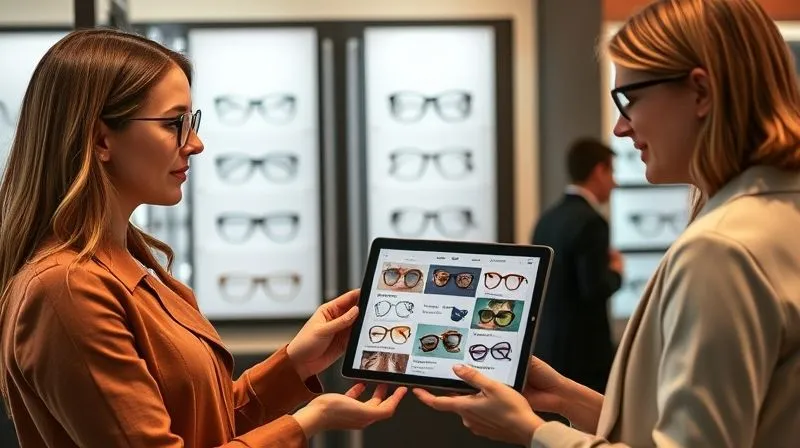
I don't just present frames; I present a vision. After our initial discussion and archetype identification, I'll often create a small, personalized 'Brand Vision Board.' This isn't a physical board but can be a digital collage or even a mental one I walk them through. It includes:
- Images of individuals (not necessarily celebrities) who embody their desired archetype, paying attention to their overall styling, including eyewear.
- Examples of different frame shapes, colors, and materials that align with their brand keywords.
- Before-and-after style transformations (generic, not of past clients) that illustrate the power of eyewear.
This helps clients visualize the connection between their personal brand goals and the specific eyewear recommendations. It allows them to see themselves in a new light, understanding the 'why' behind each suggestion.
The Art of the 'Eyewear Wardrobe'
Just as one wouldn't wear the same outfit to a boardroom meeting, a casual brunch, and a formal gala, the concept of an 'eyewear wardrobe' is crucial for clients with diverse roles and brand expressions. A single pair of glasses rarely serves all aspects of a complex personal brand.
I often recommend 2-3 pairs, each serving a distinct purpose:
- The 'Power' Pair: For high-stakes meetings, presentations, or when maximum authority and professionalism are required. Often a sharper, more structured frame in a classic color.
- The 'Creative/Approachability' Pair: For collaborative sessions, networking events, or when a more innovative, approachable, or casual brand message is desired. This might be a rounder, bolder color, or unique material.
- The 'Everyday' Pair: A comfortable, versatile option that still aligns with their core brand but is perhaps less overtly 'statement-making.'
This approach empowers clients to strategically deploy their eyewear to reinforce different facets of their personal brand, depending on the context. It shifts their perception of glasses from a necessity to a strategic asset.
Common Pitfalls and How to Avoid Them
Even with the best intentions and a solid framework, there are common missteps that can derail an otherwise excellent eyewear recommendation. My years in the field have taught me to anticipate these and guide clients away from them.
Overlooking Comfort and Fit
This might seem obvious, but it's astonishing how often comfort is sacrificed for style. An ill-fitting or uncomfortable pair of glasses will simply not be worn with confidence, regardless of how perfectly it aligns with the client's brand. The client will constantly be adjusting them, or worse, leaving them in their case. This undermines the very purpose of enhancing their brand.
Always prioritize:
- Proper Bridge Fit: No slipping, no red marks.
- Temple Length: Should extend comfortably over the ear without pinching or being too short.
- Weight Distribution: Balanced weight prevents nose or ear fatigue.
- Lens Coverage: Sufficient for their prescription and field of vision.
A confident posture and demeanor stem from comfort. If the eyewear isn't comfortable, the confidence will waver.
Ignoring Practicality and Prescription Needs
While we're focusing on brand enhancement, the primary function of eyewear – vision correction – can never be secondary. I've seen clients fall in love with a frame only to realize it's not suitable for their high prescription, or the lens type they need (e.g., progressives) won't work optimally with that specific frame shape or size.
Always confirm:
- Prescription Compatibility: Some frames are not ideal for very strong prescriptions or specific lens types.
- Lifestyle Needs: Does the client need photochromic lenses for outdoor work? Anti-glare for extensive screen time? Blue light protection?
- Durability: For active clients, a more robust frame might be necessary.
Functionality is the foundation upon which style and brand enhancement are built. Without it, the recommendation is incomplete.
Pushing Trends Over Timelessness (Unless it's the Brand)
Trends are fleeting, but a personal brand should be enduring. While it's important to be aware of current fashion, blindly pushing trendy frames can be a disservice to a client whose brand calls for a more classic or timeless aesthetic. Unless the client's personal brand *is* about being on the cutting edge of fashion, prioritize styles that will remain relevant and resonate with their core identity for years to come.
As renowned marketer Seth Godin often emphasizes, authenticity trumps fleeting trends. A client's eyewear should reflect their unique narrative, not just the latest seasonal fad. The goal is to build an iconic personal brand, not just a trendy outfit.
Measuring Success and Client Satisfaction
My role as an eyewear specialist doesn't end when a client walks out the door with their new frames. True expertise involves ensuring the recommendations genuinely serve their purpose and building lasting relationships. Measuring success is crucial for refining your approach and fostering client loyalty.
Feedback Mechanisms and Follow-up
I always implement a structured follow-up process. About 2-4 weeks after the client receives their eyewear, I reach out. This isn't just a courtesy; it's an opportunity to gather invaluable feedback:
- How do you feel wearing your new glasses? (Assesses comfort and confidence.)
- Have you noticed any changes in how others perceive you, or how you feel in professional settings? (Directly measures brand enhancement impact.)
- Are there any situations where you feel the eyewear doesn't quite fit your needs? (Identifies potential gaps or areas for a second pair.)
- What kind of feedback have you received from colleagues or clients? (External validation of the brand message.)
This feedback loop is essential. It helps you understand what's working, what's not, and how to continuously improve your consultative process. It also demonstrates your commitment to their success, not just to a sale.
Building Long-Term Client Relationships
When you consistently deliver eyewear recommendations that genuinely enhance a client's personal brand, you transition from being a salesperson to a trusted advisor. Clients will return to you for future needs and, more importantly, refer others. This is the ultimate measure of success and the foundation of a sustainable practice.
Being a trusted advisor means:
- Staying Updated: Continuously learning about new materials, technologies, and fashion trends while keeping the personal brand lens in focus.
- Proactive Communication: Sending personalized updates on new collections that might suit their evolving brand.
- Empathy and Understanding: Always putting the client's needs and aspirations first.
Ultimately, when clients feel seen, understood, and genuinely supported in their journey to project their best self, the relationship transcends a transactional exchange, solidifying your position as their go-to expert for eyewear that truly makes a difference.

Frequently Asked Questions (FAQ)
How do I handle a client who insists on a style that clashes with their brand? This is a common scenario. My approach is to first acknowledge their preference respectfully. Then, gently pivot by asking them to articulate *why* they like that particular style. Is it comfort? A memory? A trend? Once you understand their motivation, you can guide them. For instance, if they like a bold color that clashes with their corporate brand, you could suggest a similar shape in a more professional hue, or propose the bold color for a 'weekend' or 'creative' pair, introducing the concept of an eyewear wardrobe. Frame it as helping them achieve their goals, explaining how certain styles can inadvertently send unintended messages, and offering alternatives that achieve both their aesthetic preference and brand alignment.
Can eyewear genuinely change how others perceive someone professionally? Absolutely. Eyewear is a powerful non-verbal cue. Studies in social psychology and communication consistently show that appearance, including accessories, significantly influences first impressions and ongoing perceptions. For example, a client who switches from purely functional, almost invisible frames to a well-chosen, assertive style might be perceived as more confident, knowledgeable, or decisive. The change isn't just external; it often boosts the client's self-confidence, leading to a more authoritative presence. It’s a subtle yet profound catalyst for professional perception.
What's the difference between 'personal style' and 'personal brand' in eyewear? Personal style is about individual aesthetic preferences – what you personally like and feel good in. It’s often driven by trends, comfort, and subjective taste. Personal brand, however, is the deliberate perception you want others to have of you, especially in professional or public contexts. It's about what message you're consistently sending. In eyewear, a client's personal style might lean towards quirky, brightly colored frames, but if their personal brand needs to convey gravitas and reliability as a financial advisor, then those frames might clash. The goal is to find eyewear that harmonizes both, or offers different options for different branding contexts.
Should I consider the client's age when recommending styles for personal branding? While age isn't the primary driver for personal brand recommendations, it's a contextual factor. For example, a youthful entrepreneur might leverage more modern, perhaps slightly bolder designs to signal innovation, whereas a seasoned executive might opt for classic, sophisticated frames that convey gravitas and experience. However, it's crucial to avoid stereotypes. The focus should always be on the *desired brand message* and the client's *aspirations*, rather than their chronological age. A 60-year-old artist might want vibrant, creative frames, while a 30-year-old lawyer might need traditional, authoritative ones.
How important is lens type (e.g., anti-reflective, blue light) in personal brand enhancement? While lens type doesn't directly dictate the 'style' of the frame, it plays a crucial supporting role in personal brand enhancement by contributing to perceived professionalism and well-being. For instance, anti-reflective coatings eliminate distracting glare, allowing others to see your eyes clearly, which is vital for connection and trust. Blue light filtering can signal a client's awareness of modern health and technology, especially if they work extensively with screens. These technical aspects indirectly enhance the brand by demonstrating attention to detail, clarity, and a commitment to overall presentation. For further reading on non-verbal communication and personal branding, consider resources from The American Psychological Association.
Key Takeaways and Final Thoughts
Mastering the art of recommending eyewear that subtly enhances a client's personal brand is a nuanced skill, but one that profoundly impacts your value as an expert. It moves beyond mere aesthetics to strategic, empathetic styling that truly empowers individuals.
- Start with Identity, Not Just Face Shape: Understand the client's core personal brand archetype and aspirations.
- Decode Psychological Cues: Leverage the inherent messages conveyed by frame shape, color, and material.
- Embrace Subtlety: Aim for congruence and authentic enhancement, not overt branding.
- Adopt a Consultative Approach: Ask deep, insightful questions that uncover true needs and goals.
- Utilize Visual Aids: Help clients visualize their enhanced brand through curated selections and vision boards.
- Avoid Common Pitfalls: Never compromise on comfort, practicality, or timelessness (unless a trend *is* the brand).
- Measure and Follow-Up: Ensure satisfaction and build lasting, trusting relationships.
In a world saturated with visual information, eyewear offers an unparalleled opportunity for subtle, impactful communication. By applying these principles, you won't just be selling glasses; you'll be helping clients articulate their unique story, amplify their presence, and confidently step into the best version of their personal brand. This is the true power of expert eyewear styling, and it's a journey I encourage you to embark on with every client you meet.
Recommended Reading
- Scaling Biodegradable Textiles: 7 Strategies to Cut Costs & Innovate
- Unlock 5 AI Strategies: How to Improve Fashion Demand Forecasting?
- Unlock the Secret: How to Make Minimalist Accessories Look Exciting
- 7 Expert Steps: Authenticating Rare Vintage Designer Pieces Without Labels
- 7 Proven Steps: Recovering from a Sudden Drop in Fashion Affiliate Commissions



Your email address will not be published. Required fields are marked *