

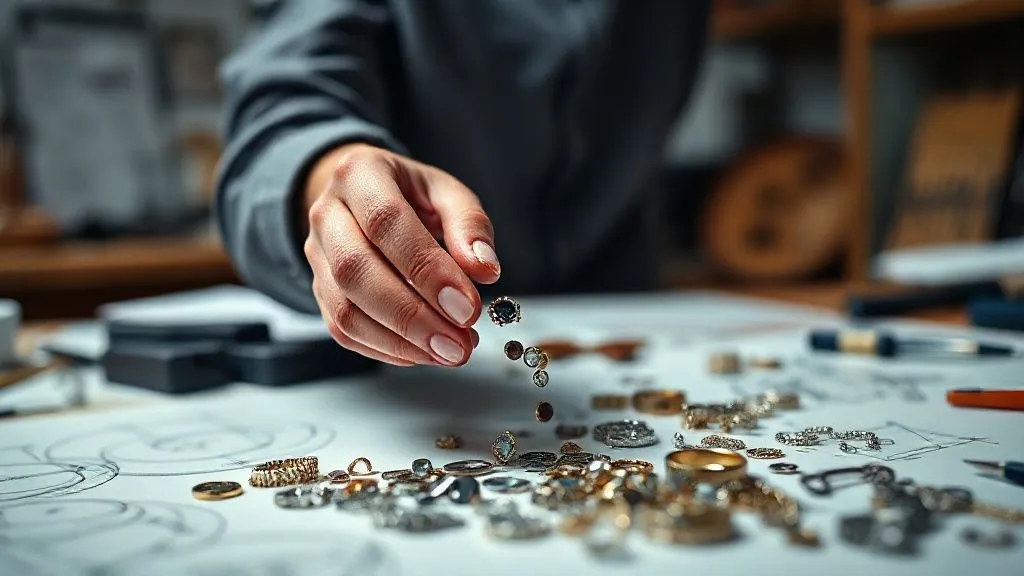
How to quickly pivot jewelry designs for sudden trend shifts?
For over 15 years in the dynamic world of jewelry design, I've witnessed firsthand how swiftly consumer tastes can shift, often leaving designers and brands scrambling. It's a challenging environment where what's 'in' today can be 'out' tomorrow, and the ability to adapt isn't just an advantage—it's a matter of survival.
Many brands, unfortunately, get caught in a cycle of slow response. They invest heavily in collections based on past trends, only to find themselves with excess inventory when a new aesthetic unexpectedly dominates. This not only leads to significant financial losses but also erodes brand relevance and customer trust.
In this definitive guide, I'll share seven battle-tested strategies that I've seen successful brands employ to not just react, but proactively pivot their jewelry designs for sudden trend shifts. We'll delve into actionable frameworks, real-world insights, and practical steps to build a truly agile and responsive design process.
The Pulse of the Market: Real-time Trend Monitoring
In my experience, the first step to pivoting quickly is knowing when and where to pivot. This isn't about guesswork; it's about establishing robust systems for real-time trend intelligence. Relying on annual trend reports is no longer sufficient; you need to be constantly listening to the market's heartbeat.
This means going beyond traditional forecasting. It involves deep dives into social media analytics, engaging with key opinion leaders, and maintaining close relationships with retail partners who are on the front lines of consumer interaction. The goal is to identify nascent trends before they become mainstream, giving you a crucial head start.
- Set Up Social Listening Tools: Utilize platforms like Brandwatch or Sprout Social to monitor keywords, hashtags, and visual trends related to jewelry, fashion, and lifestyle. Pay attention to emerging aesthetics, color palettes, and material preferences discussed by influencers and early adopters.
- Analyze Influencer & Micro-Influencer Activity: Identify individuals whose style resonates with your target audience. Track what they're wearing, promoting, and discussing. Often, micro-influencers are better indicators of authentic, grassroots trends than mega-influencers.
- Engage with Retail Partners and Sales Teams: Your sales teams and retail partners are invaluable sources of information. They hear direct feedback from customers, understand purchasing patterns, and can spot shifts in demand long before they appear in sales reports. Establish regular feedback loops.
- Attend Virtual & Physical Trade Shows Strategically: While physical shows provide networking, virtual platforms offer broader access to global trends. Look for new material innovations, emerging designers, and cross-industry collaborations that might signal future directions.
“True agility in jewelry design isn't about reacting to trends, but anticipating them by becoming an active listener in the global conversation of style.”
Understanding the nuances of different trend types is also critical. Are we seeing a micro-trend (short-lived, highly specific), a macro-trend (broader, longer-lasting, like sustainability), or a 're-trend' (a revival of a past style)? Each requires a different level of pivot and investment.

Agile Design Thinking: Building Flexibility into Your Process
The core of rapid pivoting lies in your design process itself. I advocate for an 'agile' approach, borrowing principles from software development. This means breaking down design into smaller, iterative cycles, focusing on modularity, and embracing continuous feedback. It's about designing for change, not just for a static collection.
Think about how your designs can be easily modified or reconfigured. Can components be swapped out? Can a base design accommodate different stones, metals, or finishes without a complete overhaul? This foresight saves immense time and resources when a trend shift demands a quick response.
- Embrace Modular Component Design: Design jewelry pieces with interchangeable elements. Think about clasps, pendants, charms, or even sections of a bracelet that can be easily swapped. This allows for quick customization and trend updates without redesigning from scratch.
- Prioritize Rapid Prototyping: Invest in technologies like 3D printing. Being able to quickly render and physically test new designs or modifications is a game-changer. It compresses the time from concept to tangible product, allowing for faster iterations.
- Implement Small Batch Production for New Lines: Instead of committing to large production runs for untested designs, start with smaller batches. This minimizes financial risk and allows you to gauge market reception before scaling up. If a trend fades, you're not stuck with excessive inventory.
Case Study: Gemstone Innovations Co.
Gemstone Innovations Co., a mid-sized jewelry brand, faced significant losses when their core gemstone cuts fell out of favor. By implementing a modular design strategy, they began creating settings that could accommodate various gemstone shapes and sizes. When a shift towards raw, organic stones emerged, they quickly swapped out polished gems for rough-cut alternatives within existing settings, launching a 'Nature's Embrace' collection in just six weeks. This rapid adaptation reduced their inventory write-offs by 40% and captured new market share.
“Modularity isn't just about design flexibility; it's about financial resilience in a volatile market.”
Supply Chain Agility: Sourcing for Speed and Adaptability
A brilliant design means little if your supply chain can't keep up. In my experience, rigid supply chains are often the biggest bottleneck when trying to pivot quickly. Building an agile supply chain means having diverse, reliable partners who can deliver materials and components on demand, and sometimes, even locally.
This requires strategic partnerships, not just transactional relationships. It's about working with suppliers who understand your need for speed, can accommodate smaller, more frequent orders, and are transparent about their own capabilities and lead times. Diversifying your sourcing geographically and by supplier type can also mitigate risks.
- Diversify Your Supplier Base: Don't rely on a single supplier for critical components. Have backup options for metals, stones, and findings. This reduces vulnerability to delays or quality issues from one source.
- Negotiate Flexible Terms: Work with suppliers who are willing to accommodate smaller order quantities, faster turnaround times, and even consignment agreements for certain materials. Building strong, trust-based relationships is key here.
- Maintain Buffer Stock for Core Components: While just-in-time (JIT) can be efficient, for frequently used or hard-to-source core components (e.g., standard metal alloys, specific clasps), having a small buffer stock can save weeks during a rapid pivot.
- Explore Local Sourcing for Quick Turnarounds: For certain elements, especially during a trend emergency, local suppliers can offer unparalleled speed, even if the cost is slightly higher. Balance cost-efficiency with speed when necessary.
According to a McKinsey report on supply chain resilience, companies with agile supply chains are 20% more likely to outperform their peers in times of disruption. This principle directly applies to trend shifts in jewelry.
| Supplier Type | Lead Time | Order Size | Flexibility |
|---|---|---|---|
| Local Artisan | 1-2 Weeks | Small Batches | High |
| Regional Manufacturer | 3-5 Weeks | Medium Batches | Medium |
| International Bulk | 8-12 Weeks | Large Batches | Low |

Leveraging Technology: From CAD to AI-driven Insights
Technology is no longer a luxury; it's the engine of rapid design iteration and trend prediction. As a veteran in this space, I've seen the transformative power of tools like Computer-Aided Design (CAD) and, more recently, Artificial Intelligence (AI) in revolutionizing how we approach jewelry design and market response.
CAD software drastically reduces the time from concept to prototype, allowing for endless modifications with a few clicks. AI, on the other hand, can process vast amounts of data to identify patterns and predict emerging trends with a level of accuracy human analysts simply cannot match. Integrating these tools into your workflow is non-negotiable for agility.
- Invest in Advanced CAD/CAM Software: Tools like Rhino or MatrixGold enable designers to create intricate 3D models, visualize designs from all angles, and make rapid modifications. These models can then be directly sent to 3D printers or CNC machines for prototyping and production.
- Explore AI-Powered Trend Platforms: Emerging AI tools can analyze social media, fashion blogs, retail sales data, and even runway shows to identify subtle shifts in consumer preferences and predict upcoming trends. These insights can inform your design decisions proactively.
- Implement Digital Asset Management (DAM) Systems: A well-organized DAM system for your design files, material libraries, and component inventories ensures that designers can quickly access and reuse elements, speeding up the modification process during a pivot.
“In the race against time, technology is your fastest vehicle. From CAD's precision to AI's foresight, these tools transform reactive design into proactive innovation.”
The Power of Customer Feedback and Co-creation
Who better to tell you what's trending than your own customers? In my experience, neglecting direct customer feedback is a common pitfall. Engaging your audience early in the design process, even through informal channels, can provide invaluable insights and build a loyal community around your brand's adaptability.
This isn't just about surveys; it's about creating interactive experiences. Think about limited-edition drops, 'vote for your favorite design' campaigns, or even inviting a select group of loyal customers to participate in virtual design sessions. This co-creation approach not only informs your pivots but also generates excitement and pre-orders.
- Create a Continuous Feedback Loop: Implement mechanisms for ongoing customer feedback, such as post-purchase surveys, website polls, and dedicated social media channels. Analyze comments, reviews, and direct messages for sentiment and emerging preferences.
- Host Virtual Focus Groups or Design Sprints: Invite a diverse group of your target audience to participate in online sessions where they can view early design concepts, provide input, and even vote on elements. This provides qualitative insights that data alone cannot.
- Launch Limited Edition 'Trend Test' Drops: Produce very small quantities of a new, trend-inspired design and release it as a limited edition. Monitor sales and feedback closely. This acts as a low-risk market test before committing to larger production.
- Leverage User-Generated Content (UGC): Encourage customers to share how they style your jewelry. This provides organic insights into how your pieces are being worn and what other accessories they're paired with, indicating broader style shifts.
As marketing guru Seth Godin often emphasizes, building a tribe around your brand, where customers feel heard and valued, is paramount. This connection fosters loyalty and provides a direct channel for understanding evolving desires.
Marketing and Communication: Announcing Your Pivot
Successfully pivoting your designs also requires a strategic communication plan. It's not enough to simply launch new pieces; you need to tell a compelling story about your brand's agility, responsiveness, and commitment to staying fresh. A poorly communicated pivot can confuse customers and dilute your brand message.
In my career, I've seen brands stumble by making changes without explaining the 'why.' Instead, frame your pivots as a benefit to the customer – you're evolving to meet their desires, offering them the latest styles, and keeping their collections exciting. This builds trust and positions your brand as a trendsetter, not just a follower.
- Craft a Narrative of Responsiveness: Develop a compelling story around your brand's ability to adapt and innovate. Highlight how you listen to your customers and the market to bring them the most current and desirable designs.
- Leverage Social Media for Teasers and Reveals: Use Instagram, TikTok, and Pinterest to create excitement around upcoming 'trend-responsive' collections. Utilize polls, countdowns, and behind-the-scenes content to engage your audience.
- Educate Your Sales and Customer Service Teams: Ensure that everyone interacting with customers understands the rationale behind the design pivots. They should be equipped to answer questions and articulate the value of the new collections confidently.
- Collaborate with Influencers for Launch: Partner with relevant fashion and lifestyle influencers who embody the new trend to showcase your pivoted designs. Their authentic endorsement can quickly validate your new direction.

Financial Prudence: Managing Inventory and Investment
Pivoting quickly isn't just a design and supply chain challenge; it's a financial one. Unmanaged inventory can quickly become a liability, and misallocated investment can stifle future innovation. As an industry specialist, I've always stressed the importance of a financially sound strategy for agility.
This involves intelligent inventory management, understanding your cash flow, and strategically allocating resources towards research and development (R&D) and rapid prototyping. The goal is to minimize risk while maximizing your ability to capitalize on new opportunities.
- Implement Just-in-Time (JIT) Inventory for Non-Core Items: For trend-driven components or finished pieces, aim for JIT inventory to reduce holding costs and the risk of obsolescence. Only order what you need, when you need it.
- Analyze Sell-Through Rates Continuously: Regularly review how quickly different designs and components are selling. This data is crucial for making informed decisions about production quantities and identifying items that need to be phased out or redesigned.
- Allocate Budget for R&D and Prototyping: Consider your agile design capabilities as an investment. Dedicate a portion of your budget specifically to exploring new materials, technologies, and rapid prototyping, allowing you to experiment without impacting core production.
- Segment Inventory by Trend Risk: Categorize your inventory into 'core staples' (low trend risk, higher stock), 'seasonal basics' (medium risk, moderate stock), and 'high-trend items' (high risk, minimal stock, JIT).
Efficient inventory management, supported by robust data analytics, is a cornerstone of financial agility. It allows you to free up capital that would otherwise be tied up in slow-moving stock, ready to be reinvested into new, trend-responsive collections.
| Inventory Category | Trend Risk | Stock Level | Pivot Strategy |
|---|---|---|---|
| Core Staples | Low | High | Minimal change, focus on quality |
| Seasonal Basics | Medium | Moderate | Material/color updates |
| High-Trend Items | High | Low/JIT | Rapid iteration, quick phase-out |
Frequently Asked Questions (FAQ)
Question: How can small jewelry businesses compete with larger brands in pivoting quickly? Small businesses actually have an advantage in agility due to fewer bureaucratic layers. Focus on building strong local supplier relationships, leveraging social media for direct customer feedback, and utilizing affordable rapid prototyping technologies like desktop 3D printers. Your niche focus often means you understand your specific customer base more intimately, allowing for highly targeted and quick pivots.
Question: What's the biggest mistake jewelry designers make when trying to adapt to new trends? The biggest mistake I've seen is waiting too long to react, or conversely, chasing every single micro-trend without a clear brand identity. A successful pivot isn't about abandoning your brand's essence; it's about evolving within it. Don't be afraid to phase out underperforming designs, but always ensure new collections still resonate with your core brand values. Over-committing to a trend too early without proper market testing is also a common pitfall.
Question: How do I balance creative vision with market demands during a pivot? This is a classic dilemma. My advice is to integrate market insights into your creative process from the beginning. View trend data not as a constraint, but as a source of inspiration. Use it to inform your material choices, color palettes, and silhouettes, while still injecting your unique artistic flair. Agile design thinking allows you to experiment with market-responsive elements without sacrificing your core creative vision. It's about finding the intersection where art meets commerce.
Question: What role does sustainability play in pivoting designs for new trends? Sustainability is no longer a trend; it's a fundamental shift. When pivoting, consider sustainable sourcing of materials, ethical manufacturing processes, and designing for longevity or recyclability. Many emerging trends are intertwined with conscious consumption. Integrating sustainability into your core design and pivot strategy will not only align with consumer values but also enhance your brand's reputation and long-term viability. It's a non-negotiable aspect of modern jewelry design.
Question: How often should a jewelry brand expect to pivot its designs? The frequency of pivots depends heavily on your brand's niche and the speed of your target market's trends. For high-fashion or fast-fashion jewelry, minor pivots (e.g., color, finish, material swap) might occur seasonally or even monthly. For fine jewelry, pivots might be less frequent but more significant, focusing on new gemstone cuts, setting styles, or collection themes every 1-2 years. The key is continuous monitoring and being prepared to act when the data signals a significant shift, rather than adhering to a fixed schedule.
Key Takeaways and Final Thoughts
- Monitor Relentlessly: Implement real-time trend monitoring through social listening, influencer analysis, and direct retail feedback.
- Design for Agility: Embrace modular design, rapid prototyping, and small batch production to build flexibility into your creative process.
- Cultivate Agile Supply Chains: Diversify suppliers, negotiate flexible terms, and maintain strategic buffer stocks.
- Leverage Technology: Invest in CAD/CAM and explore AI for faster iteration and predictive insights.
- Engage Your Customers: Utilize feedback loops, co-creation, and 'trend test' drops to inform and validate your pivots.
- Communicate Strategically: Frame your pivots as brand evolution, leveraging compelling narratives and social media.
- Manage Finances Prudently: Implement JIT inventory, analyze sell-through rates, and allocate budget for R&D.
The jewelry industry is a beautiful, ever-evolving landscape. While the pace of change can feel daunting, the ability to quickly pivot your designs isn't just a survival tactic; it's an opportunity to innovate, captivate your audience, and solidify your brand's position as a forward-thinking leader. By adopting these strategies, you're not just reacting to the market; you're shaping its future. Embrace the challenge, and watch your designs shine brighter than ever.
Recommended Reading
- 7 Expert Checks: Quickly Spot Advanced Replica Luxury Handbags
- Stunning Nail Art Ideas for Short Nails at Home: Your Ultimate Guide!
- 7 Steps to Zero Waste: Design Clothing Patterns, Eliminate Fabric Waste
- 7 Steps to Master Cinematic Noir Lighting & Banish Flat Shots
- Client Rejects All Flattering Styles? 7 Expert Steps to Realign




Your email address will not be published. Required fields are marked *