

How to Quickly Liquidate Stagnant Limited Edition Sneaker Inventory?
For over 15 years in the cutthroat world of footwear retail, particularly within the hyper-competitive limited-edition sneaker market, I've witnessed firsthand the exhilaration of a successful drop and the crushing weight of unsold stock. Many enthusiastic entrepreneurs enter this space with dreams of endless hype and instant sell-outs, only to find themselves eventually staring down shelves laden with once-coveted, now-stagnant inventory.
The problem is insidious: limited edition sneakers, by their very nature, are time-sensitive assets. What was 'hype' yesterday can quickly become 'dead stock' tomorrow, tying up crucial capital and occupying valuable warehouse space. This isn't just about lost profit; it's about missed opportunities, increased holding costs, and a constant drain on your business's agility. The longer these sneakers sit, the more their perceived value erodes, making liquidation an increasingly daunting task.
But despair not. In this definitive guide, I will share the actionable frameworks, proven strategies, and expert insights I've developed over years in the trenches. You'll learn not just how to move your stagnant inventory, but how to do so quickly, efficiently, and with minimal damage to your brand's reputation, ultimately reclaiming your capital and revitalizing your business flow.
Understanding the Stagnation: Why Limited Editions Get Stuck
Before we can fix the problem, we must understand its roots. The limited-edition sneaker market operates on a delicate balance of scarcity, demand, and perceived value. When this balance is disrupted, stagnation occurs.
The Illusion of Infinite Demand
Many retailers fall into the trap of believing that 'limited edition' automatically equates to 'infinite demand' or 'guaranteed profit.' While initial drops often see frenzied activity, the secondary market is far more nuanced. Factors like overproduction, shifts in fashion trends, celebrity endorsements, or even unexpected re-releases can suddenly dampen demand for a previously hyped silhouette. I've seen countless retailers over-order on a perceived 'sure thing' only to be left holding the bag.
Common Pitfalls in Inventory Management
Beyond external market forces, internal inventory management practices often contribute to stagnation. This includes poor forecasting, insufficient data analysis on past sales trends, a lack of dynamic pricing strategies, and an unwillingness to acknowledge a product's declining velocity. Holding onto stock with the hope that 'it will eventually sell for more' is a dangerous gamble that rarely pays off in the fast-paced sneaker world.
Phase 1: Deep Dive – Data-Driven Inventory Assessment
The first step in any effective liquidation strategy is to stop guessing and start analyzing. You need a clear, unbiased picture of exactly what you have, where it's sitting, and its true market viability.
Step 1: Segment Your Stagnant Stock
Not all dead stock is created equal. You need to categorize your inventory to determine the best liquidation approach for each segment. This isn't just about shoe size; it's about market desirability, age, and condition.
- Identify True Dead Stock: These are items with zero sales in the last 6-12 months. They are your highest priority for aggressive liquidation.
- Slow-Moving Inventory: Items with infrequent sales (e.g., 1-2 units per quarter) that are not performing as expected. These might respond to targeted promotions.
- Aging Core Inventory: While not 'limited edition,' sometimes older models from a core collection can become stagnant. Their liquidation strategy might differ.
- High-Value, Low-Demand Items: These are the trickiest – rare sneakers that simply haven't found the right buyer yet, perhaps due to an unrealistic asking price or niche appeal.
Step 2: Analyze Sales Velocity & Market Trends
Once segmented, dig into the data. What was the original sales velocity? When did it drop off? More importantly, what are similar items selling for on the secondary market *right now*? Platforms like StockX, GOAT, and eBay provide real-time data that is invaluable. Don't rely on your initial purchase price; focus on what buyers are willing to pay today.
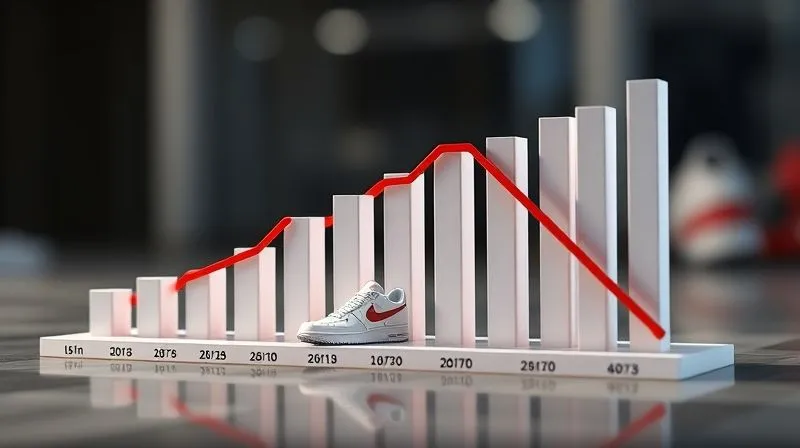
According to a recent market analysis by Deloitte, companies that leverage advanced analytics for inventory management can reduce carrying costs by up to 20% and improve sales by 10-15%. This isn't just about looking at your own numbers, but understanding the broader market pulse.
Step 3: Calculate True Holding Costs
Many retailers underestimate the hidden costs of stagnant inventory. It's not just the money tied up; it's the rent for warehouse space, insurance, potential depreciation, and the opportunity cost of not investing that capital elsewhere. Calculate these costs precisely to understand the urgency of liquidation.
| Cost Type | Monthly Cost |
|---|---|
| Warehouse Storage (per unit) | $1.50 |
| Insurance (per unit) | $0.25 |
| Opportunity Cost (capital) | $0.75 |
| Depreciation/Obsolescence | $2.00 |
| Admin/Handling | $0.50 |
Understanding that a sneaker costing you $5.00 a month to store and insure is a powerful motivator to move it, even at a reduced margin. This is crucial for answering 'How to quickly liquidate stagnant limited edition sneaker inventory?' decisively.
Phase 2: Strategic Pricing & Discounting Tactics
Aggressive discounting might seem counterintuitive for 'limited edition' items, but when inventory is stagnant, it's a necessary evil. The goal is to recover as much capital as possible, not to hold out for an unrealistic profit.
The Art of Dynamic Pricing
Traditional pricing models don't work for stagnant inventory. You need a dynamic approach that responds to real-time market conditions. This means being prepared to adjust prices frequently, sometimes daily, based on demand signals and competitor actions.
- Anchor Pricing: Always show the original (or perceived) retail price alongside your discounted price to highlight the value proposition.
- Loss Leader Strategy: For truly dead stock, consider selling a few units at cost or even a slight loss to attract traffic to your store or website, hoping they'll purchase other, more profitable items.
- Flash Price Drops: Announce significant, but temporary, price reductions to create urgency and a sense of exclusivity, even for discounted items.
Tiered Discounting Models
Instead of a flat percentage off, implement tiered discounts to encourage larger purchases or to reward specific customer segments.
- Volume Discounts: "Buy two, get 15% off; Buy three, get 25% off." This is particularly effective for less desirable sizes or colorways.
- Membership Discounts: Offer exclusive, deeper discounts to loyal customers or members of your community.
- Bundle Deals: Pair a stagnant sneaker with a more desirable accessory (e.g., premium laces, cleaning kit, or even a less popular apparel item) at an attractive combined price.
"The goal isn't just to sell, but to sell intelligently, preserving margin where possible and cutting losses decisively where necessary. Sometimes, the most profitable sale is the one that prevents further losses."
Phase 3: Unconventional Sales Channels & Partnerships
Your primary sales channels might not be the best place for liquidation. Think outside the box and explore alternative avenues that cater to bargain hunters or niche collectors.
Leveraging Consignment & Resale Platforms
While you might already use these for new drops, they are excellent for offloading stagnant stock. Their vast audiences are actively searching for deals.
- StockX/GOAT: For high-value, but slow-moving items, these platforms offer authentication and a global reach, but be prepared for fees and competitive pricing.
- eBay/Grailed: Ideal for mid-tier items or those with minor imperfections, allowing for direct interaction with buyers and more flexible pricing.
- Local Consignment Shops: If you have physical inventory, partnering with local sneaker consignment stores can clear stock without extensive shipping logistics.
Strategic B2B Bulk Sales
Sometimes, the fastest way to move a significant volume of stagnant inventory is to sell it to another business. This could be a smaller retailer, an outlet store, or a liquidator. While the per-unit profit will be lower, the speed of capital recovery is unmatched.
How to approach B2B:
- Identify Potential Buyers: Look for businesses specializing in discounted goods or smaller boutiques looking to expand their inventory.
- Prepare a Detailed Manifest: Provide exact quantities, sizes, conditions, and original retail prices. Transparency builds trust.
- Negotiate a Bulk Price: Be realistic. Your goal is swift liquidation, not maximizing individual unit profit.
Case Study: SneakerVault's Swift Clearance
SneakerVault, a boutique retailer in NYC, found itself with a significant overstock of a once-hyped collaboration that quickly lost steam. Instead of holding onto the 300+ pairs, which were incurring $1,500 in monthly holding costs, they implemented a multi-pronged approach. They first offered a flash sale to their VIP members, moving 50 pairs. The remaining 250 pairs were then segmented. The higher-value sizes were listed on GOAT at aggressive prices, clearing another 100 units. The remaining 150 pairs, mostly smaller or less popular sizes, were sold in a single bulk deal to a regional outlet chain. While the bulk deal was at a 40% loss on initial cost, SneakerVault recovered capital within two weeks, avoiding months of holding costs and freeing up warehouse space for new, profitable inventory. This proactive decision allowed them to invest in a new collection that quickly sold out, demonstrating the power of decisive action when answering 'How to quickly liquidate stagnant limited edition sneaker inventory?'.
Phase 4: Creative Marketing & Community Engagement
Even discounted items need smart marketing. Engage your audience and create a compelling reason for them to buy, beyond just the lower price tag.
Flash Sales & Limited-Time Offers
Create a sense of urgency. Announce a 24-48 hour flash sale with a significant discount. Use countdown timers on your website and social media. This taps into the FOMO (Fear Of Missing Out) that drives the sneaker market.
- Exclusive Access: Offer early access to flash sales for email subscribers or app users.
- Social Media Blasts: Leverage Instagram Stories, TikTok, and Twitter with visually appealing content showcasing the discounted sneakers.
Bundle Deals & Value Additions
As mentioned, bundling can transform a stagnant item into an attractive offer. Think about what complements a sneaker. This could be:
- Sneaker Cleaning Kits: A practical addition that adds perceived value.
- Exclusive Apparel: Pair a less popular sneaker with a graphic tee or hoodie.
- Digital Content: Offer an exclusive e-guide on sneaker care or styling tips.
Engaging the Sneakerhead Community
The sneaker community is passionate and often understands the nuances of the market. Engage them directly.
- Host a 'Mystery Box' Sale: Curate boxes with a mix of new and stagnant sneakers at a fixed price, guaranteeing a value higher than the purchase price. This creates excitement and clears varied stock.
- Community Giveaways/Contests: Use a few stagnant pairs as prizes for contests, requiring participants to share your liquidation sale. This generates buzz.
- Collaborate with Influencers: Partner with micro-influencers who genuinely appreciate sneakers. They can showcase your discounted items in a way that feels authentic, not just promotional. For more on community engagement, check out this guide on Forbes' insights on community building.
Phase 5: Brand Reputation & Long-Term Prevention
Liquidating inventory shouldn't come at the cost of your brand's long-term health. How you handle this process can either reinforce or damage your reputation.
Protecting Your Brand Value During Liquidation
Transparent communication is key. Frame your liquidation as an opportunity for customers to grab a great deal, rather than a sign of business trouble. Avoid language that suggests desperation.
- Dedicated Sale Section: Create a clear 'Archive Sale' or 'Vault Clearance' section on your website.
- Quality Control: Ensure even discounted items are shipped in excellent condition and with proper packaging.
- Customer Service: Maintain high standards of customer service, especially during sales periods. A positive experience encourages repeat business, even on discounted items.
As Harvard Business Review emphasizes, maintaining brand equity during price reductions is a delicate balance. It requires strategic communication and a clear understanding of your customer base. Read more about how to cut prices without hurting your brand.
Implementing Proactive Inventory Management Systems
The best way to liquidate stagnant inventory is to prevent it from happening in the first place. Invest in robust inventory management systems and forecasting tools.
| Strategy | Benefit |
|---|---|
| Pre-order System | Reduces overstock risk, gauges true demand |
| Just-In-Time (JIT) Inventory | Minimizes holding costs, reduces waste |
| Data Analytics & Forecasting | Improves buying accuracy, identifies trends early |
| Automated Reordering Thresholds | Prevents stockouts and overstock simultaneously |
Embrace technology that provides real-time insights into sales velocity, market trends, and customer behavior. This proactive approach ensures your capital remains fluid and your shelves are stocked with what truly sells. The principles of Just-In-Time (JIT) inventory, for example, can be adapted even for limited-edition drops to minimize excess. Learn more about Just-In-Time inventory management.
Frequently Asked Questions (FAQ)
Q: What's the biggest mistake retailers make when trying to liquidate stagnant sneaker inventory? The most common and detrimental mistake is procrastination. Many retailers hold onto stagnant inventory for too long, hoping for a market rebound or a buyer willing to pay their desired price. This only increases holding costs, degrades the item's perceived value further, and ties up capital that could be used for profitable new stock. Decisive, data-driven action early on is always better than prolonged hesitation.
Q: How do I know if I should sell at a loss or continue to hold out? This is a critical decision. You should calculate your true holding costs (storage, insurance, opportunity cost) and compare them to the potential recovery value. If the monthly holding costs exceed the potential for a significant price increase in the near future (e.g., next 3-6 months), it's almost always better to cut your losses and liquidate. As a rule of thumb, if an item hasn't sold in 6-9 months and market data doesn't suggest an imminent surge in demand, it's time to move it.
Q: Can liquidating at a discount damage my brand's 'exclusive' image? It can, if not handled carefully. The key is how you frame it. Avoid language that suggests desperation. Instead, position it as an 'Archive Sale,' 'Vault Clearance,' or a special opportunity for loyal customers. Emphasize the limited-time nature and the unique chance to acquire past gems. Maintaining high-quality product presentation and customer service during these sales also helps preserve brand integrity.
Q: Are there any ethical considerations when liquidating sneakers, especially if they were once highly sought after? Absolutely. Transparency is paramount. Clearly state the condition of the sneakers, especially if they have any minor imperfections from storage. Avoid misleading customers about rarity or future value. Additionally, consider donating a small portion of truly unsellable stock to charitable organizations, rather than simply destroying them, which can have positive PR benefits and aligns with corporate social responsibility.
Q: How can I prevent stagnant inventory in the future for limited edition drops? Prevention is the best cure. Implement rigorous pre-order systems to gauge demand accurately before committing to large orders. Utilize advanced analytics for forecasting based on historical sales, trend analysis, and social media sentiment. Diversify your sourcing and consider smaller, more frequent drops rather than large, infrequent ones. Building strong relationships with suppliers for potential buy-backs or consignment options can also provide a safety net.

Key Takeaways and Final Thoughts
Navigating the limited-edition sneaker market requires not just an eye for hype, but a keen understanding of inventory dynamics. Stagnant stock is a silent killer for any retail business, eroding capital and stifling growth. But with the right strategies, you can transform this challenge into an opportunity for swift capital recovery and renewed business agility.
- Act Decisively: Procrastination is your biggest enemy. The longer you wait, the more costly and difficult liquidation becomes.
- Embrace Data: Base your decisions on concrete sales velocity, market trends, and true holding costs, not on hope or past glories.
- Diversify Channels: Don't limit yourself to your usual sales avenues. Explore consignment, bulk sales, and community engagement.
- Innovate Marketing: Even discounted items need creative promotion to stand out and create urgency.
- Prioritize Prevention: Implement robust inventory management and forecasting to avoid future stagnation.
Remember, every pair of sneakers represents not just a product, but a portion of your business's vital capital. By mastering the art of liquidation, you're not just clearing shelves; you're freeing up resources, strengthening your cash flow, and positioning your business for sustainable success in the ever-evolving world of limited-edition footwear. Stay agile, stay informed, and keep those sneakers moving! For further reading on e-commerce trends and inventory management best practices, I highly recommend exploring resources from Shopify's extensive blog or McKinsey's retail insights.
Recommended Reading
- The Secret Playbook: How to Get Early Access to New Shoe Launches
- 7 Proven Signals: How to Identify Micro-Streetwear Trends Before Saturation
- Stunning Nail Art Ideas for Short Nails at Home: Your Ultimate Guide!
- The Smart Bride's Guide: How to Budget for Your Dream Designer Wedding Dress
- 7 Steps: Verify Sustainable Jewelry Material Sourcing Claims Effectively



Your email address will not be published. Required fields are marked *