


How to prevent greenwashing accusations with organic cotton claims?
For over 15 years in the sustainable fashion industry, I've witnessed countless brands, both large and small, stumble into the treacherous waters of greenwashing. It often starts with good intentions – a genuine desire to offer more sustainable products, like organic cotton. However, without a clear strategy and unwavering commitment to transparency, these efforts can quickly backfire, leading to accusations that damage reputation, erode consumer trust, and undermine the very movement we're trying to build.
The problem is pervasive: consumers are savvier than ever, and their skepticism towards vague 'eco-friendly' claims is at an all-time high. When you claim your cotton is 'organic,' you're not just making a statement about the fiber; you're inviting scrutiny into your entire supply chain, your ethical practices, and your commitment to genuine sustainability. Failing to meet this scrutiny with robust evidence and clear communication is where the greenwashing trap lies, threatening to undo years of hard work.
In this definitive guide, I will share the actionable frameworks, real-world insights, and expert strategies I've cultivated over my career to help you navigate this complex landscape. You'll learn not just how to avoid greenwashing accusations with your organic cotton claims, but how to build an unshakeable foundation of authenticity and trust that truly resonates with your customers and the wider sustainable fashion community.
Understanding the Greenwashing Landscape in Sustainable Fashion
Before we dive into solutions, it's crucial to grasp the nature of the challenge. Greenwashing isn't always malicious; sometimes it's born from ignorance, poor communication, or simply a lack of resources to back up ambitious claims. However, the impact on consumer perception is the same. In the context of organic cotton, common greenwashing pitfalls include:
- Vague Terminology: Using terms like 'natural' or 'eco-friendly' without specific, verifiable evidence.
- Misleading Visuals: Employing imagery of nature and pristine environments that don't accurately reflect the product's true environmental footprint.
- Hidden Trade-offs: Highlighting one sustainable attribute (e.g., organic cotton) while ignoring other significant environmental impacts (e.g., excessive water use in dyeing, unethical labor practices).
- Lack of Proof: Making claims without providing accessible, third-party verification or data.
- Irrelevant Claims: Boasting about practices that are legally mandated anyway, presenting them as voluntary efforts.
I've seen brands proudly announce '100% organic cotton!' only for a quick audit to reveal that only a small percentage of their total collection uses certified organic fibers, or that the 'organic' claim stops at the farm gate, ignoring the chemical-intensive processing that follows. This kind of oversight, intentional or not, is precisely what fuels greenwashing accusations and erodes consumer faith in the entire sustainable fashion movement.
The Pillars of Authenticity: Beyond the "Organic" Label
True authenticity in sustainable fashion, especially with organic cotton, goes far beyond a single label. It's about building a comprehensive strategy that addresses environmental, social, and governance (ESG) factors across your entire value chain. Think of it as constructing a robust house; the organic cotton is a crucial wall, but you need a strong foundation, a sturdy roof, and all the connecting elements to make it truly sound.
Key Pillars for Unquestionable Authenticity:
- Holistic Environmental Stewardship: Beyond organic farming, consider water usage, energy consumption, waste management, and chemical use throughout manufacturing.
- Transparent Social Responsibility: Ensure fair labor practices, safe working conditions, and living wages at every stage, from farm to factory.
- Robust Governance and Ethics: Implement strong internal policies, ethical sourcing guidelines, and a commitment to anti-corruption.
- Continuous Improvement: Acknowledge that sustainability is a journey, not a destination. Be open about challenges and your plans to address them.
As marketing guru Seth Godin often says, "People do not buy goods and services. They buy relations, stories, and magic." Your organic cotton claim becomes magical when it's part of a bigger, authentic story of responsibility and care that your brand embodies entirely. This integrated approach is your first line of defense against the skepticism that leads to greenwashing accusations.
Mastering Certification: Your Shield Against Scrutiny
This is where the rubber meets the road. In my experience, the single most effective way to prevent greenwashing accusations with organic cotton claims is through rigorous, third-party certification. It's not just a logo; it's a testament to verifiable adherence to strict standards, audited by independent bodies. This provides the objective proof consumers and regulators demand.
Choosing the Right Organic Cotton Certifications
Not all certifications are created equal. For organic cotton, the two most recognized and respected global standards are:
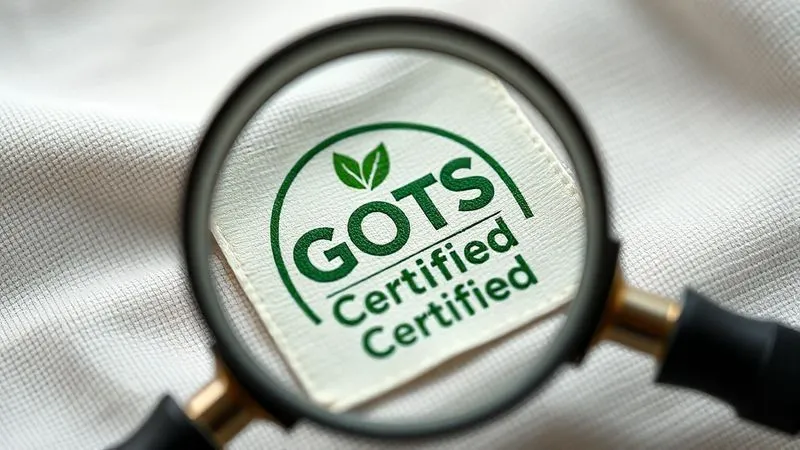
- Global Organic Textile Standard (GOTS): This is the gold standard. GOTS covers the processing, manufacturing, packaging, labeling, trading, and distribution of all textiles made from at least 70% certified organic natural fibers. It includes strict environmental criteria (e.g., chemical inputs, wastewater treatment) and social criteria (e.g., fair labor practices). Achieving GOTS certification for your entire supply chain, from ginning to finished product, is the strongest statement you can make. Learn more about GOTS here.
- Organic Content Standard (OCS): The OCS verifies the presence and amount of organic material in a final product. It tracks the organic material from the source to the final product, but unlike GOTS, it does not address the processing stages' environmental or social aspects beyond the organic content itself. It's a good starting point for content verification but should ideally be complemented by other certifications for a holistic claim.
When you use these certifications, you're not just saying 'organic'; you're saying 'certified organic by a globally recognized, independent body.' This level of detail and third-party validation is incredibly powerful.
Case Study: How EcoWeave Built Unshakeable Trust
EcoWeave, a small but rapidly growing apparel brand, initially struggled with how to prevent greenwashing accusations with organic cotton claims. They used organic cotton but only had a supplier's declaration, which left them vulnerable. After facing a minor social media backlash for vague 'sustainable' claims, their CEO, Maria, decided on a full overhaul. She invested in getting their primary organic cotton supplier and their manufacturing facility GOTS certified. This involved a significant upfront investment in audits and process adjustments. They then prominently displayed the GOTS logo on all relevant products and created a dedicated 'Our Certifications' page on their website, detailing what GOTS meant and providing links to the standard's official site. Within six months, not only did greenwashing accusations cease, but their customer engagement and brand loyalty significantly increased, with many customers citing the GOTS certification as a key purchase driver. Their transparency became a competitive advantage.
Supply Chain Transparency: Unveiling Every Thread
Certification is vital, but transparency extends beyond the label. Consumers increasingly want to know the journey of their clothes, from farm to factory to their wardrobe. A truly transparent supply chain is one where you can trace your organic cotton from the seed to the final stitch, and ideally, share that journey with your customers.
Actionable Steps for Supply Chain Traceability:
- Map Your Entire Supply Chain: Identify every single entity involved: fiber farmers, ginners, spinners, dyers, weavers/knitters, cut-and-sew factories, and logistics partners.
- Collect Documentation: For each stage, gather relevant certifications (e.g., GOTS transaction certificates, organic farm certificates), invoices, and shipping documents. This paper trail is your proof.
- Implement Digital Tracking (Optional but Recommended): Explore blockchain or other digital platforms that can securely record and verify each step of the product's journey. This makes sharing information with consumers much easier and more credible.
- Supplier Audits: Conduct regular, independent audits of your suppliers' environmental and social practices, even if they are certified. This ensures ongoing compliance and builds stronger relationships.
"In today's market, transparency isn't just a buzzword; it's the bedrock of consumer trust. If you can't trace it, you can't claim it with absolute certainty."
I've often advised brands to think of their supply chain as a story waiting to be told. The more details you can provide, the richer and more believable that story becomes. This isn't about revealing trade secrets, but about validating your claims with verifiable facts.
Communicating Authenticity: Crafting Trustworthy Narratives
Having the certifications and the transparent supply chain is one thing; effectively communicating it without sounding boastful or vague is another. Your communication strategy is paramount in how to prevent greenwashing accusations with organic cotton claims.
Best Practices for Authentic Communication:
- Be Specific and Factual: Instead of 'sustainable cotton,' say 'GOTS certified organic cotton, traced from farm to finished garment.'
- Show, Don't Just Tell: Use visuals (photos of farms, factories, certification documents), videos, and infographics to illustrate your processes.
- Educate Your Audience: Explain what certifications mean, why they matter, and the impact of organic cotton farming.
- Be Honest About Challenges: No brand is perfect. Acknowledging areas for improvement and outlining your plans to address them builds immense credibility.
- Consistent Messaging: Ensure your claims are consistent across all platforms – website, product tags, social media, marketing materials.
According to a recent Deloitte study on sustainable consumer behavior, consumers are increasingly seeking transparent brands, and 50% are willing to pay more for sustainable products. However, they are also highly skeptical of brands that make unverified claims. Your communication must bridge this gap, offering clarity and proof.
| Communication Tactic | Example | Risk |
|---|---|---|
| Vague Claim | Eco-friendly cotton t-shirt | High greenwashing accusation |
| Specific Claim | GOTS certified 100% organic cotton t-shirt, made in audited factory | Low greenwashing accusation |
| Visual Proof | Picture of cotton farm | Medium greenwashing accusation |
| Documentary Proof | Publicly available GOTS certificate | Very low greenwashing accusation |
Consumer Education: Empowering Informed Choices
Part of preventing greenwashing accusations is empowering your consumers to understand what genuine sustainability looks like. A well-informed customer is less likely to feel deceived and more likely to become a loyal advocate for your brand.
Strategies for Effective Consumer Education:
- Dedicated Website Section: Create an easily navigable section on your website explaining your sustainability initiatives, certifications, and supply chain.
- Blog Content: Publish articles that delve into the benefits of organic cotton, the meaning of GOTS, the challenges of sustainable production, and your specific efforts.
- Social Media Campaigns: Use platforms like Instagram and TikTok to share behind-the-scenes glimpses, interviews with farmers/workers, and educational infographics.
- Product Tag Information: Provide concise yet informative details on product tags about the organic cotton, its certifications, and where to find more information online.
I've observed that brands that transparently educate their customers not only build trust but also cultivate a community around their values. This community then becomes a powerful force against any potential greenwashing accusations, as they are equipped with the knowledge to defend and advocate for your brand.
Continuous Improvement and Auditing: Staying Ahead
Sustainability is not a static state; it's a dynamic journey of continuous improvement. What is considered 'best practice' today may evolve tomorrow. Therefore, your commitment to preventing greenwashing must include ongoing evaluation and adaptation.
Maintaining Your Authenticity Edge:
- Regular Internal Audits: Periodically review your own processes, documentation, and claims against your stated sustainability goals and relevant standards.
- Re-certification: Ensure all your certifications (GOTS, OCS, etc.) are up-to-date and renewed according to their schedules.
- Stakeholder Feedback: Actively seek feedback from your suppliers, employees, customers, and even critics. This can highlight blind spots and areas for improvement.
- Industry Engagement: Stay current with new sustainability innovations, standards, and best practices by participating in industry groups like Textile Exchange.
Remember, a brand that demonstrates a genuine commitment to learning and evolving is far more credible than one that claims perfection. Be humble, be open, and be persistent in your pursuit of better practices.
Navigating Legal and Ethical Compliance
Beyond consumer perception, greenwashing can have serious legal and regulatory consequences. Agencies like the Federal Trade Commission (FTC) in the U.S. have 'Green Guides' that outline principles for environmental marketing claims, aiming to prevent deception. Other countries have similar regulations. Ignoring these can lead to fines, lawsuits, and severe reputational damage.
Key Compliance Considerations:
- Understand Regulatory Guidelines: Familiarize yourself with environmental marketing guidelines in all markets where you operate.
- Legal Review of Claims: Have your marketing claims, especially those related to sustainability, reviewed by legal counsel specializing in environmental law.
- Avoid Exaggeration: Do not overstate environmental benefits or imply benefits where none exist.
- Substantiate All Claims: Every environmental claim you make must be supported by competent and reliable scientific evidence.
I've seen brands face significant legal challenges simply because their marketing department wasn't aligned with their sourcing department. Ensuring a robust internal communication and verification process is crucial to avoid inadvertently making unsubstantiated claims that could lead to legal repercussions. Your legal team is as important as your sustainability team in how to prevent greenwashing accusations with organic cotton claims.
Frequently Asked Questions (FAQ)
How can a small brand afford comprehensive organic cotton certification like GOTS? I understand the cost can be a barrier. For small brands, I often recommend a phased approach. Start by sourcing GOTS-certified fabric or yarn from reputable suppliers. While you might not certify your entire brand or all products initially, clearly communicate that you are using 'GOTS certified organic cotton fabric' and name your supplier if possible. As you grow, you can then invest in certifying your own facilities or more of your supply chain. Look into grants or industry support programs, and remember that the long-term trust built by certification often outweighs the initial investment.
Is it enough to just use organic cotton, or do I need to consider other materials too? While using organic cotton is a fantastic step, it's rarely enough on its own to claim overall sustainability. Consumers are looking for holistic efforts. I always advise brands to consider the full material palette, the entire lifecycle of their products, and their social impact. Organic cotton is a strong foundation, but integrating other sustainable materials (e.g., recycled polyester, linen, Tencel) and focusing on durability, repairability, and end-of-life solutions will strengthen your anti-greenwashing efforts significantly.
What if my organic cotton supply chain is global and very complex? How do I achieve full transparency? Complex global supply chains are indeed challenging. The key is incremental progress and strong supplier relationships. Start by mapping your Tier 1 and Tier 2 suppliers (your direct manufacturers and their fabric/yarn suppliers). Work with them to identify their upstream suppliers (e.g., ginners, farmers). Leverage digital traceability tools if feasible. While 100% visibility down to every individual farmer can be difficult, aiming for at least Tier 3 (fiber source) visibility with robust certification at each stage will put you far ahead of most brands. Transparency is a journey, not a destination, so be open about your progress and your current limits.
How often should I update my sustainability claims and reports? I recommend updating your sustainability claims and any public reports annually. This demonstrates a commitment to continuous improvement and allows you to reflect new achievements, address challenges, and adapt to evolving standards. For specific certifications like GOTS, annual audits are typically required to maintain certification, so aligning your public reporting with these cycles makes practical sense. Regularly reviewing your website content for accuracy is also crucial.
Can I still use the term 'sustainable' if not every single product in my line is organic cotton or fully certified? Yes, but with extreme caution and precise language. Avoid blanket statements like 'We are a sustainable brand.' Instead, be specific: 'We are committed to sustainability, and this product is made with GOTS certified organic cotton.' Clearly delineate which products or collections meet specific sustainable criteria. Transparency about what *is* sustainable versus what *isn't yet* is key to preventing greenwashing accusations. It's better to be honest about your journey than to overstate your current impact.
Key Takeaways and Final Thoughts
Preventing greenwashing accusations with organic cotton claims isn't just about avoiding negative press; it's about building a brand founded on integrity, trust, and genuine impact. As an industry specialist, I've seen firsthand that the brands that thrive are those that embrace transparency not as a burden, but as their greatest asset.
- Prioritize Third-Party Certification: GOTS is your strongest ally for verifiable organic cotton claims.
- Embrace Supply Chain Transparency: Map, document, and share the journey of your cotton from seed to garment.
- Communicate with Clarity and Honesty: Be specific, provide proof, and educate your audience.
- Commit to Continuous Improvement: Sustainability is an ongoing journey of learning and adaptation.
- Align with Legal & Ethical Standards: Ensure all claims are substantiated and comply with regulatory guidelines.
The path to authentic sustainable fashion is challenging, but it is profoundly rewarding. By adopting these expert strategies, you can confidently make your organic cotton claims, foster deep consumer trust, and contribute meaningfully to a more ethical and environmentally responsible fashion industry. Your customers, and the planet, will thank you for it.
Recommended Reading
- 7 Steps: Prevent Makeup Creasing on Mature Skin All-Day Long
- Most Flattering Denim Wash for Men: Look Your Best!
- 7 Proven Strategies: Cross-Selling Unique Bridal Accessories to Indecisive Clients
- Ultimate Guide: Best Casual Shoes for Wide Feet Men
- The Ultimate Guide: How to Ensure Perfect Custom Bridal Gown Fit for Your Big Day




Your email address will not be published. Required fields are marked *