

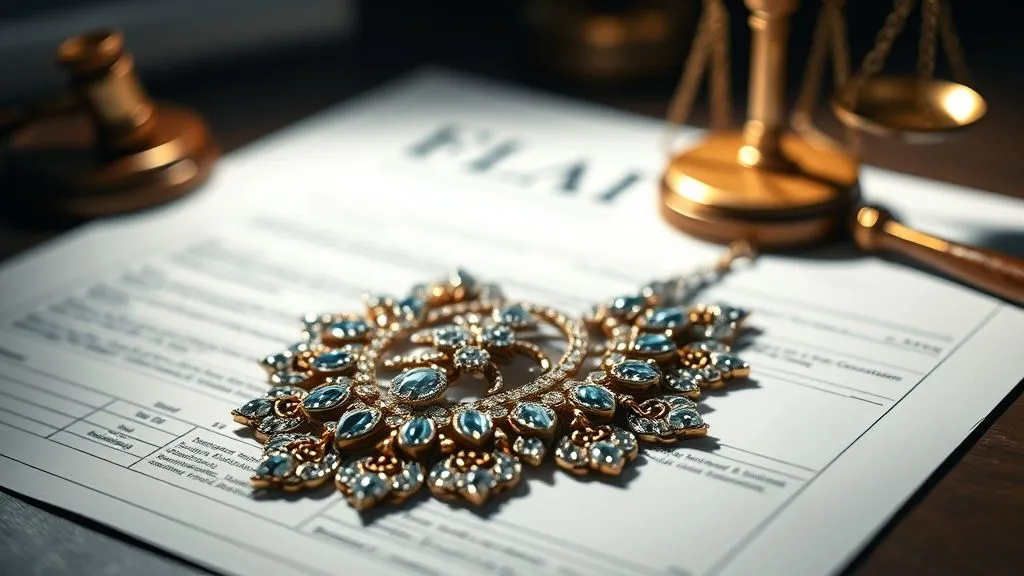
How to Legally Protect Unique Costume Jewelry Designs from Copying
For over two decades in the vibrant, often cutthroat, world of jewelry design, I've witnessed firsthand the heartbreak and financial ruin that occurs when a designer's unique creation is brazenly copied. It's a tale as old as time: an artist pours their soul into a piece, only for a fast-fashion giant or an unscrupulous competitor to reproduce it, often at a fraction of the cost, stealing not just profits but also the very essence of originality.
The pain points are palpable: lost revenue, damaged brand reputation, and the crushing feeling of artistic violation. Many designers, particularly in the costume jewelry sector, mistakenly believe their work isn't 'serious' enough for legal protection, or they simply don't know where to start. This oversight leaves their most valuable assets – their creative designs – dangerously exposed to infringement.
But it doesn't have to be this way. In this definitive guide, I will share the actionable legal frameworks and strategic insights I've gathered over my career, empowering you to proactively safeguard your unique costume jewelry designs. You'll learn not just what laws apply, but how to implement practical steps to build an impenetrable shield around your creative work, ensuring your originality pays off.
Understanding the Landscape: IP Rights for Jewelry
Before we dive into specific strategies, it's crucial to understand the intellectual property (IP) landscape. Costume jewelry, despite its often accessible price point, is just as deserving of legal protection as fine jewelry. The key difference often lies in the specific IP tools best suited for its unique characteristics.
The primary forms of IP relevant to jewelry include copyrights, design patents, trademarks (including trade dress), and, to a lesser extent, trade secrets. Each offers a distinct layer of protection, and a comprehensive strategy often involves a combination of these. Ignoring these avenues is akin to leaving your workshop door wide open for thieves.
Copyright: Your First Line of Defense
Copyright protects original works of authorship, including pictorial, graphic, and sculptural works. For jewelry, this typically applies to the artistic elements of a design, such as unique sculptural forms, specific arrangements of elements, or intricate patterns. It does not protect purely functional aspects or common shapes.
The moment you create an original design and fix it in a tangible medium (like a sketch or a finished piece), you automatically possess a basic copyright. However, registering your copyright with the U.S. Copyright Office (or equivalent national body) offers significant advantages. It creates a public record of your ownership, allows you to sue for infringement, and makes you eligible for statutory damages and attorney's fees.
- Document Everything: Keep meticulous records of your design process – sketches, CAD files, prototypes, dates of creation. This proves originality and date of first creation.
- Use Copyright Notices: Affix a copyright notice (e.g., © [Your Name/Company] [Year]) to your designs, packaging, and website. While not legally required for protection, it serves as a powerful deterrent.
- Register Your Designs: File for copyright registration for your most unique and valuable collections or individual pieces. You can often group multiple designs in a single application if they were created and published together.
"In my experience, many designers procrastinate on copyright registration, only to regret it deeply when infringement occurs. It's a small investment for potentially massive protection."
According to the U.S. Copyright Office, registration enhances your ability to enforce your rights. Without it, your legal recourse is significantly limited, often only to actual damages which are notoriously difficult to prove in creative fields.
Design Patents: Protecting Ornamental Appearance
While copyright protects artistic expression, a design patent protects the ornamental appearance of an article of manufacture. This is particularly powerful for jewelry because it covers the unique visual characteristics of your entire design, not just individual artistic elements. Think of it as protecting the 'look' of your piece.
A design patent offers a strong, enforceable monopoly over the specific visual design for a period of 15 years from the date of grant. It's a more rigorous and expensive process than copyright, but the protection it affords is often broader and more robust against direct copying.
- Identify Key Designs: Not every piece needs a design patent. Focus on your flagship, most innovative, or best-selling designs that are truly novel and non-obvious.
- Work with a Patent Attorney: Design patent applications require precise drawings and descriptions. An experienced patent attorney specializing in design will be invaluable in drafting and prosecuting your application.
- Monitor Competitors: Once granted, actively monitor the market for infringing products. A design patent is only as good as your willingness to enforce it.
Consider the famous Tiffany & Co. setting or Cartier's 'Love' bracelet; these iconic designs are often protected by design patents, preventing direct imitation of their distinctive forms. While costume jewelry might not always reach this level of global recognition, the principle of protection remains the same.
Trademark and Trade Dress: Branding Your Uniqueness
Trademarks protect brand names, logos, and slogans that identify the source of goods or services. For costume jewelry, registering your brand name or unique logo is fundamental for protecting your business identity. This prevents competitors from using similar names or marks that could confuse consumers.
Even more potent for jewelry is 'trade dress' protection. Trade dress refers to the overall visual appearance of a product or its packaging that signifies its source. This can include the shape, size, color combination, texture, graphics, or even the particular sales technique that has acquired 'secondary meaning' – meaning consumers associate that look with your brand.
Case Study: The 'Signature Clasp'
Imagine 'Glamour Gems,' a fictional costume jewelry brand, developed a unique, instantly recognizable clasp mechanism for all its necklaces and bracelets. This clasp wasn't just functional; it had a distinctive, elegant, and consistent aesthetic design that became synonymous with the Glamour Gems brand. Customers would often say, "Oh, that's a Glamour Gems piece, I recognize the clasp!"
By consistently using this unique clasp and building brand recognition around it, Glamour Gems successfully argued that its clasp had acquired 'secondary meaning' and qualified for trade dress protection. When a competitor started using a nearly identical clasp, Glamour Gems was able to issue a cease and desist, and ultimately secure an injunction, protecting their signature brand element and preventing consumer confusion. This resulted in maintaining brand integrity and market share, proving that even small, consistent design elements can be powerful IP assets.
| IP Type | Protects | Duration | Cost (Approx.) |
|---|---|---|---|
| Copyright | Artistic expression (sculptural forms, patterns) | Life of author + 70 years | Low (filing fee) |
| Design Patent | Ornamental appearance of entire design | 15 years from grant | High (attorney fees + filing) |
| Trademark (Brand Name/Logo) | Brand identification (names, logos) | Indefinite (with renewal) | Medium (filing fee + attorney) |
| Trade Dress | Overall product/packaging appearance (secondary meaning) | Indefinite (with renewal) | Medium (filing fee + attorney) |
Proactive Measures: Deterrence and Documentation
Legal protection isn't just about filing applications; it's also about building a culture of deterrence and meticulous documentation within your design process. Many infringers target designers they perceive as 'easy marks' – those without clear IP strategies.
Establishing a Robust Internal IP Policy
- Employee/Contractor Agreements: Ensure all designers, artisans, and contractors sign agreements that assign all IP rights to your company. This prevents future disputes over who owns the designs.
- Confidentiality Agreements (NDAs): Before sharing new designs with manufacturers, suppliers, or potential buyers, always have them sign a Non-Disclosure Agreement (NDA). This legally binds them to keep your designs secret.
- Design Logbook: Maintain a physical or digital logbook for every design. Record creation dates, iterations, and who worked on it. Have two independent witnesses sign and date key entries. This builds a strong chain of evidence for originality.
"A strong internal IP policy is your first line of defense against both external copying and internal ownership disputes. Don't overlook this foundational step."
Enforcement: What to Do When Copying Occurs
Even with the best preventative measures, copying can still happen. Knowing how to respond effectively is crucial to protecting your rights and deterring future infringements.
Steps for Responding to Infringement
- Gather Evidence: Document the infringing product thoroughly – photographs, links to sales platforms, packaging, and any advertising. Compare it side-by-side with your original design.
- Consult an IP Attorney: Do not attempt to handle complex infringement cases yourself. An experienced IP attorney will assess the strength of your case and advise on the best course of action.
- Send a Cease and Desist Letter: Often, a strongly worded cease and desist letter from an attorney is enough to stop the infringement. It formally notifies the infringer of your rights and demands they stop.
- Utilize Platform Takedowns: If the infringing product is sold on platforms like Etsy, Amazon, or Shopify, use their IP infringement reporting mechanisms. These platforms often have policies to remove infringing listings quickly.
- Consider Litigation: If other methods fail, litigation may be necessary. This is a costly and time-consuming process but can result in injunctions, damages, and a permanent halt to the infringement.
As Seth Godin often remarks about creative work, your uniqueness is your value. Protecting that uniqueness is paramount to long-term success. For further reading on global IP protection, the World Intellectual Property Organization (WIPO) offers extensive resources on international treaties and registration systems: WIPO Official Website.

International Considerations and Global Protection
The digital age means your designs can be copied anywhere in the world. While national registrations offer protection within specific countries, a global strategy might be necessary for widely distributed brands.
For design patents, the Hague Agreement Concerning the International Registration of Industrial Designs allows you to register a design in multiple member countries through a single application. Similarly, the Madrid Protocol simplifies international trademark registration. For copyright, the Berne Convention provides automatic protection for literary and artistic works among its member countries, meaning your copyright in one member country is generally recognized in others.
Navigating international IP can be complex, and I strongly advise working with an IP firm that has international expertise if your brand has a global reach or manufacturing base. Ignoring international IP can leave you vulnerable in key markets.
Many designers also find valuable insights from organizations like the Fashion Law Institute, which often discusses legal issues specific to creative industries. Their resources can provide additional context and guidance on how to legally protect unique costume jewelry designs from copying across different jurisdictions: Fashion Law Institute.
Leveraging Digital Tools for Monitoring and Protection
In today's interconnected world, digital tools are indispensable for monitoring potential infringement and enforcing your IP rights. It's no longer enough to just register your designs; you must actively police the market.
Essential Digital Strategies
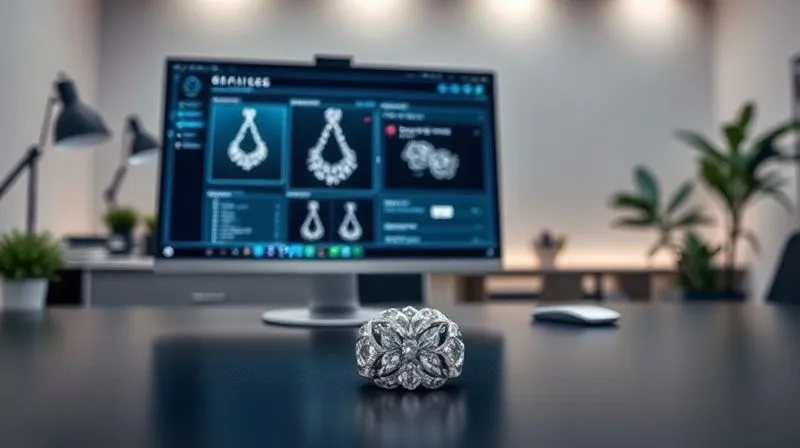
- Image Recognition Software: Utilize services that scan the internet for images similar to your designs. Google Images' reverse image search is a free starting point, but specialized services offer more robust monitoring.
- Social Media Monitoring: Regularly search hashtags, brand mentions, and image feeds on platforms like Instagram, Pinterest, and TikTok for potential copies.
- E-commerce Platform Alerts: Set up alerts on major e-commerce sites (e.g., eBay, Amazon, Etsy) for keywords related to your brand or specific design elements.
- Blockchain for IP: Emerging blockchain technologies are offering new ways to timestamp and secure design ownership, providing immutable proof of creation date. While still evolving, it's a space to watch.
The proactive use of these tools can significantly reduce the time it takes to detect infringement, allowing for swifter action and minimizing potential damages. Early detection is often the difference between a minor issue and a major legal battle.
Building a Culture of Originality and IP Awareness
Ultimately, protecting your unique costume jewelry designs from copying is not just about legal documents; it's about fostering a culture within your brand that values and prioritizes originality and IP awareness. Educate your team, your partners, and even your customers about the importance of respecting creative rights.
By consistently demonstrating your commitment to protecting your designs, you send a clear message to potential infringers: your brand is not an easy target. This long-term strategic approach builds not only legal defenses but also a reputation for integrity and innovation, which are invaluable assets in the competitive jewelry market. A great resource for understanding broader IP strategies can be found at the U.S. Patent and Trademark Office (USPTO): USPTO Official Website.
Frequently Asked Questions (FAQ)
Q: Can I protect a design that uses common shapes or materials? No, copyright and design patents protect original and non-obvious ornamental features. Common shapes (e.g., a simple circle or square) or purely functional elements are generally not protectable on their own. However, a unique combination, arrangement, or sculptural interpretation of these elements can be. The key is originality and distinctiveness.
Q: Is it worth the cost to get legal protection for costume jewelry, which often has lower profit margins? Absolutely. While the per-piece profit might be lower, the cumulative value of a unique collection and brand reputation is immense. Losing a best-selling design to copying can decimate your business. Strategic protection for your most valuable or iconic designs is a wise investment that safeguards your creative assets and market position.
Q: How do I prove my design was created first if I didn't register it immediately? Proof of first creation relies on documentation. This includes dated sketches, emails, CAD files, photographs of prototypes, receipts for materials, and even testimony from witnesses. While not as strong as a registration certificate, meticulous record-keeping can be crucial in proving your claim. This is why a design logbook is so vital.
Q: What's the difference between a design patent and a utility patent for jewelry? A design patent protects the ornamental appearance of an item – how it looks. A utility patent protects how an item works or is used, or the method of making it. For jewelry, design patents are far more common as they cover the visual aesthetics. A utility patent would only apply if you invented a truly novel and functional mechanism or material, which is rare for costume jewelry.
Q: Can I use a 'poor man's copyright' (mailing a design to myself) to protect my work? The 'poor man's copyright' is generally considered unreliable and is not a substitute for official copyright registration. While it might offer some weak evidence of creation date, it doesn't provide the legal presumptions of ownership, the ability to sue for statutory damages, or attorney's fees that come with federal registration. Always opt for official registration for robust protection.
Key Takeaways and Final Thoughts
- Proactive Protection is Paramount: Don't wait for infringement to happen. Implement legal strategies from the outset.
- Combine IP Tools: Leverage copyrights, design patents, and trademarks/trade dress for comprehensive protection.
- Document Everything: Meticulous record-keeping is your best friend in proving originality and ownership.
- Be Diligent in Enforcement: Act swiftly and decisively when infringement occurs, utilizing legal counsel and digital tools.
- Educate and Deter: Foster a culture of IP awareness within your brand to discourage copying.
The journey of a costume jewelry designer is one of passion, creativity, and relentless innovation. Your unique designs are not just pretty objects; they are valuable intellectual property, the lifeblood of your brand. By understanding and strategically applying the legal frameworks I've outlined, you're not just protecting individual pieces; you're safeguarding your entire creative legacy. Be bold, be original, and most importantly, be protected. Your artistry deserves nothing less.
Recommended Reading
- 7 Pillars: Justifying Premium Pricing for Unique Luxury Eyewear Frames
- Unlock the Secret: How to Make Unique Jewelry Designs Truly Stand Out
- 7 Steps: Authenticating Vintage Luxury Bags Lacking Provenance
- 7 Steps: Translate Abstract Script Themes to Conceptual Costume Design
- Unveiling the Future: How Advanced Textile Technologies Are Slaying Fashion Waste

Your email address will not be published. Required fields are marked *