

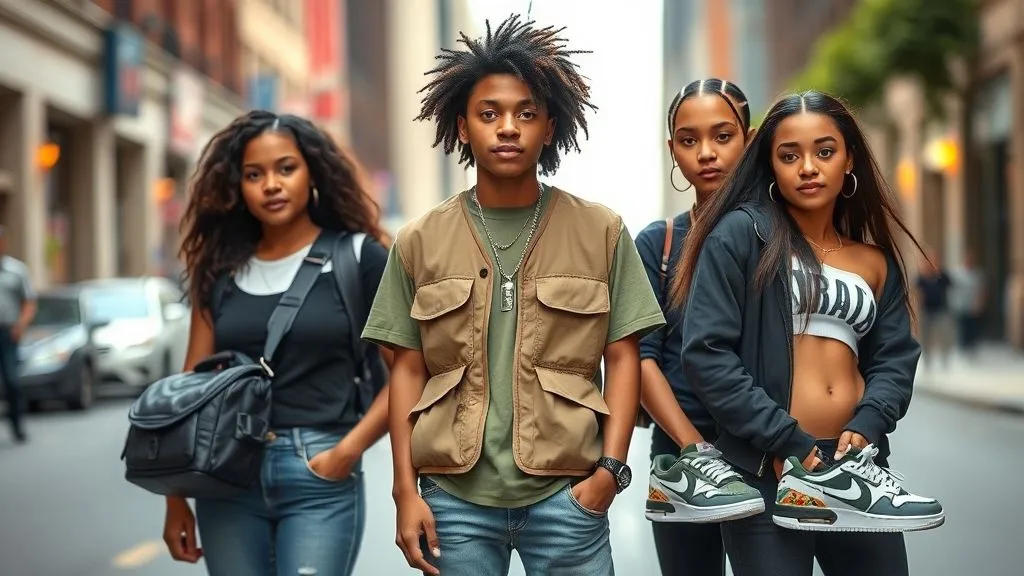
How to Identify Profitable Niche Trends for Streetwear Accessories?
For over 15 years, I've been immersed in the raw energy and ever-evolving landscape of streetwear, witnessing countless brands rise and fall. The difference between fleeting success and enduring profitability often boils down to one critical skill: identifying truly valuable niche trends, especially within the accessory market.
Many aspiring brands chase fleeting fads, pouring resources into products that are 'hot' for a moment but quickly fade, leaving them with unsold inventory and a damaged reputation. This reactive approach is a recipe for burnout and financial strain in an industry as dynamic as streetwear. Without a systematic method, you’re simply guessing, and in business, guessing is a costly gamble.
In this definitive guide, I'll share a systematic framework, honed through years of experience, that goes beyond surface-level observations. You’ll learn how to identify profitable niche trends for streetwear accessories, leveraging actionable insights, expert strategies, and real-world case studies to not just spot the next big thing, but to truly understand its potential for sustained success and build a brand that resonates deeply with its audience.
The Shifting Sands of Streetwear: Why Niche is King
The streetwear landscape is more saturated than ever. What began as a counter-culture movement has become a global phenomenon, attracting major luxury houses and fast-fashion giants alike. In such a crowded space, merely offering 'cool' accessories isn't enough; you need to carve out a distinct identity and serve a specific, underserved demand.
I've seen firsthand how brands that try to be everything to everyone end up being nothing to anyone. The power of a niche lies in its ability to create a loyal community, foster genuine connection, and allow for hyper-focused marketing efforts. It’s about being the go-to specialist, not a generalist struggling for visibility.
“In a world where everyone shouts, the quiet, confident voice of a specialist brand is heard clearest. Niche isn't about limiting your potential; it's about amplifying your impact.”
Focusing on a niche for your streetwear accessories offers several undeniable benefits:
- Reduced Competition: You're competing with fewer players, making it easier to stand out.
- Higher Profit Margins: Niche products often command premium pricing due to perceived exclusivity and specialized value.
- Stronger Brand Loyalty: Customers in a niche feel understood and valued, leading to repeat purchases and word-of-mouth marketing.
- Streamlined Marketing: Knowing your audience intimately allows for more effective and less costly marketing campaigns.
- Clearer Product Development: Specific needs guide your design process, reducing wasted effort on irrelevant products.
Decoding Consumer Behavior: Your First Data Frontier
Before you even think about designs, you must understand the human element. Profitable trends don't emerge in a vacuum; they stem from evolving consumer desires, cultural shifts, and unmet needs. This is where truly valuable market research begins.
Social Listening & Cultural Cues
The digital age has gifted us with an unparalleled window into the collective consciousness of streetwear enthusiasts. Social media platforms, forums, and online communities are buzzing with conversations, desires, and early indicators of what's resonating.
- Monitor Key Platforms: Spend time on Instagram, TikTok, Reddit (especially subreddits like r/streetwear, r/fashionreps for discussions, not just product finds), Twitter, and specialized fashion forums. Pay attention to comments, engagement rates, and user-generated content, not just influencer posts.
- Track Hashtags & Keywords: Use tools like Sprout Social's guide to social listening or native platform analytics to identify trending hashtags, common phrases, and emerging aesthetic terms related to accessories (e.g., #techwearbag, #gorpcoreaccessories, #sustainablejewelry, #customsneakerlacing).
- Observe Micro-Influencers & Subcultures: These individuals and groups often set trends long before they hit the mainstream. Look for authentic engagement and specific style tribes (e.g., skaters, b-boys, urban explorers, vintage enthusiasts).
- Analyze Visual Data: What types of accessories are consistently featured in highly engaged posts? Are there specific materials, colors, or functionalities that appear repeatedly?

Demographic Deep Dive & Psychographics
Beyond what people say, you need to understand who they are and why they feel the way they do. Demographics (age, location, income) provide the 'who,' while psychographics (values, attitudes, lifestyles, aspirations) explain the 'why.'
For instance, a Gen Z consumer in New York might prioritize ethical sourcing and unique, upcycled accessories, driven by values of sustainability and individuality. An older millennial in Tokyo might seek high-tech, functional accessories that blend seamlessly with their urban commute, driven by efficiency and modern aesthetics. Understanding these nuances is crucial.
Utilize resources like Statista for general consumer data, but also conduct your own surveys, focus groups, and one-on-one interviews with your perceived target audience. Ask open-ended questions about their daily routines, pain points with current accessories, and what they wish existed.
Market Research Mastery: Beyond the Hype
Once you have a handle on consumer behavior, it’s time to look at the market itself. This involves understanding your competitive landscape and identifying genuine white space.
Competitive Analysis & Gap Identification
Don't just look at who's selling similar items; analyze *how* they're selling them, *to whom*, and *what's missing*. This is where you find your unique selling proposition (USP).
- Identify Direct & Indirect Competitors: Direct competitors sell similar streetwear accessories. Indirect competitors might offer alternative solutions to the same need (e.g., a high-end backpack brand vs. a utility vest brand, both addressing carrying essentials).
- Analyze Their Offerings: What products do they sell? What's their price point? What materials do they use? What's their brand messaging and aesthetic?
- Examine Customer Reviews: This is gold. Look for common complaints, unmet desires, and praises. A recurring complaint about a competitor's bag lacking a specific compartment might be your cue to design one that includes it.
- Spot the Gaps: Where are competitors failing? Are there specific styles, functionalities, materials, or price points that are underserved? Is there a demographic they're overlooking?
| Brand | Target Audience | Product Type | Price Range | USP |
|---|---|---|---|---|
| Urban Nomad Co. | Outdoor-focused Gorpcore enthusiasts | Modular utility packs, durable caps | High-end | Extreme durability, modularity, eco-friendly materials |
| Chrome Drip | Y2K revivalists, hypebeasts | Chunky chains, graphic beanies, oversized sunglasses | Mid-range | Nostalgic aesthetics, limited drops, influencer collaborations |
| Solis Arte | Art-conscious minimalists, sustainable fashion advocates | Hand-dyed tote bags, artisan jewelry, recycled material wallets | Mid-to-High | Unique artistic expression, ethical production, sustainable focus |
Emerging Technology & Material Innovation
Streetwear has always embraced innovation. Keep an eye on advancements in materials science, manufacturing processes, and smart technology. These can unlock entirely new product categories or significantly enhance existing ones.
Consider the rise of sustainable and recycled materials, performance fabrics that offer breathability or water resistance, or even embedded tech like NFC chips for authentication or smart features. For instance, accessories made from mycelium leather or incorporating solar-charging capabilities could tap into eco-conscious and tech-savvy niches. Stay informed by following industry publications and innovation forums, such as those covered by sites like Business of Fashion's tech insights.
Trend Forecasting: Art Meets Science
Spotting a trend isn't just about what's popular now; it's about understanding its trajectory and underlying drivers. This requires a blend of intuition and data.
Macro vs. Micro Trends: Understanding the Ripple Effect
I always teach my clients to differentiate between macro and micro trends. Macro trends are long-term, overarching societal shifts that influence consumer behavior for years, even decades. Examples include sustainability, wellness, individualism, and digitalization. Micro trends are shorter-lived, specific manifestations of these macro trends, often appearing as specific styles, colors, or product types.
For example, 'sustainability' (macro trend) can manifest as 'upcycled denim accessories' or 'vegan leather bags' (micro trends). A profitable niche often lies at the intersection of a strong macro trend and a specific, emerging micro trend that addresses an unmet need. Don't chase every micro trend; understand which ones align with powerful macro forces.

Leveraging Trend Reports & Industry Insights
While grassroots observation is vital, professional trend forecasting agencies provide invaluable, curated data. Subscribing to services like WGSN or Fashion Snoops (if budget allows) can offer a wealth of information on upcoming colors, silhouettes, materials, and consumer mindsets. Even if you can't subscribe, following their public blogs, webinars, and summaries can provide directional insights.
Attend virtual or in-person industry trade shows and fashion weeks. Observe what designers are showcasing, what buyers are interested in, and what conversations are happening. These events are often incubators for future trends.
The Profitability Check: Can This Niche Sustain You?
Identifying a cool niche is one thing; ensuring it's profitable and sustainable is another. This requires a pragmatic look at the numbers and your operational capabilities.
Cost Analysis & Supply Chain Viability
Before committing, you need a clear understanding of your potential costs and whether you can realistically source and produce the accessories at a competitive price point while maintaining quality.
- Material Costs: Research suppliers for your chosen materials. Get quotes for different quantities. Consider minimum order quantities (MOQs).
- Manufacturing Costs: If outsourcing, obtain quotes from various manufacturers. Factor in labor, machinery, and quality control.
- Shipping & Logistics: Calculate inbound shipping for materials/products and outbound shipping to customers.
- Overhead Costs: Don't forget design, marketing, website maintenance, and other operational expenses.
- Supply Chain Reliability: Can you consistently source your materials and produce your items? Are there ethical concerns or geopolitical risks with your chosen supply chain?
Pricing Strategy & Perceived Value
Your pricing must reflect both your costs and the perceived value of your unique accessory. Niche products often allow for higher margins, but you must justify this with quality, unique design, and strong brand storytelling.
Consider value-based pricing, where the price is set primarily on the customer's perceived value of the product, rather than on the cost of production. If your accessory solves a specific problem or offers a unique aesthetic that no one else does, customers will pay a premium. Research what similar, albeit less niche, products are selling for to gauge market tolerance.
Case Study: 'Urban Utility' – From Niche Idea to Profit
I recall working with a brand, 'Urban Utility,' that recognized a gap in the market for highly functional, minimalist tech-wear accessories designed specifically for urban cyclists and commuters. They observed a macro trend towards active, sustainable commuting and a micro trend of functional, modular gear.
Their initial competitive analysis showed existing brands were either too 'sporty' or too 'luxury,' lacking a balance of rugged durability, sleek aesthetics, and smart features. Urban Utility focused on water-resistant, reflective waist bags and compact backpacks with dedicated compartments for tech and quick-access pockets for transit cards.
By rigorously analyzing their supply chain, they found a small, ethical manufacturer specializing in technical fabrics. Their initial launch was a limited run, priced at a premium, targeting specific cycling communities on social media. The perceived value of solving a specific pain point for this niche allowed them to achieve healthy margins and quickly build a loyal customer base, demonstrating that a well-identified niche combined with a solid profitability check can lead to significant success.
Validation & Iteration: Testing the Waters
Even with thorough research, the market is the ultimate judge. You need to test your assumptions and be prepared to adapt.
Minimum Viable Product (MVP) & Pilot Launches
Don't launch a full collection immediately. Start with a Minimum Viable Product (MVP) – the simplest version of your accessory that still delivers core value to your chosen niche. This could be one or two key items.
Conduct a pilot launch. This allows you to test market demand, gather real-world feedback, and refine your product and marketing strategy without significant financial risk. Use crowdfunding platforms, limited edition drops, or pre-orders to gauge interest and secure initial capital.
Feedback Loops & Agile Development
Actively solicit feedback from your early adopters. What do they love? What could be improved? Are there features they wish it had? This iterative process is crucial for long-term success.
Be agile. The streetwear market moves fast. The ability to quickly incorporate feedback, make minor adjustments, and even pivot if necessary, will keep your brand relevant and your products desirable. This isn't about chasing every whim, but about perfecting your niche offering based on genuine user experience.

Staying Ahead: Perpetual Trend Monitoring
Identifying a profitable niche trend is not a one-time event; it’s an ongoing process. The market never stands still, and neither should your brand's understanding of it.
Building an Internal Trend Radar
Integrate trend monitoring into your regular business operations. This isn't just one person's job; it should be a collective effort. Encourage your team to:
- Be Curious: Read widely, beyond just fashion. Look at art, technology, current events, and global culture.
- Engage with the Community: Maintain active presence in online forums, social groups, and real-world events relevant to your niche.
- Document Observations: Create a shared 'trend board' or digital repository for interesting findings, images, and articles.
- Regularly Review: Schedule monthly or quarterly sessions to discuss emerging patterns and potential implications for your brand.
The Long Game: Adaptability & Authenticity
Ultimately, while trends are important, your brand's longevity hinges on its authenticity and adaptability. Don't let trend-spotting dilute your core identity. Instead, use it to inform how your brand evolves while staying true to its values and aesthetic.
The most successful streetwear accessory brands are those that anticipate, rather than just react. They understand their audience so deeply that they can almost predict their next desire. This level of insight comes from consistent engagement, rigorous analysis, and a genuine passion for the culture.
Frequently Asked Questions (FAQ)
How long does it typically take to identify a profitable niche trend? The initial identification phase can take anywhere from 2-6 weeks of focused research. However, the ongoing process of monitoring, validating, and iterating on trends is continuous. A truly 'profitable' trend also needs time to mature in the market, so expect several months from initial concept to significant sales.
What's the biggest mistake brands make when trying to spot trends? The most common mistake I've observed is confusing a fleeting fad with a sustainable trend. Brands often jump on something that's momentarily popular without understanding its underlying drivers or long-term viability. This leads to quick burnout and wasted resources. Another major error is neglecting in-depth consumer research, leading to products that don't truly resonate.
Can AI tools truly help in trend identification? Absolutely. AI-powered tools for social listening, sentiment analysis, and predictive analytics are becoming incredibly sophisticated. They can process vast amounts of data much faster than humans, identifying patterns, emerging keywords, and even visual trends in user-generated content. While they don't replace human intuition and cultural understanding, they are powerful accelerators for the research phase.
How do I differentiate between a fleeting fad and a lasting trend? A fad is typically short-lived, lacks deep cultural roots, and often has limited utility. It's often driven by novelty or a single viral moment. A lasting trend, on the other hand, is usually connected to a broader macro trend (e.g., sustainability, wellness, customization), addresses a genuine consumer need or desire, and shows consistent growth and evolution over time, rather than a sharp peak and decline. Look for fundamental shifts in behavior or values, not just surface-level aesthetics.
What if my niche is too small? A niche might seem 'small' initially, but if it's highly engaged and underserved, it can be incredibly profitable. It's better to be a big fish in a small pond than a tiny fish in a vast ocean. The key is to ensure the niche has sufficient purchasing power and a clear, addressable need. As your brand grows, you can always expand horizontally into adjacent niches or vertically with more product offerings within your established community.
Key Takeaways and Final Thoughts
Identifying profitable niche trends for streetwear accessories is an art and a science, demanding both keen observation and rigorous analysis. It’s a journey that prioritizes understanding your audience, dissecting market dynamics, and embracing continuous learning.
- Start with the 'Why': Understand the deep-seated needs and desires driving consumer behavior.
- Go Beyond the Surface: Differentiate between fads and sustainable trends by looking at macro drivers.
- Leverage Data: Use social listening, market research, and competitive analysis to inform your decisions.
- Validate & Iterate: Test your ideas with MVPs and be prepared to adapt based on feedback.
- Stay Authentic: Let trends inform, but never dictate, your brand's core identity.
The streetwear accessory market is ripe with opportunity for those willing to put in the work. By applying the frameworks and insights I've shared, you're not just chasing trends; you're strategically positioning your brand to lead, innovate, and build a lasting legacy. Embrace the challenge, trust the process, and watch your vision for profitable streetwear accessories come to life.
Recommended Reading
- Unveiling the Future: How Advanced Textile Technologies Are Slaying Fashion Waste
- The Ultimate Guide: Why Do Your Belts Keep Cracking and How to Prevent It?
- Beat the Shine: The Ultimate Makeup Guide for Oily Skin This Summer
- Authenticating Pre-Owned Luxury Handbags: The Ultimate Guide
- Scaling Unique Handcrafted Jewelry: 7 Proven Strategies for Growth

Your email address will not be published. Required fields are marked *