

How to Build a Profitable Take-Back Program for Garment Reuse?
For over 15 years in the sustainable fashion space, I've witnessed firsthand the transformative power of circularity, but also the common pitfalls that can derail even the most well-intentioned initiatives. Many brands embark on take-back programs with admirable environmental goals, only to find themselves grappling with high operational costs and a murky path to profitability. It's a challenge I've seen countless times: the desire to do good clashing with the imperative to run a sustainable business.
The core problem isn't a lack of consumer interest in sustainable options, nor is it an absence of discarded garments. Instead, it often lies in the disjointed execution of collection, processing, and value recovery. Brands struggle with inefficient logistics, inconsistent grading, and an inability to effectively re-monetize collected items, turning what should be a strategic asset into a logistical burden and a financial drain.
This article isn't just another theoretical overview; it's a deep dive into the actionable frameworks, real-world strategies, and expert insights I've gathered from years in the trenches. My goal is to equip you with the knowledge to not only launch a take-back program but to engineer it for enduring profitability, transforming textile waste into a valuable resource and a new revenue stream for your brand. Let's explore how to build a profitable take-back program for garment reuse.
1. Understanding the 'Why': Beyond Compliance to Competitive Advantage
Before diving into the mechanics, it's critical to solidify your program's foundational purpose. In my experience, programs built purely on a defensive stance—reacting to regulations or public pressure—often lack the strategic depth needed for long-term profitability. The most successful take-back initiatives are those that view circularity not as a cost center, but as a genuine competitive advantage.
The Shifting Consumer Mindset
Today's consumers, particularly Gen Z and Millennials, are increasingly demanding transparency and sustainability from brands. They're not just buying products; they're buying into values. A well-executed take-back program can significantly enhance brand loyalty, attract new segments, and differentiate you in a crowded market. It signals a commitment to environmental stewardship that resonates deeply with conscious shoppers.
Regulatory Pressures and EPR
Globally, Extended Producer Responsibility (EPR) schemes for textiles are gaining momentum. Legislation in regions like the EU is already mandating greater producer responsibility for end-of-life products. Proactively establishing a robust take-back infrastructure now positions your brand ahead of the curve, mitigating future compliance risks and potentially turning regulatory challenges into operational strengths. It's about preparedness, not panic.
"A profitable take-back program is not merely about collecting old clothes; it's about collecting data, building customer relationships, and creating new value propositions within a circular economic model." - Industry Specialist Insight
2. Designing Your Take-Back Model: Collection & Logistics
The collection phase is often the first touchpoint for your customers, and its efficiency directly impacts both participation rates and operational costs. There's no one-size-fits-all solution; the ideal model depends on your brand's scale, customer base, and existing infrastructure.
In-Store vs. Mail-Back vs. Partnerships
In-store collection leverages existing retail footprints, offering convenience for customers and driving foot traffic. However, it requires staff training and dedicated space. Mail-back programs, often facilitated by prepaid shipping labels, offer broader reach but can incur higher individual shipping costs and require robust reverse logistics. Strategic partnerships with charities, textile recyclers, or even other brands can expand collection networks and share logistical burdens, reducing your upfront investment.
- Assess Customer Convenience: Where do your customers primarily interact with your brand? Make collection as seamless as possible.
- Analyze Logistical Feasibility: Can your existing supply chain handle reverse flow, or do you need specialized partners?
- Cost-Benefit Analysis: Calculate the per-item collection cost for each model. Factor in potential customer lifetime value increases.
- Pilot Programs: Start small. Test one or two collection methods in specific regions or stores to gather data before a full rollout.
- Clear Communication: Ensure customers understand how and where to return items, and what types of items are accepted.
According to a recent report by Deloitte on the Circular Economy in Fashion, brands that integrate reverse logistics efficiently can see significant reductions in waste management costs and enhanced brand perception. This isn't just about moving goods; it's about moving them intelligently.

3. The Crucial Role of Sorting and Grading: Maximizing Value Recovery
Once garments are collected, their true value is unlocked (or lost) in the sorting and grading process. This is where expertise truly pays off. In my experience, a lax approach here is a direct route to unprofitability. You need precision to differentiate between items suitable for immediate resale, those needing minor repair, and those destined for material-level recycling.
Manual vs. Automated Sorting
Manual sorting allows for nuanced judgment, especially for unique items or those requiring specific repairs. It's often employed for higher-value garments. However, it's labor-intensive and slower. Automated sorting technologies, utilizing AI and optical sensors, are emerging for high-volume operations, capable of identifying material composition and garment type. While still developing, they offer scalability for lower-value, bulk items.
Establishing Clear Grading Criteria
This is paramount. Develop a standardized system for assessing the condition of each garment. This includes factors like wear and tear, presence of stains, functionality of zippers/buttons, and overall structural integrity. Each grade should correspond to a specific downstream pathway (e.g., A-grade for premium resale, B-grade for repair/standard resale, C-grade for upcycling/textile-to-textile recycling).
"The difference between a discarded textile and a valuable asset often lies in the rigor of your grading process. Precision here is not an overhead; it's a profit driver." - Industry Specialist Insight
Here’s an example of a simplified grading framework:
| Grade | Condition Description | Potential Pathway | Estimated Value Recovery |
|---|---|---|---|
| A (Premium) | New with tags or excellent, unworn condition. No defects. | Direct premium resale, rental. | 70-90% of original RRP |
| B (Good) | Gently used, minor wear, no major flaws or stains. Repairable minor defects. | Standard resale, minor repair & resale. | 30-60% of original RRP |
| C (Fair) | Visible wear, small stains, or minor damage. Suitable for upcycling or refurbishment. | Upcycling, creative reuse, material recycling. | 10-25% of original RRP |
| D (Recycle) | Significant damage, heavy wear, or unrepairable. Material value only. | Fiber-to-fiber recycling, industrial wiping cloths. | <10% of original RRP |
4. Pathways to Profit: Reuse, Repair, and Resale
This is where your take-back program truly begins to generate revenue and deliver on its sustainability promise. Maximizing the value of collected garments means embracing a hierarchy of recovery: prioritize direct reuse, then repair for reuse, then upcycling, and finally, material recycling.
Internal Repair and Refurbishment
For higher-value items or garments with minor fixable flaws, an in-house or outsourced repair service can significantly boost profitability. This might involve mending, replacing buttons, or even professional cleaning. Brands like Patagonia's Worn Wear program have demonstrated that offering repair services not only extends product life but also fosters incredible customer loyalty and brand advocacy. Patagonia's Worn Wear is a prime example of turning repair into a core brand offering.
Partnering with Resale Platforms
The secondhand market is booming, projected to reach hundreds of billions of dollars. Instead of trying to build your own resale platform from scratch, consider strategic partnerships. Brands are increasingly collaborating with established platforms like thredUP, Poshmark, or The RealReal to sell their collected items. This provides immediate access to a vast customer base and leverages existing logistics and marketing expertise, accelerating your time to revenue.
Upcycling and Creative Transformation
For garments that can't be resold in their original form but still have material integrity, upcycling offers a creative avenue for value recovery. This involves transforming old garments into new products—think new accessories, unique apparel items, or even home goods. While often more niche, upcycling can generate significant brand buzz and appeal to a premium, design-conscious segment. It's about seeing potential where others see waste.
Case Study: EcoThread's Circular Success
EcoThread, a mid-sized sustainable apparel brand, faced challenges making their initial take-back program profitable. Their collection rates were good, but most items were being downcycled due to poor sorting. By implementing the three-step value recovery process I outlined above – focusing on meticulous grading, establishing an in-house repair hub for their core products, and partnering with a premium resale platform for 'A' and 'B' grade items – they transformed their operations. Within 18 months, EcoThread reduced waste by 60% and saw a 15% increase in annual revenue directly attributable to their resale channel, turning their take-back program from a cost center into a significant profit driver. This resulted in stronger brand loyalty and a clear competitive edge.
5. Engaging Your Customer Base: Incentives and Communication
Even the most efficient take-back program will fail without active customer participation. Engagement is about more than just a call to action; it's about building a narrative, offering tangible benefits, and fostering a sense of shared purpose. In my experience, transparency and genuine value are key.
Loyalty Programs and Discounts
Incentivize returns. Offering store credit, discounts on future purchases, or loyalty points for each item returned can be highly effective. This not only encourages participation but also drives repeat business and reinforces the circular relationship between your brand and its customers. The perceived value of the incentive must outweigh the effort of returning the garment.
Transparent Reporting and Impact Storytelling
Consumers want to know their efforts make a difference. Provide clear, concise reports on the environmental impact of your take-back program. How many garments were diverted from landfills? How much water or carbon emissions were saved? Share success stories, testimonials, and visuals that illustrate the positive change. This builds trust and reinforces the 'why' behind their participation, turning them into advocates.
"Don't just ask for returns; inspire them. Connect the act of returning a garment to a larger purpose, and show your customers the tangible impact of their choices." - Industry Specialist Insight
- Clear Call-to-Action: Make it obvious how and why customers should return items.
- Meaningful Incentives: Offer rewards that genuinely motivate your target demographic.
- Regular Updates: Keep customers informed about the program's progress and impact.
- Educational Content: Explain the journey of a returned garment and the benefits of circularity.
- Feedback Loop: Solicit customer feedback on the program to identify areas for improvement.
6. Building the Operational Backbone: Technology & Partnerships
Scaling a profitable take-back program demands robust operational infrastructure. This isn't just about physical logistics; it's about the technology that tracks, manages, and optimizes the entire reverse supply chain. You can't manage what you don't measure, and you can't scale efficiently without the right tools and alliances.
Reverse Logistics Software
Investing in specialized reverse logistics software is crucial. These platforms can manage collection points, track individual garment journeys, optimize routes for transport, handle inventory management for returned items, and integrate with resale or recycling partners. This level of data visibility is indispensable for identifying bottlenecks, reducing costs, and maximizing value recovery. It allows you to see the entire lifecycle of a garment, from consumer return to its next life.
Collaborating with Textile Recyclers and Innovators
Not every garment can be reused or repaired. For items beyond their wearable life, partnering with advanced textile recyclers is essential. Look for partners who specialize in fiber-to-fiber recycling, capable of breaking down textiles into raw materials for new products, rather than simply downcycling into insulation or rags. Explore collaborations with material science innovators who are developing new ways to process textile waste, ensuring that even the most damaged items contribute to a truly circular economy. This also helps you prepare for the future of Extended Producer Responsibility.
Here's a comparison of different operational components:
| Component | Key Features | Benefit |
|---|---|---|
| Collection Points | In-store bins, mail-back kits, drop-off centers | Customer convenience, broad reach |
| Reverse Logistics Software | Tracking, inventory, route optimization, data analytics | Efficiency, cost reduction, data-driven decisions |
| Sorting & Grading Facility | Manual/automated sorting, quality assessment | Maximizes value recovery, categorizes for next life |
| Repair & Refurbishment Hub | Mending, cleaning, quality checks | Extends product life, enhances resale value |
| Resale Platform Integration | API connection, inventory sync, pricing algorithms | Access to market, accelerated sales |
| Recycling Partnerships | Fiber-to-fiber, material innovation | Responsible end-of-life, resource conservation |
7. Measuring Success: KPIs and Continuous Improvement
Profitability isn't a static achievement; it's a moving target that requires constant monitoring and adaptation. Without clear Key Performance Indicators (KPIs) and a commitment to continuous improvement, your take-back program risks stagnation or decline. This is where your data becomes your guide.
Key Performance Indicators for Profitability
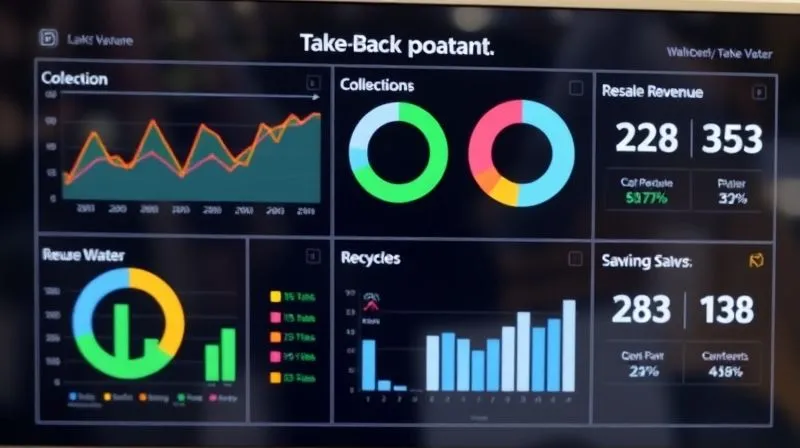
Establish a dashboard of critical metrics to track your program's health. These should include:
- Collection Volume: Total items collected over time.
- Processing Cost per Item: The cost associated with sorting, grading, and preparing each item.
- Value Recovery Rate: The percentage of collected items successfully reused, repaired, or upcycled vs. recycled/discarded.
- Resale Revenue: Direct revenue generated from selling refurbished or pre-owned items.
- Customer Participation Rate: Percentage of customers engaging with the program.
- Carbon & Waste Diversion Metrics: Environmental impact saved (e.g., CO2e, liters of water, kg of waste).
- Customer Lifetime Value (CLTV) Increase: The impact of the program on repeat purchases and loyalty.
By regularly reviewing these KPIs, you can identify what's working, what's not, and where adjustments are needed. For instance, if your processing cost per item is too high, you might need to re-evaluate your sorting efficiency or explore more automated solutions.
Iteration and Adaptability
The sustainable fashion landscape is dynamic. New technologies emerge, consumer preferences shift, and regulations evolve. Your take-back program must be designed for iteration. Conduct regular reviews, solicit feedback from both customers and operational teams, and be prepared to adapt your strategies. The brands that thrive in this space are those that view their circular initiatives as living, evolving systems, always striving for greater efficiency, higher value recovery, and stronger customer connection. As marketing guru Seth Godin often says, "The market is always changing. You can either adapt or be left behind." This applies directly to the circular economy.
Frequently Asked Questions (FAQ)
Q: What's the biggest mistake brands make when starting a take-back program? A: In my experience, the most common mistake is failing to integrate the take-back program into the core business strategy from day one. Many treat it as a separate CSR initiative rather than a potential new revenue stream or a critical component of customer acquisition and retention. Lack of a clear value recovery strategy from the outset leads to items being collected but not efficiently re-monetized, turning the program into a cost center rather than a profit driver.
Q: How can small brands compete with larger players in building a profitable take-back program? A: Small brands can leverage agility and niche appeal. Focus on local partnerships for collection and sorting, specialize in high-value repair or upcycling for a curated selection of items, and lean heavily into authentic storytelling about your circular journey. Collaboration with other small, like-minded brands can also help share logistical costs and expand reach without the massive infrastructure investment of larger companies.
Q: Is it always more profitable to repair/resell than to recycle? A: Generally, yes. Repair and direct reuse/resale retain the highest value in a garment, requiring minimal energy and resources compared to breaking down and re-manufacturing fibers. Recycling, especially advanced fiber-to-fiber recycling, is a crucial last resort but typically yields lower revenue per item. The hierarchy of value recovery always prioritizes extending the life of the garment in its original form.
Q: What are the key legal considerations for a take-back program? A: Legal considerations include consumer protection laws (especially regarding incentives and data privacy), waste management regulations, and increasingly, Extended Producer Responsibility (EPR) legislation. It's crucial to understand local and international regulations regarding the transport, processing, and disposal of textile waste, and to ensure your program complies with all relevant environmental and trade laws. Consulting with legal experts specializing in circular economy initiatives is highly recommended.
Q: How long does it typically take for a take-back program to become profitable? A: The timeline varies significantly based on scale, investment, and efficiency. However, with a well-planned strategy focusing on value recovery from the start, I've seen brands begin to break even on operational costs within 12-24 months, with significant profitability often achieved in 2-5 years. Key factors include effective customer engagement, optimized logistics, and a strong resale/repair channel.
Key Takeaways and Final Thoughts
Building a profitable take-back program for garment reuse is no longer a 'nice-to-have' but a strategic imperative for any forward-thinking fashion brand. It's a complex endeavor, but one with immense rewards, both financial and environmental. Here are the critical takeaways:
- Strategic Intent: View your program as a competitive advantage, not just a compliance burden.
- Efficient Logistics: Optimize collection and reverse supply chains to minimize costs and maximize convenience.
- Precise Grading: Implement rigorous sorting to unlock the highest possible value from each garment.
- Diverse Pathways: Prioritize reuse and repair, leveraging resale platforms and upcycling for varied revenue streams.
- Customer Engagement: Incentivize participation and transparently communicate impact to build loyalty.
- Tech & Partnerships: Invest in reverse logistics software and collaborate with advanced recyclers and innovators.
- Data-Driven Iteration: Continuously monitor KPIs and adapt your strategies for ongoing improvement.
The journey to true circularity is challenging, but it's also the most exciting frontier in fashion. By applying these expert-backed principles, you can transform textile waste into a valuable resource, enhance your brand's reputation, and build a resilient, profitable business model for the future. The time to act is now; let's collectively weave a more sustainable and prosperous future for fashion.
Recommended Reading
- 5 Expert Steps: Perfectly Accessorize Your Avant-Garde Wedding Gown
- Reinventing Your Walk: 7 Pillars of Modern Bridal Elegance Unveiled
- The Ultimate Guide: Repairing Small Tears in Cashmere Gloves Yourself
- 7 Pillars: How to Design Luxury Watches for Guaranteed Resale Value
- Unlock Fair Pay: 7 Steps to Calculate & Implement Apparel Living Wages



Your email address will not be published. Required fields are marked *