


How to avoid looking sloppy in casual menswear for professional networking?
For over two decades in the dynamic world of menswear, I've witnessed countless individuals, brilliant in their respective fields, inadvertently undermine their professional presence through a simple oversight: their casual attire. It’s a common trap, especially when the lines between personal and professional blur in networking environments. Many assume 'casual' grants permission for carelessness, but in the professional sphere, this couldn't be further from the truth.
The problem isn't just about looking a little disheveled; it's about the subtle, often unconscious, signals you send. A rumpled shirt, ill-fitting trousers, or scuffed shoes can silently communicate a lack of attention to detail, disrespect for the occasion, or even a perceived lack of professionalism. These non-verbal cues can significantly impact first impressions and, consequently, your networking success.
This comprehensive guide isn't just a list of do's and don'ts; it's a strategic framework for mastering the art of polished casual menswear. I'll share actionable strategies, drawing from my experience, to ensure your attire amplifies your professional message, builds trust, and helps you forge meaningful connections without ever looking sloppy.
Understanding the 'Casual' Misconception: It's Not About Being Careless
The term 'casual' is perhaps the most misunderstood word in the professional wardrobe lexicon. For many, it conjures images of weekend comfort – hoodies, worn-out jeans, and sneakers. While perfectly acceptable for a Saturday afternoon, this interpretation is a direct path to looking sloppy in a professional networking setting. In the context of career advancement and relationship building, 'casual' means relaxed but refined, comfortable but composed, approachable but authoritative.
The Spectrum of Casual: Defining Smart Casual vs. Business Casual
It’s crucial to understand the nuances. Smart casual is typically less formal than business casual but still implies a level of polish. Think tailored chinos, a crisp polo or button-down shirt, a sport coat, and clean loafers or stylish sneakers. Business casual elevates this further, often involving dress trousers, a button-down shirt (perhaps with a tie optional), a blazer, and dress shoes. Knowing the difference allows you to calibrate your outfit to the specific event and industry, ensuring you're never under or over-dressed.
The Psychological Impact of Appearance: First Impressions Matter
Your appearance forms the cornerstone of your first impression. Decades of research, including a well-known study by Princeton University, consistently show that people make judgments about trustworthiness, competence, and status within milliseconds of meeting someone. These judgments are heavily influenced by visual cues. If your attire projects sloppiness, you're fighting an uphill battle to convince someone of your professionalism or capability. As I always tell my clients, your clothes don't just cover you; they communicate for you.
According to a Princeton study, first impressions are formed in a fraction of a second and are highly resistant to change.The Foundation: Fit is King (and Fabric is Queen)
If there's one principle I could tattoo on every man's wardrobe mirror, it's this: fit is paramount. You could wear the most expensive designer clothes, but if they don't fit well, you'll look less put-together than someone in a well-tailored budget outfit. Sloppiness often stems from clothes that are too baggy, too long, or too tight.
“A perfectly fitting garment is the silent handshake of respect, both for yourself and for those you meet.”
Tailoring Your Way to Sharpness: Why Off-the-Rack Isn't Enough
Most clothes are made for a generic body type. Your body is unique. Investing in a good tailor isn't an extravagance; it's a necessity for professional presentation. Simple alterations can transform an average garment into something that looks custom-made.
- Sleeve Length: For blazers and shirts, sleeve cuffs should hit just at your wrist bone, allowing about half an inch of shirt cuff to show under a blazer.
- Trouser Break: Trousers should have a slight 'break' (a small crease) where they meet your shoes, or no break at all for a very modern look. Avoid puddling fabric around your ankles.
- Shoulder Fit: This is the hardest to alter. Ensure the shoulder seam of a blazer or shirt sits precisely where your shoulder ends.
- Torso Taper: Shirts and blazers should gently follow the contours of your body without being too tight or baggy, allowing for comfortable movement.
Fabric Choices that Elevate: Ditching Wrinkles and Piling
Beyond fit, the fabric of your clothing plays a critical role in how polished you appear. Cheap, thin fabrics wrinkle easily, lose their shape, and can pill quickly, instantly signaling a sloppy aesthetic. Opt for quality materials that hold their structure and drape well.
- Good Fabrics: Merino wool, high-thread count cotton (e.g., Oxford cloth, pinpoint), linen blends (for summer), cashmere, quality denim (dark, uniform wash). These fabrics resist wrinkles, breathe well, and have a luxurious hand-feel.
- Bad Fabrics (for networking): Cheap jersey knits, shiny polyester, thin rayon, heavily distressed denim. These often look cheap, wrinkle excessively, or are too informal for professional settings.

Building Your Networking Wardrobe: Key Pieces & Their Strategic Use
To consistently avoid looking sloppy, you need a core set of versatile, well-chosen pieces. These aren't necessarily expensive, but they are high-quality and can be mixed and matched to create numerous polished casual outfits.
The Versatile Blazer: Your Casual Power Tool
A well-fitting sport coat or blazer is the single most effective item for instantly elevating a casual outfit. It adds structure, sophistication, and a clear signal of intent. Opt for versatile colors like navy, charcoal gray, or a subtle check pattern. Materials like wool, cotton, or linen blends are excellent choices.
Shirts Beyond the T-Shirt: Polos, Oxford Cloth, and Button-Downs
While a plain, high-quality t-shirt *can* be part of a very specific smart-casual look, it's generally safer to opt for shirts with collars. A crisp polo shirt (especially in merino wool or pima cotton), an Oxford cloth button-down, or a refined chambray shirt are excellent choices. Ensure they are ironed and free of stains.
Trousers That Impress: Chinos, Dress Trousers, and Dark Denim
Ditch the cargo pants and heavily faded, ripped jeans. Instead, invest in well-fitting chinos in classic colors (khaki, navy, olive, grey), wool dress trousers (even if worn without a matching jacket), or dark, un-distressed denim. The key is a clean line and a good fit.
Footwear Finesse: Loafers, Derbies, and Clean Sneakers
Your shoes can make or break an outfit. Scuffed, dirty, or overly athletic sneakers are instant sloppiness indicators. Opt for clean leather loafers, sleek chukka boots, polished Derbies, or exceptionally clean, minimalist leather sneakers. Always ensure they are clean and well-maintained.
| Item | Recommended Fabric | Key Benefit |
|---|---|---|
| Blazer | Wool, Cotton, Linen Blend | Adds instant structure & polish |
| Shirt | Oxford, Pima Cotton, Merino Wool | Elevates from basic, maintains crispness |
| Trousers | Chino, Wool, Dark Denim | Provides a clean, tailored silhouette |
| Footwear | Leather, Suede | Completes the look, signals attention to detail |
The Art of Layering and Accessorizing: Adding Intentionality
Layering isn't just for warmth; it's a sophisticated styling technique that adds depth, texture, and visual interest to your outfit. Accessories, when chosen wisely, can further refine your look and convey a sense of intentionality, moving you far away from sloppiness.
Layering for Depth and Dimension: Sweaters, Cardigans, and Vests
A fine-gauge merino wool V-neck sweater over a button-down shirt, or a well-fitted cardigan, can transform a simple shirt-and-trouser combo into a thoughtful, layered ensemble. A vest (waistcoat) under a blazer adds a touch of classic formality without being overly stiff. Ensure layers are complementary in color and texture and, crucially, fit well – no bulky sweaters under slim blazers.
Strategic Accessories: Watches, Belts, and Pocket Squares
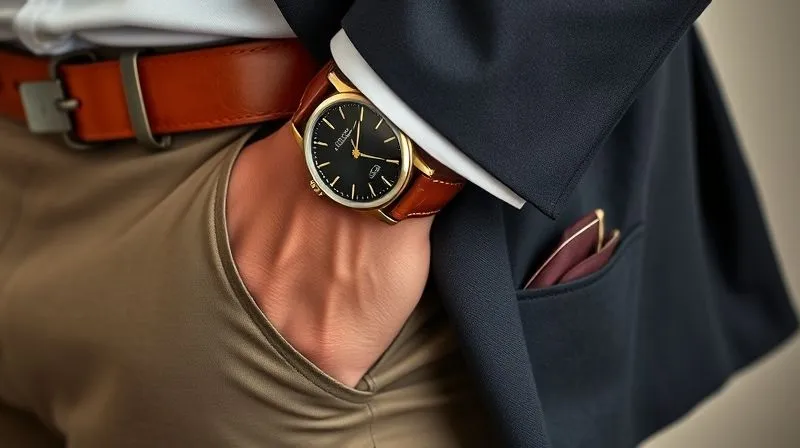
Accessories are your secret weapon. They are subtle signals of your attention to detail. A classic watch (leather or metal strap, not a sports watch) is a timeless piece. A leather belt that matches your shoes ties an outfit together. A well-folded pocket square in your blazer pocket adds a pop of personality and sophistication. These small touches speak volumes.
“True style lies in the details. A perfectly chosen accessory is not about showing off, but about demonstrating a deliberate approach to your personal presentation.”
The Often-Overlooked Details: Grooming, Hygiene, and Maintenance
Even the most impeccably chosen and tailored outfit can fall flat if the wearer neglects fundamental grooming and clothing maintenance. These details are often subconscious cues that contribute significantly to a polished or sloppy impression.
Hair & Facial Hair: The Polished Finish
A neat haircut, styled appropriately for your face shape and profession, is non-negotiable. If you have facial hair, ensure it's trimmed, shaped, and clean. A scruffy beard or unkempt hair can instantly negate the effort put into your clothing. Think sharp, not shaggy.
Hands & Nails: A Sign of Attention to Detail
You'll be shaking hands, gesturing, and holding drinks. Clean, trimmed nails and well-moisturized hands are small details that project a put-together image. Neglecting them can create an uncomfortable contrast with your otherwise polished look.
The Power of Scent: Subtle, Not Overpowering
A pleasant, subtle cologne or aftershave can enhance your presence, but too much can be off-putting. The goal is for someone to only notice it when they are in close proximity, not from across the room. Less is always more here.
Clothing Care: Ironing, Steaming, and Spot Cleaning
This is where many fall short. A crumpled shirt, trousers with a visible stain, or a blazer covered in lint are immediate indicators of sloppiness. Make ironing or steaming a routine part of your preparation. Keep a lint roller handy. Spot clean small mishaps immediately. This proactive approach ensures your clothes always look their best.
Case Study: The Transformation of Mark's Networking Persona
Mark, a talented software engineer, struggled to make meaningful connections at industry events. Despite his brilliant ideas, his perpetually wrinkled shirts, slightly overgrown beard, and scuffed sneakers often led to superficial interactions. He wasn't taken seriously by senior figures. After a mentor pointed out his presentation, Mark committed to a grooming overhaul and invested in a steamer and a few well-fitting smart casual pieces. He started getting regular haircuts, trimming his beard daily, and ensuring his clothes were always pressed. Within three months, he reported a significant change in how he was perceived. People engaged with him longer, remembered him, and he even secured a coveted introduction to a potential investor. His improved professional image amplified his inherent capabilities.
| Category | Action |
|---|---|
| Hair & Facial Hair | Fresh haircut, daily trim/shaping |
| Hands & Nails | Clean, trimmed nails; moisturize |
| Scent | Subtle cologne/aftershave; avoid overuse |
| Clothing Maintenance | Iron/steam clothes; lint roll; spot clean |
| Footwear | Polish/clean shoes regularly |
Navigating Specific Networking Scenarios: Context is Crucial
There's no one-size-fits-all casual networking outfit. The 'right' level of casual sophistication depends heavily on the context. What's perfectly acceptable in one setting might be too informal or too formal in another.
Industry-Specific Nuances: Tech vs. Finance vs. Creative
The tech industry, particularly in startup culture, often embraces a more relaxed aesthetic, where clean, stylish sneakers and high-quality t-shirts under a blazer might be appropriate. Finance, law, and consulting typically lean towards a more conservative business casual. Creative industries might allow for more personal expression, but always within the bounds of polish. Research the typical dress code of the industry you're networking in.
Event Type: Conference After-Party vs. Coffee Meeting
An after-party at a large conference might allow for a slightly more relaxed interpretation of smart casual, perhaps a button-down shirt with tailored dark jeans and a blazer. A one-on-one coffee meeting, however, demands a more focused and intentional presentation, often leaning towards a crisp shirt and smart chinos or trousers. Always consider the intimacy and formality of the specific event.
Geographic Considerations: East Coast vs. West Coast vs. International
Regional differences also play a role. East Coast cities, particularly in finance hubs, tend to be more traditionally formal. West Coast, especially California, often embraces a more relaxed, yet still sophisticated, style. International networking requires an understanding of local business etiquette, which can vary wildly. When in doubt, err on the side of slightly more formal and observe what others are wearing. Harvard Business Review offers excellent insights into navigating global business dress codes.
Mindset Matters: Confidence as Your Best Accessory
Ultimately, the most polished outfit in the world won't make up for a lack of confidence or authenticity. Your clothes are an extension of your professional persona, not a mask. Once you've mastered the principles of fit, fabric, and finesse, wear your chosen attire with conviction.
“Confidence isn't about arrogance; it's about being comfortable and assured in who you are and what you bring to the table. Your clothing should empower that feeling, not detract from it.”
Owning Your Style: Authenticity and Comfort
While following guidelines is important, don't lose your personal style. Find pieces that resonate with you, make you feel comfortable, and authentically represent your personality. When you feel good in what you're wearing, that confidence radiates, enhancing your interactions. A forced or uncomfortable outfit will make you fidget and appear ill at ease.
The Feedback Loop: Learning and Adapting
Pay attention to how your outfits are received. Do you feel appropriately dressed? Do you observe others at similar events? Use these observations to continually refine your wardrobe and approach. Style is an evolving journey, and an experienced professional is always learning and adapting.
Frequently Asked Questions (FAQ)
Can I wear jeans to a professional networking event? Yes, but with significant caveats. Only dark-wash, un-distressed, well-fitting jeans are acceptable, and even then, they should be paired with a blazer, a crisp button-down or polo, and smart shoes (not sneakers). This is typically reserved for more casual industries or specific event types. When in doubt, opt for chinos or wool trousers to be safe.
What's the real difference between smart casual and business casual? The distinction often lies in the level of formality and the specific items. Business casual usually implies trousers (not jeans), a collared shirt (often button-down), and often a blazer, with dressier shoes. Smart casual allows for more flexibility, such as tailored chinos, a high-quality polo or even a sophisticated t-shirt (under a blazer), and can include clean, stylish leather sneakers. Business casual is a step closer to traditional business attire.
How do I choose the right color palette for networking? Stick to versatile, classic colors like navy, charcoal grey, olive green, khaki, and white for your core wardrobe. These are easy to mix and match and convey professionalism. You can introduce pops of color through accessories like a pocket square or a subtle patterned shirt, but avoid overly bright or distracting colors for primary pieces.
Should I always wear a blazer, even if it's warm? While a blazer is a powerful tool, it's not always necessary, especially in very warm climates or for extremely casual networking events. In such cases, a crisp, well-fitting button-down shirt (sleeves rolled up neatly if appropriate) or a high-quality polo shirt can suffice, provided the rest of your outfit (trousers, shoes, grooming) is impeccable. A linen or unlined cotton blazer can be a good warm-weather alternative.
What's one accessory that instantly elevates a casual look? Without a doubt, a classic, well-maintained watch. It adds a touch of sophistication, demonstrates attention to detail, and is a subtle indicator of professionalism without being ostentatious. Ensure the strap (leather or metal) is in good condition and matches the overall tone of your outfit.
Key Takeaways and Final Thoughts
Navigating casual menswear for professional networking doesn't have to be a minefield. By implementing these strategies, you'll move from potential sloppiness to undeniable polish. Here are the core principles to remember:
- Fit is Non-Negotiable: Invest in tailoring; it's the biggest game-changer.
- Fabric Matters: Choose quality materials that resist wrinkles and hold their shape.
- Build a Versatile Wardrobe: Focus on key pieces like blazers, smart shirts, and tailored trousers.
- Master the Details: Pay attention to layering, accessories, grooming, and clothing maintenance.
- Context is King: Adapt your attire to the industry, event type, and location.
- Confidence is Your Best Accessory: Wear your chosen outfit with authenticity and self-assurance.
Your attire is a powerful, non-verbal communication tool. It speaks volumes before you even utter a word. By consciously and strategically refining your casual menswear, you're not just avoiding looking sloppy; you're actively cultivating an image of competence, respect, and professionalism. Go forth and network with confidence, knowing your presentation is as sharp as your ambition.
Recommended Reading
- 7 Budget Hacks: Crafting Historically Accurate Film Costumes
- 7 Steps: How to Implement a Transparent Supply Chain for Ethical Jewelry
- Achieving High-Performance Fabrics: 7 Eco-Friendly Material Strategies
- Eco-Chic Fashion: Unveiling the Truth – Is It Truly Sustainable and Ethical?
- Fashion Visuals Failing? 5 Ways to Boost Campaign Conversions



Your email address will not be published. Required fields are marked *