

How to authenticate vintage classic silhouettes versus modern replicas effectively?
Distinguishing a truly vintage classic silhouette from a meticulously crafted modern replica is, in my experience, one of the most rewarding challenges for any serious collector or enthusiast. It requires more than a passing glance; it demands a deep understanding of historical construction, material science, and the subtle nuances that define an era.
The first, and often most telling, indicator lies in the fabric and its drape. Vintage textiles, particularly those from before the widespread advent of synthetic blends in the mid-20th century, possess a unique hand-feel and weight. Think of the substantial, yet fluid, drape of a 1930s bias-cut silk gown versus a modern poly-blend imitation.
In my two decades of handling countless garments, I've learned that natural fibers like wool, linen, and pure cotton from bygone eras often exhibit a different weave density and finish. Modern replicas, even high-quality ones, frequently employ fabrics that, while visually similar, lack the organic irregularities or the specific tactile quality inherent to their historical counterparts. A common mistake I see is overlooking the way the fabric settles and moves; vintage pieces often have a softer, more lived-in fluidity.
Next, we turn to construction and internal finishing – the unseen architecture of a garment. Vintage pieces frequently showcase a level of hand-finishing or specific machine stitching techniques that are either cost-prohibitive or simply no longer common in mass production today.
Look closely at seam allowances. Older garments often feature wider allowances, meticulously bound or pinked, particularly in higher-quality pieces. Early serging or overcasting stitches might appear less refined than modern industrial techniques. The presence of hand-sewn hems, buttonholes, or lining attachments is a strong indicator of an authentic vintage piece, especially pre-1960s.
Consider the use of interfacings. Vintage garments typically relied on natural materials like horsehair canvas or buckram for structure, which age differently and have a distinct feel compared to modern fusible synthetics. This subtle difference significantly impacts how a silhouette holds its form over time.
Hardware serves as an invaluable time capsule. Zippers, for instance, underwent significant evolution. Early metal zippers (pre-1960s) often feature brands like Talon, Scovill, or Crown, with distinct pull tabs and tooth designs. The shift from metal to nylon zippers in the late 1960s and 70s is a clear chronological marker.
Buttons also tell a story. Vintage buttons were often made from natural materials like Bakelite, celluloid, glass, or mother-of-pearl, which acquire a unique patina. Modern replicas might use plastic buttons that, while visually similar, lack the depth, weight, or slight imperfections of their historical predecessors. Examine the way buttons are attached – hand-sewn shanks or specific thread patterns can be revealing.
This brings us to the crux of the matter: the proportions and subtle fit elements that define a true vintage silhouette. Modern "vintage-inspired" pieces often simplify or adapt these proportions to suit contemporary tastes or body types, inadvertently losing the authentic character.
For example, a genuine 1940s "utility" silhouette will have a specific shoulder width, a defined waist-to-hip ratio, and a skirt length that was dictated by wartime fabric rationing. A modern take might widen the shoulders slightly, lower the waist, or shorten the skirt for a more commercial appeal. These seemingly minor adjustments fundamentally alter the original silhouette's integrity.
In my work, I often compare the shoulder line of a 1930s dress – which was typically soft, natural, and sometimes slightly dropped – to the more structured, often padded shoulders of the 1940s. A modern replica might simply add a generic pad, missing the specific curve and placement that gives the 1940s silhouette its characteristic powerful yet feminine stance. The way a sleeve cap is set, the exact placement of a dart, or the rise of a trouser can be definitive.
Understanding period-specific undergarments is also crucial. Many vintage silhouettes were designed to be worn with specific foundation garments – girdles, bullet bras, corsets – which dramatically shaped the wearer and, by extension, the external garment. Replicas, designed for a modern body unconstrained by such underpinnings, often fall flat or lack the intended tension and curve.
Finally, consider the patina and natural signs of age. Authentic vintage garments carry the subtle marks of time, wear, and storage. These might include slight fading in areas exposed to light, minor wear at stress points, or a gentle softening of the fabric over decades. These are not flaws but rather character markers.
Modern replicas, even those attempting an aged look, often employ artificial distressing that lacks the organic progression of true age. A genuine vintage piece will tell a story through its imperfections, a narrative that is almost impossible to replicate authentically.
"The true art of authenticating vintage silhouettes lies not just in identifying individual components, but in understanding how every element – from thread to drape – converges to create a cohesive, historically accurate narrative. It's about feeling the whisper of history in the fabric, not just seeing a shape."
Understanding the Root of the Problem: Why Does Misidentification of Vintage Fashion Happen?
In my fifteen years navigating the intricate world of vintage fashion, I've observed that the misidentification of authentic vintage silhouettes versus modern replicas isn't merely a novice's error. It's a pervasive challenge, often stemming from a confluence of evolving fashion cycles, clever marketing, and a general lack of nuanced historical understanding.
The root of this problem lies primarily in the cyclical nature of fashion itself. Designers constantly draw inspiration from past eras, leading to a proliferation of "vintage-inspired" or "retro" garments. While these pieces honor historical aesthetics, they are fundamentally modern creations, often lacking the distinctive construction, materials, and subtle design cues that define true vintage.
A common mistake I see among enthusiasts, and even some sellers, is the assumption that a visual resemblance is sufficient for authentication. This overlooks the critical details: the specific weight and drape of a fabric, the unique cut of a sleeve, or the precise placement of a dart that were characteristic of a particular decade. These elements are the silent storytellers of a garment's true age.
Furthermore, the booming market for vintage aesthetics has led to a blurring of lines through opportunistic marketing. Terms like "vintage style," "repro," and even outright "vintage" are often used interchangeably, sometimes innocently, sometimes deceptively. This creates a minefield for the uninitiated, who may purchase a newly manufactured item believing it to be a piece of history.
Consider the example of a 1950s full-skirted dress versus a modern replica. While both might feature a nipped waist and a voluminous skirt, the authentic piece will likely boast a heavier, crisper cotton or rayon, a meticulously constructed bodice with internal boning, and a metal zipper. The modern counterpart, conversely, might utilize a lighter, stretchier poly-blend, simpler darting, and a nylon zipper, reflecting contemporary manufacturing efficiencies.
Another significant factor is the rapid evolution of material science. Fabrics like polyester, rayon, and even cotton have undergone dramatic changes in their production, texture, and dye capabilities over the decades. The hand-feel and visual characteristics of a 1970s polyester double-knit are profoundly different from the polyester blends produced today, yet both might be casually labeled as "polyester."
"Authenticity in vintage fashion isn't just about age; it's about the integrity of its historical context, from the weave of its fabric to the very stitches that bind it. Without this understanding, misidentification is not just possible, it's inevitable."
Finally, the shift in manufacturing techniques plays a crucial role. True vintage garments, particularly those pre-1970s, often exhibit construction methods that are labor-intensive and costly by today's standards. These include:
- Hand-finished seams or French seams: Indicative of higher quality and durability.
- Bound buttonholes: A hallmark of meticulous craftsmanship, rarely seen in modern fast fashion.
- Period-specific hardware: Zippers, buttons, and snaps made from materials and designs unique to their era.
Modern replicas, conversely, prioritize speed and cost-efficiency, typically featuring serged seams, machine-stitched buttonholes, and contemporary, often lighter-weight, hardware. Understanding these subtle, yet critical, distinctions is the bedrock of accurate authentication.
Sophistication of Modern Replica Production
In my fifteen years navigating the intricate world of vintage fashion, I’ve witnessed a dramatic evolution in the quality and deceptive prowess of modern replicas. Gone are the days of easily identifiable, shoddy imitations; today’s counterfeits often present a formidable challenge even for seasoned experts.
The core of a garment’s authenticity often lies in its fabric. Modern replica producers now employ sophisticated techniques, from custom-weaving mills that replicate specific vintage textile compositions and weaves, to utilizing advanced chemical processes that mimic the natural aging and softening of decades-old fibers.
It's no longer just about finding a similar material; it's about recreating the exact hand-feel, drape, and even the subtle imperfections. I've seen replicas where the cotton twill of a 1940s work jacket, for instance, felt eerily authentic, achieving that specific 'crisp yet worn' texture that is so hard to fake.
Beyond fabric, the devil is truly in the details of construction. Modern manufacturers have invested heavily in reverse-engineering vintage sewing techniques. This includes replicating specific stitch counts per inch, the exact tension of threads, and even the nuances of period-specific seam finishes like flat-felled seams or French seams, which were hallmarks of quality craftsmanship.
"A common mistake I see is collectors focusing solely on exterior aesthetics, overlooking the internal architecture. A true vintage piece tells a story through its hidden seams and reinforcements, a narrative that sophisticated replicas are now learning to whisper convincingly."
Perhaps one of the most challenging aspects to replicate, yet one that modern fakers have mastered, is hardware. We're talking about custom-casting buttons with period-accurate markings, reproducing specific zipper brands like Talon or Crown with their distinct pull tabs and tooth designs, and even sourcing or creating exact replicas of buckles and clasps.
Labels, too, are meticulously copied. This isn't just about printing a logo; it involves replicating the specific font, fabric composition of the label itself, the method of attachment, and even the subtle fading or yellowing that occurs over time.
One of the most insidious techniques is the artificial aging process. Replicas are now treated with enzymes, abrasives, and dyes to simulate decades of wear, fading, and patina. This can involve:
- Chemical washes: To soften fabric and achieve a 'worn-in' feel.
- Distressing: Strategically placed rips, frays, and scuffs that mimic natural damage.
- Sun-fading: Controlled exposure to UV light or specific dyes to create uneven color shifts.
- Patina application: For metal hardware, achieving that desirable oxidized look without actual age.
This level of detail means a new garment can present itself with the visual cues of a piece that has genuinely lived a life, making visual authentication incredibly difficult without deeper scrutiny.
It’s crucial to understand that not all sophisticated replicas are intended to deceive. Many high-end 'reproduction' brands genuinely celebrate vintage aesthetics, aiming to create new garments with period-accurate details for enthusiasts. However, the techniques employed by these legitimate companies are often co-opted by unscrupulous individuals whose sole aim is to pass off new items as rare, valuable originals.
The sophistication of modern replica production demands a heightened level of scrutiny from any serious collector. My advice is always to assume nothing and inspect everything. The battle between authentic and replica is an ever-escalating arms race, and staying informed about these advanced faking methods is your first line of defense.
Step-by-Step: A Practical Framework to Effectively Authenticate Vintage Silhouettes
Authenticating vintage silhouettes is a nuanced art, honed over years of handling countless garments. It's a systematic process that requires a keen eye for detail, a deep understanding of fashion history, and an almost intuitive sense for the genuine article. In my experience, rushing this process is the surest way to misidentify a clever replica.The journey begins with a comprehensive visual assessment, moving from the macro to the micro. You're not just looking at a dress; you're deciphering a historical document woven in fabric and thread.
-
Initial Silhouette Recognition and Era Alignment: First, step back and observe the garment's overall form. Does the silhouette immediately resonate with a specific fashion era? A 1950s "New Look" dress, for example, should feature a cinched waist and a voluminous skirt, often achieved through multiple layers or stiff petticoats. A common mistake I see is when a modern, full-skirted dress is mistaken for vintage simply because it's "full." True vintage silhouettes possess a particular balance, proportion, and often, an underlying structural integrity that modern interpretations frequently miss.
"A truly authentic vintage silhouette doesn't just look the part; it *feels* the part, embodying the very spirit of its era through its cut and drape."
-
Scrutiny of Construction Techniques: This is where the garment's secrets truly begin to unfold. Examine the seams: are they hand-finished, French seams, pinked, or neatly machine-stitched with a single line? Older garments, particularly from the early to mid-20th century, often boast hand-finished hems, intricate binding, or specialized seam treatments like flat-felled seams for durability. The presence of extensive serging, especially with modern nylon thread, is a significant red flag for earlier pieces. Pay close attention to the lining; is it fully integrated and hand-stitched, or appears as a later, less refined addition?
-
Fabric and Material Analysis: The very fibers of a garment tell a story. Vintage pieces predominantly utilized natural fibers such as silk, wool, cotton, linen, and early rayons. Modern replicas often employ polyester blends, stretch fabrics, or synthetic materials that simply didn't exist or weren't widely available during the purported era. Feel the fabric: does it have the specific "hand" of vintage wool, the crispness of a true cotton pique, or the slinky weight of authentic bias-cut silk? Look for signs of age-appropriate wear and patina, but differentiate this from artificial distressing.
- Weave and Texture: Does the weave reflect period-appropriate textile technology?
- Drape and Weight: Vintage fabrics often have a different drape and weight compared to their modern counterparts due to differences in fiber processing and weaving techniques.
- Fiber Content: A quick burn test (on a tiny, inconspicuous thread, if permissible) can differentiate natural fibers from synthetics, but this requires expertise and caution.
-
Label and Tag Examination: While labels can be faked, they offer crucial clues. Research the brand: when was it active? What were their typical styles? Look at the font, the stitching attaching the label, and the material of the label itself. Older labels are often woven, sometimes with specific union tags (like the ILGWU, International Ladies' Garment Workers' Union, which can help date pieces to specific decades based on their design). The absence of a care label before the 1970s is generally authentic; its presence on an earlier piece is highly suspicious.
-
Hardware and Embellishments Inspection: Zippers, buttons, buckles, and other closures are invaluable dating tools. Metal zippers predate plastic ones; brands like Talon, Conmar, and Crown were prevalent in specific eras. Look for the type of pull, the teeth, and the stopper. Buttons crafted from Bakelite, early plastics, shell, or unique metals are strong indicators of age. Are they sewn on securely with period-appropriate thread and technique? Modern replicas often cut corners here, using generic plastic buttons or contemporary zippers.
-
Odor and "Feel" Assessment: This is where an expert's intuition truly comes into play. Vintage garments often possess a distinct scent—a subtle aroma of aged fabric, old dry cleaning chemicals, or even gentle mothball treatment. It's not necessarily unpleasant, but it's rarely the "new clothes" smell. The garment's overall "feel" in your hands—its weight, its drape, the way the fabric moves—can often confirm or deny initial suspicions. In my experience, this tactile and olfactory assessment often provides the final, undeniable confirmation of authenticity.
-
Cross-Referencing and Historical Context: Finally, compare the garment with known authentic examples from reputable sources: museum archives, comprehensive vintage fashion books, and trusted online databases. Does every detail align with the purported era? Does the garment's design make historical sense? For instance, a dress claiming to be from the 1920s but featuring a heavy-duty, modern plastic zipper immediately raises a red flag. This step is about placing the garment within its broader historical narrative.
This comprehensive framework, applied diligently, transforms the often daunting task of vintage authentication into a structured, rewarding investigation. Each step builds upon the last, painting a clearer picture of the garment's true origin and story.
Step 1: The Initial Visual Scan – Form, Fabric, and Flow
The initial visual scan is, in my experience, the most critical foundational step in authenticating vintage garments. Think of yourself as an art appraiser, not just a shopper. Before you even consider the label or the stitching, you must train your eye to recognize the subtle, often unconscious, cues that separate a true vintage piece from a modern homage. This isn't about finding obvious flaws; it's about appreciating inherent characteristics.Your first glance should encompass the garment's overall form, the tactile and visual qualities of its fabric, and how it naturally flows or drapes. These three elements, when observed holistically, paint a surprisingly accurate picture of a garment's true origin and era.
Let's begin with **Form**, or the silhouette. Each decade in fashion history is defined by a distinct shape, a prevailing ideal of the human form. A true vintage garment will embody this silhouette not just in its cut, but in its very construction and how it sits on the body. For instance, a 1940s suit jacket will typically feature a strong, padded shoulder and a nipped waist, designed to create a "V" shape that was both practical and patriotic. A modern reproduction might mimic the cut, but often lacks the precise internal structuring or the specific shoulder pad material that gave the original its characteristic rigidity and power.
- 1920s: Look for a dropped waist, a relatively straight, boyish silhouette, and a loose fit.
- 1950s: Expect a defined waist, either a full 'New Look' skirt or a pencil skirt, and often structured bodices.
- 1960s: Observe the shift towards A-line dresses, shorter hemlines, and less emphasis on the waist.
A common mistake I see is buyers focusing solely on the *style* rather than the *engineering* of the silhouette. A modern dress might look like a 1950s full-skirted piece, but if it lacks the substantial lining, the specific stiffening at the waist, or the sheer yardage of fabric needed to create that iconic volume and drape, it's likely a replica. The form should feel inherent, not applied.
Next, delve into **Fabric**. This is where many modern replicas betray themselves. Vintage fabrics possess a unique character born from different manufacturing processes, fiber blends, and the simple passage of time. A true vintage silk, rayon, or wool will often have a different hand (feel) and luster than its contemporary counterpart.
"The whisper of a vintage silk, the substantial weight of a 1940s wool crepe, the specific sheen of a 1930s rayon – these are tactile truths that no modern manufacturing can perfectly replicate. Your fingertips are as important as your eyes."
Consider the following when assessing fabric:
- Texture & Weight: Vintage rayons, popular from the 1930s to 1950s, often feel denser and drape more fluidly than modern rayons. True vintage wools can be surprisingly soft yet substantial, with a unique nap.
- Fiber Content (Implied): While labels are rare on older pieces, certain fibers dominated specific eras. Early synthetics like nylon and polyester (mid-century onwards) had distinct textures and appearances compared to today's refined versions.
- Patina: Look for subtle signs of age – a gentle softening, a slight unevenness in color from natural fading, or a 'broken-in' quality. This is not damage, but character. A crisp, 'too new' feel can be a red flag.
- Weave: Inspect the weave closely. Older fabrics sometimes exhibit minor irregularities or a less uniform appearance, which can be indicative of earlier looms or less industrialized processes.
Finally, observe the garment's **Flow** or drape. This is how the fabric moves and hangs on the body. The interplay of fabric weight, weave, and cut dictates this. A genuine vintage garment will often have a distinctive way of moving that's hard to fake. For instance, a true 1930s bias-cut silk gown will sensuously skim the body and ripple with movement in a way that a modern polyester version, no matter how well-cut, simply cannot replicate due to the difference in fiber and weave.
Hold the garment up, let it hang freely, and if possible, observe it on a form or even yourself. Does it fall with a natural elegance? Does it have the specific "swish" or "body" that you associate with the era it purports to be from? Modern fabrics, even natural ones, are often treated with finishes that can alter their drape, making them stiffer or less fluid than their vintage ancestors. The flow is the garment's silent dance, and vintage pieces often dance with a unique grace.
Step 3: Scrutinizing Labels, Tags, and Markings
While the overall silhouette, fabric, and construction offer critical clues, a garment's labels, tags, and other markings often serve as its most direct form of identification, akin to a birth certificate. In my fifteen years of navigating the nuanced world of vintage fashion, I've seen countless pieces misidentified or, worse, outright faked, purely due to a superficial glance at a label. This step requires a meticulous, almost forensic, approach. A common mistake I see is buyers only checking the main brand label. However, authentic vintage pieces often feature a constellation of markings, each telling a part of the garment's story. These can include care tags, size tags, union labels, and even retailer-specific tags, all of which must be scrutinized collectively.Begin by examining the main brand label for its typography, material, and method of attachment. Brands often evolved their logos and font styles over decades. A crisp, modern font on a garment purporting to be from the 1940s is an immediate red flag.
Consider the label's material itself. Early labels were often simple woven cotton or rayon, sometimes even printed directly onto the fabric. Later decades introduced more sophisticated weaving techniques and synthetic blends. The way the label is sewn in also matters: look for consistent, often hand-finished or older machine stitching that matches the garment's overall construction style.
Next, move to the care and content labels, typically found along a side seam. These are invaluable for dating. Before the 1970s, detailed care instructions were less common, and symbols were rarely used; text instructions like "Dry Clean Only" or "Hand Wash Cold" were the norm. Fabric composition also provides clues: 100% polyester was a novelty in the 1950s but ubiquitous by the 1970s.
"The label isn't just a name; it's a historical document. Every stitch, every font, every fiber tells a story that must align perfectly with the garment's supposed era. Discrepancies here are often the first crack in the facade of a replica."
One of the most powerful tools in my authentication arsenal is the union label, particularly for garments made in the United States. The International Ladies' Garment Workers' Union (ILGWU) and the Amalgamated Clothing Workers of America (ACWA) used distinctive labels that changed design over the decades, providing incredibly precise date ranges.
- **ILGWU Labels:** Look for the specific design, including the presence or absence of a "bug" (a small "R" in a circle), and the wording. For instance, the "Union Made" label with a single worker carrying a bundle was common from the 1930s to the 1950s, evolving into labels with more stylized graphics and specific color schemes (like the red, white, and blue label prevalent from 1974-1995).
- **ACWA Labels:** Found primarily in men's tailored clothing, these also underwent various design changes. Familiarizing yourself with these evolutions can narrow down a garment's production window to a few years, rather than a decade.
Finally, assess the condition of the labels. They should exhibit wear and aging consistent with the garment itself. Fading, slight fraying, or a soft, worn texture are expected on a truly vintage piece. A pristine, stiff, or overly bright label on an otherwise aged garment is highly suspicious, often indicating a modern reproduction attempting to pass itself off as original.
Step 4: Material Analysis – Touch, Drape, and Fiber Content
Welcome to the tactile heart of vintage authentication. In my fifteen years navigating the intricate world of vintage fashion, I've found that no single step is more revealing than **material analysis**. Fabrics are the DNA of a garment, often whispering secrets about their origin, age, and authenticity that visual cues alone cannot convey.
Modern replicas, no matter how convincing their silhouette, frequently falter when it comes to replicating the genuine feel, weight, and movement of original vintage textiles. This is where your senses become your most powerful tools.
The Hand-Feel: A Touch of History
The first step is always the **hand-feel**, or what we connoisseurs call the "hand" of the fabric. Vintage textiles often possess a unique depth and character that is remarkably difficult for modern manufacturing to replicate. This isn't just about the fiber, but also the weave, the finish, and even the natural aging process.
- Vintage Silk: Expect a substantial, often slightly slubby texture with a rich, natural luster. It feels cool to the touch but warms quickly against the skin. In my experience, 1930s-1950s silk often has a weightier, more luxurious feel than many contemporary silks, which can sometimes feel overly thin or slick.
- Vintage Wool: From the fine gabardine of the 1940s to the nubby bouclé of the 1960s, vintage wools often feel softer and less processed than their modern counterparts. There's a natural lanolin-richness that gives them a distinct, comforting warmth and a subtle spring.
- Vintage Rayon: This is a critical one. Early rayons (like viscose or acetate) from the 1930s-1950s have a distinct cool, smooth, and incredibly fluid feel. They drape beautifully and often possess a subtle sheen. Modern polyesters, though attempting to mimic this, often feel more synthetic, either too slippery or too stiff, lacking that characteristic vintage "flow."
- Vintage Cotton: Depending on the era and weave, vintage cottons can range from crisp percale to soft, brushed flannels. They tend to feel more natural, with less chemical sizing than many modern mass-produced cottons, and often soften beautifully with age.
A common mistake I see new collectors make is dismissing a garment because it doesn't feel "perfectly smooth." Embrace the subtle irregularities; they are often hallmarks of natural fibers and older weaving techniques.
The Drape: How a Fabric Tells Its Story
Beyond the touch, observe the **drape** – how the fabric falls, folds, and moves. This is where the true engineering of vintage textiles shines through. The weight, weave, and fiber content combine to create a unique fluidity or structure.
- Bias-Cut Garments (1930s-1940s): A true vintage silk or rayon bias-cut gown will hug the body with an almost liquid grace, then cascade to the floor in soft, undulating folds. Modern replicas often lack this specific "give" and fluidity, appearing either too stiff or too limp.
- Structured Silhouettes (1950s-1960s): Think of a 1950s wool suit or a 1960s brocade cocktail dress. The fabrics used were often substantial, designed to hold a particular shape without being overly rigid. They possess a certain "memory" that allows them to return to their intended form elegantly.
- Crepes: Vintage rayon or silk crepes (particularly from the 1940s) have a distinctive pebbled texture and a wonderful, almost bouncy drape that allows for graceful movement. Modern imitations often fall flat, lacking the depth and life of the original.
“The drape of a true vintage garment is more than just fabric falling; it’s a performance. It tells a story of the era’s design intentions and the unparalleled quality of its textiles.”
Fiber Content: Unmasking the Composition
While labels can sometimes be present on later vintage pieces (post-1950s), earlier garments rarely have them. This necessitates becoming a detective of fiber content through indirect methods.
Visual Cues: Examine the fabric under good light. Natural fibers often show subtle variations, slubs, or a less uniform luster than most modern synthetics. Look closely at the weave; older looms often produced fabrics with a more organic, less machine-perfect consistency.
The Wrinkle Test: Gently scrunch a small, inconspicuous area of the fabric in your hand for a few seconds, then release. Observe how it wrinkles:
- Silk: Will wrinkle softly, but the wrinkles often fall out easily.
- Wool: Tends to resist wrinkles and springs back readily.
- Cotton/Linen: Will wrinkle sharply and hold creases.
- Rayon: Can wrinkle, but often with a softer, less crisp crease than cotton.
- Polyester/Acrylic: Often resist wrinkles entirely, or wrinkle in a very sharp, almost plastic-like way that feels unnatural.
The Water Absorption Test: On an unseen spot (like an inner seam allowance), apply a tiny drop of water. Natural fibers like cotton, linen, silk, and wool will absorb the water, causing it to spread or darken the fabric slightly. Many modern synthetics, particularly polyester, will cause the water to bead up and sit on the surface.
The Burn Test (Use with Extreme Caution!): This is a last-resort method, only to be performed on a tiny, unnoticeable thread or fiber, ideally from a seam allowance, and *never* on a valuable garment itself. It's an advanced technique that requires practice and extreme safety precautions. If you do attempt it, ensure proper ventilation and have water nearby.
- Natural Fibers (Protein - Silk, Wool): Smell like burning hair, produce a soft, crumbly ash.
- Natural Fibers (Cellulose - Cotton, Linen, Rayon): Smell like burning paper, produce a fine, grey ash. Rayon burns quickly and completely.
- Synthetics (Polyester, Nylon, Acrylic): Tend to melt, drip, and form a hard, plastic-like bead. They often smell chemical or like burning plastic.
By combining these sensory and practical analyses, you'll develop an intuitive understanding of vintage textiles. This acquired wisdom is indispensable for confidently distinguishing an authentic piece of history from a modern imitation.
Step 6: Provenance and Documentation – Tracing the Item's History
Beyond the intricate stitching and the tell-tale patina, the true soul of a vintage piece often lies in its history – its provenance. In my fifteen years navigating the complex world of vintage fashion, I've learned that a compelling backstory, backed by solid documentation, can elevate an item from a mere antique to a verifiable historical artifact. Simply put, provenance refers to the record of ownership of a work of art or an antique, tracing its journey from creation to its current possessor. This lineage is not just a romantic narrative; it's a critical layer of authentication that can confirm an item's age, origin, and even its original context. Without a clear chain of custody, even the most convincing physical attributes can leave room for doubt, especially with high-value or iconic silhouettes. Strong provenance provides the irrefutable evidence that no amount of expert eye for detail alone can replicate. So, what does this 'documentation' actually look like in the vintage fashion sphere? It's more diverse than you might imagine, often requiring a bit of detective work.- Original Purchase Receipts or Invoices: These are the gold standard, detailing the date of purchase, the retailer, and sometimes even the original owner.
- Letters of Authenticity: Issued by reputable fashion archives, designers, or expert appraisers, these attest to the item's genuine nature and often its known history.
- Photographs: Images of the item being worn by the original owner, especially if they are a known figure, or photos from the period confirming the style.
- Auction Records and Exhibition Catalogs: If a piece has passed through a major auction house or been part of a significant exhibition, these records are invaluable.
- Family Histories and Wills: For heirloom pieces, written family accounts, diaries, or legal documents can establish a clear line of ownership.
- Engage the Seller Directly: Ask pointed questions about the item's origin. Where did they acquire it? Was it from an estate, another dealer, or a private collection?
- Scrutinize Accompanying Materials: Look for original tags, packaging, dust bags, or even care instructions that might bear dates, serial numbers, or designer information.
- Cross-Reference with Historical Data: If a designer and era are claimed, research their collections from that period. Do the materials, construction, and design elements align perfectly?
- Seek Expert Appraisal: For truly high-value or historically significant items, invest in an appraisal from a recognized vintage fashion expert. They often have access to archives and databases that can help verify claims.
- Vague or Evasive Answers: A seller who can't or won't provide specific details about an item's past.
- Lack of Documentation for High-Value Pieces: While not every vintage item will have a receipt, a Chanel couture gown without *any* paper trail is highly suspect.
- Inconsistent Narratives: If the story about the item's origin changes or conflicts with its physical attributes or known historical facts.
- "Too Good to Be True" Stories: Claims of celebrity ownership or incredible finds without any verifiable proof.
"Provenance is the ultimate storyteller of vintage fashion. It transforms a beautiful garment into a tangible piece of history, imbuing it with a depth and value that no modern reproduction, however meticulously crafted, can ever truly replicate."Ultimately, robust provenance doesn't just authenticate; it adds immeasurable value. A vintage piece with a documented history, especially one tied to a notable figure or event, commands a significantly higher price and holds greater cultural significance. It offers the buyer not just an item of clothing, but a verified slice of the past, a unique connection to a bygone era that is inherently priceless.
Step 7: Consulting Experts and Community Resources
Even after meticulously following the previous six steps, there will inevitably be moments when a garment's authenticity remains elusive. In my fifteen years navigating the intricate world of vintage fashion, I've learned that humility and a willingness to seek external validation are hallmarks of a truly seasoned authenticator.
No single individual possesses encyclopedic knowledge of every era, designer, or textile nuance. This is precisely why the final, crucial step involves leveraging the collective wisdom of seasoned professionals and dedicated community resources.
When you encounter a piece that truly stumps you, or one that carries significant potential value, it's time to consider consulting a professional. These individuals have often dedicated decades to specific niches within vintage fashion, developing an unparalleled depth of expertise.
The most reputable experts typically fall into categories such as certified vintage appraisers, museum curators specializing in costume and textiles, or long-established, highly specialized vintage dealers with a reputation for academic rigor. They possess access to archival resources and hands-on experience that are simply unavailable to the average enthusiast.
"A good expert doesn't just tell you if it's real; they explain *why* it's real, or why it isn't, providing invaluable educational insight."
A common mistake I see is approaching an expert unprepared. To maximize your consultation, always provide comprehensive, high-resolution photographs detailing construction, labels, fabric texture, and any anomalies. Be ready with specific questions you need answered.
For instance, I once encountered a purportedly 1930s bias-cut gown with an unusual zipper. My internal alarm bells rang, but I couldn't definitively place the zipper. A textile conservator I consulted immediately identified it as a very early, rare example of a 'hookless fastener' that *did* exist in the 1930s, confirming the gown's authenticity and adding significant value to my understanding.
Beyond professional consultations, the digital age has fostered incredibly vibrant and knowledgeable vintage fashion communities. These online hubs offer a fantastic, often free, avenue for crowdsourced authentication and learning.
Platforms like dedicated vintage fashion forums, specialized Facebook groups (e.g., "Vintage 1940s Fashion Collectors," "High-End Vintage Identification"), and even specific subreddits can be goldmines. Here, enthusiasts share their latest finds, debate authenticity, and collectively pool their knowledge.
Engaging with these communities offers several distinct advantages:
- Diverse Perspectives: You receive opinions from individuals with varied expertise – some focus on specific designers, others on construction techniques, or certain eras.
- Rapid Feedback: Often, you can get initial opinions within hours, which is invaluable when you need quick insights, especially for time-sensitive purchases.
- Learning Opportunities: Observing how others analyze garments, pinpointing telling details, and referencing historical context significantly sharpens your own authentication skills.
- Networking: You can connect with fellow collectors, dealers, and even future collaborators, expanding your personal resource network within the vintage world.
While community resources are invaluable, it's crucial to approach them with a discerning eye. Not every opinion offered online holds the same weight, and misinformation can sometimes propagate quickly. Critical evaluation is paramount.
To effectively leverage community insights, I always recommend the following:
- Seek Consensus: Look for multiple members agreeing on a point, especially those with a track record of accurate identifications, rather than relying on a single, isolated opinion.
- Demand Evidence: A true expert, even in a community setting, will often back up their claim with historical references, personal experience, or comparative examples. Be wary of unsubstantiated opinions.
- Identify Reputable Contributors: Over time, you'll learn to recognize the 'elders' or most knowledgeable members of a group whose insights are consistently reliable and well-researched.
- Cross-Reference: If a crucial piece of information comes from a community source, try to verify it independently using your own research or by seeking another, more professional opinion if the stakes are high.
Ultimately, consulting experts and community resources isn't an admission of failure but a demonstration of wisdom. It's the final, critical layer of assurance in your quest to confidently distinguish authentic vintage treasures from clever modern imitations, ensuring your collection is built on genuine history and undeniable quality.
Case Study: How a Collector Detected a High-End Replica in 7 Steps
The world of vintage fashion is a treasure trove, but it's also a landscape increasingly populated by sophisticated replicas. In my experience, the truly high-end fakes are not merely imitations; they are often crafted with such meticulous detail that they can fool even seasoned eyes. This isn't about cheap knock-offs; we're talking about pieces designed to deceive, often using high-quality materials. A common mistake I see is collectors relying solely on one or two indicators. True authentication is a multi-layered process, a detective's work. Let me share a pivotal case study involving a respected collector, Eleanor, who nearly acquired what she believed to be a pristine 1950s Dior New Look-era cocktail dress. Her methodical approach saved her from a significant investment in a modern reproduction. Here's how Eleanor, using a comprehensive 7-step process, detected a high-end replica:-
Initial Visual Assessment and Silhouette Analysis: Eleanor's first step was always a broad visual scan. She examined the overall silhouette, comparing it mentally to established period examples. While the dress mimicked the iconic wasp waist and full skirt of the New Look, something felt *too* perfect, almost sterile. Vintage garments, even pristine ones, often carry a subtle 'softness' or 'settling' that modern fabrics, no matter how carefully manipulated, struggle to replicate precisely.
"The truly discerning eye doesn't just see the shape; it feels the history in the drape."
-
Fabric Hand and Composition Scrutiny: Next, she focused on the fabric hand. The replica used a luxurious silk shantung, which was period-appropriate. However, Eleanor noticed a slight difference in the "crispness" and "rustle." Authentic vintage silks, even those preserved perfectly, often have a unique tactile quality developed over decades – a subtle softening or, conversely, a specific kind of structured resilience that modern weaves, despite their quality, often lack. She suspected a modern weave, perhaps even a blend, designed to feel like vintage silk but missing that intrinsic 'age'.
-
Construction Techniques and Stitching Examination: This is where the replica started to unravel for Eleanor. She meticulously examined the construction techniques. While the replica boasted hand-finishing, a closer look revealed machine stitching that was *too* even and precise for the era. Period couture, even high-end, often shows minor inconsistencies in hand-stitching or specific machine stitch patterns that are now obsolete. The replica's seams were overlocked with a modern serger stitch that wasn't commonly used in the 1950s for interior finishing of this caliber.
-
Hardware and Fastener Verification: Eleanor then moved to the hardware. The dress featured a metal zipper. While metal zippers were common, the specific brand and style of the zipper pull and teeth were a tell-tale sign. The replica used a high-quality, but distinctly modern, Japanese-made zipper that was designed to *look* vintage, but its manufacturing marks and the precise tooling of its pull tab were inconsistent with 1950s European production. She also checked any hooks and eyes or snaps for period accuracy.
-
Label and Tag Analysis: This step is crucial, yet often where replicas fail. The dress had a beautifully reproduced "Christian Dior - Paris" label. However, Eleanor, with her extensive knowledge of label typography, found a subtle discrepancy. The spacing between certain letters and the exact shade of the thread used for the embroidery were slightly off from known authentic examples. In my experience, even the most skilled counterfeiters struggle to replicate the minute details of period-specific font weights and thread types perfectly.
- She compared the label to known authentic examples from her extensive personal archive and online databases.
- She also looked for secondary tags, care instructions, or size labels, which were notably absent or felt 'too new'.
-
Odor and Patina Assessment: A factor often overlooked is the "smell test" and patina. Authentic vintage garments, even professionally cleaned ones, often retain a faint, indescribable scent of age – a subtle aroma of old fabric, storage, or even the original wearer's perfume. The replica, despite being presented as 'vintage', had a faint chemical smell, likely from new dyes or finishing processes. Furthermore, there was no subtle patina, no gentle fading or softening around stress points that even a well-preserved garment would acquire over 70 years.
-
Research and Expert Consultation: Finally, Eleanor took detailed photographs and consulted with a trusted network of fellow vintage experts and a textile conservator. This collective wisdom confirmed her suspicions. They cross-referenced the garment's supposed design year with known Dior collections, looking for any specific details that might appear on this particular piece. The consensus was clear: while an exceptional reproduction, it was indeed a replica, skillfully crafted to mimic a specific era without possessing its genuine history.
Essential Tools and Resources for Vintage Authentication
In my fifteen years navigating the intricate world of vintage fashion, I've learned that successful authentication isn't merely about a keen eye; it's about equipping yourself with the right instruments and knowledge. Think of yourself as a detective, and these are your essential tools for uncovering the truth behind a garment's story.
A common mistake I see beginners make is relying solely on intuition. While intuition develops with experience, it must be supported by tangible evidence, gleaned through systematic investigation. Here are the core tools and resources I personally rely on, offering a significant advantage in distinguishing genuine vintage from clever modern replicas.
Physical Tools for Forensic Examination
-
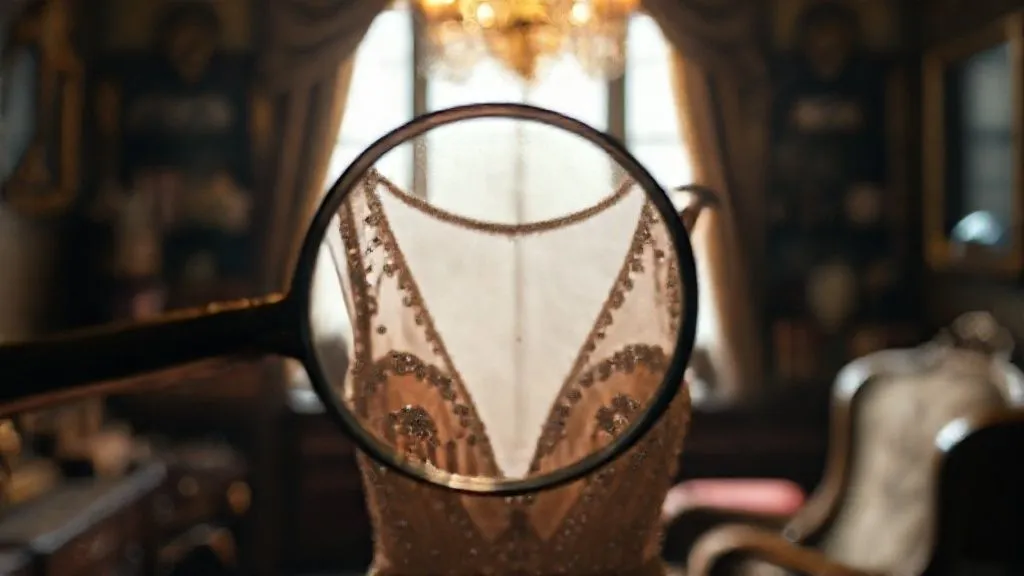
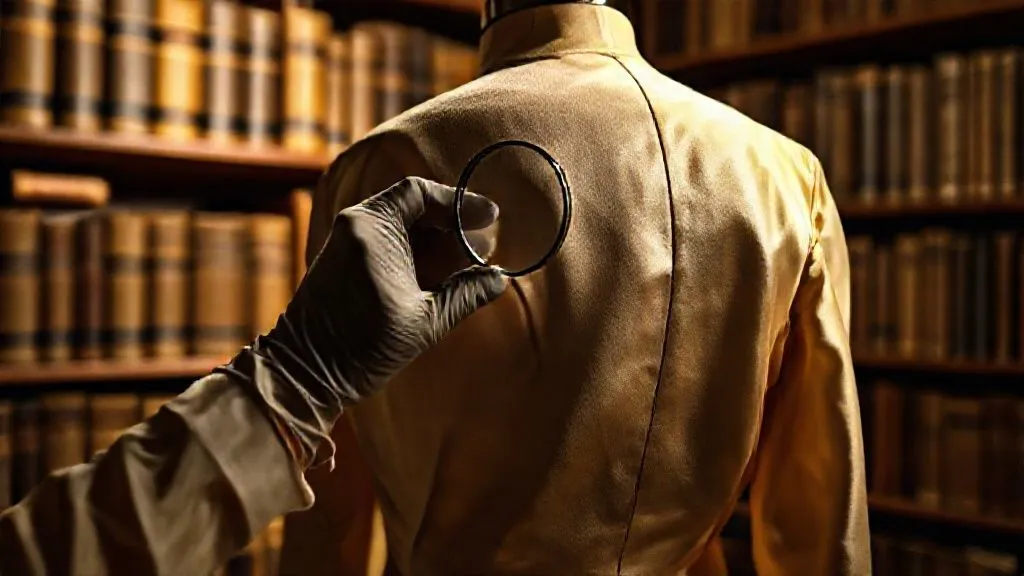
Jeweler's Loupe or Magnifying Glass (10x-20x magnification): This is arguably your most crucial physical tool. It allows for an incredibly close inspection of details that are invisible to the naked eye, offering irrefutable clues about a garment's age and construction.
Use it to examine stitching: Are the stitches consistent? Do they show the slight imperfections of hand-sewing, or the perfect uniformity of modern industrial machines? Look for thread type – pre-1960s, natural fibers like cotton or silk were dominant, while synthetics like polyester became prevalent later. I've often identified a modern repair on an otherwise vintage garment by a single polyester thread glowing under UV light, visible only with the loupe.
-
UV Light (Blacklight): A small, handheld UV flashlight can be a game-changer. Many modern fibers, dyes, and glues fluoresce brightly under UV light, while older, natural materials and dyes typically do not.
This is particularly effective for detecting modern repairs, fabric stabilizers, or even the tell-tale glow of optical brighteners used in modern detergents and fabric finishes. A true vintage white linen, for instance, will appear dull under UV, whereas a modern bleached white will often glow a stark blue-white.
-
Flexible Measuring Tape: While seemingly basic, a flexible tailor's tape is indispensable for comparing garment dimensions against historical sizing charts. Vintage sizing is notoriously different from contemporary sizing; a vintage size 10 might be closer to a modern size 2 or 4.
Accurate measurements also help identify if a garment has been significantly altered or "sized up" by a previous owner, which can impact its authenticity and value. Always measure flat, seam-to-seam, and compare against known period standards.
-
Fabric Swatch Reference Book or Kit: Developing a tactile understanding of period-specific fabrics is paramount. While not always a 'tool' you carry, a well-studied collection of fabric swatches from different eras (e.g., rayon crepe from the 1930s, barkcloth from the 1940s, crimplene from the 1960s) will train your fingers and eyes.
The drape, weight, and hand-feel of genuine vintage fabrics are distinct. Modern blends often mimic the look but rarely replicate the exact tactile experience of their historical counterparts, which a seasoned expert can discern almost instantly.
Intellectual Resources and Digital Archives
-
Specialized Online Databases and Digital Archives: The internet, when used judiciously, is an unparalleled resource. Institutions like the Metropolitan Museum of Art, the Victoria and Albert Museum, and various university fashion archives offer extensive digital collections.
These databases allow you to search for specific designers, fashion eras, or garment types, providing high-resolution images and detailed descriptions of authenticated pieces. I regularly use these to cross-reference design elements, construction methods, and fabric patterns against items I'm examining in person.
-
Curated Library of Fashion History Books: While digital resources are vast, there's no substitute for a well-stocked physical library. Comprehensive books on fashion history, specific designers, textile history, and costume construction offer deep dives into the nuances of different eras.
These texts often provide context on manufacturing techniques, social influences on design, and the evolution of silhouettes that online searches might miss. I've found books like "Fashion: The Definitive History of Costume and Style" or specialized texts on haute couture to be invaluable.
-
Reputable Vintage Retailer Websites and Auction Houses: While not authentication tools themselves, these platforms serve as excellent visual reference libraries. High-end vintage retailers and auction houses often employ their own experts to authenticate items before listing them.
By studying their detailed descriptions, high-quality photographs, and often specific authentication notes, you can develop a mental catalog of what an authenticated piece from a particular era or designer *should* look like, down to the labels, hardware, and construction.
Ultimately, true vintage authentication is a blend of scientific observation and historical knowledge. Each tool, whether a loupe or a museum archive, contributes a vital piece to the puzzle, allowing you to build an unshakeable case for a garment's genuine provenance.
Frequently Asked Questions (FAQ)
When delving into the fascinating world of vintage fashion, particularly when it comes to authenticating a true silhouette from a modern replica, I find that a few key questions consistently arise. My 15+ years in this niche have shown me that a deep understanding of these nuances is what truly separates the novice from the seasoned collector.What's the most common mistake beginners make when trying to authenticate vintage silhouettes?
In my experience, the single biggest pitfall is an over-reliance on a single, easily replicated feature. For instance, many beginners might spot a metal zipper and immediately assume a garment is 1940s or 50s. While metal zippers were indeed prevalent then, they are also readily available today and often used in modern "vintage-inspired" garments, or even as replacements on truly vintage pieces. Authenticity is never about one detail; it's about a symphony of clues.
"A true vintage garment doesn't whisper its age; it sings it through every seam, every fiber, and every subtle imperfection."
How do I effectively authenticate a garment if it has no labels or tags?
This is where your expertise truly shines, and it's a skill I've honed over decades. When labels are absent, you become a detective, piecing together evidence from the garment's intrinsic qualities. Focus on these critical areas:
- Construction Techniques: Examine the seams. Are they French seams, pinked seams, or serged? Serging, for example, became widely common from the late 1960s/early 70s onwards. Earlier pieces often feature hand-finishing, bound seams, or meticulously pressed open seams.
- Fabric Hand and Weave: True vintage fabrics often possess a unique 'hand' – a feel, drape, and weight that differs from modern synthetics or even natural fibers produced today. Look for natural fiber content (silk, wool, cotton, linen) with period-appropriate weaves. Older rayon, for instance, feels distinctly different from modern rayon.
- Hardware: Beyond zippers, scrutinize buttons, buckles, and clasps. Are the buttons Bakelite, early plastics, shell, or wood? Do they show signs of age-appropriate wear? Metal hardware often has a different patina or construction than contemporary versions.
- Overall Silhouette and Cut: Does the garment's cut genuinely align with the anatomical ideals of a specific era? For example, a true 1950s circle skirt will have a specific waist-to-hip ratio and fullness that modern pattern-making often struggles to replicate authentically without looking forced.
Are there certain eras or garment types that are particularly challenging to authenticate?
Absolutely. The 1920s can be notoriously difficult. Many garments from this era, especially flapper dresses and undergarments, were often handmade or produced by smaller, unbranded ateliers. Their simpler, less structured silhouettes mean fewer distinct construction markers compared to, say, a heavily tailored 1940s suit. Similarly, unbranded daywear from any era can pose a challenge. Another tricky period is the late 1960s to early 1970s, a time of rapid stylistic change and the early adoption of new synthetic fabrics, making it harder to discern between genuine vintage and very early "vintage-inspired" pieces without extensive fabric knowledge.
To overcome this, I recommend immersing yourself in period fashion plates, catalogs, and actual museum collections to train your eye on the subtle nuances of these challenging eras. It's about building a mental library of authentic examples.
Beyond visual cues, what 'intangible' factors should I consider when evaluating a piece's authenticity?
While tangible details are paramount, 'intangible' factors often provide crucial supporting evidence. One such factor is provenance – the documented history of ownership. A garment from a reputable estate sale with a known history, even if anecdotal, adds significant weight to its authenticity. Another is the seller's reputation. A dealer with years of experience and a track record of selling genuine vintage is often a safer bet than an unknown online seller offering suspiciously low prices. Finally, there's the 'gut feeling.' After years of handling vintage, you develop an instinct. If something feels "off" – perhaps the fabric drapes too perfectly, or the colors are too vibrant for its supposed age – it's always worth a second, deeper look. Trust your instincts, but always back them up with concrete evidence.
What are the most common tells of a modern replica attempting to mimic vintage?
After more than a decade and a half immersed in the world of vintage fashion, I've developed a keen eye for the subtle deceits of modern replicas. These pieces, while often charming, rarely stand up to the scrutiny of an experienced collector. My journey has taught me that discerning an authentic vintage garment from a contemporary homage requires more than a passing glance; it demands a deep understanding of historical manufacturing practices and material science. One of the most immediate indicators I look for is the **fabric composition and hand**. Modern textiles, even those attempting to mimic vintage, often lack the specific weight, weave, and fiber content that define true period garments. A 1950s wool coat, for instance, will possess a specific heft and a dense, almost 'alive' texture that modern wool blends rarely replicate.- Fiber Content: Always check labels, but more importantly, trust your touch. Natural fibers like cotton, wool, silk, linen, and true rayon were dominant. The presence of significant polyester or spandex in garments claiming to be pre-1970s is an immediate red flag.
- Weave and Texture: Vintage fabrics often exhibit more character, a less uniform weave, and a distinct 'hand' or feel. Look for subtle slubs in cottons or the distinctive, fluid drape of earlier rayon crepes.
- Weight and Drape: Genuine vintage items often feel heavier and drape differently due to denser weaves and the inherent qualities of natural fibers. Modern replicas frequently skimp on fabric weight to cut costs.
"Authenticity often lies in the details you don't immediately see – the hidden seams, the quality of the stitching, the deliberate craft that went into making a garment last."
- Seam Finishes: Look for meticulously executed **pinked seams**, **French seams**, or **bound seams**. The ubiquitous modern serged seam is a strong indicator of post-1970s manufacturing, especially on higher-end pieces.
- Stitching: Observe the stitch length and consistency. Older machines often produced slightly less uniform stitches, but they were generally robust. Replicas might have overly perfect, tiny stitches or, conversely, very poor, loose ones.
- Buttonholes: Authentic vintage buttonholes, particularly before the 1960s, were often hand-sewn or machine-stitched with a distinct, often thicker thread and a different construction than modern machine buttonholes. Keyhole buttonholes were common on tailored pieces.
- Hemming: Hand-stitched hems are a hallmark of quality vintage, especially before the widespread adoption of blind-hemming machines.
- Zippers: **Metal zippers** (brass, steel, aluminum) are characteristic of pre-1960s garments. Look for specific brand names like **Talon**, **Conmar**, **Crown**, or **Scovill** stamped on the pull or slider. Plastic zippers became common in the late 1960s and 70s.
- Buttons: Authentic vintage buttons often have a different weight and feel. Early plastic buttons (Bakelite, Lucite, urea) possess a distinct quality. Natural materials like shell, bone, or wood were also prevalent and have a different texture than modern plastic.
- Buckles and Clasps: Examine the material and construction. Many modern buckles are lightweight, flimsy plastic or poorly cast metal, lacking the substantial feel of their vintage counterparts.
- Font and Design: Vintage labels often used specific typefaces, sometimes embroidered, printed, or woven with a distinct character. Replicas frequently use generic modern fonts or poorly simulated vintage styles.
- Material: Early labels were typically woven cotton, silk, or rayon. They tend to soften with age. Modern replica labels can feel too stiff, new, or synthetic.
- Information: Look for **"Union Made"** tags (especially in US garments), country of origin (e.g., "Made in U.S.A." before the 1970s), and the absence of modern care symbols or precise fiber content percentages, which became standard post-1970s.
- Attachment: How is the label sewn in? Hand-tacked or machine-stitched in a manner consistent with the era and quality of the garment.
- Proportions: Vintage garments often feature distinct waistlines, shoulder widths, and sleeve cuts that subtly differ from modern ready-to-wear. For instance, a 1940s shoulder might be quite structured, while a 1950s waist is often cinched higher and tighter.
- Volume and Flow: Skirts from the 1950s, for example, often used significantly more fabric to achieve their full swing than modern interpretations, which might skimp on yardage.
- Natural Wear: While pristine deadstock vintage exists, a garment claiming to be 70 years old with absolutely no signs of wear, no softening of the fabric, or no subtle fading, can often be suspicious. Authenticity often comes with a story, told in its gentle imperfections.
- Odor: This is a surprisingly strong tell. Authentic vintage often carries a faint, unique scent – sometimes a subtle mustiness, a scent of old fabric, or even a lingering perfume. Replicas will smell new, of modern detergents or factory chemicals.
How do fabric composition and stitching techniques differ significantly between eras?
When examining vintage textiles, the very fibers and threads tell a profound story, acting as silent witnesses to their era. In my experience, understanding the evolution of fabric composition and stitching techniques is arguably the most crucial step in distinguishing an authentic vintage piece from a modern reproduction.Before the mid-20th century, the textile landscape was dominated by **natural fibers**. Think luxuriant silks with a substantial hand-feel, often heavier and less prone to the sheerness we see in many modern silks. Wool, too, presented in a broader array of textures—from robust tweeds to fine gabardines—each possessing a distinct, unprocessed character that's often absent in today's highly refined versions.
Cotton, another cornerstone, was frequently woven with a denser, tighter count, offering a more structured drape. Early mercerized cottons, popular for their subtle sheen, can sometimes be mistaken for silk by the untrained eye. Even linen, a timeless summer staple, often exhibits a more pronounced slub and a crispness that speaks to its natural origins.
The 1920s saw the emergence of **rayon**, sometimes affectionately called "poor man's silk." Early rayon, though synthetic, mimicked silk's drape beautifully but often felt cooler and heavier. A common mistake I see is buyers dismissing a piece as modern due to a synthetic label, unaware that early synthetics like rayon and acetate have their own vintage lineage and unique tactile qualities distinct from later polyesters.
"The tactile experience of vintage fabric is often unparalleled; it breathes, drapes, and ages differently. Modern fabrics, especially synthetics, tend to have a uniform slickness or a rigid resistance that betrays their newness."
Post-1950s, the textile world was revolutionized by **petroleum-based synthetics** like nylon, polyester, and acrylic. While these offered durability and easy care, they often lack the breathability and natural aging process of their predecessors. Modern replicas frequently utilize these contemporary synthetics, which can feel slick, less substantial, or exhibit a subtle plastic-like sheen compared to true vintage. Learning to differentiate the specific "hand" of these materials is paramount.
Moving from the warp and weft to the needle and thread, **stitching techniques** offer an equally telling narrative. Early 20th-century garments, particularly those of higher quality, often boast a meticulousness in construction that is rarely found in mass-produced items today. This attention to detail is a hallmark of authenticity.
-
Stitch Count and Precision: Vintage garments frequently exhibit a higher number of stitches per inch (SPI). This denser stitching creates stronger, more refined seams that resist puckering and tearing. Modern fast fashion, in contrast, prioritizes speed, often resulting in lower SPI and less durable seams.
-
Seam Finishes: Look for **French seams** on delicate fabrics like silk chiffon, where raw edges are fully enclosed, indicating superior craftsmanship. **Bound seams**, often found on unlined jackets or coats, using a contrasting fabric strip, are another sign of quality. Even simple **pinked seams**, a zigzag edge to prevent fraying, were a common and effective finish on many vintage pieces.
-
Hems: Hand-stitched hems were a standard of quality for decades, even on machine-sewn garments. The invisible ladder stitch, where individual stitches are barely perceptible, is a clear indicator of a garment intended to last and be admired.
-
Buttonholes: Before the widespread adoption of specialized industrial machines, **hand-bound buttonholes** were a mark of high-end tailoring, particularly before the 1950s. Their precise, corded edges are distinct from the machine-stitched versions prevalent today.
-
Zippers: The humble zipper also holds clues. Early zippers, often metal and heavier, frequently bear brand names like 'Talon' or 'Conmar' and may have a different tooth structure. Their placement, often on the side or back with a placket, differs from the center-back plastic zippers common in modern dresses.
In contrast, modern mass production relies heavily on **serged or overlocked seams** for efficiency. While functional, these finishes, with their characteristic looped edge, are generally less refined than the enclosed or bound seams of quality vintage wear. The thread itself can offer clues; vintage garments often used cotton or silk threads, while modern pieces almost exclusively use stronger, synthetic polyester threads.
To truly master this, I encourage you to become a tactile detective. Feel the weight, examine the seams with a magnifying glass, and compare them against known authentic pieces. The subtle differences in the way a thread lies or a fabric drapes are the key to unlocking a garment's true history.
Are there specific vintage brands or eras that are notoriously difficult to authenticate?
In my fifteen years navigating the intricate world of vintage fashion, I've certainly encountered my share of authentication puzzles. Yes, there are absolutely specific vintage brands and eras that are notoriously more challenging to authenticate, often due to a confluence of factors ranging from production methods to sheer market demand for replicas.
One of the most elusive periods, in my experience, is anything **pre-1920s**, particularly Victorian and Edwardian garments. These pieces often predate standardized labeling practices, meaning many beautiful, high-quality garments were custom-made or produced by small, local dressmakers without any brand identification. Authenticating these relies almost entirely on a deep understanding of period-specific construction techniques, fabric weaves, and silhouette nuances, rather than a tag.
Moving forward, the **1960s and 1970s** present a different kind of difficulty, especially for mass-market fashion. This era saw an explosion of ready-to-wear and fast-fashion trends, leading to countless manufacturers producing remarkably similar styles. Without distinctive branding, distinguishing a high-quality, period-accurate piece from a contemporary copy or even a lower-tier original can be a subtle art, demanding meticulous examination of seam finishes, zipper types, and fabric composition.
However, when it comes to specific brands notoriously targeted by counterfeiters, a few stand out, particularly from the **late 1980s through the early 2000s**. This period marked the rise of the "it" bag and overt logomania, creating a massive demand that fueled an equally massive, and increasingly sophisticated, replica market.
-
Louis Vuitton Monogram and Damier Canvas: The sheer volume of counterfeits, some incredibly well-made, makes authenticating vintage Louis Vuitton challenging. Early fakes were often crude, but by the mid-90s, the quality of replicas improved dramatically, mimicking hardware, stitching, and even leather aging. You need to know specific date codes, hardware markings, and the subtle texture of the canvas itself.
-
Chanel Costume Jewelry (1980s-90s): Vintage Chanel jewelry, especially pieces from the Victoire de Castellane era, is highly coveted. The problem lies in the varying quality of genuine pieces from different production runs and the existence of extremely good fakes that replicate the weight, plating, and even the "made in France" stamps. I've seen pieces so convincing they fooled seasoned dealers initially.
-
Burberry Nova Check Items (1980s-90s): The iconic Burberry check became a global phenomenon, leading to its widespread appropriation and replication. From scarves to trench coats, countless counterfeit items flooded the market. Authenticating requires a deep dive into the precise check pattern (spacing, color saturation), label fonts, and the quality of the wool or cotton used, as replicas often use inferior, less dense fabrics.
The core challenge with these brands and eras stems from the fact that many replicas aren't just poor imitations; they are often **deliberate, high-quality fakes** designed to deceive. They might use similar materials, replicate stitching patterns, and even forge labels with impressive accuracy. This is where a holistic approach, looking beyond just the label, becomes paramount.
A common mistake I see is relying solely on a single authentication point, like a date code or a specific hardware stamp. True authentication for these difficult pieces demands a comprehensive evaluation of every detail: the overall silhouette, the drape of the fabric, the quality and type of all hardware, the consistency of stitching, and the specific nuances of the brand's unique construction methods for that particular era.
In the realm of notoriously difficult vintage pieces, your best ally isn't a single checklist, but a cultivated eye that understands the subtle language of craftsmanship, material integrity, and historical context. It’s about feeling the story in the seams.
Reading Recommendations:
- Thrift Store Gold: 7 Quick Ways to Spot Undervalued Vintage Gems
- Runway Photography Redefined: Deliver High-Quality Images Quickly
- 7 Proven Strategies: How to Mitigate Financial Risks at Luxury Fashion Week
- Find Your Perfect Hat: The Ultimate Guide to Choosing the Right Style for Your Face Shape
- Slash Kids' Character Apparel Dead Stock: 7 Expert Strategies
Key Points and Final Thoughts
After dissecting the nuances of vintage silhouettes, it's crucial to remember that true authentication is less a rigid checklist and more an art form honed by experience. In my over 15 years in this field, I've seen countless enthusiasts make rapid progress once they shift their mindset from mere identification to genuine historical appreciation.
A common pitfall I observe is an overreliance on a single tell-tale sign. While a specific zipper or label can be highly indicative, authenticating a piece demands a holistic evaluation. Every detail—fabric weave, stitching technique, button material, and construction method—must align to paint a cohesive picture of its era.
This holistic approach eventually cultivates what I call the "vintage sixth sense." It's that moment when you pick up a garment and an instinctive feeling, born from years of comparison and study, tells you its story even before a deep dive into the specifics. Trust this growing intuition; it's a powerful tool.
Don't be disheartened by initial misidentifications. Each error is an invaluable lesson. I recall a time early in my career where I confidently authenticated a 1940s suit based solely on its silhouette, only to later discover it was a meticulously crafted 1980s revival piece due to the synthetic lining and machine-finished buttonholes. It taught me the profound importance of examining internal construction.
In vintage, the inside often tells a more honest story than the outside. A seemingly perfect exterior can mask modern shortcuts in seam finishes or interfacing, revealing a replica's true age.
To truly master the craft, here are my final actionable recommendations:
Document Your Finds: Keep a journal or digital archive of pieces you've authenticated, noting key indicators. This builds your personal reference library and sharpens your observational skills.
Handle Everything: Don't just look; touch, feel, and examine construction. Physical interaction is crucial for developing a tactile memory of authentic materials and traditional techniques.
Visit Museums & Archives: Study actual period garments from the inside out. There's no substitute for seeing original construction, fabric aging, and finishing details up close in a preserved context.
Engage with Experts: Join online communities, attend vintage fairs, and don't hesitate to politely ask seasoned dealers about specific pieces. Most are happy to share their knowledge and insights.
Ultimately, the journey of authenticating vintage is a rewarding one that deepens your connection to fashion history. It's about more than just owning an old garment; it's about preserving a piece of the past and understanding the craftsmanship that defined an era. Keep practicing, keep learning, and most importantly, keep enjoying the hunt.

Your email address will not be published. Required fields are marked *