

How to Authenticate Rare 1950s Couture Garments for Resale?
After two decades immersed in the vibrant, sometimes treacherous, world of vintage couture, I've witnessed both the exhilarating triumph of discovering a genuine masterpiece and the crushing disappointment of a sophisticated forgery. The 1950s, in particular, represent a golden age of haute couture, a period of unparalleled craftsmanship, revolutionary silhouettes, and iconic designers whose names still resonate today. Yet, the very rarity and desirability of these garments make them prime targets for unscrupulous individuals.
The challenge for resellers isn't just identifying a beautiful dress; it's confirming its authenticity, ensuring that what you believe to be a rare Christian Dior or Balenciaga is indeed the real deal. The financial stakes are high, and more importantly, your reputation as a trusted vintage dealer hangs in the balance. Without a rigorous authentication process, you risk not only monetary loss but also damaging the trust you've built with your clientele.
In this comprehensive guide, I will share the distilled wisdom of my years in the trenches, offering a definitive, step-by-step framework on how to authenticate rare 1950s couture garments for resale. We'll delve into the nuanced details, from the invisible stitches to the forgotten histories, providing you with the expert insights and actionable strategies needed to confidently identify, value, and successfully resell these magnificent pieces of fashion history.
The Indispensable Role of Provenance Research
In my experience, the first and often most crucial step in authenticating any rare vintage couture piece is establishing its provenance. Provenance is essentially the garment's documented history of ownership, a verifiable chain of custody that can speak volumes about its authenticity and value. Without a solid story behind the dress, even the most convincing construction can leave room for doubt.
Tracing Ownership and Origin
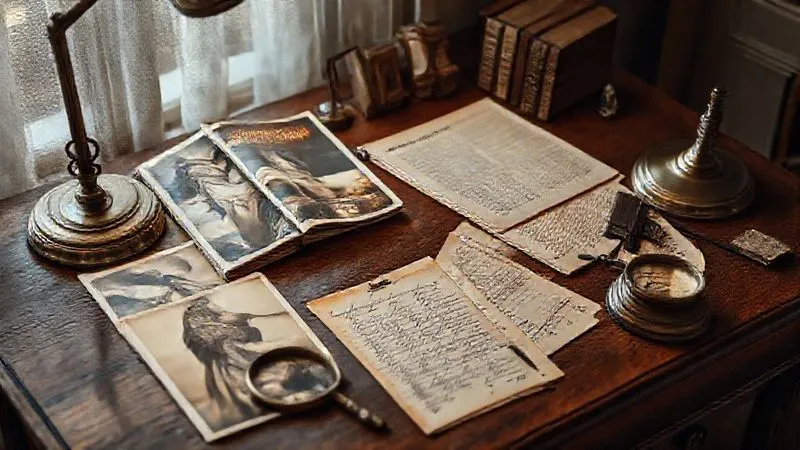
Start by asking the seller for any information they have regarding the garment's history. Who owned it? Where was it acquired? Were there any notable events associated with its wear? While anecdotal evidence is a starting point, always seek tangible proof. Look for old receipts, letters, photographs, personal diaries, or even newspaper clippings that feature the garment or its original owner. These documents provide invaluable context and can often confirm the garment's age and origin.
Deciphering Historical Documentation
Beyond direct ownership, research the designer's collections from the specific era. Fashion archives, museum collections, and historical fashion publications like Vogue, Harper's Bazaar, and L'Officiel from the 1950s are treasure troves of information. Cross-reference the garment's design, fabric, and construction details with documented pieces from the designer's collections. Sometimes, a specific collection number or style name can be found within the garment itself, which can then be matched to archival records. This meticulous cross-referencing is a hallmark of true expertise.
Case Study: The 'Lost Balenciaga' Gown and the Power of Provenance
I recall a particularly challenging piece: a stunning, seemingly authentic Balenciaga evening gown from 1955. It had all the hallmarks – the silhouette, the fabric, the meticulous hand-finishing. However, the label was missing. The seller claimed it was a family heirloom, but provided no documentation. My initial instinct was caution. We began a deep dive into provenance. Through painstaking research, cross-referencing family archives with auction records and exhibition catalogues, we discovered a photograph of the seller’s grandmother wearing an identical gown at a society event in 1956, published in Vogue. Further, a handwritten note from the grandmother’s diary mentioned a 'fitting at Balenciaga' that year. This irrefutable chain of evidence, pieced together from disparate sources, not only authenticated the garment but significantly increased its market value, turning a questionable item into a verified masterpiece. This resulted in a successful resale that far exceeded initial expectations, proving that sometimes, the story behind the dress is as valuable as the dress itself.
"Provenance isn't just a story; it's a verifiable timeline that breathes life and authenticity into a garment, often elevating its value far beyond its material worth."
Deconstructing the Label: Signature, Era, and Evolution
The designer label is often the first point of authentication, but it can also be the easiest to fake. A true expert understands that a label isn't just a name; it's a historical artifact in itself, reflecting the brand's identity, the era of production, and even the specific salon or collection.
Identifying Authentic Couture Labels (e.g., Dior, Chanel, Balenciaga)
Each major couture house in the 1950s had distinct label characteristics. For example, early Christian Dior labels often featured a specific font and layout, sometimes accompanied by a separate serial number tag or collection number. Balenciaga labels frequently included the Parisian salon address. Chanel, after its post-war reopening in 1954, adopted specific label styles for its new collections. Familiarize yourself with these subtle nuances, as even a slight deviation can be a red flag. I've spent countless hours poring over museum archives, comparing label variations across documented pieces to build my internal database of these details.
Understanding Label Variations Over Time
Designers often updated their labels over the years. A label from 1950 might look different from one in 1959, even from the same house. These changes can be subtle – a different font, a change in material (e.g., silk vs. cotton), or the inclusion/exclusion of specific text like 'Made in France.' Understanding these evolutions is critical. A garment with a label style that doesn't match its purported year of creation is highly suspect. This requires deep historical knowledge, not just a passing familiarity with brand names.
The Significance of Union Labels and Serial Numbers
Beyond the designer's main label, look for subsidiary labels. In the United States, the International Ladies' Garment Workers' Union (ILGWU) label was common, and its design changed over the decades, offering another layer of authentication. French couture houses sometimes used specific atelier or workroom numbers. Some designers, like Dior, famously used serial numbers on their haute couture pieces, which could, in rare cases, be traced back to original client orders. These secondary identifiers act as valuable corroborating evidence, cementing the garment's authenticity.
Key Label Characteristics: 1950s Couture Designers
While each designer had unique identifiers, understanding common characteristics across major houses is crucial:
| Designer | Era (approx.) | Label Characteristics | Union Label |
|---|---|---|---|
| Christian Dior | 1947-1957 (Dior's lifetime) | White silk label, black script 'Christian Dior - Paris', often with a serial number or collection number stamped on the reverse or a separate small tag. | Typically present (ILGWU or similar, if made for US export). |
| Coco Chanel | 1954-1971 (Post-war revival) | White label, black text 'CHANEL' (often sans-serif), sometimes 'MADE IN FRANCE'. Early post-war labels might be simpler. | Less common on French-made couture, but possible depending on production location. |
| Cristóbal Balenciaga | 1937-1968 (Peak 1950s) | White silk label, black block lettering 'BALENCIAGA' or 'BALENCIAGA PARIS'. Often includes a specific salon address like '10, Avenue George V'. | Yes, for items produced in specific regions for export. |
| Hubert de Givenchy | 1952 onwards | White or black label, 'GIVENCHY' or 'GIVENCHY PARIS' in various elegant fonts. Early labels might be more understated. | Yes, depending on destination market. |
Unveiling Craftsmanship: Construction Techniques of the Golden Age
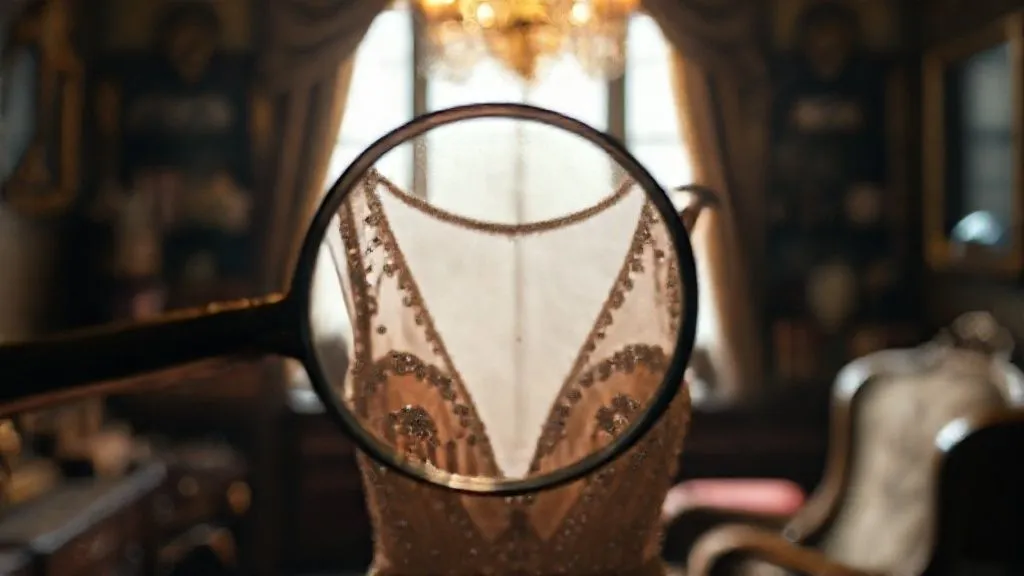
This is where the true detective work begins, delving into the very DNA of the garment. 1950s haute couture was defined by an almost obsessive attention to detail, much of which was hidden from plain sight. Forgeries often fail at replicating this level of internal craftsmanship.
Hand-Finishing and Haute Couture Standards
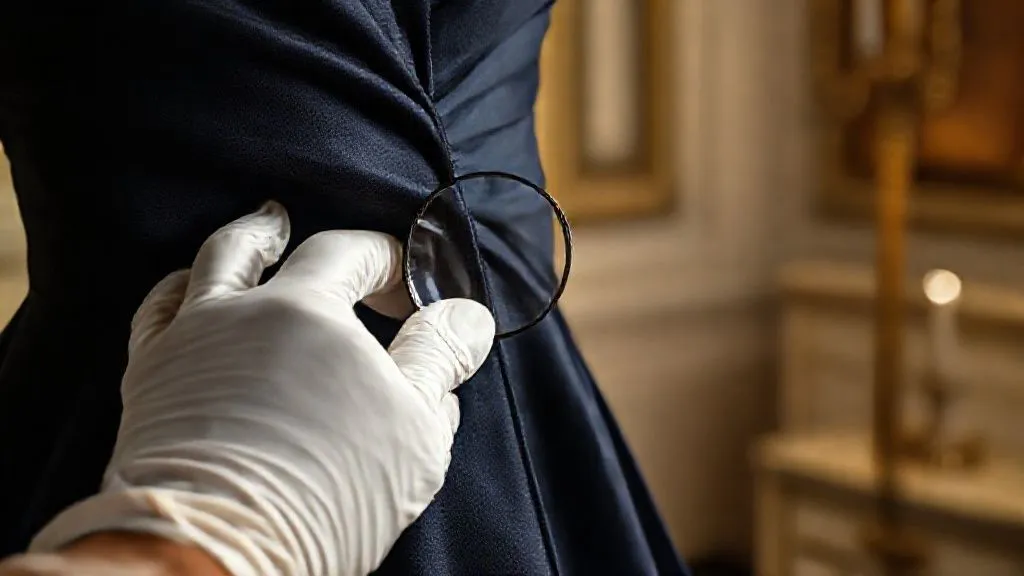
Authentic 1950s couture garments, especially from the major Parisian houses, were largely hand-sewn and hand-finished. This means looking for signs of hand-stitching on hems, linings, closures, and decorative elements. These stitches are often tiny, even, and almost invisible, a testament to the skill of the petites mains (small hands) in the ateliers. Machine stitching, while present for structural seams, would be used judiciously. I always advise my students to turn a garment inside out; the interior can reveal more about its authenticity than the exterior.
Seams, Hems, and Closures: A Masterclass in Detail
Examine the seams. Couture seams are typically meticulously finished, often with bound edges, French seams, or Hong Kong seams, preventing fraying and ensuring durability. Hems are usually hand-stitched, often weighted with chain or horsehair braid to ensure a perfect drape. Closures – zippers, hooks and eyes, snaps – should be period-appropriate. Early 1950s garments might feature metal zippers (often Talon or Conmar in the US) or even hook-and-eye closures, while later in the decade, nylon zippers became more common. The quality of these components and their application is a major indicator.
Inner Workings: Linings, Interfacings, and Boning
The structural integrity of 1950s couture was paramount. Look at the lining; it should be perfectly integrated, often of high-quality silk or crepe, and hand-stitched. Many 1950s dresses and suits featured complex internal structures, including integrated corsetry, boning (often spiral steel or plastic), and extensive interfacing to create those iconic hourglass or architectural silhouettes. These internal elements are incredibly difficult and costly to replicate convincingly in a fake. A genuine couture piece often feels like a second skin, perfectly molded to the body, even when laid flat.
"The true mark of 1950s haute couture isn't just what you see on the outside, but the invisible artistry within – the hand-stitching, the complex internal architecture, and the meticulous finishing that speaks of countless hours of dedicated craftsmanship."
Fabric and Materials: The Touch and Feel of True Vintage
The quality of materials used in 1950s couture was unparalleled, a stark contrast to much of today's fast fashion. Identifying period-appropriate textiles, their specific weave, and how they age is a critical skill for authentication.
Identifying Period-Appropriate Textiles (silk, wool crepe, brocade, etc.)
Couture houses of the 1950s primarily worked with natural fibers: luxurious silks (duchesse satin, shantung, taffeta, organza), fine wools (crepe, gabardine, bouclé), rich brocades, velvets, and high-quality cottons for daywear. Synthetic fibers were just beginning to emerge but were rarely used for high-end couture, especially in the early part of the decade. Learn to identify the look and feel of these specific materials. A heavy, fluid silk crepe has a different drape and texture than a modern synthetic blend.
Quality, Drape, and Weight
Beyond the fiber content, assess the quality of the fabric itself. Couture fabrics were often custom-milled, heavier, and more substantial than their ready-to-wear counterparts. They have a distinct drape and hand (how they feel to the touch). A 1950s wool suit, for example, will typically feel dense and luxurious, with a beautiful fall, unlike a lighter, modern wool blend. The integrity of the weave, the richness of the dye, and the overall resilience of the material are key indicators.
The Patina of Age vs. Artificial Wear
Authentic vintage garments will exhibit a natural patina of age. This might include slight fading, minor wear consistent with gentle use, or a subtle softening of the fabric. However, be wary of signs of artificial aging, such as deliberately distressed areas, chemical treatments to mimic wear, or forced discoloration. A garment that looks too 'perfectly' aged or, conversely, too 'new' despite its purported age, should raise suspicion. Understanding how various fabrics naturally age over 70 years is crucial. For further reading on textile history and identification, I highly recommend consulting resources like The George Washington University Museum and The Textile Museum.
Design Silhouettes and Period Accuracy
The 1950s were a period of revolutionary change in fashion silhouettes, driven by designers like Christian Dior and his 'New Look.' Understanding the defining shapes of the decade is essential for spotting anachronisms.
Iconic 1950s Silhouettes (New Look, sheath, wiggle)
The decade began with the enduring influence of Dior's New Look: rounded shoulders, cinched waists, and full, voluminous skirts. As the decade progressed, other iconic shapes emerged, such as the sleek, form-fitting 'sheath' dress, the pencil-skirted 'wiggle' dress, and the more relaxed 'sack' dress towards the very end of the 50s. A genuine 1950s couture piece will perfectly embody one of these dominant silhouettes, reflecting the designer's interpretation of the era's aesthetic. Study these forms meticulously.
Anachronisms: Spotting Out-of-Place Details
Anachronisms are often subtle but are tell-tale signs of a fake or misidentified garment. This could be a zipper type that wasn't invented until the 1960s, a fabric blend that didn't exist in the 50s, or a silhouette that is distinctly 1970s trying to pass as earlier. Even minor details, like the width of a lapel, the style of a button, or the exact placement of a dart, can be incorrect for the period. These small discrepancies, when accumulated, paint a clear picture of inauthenticity. My advice: trust your gut, but verify with historical references.
"Every seam, every button, every silhouette tells a story. In 1950s couture, these stories must align perfectly with the historical narrative of the era and the designer's known aesthetic."
Condition Assessment and Restoration Considerations
While not strictly part of 'authentication,' understanding condition is vital for resale and often informs the authentication process itself. A garment's condition can reveal its history and impact its perceived authenticity and value.
Evaluating Wear and Tear
Carefully inspect the garment for any damage: tears, holes, stains, fading, or stress on seams. While minor imperfections are common and expected in vintage items, significant damage can drastically reduce value. Assess if the wear is consistent with the garment's age and purported usage. Excessive wear in unusual places might suggest a garment has been altered or repurposed, or even that it's a reproduction that has been deliberately aged.
Professional Restoration vs. DIY
Some minor damage can be professionally restored, but this requires a skilled conservator specializing in textiles. Improper repairs or DIY attempts can further devalue a garment and even obscure original construction details that are crucial for authentication. A high-quality restoration, however, can enhance both the aesthetic appeal and the market value, provided it's done sensitively and documented thoroughly. Always disclose any known repairs to potential buyers.
Impact on Resale Value
The condition directly impacts resale value. A pristine, museum-quality piece will command a premium, while a garment with significant flaws, even if authentic, will fetch considerably less. When authenticating for resale, you must consider not just if it's real, but also its market viability given its state. Sometimes, a heavily damaged but extraordinarily rare piece might still be valuable for study or display, but its wearability and retail price will be affected.
Leveraging Expert Opinion and Digital Tools
Even with extensive personal knowledge, there are times when an additional layer of verification is prudent. The vintage fashion community is rich with resources and expertise.
When to Consult a Professional Appraiser
For extremely rare, high-value pieces, or when you encounter conflicting information, I strongly advise seeking the opinion of a professional vintage couture appraiser or conservator. These individuals have specialized knowledge, access to private archives, and often a network of contacts that can provide definitive answers. Their expertise can provide peace of mind and, crucially, a certified valuation that is indispensable for insurance or high-end resale. This is an investment that protects your investment.
Online Databases and Forums for Research
The digital age offers incredible research tools. Explore online museum databases, university fashion archives, and reputable vintage fashion forums. Websites like The Metropolitan Museum of Art's Costume Institute collection or the Victoria and Albert Museum's fashion archives are invaluable resources for visual comparisons and historical context. Engage with knowledgeable communities online, but always cross-verify information. Remember, not all online advice is expert advice. For academic insights into fashion history, platforms like JSTOR can be incredibly useful.
The Final Verdict: Compiling Your Authentication Report
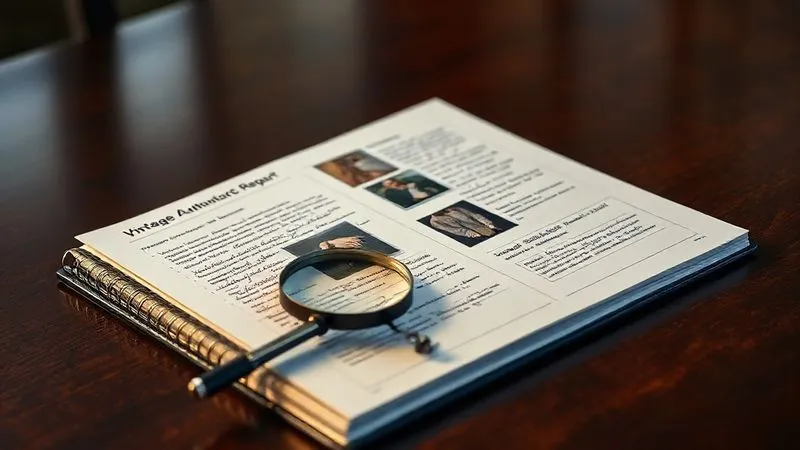
Once you've meticulously gathered all your evidence, the final step is to compile a comprehensive authentication report. This document not only solidifies your findings but also serves as a crucial asset for resale, building trust with potential buyers.
- Document Provenance: Include all verifiable history of ownership, original receipts, photographs, or any other historical documents.
- Detail Label Analysis: Photograph all labels (designer, union, size, care) and describe their characteristics, comparing them to known authentic examples.
- Describe Construction: Provide a detailed account of internal and external construction, highlighting hand-finishing, seam types, closures, and internal structures.
- Analyze Fabric and Materials: Identify fiber content, weave, and quality, noting its period appropriateness and any signs of natural aging.
- Confirm Silhouette Accuracy: Explain how the garment's design aligns with 1950s fashion trends and the specific designer's aesthetic.
- Assess Condition: Provide an honest and thorough evaluation of the garment's condition, noting any repairs or areas of wear.
- Include Expert Opinions: If consulted, attach any reports or statements from professional appraisers or conservators.
"A truly comprehensive authentication process is like building a legal case for the garment's identity. Every piece of evidence strengthens the argument, turning a mere garment into a verifiable piece of history."
Frequently Asked Questions (FAQ)
Q: What are the most common red flags for fake 1950s couture? A: Common red flags include anachronistic zippers or fasteners, poorly executed hand-stitching (or too much machine stitching where hand-stitching should be), incorrect label fonts or styles for the period, synthetic fabrics trying to pass as natural fibers, and a general lack of the intricate internal construction typical of haute couture. Always be suspicious of a 'too good to be true' price.
Q: Can a garment be authentic 1950s couture without a designer label? A: Yes, it is possible, though significantly harder to authenticate. Some early couture pieces might have lost their labels over time, or were custom-made directly for clients without an attached brand label (though this is rare for major houses). In such cases, provenance, construction quality, fabric analysis, and silhouette accuracy become even more critical. A professional appraiser is highly recommended for unlabeled pieces.
Q: How much does professional authentication typically cost? A: The cost of professional authentication varies widely depending on the appraiser's expertise, the complexity of the garment, and the depth of research required. It can range from a few hundred dollars for a basic assessment to several thousand for a comprehensive report on a high-value, challenging piece. Consider it an investment that protects the value of your asset.
Q: What role does condition play in authentication for resale? A: While condition doesn't directly confirm authenticity, it impacts the garment's overall value and desirability for resale. A piece in excellent condition is easier to sell and commands a higher price, making the authentication investment more worthwhile. Severe damage, even on an authentic piece, can make it difficult to resell, shifting its value towards historical study rather than wearability.
Q: Are there any specific textiles unique to 1950s couture? A: While not entirely unique, certain textiles were highly prevalent and characteristic of 1950s couture. These include heavy duchesse satin, silk shantung, wool bouclé (especially for Chanel suits), silk gazar (pioneered by Balenciaga), and stiff taffetas for dramatic evening gowns. The quality and weave of these textiles were often superior to what is commonly found today.
Key Takeaways and Final Thoughts
- Provenance is Paramount: Always prioritize a verifiable history of ownership.
- Labels are Complex: Understand the subtle evolution of designer and union labels.
- Internal Craftsmanship Reigns: The hidden details of hand-stitching and internal construction are definitive.
- Fabric Tells a Story: Period-appropriate, high-quality textiles are non-negotiable.
- Silhouettes Must Align: Ensure the garment's design accurately reflects 1950s trends.
- Document Everything: A thorough report is your strongest asset for resale.
- Don't Hesitate to Consult Experts: For high-value pieces, professional appraisers offer invaluable certainty.
Authenticating rare 1950s couture garments for resale is an art form, a blend of historical research, textile science, and a keen eye for detail honed by years of experience. It's a journey that demands patience, meticulousness, and an unwavering commitment to integrity. By embracing the strategies and insights I've shared, you're not just verifying a piece of clothing; you're preserving a tangible slice of fashion history and ensuring its legacy continues. Approach each garment with curiosity, rigor, and respect, and you will not only protect your investments but also elevate your standing as a truly knowledgeable and trustworthy purveyor of vintage luxury.
Recommended Reading
- Eco-Kids Apparel: 5 Steps to Green Marketing Without Accusations
- Backstage Rip? 7 Urgent Fixes for Cosplay Costume Emergencies at Shows
- Supplier Ethical Audit Failure? 7 Steps to Remediation & Resilience
- 7 Steps to Authenticate Holistic Ingredient Claims for Your Beauty Brand
- 7 Steps: Evolve Iconic Luxury Fashion Brand Legacies Digitally

Your email address will not be published. Required fields are marked *