

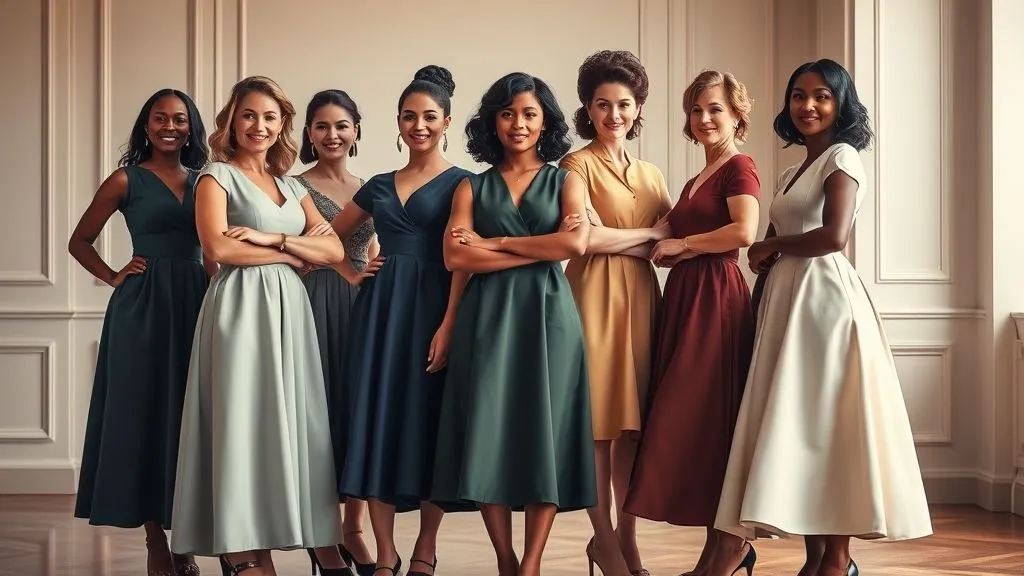
How to Adapt Classic Vintage Silhouettes for Diverse Modern Body Types?
For over 15 years in the vintage fashion industry, I've witnessed countless enthusiasts fall in love with the charm and history of vintage pieces, only to be met with the frustrating reality of fit. It's a common scenario: a stunning 1950s full-skirted dress or a sleek 1930s bias-cut gown catches their eye, but when tried on, it simply doesn't drape or flatter their modern physique as envisioned. This disconnect often leads to beautiful garments languishing in closets or, worse, being passed over entirely.
The core problem lies in historical context. Vintage garments were designed for body ideals and sizing standards of their respective eras, which often differ dramatically from contemporary body types and measurement systems. What flattered a 1920s flapper's boyish frame might overwhelm a modern hourglass, and a 1940s tailored suit, while impeccably constructed, might not accommodate today's broader shoulders or curvier hips. This discrepancy isn't a reflection of your body; it's a testament to fashion's evolving landscape.
But here's the good news: I'm here to tell you that these challenges are entirely surmountable. In this definitive guide, I will share my expert-level strategies, actionable frameworks, and invaluable insights gained from years of working with classic silhouettes. You’ll learn not just *how* to adapt classic vintage silhouettes for diverse modern body types, but *why* certain techniques work, empowering you to confidently integrate timeless style into your contemporary wardrobe, making every piece feel custom-made for *your* unique shape.
Understanding the Historical Context of Vintage Silhouettes
Before we dive into adaptation, it's crucial to appreciate the historical context that shaped these iconic silhouettes. Vintage fashion was never a 'one size fits all' proposition, even in its own time. Each era celebrated distinct body ideals and developed clothing to enhance or create those specific forms.
Think of the 1920s with its straight, dropped-waist flapper dresses designed to de-emphasize curves and create a more boyish, elongated figure. Contrast that with the 1930s, which brought back a more feminine, bias-cut drape that softly skimmed the body, often highlighting the back. The 1940s wartime era introduced broader, padded shoulders, cinched waists, and A-line or pencil skirts, creating a strong, utilitarian yet feminine silhouette. The iconic 1950s 'New Look' celebrated an exaggerated hourglass with tiny waists, full skirts, and structured bodices, while the 1960s ushered in the streamlined shift dress and mod aesthetic, prioritizing a youthful, slender frame.
Understanding these foundational ideals is the first step in successful adaptation. It helps us identify which elements of a vintage piece might clash with a modern body type and, more importantly, which elements can be cleverly manipulated to flatter. This historical lens isn't about rigid adherence; it's about informed transformation, allowing us to respect the garment's past while ensuring its relevance in your present.

The Foundation: Knowing Your Modern Body Type
The journey to successfully adapting vintage silhouettes begins with a profound understanding of your own body. In my experience, many people get hung up on perceived 'flaws' or trying to fit into an outdated ideal. Let me be clear: there is no 'ideal' body type, only *your* unique and beautiful body. The goal here is self-awareness, not self-critique.
Identifying Your Shape: A Quick Guide
While bodies are wonderfully diverse, we often categorize them into general shapes to help guide styling decisions. This isn't about boxing you in, but rather providing a framework:
- Hourglass: Balanced bust and hips with a defined waist.
- Apple: Broader shoulders/bust, fuller midsection, narrower hips.
- Pear: Narrower shoulders/bust, wider hips and thighs.
- Rectangle: Shoulders, waist, and hips are roughly the same width, with little waist definition.
- Inverted Triangle: Broader shoulders/bust, narrower hips.
Beyond general shape, accurately taking your bust, waist, and hip measurements is non-negotiable. These numbers will be your best friends when evaluating vintage pieces, allowing you to quickly determine if a garment has the potential for adaptation or if it's simply not a viable starting point. Remember, a garment can always be taken in, but letting it out is far more challenging, often impossible, if there isn't enough seam allowance.
Strategic Tailoring: Your Best Friend in Vintage Adaptation
If there's one piece of advice I can impart that will revolutionize your vintage wardrobe, it's this: embrace tailoring. For many, tailoring is seen as a luxury, an added expense. But when it comes to vintage, it's an absolute necessity. It's the bridge between a garment that 'almost fits' and one that looks like it was custom-made for you, instantly elevating its perceived value and, more importantly, your confidence.
Key Tailoring Adjustments for Common Vintage Pieces
A skilled tailor can work wonders. Here are some of the most common and impactful adjustments:
- Hemming Dresses, Skirts, and Trousers: The length of a garment dramatically impacts its overall proportion and how it flatters your height and leg line. A vintage dress might hit at an awkward midi length on a petite frame, or trousers might be too long or too short. A simple hem adjustment can transform the entire look.
- Taking in/Letting Out Seams: This is where the magic happens for bust, waist, and hip fit. A dress might fit your bust but be too loose in the waist, or vice-versa. A tailor can expertly adjust side seams, often using existing seam allowances, to sculpt the garment to your exact measurements.
- Sleeve Adjustments: Sleeves can be too long, too wide, or the armholes too restrictive. A tailor can shorten sleeves, narrow them, or even adjust the armhole for better comfort and movement, especially crucial in structured vintage jackets.
- Adding or Adjusting Darts: Darts are the unsung heroes of shaping. They're folds sewn into fabric to give it a three-dimensional shape. A tailor can add new darts or adjust existing ones at the bust, waist, or back to create a more defined silhouette and eliminate excess fabric.
- Shoulder Pad Removal/Addition: Particularly common in 1940s and 1980s vintage, shoulder pads can sometimes feel dated or create an unflattering silhouette on modern bodies. A tailor can often remove them for a softer look or, conversely, add subtle pads to balance narrow shoulders.
A well-tailored vintage piece feels custom-made, elevating its value and your confidence exponentially. It transforms an 'old dress' into a 'timeless statement.'
The Art of Accessorizing: Reshaping and Redefining
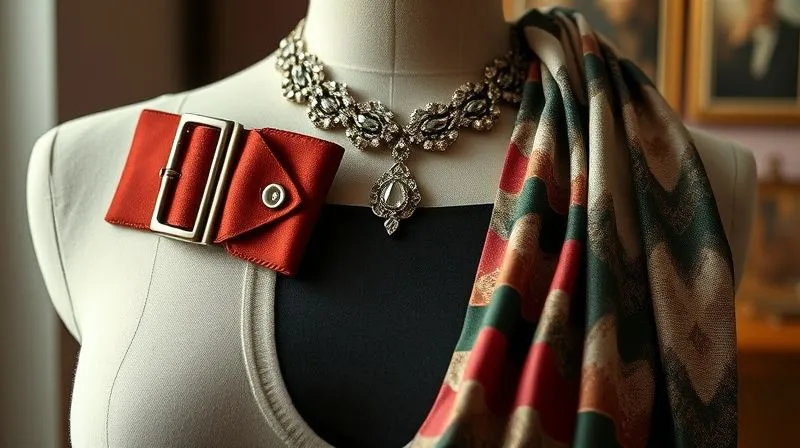
Beyond the fundamental fit, accessories are powerful tools for adapting vintage silhouettes to diverse modern body types. They aren't just afterthoughts; they are strategic elements that can redefine proportions, add emphasis, or subtly shift the visual focus of an outfit. In my years styling, I've seen a simple belt transform an otherwise shapeless vintage piece into a figure-flattering ensemble.
How Accessories Can Transform a Silhouette
- Belts: This is perhaps the most potent tool. A wide cinching belt can instantly create an hourglass silhouette on a straight-cut vintage dress or define a waist on an empire-waisted piece. Experiment with placement – sometimes a belt worn slightly above your natural waist can be more flattering.
- Shapewear: Modern shapewear is a marvel. It can smooth, lift, and subtly enhance your natural curves, providing the perfect foundation for vintage garments that often require a specific under-structure. For example, a 1950s wiggle dress truly shines with the right smoothing shapewear.
- Jewelry: Statement necklaces or earrings can draw attention upwards, away from areas you might want to de-emphasize. Long, vertical necklaces can create an elongating line, which is particularly effective with certain vintage cuts.
- Scarves: A strategically draped scarf can add volume where needed (e.g., around the bust for an inverted triangle shape) or create soft, vertical lines. A silk scarf tied at the waist can mimic a belt's effect with a softer feel.
- Shoes: The right footwear can dramatically alter your leg line and overall proportion. Heels can elongate the legs, making a midi-length vintage skirt or dress appear more balanced, especially for petite frames.
Fabric & Drape: The Unsung Heroes of Flattery
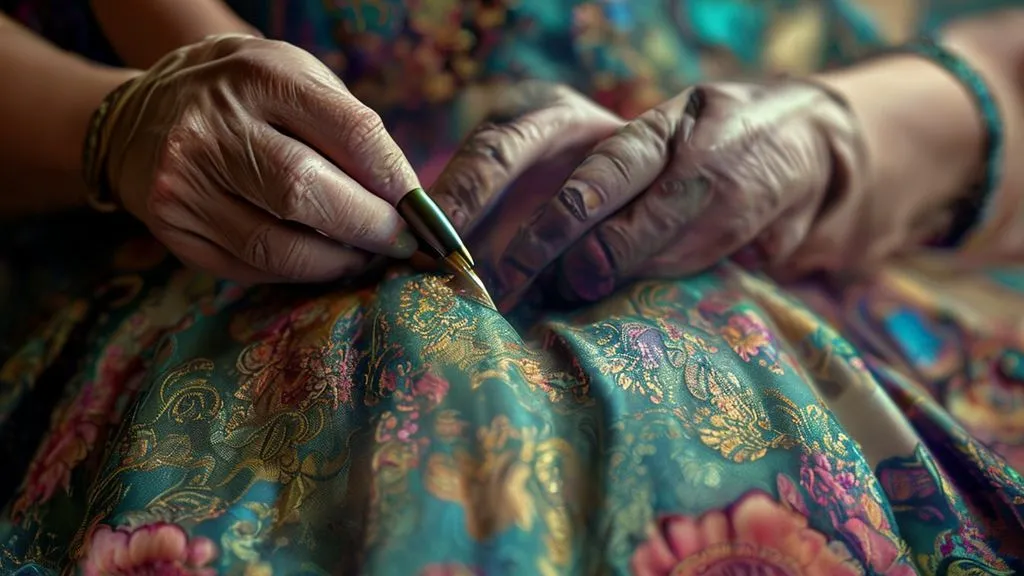
When considering how to adapt classic vintage silhouettes for diverse modern body types, the fabric itself is often overlooked, yet it plays an incredibly vital role. Vintage fabrics possess unique weights, textures, and drapes that significantly impact how a garment falls on the body. For instance, a structured wool from the 1940s will behave very differently from a flowing rayon crepe of the same era or a stretch jersey from the 1970s.
Understanding a fabric's properties – whether it’s stiff and holds shape, soft and drapes fluidly, or has a bit of stretch – is key to predicting its flattering potential. A rigid cotton might emphasize a straight silhouette, while a soft silk or rayon will gracefully skim curves. Lack of stretch in many true vintage pieces means that precise fit is paramount, making tailoring even more critical.
Case Study: Eleanor's 1940s Rayon Dress Dilemma
Eleanor, a client with a beautiful pear-shaped figure, fell in love with a vibrant 1940s rayon day dress. The print was perfect, but the dress, designed for a more rectangular figure of the era, clung awkwardly around her hips and didn't define her waist. She was about to give up, but I advised her to consider the fabric. Rayon, known for its beautiful drape, could be persuaded. We took the dress to a skilled tailor who added subtle darts at the waist and gently released some fabric at the hip seams (luckily, there was enough allowance). Paired with modern shaping shorts to smooth her lines and a thin belt, the dress transformed. The rayon now flowed elegantly over her curves, and the tailored waist created a flattering, balanced silhouette. This resulted in a stunning, comfortable outfit that perfectly blended vintage charm with her modern body.
When seeking out vintage or vintage-inspired pieces, consider how the fabric will interact with your body. Sometimes, choosing modern fabrics that mimic vintage textures but offer contemporary flexibility (like a stretch crepe or a structured knit) can provide the best of both worlds, giving you the vintage aesthetic with a more forgiving fit.
Mixing & Matching: Blending Vintage with Modern Staples
While a head-to-toe vintage look can be incredibly striking, it can also feel intimidating or even costume-like if not executed perfectly. For many, the most accessible and flattering way to adapt classic vintage silhouettes for diverse modern body types is through strategic mixing and matching. This approach allows you to integrate the unique character of vintage pieces into your contemporary wardrobe, creating a personal style that's both current and timeless.
The power of blending lies in balance. By pairing a single, impactful vintage item with modern staples, you ground the look in the present, making the vintage piece feel fresh and intentional. This method is particularly effective for those new to vintage or those who prefer a more understated approach.
Creating Balanced Outfits: A Formula
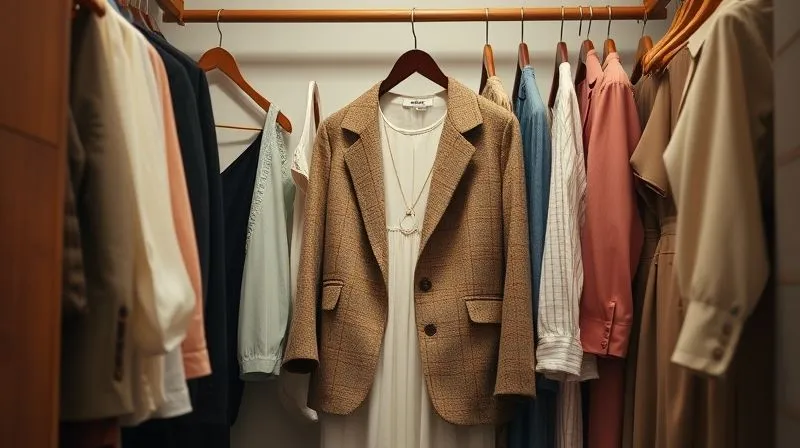
- Identify Your Vintage Star: Choose one vintage piece that you want to highlight – perhaps a beautifully tailored 1940s blazer, a vibrant 1960s A-line skirt, or a delicate 1930s silk blouse.
- Pair with Modern, Fitted Basics: If your vintage piece is voluminous, pair it with something streamlined and modern. A full 1950s skirt looks fantastic with a simple, fitted knit top or a crisp, tucked-in modern blouse. A loose vintage blouse can be balanced with sleek, contemporary trousers or jeans.
- Add Contemporary Accessories: Use modern shoes, bags, and jewelry to bring the outfit firmly into the present. This prevents the look from feeling dated and ensures it aligns with current trends while showcasing the vintage element.
- Adjust Proportions: Pay attention to the overall silhouette. If your vintage piece creates volume on the bottom, ensure your top is more fitted, and vice-versa. This proportional play is key to creating a harmonious and flattering look for any body type.
True vintage style isn't about being a costume; it's about weaving history into your personal present, creating a narrative that is uniquely yours.
Embracing Proportional Play: Visual Tricks for Every Shape
Understanding how different vintage silhouettes interact with your unique proportions is crucial for achieving a flattering look. It's not just about what 'fits' but what visually balances and enhances your figure. As an expert, I've guided countless individuals to discover their most flattering vintage styles by focusing on this 'proportional play'.
Strategies for Different Body Types
- Hourglass: Vintage silhouettes that emphasize the waist are your best friends. Think 1950s New Look dresses with cinched waists and full skirts, or 1940s wiggle dresses that hug curves. Tailoring to ensure a snug fit at the waist is paramount.
- Apple: Focus on creating vertical lines and defining the waist *above* your natural waistline. 1920s/30s empire waist dresses or 1960s A-line and shift dresses can work beautifully. Avoid anything that adds bulk to the midsection.
- Pear: Balance your wider hips with volume or emphasis on your upper half. 1940s broad-shouldered jackets, 1950s full skirts, or dresses with interesting necklines can draw the eye upwards. A-line skirts are also incredibly flattering.
- Rectangle: The goal is to create the illusion of curves. Look for vintage pieces with peplum details (1940s), full skirts (1950s), or strong belted waists. Draping and gathering can also add softness and shape.
- Inverted Triangle: You want to add volume to your lower half to balance your broader shoulders. A-line skirts, pleated skirts, and wide-leg trousers from various eras (e.g., 1930s/40s) are excellent choices. Keep tops streamlined and avoid shoulder pads.
| Body Type | Vintage Silhouettes to Explore | Adaptation Focus |
|---|---|---|
| Hourglass | New Look (50s), Wiggle Dress (50s), Fitted Blouses | Cinching waist, emphasizing curves |
| Apple | Empire Waist (20s/30s), A-line (60s), Shift Dress (60s) | Vertical lines, defining waist above natural line |
| Pear | A-line skirts (50s/60s), Full Skirts (40s/50s), Broad Shoulder Jackets (40s) | Balance shoulders, gentle waist definition |
| Rectangle | Peplum (40s), Full Skirts, Belted Waists, Draped Styles | Creating curves, adding volume to bust/hips |
| Inverted Triangle | A-line skirts, Pleated skirts, Wide-leg trousers, Empire waists | Volume on bottom, streamlined tops |
The Ethical & Sustainable Angle: Why Vintage Matters More Now
Beyond the undeniable aesthetic appeal and the joy of finding unique pieces, there's a profound ethical and sustainable imperative driving the resurgence of vintage fashion. As an industry veteran, I've seen firsthand the devastating impact of fast fashion on our planet and its people. Choosing vintage isn't just a style statement; it's a conscious decision to participate in a more responsible consumption cycle.
The fashion industry is notoriously one of the largest polluters globally, contributing significantly to landfill waste, water pollution, and carbon emissions. By embracing vintage, you are actively reducing demand for new production, diverting garments from landfills, and giving them a second, third, or even fourth life. Each classic silhouette you adapt for your modern body is a vote for sustainability, a unique expression that doesn't cost the Earth. According to a report by the Ellen MacArthur Foundation, less than 1% of clothing is recycled into new clothing, highlighting the critical need for extending the lifespan of existing garments.
Furthermore, vintage clothing often boasts superior quality and craftsmanship compared to many modern mass-produced items. The fabrics are often more durable, and the construction techniques more robust, meaning these pieces are *built to last*. This inherent longevity aligns perfectly with the slow fashion movement, encouraging thoughtful consumption over fleeting trends. As Forbes notes in their article on conscious consumerism, consumers are increasingly prioritizing brands and products that align with their values, and vintage fashion perfectly fits this ethical framework.
Building Your Vintage Wardrobe: A Curated Approach
With the knowledge of how to adapt classic vintage silhouettes for diverse modern body types, the next step is building a wardrobe that truly reflects your personal style and flatters your figure. My advice, honed over years of experience, is to adopt a curated approach rather than simply collecting. Think quality over quantity, and intention over impulse.
Don't feel pressured to buy every vintage piece you encounter. Instead, research the eras and specific silhouettes that you've identified as most flattering for your body type. This focused approach will save you time, money, and frustration, ensuring every addition to your wardrobe is a cherished and wearable item.
My Expert Tips for Smart Vintage Shopping
- Research Eras That Flatter You: Based on your body type, identify which decades' silhouettes are most likely to work for you. This narrows your search considerably.
- Always Measure: Carry your current bust, waist, and hip measurements. Never rely solely on the tag size; vintage sizing is wildly inconsistent. Measure the garment itself and compare.
- Inspect Condition Thoroughly: Check for stains, tears, moth holes, damaged zippers, and weak seams. Factor potential repair costs into your budget.
- Consider Versatility: Can the piece be dressed up or down? Does it pair well with items you already own? A versatile vintage piece offers more value.
- Don't Be Afraid to Walk Away: If it doesn't fit well, if the fabric is problematic, or if the repair costs are too high, it's okay to pass. The right piece will come along.
Embracing Imperfection and Personal Style
Finally, as you embark on your journey of adapting classic vintage silhouettes for diverse modern body types, I want to emphasize the importance of embracing imperfection and allowing your personal style to shine through. Vintage garments carry history, and sometimes that history comes with minor flaws – a faint discoloration, a tiny mend, or a slightly worn edge. These aren't defects; they're character marks, telling a story that mass-produced new clothing simply cannot.
The true beauty of vintage fashion lies not in achieving pristine perfection, but in the unique narrative it allows you to create. It's about finding pieces that resonate with your aesthetic, making them work for *your* body, and confidently integrating them into *your* life. Your personal style is a reflection of who you are, and vintage offers an unparalleled avenue for self-expression that is both distinctive and environmentally conscious. As body positive advocates often remind us, fashion should be about celebrating every body, and vintage, with the right adaptation, is incredibly inclusive.
The most flattering vintage piece is the one that makes you feel utterly authentic and confident, not the one that perfectly recreates a historical image.
Frequently Asked Questions (FAQ)
Q: Can I really wear a 1920s flapper dress if I'm not straight-bodied? A: Absolutely! While original flapper dresses were designed for a more columnar figure, you can adapt them. Look for styles with a slightly lower drop waist, or consider adding subtle, removable waist ties on the inside to create a gentle curve. Pairing with shapewear for smoothing and choosing a dress with some bias cut (even if subtle) can also make a significant difference in how it drapes on a curvier figure, allowing it to skim rather than cling.
Q: How do I find a good tailor for vintage clothes? A: This is crucial. Ask for recommendations from local vintage boutiques, dry cleaners, or even fashion schools. When you find a potential tailor, bring in a simple garment (vintage or not) for a small alteration and assess their work. Look for someone who understands garment construction, can work with delicate fabrics, and ideally has experience with older clothing. Communication is key – explain your vision for the adaptation.
Q: What are the best vintage eras for plus-size body types? A: Many eras offer flattering options. The 1940s often featured strong shoulders and A-line skirts, which can be very balancing. The 1950s full skirts with cinched waists (especially New Look styles) are excellent for emphasizing an hourglass shape. The 1960s A-line and shift dresses, while sometimes perceived as straight, can be incredibly chic and comfortable, especially when chosen in a generous cut and paired with modern shapewear. Look for pieces designed with generous seam allowances, as these are easier to adjust.
Q: Is it okay to modernize vintage pieces, or should I keep them authentic? A: This is a personal choice, but my firm belief is that fashion should serve you, not the other way around. While preserving historical accuracy is important for museum pieces, your personal wardrobe is for your enjoyment and expression. Adapting a vintage piece to make it wearable and flattering for your modern body is a wonderful way to give it a renewed life. It's about respecting the past while living in the present.
Q: How do I deal with vintage sizing discrepancies? A: Forget the number on the label entirely. Vintage sizes bear little resemblance to modern sizing. Always, always rely on actual garment measurements. Measure the bust, waist, and hips of the vintage item and compare them to your own body measurements. If you're shopping online, ask the seller for precise flat-lay measurements. This is the single most important rule for successful vintage shopping.
Key Takeaways and Final Thoughts
Navigating the rich landscape of vintage fashion and successfully adapting classic silhouettes for diverse modern body types is an art, but it's an art that is entirely within your grasp. As an industry specialist, I've seen the transformative power of these strategies firsthand. It's not about forcing your body into an outdated ideal, but about celebrating your unique shape with the timeless elegance of the past.
- Know Your Body: Accurate measurements and an understanding of your proportions are your ultimate guides.
- Embrace Tailoring: A skilled tailor is an invaluable partner in transforming 'almost there' vintage into perfectly fitted treasures.
- Accessorize Strategically: Belts, shapewear, and thoughtful jewelry can redefine a silhouette and draw the eye where you want it.
- Understand Fabric: The drape, weight, and stretch (or lack thereof) of a fabric profoundly impact fit and flattery.
- Mix & Match: Blend vintage showstoppers with modern basics for a contemporary, wearable look.
- Shop Smart: Prioritize condition, versatility, and always measure the garment itself.
- Prioritize Confidence: The most flattering vintage piece is the one that makes you feel authentic, beautiful, and utterly confident.
The world of vintage fashion is a treasure trove of unique style, unparalleled craftsmanship, and sustainable choices. By applying these expert strategies, you're not just wearing old clothes; you're weaving history into your personal narrative, creating a style that is truly one-of-a-kind, timeless, and perfectly tailored for *you*.
Recommended Reading
- 7 Steps: Forecast Bridal Micro-Trends, Halt Inventory Losses Now
- 7 Smart Ways to Liquidate Unsold Winter Accessories Without Devaluing Your Brand
- Scaling Luxury: 7 Proven Ways to Grow Without Diluting Exclusivity
- Restore Heavily Corroded Edwardian Platinum: The Damage-Free Expert Guide
- 7 Proven Strategies: Forecasting Jewelry Trends for Max Profit

Your email address will not be published. Required fields are marked *